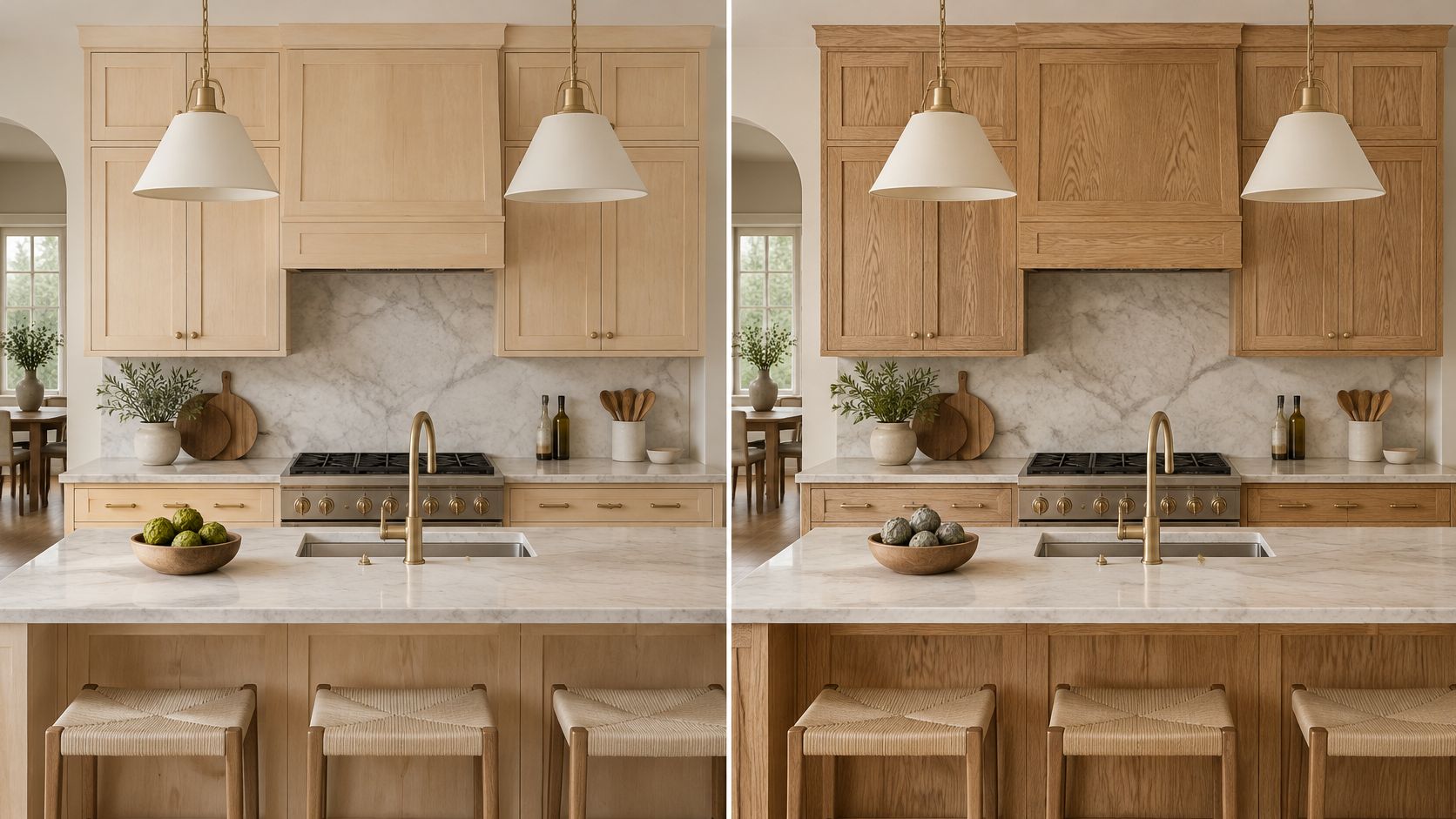
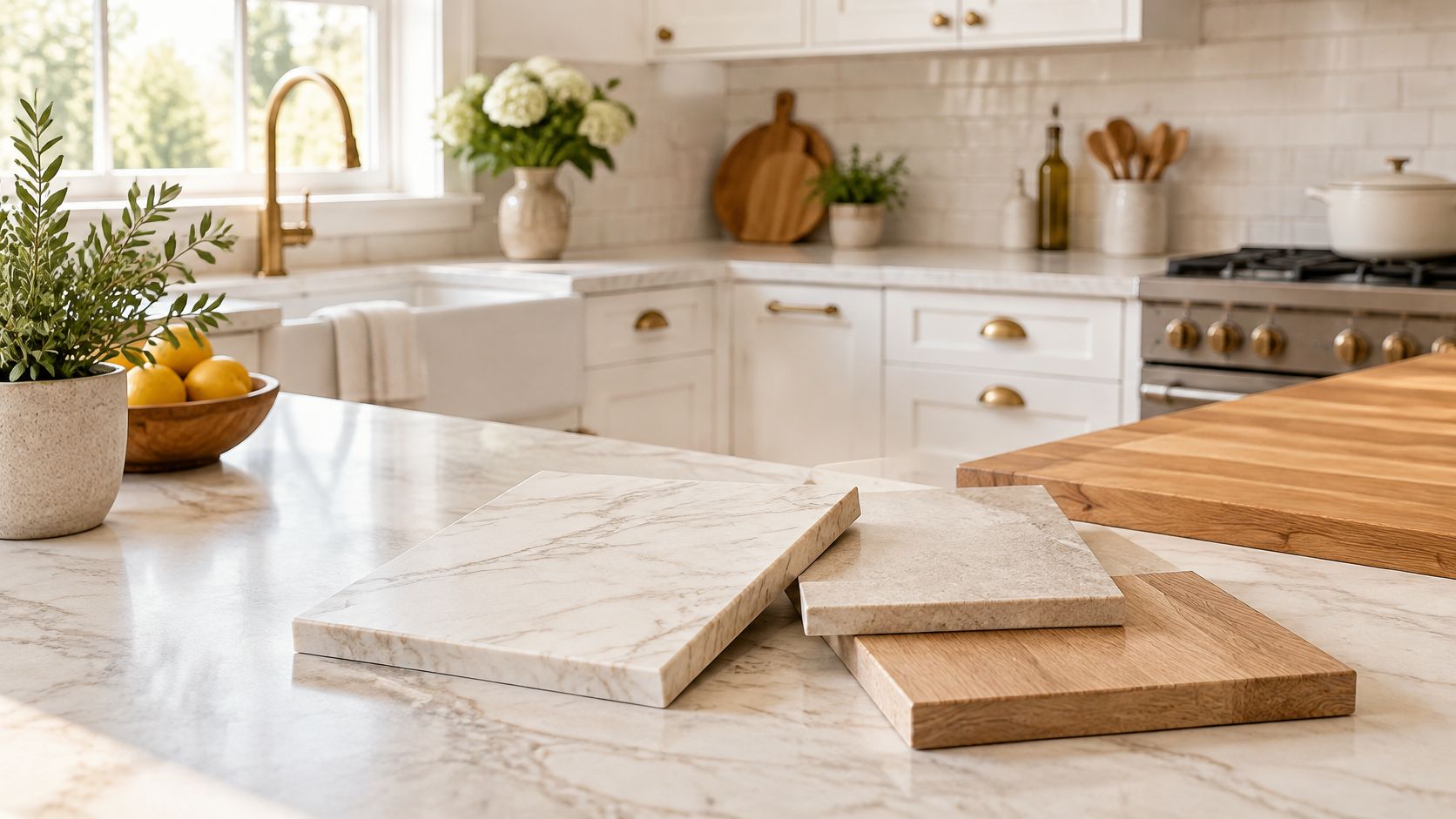
You're standing in a kitchen you've stopped inviting people into. The cabinets are fine, the layout works, the appliances still run, but the counters date the whole room, and the quote for the stone you pinned is more than you want to spend on a surface you'll cut onions on.
Here's the number that reframes the problem. The 2024 U.S. Kitchen Trends Study from Houzz found that 91% of renovating homeowners replaced their countertops, while the median cost of a major remodel, one that replaces at least all cabinets and appliances, reached $55,000 in 2023. That's the gap a budget plan lives in. You can change the thing everyone looks at without touching the things that are still sound.
So the goal isn't the cheapest slab on the yard. It's the smartest allocation of what you've got, which sometimes means splitting the budget across two materials instead of stretching for one.
Four factors decide whether a cheap surface stays cheap. Installed cost, not sticker price. Upkeep, meaning what you'll realistically do on a Tuesday night. Heat and moisture risk, because that's what kills surfaces early. And how convincing the material looks in a real kitchen with real lighting rather than under showroom spots.
If you're still deciding on wall color, shelving, and the styling layer that makes a modest surface read as intentional, Farmhouse World's kitchen decor guide is worth a look before you order samples.
Here are eight kitchen countertop ideas on a budget, ordered roughly by cost and by how much visual work each one does.
Table of Contents
- 1. Laminate Countertops
- 2. Butcher Block (Solid Wood) Countertops
- 3. Ceramic or Porcelain Tile Countertops
- 4. Stone Remnants and Discounted Slabs (Granite or Quartz)
- 5. Concrete Overlay and DIY Resurfacing Kits
- 6. Stainless Steel Countertops
- 7. Solid Surface Countertops
- 8. Refinishing or Reglazing Existing Countertops
- Countertop Options at a Glance
- Where to Spend, Where to Save, and How to Start
1. Laminate Countertops
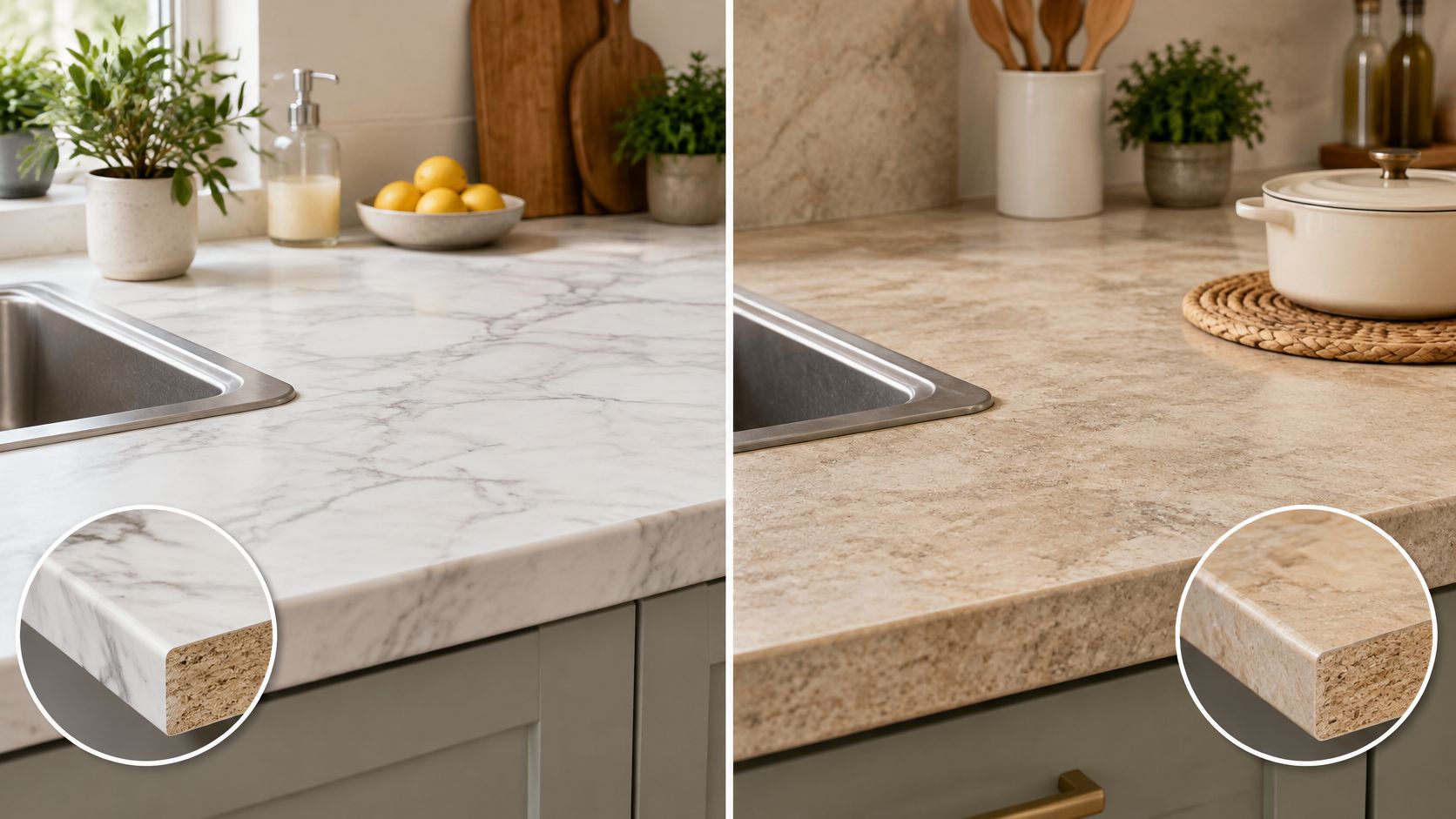
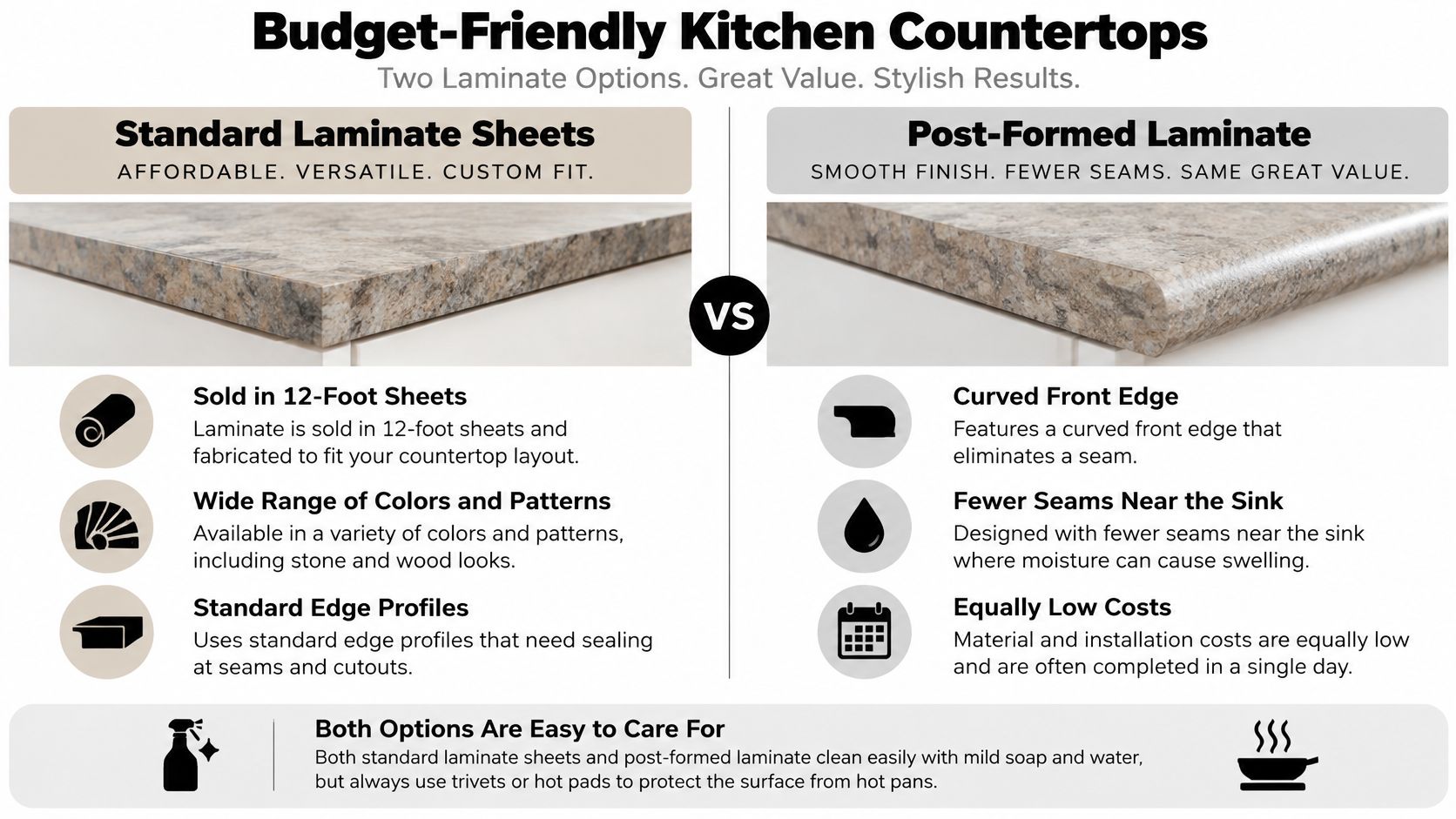
Laminate is not the compromise it was twenty years ago. High-definition prints now mimic marble, soapstone, and walnut grain convincingly enough that guests touch the surface before they ask what it is. The material is also being actively developed rather than phased out: the global laminate segment generated an estimated $13.74 billion in 2024 and is forecast to grow about 7.7% annually through 2033, per Construction Flux's countertop material comparison.
That same source puts countertop material and installation at roughly 10% to 15% of a full kitchen-remodel budget. When the top is that small a slice, spending the difference on cabinet doors, lighting, or a better faucet usually does more for the room.
If you want the honest trade-off against stone, including where each one shows wear first, this breakdown of laminate versus granite countertops covers it.
Where laminate earns its keep
- Post-formed runs win. An integrated backsplash and rolled front edge eliminate the rear seam behind the sink, which is where water sits and swells the core.
- Seal the cutouts. Sink and cooktop openings expose raw core. Ask specifically how those edges get sealed, then re-caulk them every few years.
- Order the exact finish sample. A warm graystone under showroom lighting can read pink in a north-facing kitchen with oak floors.
- Keep the sink where it is. Moving plumbing under a laminate top adds labor you don't get back in looks.
Practical rule: Laminate fails at edges, seams, and cutouts, almost never in the middle of the field. Put your attention and your money there.
2. Butcher Block (Solid Wood) Countertops
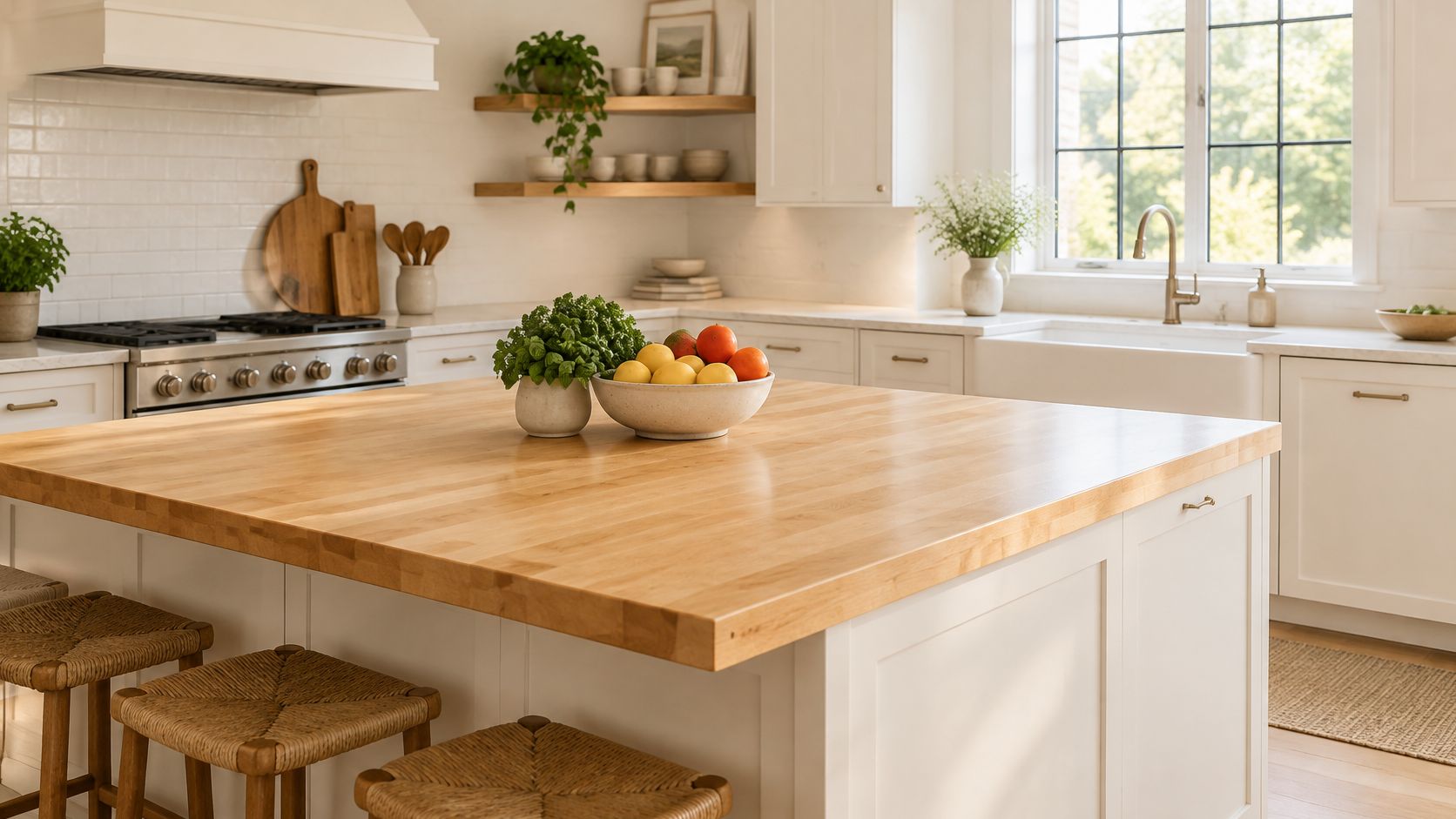
The fastest way to make a modest kitchen feel expensive is to put wood where hands land. Butcher block does that job better than any other budget surface, and it does it on the island only, which is the trick most homeowners miss.
You don't need wood everywhere. For a typical 30 to 50 square foot kitchen, This Old House's remodeling cost coverage lists butcher block at approximately $900 to $3,000 installed, against laminate at about $450 to $2,000 and tile at about $300 to $1,750. Those ranges assume reasonably standard layouts, so treat them as a starting frame, not a quote. A wood island paired with a laminate or solid surface perimeter lands the warmth exactly where people stand.
The maintenance nobody warns you about
Wood moves. It swells at the sink, dries at the dishwasher, and shows every ring from a wet glass left overnight. The first six months are the thirsty ones, when the end grain near a sink cutout can drink a full coat of oil in a week.
- Oil before you think you need to. Food-safe mineral oil or a butcher block conditioner, applied thin and often. If water beads, it's fine. If water darkens the wood instantly, it's overdue.
- Skip the sink in wood unless you're meticulous. A stone or solid surface perimeter with a wood island removes the highest-risk junction entirely.
- Sand, don't replace. A random-orbit sander with 120 then 220 grit, followed by re-oiling, erases knife marks and light staining.
- Use an undermount only with a sealed, caulked cutout and check that caulk line twice a year.
For the full routine, this guide to butcher block countertop care walks through oiling intervals and stain lifting.
Short of stone, wood is the only countertop material that gets better looking as it ages, but only if you feed it.
3. Ceramic or Porcelain Tile Countertops
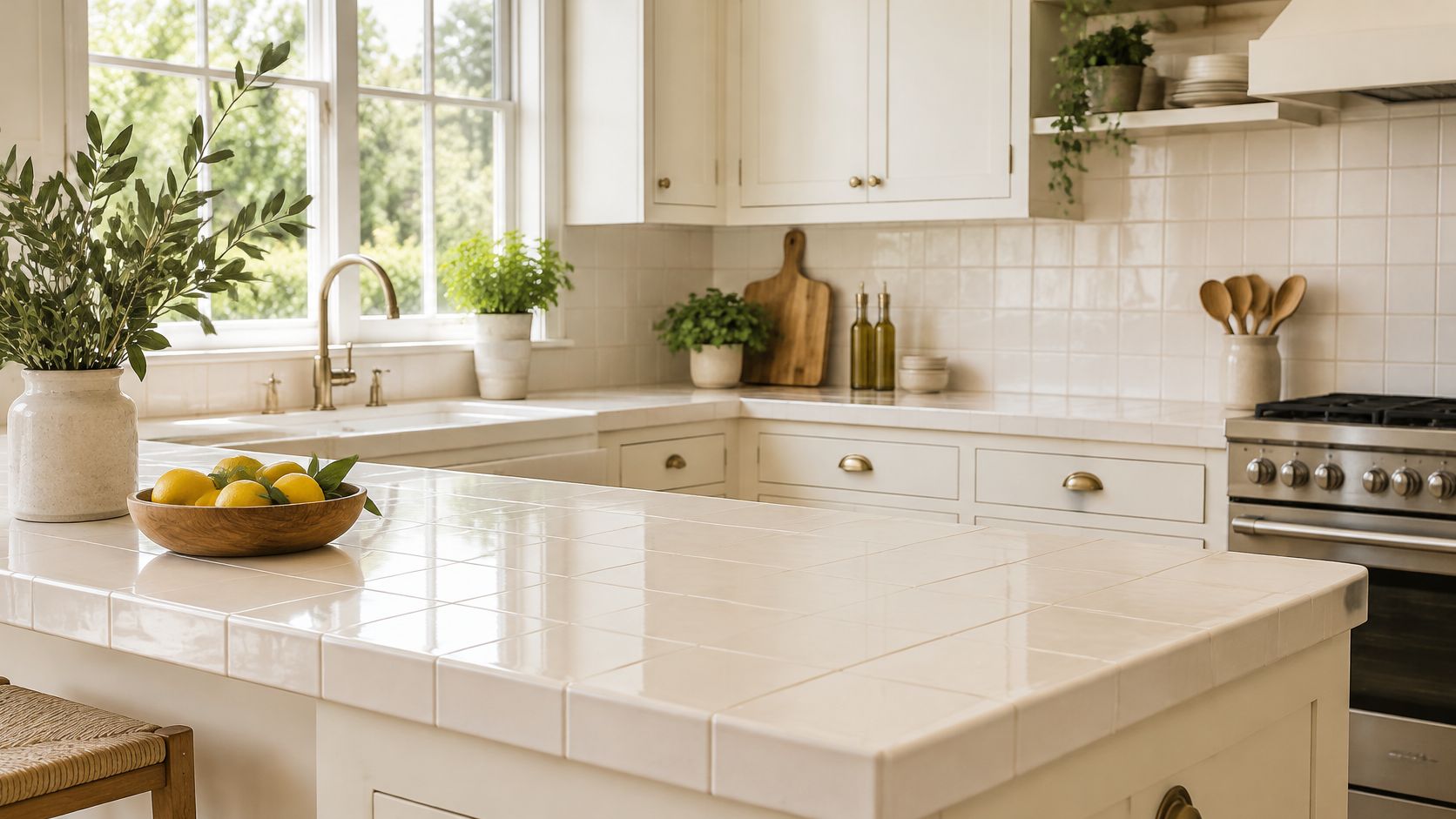
Tile has a reputation as the bargain option, and it's partly deserved for material cost. It's also the surface most likely to become expensive after installation, because the grout is the countertop. That single fact should shape the whole decision.
On durability, the Slabwise guide to cheap countertops notes that laminate can last roughly 10 to 20 years under suitable conditions, an estimate that depends on keeping seams dry. Tile introduces dozens of grout joints per square foot, and each one is a place where moisture, oil, and tomato sauce collect. The tile itself will outlive the grout five times over.
Making tile behave
- Epoxy grout, not cement grout, anywhere near the cooktop or sink. It resists staining far better and doesn't need resealing.
- Use bullnose or pencil trim on the front edge. Field tile cut and left raw at the edge chips, and it's the first thing a buyer touches.
- Set a full dry layout before ordering. Verify the tile dimensions and your counter depth on paper. Diagonal and herringbone patterns waste 15% to 20% more tile than a straight stack.
- Keep the tile field small. A fully tiled island face reads busy. A tile counter with a stone or wood top on the island gives you the look without the scrubbing.
Tile is not automatically the cheapest finished option. Low material cost disappears fast when fabrication, edge trim, and grout maintenance get counted honestly.
4. Stone Remnants and Discounted Slabs (Granite or Quartz)
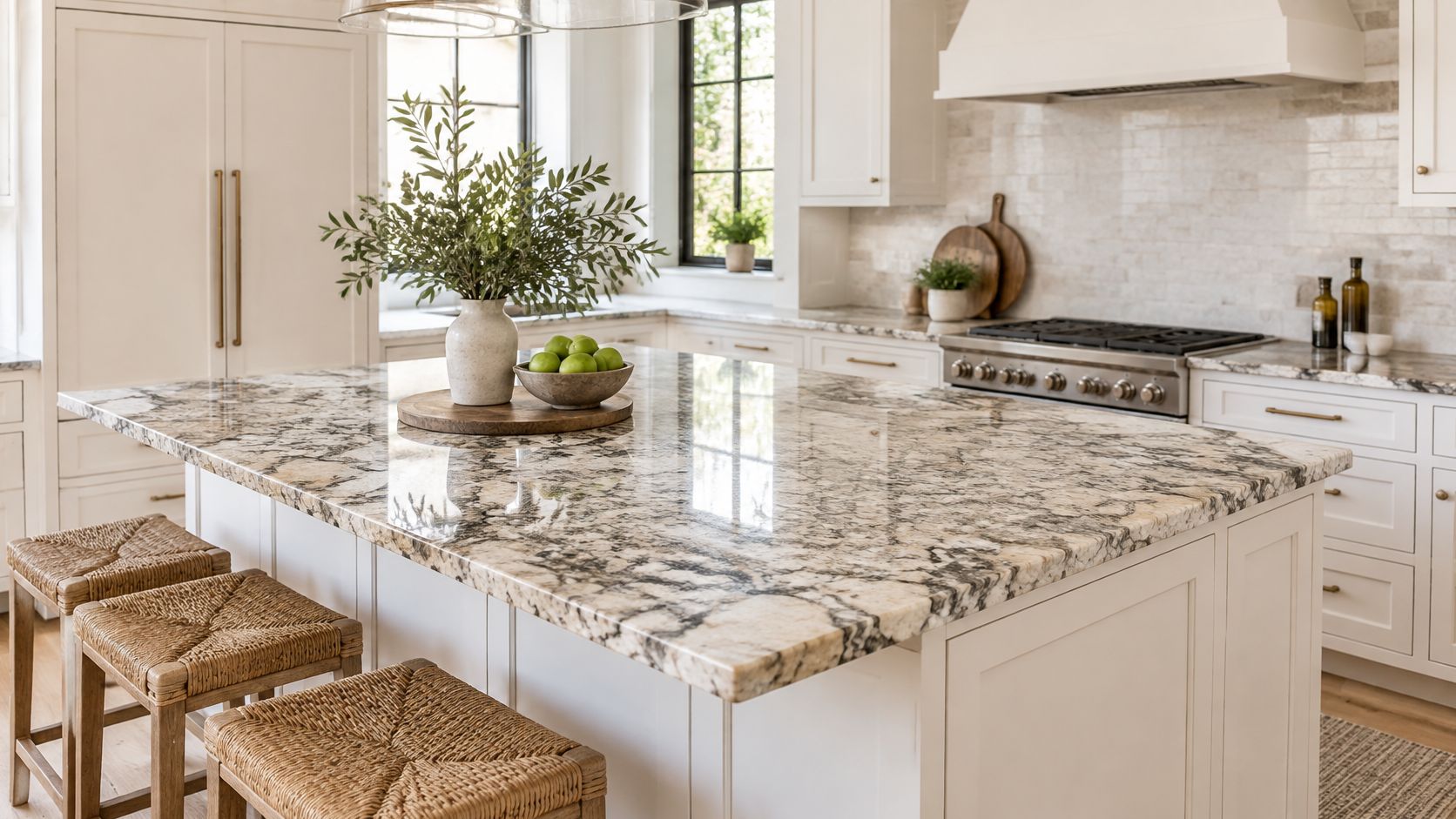
Remnants are the leftover pieces from someone else's larger slab purchase, sold from the rack at the back of a stone yard. They're the legitimate way to get real stone into a budget kitchen, provided the geometry of your project fits what's on the rack.
Understand what you're buying. Granite is commonly rated around 6 to 7 on the Mohs hardness scale and is one of the more forgiving stones for a busy kitchen, while engineered quartz offers consistent appearance and low routine maintenance but can be damaged by hot cookware, so trivets stay in the drawer. Natural stone generally needs periodic sealing, and nonporous engineered surfaces typically skip it, which changes your annual labor, not just your purchase price, per Slabwise's countertop material guide.
How remnant shopping actually goes
- Call the yards first. Ask fabricators and stone yards in Camden and Burlington Counties what's in the remnant bin this week before you settle on a design.
- Design around the piece. A remnant that fits your island with one seam beats a full slab that needs three.
- See it wet. Ask them to wet the slab. Dry stone hides half its veining and most of its color shift.
- Compare quotes line by line, which is the same discipline needed when evaluating slab quotes for kitchen renovations. Cutouts, edge profiles, tear-out, and delivery can move a number more than the slab itself.
For budgeting, this guide to quartz countertop cost per square foot explains which charges are fixed and which track your layout.
One caution on scope. The 2024 Cost vs. Value figures cited in the available industry coverage reported roughly 96% cost recoupment for a minor kitchen remodel against about 49% for a major one. Installing stone doesn't justify expanding the footprint to fit it.
5. Concrete Overlay and DIY Resurfacing Kits
An overlay is a thin cement-based or polymer coating troweled or rolled over your existing top, usually laminate or tile, to produce a concrete or stone look at a fraction of replacement cost. It skips demolition, which is where a lot of money hides in a countertop project.
What it does well is change color and texture. What it doesn't do is fix a spongy substrate, a sagging cabinet run, or a top that has already swollen at the sink cutout.
What decides whether it holds
- Prep is the whole job. Degrease, then sand the existing surface dull, then prime. A glossy laminate top that wasn't scuffed will delaminate within a season.
- Respect the recoat window. Follow the manufacturer's drying time between coats exactly. Rushing traps solvent and produces a soft, sticky film.
- Seal it and keep sealing. A penetrating sealer in wet zones, reapplied periodically. An unsealed overlay near a sink stains from the first splash.
- Hire out the high-traffic counters. A large kitchen or a family that cooks daily is where DIY overlays fail visibly.
For realistic numbers on both routes, this outline of concrete countertop installation cost separates poured-in-place work from resurfacing.
An overlay buys you five to eight good years on a structurally sound top. It is a postponement, not a permanent fix, and priced honestly it should be treated that way.
6. Stainless Steel Countertops
Stainless shows up in home kitchens for the same reasons it dominates commercial ones. It doesn't stain, it doesn't care about heat, and it wipes clean in one motion. The catch is that it looks like what it is, and a poorly specified stainless top will telegraph every dent, every fingerprint, and every pan set down hard.
For budget purposes, stainless makes the most sense as a section rather than a whole kitchen. A prep run beside the range, a utility counter near a laundry, or a small island in a household that bakes constantly.
- Specify brushed, not mirror. A brushed finish hides scratches and fingerprints, and it can be re-grained later.
- Ask for sound dampening. A plywood substrate bonded underneath stops the hollow drum roll when a mixing bowl lands.
- Confirm grade and gauge before ordering. Commercial-grade 304 stainless is the standard; ask what thickness you're getting and get it in writing.
- Clean with the grain. A stainless-specific cleaner and a soft cloth, wiped in the direction of the brush lines. Steel wool and bleach are out.
The honest downside
Stainless scratches. It will show a scuff from a cast iron skillet, and nobody is refinishing that spot in place. Homeowners who want a surface that looks untouched in year five should choose something else. Homeowners who want a work zone that can take a beating and be sanitized without worry will find it hard to beat.
7. Solid Surface Countertops
Solid surface is the quiet value pick in the middle of the price range, priced below quartz and natural stone while giving you a smooth look with no visible joints. It's an acrylic or polyester resin blended with minerals, non-porous, and workable with ordinary woodworking tools, which is why fabricators can shape it into integrated sinks and coved backsplashes.
That solid construction is the main selling point. No seam behind the sink means no caulk line to fail. No grout means nothing to scrub with a toothbrush. For a rental or a busy family kitchen, that's worth more than a stone name.
- Keep trivets handy. Solid surface is heat-sensitive. A hot sheet pan straight from the oven will leave a mark.
- Ask for a seam diagram before fabrication. You want seams placed away from the sink and out of the sight line from the doorway.
- Choose matte to hide scratches. Matte surfaces can be scuff-sanded in place years later; gloss shows every abrasive mark.
- Read the warranty closely. Coverage varies widely between manufacturers, particularly on heat damage and integrated sink joints.
For a sense of where it lands in the budget, this breakdown of the cost of solid surface countertops covers pricing tiers and fabrication extras.
Solid surface is the only budget-adjacent material you can repair invisibly in your own kitchen with a sanding pad and a bit of patience.
8. Refinishing or Reglazing Existing Countertops
Sometimes the smartest countertop decision is the one you make about the countertop you already own. Refinishing restores or coats an existing laminate, tile, or solid surface top with a new finish, no demolition, no cabinet work, no plumbing disconnect.
It's the lowest-cost route available, and the most variable in outcome. On a sound substrate, a proper epoxy or reglazing system can carry a dated kitchen through another resale cycle. On a top that has swelled, delaminated at the edges, or lost its bond to the cabinet, the finish will fail and take your money with it.
Doing it without regret
- Test a hidden spot first. Under a small appliance is the honest sample board.
- Ventilate hard and follow the safety instructions. Epoxy and reglazing products carry real solvent load. Masking tape and drop cloths protect cabinetry, and that effort is not optional.
- Fix the substrate before you coat it. Repair loose laminate, level a rocking cabinet, and re-caulk the sink before any finish goes down.
- Hire it out for a primary kitchen. Tenants and guest bathrooms are forgiving. A high-use family kitchen is not the place for a first attempt.
A finish that looks good on day one and peels on day ninety is more expensive than the surface you almost bought.
Countertop Options at a Glance
| Item | Cost Level | Best For | Maintenance Needs | DIY Friendly | Heat Resistance |
|---|---|---|---|---|---|
| Laminate Countertops | Very low cost | Budget updates and rental kitchens | Clean with mild soap; protect seams from moisture | Easy to install | Low; hot pans can scorch the surface |
| Butcher Block (Solid Wood) Countertops | Affordable | Islands and food prep zones | Oil regularly; keep water-prone areas sealed and dry | Yes, with basic tools | Moderate; use trivets |
| Ceramic or Porcelain Tile Countertops | Low material cost | Custom designs and budget kitchens | Seal and maintain grout; repair chips as needed | DIY-friendly with careful preparation | High; suitable for hot cookware |
| Stone Remnants and Discounted Slabs (Granite or Quartz) | Lower cost than full slabs | Small counters, vanities, and islands | Quartz needs little care; granite may need periodic sealing | Limited; fabrication is needed | High; durable and heat-resistant |
| Concrete Overlay and DIY Resurfacing Kits | Lower cost than replacement | Updating existing counters without demolition | Seal carefully and periodically; protect from moisture | Yes, but preparation and application require care | Moderate; depends on the coating and sealer |
| Stainless Steel Countertops | Relatively affordable | Prep zones, islands, and utility spaces | Clean with mild detergent; wipe to reduce water spots | Limited; custom fabrication is typical | High; heat-resistant |
| Solid Surface Countertops | Moderate; below quartz and natural stone | Seamless counters and integrated sinks | Clean routinely; sand out minor scratches as needed | Limited; fabrication is generally needed | Low; protect from hot pans |
| Refinishing or Reglazing Existing Countertops | Very low cost | Refreshing sound, dated countertops | Protect coatings from heavy wear; follow product care instructions | DIY possible; professional help can improve results | Variable; depends on the coating |
Where to Spend, Where to Save, and How to Start
Work in this order and the budget takes care of itself.
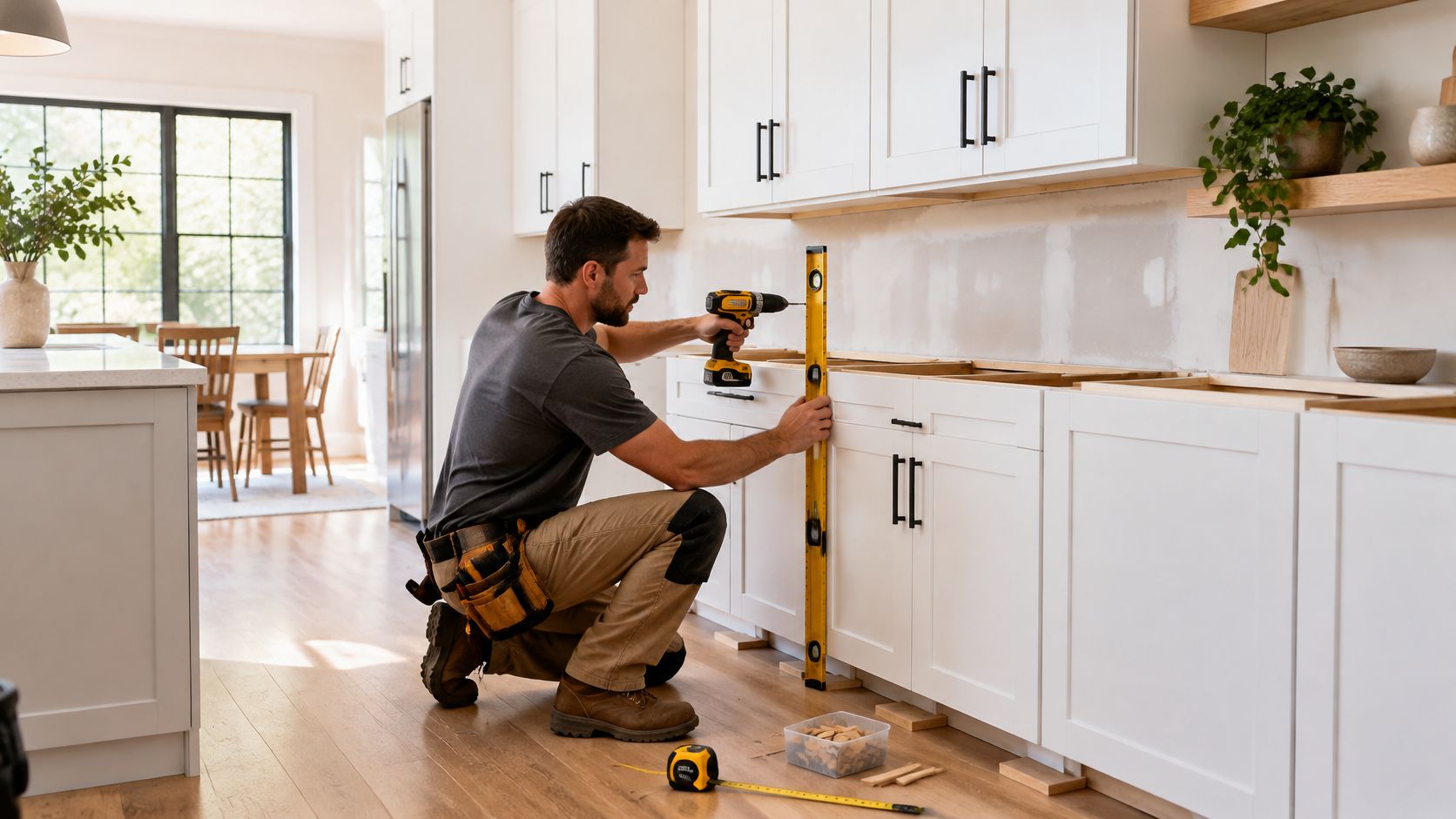
Fix layout and substrate first. If the cabinets rock, the floor dips, or there's a slow leak under the sink, no surface survives that. Correct it before you shop. A layout change triggers construction you can't see and can't avoid paying for.
Choose the surface that takes the most abuse. The area around the sink and range is where every material fails first. That's where durability earns its premium, whether it's engineered quartz, solid surface, or granite.
Spend on the focal point. One surface that makes people look, usually the island, does more than upgrading everything evenly. Pair it with a value material on the perimeter and most guests never notice the difference.
Use refinishing and remnants only where they solve a specific problem. A remnant is a solution when the piece fits the space. A refinish is a solution when the substrate is sound. Neither is a solution for a countertop that's structurally failing.
The practical checklist:
- Confirm what stays. Keep the cabinet boxes, sink location, and plumbing if they work. Spend the savings on the surface.
- Get line-item quotes. Square-foot pricing, fabrication, cutouts, edge profiles, tear-out, delivery, and installation as separate lines.
- Limit complexity. Standard depth, fewer seams, simple edges, in-stock patterns.
- Choose the finish in your own kitchen. Bring the sample home and look at it at 7 a.m. and 8 p.m.
- Budget the upkeep. Oil, sealer, and re-caulking are line items, not afterthoughts.
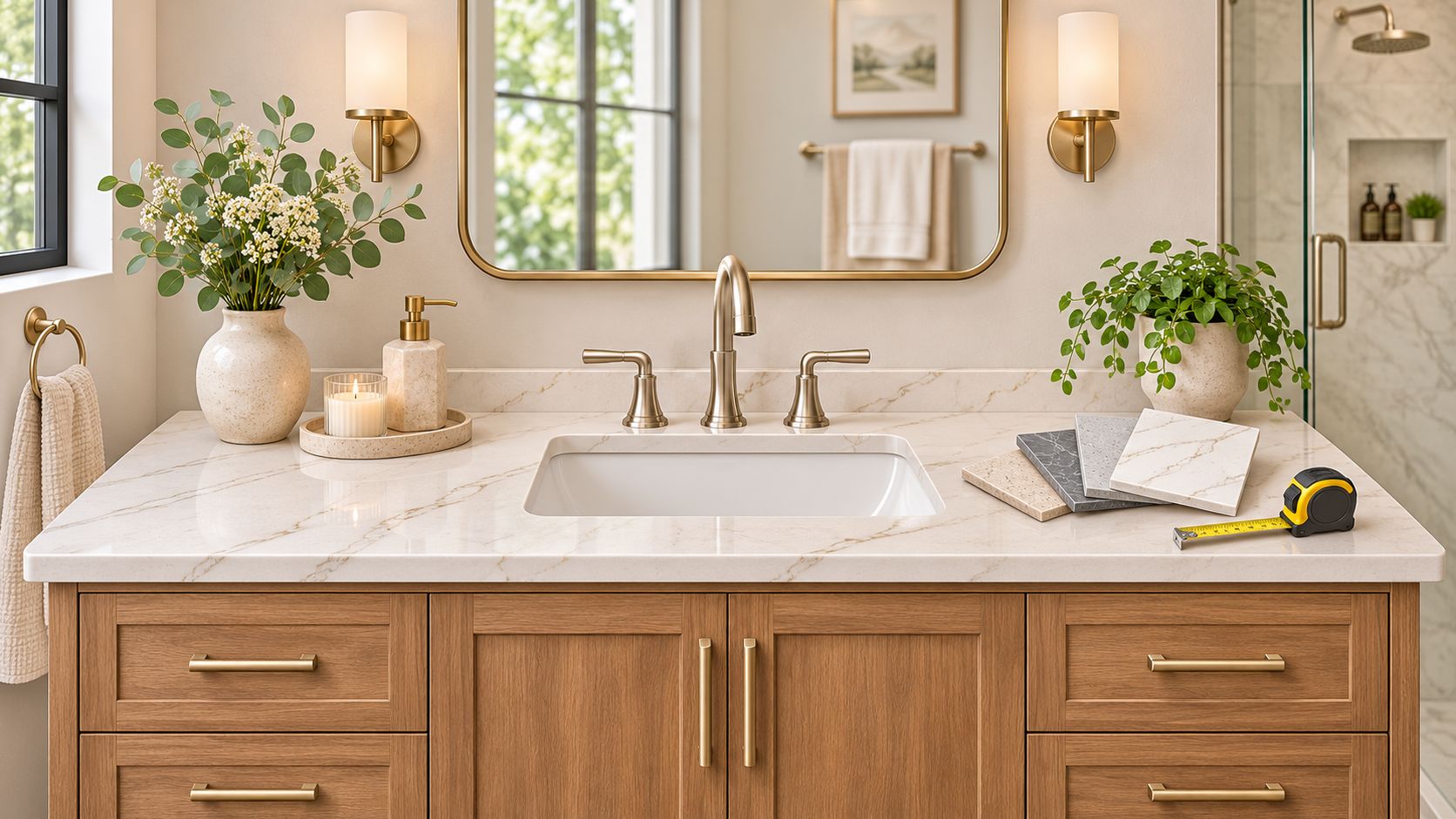
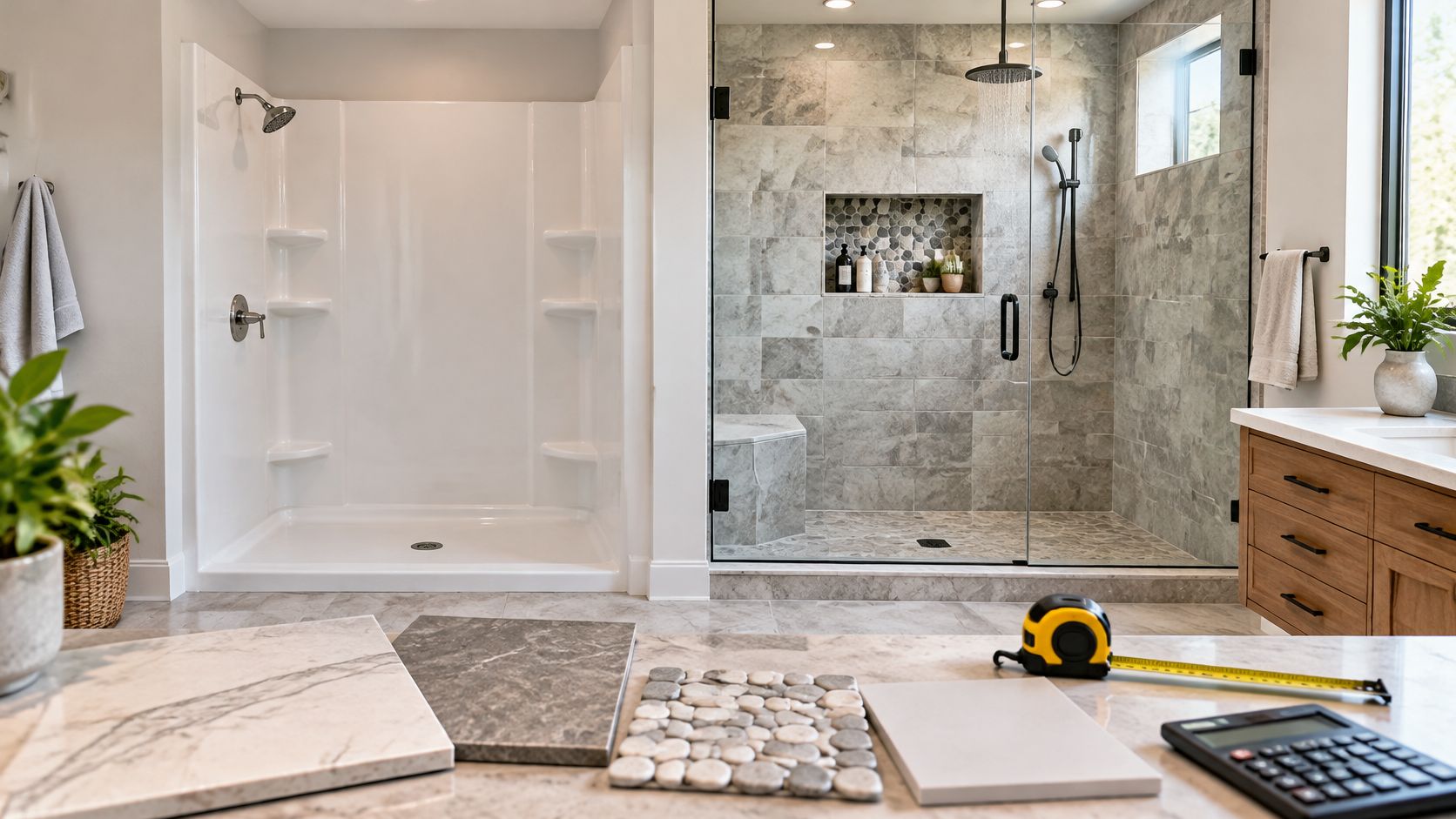
If you'd rather pressure-test a plan than guess in a showroom, South Jersey homeowners can book a consultation with The Cabinet Coach, which brings cabinetry, countertop, hardware, and tile samples to the home and guides material selection around style, budget, and daily use. If you're also planning the outdoor version of this project, this guide to building a budget backyard kitchen covers the surfaces that survive weather.
The Cabinet Coach brings cabinets, countertops, hardware, and tile samples straight to your kitchen so you can compare laminate, butcher block, solid surface, and stone under the light where they'll live. From Cherry Hill to Moorestown and across South Jersey, the team builds the budget around the parts of your kitchen worth keeping, then coordinates fabrication and installation so the surface you choose gets fitted correctly. Visit The Cabinet Coach to schedule a consultation.