
Refacing usually saves 30 to 50 percent upfront compared with replacing your cabinets. But a lower cabinet refacing cost only makes sense if your cabinet boxes are sound and you want to keep your kitchen layout.
Keeping that layout is the biggest factor in making refacing affordable. You can spend weekends driving between cabinet stores across South Jersey to compare veneer prices, but those savings depend on what stays in place.
Function matters more than a fresh finish. Blind corners, narrow walkways, or too little deep storage won't improve with new surfaces. Before spending thousands to cover old boxes, weigh the upfront savings against how well the kitchen will work for you over time.
What's Inside This Guide
- The Real Price of Preserving Flawed Kitchen Layouts
- Evaluating the Box: Refacing Versus Tearing Down to the Studs
- Matching Your Home's Architecture and Daily Routine to the Right Path
- Integrating Countertops, Hardware, and Adjoining Trim
- Five Essential Field Steps Before Signing Any Work Order
- Allocating Your Renovation Dollars Between Surface Finishes and Storage Mechanics
- Questions Haddonfield Homeowners Often Ask About Cabinet Options
- A Practical Next Step for Your Haddonfield Home
The Real Price of Preserving Flawed Kitchen Layouts
Most homeowners consider refacing to avoid the mess and time involved in demolition. The first estimate, though, tells you nothing about how cooking will feel afterward. Cabinets without accessible pull-outs or separate trash storage may still fall short of your household's needs. Refacing can leave you living with those same frustrations for another fifteen years.
Many Haddonfield homes still have sturdy pine or plywood cabinets built on-site in the mid-twentieth century. Their thick boxes can be worth keeping. But the shelves rarely adjust, and drawers often stick on their old wooden runners.
Our refacing work covers those exteriors with fresh hardwood or laminate. It cannot create room for two people to cook without bumping elbows every evening.
Practical check: Don't reface a kitchen that forces you to store everyday cookware outside the work triangle between your sink, stove, and refrigerator. New doors will leave that awkward arrangement in place.
At our mobile design studio, we check whether your boxes are worth preserving before pricing the materials. Water damage near the sink is a warning sign. Frames pushed out of square by decades of settling can also make a fresh start a better use of your money.
Evaluating the Box: Refacing Versus Tearing Down to the Studs
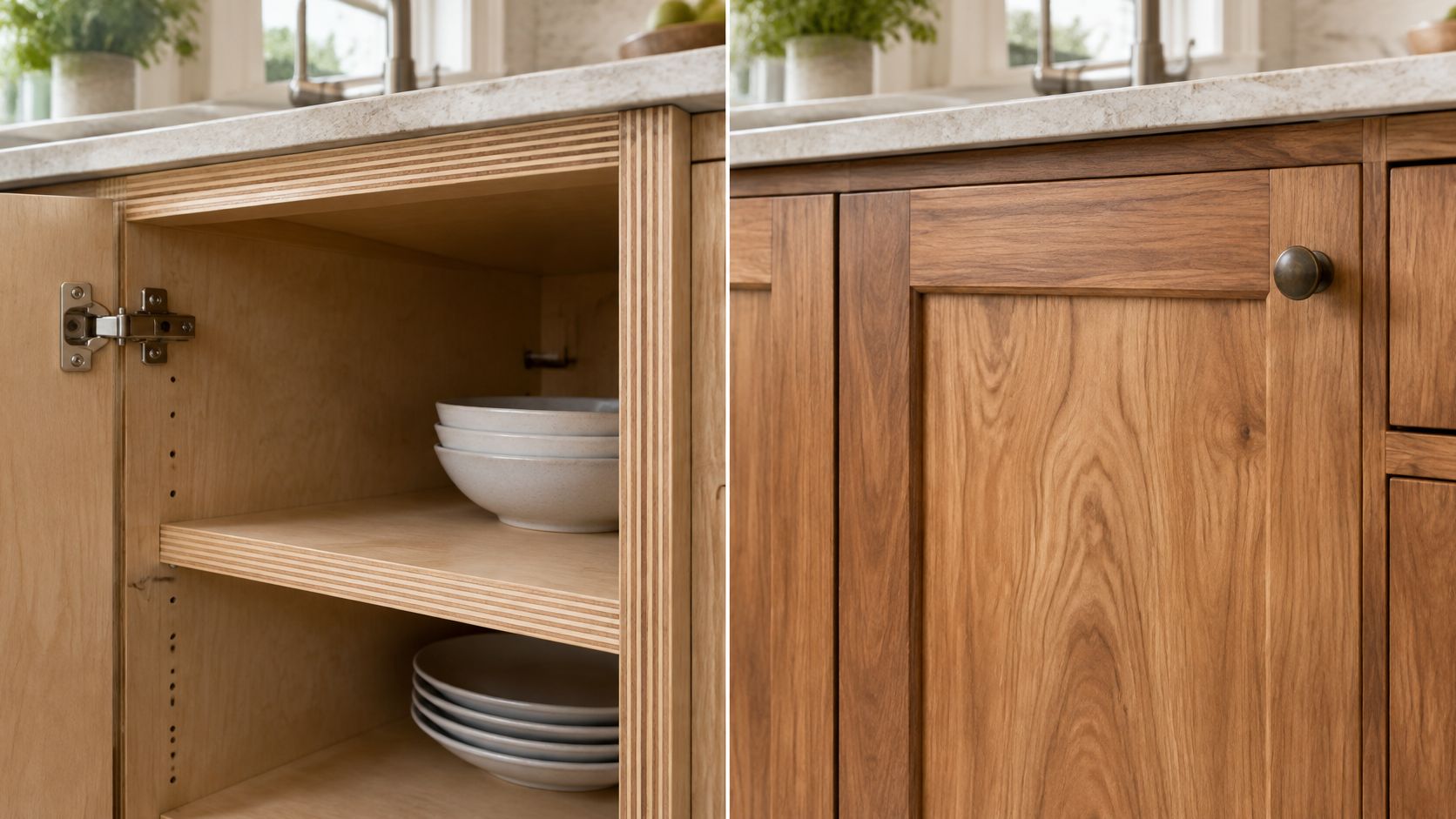
Start with the condition of the cabinet box itself. A full tear-out lets you inspect wiring and update plumbing before installing level, modular cabinets suited to how you cook. Keeping sound hardwood frames avoids drywall repairs and leaves the surrounding backsplash intact. That difference matters when you compare the full scope of each job.
Video from JSB Home Solutions: How refacing and replacement affect home value and buyer interest
Diagnostic Checks for Existing Frameworks
Use these checks to compare your options before choosing a finish. The condition of the frames determines whether they can take new veneers, the thin surface coverings used in refacing.
| Option | Recommended starting point | What to watch |
|---|---|---|
| Full surface refacing | Three-quarter-inch plywood boxes with straight, vertical face frames | Particleboard edges peeling apart, door openings out of square, or sagging bottom shelves |
| Box replacement with reused tops | Stone counters in excellent condition that can be lifted and braced | Stone can crack along sink cutouts as old cabinets come out |
| Complete cabinet selection and installation | Walls opened to move prep areas, appliances, and utility connections | Longer lead times and no basic kitchen plumbing while new lines are roughed in |
A refacing estimate should account for the work needed to bond veneers under high pressure. Wood that has absorbed grease or moisture over thirty years can cause veneers to blister later. Review the available materials with your installer, including solid wood strips and thermofoil, a thin plastic covering. Indoor humidity changes affect which material fits your kitchen.
Matching Your Home's Architecture and Daily Routine to the Right Path
Your house and cooking routine both matter here. Historic brick twins and colonial homes near Kings Highway often have uneven plaster walls and floors that have settled. Removing their original built-ins can expose framing problems you couldn't see before. Those repairs add labor costs that belong in the comparison.
| Situation or style | Recommended choice | Avoid |
|---|---|---|
| Historic home with custom-sized plaster alcoves | Targeted refacing with hardwood face coverings milled to fit | Stock replacement boxes that need awkward four-inch filler strips |
| Narrow galley kitchen with cramped overhead space | Full replacement with ceiling-height wall storage and deep base pull-outs | Refacing shallow upper cabinets with twenty inches of unused soffit space above them |
| Suburban ranch planned for an open kitchen with an entertaining island | Full replacement with clearance for structural beams and island installation | Refacing the perimeter while adding a mismatched island in the center |
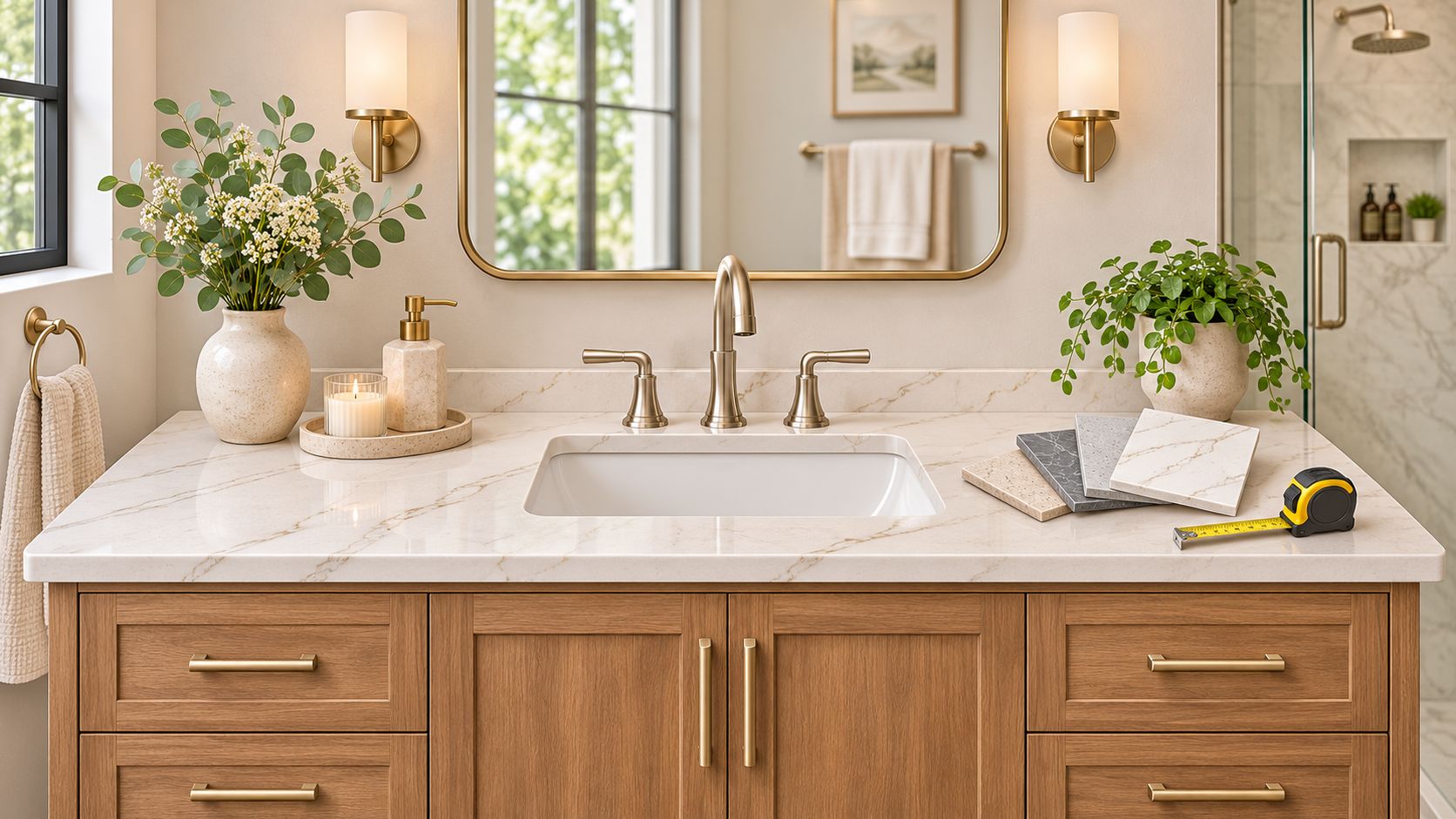
| Secondary bathroom or powder room update | Premade vanity swap or direct cabinet installation | Custom on-site refacing labor for a small single-sink vanity base |
Before you buy: Check that base cabinets can accept full-extension glides, which let drawers open all the way, before refacing. Keeping fixed shelves behind new doors leaves eighty percent of your lower storage out of reach.
For new cabinetry, pricing per linear foot gives you a starting point for the budget. Replacement can also spare you the work of coordinating separate delivery and installation vendors. That depends on choosing one team that manages delivery schedules directly with the carpentry crew.
Integrating Countertops, Hardware, and Adjoining Trim
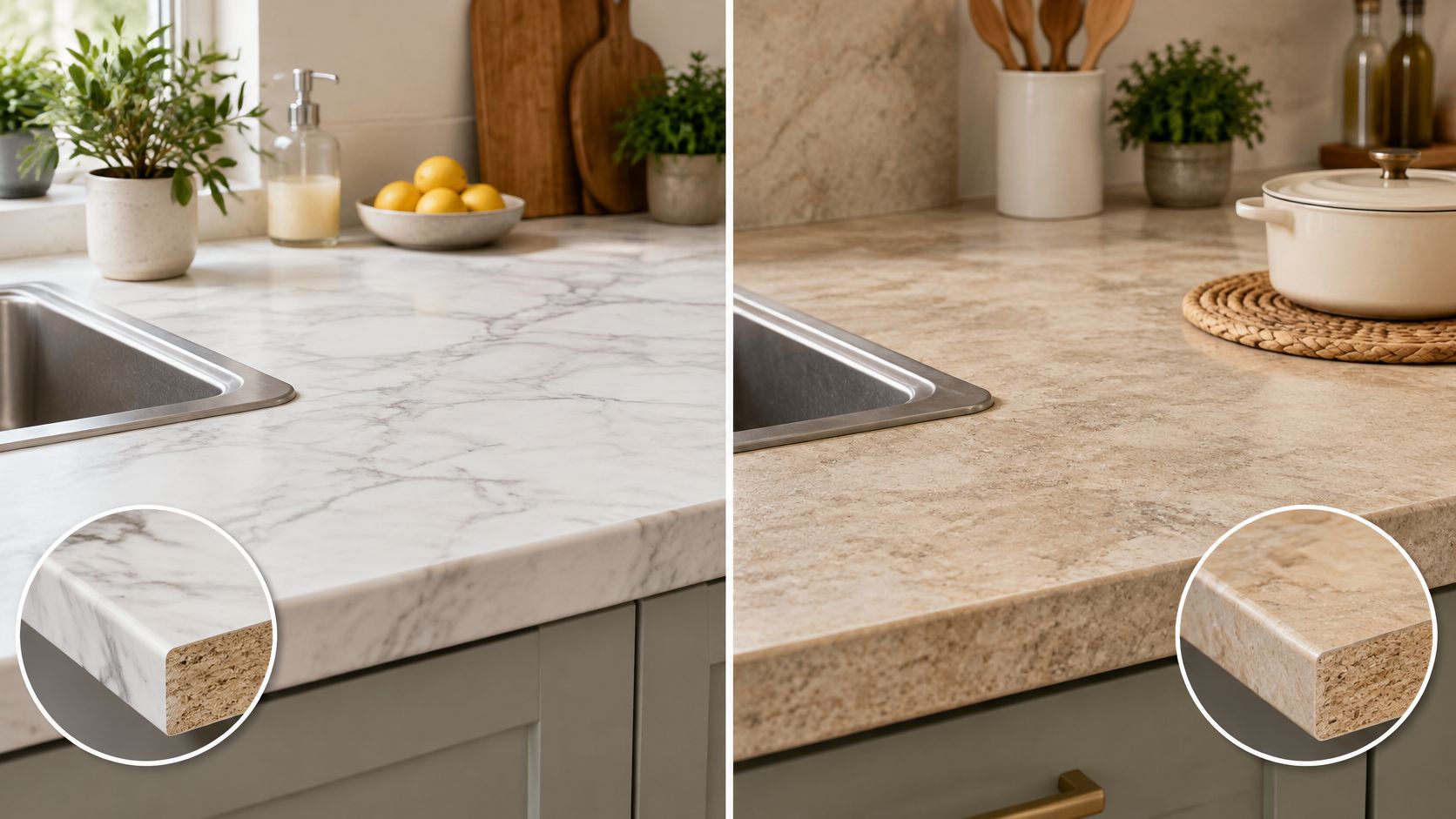
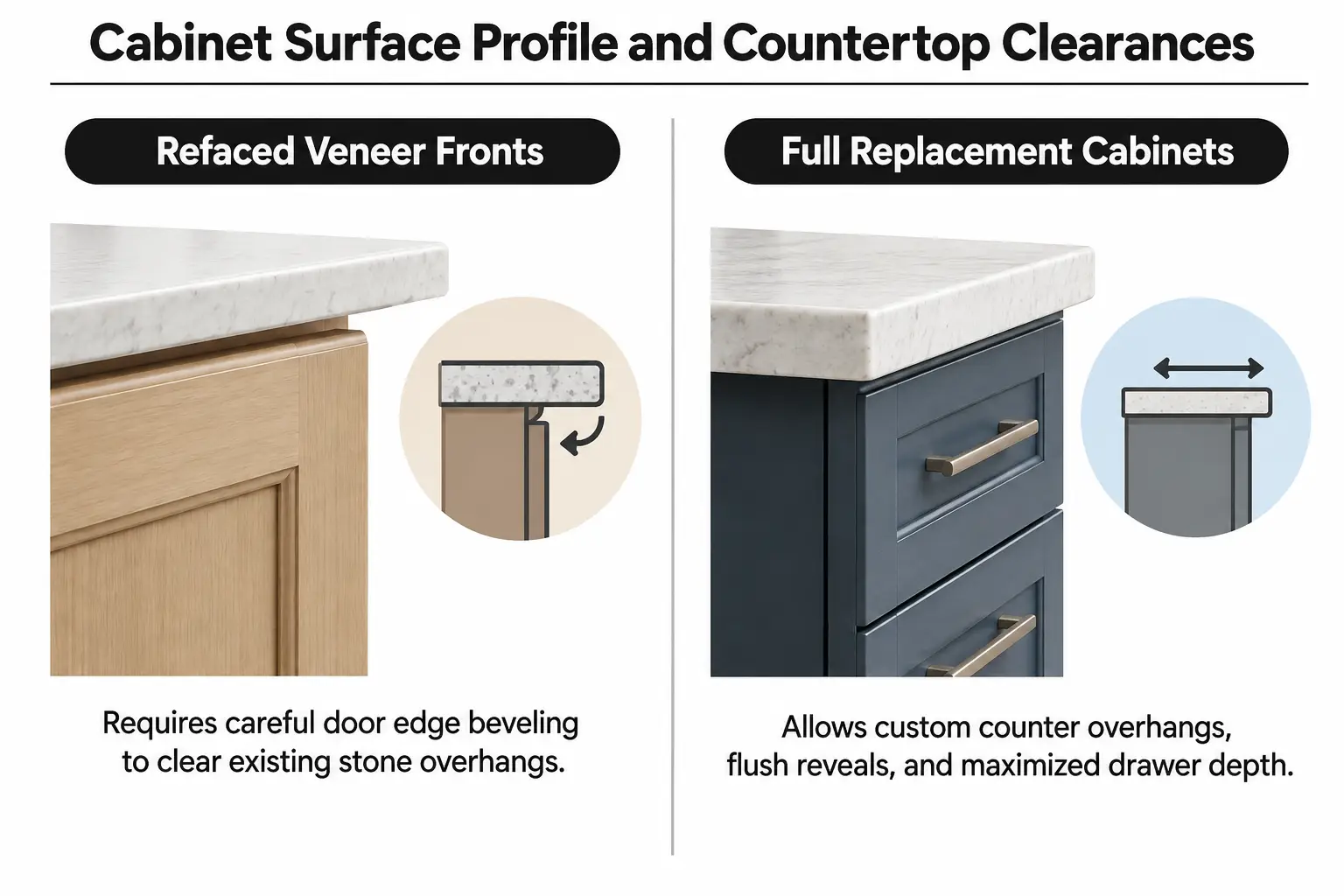
Cabinets support your counters and sit against appliances and floor molding. Existing countertops generally stay put during refacing, which sounds convenient until you check the clearances. A natural stone overhang limits how thick the new door profiles can be. Too much thickness can cause contact with drawer fronts or trim.
| Starting point | What to pair with it | What to sample or test | Intended effect |
|---|---|---|---|
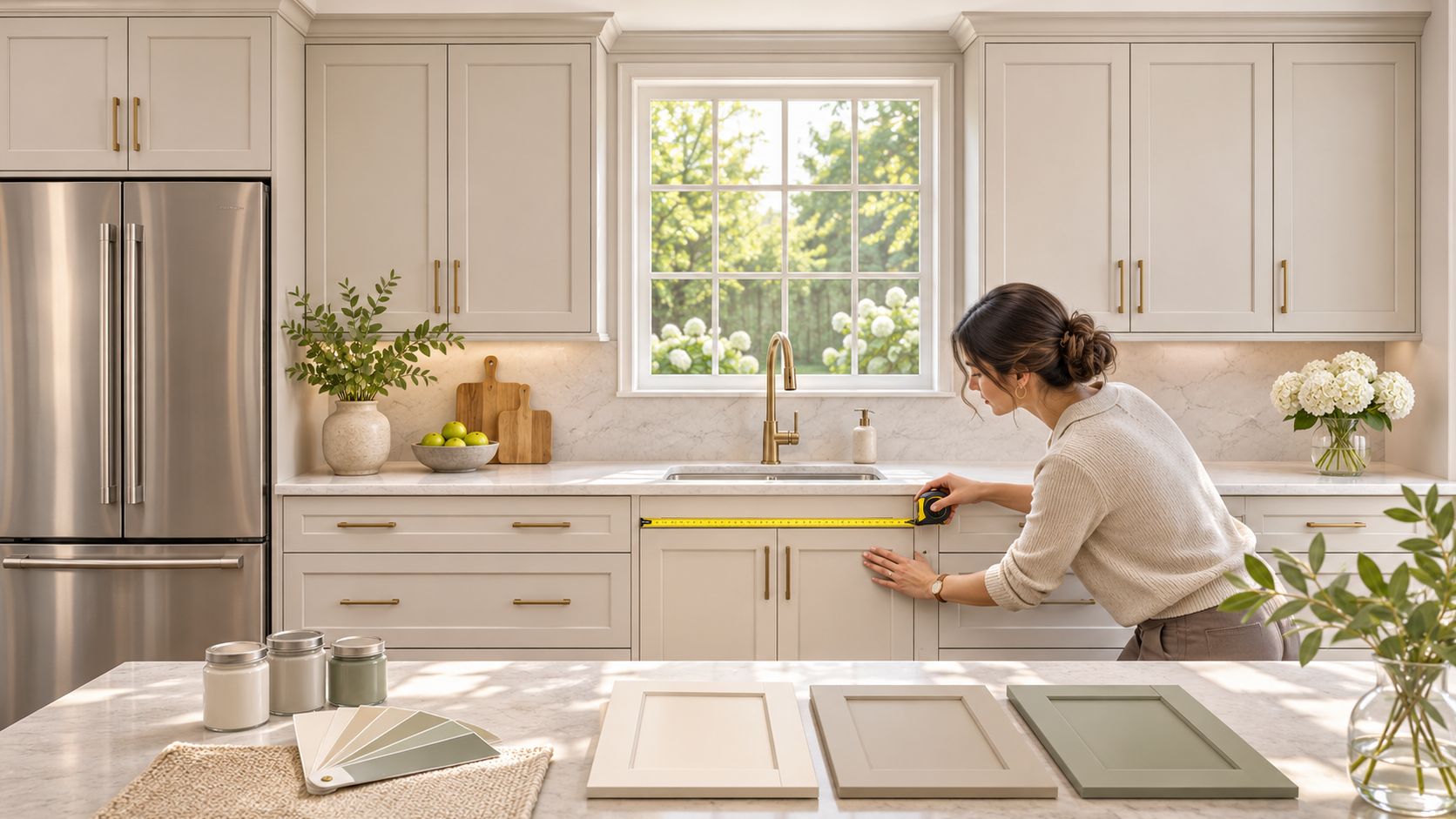
| Existing granite with warm gold veining | Painted maple Shaker doors in creamy neutral tones | Door finish samples against countertop edges in natural midday light | Works with the stone's warmth without clashing with older yellow undertones |
| New quartz countertops planned with the cabinets | Full replacement boxes with flush European frameless profiles | Space between undermount sink basins and the back edge of front cabinet rails | Flush alignment and as much usable drawer width as possible |
| Original hardwood floors with patched thresholds | New cabinets in the same footprint or baseboards cut to fit the floor | Toe-kick depth and floor stain lines hidden under old cabinet edges | Avoids costly subfloor patches and mismatched hardwood boards |
Concealed soft-close hinges need precise cup-shaped holes drilled into the new doors. Different hinge types also need different interior clearances, especially around stiles, the narrow vertical parts of a face frame. Check the Woodwork Institute architectural guidelines for technical hinge standards. Heavy pantry doors need hinges rated to carry their weight.
Five Essential Field Steps Before Signing Any Work Order
Before accepting a proposal, make these measurements and check for damage. Finding a problem now gives you a chance to account for it in the budget.
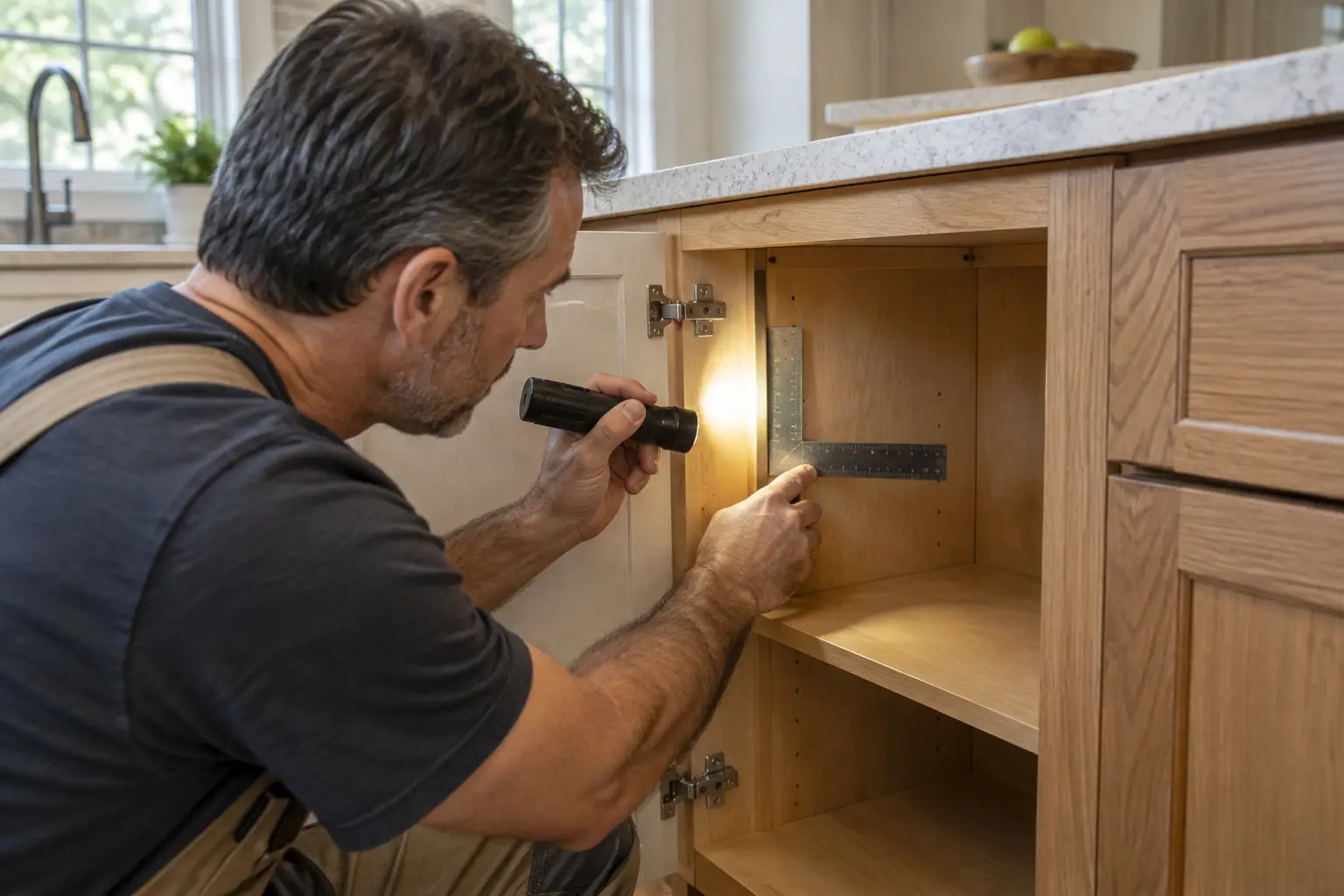
- Inspect box squareness: Measure both diagonals across each cabinet opening, from corner to corner. A difference greater than one-eighth of an inch means the box has shifted out of square. New doors will be harder to align.
- Probe for internal wood rot: Press an awl or flat screwdriver firmly into the plywood beneath the sink and around the dishwasher opening. Soft spots point to hidden leaks and rule that box out for refacing.
- Verify countertop levelness: Place a four-foot carpenter's level across the base cabinets. Counters that sag toward the middle show that the framework below has settled. Left uncorrected, that movement may crack brittle stone tops.
- Examine face frame adhesion: Look for mortise-and-tenon joints, where a shaped wood end fits into a matching slot, rather than simple brad nails. Weak joints will pull apart under the strain of heavier new solid wood doors.
- Audit electrical clearance: Open doors past ninety degrees and check nearby switch plates. Allow room for thicker doors and drawer fronts so they won't hit radiator covers or door casings either.
Installer's rule: Before ordering deeper replacement drawers, confirm at least two inches of clearance between adjoining cabinet faces and the handles on your range and refrigerator.
Homeowners comparing refacing with replacement often skip these checks and find their hinges binding three months after installation. Twenty minutes with a level and flashlight can catch the underlying problems before you pay to cover them.
Allocating Your Renovation Dollars Between Surface Finishes and Storage Mechanics
Put your money into surfaces you touch and hardware that carries weight every day. Cheap hardware fails quickly. Well-made drawer boxes and durable coatings stand up to years of grease and steam from cooking. Use the priorities below to separate useful spending from expensive finishes that add little.
| Budget level | What to prioritise | What to question |
|---|---|---|
| Value tier ($) | Solid maple door frames; factory finishes hardened with a catalyst; soft-close slides mounted beneath drawers | Thermofoil film coverings that peel near ovens during high-heat cleaning cycles |
| Mid-range tier ($$) | Plywood boxes; pantry trays that roll all the way out; concealed hinges adjustable in several directions | Exotic outer veneers when stained oak or painted birch gives you the same look |
| Custom architectural tier ($$$) | Appliance boxes ready for matching panels; solid maple drawers with interlocking dovetail joints; custom decorative crown molding | Luxury door fronts fitted to thirty-year-old builder-grade particleboard boxes |
Add drawer boxes, hardware, side veneers, and installer hours to find the full cost of refacing. Once those items exceed sixty percent of new factory-built cabinet pricing, replacement offers much better value. It also provides better warranty coverage and retains more home equity, according to data from the National Association of Home Builders.
Questions Haddonfield Homeowners Often Ask About Cabinet Options
Does cabinet refacing cost more in older historic homes?
Yes, older homes can cost more to reface because their site-built face frames are rarely straight or square. Installers spend extra hours cutting filler strips to follow uneven walls. They also shim hinge plates, adding thin spacers so the doors hang straight against the plaster.
Can I reface my bathroom cabinets while replacing my kitchen entirely?
Small vanities can be refaced, but buying a complete pre-assembled vanity rarely costs more. On-site refacing comes with minimum trip charges, even for a small job. Replacing the bathroom cabinet is usually faster and more affordable in a compact space.
How long does full cabinet installation take compared to refacing?
Expect three to five consecutive days of on-site carpentry for refacing, usually without disturbing plumbing or wiring. Full removal and installation typically takes two to three weeks on-site. That includes making countertop templates and updating electrical work, along with reconnecting the plumbing.
Will refacing fix sticking drawers or sagging face frames?
New doors and surface coverings won't repair bowed frames or sagging shelves. Those aren't part of refacing. You can, however, add new dovetailed drawer boxes and modern ball-bearing slides to the job if the drawers need work.
Does cabinet refacing hurt resale value compared to brand new cabinets?
Professional refacing won't hurt resale value when the kitchen layout already works well. Buyers in historic South Jersey neighborhoods do notice poorly finished veneer edges, though. Refacing won't recover its value if the kitchen still lacks the storage features and working space buyers expect.
A Practical Next Step for Your Haddonfield Home
Start by looking at what works in your kitchen each day and what needs to change. With our mobile cabinet showroom, you can compare materials in your own kitchen light instead of carrying samples between stores. We bring traditional and transitional door profiles to your driveway, along with contemporary options.
Before signing a contract or buying materials, go through these five checks:
- Box integrity: Check that the sink base and corners are completely dry and show no structural sagging.
- Layout satisfaction: Make sure you're happy with the current positions of the stove, sink, and refrigerator.
- Drawer mechanics: Decide if standard drawers work for you or if you need glides that extend fully.
- Countertop condition: Confirm that the existing counters can stay, or decide if you plan to replace the stone anyway.
- Cost threshold: Keep the refacing bid safely below sixty percent of the price of new cabinets.
Schedule an in-home design session for a cabinet assessment and clear 3D planning based on your Haddonfield home.