
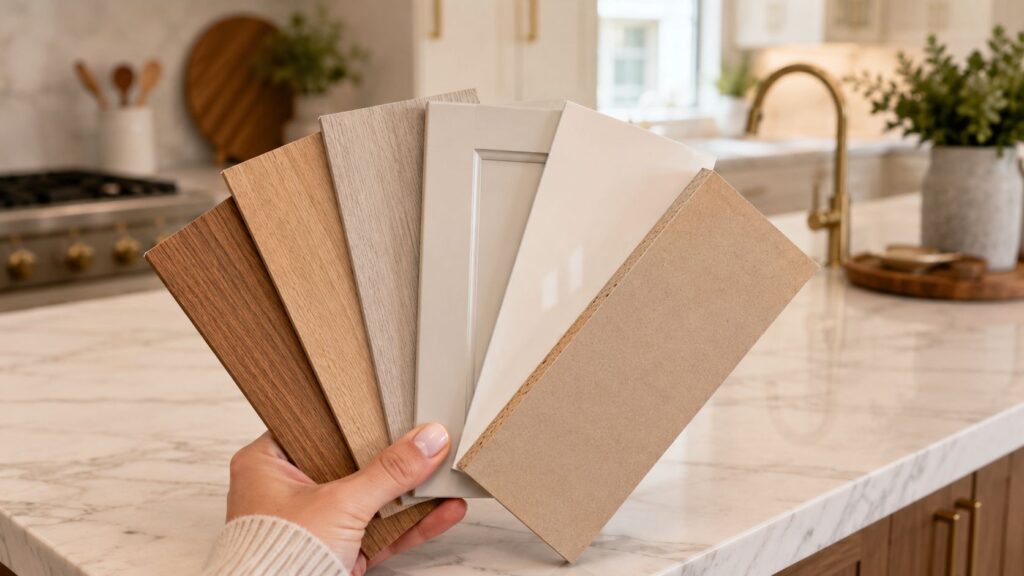
You're probably in the same spot a lot of South Jersey homeowners hit after a few years in the house. The kitchen still works, but the cabinets scream another decade. The oak doors feel heavy and dated, the white finish is chipping near the sink, and every quote for a full remodel looks bigger than the project needs to be.
That's where refacing makes sense. If the cabinet boxes are still solid, you can keep the layout that works and change the parts everyone sees. The result can feel like a full kitchen upgrade without the mess of tearing everything out. That's one reason renovation activity keeps pushing this category forward. The global kitchen cabinet market, which includes refacing materials, was valued at USD 107.86 billion in 2025 and is projected to reach USD 218.23 billion by 2034, with an 8.26% CAGR, according to Fortune Business Insights on the kitchen cabinets market.
In Cherry Hill, Voorhees, Haddonfield, and Medford, I see the same decision over and over. Homeowners don't need a full gut job. They need better cabinet refacing materials, better guidance, and a realistic sense of what will hold up in a busy kitchen. If you're sorting through veneer, laminate, thermofoil, and wood doors, kitchen cabinet refacing services are only as good as the material choices behind them.
Table of Contents
- Your Guide to Cabinet Refacing Materials in South Jersey
- The Core Four Refacing Materials Explained
- Comparing Cabinet Refacing Materials Head-to-Head
- Beyond the Surface Supporting Materials and Finishes
- Choosing Materials for South Jersey Homes and Sustainability
- How to Choose the Perfect Cabinet Refacing Materials
- Bring the Showroom Home with The Cabinet Coach
Your Guide to Cabinet Refacing Materials in South Jersey
A lot of kitchens in South Jersey have good bones and tired faces. The layout still works. The cabinet boxes are usually serviceable. What dates the room is the finish, the door style, and the worn edges around the handles, sink base, and trash pullout.
That's why refacing works so well here. In a Collingswood foursquare, a Moorestown colonial, or a Voorhees kitchen from the early 2000s, the smartest move is often to keep the structure and upgrade the surfaces. You get a major visual change without treating your house like a demolition site.
The decision is more technical than most homeowners think
People often shop cabinet refacing materials like they're choosing paint colors. That's a mistake. Material choice affects how the doors feel, how the exposed faces wear, how easy the kitchen is to clean, and how the finished job handles steam, splashes, and summer humidity.
Practical rule: Pick the material for the kitchen you actually use, not the photo you saved.
If you cook hard, have kids, or run the dishwasher constantly, durability matters more than showroom romance. If your kitchen is more for entertaining and you care most about warmth and character, real wood may be worth the extra upkeep.
South Jersey homes need practical choices
Local homes cover a wide range. You've got classic houses that look right with stained wood grain. You've also got updated homes where flat, easy-clean finishes make more sense. Neither is automatically better.
The right answer usually comes down to three things:
- Cabinet condition: Solid boxes give you more options. Damaged or uneven ones narrow them fast.
- Moisture exposure: Areas around sinks, dishwashers, and coffee stations punish weak material choices.
- Style goal: Some kitchens want authentic grain. Others want a clean, uniform finish that stays easy to live with.
That's the lens I'd use if we were standing in your kitchen talking this through.
The Core Four Refacing Materials Explained
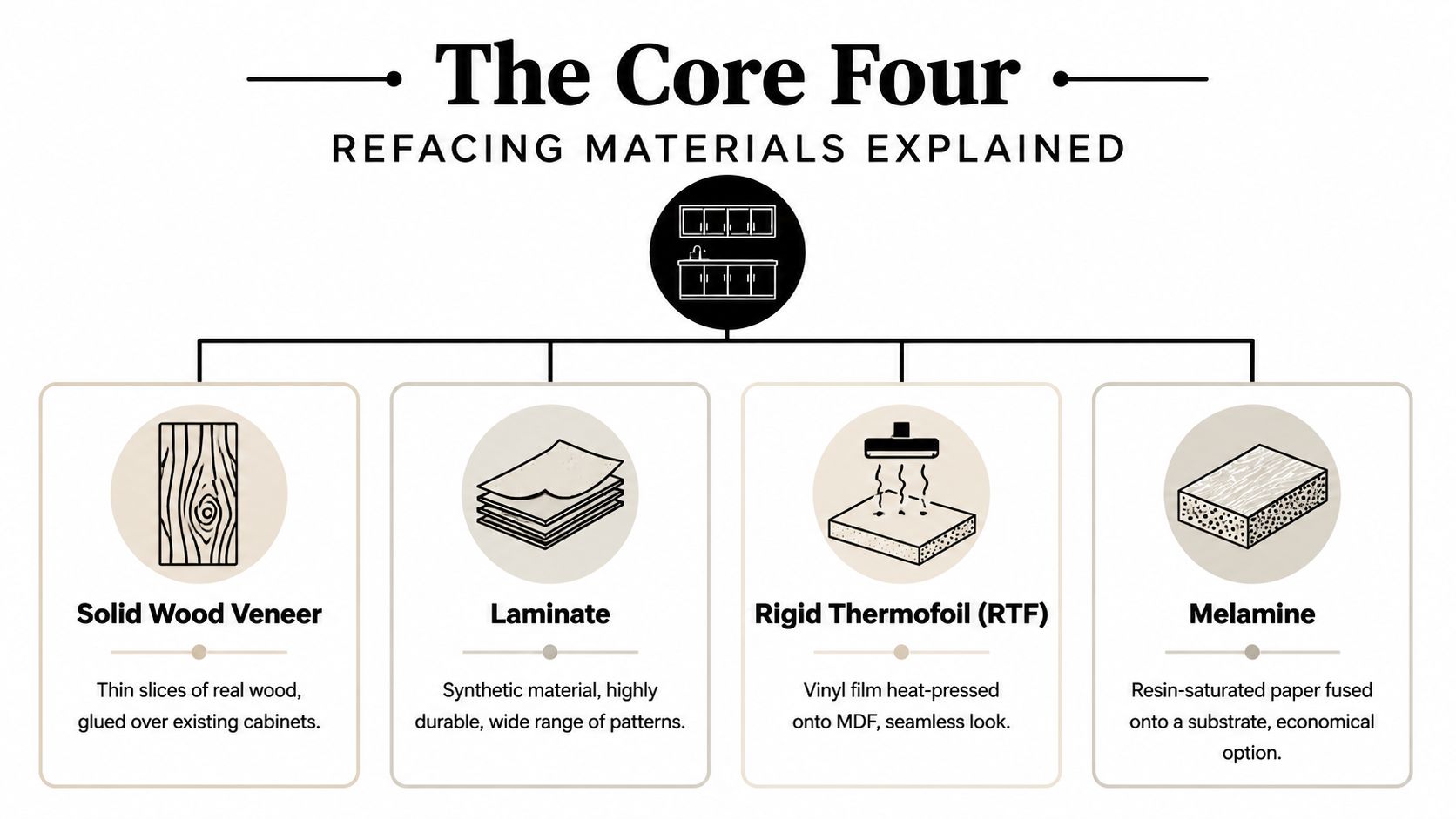
Most cabinet refacing materials fall into four practical categories. Learn these four and you'll cut through most of the marketing fast.
Real Wood Veneers
Wood veneer is a thin layer of real wood applied over a stable surface. It allows for the look of hardwood on the visible face without building an entirely new cabinet box out of solid lumber. It gives you authentic grain, natural variation, and a look that laminates still don't fully duplicate.
That said, veneer needs respect. In standard kitchens, properly finished veneer can maintain integrity for 10 to 15 years, but near sinks and dishwashers failures occur in 30% of cases without adequate moisture barriers, according to this cabinet refacing material review from Remodel with 3C.
Wood veneer is for homeowners who care about a real-wood look and are willing to protect it. If you want timeless and warm, it's a strong option. If you want carefree, keep reading.
Durable Laminates
Laminate is the workhorse. It's a synthetic surface made for wear, cleanup, and moisture resistance. It comes in wood looks, solid colors, textured finishes, and more contemporary styles than many homeowners expect.
Laminates outperform veneer where kitchens take abuse. In benchmark notes, laminate can resist peeling and chipping in high-impact areas with 95% effectiveness, and it offers better moisture resistance than wood veneer, as outlined by Kitchen Cabinet Depot's comparison of refacing materials.
For many busy South Jersey households, laminate is the practical winner. If you want a useful outside perspective on species and wood appearance before deciding between natural and manufactured finishes, this guide to cabinet wood advice for Kent homeowners helps clarify how different wood looks read in a home.
Seamless Thermofoil RTF
RTF stands for rigid thermofoil. It's a vinyl film heat-pressed onto an MDF core, usually for doors and drawer fronts. The big appeal is the uniform surface. No visible grain variation, no stain inconsistency, and no open wood pores to fuss over.
RTF makes sense when you want a smooth painted look without the maintenance habits that real wood can demand. It's especially popular in simple shaker profiles and clean transitional kitchens. The trade-off is feel. Some homeowners love the uniform finish. Others think it looks too manufactured once they see it in person.
If you're weighing engineered door construction against wood options, this breakdown of MDF vs. wood cabinet doors is worth reading before you commit.
Solid Wood Doors and Fronts
Solid wood doors aren't usually the material for wrapping face frames. They're the premium move for the moving parts: doors, drawer fronts, decorative end panels, and trim pieces. If you want the most authentic and substantial feel in your hand, solid wood is still the benchmark.
Solid wood looks best when the rest of the kitchen supports it. In a modest update, premium doors over poor prep can feel like expensive shoes on a weak foundation.
Wood remains the dominant material category in the global kitchen cabinet market. It held 60.15% of global revenue in 2025, which tells you homeowners still strongly prefer wood-based looks and components when budget and style line up. I'll use that fact in the comparison that follows rather than repeat the source here.
Comparing Cabinet Refacing Materials Head-to-Head
You see the difference after six months, not on the sample board. A door that looked great under showroom lights can start showing edge wear, heat damage, or cleaning streaks fast in a busy South Jersey kitchen. That is why I push homeowners to compare refacing materials by real use, not by first impression.
Material Comparison At a Glance
| Material | Cost Range (Approx.) | Typical Lifespan | Durability | Best For |
|---|---|---|---|---|
| Wood veneer | Mid to upper range | Long-lasting with proper sealing and normal kitchen conditions | Good in dry areas, weaker in wet zones | Traditional kitchens, natural grain lovers |
| Laminate | Budget to mid range | Strong long-term option in active kitchens | Very good for moisture and wear | Busy families, rental upgrades, easy-clean kitchens |
| RTF thermofoil | Budget to mid range | Good when properly fabricated and installed | Good for routine use, especially on smooth door styles | Painted-look kitchens, low-maintenance households |
| Solid wood doors/fronts | Upper range | Long-lasting with maintenance | Strong but not carefree | Higher-end projects, classic South Jersey homes |
What Actually Matters in a Real Kitchen
Start with your house, not the brochure.
In older Haddonfield, Collingswood, and Moorestown homes, wood veneer or solid wood doors usually look more believable because they match the age and character of the space. In newer developments around Marlton, Mount Laurel, and Cherry Hill, laminate and RTF often fit the cleaner, simpler cabinet styles better and keep the budget under control.
South Jersey humidity matters too. Summer moisture, cooking steam, and constant wipe-downs punish weak edges and poor prep. Laminate usually handles that abuse best. Veneer gives you a richer, more natural look, but it asks for better habits and a kitchen that does not stay damp around the sink or dishwasher area.
Here is the straight recommendation:
- Choose wood veneer if the grain matters, the kitchen has a more traditional style, and you are willing to protect it from standing moisture.
- Choose laminate if you want the toughest finish for the money. It is the safest pick for busy households, shore rentals, and heavy-use kitchens.
- Choose RTF if you want a smooth painted appearance on a tighter budget and prefer simple door profiles.
- Choose solid wood doors and drawer fronts if you care most about feel, detail, and long-term style, and you are comfortable paying more for it.
Some combinations make more sense than others. One of my favorite value plays is laminate on the fixed surfaces with better-quality doors and drawer fronts where your hands touch the kitchen every day. That gives you durability where the abuse happens and keeps the project from getting overpriced.
The frame matters as much as the finish
A good refacing job starts with cabinet boxes that are flat, stable, and worth saving. If the face frames are out of square, swollen near the sink, or patched poorly over the years, your material choices narrow fast. Veneers and thin skins show flaws. Stiffer products can make those flaws even more obvious.
That is why I always tell homeowners to check the cabinet structure before falling in love with a finish. If you are weighing box materials too, this guide on plywood vs. MDF cabinets will help you figure out what works best under a refacing project.
The right material is the one that fits your kitchen, your house style, and how hard you are on it. In South Jersey, that answer is rarely the same from one neighborhood to the next.
Beyond the Surface Supporting Materials and Finishes
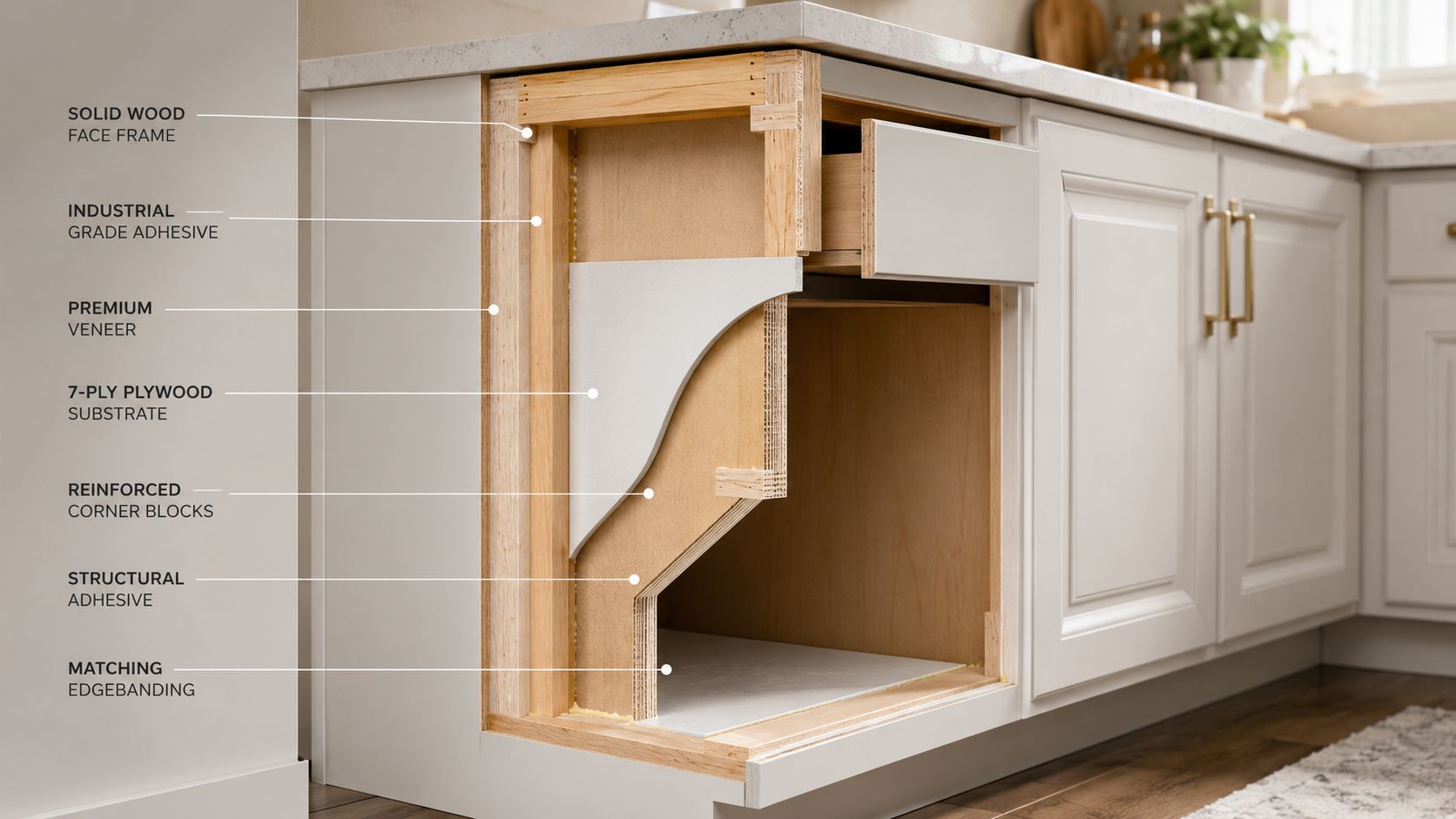
A refacing job lasts or fails on the parts most homeowners never ask about. The decorative layer gets attention. The substrate, edges, glue, and topcoat decide whether the kitchen still looks tight after real use.
The substrate under the finish
The substrate is the base material under the visible surface. If the face frame isn't flat, clean, and stable, even a good veneer or laminate can end up looking cheap. That's why pros inspect cabinet faces before talking color.
MDF gives a smooth, uniform base. Plywood can offer a different balance of rigidity and screw-holding depending on the application. Neither is magically better in all situations. The right choice depends on the cabinet condition, the finish system, and whether the project uses panels, skins, or new door components.
Edge banding and why it matters
Edges take abuse. Pots bump them. Rings scrape them. Cleaning cloths hit them every day. Cheap edge treatment is one of the fastest ways to make a refacing job look tired early.
Good edge banding does two jobs. It hides the raw core and protects the vulnerable edge from chipping and moisture intrusion. When it's color-matched well and applied cleanly, the cabinet looks factory-finished instead of patched together.
A nice door won't save a sloppy edge. People touch the edges more than they notice the panel field.
Adhesives and topcoats do the heavy lifting
The glue matters more than homeowners think. Laminates and veneers need the right adhesive, proper coverage, firm pressure, and accurate alignment. Miss any of those and the finish can bubble, lift, or telegraph imperfections underneath.
Finishes matter too, especially with real wood surfaces. Around sink walls, dishwasher end panels, and coffee spots, the topcoat is the first line of defense. If you're thinking about changing color rather than replacing every visible component, this guide on painting and staining cabinets helps frame where finishing fits into the bigger decision.
This quick visual gives a useful overview of cabinet construction details that affect how a refacing system performs over time.
Choosing Materials for South Jersey Homes and Sustainability
You pick a cabinet finish in January, love it under showroom lights, then July hits in South Jersey. The dishwasher is running, the back door is open, pasta water is boiling, and the room turns humid fast. That is when material choice stops being about samples and starts being about performance.
What South Jersey weather does to cabinets
Our local mix of shore humidity, summer heat, and everyday kitchen moisture exposes weak refacing jobs quickly. I pay the most attention to sink bases, dishwasher panels, and cabinet runs near exterior doors because those spots take the biggest swings in heat and moisture.
For those areas, laminate is usually the safest bet. A well-made RTF door can also work well if the product quality is solid and the installation is clean. Both are easier to live with than real wood in busy family kitchens where people want easy cleanup and fewer maintenance headaches.
Wood veneer fits a different homeowner. It looks better in the right house, especially in older South Jersey colonials, capes, and ranch homes where a painted plastic-looking finish would feel out of place. But veneer needs better moisture control, better finishing, and more realistic expectations. If you want stained wood character, choose it. If you want the lowest-fuss kitchen possible, skip it.
Style matters too. Many South Jersey homes are not ultra-modern new builds. They have a little age, a little trim, and a layout that benefits from warmer, more forgiving finishes. In those kitchens, matte laminates, textured thermally fused surfaces, and wood-look veneers usually age better visually than high-gloss options that show every fingerprint and reflection.
Smarter material choices for greener projects
The most responsible cabinet update is usually the one that keeps good cabinet boxes in place. If the structure is sound, refacing cuts waste, reduces demo, and avoids paying for a full replacement you may not need.
Then look at what you are adding back into the kitchen. Ask where the wood came from. Ask whether low-VOC adhesives and finishes are available. Ask how long the finish is expected to hold up in a real kitchen, not just in a brochure. Durability is part of sustainability. A finish that fails early creates more waste than a material with a cleaner label that lasts.
If you are trying to picture different colors, grain patterns, or door styles before you commit, AI tools for interior design visualization can help you narrow the field without ordering a stack of samples you will never use.
Use these questions to keep the decision grounded:
- Will this material handle South Jersey humidity well?
- Does it fit the style of your house, not just current trends?
- Can it be cleaned easily around grease, steam, and sink splash zones?
- Will it still look good in ten years, or just on install day?
- Can you keep the existing boxes and replace only what needs replacing?
The greenest kitchen update usually preserves solid cabinet boxes, chooses finishes that last, and avoids trendy materials that fail early.
How to Choose the Perfect Cabinet Refacing Materials
Most homeowners start with color. Pros start with condition. That's the difference between a kitchen that stays sharp and one that starts lifting at the corners.
Start with the cabinet boxes
Here's the hard truth. Some cabinet boxes should not be refaced with certain materials. If the frames are greasy, chipped, swollen, out of flat, or previously patched poorly, your material options shrink fast.
A 2025 industry report found that homeowners who skipped surface prep before applying certain veneers had a 65% higher chance of delamination within 12 months, according to this review of common cabinet refacing mistakes. That's why prep is not cosmetic. It's structural.
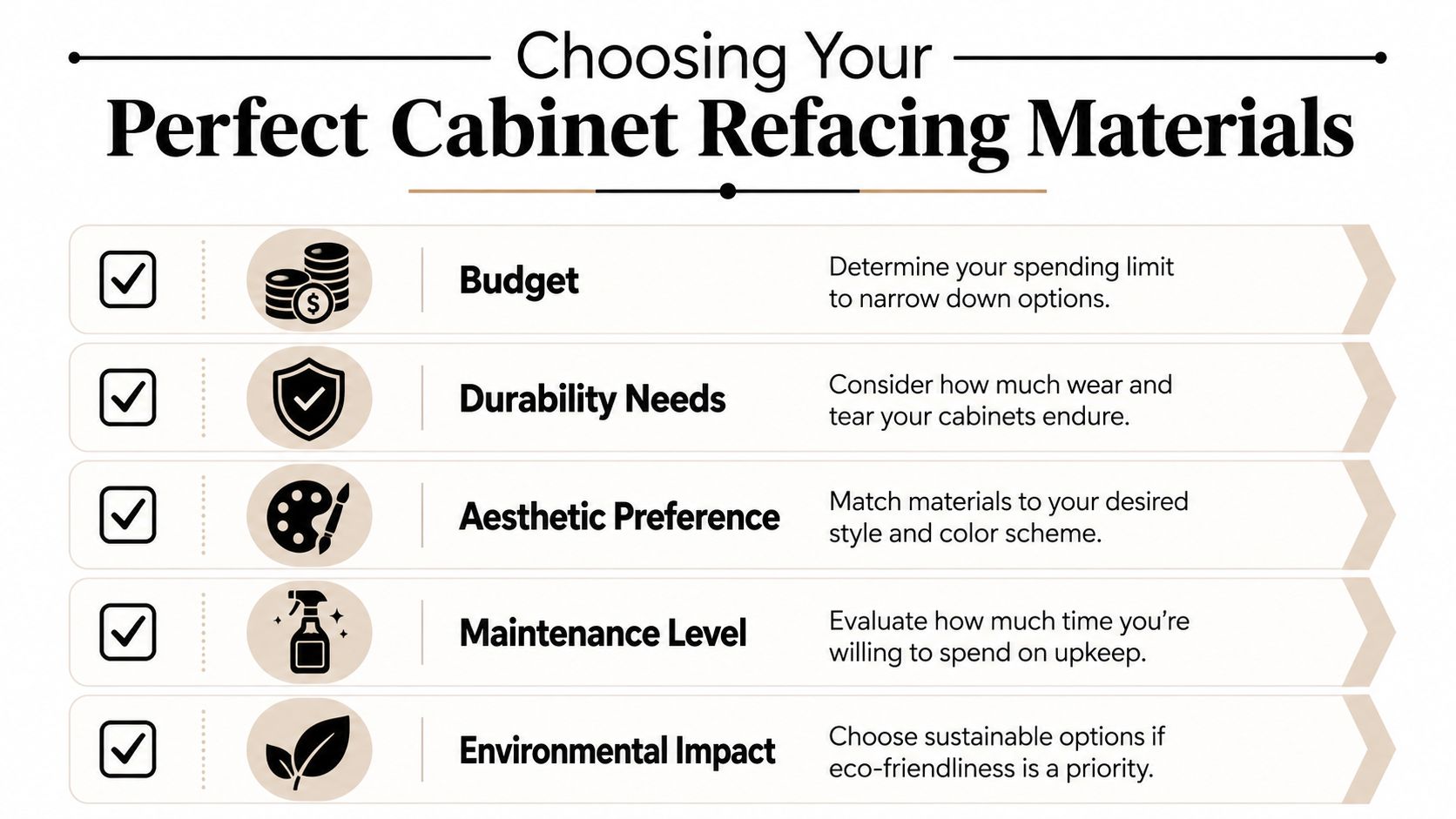
Before choosing a finish, check these basics:
- Surface flatness: Rigid materials show flaws fast.
- Moisture history: Swollen sink bases and dishwasher sides need special scrutiny.
- Old coatings: Wax, grease, and failing paint interfere with adhesion.
- Door alignment: If the boxes are out of square, premium new fronts can still look off.
Match the material to how you live
A retired couple who cooks lightly can choose for appearance first. A family with three kids, sports bottles, and constant traffic should choose for wear first. That's not glamorous advice, but it saves regret.
Physical samples matter too. A door style that looks perfect online can feel too cold, too shiny, or too busy once it's sitting under your kitchen lighting. If you want help visualizing finishes before ordering samples, these AI tools for interior design visualization can help you narrow the field without guessing.
Buy the material that fits your habits. Then pick the prettiest version of that material.
Bring the Showroom Home with The Cabinet Coach
Good cabinet refacing materials solve only half the problem. The other half is choosing them in the right order, with realistic timing, and against the actual lighting, flooring, and wall color in your house.
Good material choices need good coordination
A lot of homeowners hear that refacing is quick and assume the whole job starts tomorrow and wraps up by the weekend. That's not how real projects work. Material lead times, custom door ordering, finish matching, and scheduling all affect the timeline.
A 2026 survey found that 72% of homeowners underestimated total project duration because they didn't account for material lead times, according to Kitchen Magic's article on refacing timelines and assumptions. That's why project coordination matters just as much as design taste.
If you're curious how digital planning is changing product selection before anything gets ordered, Explore MerchLoom's AI workflow for a look at how visualization tools can reduce indecision early in the process.
Why seeing samples at home changes the decision
A showroom sample under retail lighting is useful. Seeing that same finish in your own kitchen is better. South Jersey homes vary too much for generic advice to carry the whole load. A warm white can turn yellow in one room and look crisp in another. A wood grain that feels rich in Medford may look too heavy in a smaller Cherry Hill kitchen.
That's why the mobile showroom model makes so much sense for this kind of project. You can compare veneer, laminate, thermofoil, and wood options where they'll live. If you want to understand that approach better, this piece on why a mobile cabinet showroom is the future of kitchen remodeling in South Jersey lays out the logic.

The right choice usually isn't the fanciest material or the cheapest one. It's the material that fits your cabinet condition, your kitchen habits, your house style, and your patience for maintenance. Get that combination right and refacing feels smart, not like a compromise.
If you want expert help sorting through cabinet refacing materials without bouncing between showrooms, The Cabinet Coach brings the selection process to your home. You can compare real samples, get guidance that fits South Jersey homes, and make decisions with your actual kitchen, budget, and timeline in view.