
To organize medicine cabinet shelves, measure the space first, then group daily supplies where you can reach them easily. Leave room around bottles so grabbing dental floss doesn't knock something over. A layout that fits your daily supplies saves time and keeps grooming clutter off your bathroom counter.
Too often, a shallow cabinet becomes a junk drawer with a mirror. Expired tubes and bulky bottles get pushed onto fixed shelves that don't have enough room for them.
In most homes around Voorhees, NJ, builder-grade mirrored cabinets offer barely three to four inches of usable depth. That leaves little room for wasted space. Group shelves by use and measure their heights before deciding what stays near the sink and what moves to linen storage.
Before buying plastic bins or moving glass shelves, check how much room you actually have inside the cabinet.
What's Inside This Guide
- Why Medicine Cabinet Organization Requires a Structural Plan
- Five-Step Layout Strategy for Shallow Wall Storage
- Matching Your Storage Style to Your Morning Routine
- Hardware Clearances and Shelf Depths That Prevent Morning Chaos
- Project Steps, Real Timelines, and Storage Investment Drivers
- Straight Answers on Bathroom Wall Storage
- Planning Better Built-In Storage with The Cabinet Coach
Why Medicine Cabinet Organization Requires a Structural Plan
Organizers that don't fit can jam doors and scratch mirror backs. Most stock bathroom cabinets have fixed shelf clips or very little room to adjust them. You'll often find unused space above short pill bottles while taller face washes have to lie on their sides.
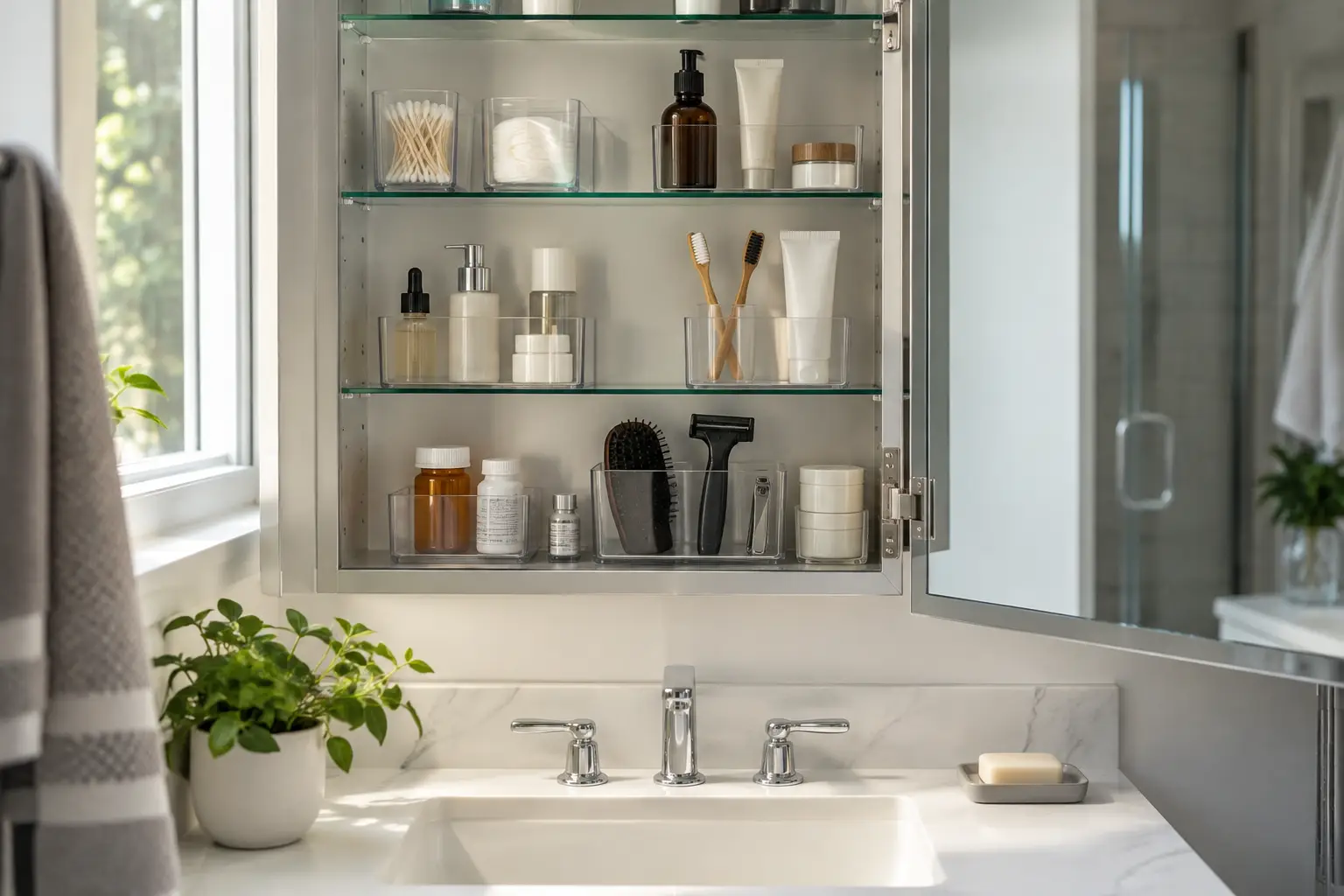
We plan shelf heights around both bottle size and how often you use each product. Daily items belong at eye level, with weekly supplies farther out of the way.
Preventing Morning Countertop Spillover
Poor shelf spacing pushes everyday items onto the counter. Toothbrushes, razor docks, and serums end up around the faucet because getting them out of the cabinet means knocking other things over. Giving each tube and dropper enough room behind the mirror keeps those supplies where they belong.
Protecting Sensitive Products from Moisture and Heat
Bathroom heat and humidity rise sharply after showers. Prescriptions stored beside a steamy shower can lose their effectiveness faster. CDC guidance on safe medication storage calls for cool, dry spaces away from children.
Your morning lotions can stay near the sink while oral prescriptions may need a hallway linen cabinet with a steadier temperature.
Practical check: Measure your tallest daily container before moving shelf brackets. Leave one-half inch above that bottle when setting the shelf height to help prevent accidental door jams.
Five-Step Layout Strategy for Shallow Wall Storage
Sorting your upper shelves can take less than an hour when you work in order. At The Cabinet Coach, we recommend starting with an empty cabinet rather than moving bottles around inside it. This is the order we suggest to clients who want their bathroom counters clear:
Video: Organizing a medicine cabinet with Melissa Huenergardt of My Intentional Life
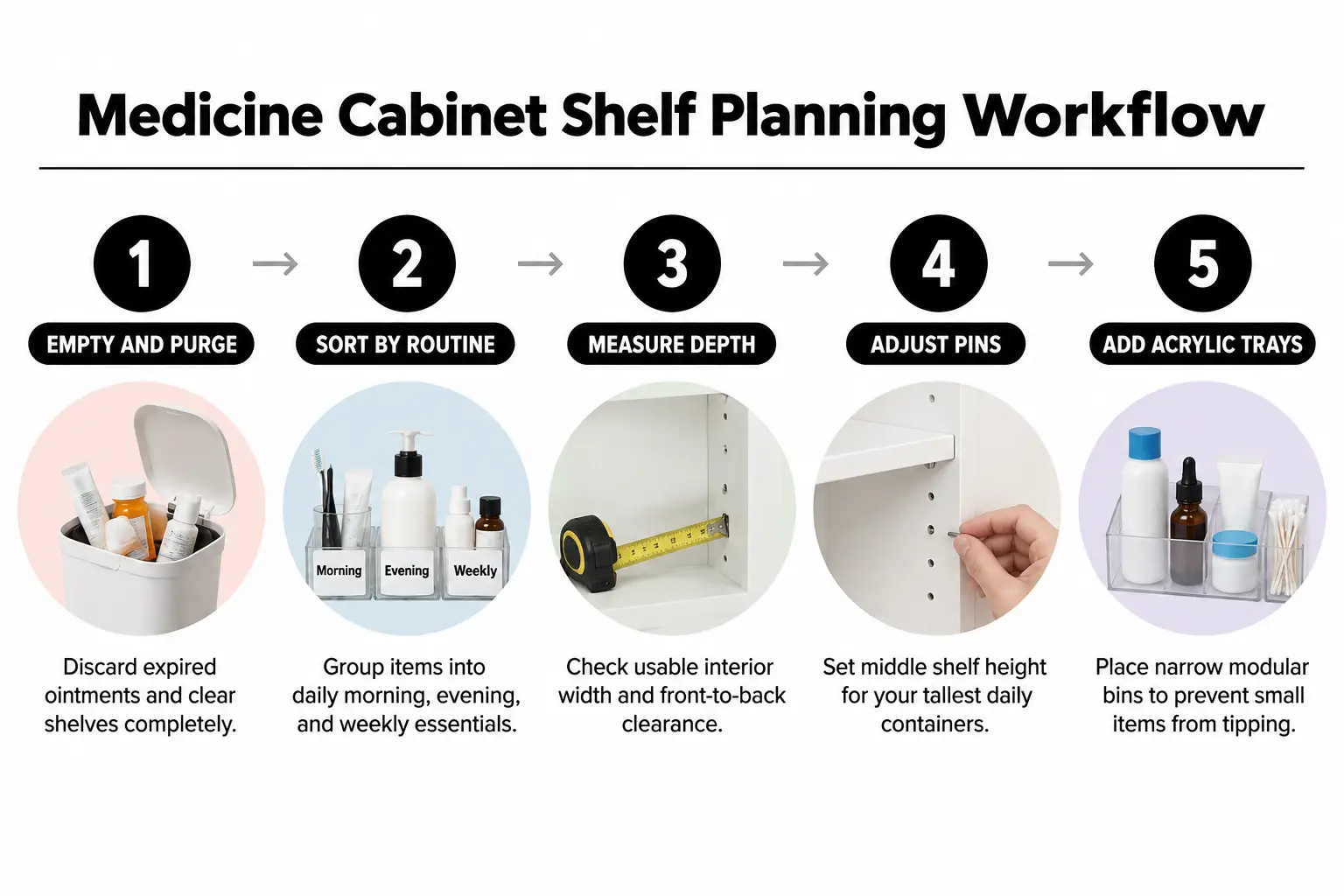
- Empty the cabinet: Set everything on a dry towel. Dispose of expired ointments following FDA medicine disposal guidance so old products don't take up space you need daily.
- Group supplies by use: Separate morning products from evening products, occasional first aid supplies, and weekly grooming tools. Give the things you use most the easiest spots to reach.
- Measure inside the cabinet: Record the inside width and usable front-to-back depth, along with the total height. These measurements tell you which organizers will actually fit.
- Move adjustable shelf pins: Put morning supplies on the center shelf at natural eye level. Reserve the upper shelf for monthly use and the bottom shelf for heavier items.
- Add non-slip acrylic containers: Use narrow trays or magnetic strips on interior metal panels. They keep small droppers upright and hold tools such as tweezers and nail clippers in place.
Choosing Between Recessed and Surface-Mounted Depths
During a bathroom update, the space inside your wall helps determine how much storage you can add. Surface-mounted cabinets project into your mirror sightline and offer about four inches of depth. Recessed cabinets fit between two-by-four wall studs, providing deeper storage without crowding the faucet.
Homeowners planning a full bathroom upgrade often need someone to design cabinets and take measurements at home, including bathroom cabinetry. Checking for plumbing vent pipes inside the wall early helps avoid a stopped installation later.
Matching Your Storage Style to Your Morning Routine
A couple sharing one sink needs a different shelf arrangement from someone setting up a guest powder room. Family bathrooms need their own plan, especially with small children reaching for bandages.
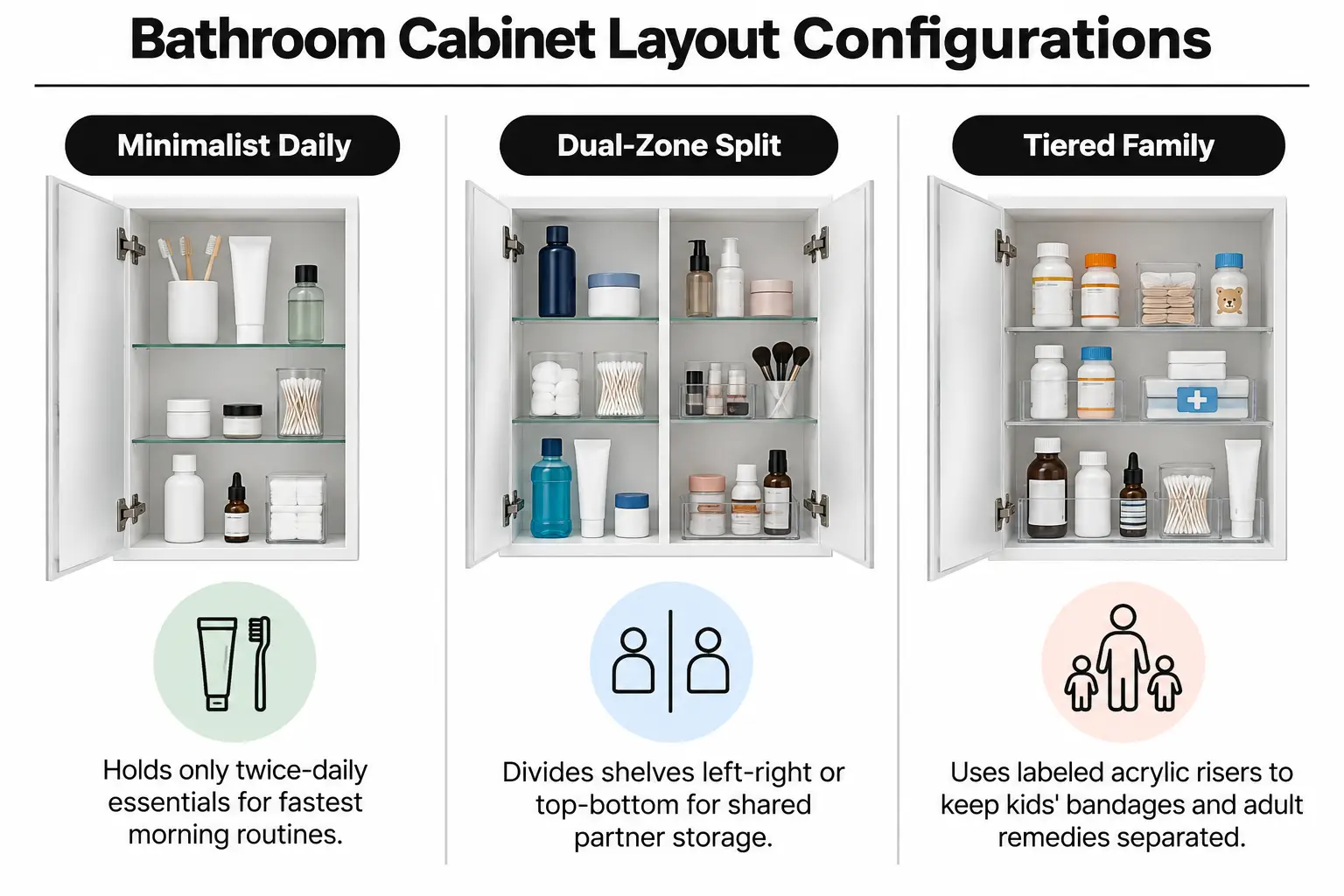
The Strict Minimalist Layout
Keep only twice-daily essentials here: toothbrush, toothpaste, facial cleanser, daily moisturizer, and deodorant. First aid supplies and spare products go in vanity drawers or linen closets, along with seasonal treatments. With those extras out of the cabinet, you won't have to move them aside to reach what you need before work.
The Dual-Zone Split Layout
Shared bathrooms work better when each person has their own shelf space. Divide the cabinet left to right, or give one person the upper shelves and the other the lower shelves. With two mirrored doors, assigning one door per person keeps personal items separate and helps prevent knocked-over bottles.
The Health and First-Aid Staging Approach
For a cabinet that must hold family supplies, use labeled acrylic risers and narrow clear bins. Group pain relievers, fever reducers, thermometer covers, and adhesive bandages together. Keep child-safety caps facing forward, with oral medications on the highest shelf out of toddlers' reach.
| Storage Approach | Best Suited For | Things to Watch Out For |
|---|---|---|
| Daily essentials only | Busy professionals who want less clutter during the morning rush | Spare supplies need a separate storage spot elsewhere in the home |
| Separate space for each person | Couples sharing a pedestal sink or narrow vanity mirror | Both sides need shelf heights that fit each person's products |
| Tiered first aid and family supplies | Main family bathrooms used by children and adults | Can get crowded quickly; check for expired products twice a year |
Hardware Clearances and Shelf Depths That Prevent Morning Chaos
Hardware matters in an existing cabinet just as much as it does in a new one. Hinges that don't line up properly can catch containers as the mirror opens. Shelves set too close to the door frame cause the same trouble, even with everything neatly arranged.
Hinges and Door Swing Clearances
Check how far the mirror opens before it hits a wall or light fixture. European-style concealed hinges, hidden inside the cabinet, take up roughly half an inch on the hinge side. During kitchen and bath cabinet design, we leave room around hinge arms so they don't chip glass shelves or crack plastic organizers.
Vertical Spacing for Common Grooming Containers
Common bathroom products tend to fall within these height ranges. Use them to plan shelf positions, then check your own containers so taller bottles don't have to lie sideways:
- Electric toothbrush handles with bases: Allow 9.5 to 10.5 inches of vertical room.
- Standard prescription bottles: Allow 3.5 to 4.5 inches of space.
- Shaving cream and aerosol cans: Leave 7.0 to 8.0 inches between shelves.
- Dropper bottles and eye serums: Usually fit within 3.0 to 4.0 inches of shelf space.
Installer's rule: Check for soft-close dampers, the hinge parts that slow the door before it shuts. A slamming mirror rattles glass shelves and can tip tall, narrow bottles.
Storage changes sometimes lead to matching finishes and hardware throughout the bathroom or kitchen. Our guide to choosing cabinet hardware covers coordinating pulls. For a closer look at door profiles, read our guide to choosing kitchen cabinets.
Project Steps, Real Timelines, and Storage Investment Drivers
Better bathroom storage may take an afternoon of sorting, or it may mean replacing a builder-grade cabinet with custom recessed cabinetry. The work involved makes a big difference to cost. Use the steps below to decide what you can handle yourself and where a designer or installer should help.
| Project Phase | What Happens | Who Handles It | Typical Timing |
|---|---|---|---|
| Inventory and clear-out | Empty the cabinet, dispose of expired medicine, and group daily tools | Homeowner | 1 to 2 hours |
| Fit organizers | Measure the inside depth and fit narrow acrylic caddies | Homeowner | 1 afternoon |
| Assess the cabinet space | Check wall framing and outlet locations, plus room around plumbing pipes | Cabinet design specialist | 1 hour consultation |
| Design custom built-ins | Draw recessed or mirrored cabinet layouts in 3D | Professional designer | 3 to 5 business days |
| Install the cabinet | Mount and level the cabinet, fit trim, and align doors | Licensed installer | Half to full day |
Bottles still sitting around the sink after a clear-out may point to a larger problem. The vanity layout might not offer enough drawer storage for the things you use.
Planning storage in other rooms follows some of the same principles. See our guide to organizing deep kitchen cabinets, or read about cabinet replacement costs if your older cabinets are nearing the end of their useful life.
Larger updates also give you a chance to coordinate colors between adjoining bedrooms and main bathrooms. Our guide to choosing cabinet colors explains how light affects paint and stain. The tile and fixture comparison can help you match mirror frames with wall finishes.
Straight Answers on Bathroom Wall Storage
How do you organize deep medicine cabinet shelves without losing items in the back?
Choose narrow, clear acrylic pull-out bins with small handles along the front edge. Single-file rows keep little cosmetic jars from disappearing behind other products on deep glass shelves. Shallow tiered risers also help: they lift rear bottles enough for you to see their labels over the items in front.
What should you not store in a bathroom medicine cabinet?
Keep daily oral medications and prescription pills out of cabinets exposed to hot shower steam. Heat and humidity can break down tablets and capsules early. A dry bedroom nightstand or linen closet is a better spot for them, leaving the bathroom cabinet for topical lotions, dental supplies, and grooming tools.
How can I organize electric toothbrushes inside my medicine cabinet?
Look for an internal electrical knockout, a removable wiring opening, or a built-in GFI outlet, which protects against ground faults. These allow for concealed charger connections. Without an outlet, a cord clip on the side frame can keep cords tidy. Leave at least ten inches above the lower shelf so brush handles fit without bent bristles.
How do you keep items from tumbling out when opening mirrored doors?
Line glass shelves with thin, clear silicone grip mats with a ribbed surface. They help stop smooth plastic and glass bottles from sliding forward as the door opens. Small magnetic strips on metal sidewalls or the back panel can hold tweezers, nail files, and bobby pins off the shelves.
Can I replace my surface-mount cabinet with a recessed one?
Yes, as long as essential wall framing, main plumbing vents, or complicated wiring aren't in the way. An installer can check building plans or make a small inspection opening to confirm there's room between studs. With a clear wall cavity, the recessed cabinet provides deep storage flush with the tile or drywall.
Planning Better Built-In Storage with The Cabinet Coach
Repeated sorting won't fix cabinetry that doesn't fit your routine. Counters that stay crowded after you've rearranged the shelves may need a different storage layout.
We bring our mobile cabinet studio to your driveway in Voorhees, NJ. You can compare real door styles and hardware at home, alongside interior storage options for the rooms where they'll be used.
Our cabinet design team measures your space and checks for plumbing or framing obstacles. You'll review a clear 3D layout before anything is ordered. To plan your bathroom or kitchen storage, contact our local team and book an in-home design consultation.