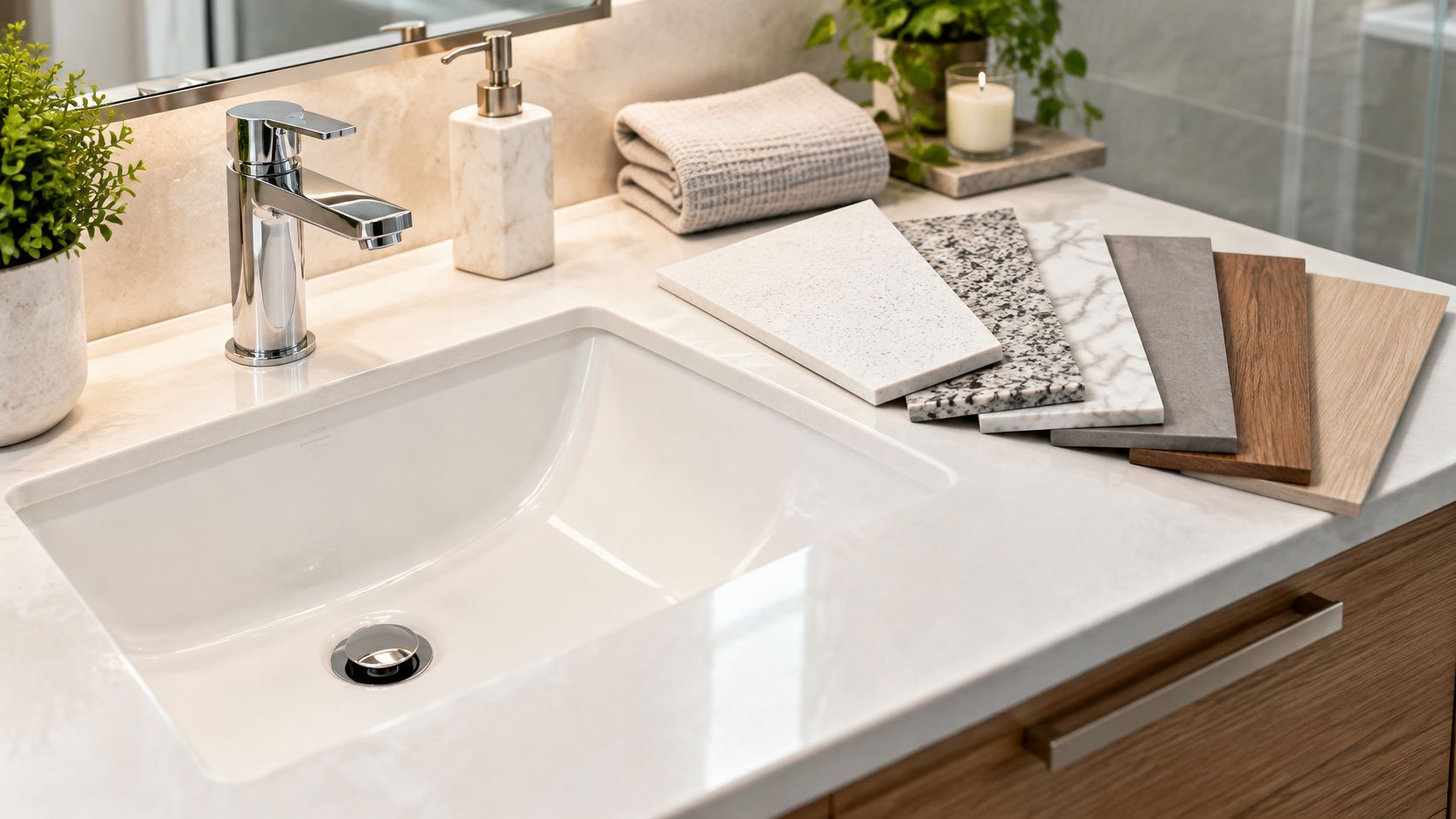
You're choosing a vanity top, and the samples all look good beside the cabinet door. Then you think about what lands on that surface: a hot straightener, nail-polish remover, hair dye, toothpaste and water left around the faucet. The right choice isn't the prettiest slab or the lowest quote. It's the material whose weak points fit the way your household uses the bathroom.
Comparing bathroom vanity countertop materials means weighing installed cost against damage risk, cleaning habits and repair options. A cheaper top can work well in a powder room, while an expensive surface can disappoint if you treat stain resistance as permission to use any cleaner.
Table of Contents
- Bathroom Vanity Countertop Materials at a Glance
- How Each Material Handles Heat and Harsh Products
- Granite and Marble as Natural Stone Options
- Porcelain and Sintered Stone for Splash-Heavy Vanities
- Silica Dust and Fabrication Safety Questions
- Lifetime Environmental Impact of Vanity Tops
- Matching Your Vanity Top to Bathroom Type, Budget and Upkeep
Bathroom Vanity Countertop Materials at a Glance
| Material | Water and stain resistance | Heat tolerance | Routine care |
|---|---|---|---|
| Quartz (engineered) | Very high; nonporous, but not stain-proof | Protect from direct styling-tool heat | Mild soap and water; avoid harsh solvents |
| Granite | High with an appropriate sealer | Good; protect sealers and repaired areas | Mild stone cleaner; reseal when needed |
| Marble | Susceptible to staining and acid etching | Stone tolerates heat better than its surface treatments | pH-neutral cleaner; monitor sealing |
| Porcelain or sintered stone | Very high with documented low absorption | Strong heat tolerance; protect vulnerable edges | Mild cleaner; follow slab-specific care |
| Solid surface (acrylic or polyester) | High; well-made joints simplify cleaning | Can scorch or deform | Nonabrasive cleaning; professional refinishing for deeper damage |
| Cultured marble | Protective gel coat resists moisture; joints need attention | Low; hot tools can damage the finish | Soft cloth and nonabrasive cleaner |
| Laminate | Face resists splashes; exposed substrate can swell | Low; direct heat can blister it | Wipe dry, especially around seams |
| Cast concrete | Sealer controls stain resistance | Concrete tolerates heat; coatings may not | Gentle cleaner; renew the specified sealer |
| Wood or butcher block | Finish-dependent; vulnerable around penetrations | Protect from direct heat | Maintain its oil or coating system; dry promptly |
| Ceramic tile | Glazed faces resist water; grout and joints need attention | Good at the tile face | Clean grout; maintain sealant and applicable grout sealer |
These are performance comparisons, not installed-price quotes. Reliable regional installed-cost ranges aren't available here, so attaching dollar figures would suggest precision you shouldn't use for budgeting. Use the countertop cost-per-square-foot guide to understand pricing components, then compare written quotes for the same scope.
Compare the whole installation
A quote should identify the material, finished dimensions, edge profile, sink openings, faucet drilling, backsplash, delivery and installation. Ask whether removal, disposal, plumbing reconnection and cabinet modifications are included. An attractive slab price doesn't necessarily produce an attractive finished bill.
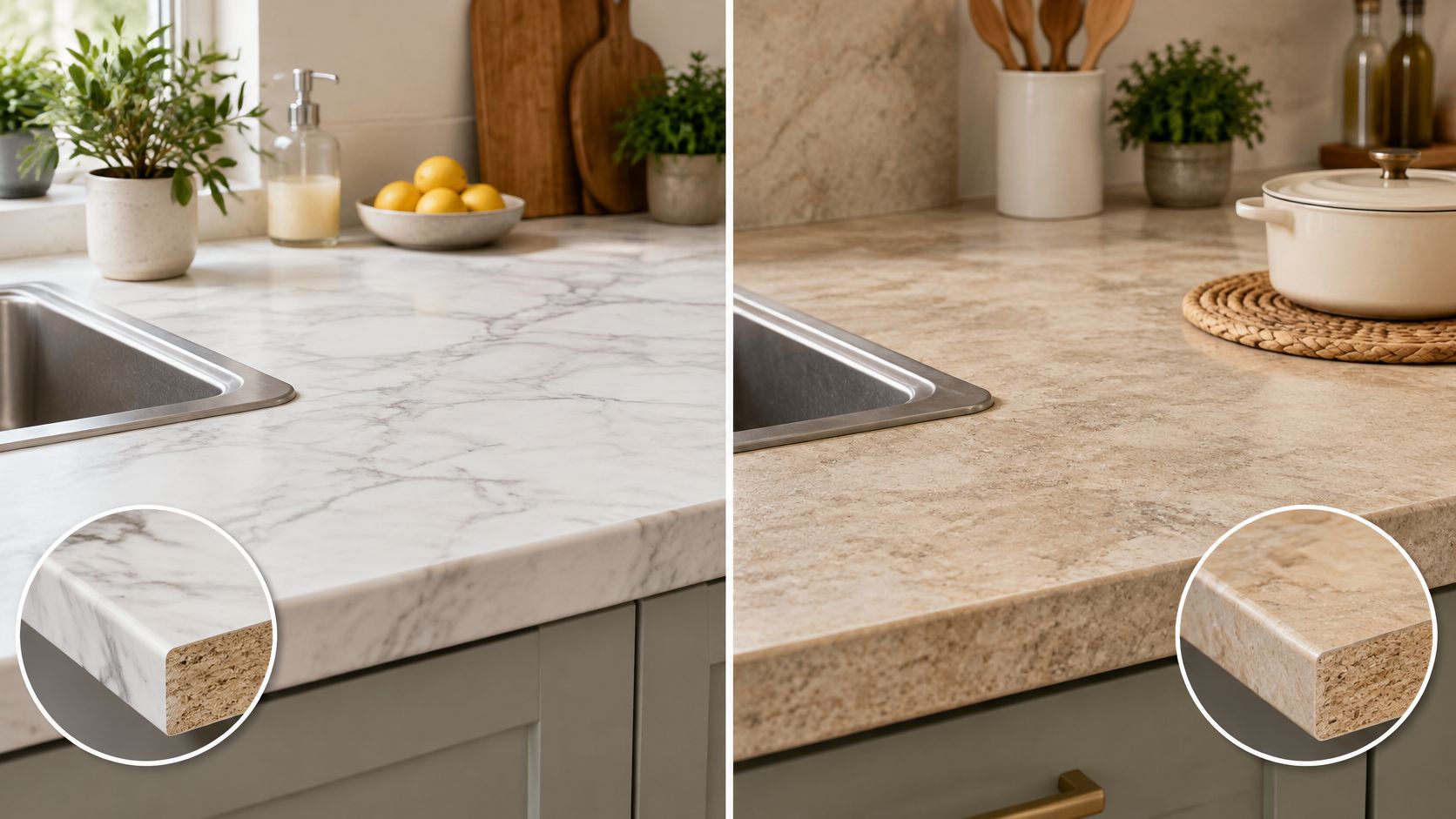
Laminate usually serves the budget-first end of the shortlist, but its savings come with moisture-sensitive edges and heat limits. Cultured marble can simplify the sink assembly through an integrated basin. Custom concrete, elaborate stone edges and carefully fabricated thin slabs require more labor than their appearance might suggest.
Quartz and porcelain are strong starting points for water resistance. Natural stone offers individual character but requires more deliberate care, while solid surface deserves consideration when repairability matters more than stone-like depth.
Buying rule: Shortlist materials that can handle your household's water, heat and cleaning habits before comparing their installed prices.
How Each Material Handles Heat and Harsh Products
Low porosity doesn't mean universal chemical or heat resistance. According to Slabwise's quartz restoration guidance, engineered quartz resin can discolor, crack or delaminate above roughly 150°C/300°F, and solvents can alter the resin. Deep thermal or chemical damage may require section or slab replacement rather than cleaning.
That distinction matters beside a bathroom sink. A removable mark is a cleaning problem; damaged resin is a material problem. Scrubbing harder won't reverse it and may leave a dull patch around the original damage.
| Exposure | Quartz | Natural Stone | Porcelain | Solid Surface |
|---|---|---|---|---|
| Heated styling tools | Resin can discolor or crack | Stone generally tolerates heat; sealers and repairs need protection | Strong resistance; use a protective resting surface | Can scorch or deform |
| Hydrogen peroxide disinfectant | Use only an approved concentration and contact time | Confirm compatibility with the stone and sealer | Generally resistant; check the finish specification | Check the product's care instructions |
| Acetone nail polish remover | Can damage resin or alter sheen | May affect sealers, fillers and repairs | Slab face generally resistant; protect joints | Can soften or damage the finish |
| Permanent hair dye | Remove promptly; staining remains possible | Can penetrate inadequately protected stone | Strong surface resistance; wipe joints promptly | Can stain when left standing |
| Hard-water deposits | Mineral film can accumulate | Deposits form; acidic removers can damage marble | Deposits remain possible despite low absorption | Deposits require finish-compatible cleaning |
| Abrasive cleaners | Can alter sheen | Can scratch or dull polish | Avoid unnecessary abrasion and protect decorative finishes | Can scratch; suitable finishes may be refinished |
Match the cleaner to the finish
Don't treat hydrogen peroxide as a single, universally safe product. Concentration, additives and contact time matter. Likewise, a porcelain slab's resistance doesn't automatically extend to the adhesive, caulk or decorative edge treatment beside it.
On natural stone, the sealer, filler or repair resin may be affected before the stone itself. Marble also has its own acid sensitivity. A cleaner that removes mineral deposits from a faucet may damage the surrounding vanity top.
For quartz, the quartz countertop maintenance guide provides a useful starting point for a care routine. Keep the manufacturer's product-specific instructions with your warranty rather than relying on a general household-cleaning label.
Prevent damage before testing a repair
- Create a hot-tool station. Use a heat-protective mat and a stable holder so a straightener can't roll onto the counter.
- Contain chemical work. Put nail products and hair dye on a washable, chemical-resistant tray.
- Remove spills promptly. Blot first, then clean with a compatible product instead of spreading dye across the surface.
- Read exclusions. Check how the warranty treats heat, chemicals, staining, chips and field repairs.
Granite and Marble as Natural Stone Options
Granite is an established slab material, not a specialty product with an uncertain supply chain. The U.S. Geological Survey's dimension-stone summary reports approximately 2.2 million tons sold or used domestically in 2024, with granite representing about 19% of that broader market. For your vanity, slab selection and fabrication are more useful buying criteria than assumptions about scarcity.
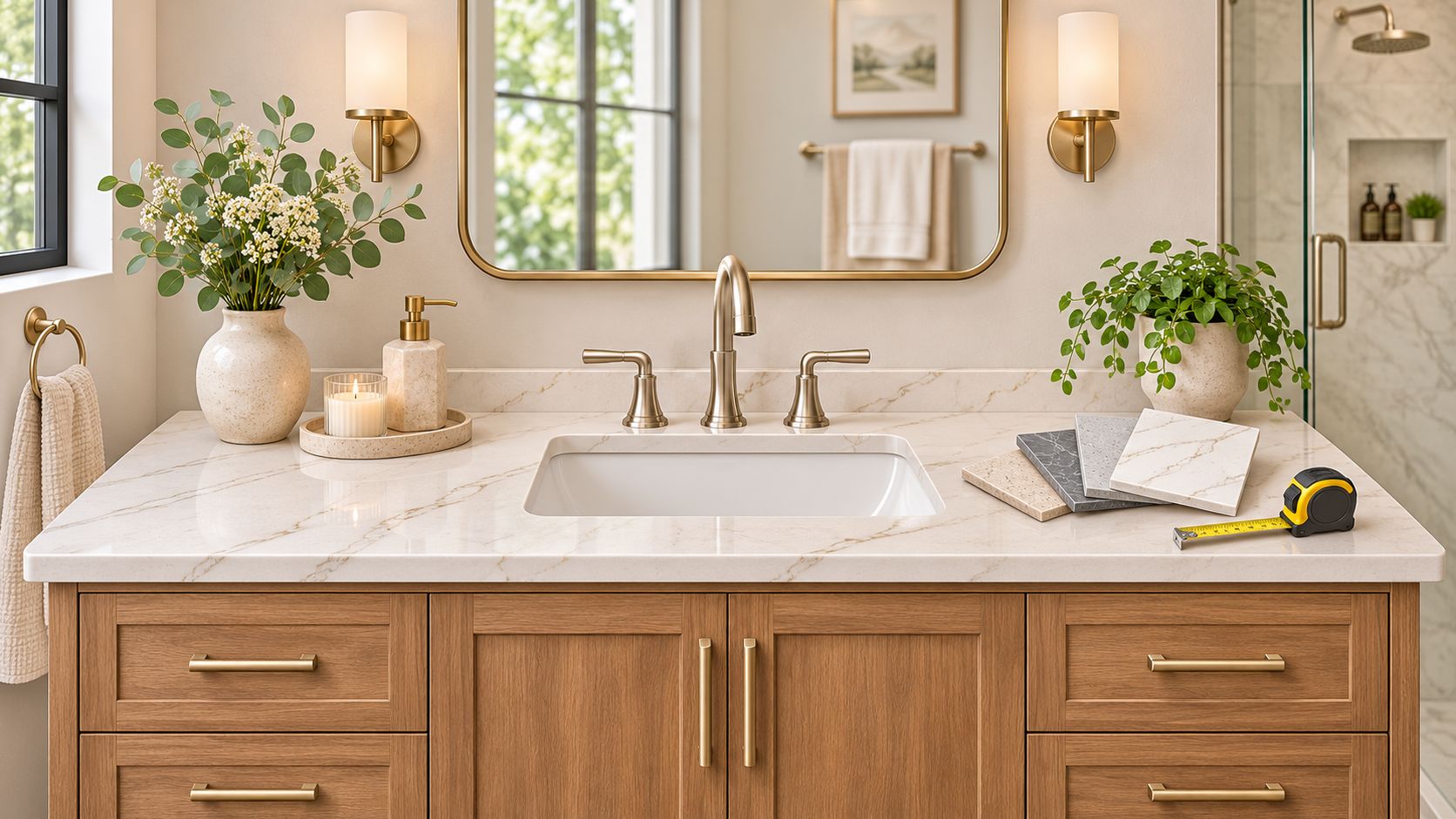
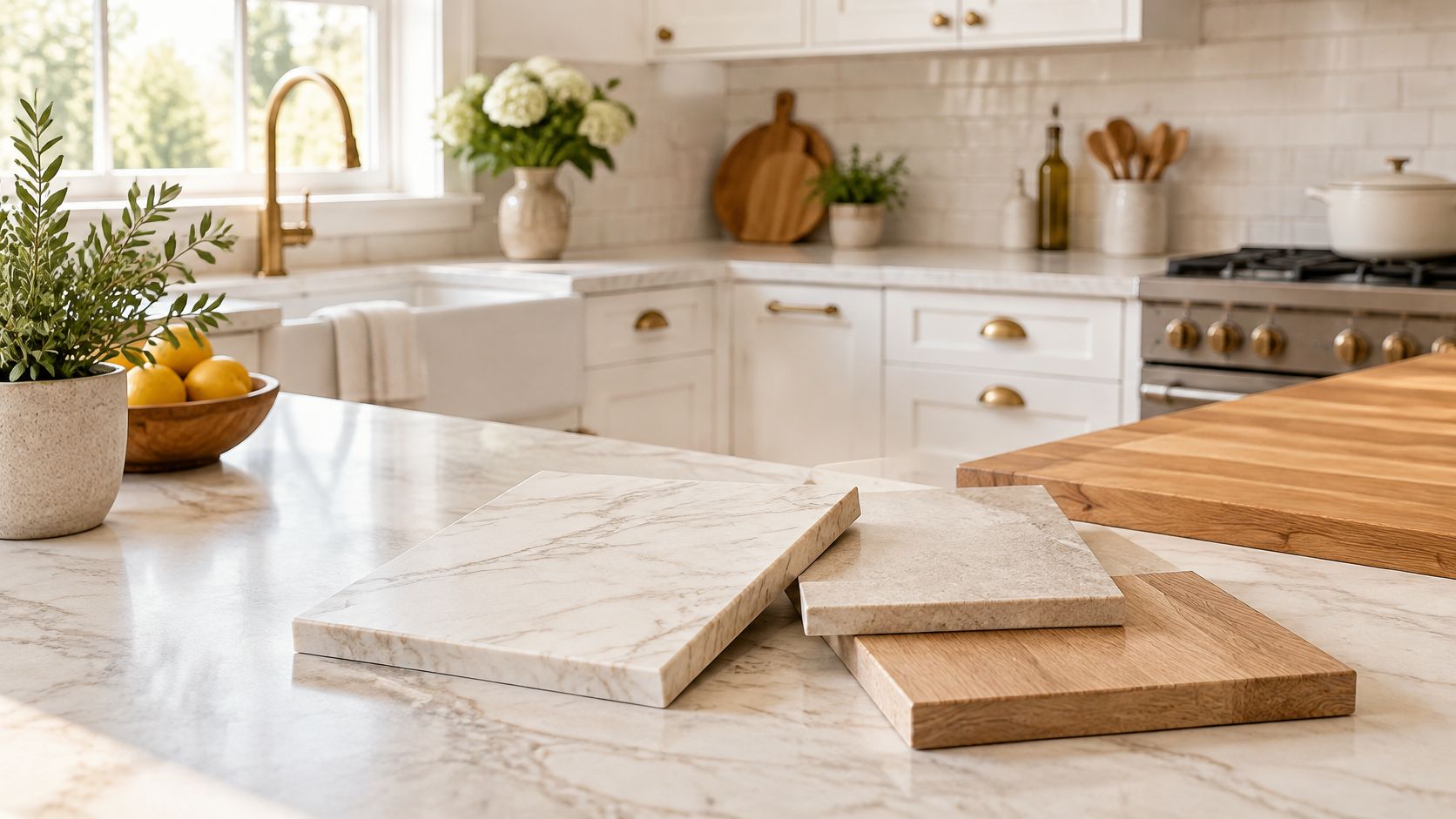
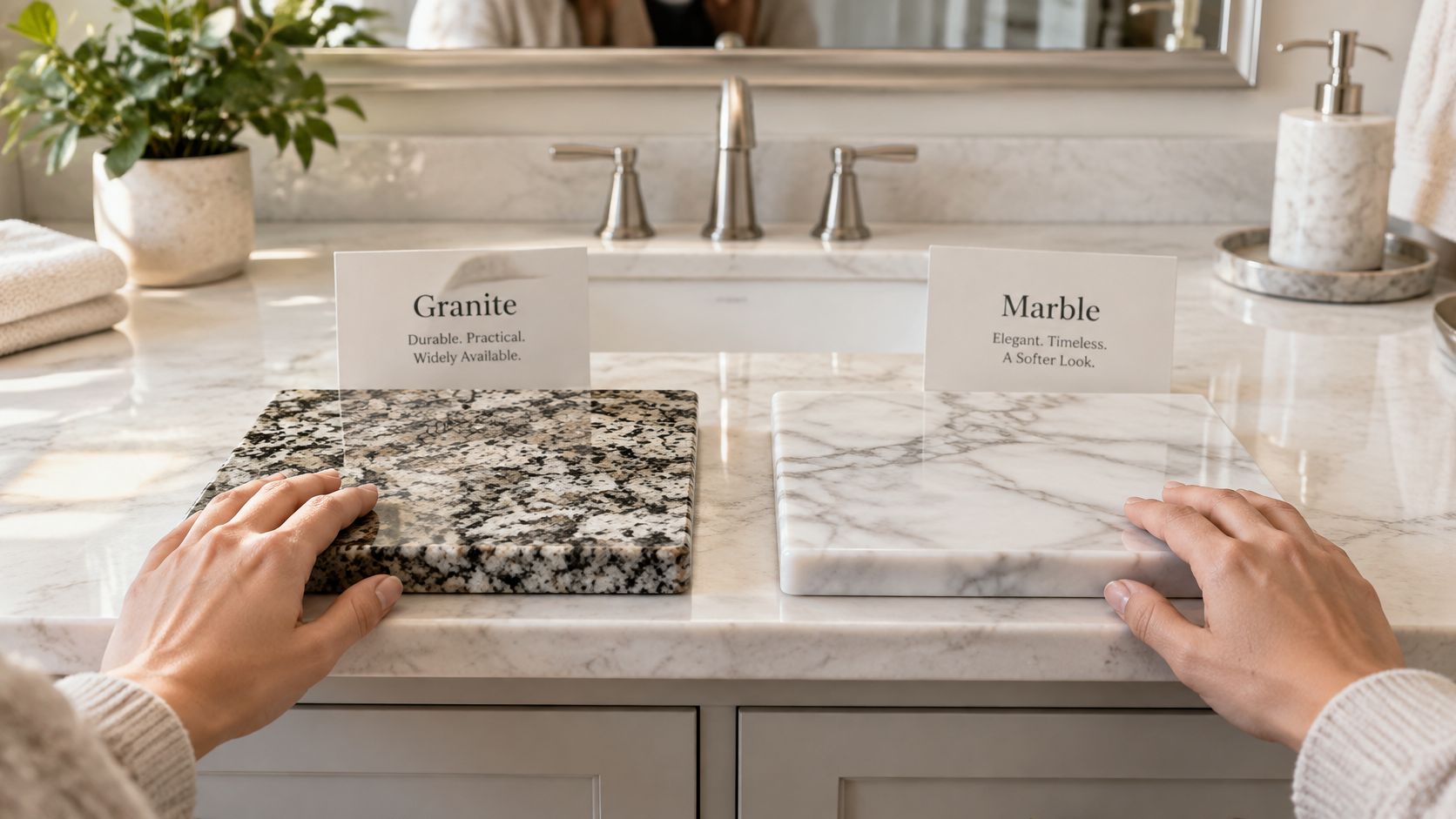
Compare actual samples beside the cabinet finish and sink.
Granite for natural character with manageable care
Granite offers broad color variation and a durable working surface. Choose the actual slab or remnant, not just a small showroom sample, because mineral patterns and movement affect the finished appearance. Thickness, edge work, backsplash pieces and sink cutouts all influence the installation.
Use a stone-compatible cleaner and assess sealing needs rather than following an arbitrary calendar. If granite looks cloudy, remove soap residue before assuming it needs polishing. Canes Cleaners' guide to restore shine to dull granite is useful for distinguishing cleaning issues from a finish that needs restoration.
Marble when patina is acceptable
Marble's veining comes with a softer, acid-sensitive surface. Say a homeowner cleans a white marble vanity with vinegar spray: dull etch marks can appear even though the countertop remains structurally sound. Sealing helps manage absorption; it doesn't prevent acid etching.
The marble bathroom countertop guide can help you decide whether that care commitment suits the room. Choose granite for a busy family bathroom that wants natural character; choose marble when you accept surface changes and will use pH-neutral cleaning.
Use the video as another visual reference when comparing stone options.
Porcelain and Sintered Stone for Splash-Heavy Vanities
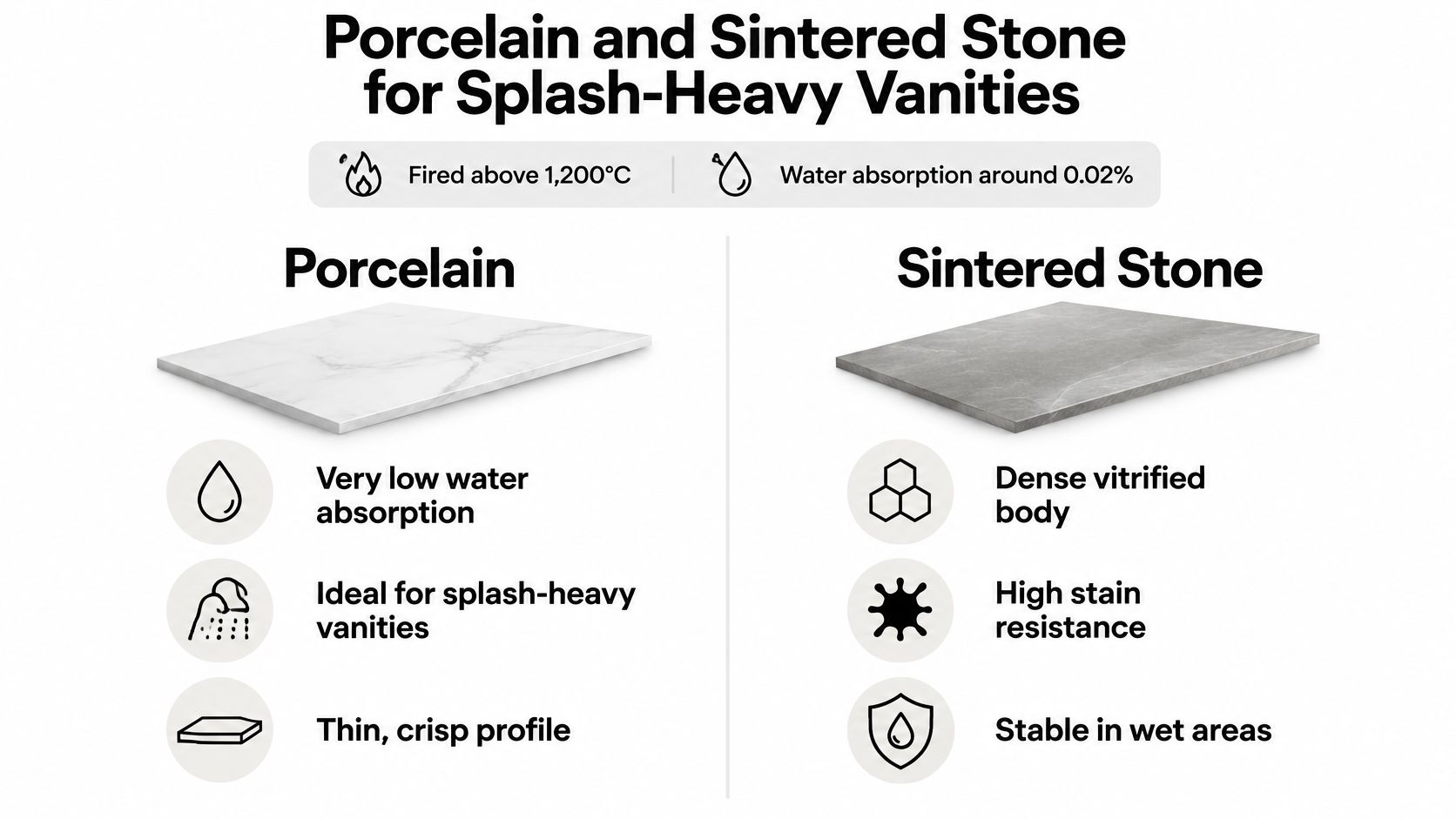
Large-format porcelain's low absorption is its main bathroom advantage. ConstructionFlux's countertop guide describes porcelain fired above 1,200°C, with reported water absorption around 0.02%. That dense body limits liquid penetration, making it harder for toothpaste, cosmetics and dye residues to become embedded below the surface.
Those characteristics make porcelain worth considering for a frequently used primary bathroom. Sintered slabs also belong on the shortlist, but don't assume every product sold under either label has identical properties. Request documentation for the actual slab.
Verify the slab and the fabrication plan
Ask for documented water-absorption and breaking-strength test results. The supplier should identify the test methods, material thickness and intended applications so you can distinguish a countertop slab from a product that merely has a porcelain appearance.
Hardness isn't the same as resistance to edge impact. Porcelain's brittleness makes unsupported corners, narrow strips beside sink openings and poorly detailed cutouts vulnerable. A dropped glass bottle can strike an exposed edge differently from an ordinary splash hitting the face.
The fabrication discussion should cover:
- Sink openings. Confirm cutout geometry, reinforcement and support before approving the sink.
- Edge construction. Ask how exposed edges will look and whether a built-up edge introduces visible joints.
- Handling and installation. Choose a fabricator who can explain its large-format slab process, not just show a material sample.
- Repair expectations. Ask what an edge-chip repair would look like on your selected color and pattern.
Pay for skill where it matters
Porcelain's advantages are stain resistance, heat tolerance and straightforward routine cleaning. Its drawbacks are specialized fabrication, potentially conspicuous edge damage and labor that can make a thin-looking top more expensive than expected.
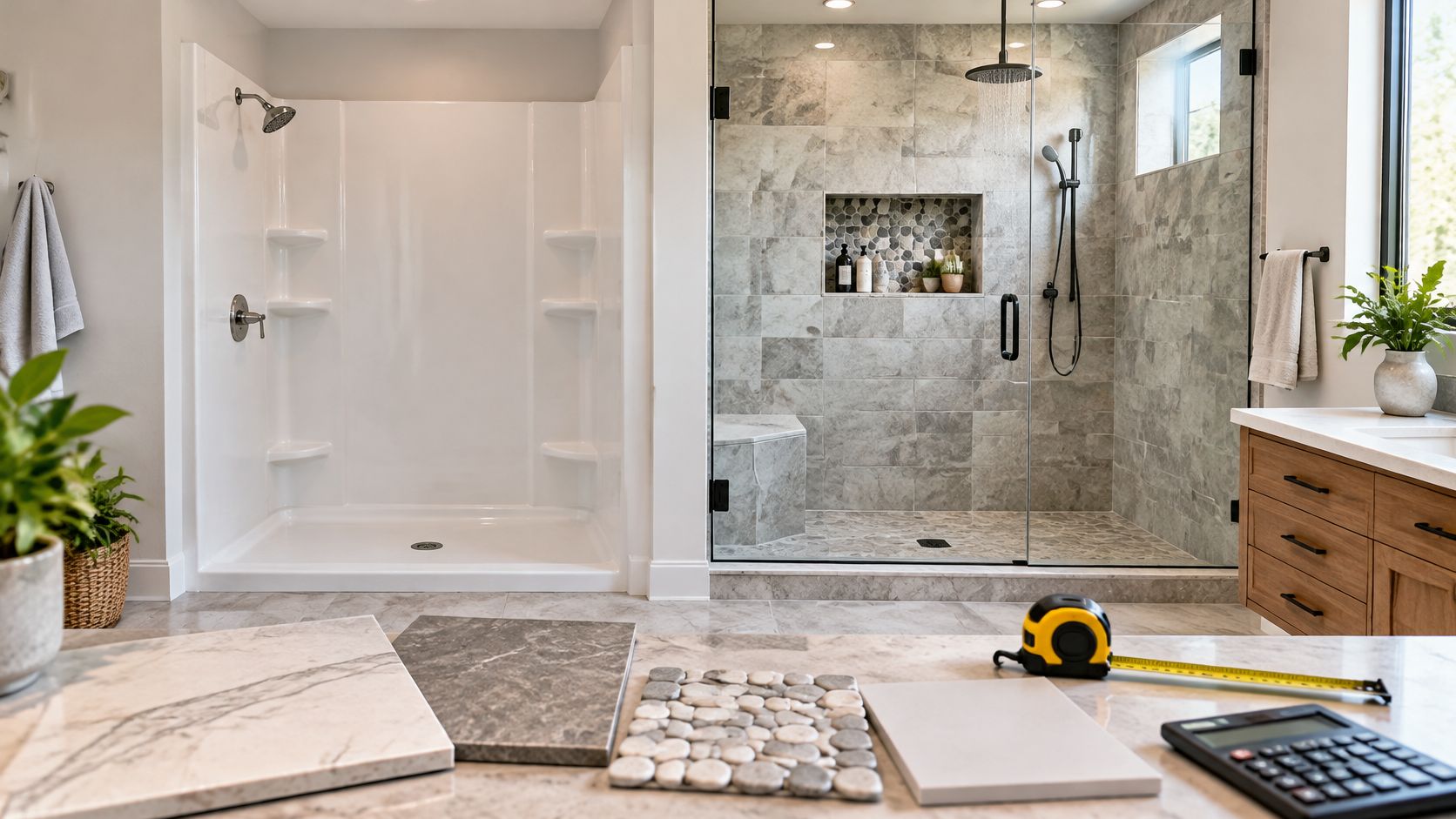
For a coordinated wet-room design, the shower material selection guide helps frame adjacent finish choices, though wall and countertop specifications aren't interchangeable. I'd shortlist porcelain for heavy-use bathrooms and rentals where gentle cleaning habits can't be assumed, provided the edge design and installer are right.
Silica Dust and Fabrication Safety Questions
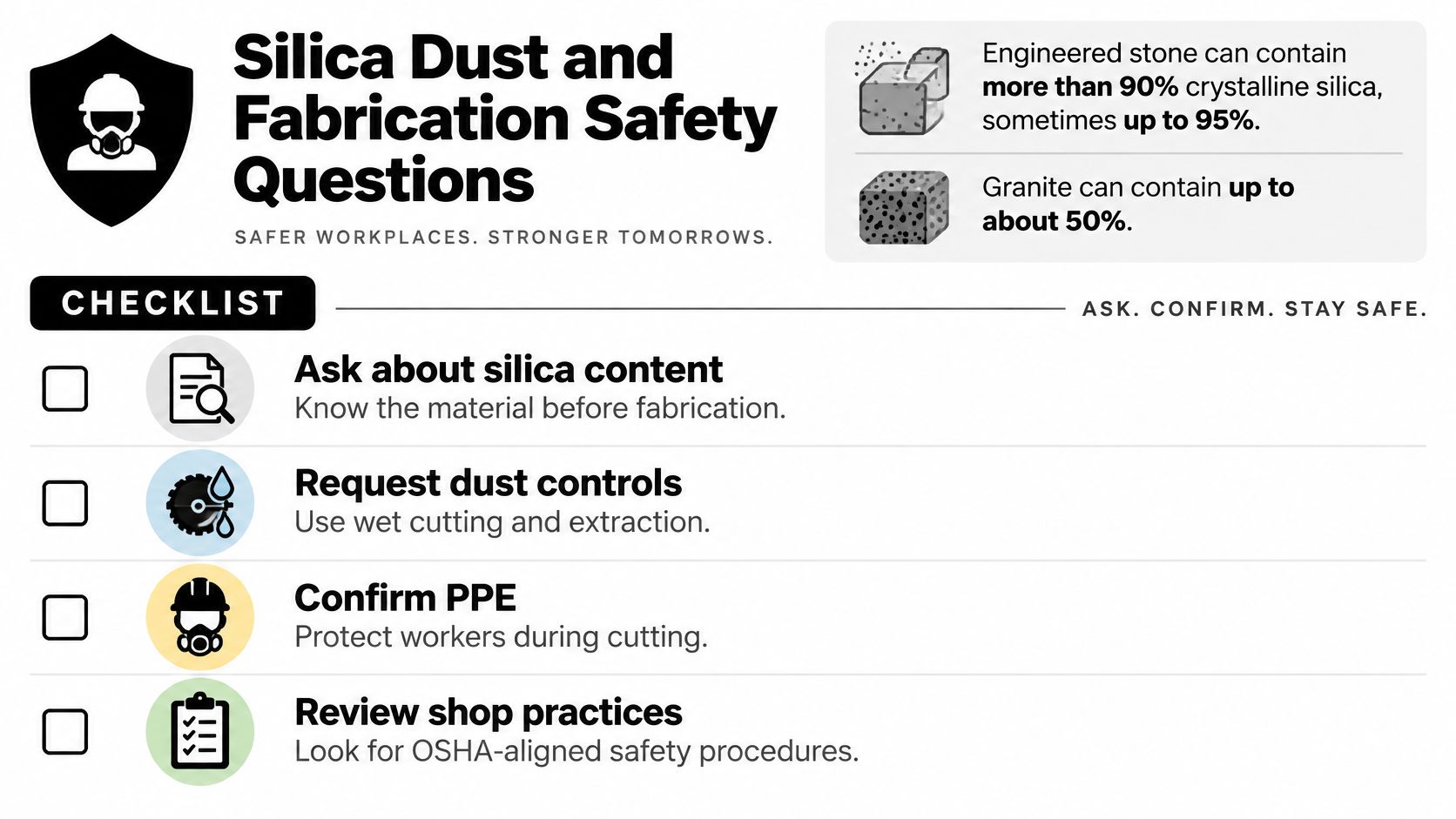
Countertop selection also affects the people who cut the material. The OSHA and NIOSH countertop fabrication hazard alert states that some engineered-stone products can contain up to 95% crystalline silica, while granite can contain up to approximately 50%.
The concern is respirable dust generated during cutting, grinding, polishing and drilling. Those operations create sink openings, faucet holes and finished edges. A finished, intact vanity top isn't the same exposure situation as active fabrication.
Questions that reveal shop practices
Use these questions before approving fabrication:
- How do you control dust during cutting? Ask about water-fed equipment and extraction appropriate to the operation. A vague promise to keep the area clean doesn't explain exposure control.
- What ventilation and housekeeping methods do you use? The answer should address airborne dust and cleanup, not just whether workers wear masks.
- How do you verify compliance with applicable silica exposure limits? Let the fabricator explain its monitoring and worker-protection procedures.
- Will any cutting happen at the house? Confirm who performs it, how the work area is controlled and how occupants are kept away.
- How are workers trained and protected? Respiratory protection, where required, belongs within a complete safety program rather than standing in for dust suppression.
Resolve field adjustments before installation
Accurate templating and coordinated sink and faucet specifications help reduce unexpected adjustments. Give the fabricator the actual fixture information before production, and don't approve a faucet-hole layout based on a rough sketch alone.
A finished stone top and a dust-generating fabrication operation are different situations. Judge the shop by how it controls the work.
These questions remain useful outside the United States, although regulatory requirements differ. The practical aim isn't to reject every stone surface. It's to select a fabricator who treats dust control as part of competent workmanship.
Lifetime Environmental Impact of Vanity Tops
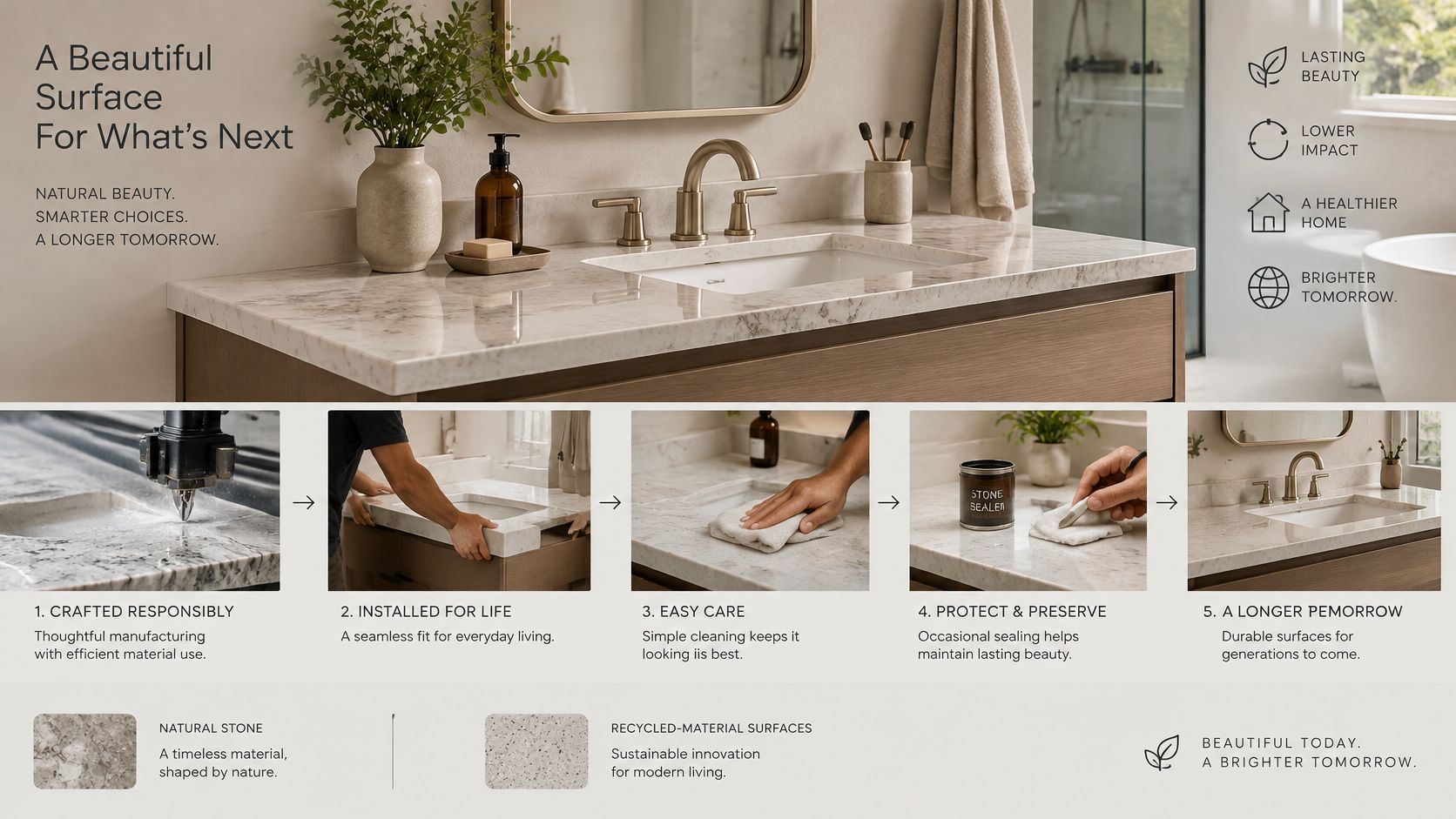
Recycled content alone doesn't establish the lowest-impact vanity top. TradeMaster's bathroom-material guidance emphasizes maintenance and moisture-related demands alongside material selection. A useful comparison includes manufacturing, service life, cleaning products, repairability and disposal.
Consider a top that can be refinished after localized damage compared to one that must be removed when its protective surface fails. The better environmental choice can depend on how long the household keeps each installation, not just whether the sales sheet says natural or recycled.
Use a service-life scorecard
| Question | Evidence to request |
|---|---|
| Will it tolerate this bathroom's wet conditions? | Application guidance and care requirements |
| Can localized damage be repaired? | Written repair options and finish limitations |
| What maintenance products will it need? | Cleaner, sealer and refinishing instructions |
| Can it remain through a future cabinet update? | Removal, support and reuse considerations |
| What happens at replacement? | Available take-back, reuse or recycling information |
Moisture management matters beyond the slab. Failed caulk, leaking faucet penetrations and neglected ventilation can create additional cleaning, repair and replacement work. A surface's environmental credentials don't compensate for an installation that traps water against vulnerable cabinetry.
Request documents, not labels
Ask for environmental product declarations, documented recycled content, applicable low-emitting certifications and manufacturer take-back information. Check that each document applies to the product you're buying, rather than another collection from the same brand.
Don't assume a local recycling outlet will accept a fabricated top just because its ingredients are recyclable. Confirm a realistic destination. For an eco-minded Cherry Hill renovation, a durable, repairable surface with manageable upkeep may be a stronger choice than a recycled-content product that's poorly suited to the room.
Matching Your Vanity Top to Bathroom Type, Budget and Upkeep
| Situation | Good fit | Watch out for |
|---|---|---|
| Guest or powder room on a tight budget | Laminate or cultured marble | Edge swelling and heat limits |
| Family bath with daily splashing | Quartz or porcelain | Edge detailing and stain-warranty terms |
| Primary bath with heavy styling-tool use | Porcelain or sealed granite | Keep hot tools off resin-based surfaces |
| Rental or investment property | Quartz or solid surface | Marble's upkeep demands; repair logistics |
| Main bath with a defined installed-top budget | Quartz or granite, subject to comparable quotes | Fabrication, cutout quality and excluded work |
| Design-led luxury look | Porcelain marble-look slab or natural marble | Brittle edges or marble's care requirements |
| Eco-minded buyer | Durable, repairable material with documented environmental attributes | Verify certifications and maintenance needs |
Choose for the user before the photograph
Start with water and heat exposure, then establish the complete installed budget, and only then narrow the appearance. Reversing that order can leave you trying to justify a beautiful material that doesn't fit daily routines.
A powder room offers more freedom because it generally has fewer products and styling tools on the counter. Laminate or cultured marble can be sensible there if you protect the vulnerable details. Wood and cast concrete are more deliberate design choices: select them because you accept the finish-maintenance plan, not because either appears effortless in a photograph.
A family bathroom needs forgiving surfaces and accessible cleaning details. Solid surface can be especially useful when an integrated basin and repairable finish matter. Tile deserves a more cautious recommendation around a busy sink because grout lines add cleaning work that a slab avoids.
For a rental, think about who handles repairs between occupants. A replaceable standard-size assembly may be more practical than a highly customized top with an unusual sink opening. For readers also managing commercial accommodation, Yasu Trading Co. LLC's bathroom sink options for hospitality renovations offers a useful fixture-selection reference; confirm local specifications separately.
Coordinate the sink, support and cabinetry
The sink changes both the fabrication and the way people use the top. An undermount basin needs a properly finished opening and independent support as specified. A vessel sink changes working height, faucet reach and the amount of exposed surface around its base; the vessel-sink vanity guide helps with that coordination.
Floating and island vanities also require a support plan. Don't assume a thinner slab eliminates structural concerns, or that every floating cabinet needs the same brackets. Have the cabinet construction, wall attachment, span and selected top evaluated together.
We can build custom vanity cabinets for master bathrooms and help select countertop surfaces that coordinate with the cabinet style and withstand daily use. That makes the cabinet and countertop a combined design decision rather than separate purchases.
Complete the pre-order checks
- Compare samples in your lighting. We bring full-size cabinetry, countertop, hardware and tile samples to the home for side-by-side comparison with an experienced guide. Check undertones beside the floor and wall tile.
- Confirm fabrication practices. Resolve dust-control questions, sink templates, faucet locations and edge details before the material is cut.
- Get the terms in writing. Keep the itemized installation scope, care instructions and warranty exclusions together. Ask who handles a chip, failed joint or damaged finish after installation.
Bring a shortlist and notes about hot tools, dye use, cleaning products and standing water to the initial conversation. Those details make a material recommendation more useful than a preference for white, gray or marble-look alone.
The Cabinet Coach offers coordinated bathroom design guidance, with in-home samples to help you compare vanity tops alongside cabinetry, hardware and tile. Visit The Cabinet Coach to arrange a complimentary video consultation and discuss a shortlist that fits your bathroom's exposure, upkeep and budget.