
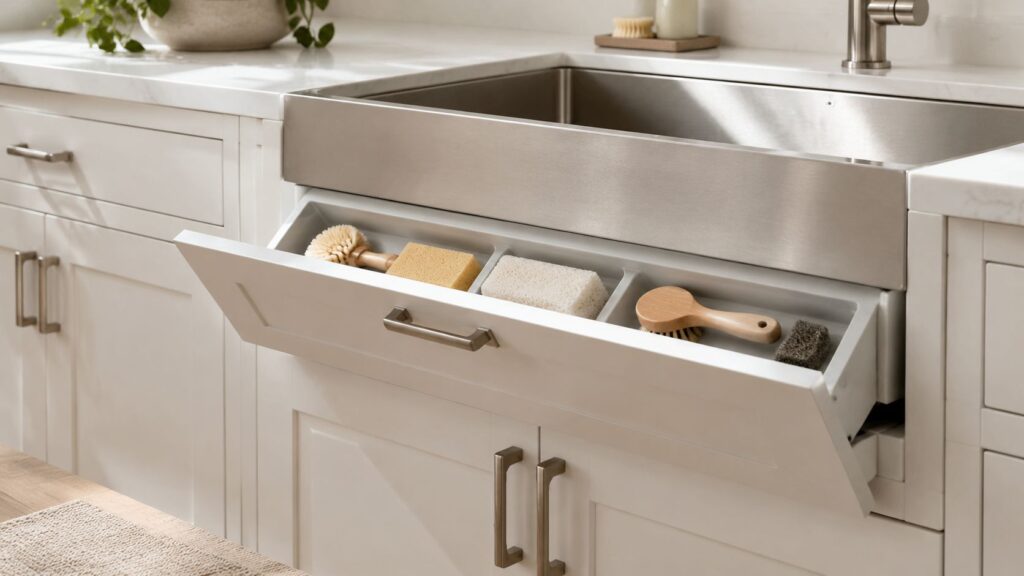
You're probably looking at the false drawer front under your sink and thinking the same thing most homeowners do. It looks like it should do something, but it doesn't. Meanwhile, the sponge sits on the counter, the scrub brush leans against the faucet, and the sink area always feels one item away from looking messy.
That's exactly where tip out trays earn their keep. They turn a dead strip of cabinet space into hidden storage for the small things that are always in the way but still need to stay close at hand. In South Jersey homes, especially in kitchens and baths where every inch matters, this is one of those upgrades that feels minor on paper and surprisingly useful in daily life.
Table of Contents
- The Smart Solution for Unused Sink Space
- Choosing Your Tip-Out Tray Size and Material
- Design and Placement in Your Kitchen and Bath
- What to Know About Installation and Maintenance
- Budgeting for Tip-Out Trays in Your Remodel
- Expert Advice for Your South Jersey Home
The Smart Solution for Unused Sink Space
You wipe down the counter, set the sponge by the faucet, and by evening the sink edge looks cluttered again. That little strip behind the false drawer front can fix that problem, but only if the tray fits your sink setup and does not turn into one more thing to scrub.
A tip out tray is a shallow insert mounted behind a false sink-front panel. The panel tilts outward on specialty hinges, giving you a narrow spot for the small items that usually end up wet and visible on the counter. In real kitchens and baths, that means a sponge, sink stopper, short brush, razor, or toothbrush. It is simple storage, but it solves a daily-use problem in a spot that usually does nothing.
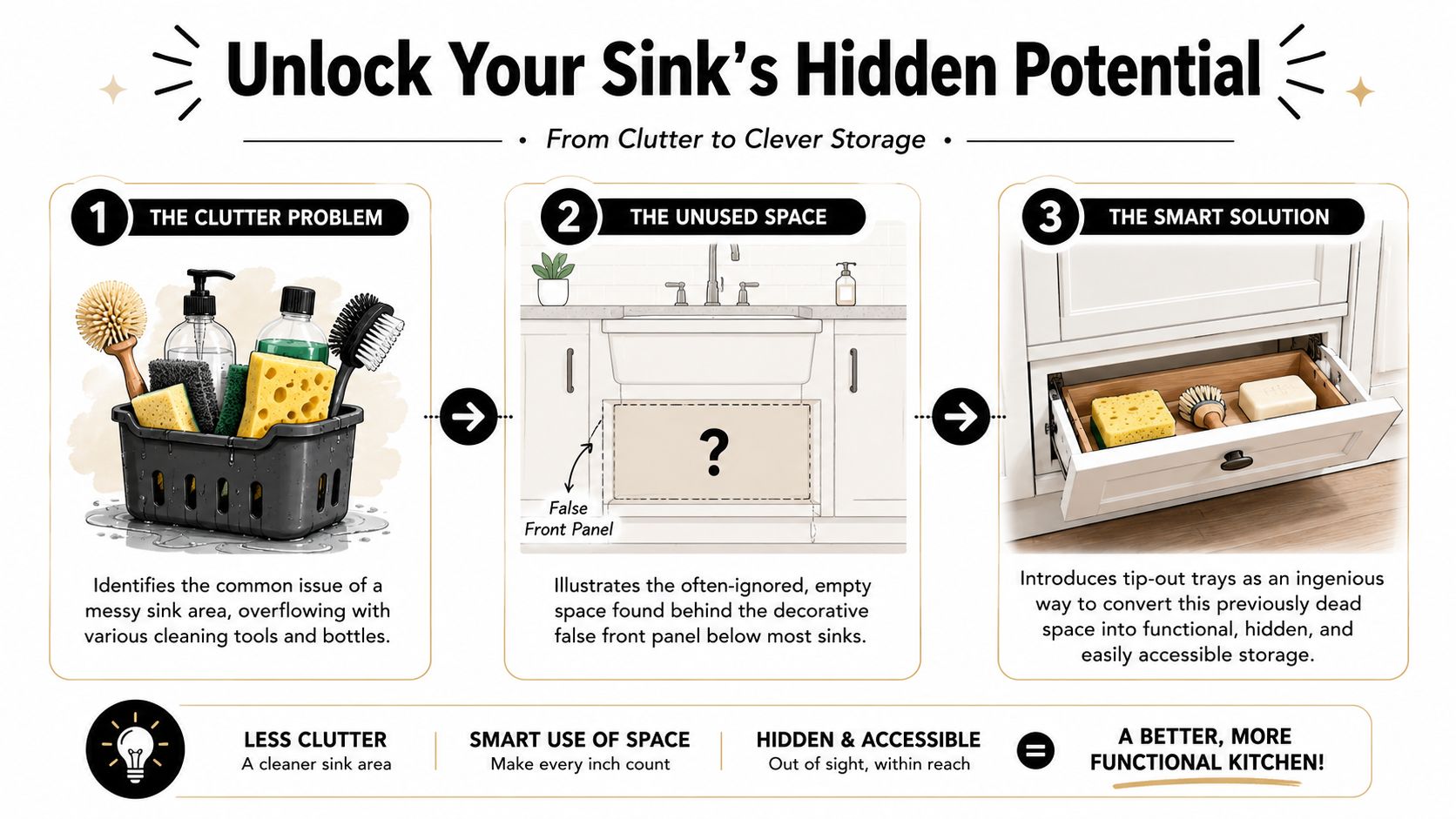
What makes a tip-out tray useful is proximity. The items live right at the sink instead of under the cabinet, behind plumbing, or out on the counter collecting water spots. I recommend them most often for homeowners who are tired of seeing the same few wet tools parked in plain sight.
Why homeowners like them right away
The benefit shows up fast because the tray improves a habit you already have.
- It clears the sink edge: Sponges and brushes have a place out of view.
- It uses dead space: The cabinet footprint stays the same.
- It supports daily cleanup: Grab the item, use it, put it away in seconds.
Practical rule: Tip out trays work best for thin, frequently used items that create clutter faster than they create storage demands.
They are especially helpful in compact kitchens, powder rooms, and hall baths where every inch around the sink matters. If you are already collecting small kitchen design ideas, this upgrade follows the same logic. Put the right storage at the exact point of use.
The two homeowner questions I hear most are the ones product pages usually skip. First, will the tray fit if you have a large modern undermount sink or an apron-front sink? Second, will the tray itself become a grimy pocket that nobody wants to clean? Both are fair questions, and both depend more on layout and material choice than on the tray concept itself.
What they are not
A tip out tray adds convenience, not major capacity. It will not replace under-sink organizers, pull-outs, or a well-planned drawer stack. Homeowners get the best result when they treat it as a small front-row storage zone and pair it with a better cabinet plan below. If the sink base is overloaded now, this guide on how to organize deep kitchen cabinets is the right companion step.
That trade-off matters. Tip-out trays are excellent at hiding the small mess you use every day. They are not the place for bulky cleaners, backup supplies, or anything tall enough to interfere with the sink behind the panel.
Choosing Your Tip-Out Tray Size and Material
The sizing question gets real fast once a homeowner picks a deep undermount sink or an apron-front sink. The false front may look generous from the outside, but the sink bowl, clips, faucet hardware, and even the tilt of the panel decide whether a tray will fit and whether it will open far enough to be useful.
Cabinet width only tells part of the story. The measurement that saves trouble is the open space behind the false front and in front of the sink. That is why I check tray depth, panel height, hinge swing, and the sink's front profile before I recommend a model.
What fits in a tip-out tray
Most tip-out trays fall into two practical categories. One is a slimmer tray for tighter sink clearances. The other is a deeper tray for cabinets with more room between the false front and the sink bowl. That small difference on paper matters a lot in the field, especially under modern sinks that sit farther forward than older drop-in models.
Replacement tray sizing also tells you what these inserts are good at storing. Product specs from Hardware Resources replacement trays show the same pattern again and again. They are shallow, low-profile organizers meant for thin, grab-and-go items, not for building real storage capacity.
A good fit usually means storing items like:
- sponge or scrub pad
- sink stopper
- small brush
- razor
- toothbrush
- bar soap or a compact soap dish
Poor fits include taller bottles, stacked items, bulky brush handles, and anything that needs to stand upright.
Apron-front sinks deserve extra caution. Many of them consume the exact space a tip-out tray would need, or they leave so little clearance that the tray becomes too shallow to justify. Some farmhouse setups still work, but they need to be checked cabinet by cabinet. I would rather rule a tray out early than force in a product that binds, rubs, or gives you a storage slot too small to use.
Wider sink bases can sometimes use trim-to-fit tray systems, which helps when the false front spans a broad opening. Even then, width is not the hard part. Clearance and hinge geometry are.
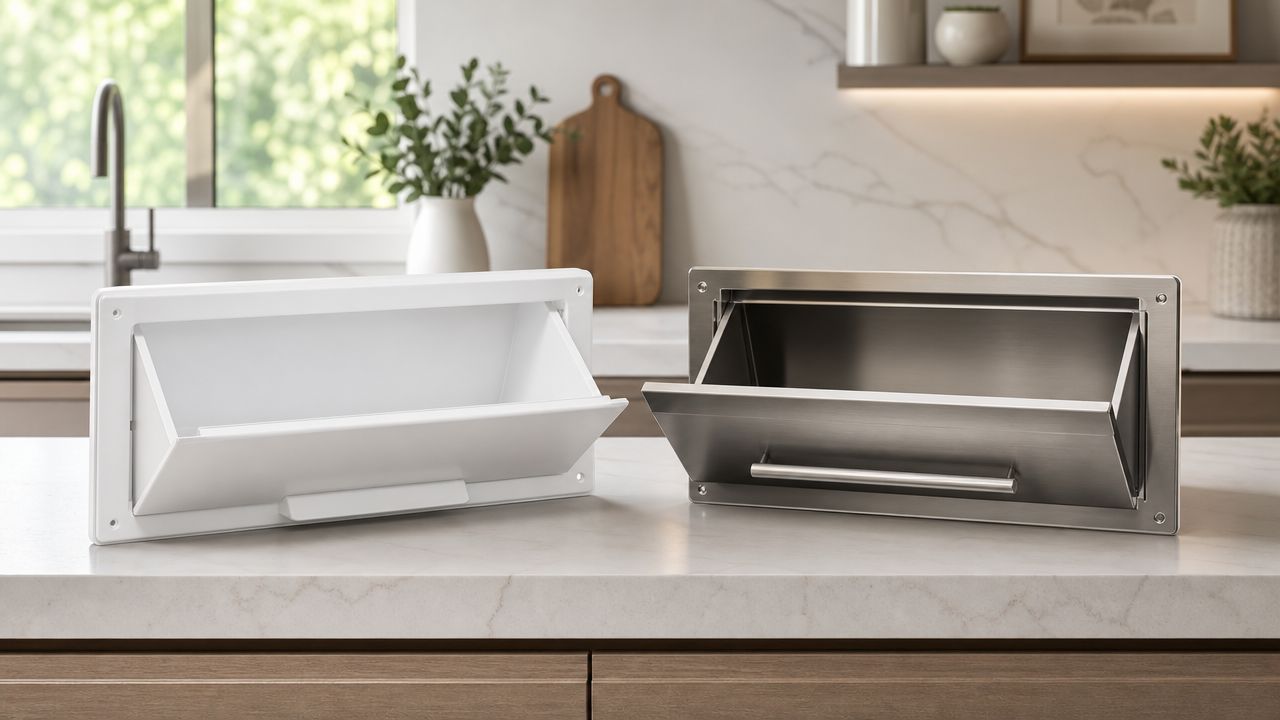
Polymer versus stainless steel
The second homeowner question is the one product pages skim past. Which material stays cleaner with less hassle?
Here is the practical answer. Both polymer and stainless trays can work well, but they age differently in a busy sink cabinet.
| Feature | Polymer (Plastic) | Stainless Steel |
|---|---|---|
| Everyday cleaning | Easy to wipe, but residue can cling in corners and surface scratches over time | Easy to wipe, and soap film is usually easier to see and remove |
| Visual wear | More likely to dull, stain, or look tired sooner | Holds a cleaner-looking finish longer |
| Moisture exposure | Fine for normal use if cleaned regularly | Better choice for homeowners focused on hygiene and repeat cleanup |
| Removal for cleaning | Depends on hinge and screw setup | Depends on hinge and screw setup |
| Best fit | Budget-conscious remodels and light-duty use | Kitchens or baths where maintenance habits matter more than first cost |
Plastic trays are common for a reason. They are affordable, widely available, and perfectly serviceable in many kitchens and baths. The trade-off is long-term appearance. If toothpaste, soap residue, hard-water spots, or damp sponges sit in the tray day after day, polymer can start to look tired faster.
Stainless costs more, but many homeowners prefer it because it feels cleaner and stays presentable with less fuss. In South Jersey homes with hard water, that can be a smart upgrade. You still have to wipe it out. You just do not end up wondering whether the tray is stained or dirty.
My rule is simple. If the household is disciplined about quick cleanup, polymer is usually fine. If the sink zone already collects wet sponges, toothpaste drips, or soap buildup, stainless is often the better buy.
This choice also ties back to the larger cabinet plan. Sink style, false-front dimensions, hardware, and maintenance expectations should be considered together, not as separate picks. If you are weighing all of those parts at once, this guide on choosing kitchen cabinets for your layout and storage needs helps put accessories like tip-out trays in the right context.
Design and Placement in Your Kitchen and Bath
Some upgrades are purely functional. Tip out trays have to be functional first, but they also need to belong in the cabinet design. A tray that looks clever on a product page can still be the wrong move if the sink, face frame, or false front proportions don't support it.
Kitchen use versus bathroom use
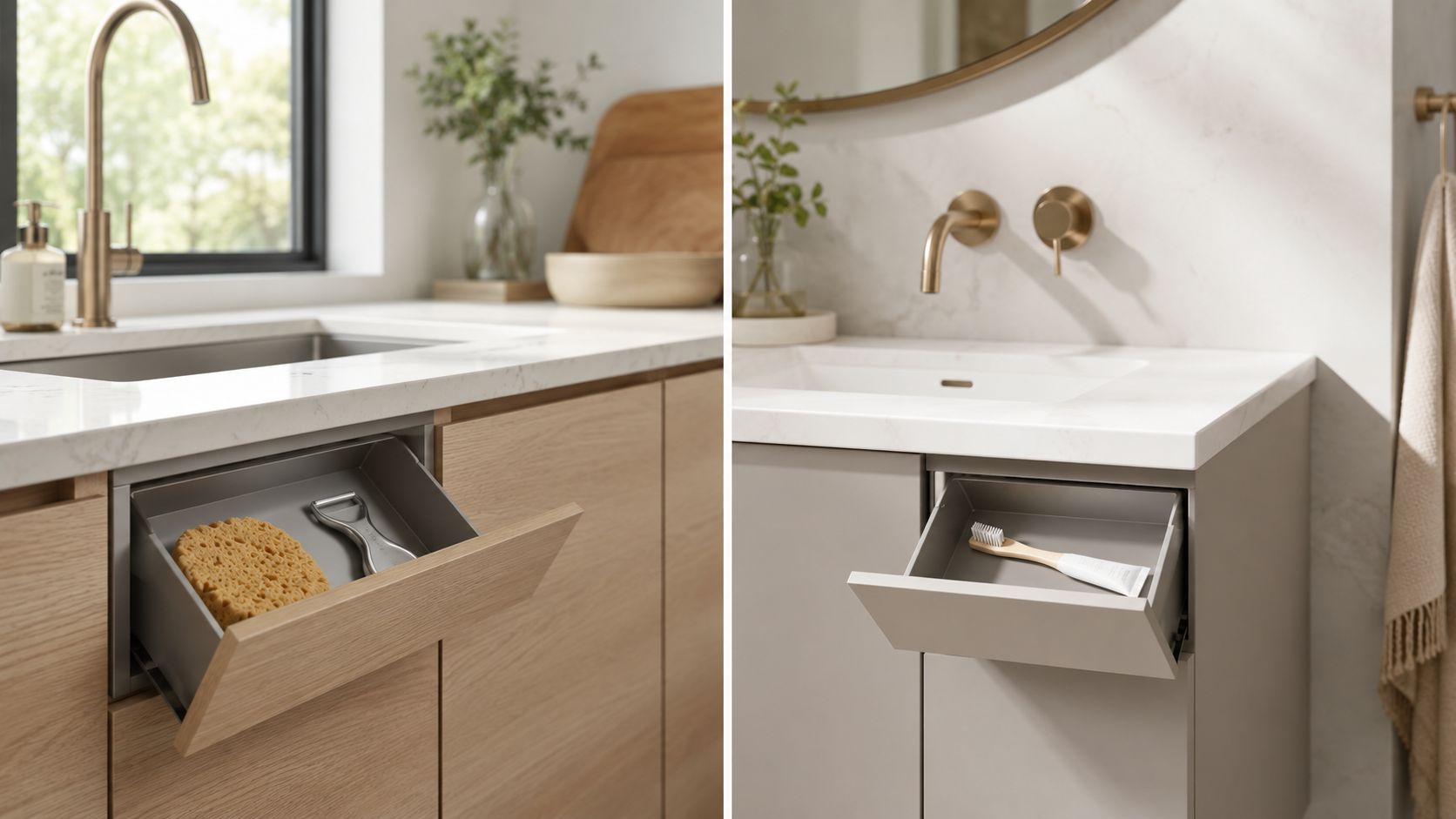
In kitchens, the tray usually holds wet-work items. Think sponge, scraper, sink stopper, or a compact brush. The biggest advantage is visual control. The sink area looks less busy because the small mess-makers have somewhere to disappear.
In bathrooms, the logic changes a bit. The tray often stores toothbrushes, toothpaste, small grooming tools, or a bar of soap. That can be a smart move in a vanity where the countertop is narrow and every exposed item makes the room feel crowded.
A few placement realities matter:
- Kitchen trays need fast cleanup: Food residue and soap film show up quickly.
- Bathroom trays need hygiene awareness: Toothpaste and standing moisture create buildup in corners.
- Guest baths benefit most from concealment: You keep essentials close without leaving them in view.
For homeowners reworking a compact footprint, ideas like this fit well alongside other small kitchen makeover strategies that prioritize hidden function over adding visual bulk.
Will it work with an undermount or apron-front sink
This is the question homeowners struggle to get answered clearly. A major gap in online advice is whether a tip out tray will work with an undermount or apron-front sink, and the answer depends on the cabinet style, sink size, and tray depth, as noted in this YouTube installation discussion on fit and compatibility.
That means there isn't a universal yes or no. There's only a fit check.
Here's where these projects usually get tricky:
- Deep undermount sinks: The sink bowl can eat into the space directly behind the false front, leaving very little clearance for the tray.
- Apron-front sinks: The front apron changes the whole geometry. In many cases, the visible front of the sink occupies space where the false drawer front would normally go.
- Tight face-frame cabinets: Even if the tray fits in theory, hinge motion can become awkward if the opening is too constrained.
If the tray only fits on paper, it doesn't fit. Real clearance has to account for the sink, the mounting method, and the way the front panel swings.
A quick visual can help if you're trying to picture how the hardware behaves in real cabinets.
In older South Jersey homes, retrofit conditions make this even more important. Cabinets aren't always perfectly square, sink replacements may have changed interior clearances, and plumbing updates can leave less tolerance than expected. In those cases, tip out trays can still be excellent, but only when the fit is verified before anyone drills into the false front.
What to Know About Installation and Maintenance
A tip-out tray earns its keep only if it opens cleanly, clears the sink, and comes out easily enough to wash. In practice, those are the two questions homeowners ask me most. Will it fit with the sink they picked, and will the tray become one more dirty thing to scrub around?
Installation answers both.
What a professional installer is checking
The first job is confirming that the false front can swing without hitting the sink, clips, faucet hardware, or plumbing tied too close to the cabinet face. Rules of thumb help, but they do not replace checking the specific cabinet and sink in front of you.
I also look at how the front panel is built. Some false fronts are solid and ready for hinges. Others need reinforcement so they do not loosen up after months of opening with wet hands.
A careful installer checks:
- Panel strength: The false front has to hold the hinges and stay aligned through repeated use.
- Hinge position: Small placement errors change how far the panel opens and whether the tray rubs.
- Tray removal: If the tray cannot be lifted out without fighting the hardware, cleaning will get skipped.
- Nearby obstructions: Disposal brackets, sink clips, and water lines can turn a good-looking plan into a poor install.
If you want a better sense of how placement affects day-to-day use, this guide on how to install cabinet hardware gives helpful context.
How to keep the tray from becoming a grime trap
Material matters here, but maintenance habits matter more. Plastic trays are light, inexpensive, and easy to rinse at the sink. Metal trays usually feel sturdier and can look better in a higher-end cabinet, but soap residue and hard-water spotting tend to show faster on them, especially under a busy kitchen sink.
Neither one is high maintenance if the tray is removable and not overloaded.
Use the tray for small, dry, frequently used items. Sink stoppers, a short scrub brush, or dishwasher tabs work better than a wet sponge that never dries out. In a bath vanity, I like them for nail clippers, tweezers, or travel-size items, not anything that leaks.
A few habits keep the area clean:
- Empty it during regular sink cleanup: A quick wipe beats scraping off buildup later.
- Wipe the underside of the false front: That is where splashes and residue collect.
- Do not store soaking items there: Constant moisture is what turns a smart accessory into a dirty one.
- Check for drips nearby: The tray often exposes a small leak before the rest of the cabinet shows damage.
For South Jersey homes, especially older remodels, I recommend treating tip-out trays as part of the full cabinet plan instead of an afterthought. If you are renovating your kitchen effectively, details like tray access, sink clearance, and easy cleanup are much easier to get right before installation day.
Budgeting for Tip-Out Trays in Your Remodel
You are standing at the sink with a cabinet plan in front of you, trying to decide whether a tip-out tray is a smart add-on or just another little charge. That is the right question. In my experience, this upgrade earns its keep when it solves a real storage problem and fits the sink you chose, especially with undermount and apron-front setups that can eat up more front clearance than homeowners expect.
Why this upgrade makes more sense during a remodel
A tip-out tray is a small budget item, but it works best when it is planned early. The tray itself is usually affordable. Its true value stems from making the sink base work harder without adding cabinet width, then avoiding a retrofit that turns into extra labor because the sink front, false drawer height, or hardware choice was never checked.
That planning matters for a few practical reasons:
- The sink decides whether the tray is worth pricing at all. A modern undermount sink with a deep bowl or a farmhouse apron-front sink can leave very little usable space behind the false front.
- The tray material affects long-term upkeep. Plastic usually costs less and hides water spots better. Metal often feels more substantial, but some homeowners end up wiping it more often because residue shows faster.
- Labor is lower when the cabinet is built or prepped for it from the start. Retrofitting can still work, but the budget can climb if the front needs adjustment or the available clearance is tight.
I tell South Jersey clients to treat tip-out trays the same way they treat pull-outs and trash rollouts. Price them as part of cabinet function, not as a last-minute accessory. If you are sorting through priorities across the whole project, this kitchen remodeling cost breakdown helps put small functional upgrades in context.
One more budgeting point gets missed all the time. A tip-out tray that fits poorly or turns into a grimy catch-all is not a bargain, even if the hardware was inexpensive. The best value comes from choosing one that clears the sink, holds only the right small items, and stays easy to wipe out during normal cleanup.
Expert Advice for Your South Jersey Home
Tip out trays are worth considering because they solve a real problem. They hide the little items that clutter the sink area and make use of a strip of cabinet space that otherwise does nothing. But the success of the upgrade depends on two decisions homeowners often underestimate: whether the tray will fit with the sink you have, and whether the material you choose will still feel easy to live with after months of moisture, soap, and daily use.
That's especially true in South Jersey homes, where cabinet retrofits, older layouts, and updated sink styles often create tricky clearances. A tray can be a sharp, efficient upgrade in a Cherry Hill kitchen, a Moorestown powder room, or a Medford bath vanity. It can also be the wrong choice if the sink front has no practical room to spare.
The best results come from treating tip out trays as part of the cabinet design, not a last-minute accessory. Check the opening. Check the sink profile. Think about how you clean. Then choose the tray that makes daily life easier, not just the one that looks good in the package.
If you're planning a kitchen or bathroom update in South Jersey and want help deciding whether tip out trays make sense for your layout, schedule a consultation with The Cabinet Coach. Their mobile showroom brings cabinet, hardware, and material options to your home, so you can make fit, finish, and function decisions with real guidance instead of guesswork.