

A typical mid-range kitchen remodel in South Jersey usually lands between $35,000 and $65,000. National averages are a useful starting point, but locally, cabinets and labor are usually the biggest cost drivers, and older homes in towns like Haddonfield, Cherry Hill, and Moorestown can add permit and code-update costs that generic online estimates miss.
If you're staring at wildly different remodeling numbers online, you're not alone. One site says a kitchen can be done for the price of a used car. Another makes it sound like you need luxury-home money just to replace cabinets and counters.
The problem isn't that one estimate is honest and the other isn't. It's that kitchen budgets change fast based on scope, house age, layout changes, and local labor conditions. In South Jersey, that matters more than many homeowners expect. A straightforward cabinet-and-countertop update in a newer suburban home is one thing. A kitchen in an older home with outdated wiring, tight footprints, and permit requirements is something else entirely.
A clear kitchen remodeling cost breakdown helps. Once you see where the money goes, the project gets less intimidating. You can stop guessing, start making trade-offs on purpose, and build a budget that fits how you live.
Table of Contents
- Navigating Your Kitchen Remodel Budget in South Jersey
- The Three Tiers of Kitchen Remodeling Budgets
- A Detailed Line-Item Kitchen Remodel Cost Breakdown
- Sample Budgets for Cherry Hill and South Jersey Homes
- Smart Ways to Control Your Kitchen Remodeling Budget
- Financing and Timing Your South Jersey Kitchen Project
- Your Partner for a Stress-Free and On-Budget Remodel
Navigating Your Kitchen Remodel Budget in South Jersey
Most homeowners start with photos. Then the numbers show up, and the excitement gets replaced by uncertainty. That's especially common when you're comparing national articles to real bids in Camden and Burlington County.
The national benchmark for a typical mid-range kitchen remodel in the U.S. is $25,000 to $50,000, while South Jersey projects with new cabinetry and quartz countertops often land at $35,000 to $65,000, according to this 2025 kitchen remodel cost guide. That local range feels more realistic because it reflects the kind of work many homeowners here actually want, not just cosmetic updates.
A budget meeting usually gets easier once the project stops being one giant mystery number. Instead of asking, "How much does a kitchen cost?" it helps to ask better questions.
- Are you keeping the layout? Keeping sink, range, and major plumbing in place usually protects the budget.
- Are the cabinets staying, refaced, or replaced? That single choice changes the entire project.
- Is the house older? In places like Haddonfield and Moorestown, code updates can affect electrical, ventilation, and permit needs.
- Are you buying visual impact or functional change? New finishes look great, but storage, circulation, and cabinet design change how the room works every day.
A realistic budget isn't built from wishful thinking. It's built from scope.
If you're still in the planning stage, a good next step is reviewing a practical kitchen remodel planning checklist before you choose finishes. It helps you sort must-haves from upgrades that can wait.
The Three Tiers of Kitchen Remodeling Budgets
Kitchen remodels fall into three budget tiers, and each one solves a different problem. In a first budget meeting, I usually see homeowners in Cherry Hill, Haddonfield, and Moorestown trying to fit very different goals into the same number. A cosmetic update, a functional mid-range remodel, and a full gut renovation are not priced the same because the work behind them is not the same.
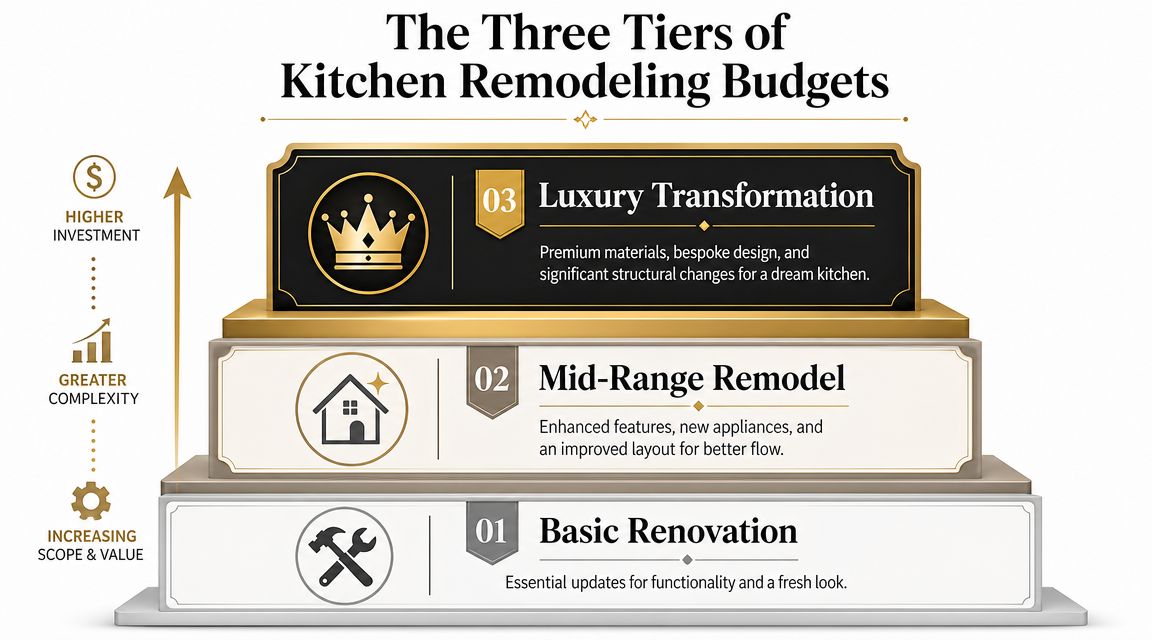
Refresh work that improves the look
This tier keeps the kitchen's structure largely intact and focuses on visible updates. Paint, hardware, backsplash, lighting, and a few appliance swaps usually live here. If the cabinet boxes are solid, homeowners can often save meaningful money by keeping them and comparing cabinet refacing costs versus full replacement.
Refresh projects work best when the layout already functions well and the room does not need major electrical, plumbing, or ventilation changes.
The budget can still shift in older South Jersey homes. A simple finish update in Haddonfield sometimes uncovers outlets that need GFCI protection, older wiring that should be corrected while walls are open, or permits required for work that looked minor at first. Those are not luxury upgrades. They are the kind of practical corrections that keep a small project from turning into a frustrating one.
Mid-range remodeling that changes daily use
This is the tier many South Jersey homeowners choose because it improves the kitchen without rebuilding the house around it. New cabinets, new countertops, updated flooring, better lighting, and appliance upgrades usually fall here. The layout may stay mostly the same, but storage, workflow, and durability get a real improvement.
In local terms, this is often the budget range where a kitchen starts to offer a noticeably improved living experience. Deep drawers replace hard-to-reach base cabinets. A better island overhang makes seating usable. Task lighting gets added where people prep food, not just where the old fixture happened to sit.
This is also where hidden costs start to matter. In Cherry Hill and Moorestown, moving one appliance can trigger added electrical work. Replacing an old hood with a properly vented system can add ductwork and patching. Tile choices can also move the number more than homeowners expect, especially once installation labor and substrate prep are included. A good material reference point is this high-end kitchen tiles guide, which shows how finish selections can widen the gap between a controlled mid-range project and a premium one.
Mid-range remodels usually give the best balance of function, appearance, and resale value, as long as the scope stays disciplined.
Full gut renovation for major change
A full renovation is for kitchens that need structural change, major layout correction, or a finish level that matches the rest of a high-value home. Walls may move. Plumbing and electrical lines may relocate. Windows, flooring, insulation, and HVAC adjustments can all become part of the job.
In South Jersey, older homes are often what push a project into this tier. I see it in Haddonfield especially. Once walls and ceilings are opened, code updates, framing repairs, and ventilation fixes can become part of the full scope. Permit costs are only one piece of it. The larger budget driver is bringing older work up to current standards while still delivering the kitchen you want.
This tier can absolutely be worth it. It just requires honest planning from the start, because upscale results often come from a long list of smaller decisions that add up fast.
A Detailed Line-Item Kitchen Remodel Cost Breakdown
Once the scope is clear, the next question is where the money goes. This is the part that helps homeowners read estimates without getting lost in a lump-sum number.
Why cabinets take the biggest share
Cabinets are usually the most expensive single line item. According to this cabinet renovation cost analysis, cabinets typically account for 30% of the total budget under the 30-25-20-15-10 rule, with the remaining allocation split across labor, appliances, countertops and surfaces, and other elements. The same source notes that for a mid-range remodel averaging $82,793 nationally, cabinets alone translate to about $24,838.
That lines up with what many homeowners feel when quotes arrive. Cabinetry isn't just boxes with doors. It includes sizing, finish, storage features, trim details, installation, and the fact that every other visual decision has to coordinate around it.
If you're debating whether to keep existing cabinet boxes and update the exterior instead, this breakdown of cabinet refacing costs versus replacement can help frame the decision.
A practical budget allocation table
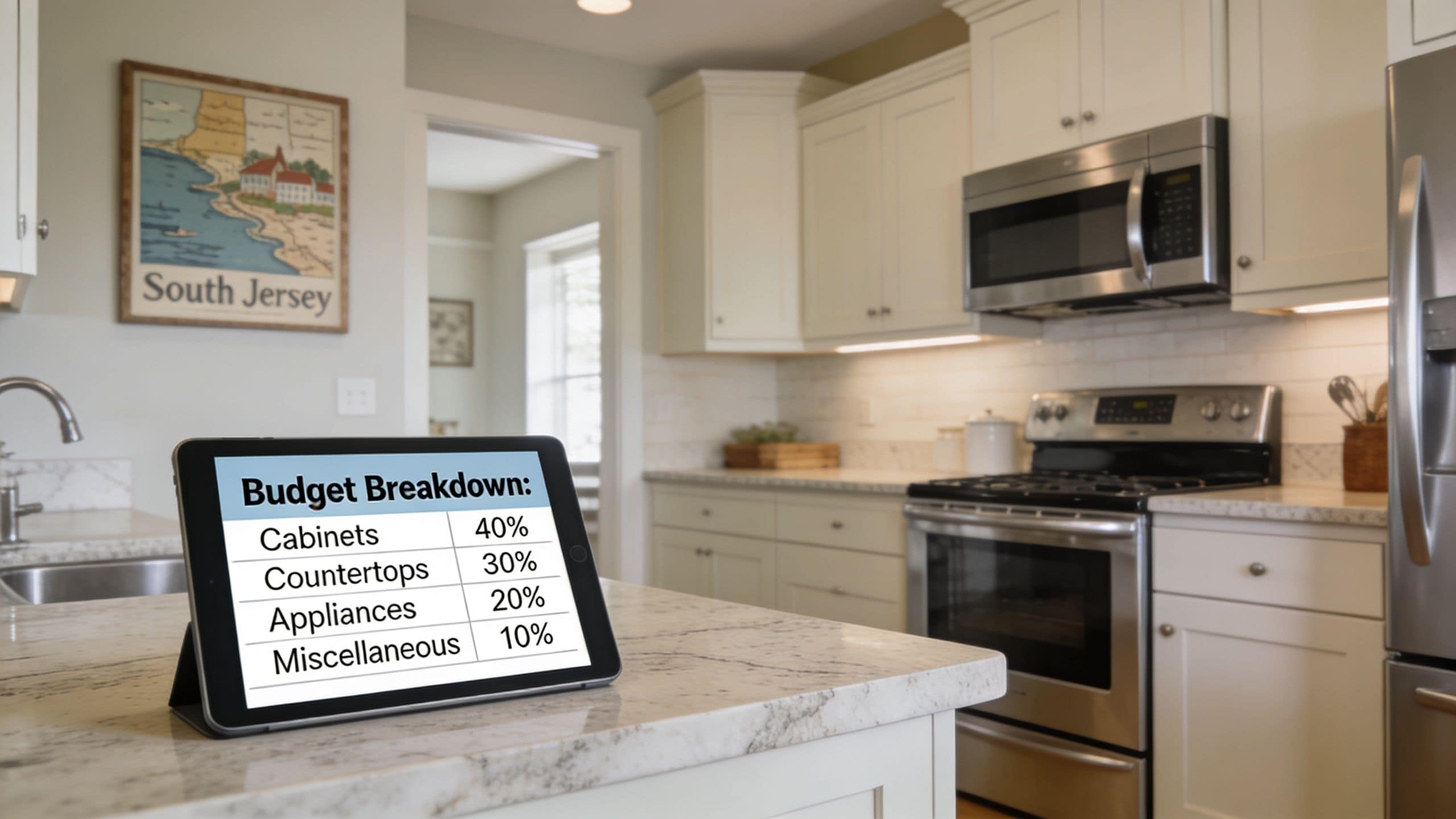
The percentages below are the most useful way to read a mid-range estimate. They don't replace a quote, but they do help you spot whether one category is out of balance.
| Typical Mid-Range Kitchen Remodel Cost Allocation (South Jersey) | Percentage of Total Budget |
|---|---|
| Cabinets | 30% |
| Labor | 25% |
| Appliances | 20% |
| Countertops and surfaces | 15% |
| Other elements such as flooring and lighting | 10% |
That allocation follows the verified 30-25-20-15-10 rule from the cabinet cost source above. In practice, some projects lean heavier toward labor, especially in older homes where installers, electricians, and plumbers spend extra time correcting what's behind the walls.
A common example is tile. Homeowners often underestimate how quickly tile costs move from "small finish detail" to meaningful budget item once material, layout, cuts, and labor are all in play. If you're comparing surface options, this high-end kitchen tiles guide is a useful visual reference for how tile choices can shift the feel of a project.
Where quotes often get fuzzy
Not every proposal is equally clear. A good estimate should separate the major buckets so you can make real trade-offs instead of blind cuts.
Watch for these trouble spots:
- Cabinets bundled with installation so you can't tell whether the product or the labor is driving the number
- Appliance allowances that are too vague to know what tier you're buying
- Flooring and lighting grouped into "finish work" with no detail
- Permit language that sounds optional when the scope clearly says otherwise
Practical rule: If a quote makes it hard to tell what you're buying, it will also make it hard to control the budget.
The best kitchen remodeling cost breakdown is the one that lets you say yes or no to a specific decision. Not a mysterious total.
Sample Budgets for Cherry Hill and South Jersey Homes
Numbers make more sense when they match real houses. A kitchen in a mid-century Haddonfield home doesn't behave like a kitchen in a newer Voorhees or Moorestown property, even when the square footage sounds similar.
A smaller older-home kitchen
For a typical 120 sq. ft. Cherry Hill kitchen, verified South Jersey guidance says a mid-range budget often falls between $28,000 and $55,000, with regional costs running 15% to 25% above national averages because of labor rates and permitting. The same source notes that permits can add $2,000 to $5,000 in local projects, according to this regional kitchen budget guide.
That kind of budget usually fits a kitchen where the footprint stays mostly intact, but the room still needs serious updating. In older homes, the hidden issue isn't always luxury selections. It's the house itself. Existing wiring may need correction. Floors may be out of level. Wall conditions may slow cabinet installation.
A sample use of that budget in a Haddonfield-style home might look like this in practical terms:
- Cabinet replacement over refacing because old boxes aren't square enough to justify saving
- Quartz counters instead of a more delicate material because durability matters in daily use
- Targeted electrical and lighting work to meet current needs
- Permit and inspection costs because older housing stock rarely rewards shortcuts
If you're trying to benchmark size and cabinet density, this 10 x 10 kitchen planning reference helps put common layouts into perspective.
A larger suburban family kitchen
Now shift to a larger kitchen in Moorestown or Voorhees. The room may be newer, but the wish list is usually bigger too. More wall space means more cabinetry. More cabinetry means more finish decisions, more hardware, and more installation time.
Often, homeowners move from a simple replacement project into a more ambitious one without realizing it. An island gets enlarged. Appliance preferences improve. Pantry storage becomes built-in instead of freestanding. Lighting becomes layered instead of basic.
Bigger kitchens don't just cost more because they have more square footage. They cost more because they invite more decisions.
In these homes, the smartest budgets stay disciplined about one thing. They choose whether the project is about layout change or material quality. Trying to max out both at once is what usually pushes a job beyond the original target.
Smart Ways to Control Your Kitchen Remodeling Budget
Budget control doesn't come from buying the cheapest products. It comes from making a few smart decisions early, before expensive revisions start showing up.
One verified 2025 trend worth paying attention to is that mobile showrooms can speed up decisions by 20% and reduce design fees, while sustainable materials can add 10% to 20% upfront and are gaining resale appeal in New Jersey, based on this 2025 remodel cost discussion. Faster decisions matter because indecision has a cost. Delays create rework, rushed substitutions, and expensive last-minute changes.
Spend where function lives
The best savings usually come from restraint, not sacrifice.
A few choices tend to work well:
- Keep the existing layout when it already works. Moving plumbing and electrical can turn a manageable remodel into a construction-heavy one.
- Choose semi-custom over full custom when the room allows it. You still get design flexibility without paying for solutions you don't need.
- Put money into drawers, organizers, and usable storage. Homeowners feel those upgrades every day.
- Use durable surfaces in heavy-use zones. A material that holds up well often beats one that looks impressive in a sample.
What doesn't work is trimming the budget in the exact places that affect daily use. Cheap hardware, weak storage planning, and poor lighting almost always feel disappointing after the dust settles.
If you're sorting cabinet options, this guide on how to choose kitchen cabinets is a solid place to compare styles and practical trade-offs.
Another overlooked line item is cleanup and disposal. If you're budgeting demolition, tear-out, or clearing a garage full of old cabinets and materials, a local-style guide to junk removal pricing can help you think through what that part of the job may involve.
Use the planning phase to prevent waste
A good budget meeting should settle the hard questions before ordering starts.
That means deciding:
What stays
Existing layout, appliances worth keeping, flooring outside the kitchen, and any trim that doesn't need to be disturbed.What changes the function
Cabinet configuration, pantry access, island size, trash pull-outs, drawer storage, and lighting placement.What changes the finish only
Hardware color, backsplash style, edge profiles, and decorative details.
This walkthrough offers a useful visual example of how remodel planning choices affect the end result:
Some of the most expensive kitchen decisions aren't upgrades. They're late decisions.
That applies to eco-friendly selections too. Sustainable cabinetry or low-VOC finishes can be worth it, but they should be discussed at the beginning so they fit the budget instead of surprising it.
Financing and Timing Your South Jersey Kitchen Project
A typical first budget meeting in Cherry Hill or Haddonfield often ends with the same two questions. How will we pay for it, and how soon can we start without creating a bigger mess?
Both matter because South Jersey kitchens rarely move from design to construction on a national-average timeline. Older homes in Haddonfield and Moorestown can need electrical updates, plumbing corrections, or permit review that adds time before the first cabinet comes out. Even in newer homes, appliance lead times and inspection scheduling can shift the calendar if those steps are handled late.
Choosing how to pay
The best financing approach depends on how long you plan to stay in the home, how much cash you want to keep available, and whether the remodel is cosmetic or tied to larger house updates.
Common options include:
- Cash savings if you want a simple transaction and a firm spending limit
- Home equity borrowing if the kitchen is part of a long-term investment in the house
- Renovation-focused lending if the project includes multiple trades and you prefer fixed monthly payments
Many homeowners start by comparing general payment structures before they talk through kitchen-specific terms. This overview of home service financing solutions is useful for seeing the kinds of financing models homeowners often review.
If you want a kitchen-focused starting point, review these kitchen remodel financing options before finalizing scope. It helps to match the funding method to the size and complexity of the work, not just the total number.
One practical caution. Financing the visible finishes but forgetting permit fees, contingency money, or likely code corrections is how budgets get strained halfway through the job. In older South Jersey homes, I advise clients to leave room for the things behind the walls, especially if the kitchen has not been updated in decades.
Choosing when to start
Start dates should be based on readiness, not optimism.
A spring construction slot sounds great on paper, but it only works if the layout is settled, materials are selected, appliances are ordered, and the permit set is ready to submit. In towns with stricter review or older housing stock, a rushed start usually creates more downtime later.
Costs have generally trended upward in recent years, as noted earlier. That is one reason waiting without making decisions rarely helps. The better approach is to use the waiting period well. Finalize selections, confirm measurements, and sort out town requirements before demolition is on the calendar.
A practical timing checklist:
- Begin design well before your target construction month
- Select appliances early, especially if sizes affect cabinetry
- Allow time for permits, inspections, and older-home corrections
- Avoid starting construction with unfinished material decisions
- Build in a cushion for township scheduling and special-order items
The best start date is the one backed by complete decisions, approved plans, and realistic lead times.
Homeowners who handle timing this way usually protect their budget better. They are not paying crews to wait, reordering materials because a field condition was missed, or scrambling when a township requirement surfaces after the walls are open.
Your Partner for a Stress-Free and On-Budget Remodel
A kitchen remodel gets easier once the project is translated into real categories. Scope determines the tier. Cabinets and labor shape the budget. Local conditions in South Jersey, especially permits and older-home updates, explain why online averages often feel off the moment real estimates arrive.
The homeowners who stay on budget usually do three things well. They define the scope early, they make trade-offs on purpose, and they use line-item thinking instead of reacting to one big number. That approach works whether the goal is a careful refresh or a full transformation.
A good remodel also feels calmer when one team helps connect the design choices, material selections, and budget decisions from the start. That's what keeps a kitchen from becoming a collection of disconnected purchases and change orders.
If you're ready to turn ideas into a realistic plan, The Cabinet Coach brings a mobile showroom, personalized design guidance, and transparent project planning directly to South Jersey homeowners. It's a practical way to sort through cabinets, countertops, hardware, and layout choices without the usual showroom fatigue, and to build a remodel that fits your home, your style, and your budget.