
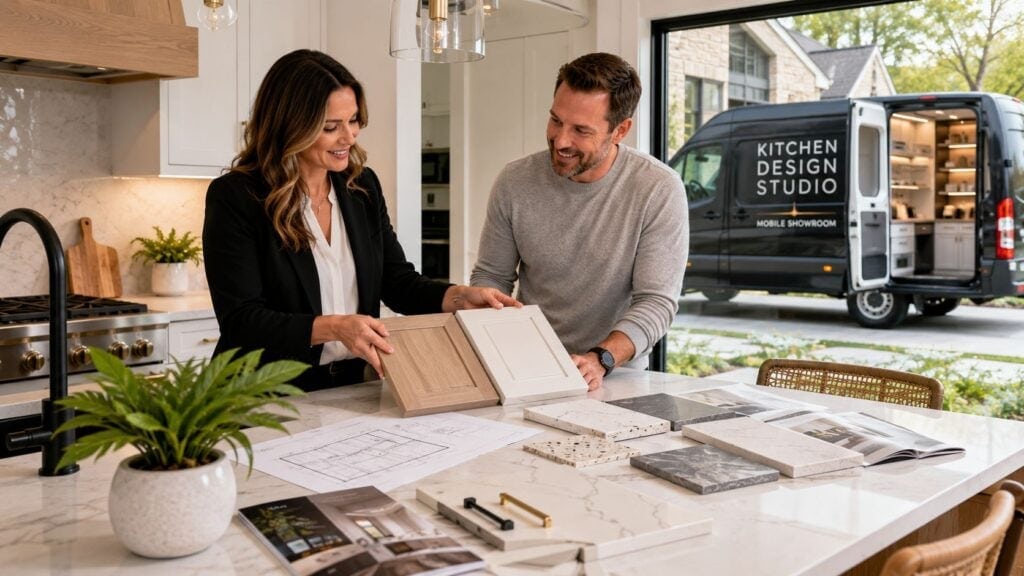
You're probably standing in your kitchen noticing the same things every day. The corner that never works. The crowded walkway near the refrigerator. Cabinets that looked acceptable when you moved in but now make the whole room feel tired. You may already have saved photos, compared door styles, and talked about knocking out a wall, yet still feel stuck on the first real move.
That feeling is normal. A kitchen remodel asks you to make dozens of connected decisions before demolition even starts. Layout affects plumbing. Lighting affects material color. Cabinet depth affects traffic flow. Once those choices start overlapping, most homeowners need less inspiration and more structure.
That's where a kitchen design consultation earns its place. It gives the project a starting point that's grounded in how you live, what your home will allow, and what your budget can support. That matters even more now that the median spend on kitchen renovation has risen to $60,000, and a full renovation can recoup about 75% of its cost at resale according to kitchen remodeling statistics summarized here. At that level of investment, guessing is expensive.
Table of Contents
- Your Dream Kitchen Starts with a Simple Conversation
- What a Kitchen Design Consultation Really Involves
- The Consultation Process Step by Step
- Understanding Consultation Costs and Project Estimates
- How to Prepare for Your Design Consultation
- The Advantage of a Mobile Showroom Consultation
- Schedule Your Complimentary Consultation in South Jersey
Your Dream Kitchen Starts with a Simple Conversation
Most kitchen projects don't begin with construction drawings. They begin with a homeowner saying some version of, “I know this room isn't working, but I'm not sure what to fix first.”
That first conversation is more useful than people expect. It helps separate surface issues from structural ones. A client may think the problem is cabinet color, then realize the underlying problem is that two people can't unload groceries without colliding near the range. Another may come in focused on adding an island, only to learn the room needs clearer circulation before an island makes sense.
The first goal is clarity
A good consultation isn't a sales pitch disguised as a meeting. It's the point where vague preferences start turning into a usable plan. You talk through what frustrates you now, what you want the kitchen to do better, and what should stay realistic for your house.
That discussion often covers more than style boards. It includes:
- Daily use patterns such as where kids drop backpacks, how often you cook, and whether you entertain
- Scope decisions like keeping the footprint versus changing the layout
- Material priorities including cabinets, countertops, hardware, and tile
- Visual direction so your ideas move beyond “clean and modern” into something specific
If you already know you're drawn to lighter palettes, looking through examples of black, white, and gray kitchens can help you describe what feels right and what doesn't.
A homeowner rarely needs more options at the start. They need a way to rule options out.
Why this step protects the project
The emotional side of remodeling gets talked about a lot. The practical side matters just as much. Early decisions shape demolition, ordering, coordination, and installation. When the design isn't settled, changes tend to happen late, and late changes cost more because they touch labor, lead times, and other selections already tied to the plan.
A strong consultation creates a filter for every next decision. If the kitchen needs better prep space, cleaner traffic flow, and durable finishes, those priorities can guide every recommendation that follows. That makes the process calmer and usually smarter.
What a Kitchen Design Consultation Really Involves
People hear “consultation” and sometimes picture a quick chat about cabinet colors. In practice, it's closer to a project blueprint session. The purpose is to line up function, style, scope, and budget before anyone gets too attached to the wrong solution.
It starts with how the kitchen needs to work
The first useful questions aren't about paint. They're about behavior.
Who cooks most often? Do you need one cleanup zone or two? Is the kitchen the homework station, the entertaining hub, or mainly a weekday workhorse? Answers like these shape layout decisions long before anyone chooses a shaker door or slab front.
A solid consultation usually sorts through four categories:
| Focus area | What gets discussed | Why it matters |
|---|---|---|
| Function | Cooking habits, storage gaps, traffic conflicts | Prevents layouts that look good but work poorly |
| Style | Cabinet profiles, finish direction, hardware feel | Keeps selections cohesive |
| Project scope | Cosmetic refresh, cabinet replacement, or larger renovation | Sets the level of planning required |
| Budget alignment | Priorities and trade-offs | Helps avoid designing beyond the job's real range |
It also looks at the room as it actually exists
A kitchen doesn't begin as an empty box. Existing windows, doors, venting, and utility locations all affect what's possible and what's expensive. That's one reason lighting and finish decisions shouldn't be left to generic showroom conditions alone.
If you're still gathering ideas before meeting with a designer, it helps to review examples of smart kitchen lighting solutions. Not because you need a final lighting plan on day one, but because lighting changes how cabinetry, countertops, and wall color read in a real home.
Practical rule: If a consultation spends all its time on style and never gets into function, scope, and constraints, it's incomplete.
What a consultation is not
It isn't a promise that every wish list item belongs in the room. It isn't a final bid for construction. And it isn't a generic package that works the same way in every house.
Older homes, additions, and partially opened floor plans usually need more layout problem-solving than homeowners expect. Newer homes may have cleaner geometry but still require hard choices about storage, appliance placement, and finish coordination. The consultation is where those choices get framed early, while they're still manageable.
The Consultation Process Step by Step
A good consultation process keeps a kitchen project from drifting. In South Jersey homes, that matters even more because older layouts, uneven walls, past additions, and dated utility locations can turn a simple idea into an expensive change order if nobody checks the room carefully at the start.
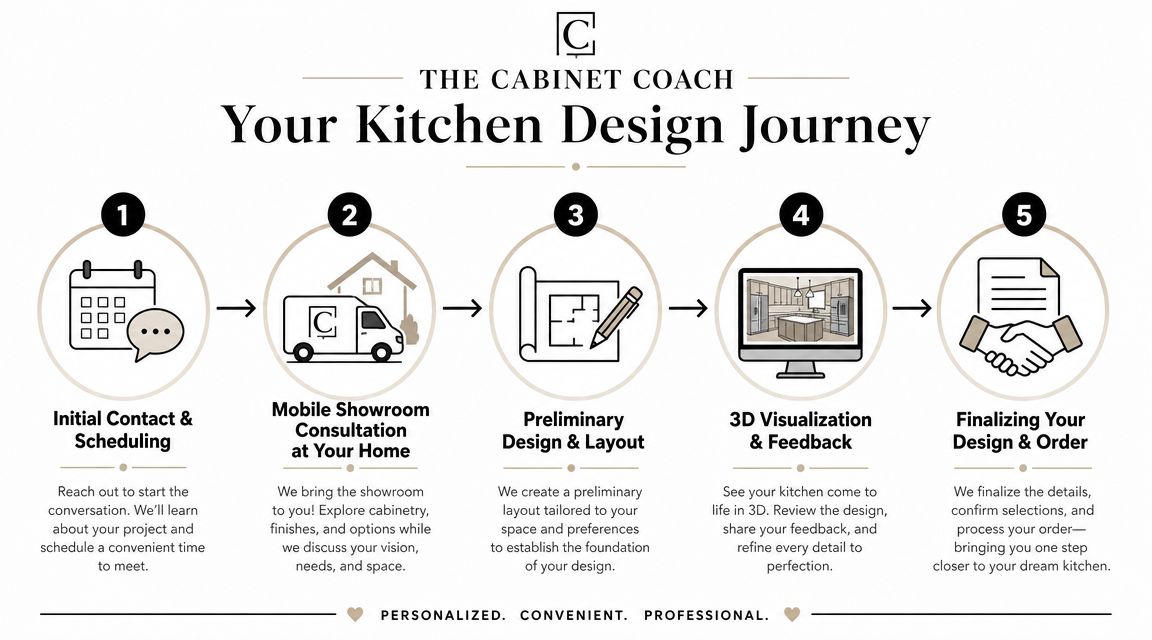
Step one and step two
The process usually starts with a short conversation. The goal is simple. Learn how the kitchen falls short today, what kind of work the homeowner is considering, and whether the budget and timeline fit the scope.
Then the project moves into the home, where the in-depth consultation begins. This is one of the biggest differences between an in-home, mobile-showroom model and a big-box or virtual-first experience. Materials, colors, and door styles look different under your actual lighting than they do under showroom spots or on a laptop screen. In practice, that saves clients from choosing a white that turns yellow in their house or a wood tone that fights the existing flooring.
Step three is measurement and layout analysis
Once we are in the space, the room gets measured and studied as it exists today. That includes wall lengths, ceiling changes, window and door swings, appliance locations, and utility points that may limit what makes sense financially. The National Kitchen and Bath Association explains the value of documenting those constraints early in its overview of kitchen planning guidelines.
Layout analysis goes beyond fitting cabinets on a wall. A designer checks whether prep space is in the right place, whether traffic cuts through the cook zone, and whether refrigerator, dishwasher, and oven doors can all open without creating daily frustration. For homeowners who want a clearer sense of how movement patterns affect function, this guide on the kitchen work triangle explains the principle well.
In older homes, this step often changes the direction of the project. A wall that looks easy to remove may carry ductwork. A sink move that seems minor may trigger more plumbing work than expected.
Step four and step five
After the room is measured correctly, the design starts to take shape. That usually includes cabinet layout, appliance placement, storage planning, and a first round of finish and material options. If the plan involves moving a sink, dishwasher, or gas range, homeowners should also understand the plumbing aspects of kitchen planning, because utility work affects both layout choices and cost.
Then comes the presentation. Homeowners review drawings, samples, and proposed selections in the context of their own home, which is where a mobile showroom has a practical advantage. You can compare door styles against your flooring, check countertop samples beside your wall color, and rule out finishes that looked fine online but feel wrong in the room.
The best feedback at this stage is specific and tied to daily use.
- “That island shortens the walkway too much.”
- “I need the microwave away from the main prep area.”
- “This paint color looks colder here than it did in the sample photo.”
That kind of response leads to useful revisions. By the end of the process, the project has a clearer layout, tighter material direction, and fewer costly surprises later.
Understanding Consultation Costs and Project Estimates
Kitchen design fees vary because the service itself varies. Some homeowners need a few hours of guidance and finish direction. Others need full planning for a major renovation with layout changes, detailed selections, and coordination across multiple trades.
What the market typically looks like
Kitchen design consultation is usually billed as a professional service, not a single off-the-shelf product. According to Sweeten's kitchen designer cost guide, designers may charge $65 to $250 per hour, with a more common average of $125 to $150 per hour. The same source notes that conceptual meetings often run $350 to $500, while full design planning can range from $500 to $10,000, with a typical middle range of $2,500 to $3,500.
That pricing range surprises people until they see what the work includes. Measuring. Layout problem-solving. Product coordination. Revisions. Drawings. Material decisions. In more complex markets and larger projects, fees can also scale with the renovation budget.
Why estimates change as the design gets sharper
An early estimate is usually directional. It helps answer whether the project is moving in the right lane financially. A later estimate gets better because more decisions have been made. Cabinet line, finish level, scope of demolition, utility relocation, countertop selection, and installation details all influence cost.
This is why homeowners should be careful about comparing numbers from different sources too early. One estimate may assume a simple footprint-preserving update. Another may include substantial construction work.
A broader budgeting reference can help you frame those conversations before you commit to final selections. This breakdown of kitchen remodeling costs is useful for understanding where money usually gets allocated across the project.
Where a complimentary initial consultation fits
A complimentary initial consultation has real value because it helps define the project before you pay for deeper planning. It can determine whether your goals fit the space, whether the budget direction is realistic, and whether the working relationship feels right.
Paying for design isn't the issue most homeowners regret. Paying for the wrong design, or redesigning late, usually is.
That's the practical way to think about consultation cost. You're not only buying ideas. You're buying fewer avoidable mistakes.
How to Prepare for Your Design Consultation
You do not need a finished vision before the first meeting. You need enough real information for the designer to separate preferences from practical limits, especially in older South Jersey homes where the room often behaves differently than it looks in photos.
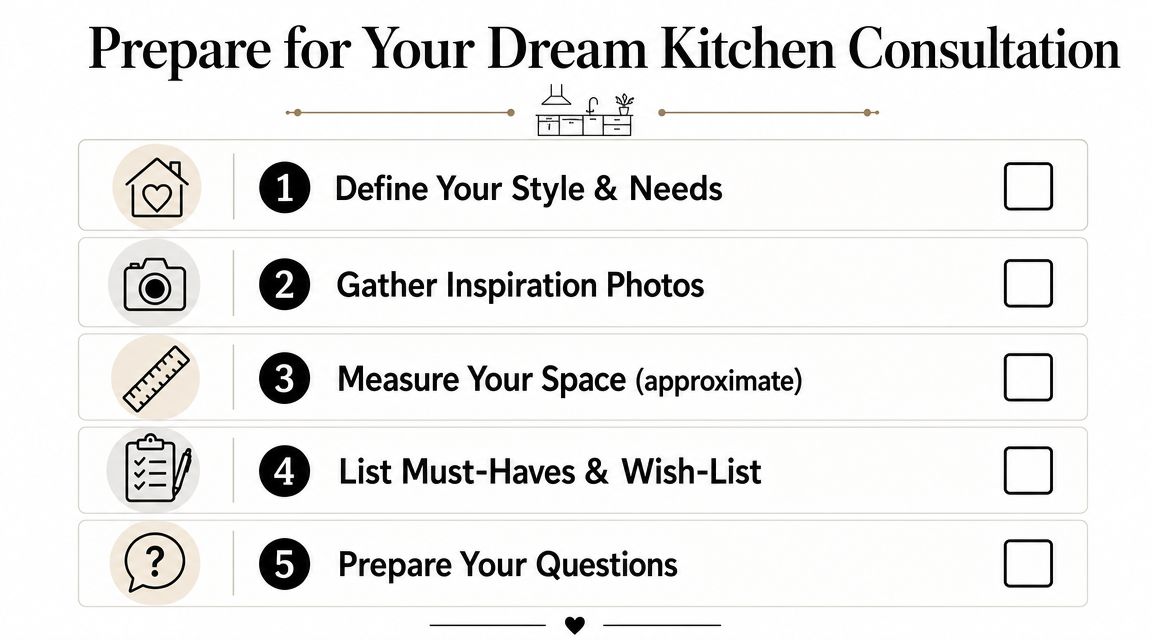
Bring visual direction and daily-use details
Bring a short set of inspiration photos, not a gallery of every kitchen style you have ever liked. Five to ten images is usually enough. The goal is to spot patterns. Maybe you keep saving painted perimeter cabinets with a wood island. Maybe you respond to simple slab doors, lighter counters, or less visual clutter.
Then describe how your current kitchen works on a normal Tuesday morning.
- What slows the room down: crowded prep space, traffic cutting through the work zone, poor pantry access
- What bothers you visually: heavy soffits, too many finishes, dated door styles, a backsplash that fights with the counters
- What has to stay: a window wall, a table area, access to the yard, an appliance you plan to keep
Those details help far more than broad statements like “we want it more functional.”
If you want a rough sketch before the appointment, these apps for 2D and 3D floor plans can help you map the room well enough to start the conversation.
Measure what you can and photograph what you use
Rough dimensions are useful. Perfection is not required at this stage.
Measure the length of each wall if you can. Note ceiling height, window and door locations, and anything that projects into the room, such as radiators, soffits, trim, or a pantry bump-out. In older homes, I also want to know where floors slope, where walls feel out of square, and whether door swings already create conflicts. Those conditions affect layout choices early.
Phone photos matter just as much. Take shots from each corner, then add a few photos of problem areas while the kitchen is in use. A counter piled up near the coffee station or trash pullout tells a more honest story than a clean wide shot.
Make three short lists before the appointment
Come in with priorities, not a script. A clear consultation usually starts with three short lists.
Required improvements
Focus on changes tied to daily use. Better drawer storage. A wider prep area. Trash closer to cleanup. Lighting where you chop and read labels.Nice-to-have features
Include the items you would love if the space and budget allow. A beverage station, open shelves, a larger island, a statement hood, or extra seating can all make sense. They just need to earn their place in the room.Questions to ask
Write them down ahead of time. Ask what should be decided first, which selections affect lead times, what layout compromises may be necessary, and where the budget is most likely to shift.
A practical checklist like how to plan a kitchen remodel can help you sort those decisions before the meeting.
One more piece of advice. If your home has quirks, say so early. A mobile showroom and in-home consultation work best when the conversation starts with the specific room, the specific lighting, and the way your household typically uses the kitchen. That is how good design avoids expensive corrections later.
The Advantage of a Mobile Showroom Consultation
Virtual design has made the early stages of remodeling easier. Big-box consultations can also be useful for broad product exposure. But neither format fully replaces what happens when a designer stands in your actual kitchen, studies the room, and pulls real samples under your home's lighting.

Where virtual help works and where it falls short
Virtual consultations are efficient at the beginning. They're good for discussing style preferences, general scope, and whether a project direction makes sense. Big-box environments can also help homeowners compare broad categories quickly.
The problem starts when the room has quirks. Older homes in South Jersey, especially in places like Cherry Hill, Haddonfield, and Moorestown, often have conditions that don't reveal themselves well on a screen. Slightly off-square walls. Tight swing clearances. Additions that changed circulation. Window placement that makes a standard cabinet plan feel wrong.
For homes with irregular geometry, this awkward-angle kitchen case study shows why accurate scaled drawings matter and notes that appliance clearances should be kept at at least 42 to 48 inches in working areas. Those are exactly the kinds of details virtual planning can miss.
Why physical samples change decisions
Cabinet color isn't a fixed thing. A painted door can look soft in one house and stark in another. Quartz with subtle movement can disappear under cool lighting and read much stronger under warm lighting. Hardware finish can either connect the room or create visual noise.
That's where a mobile showroom is useful. It brings actual door samples, finish boards, countertop options, and hardware into the house where they'll live. Homeowners can compare combinations against their flooring, wall color, adjacent rooms, and natural light conditions. That often settles debates much faster than online renderings.
A mobile showroom model also helps with coordinated decision-making. Instead of selecting cabinets one week, countertops later, and hardware somewhere else, you can evaluate relationships between materials at the same time. If you want a fuller look at that approach, this article on why a mobile cabinet showroom is the future of kitchen remodeling in South Jersey lays out the logic behind it.
The format looks like this in practice:
Why in-home work is especially useful in South Jersey
South Jersey housing stock is mixed. You'll find older colonials, ranch homes, split levels, and newer builds all within a short drive. That means there isn't one standard kitchen problem.
Some homes need layout triage first. Others need better finish coordination. Some need both. A mobile, in-home process handles those realities better because the consultation happens in the same environment where the decisions will matter. One option for that kind of service is The Cabinet Coach, which works as a mobile showroom for cabinetry and related selections in South Jersey.
Schedule Your Complimentary Consultation in South Jersey
The smartest kitchen remodels usually don't begin with demolition plans or finish boards. They begin with a measured conversation about how the room works, what the house allows, and which decisions deserve attention first.
That's why a kitchen design consultation matters. It gives shape to the project before money starts moving quickly. It also helps homeowners avoid a common problem. Spending too much energy on surface choices before layout, clearances, and material coordination are resolved.
For homeowners in Camden and Burlington Counties, the in-home approach is especially practical. It aligns with the specific characteristics of South Jersey homes, where room conditions, lighting, and existing architecture often matter more than a generic online plan suggests.
If you're still in the stage of comparing ideas, that's fine. A consultation is exactly where those ideas get tested. You don't need every answer before you start. You just need a place to begin, and a process that can turn preferences, constraints, and budget into a workable plan.
If you're planning a remodel in South Jersey, a good next step is to schedule a consultation with The Cabinet Coach and start sorting out layout, materials, and budget in the room where those decisions matter.