
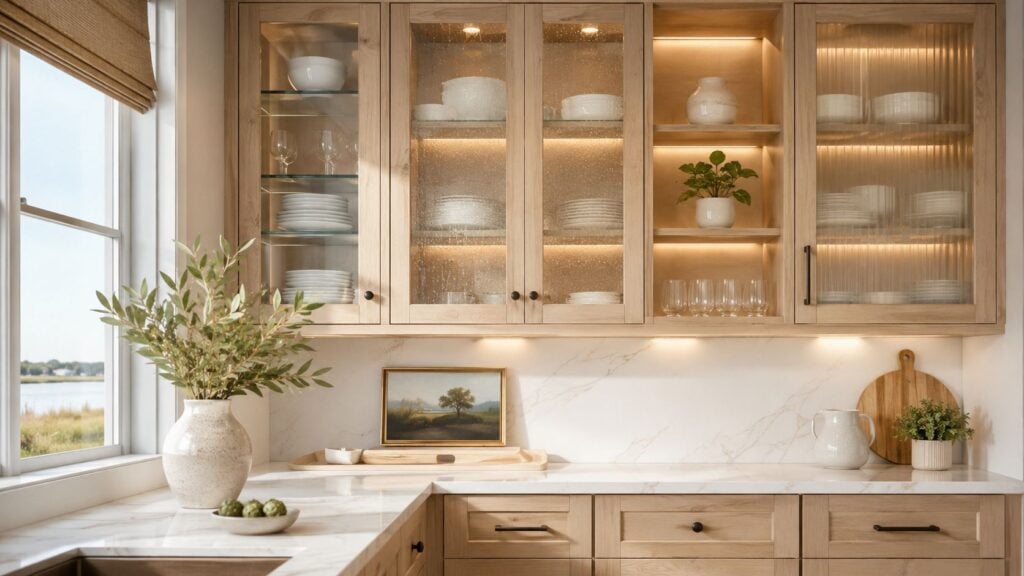
If you're standing in your kitchen thinking it feels a little flat, a little dark, or just too heavy with solid doors from one end of the room to the other, you're not alone. A lot of South Jersey homeowners reach that point before they realize they don't necessarily need a dramatic layout change to make the room feel lighter.
Glass doors for kitchen wall cabinets can change the mood of a kitchen fast. They reflect light, add depth, and give upper cabinets a furniture-like look that solid fronts can't always deliver. They can also create a problem if the wrong glass, the wrong placement, or the wrong budget assumptions drive the decision.
The smartest approach is to treat glass as both a design choice and a working part of your kitchen. It needs to look right from across the room, hold up to daily use, and fit the way your household lives.
Table of Contents
- Brighten Your Kitchen with Glass Cabinet Doors
- Choosing Your Cabinet Glass Style and Type
- Practical Pros and Cons for a Real Household
- Designing with In-Cabinet Lighting and Displays
- Budgeting for Your Glass Cabinet Doors
- New Installation Versus Retrofitting Existing Cabinets
- Start Your South Jersey Kitchen Design Today
Brighten Your Kitchen with Glass Cabinet Doors
A kitchen can be fully functional and still feel closed in. That usually happens when every upper cabinet door is solid, dark, and visually heavy, especially in homes where natural light is limited or the kitchen opens only partially into the next room.
Glass changes that dynamic because it breaks up the block of cabinetry. Instead of seeing one uninterrupted wall of wood or painted fronts, your eye gets depth. The room feels less crowded, and even a modest remodel can read as more custom.
For many homeowners, the best use of glass isn't across the entire kitchen. It's in the spots that deserve attention. A pair of doors around a range hood, a cabinet at the end of a run, or a few uppers near a breakfast area often do more for the room than converting every cabinet. That selective approach usually looks more intentional, and it keeps the kitchen from feeling too exposed.
Practical rule: Use glass where you want the kitchen to feel lighter or more finished, not where you need to hide the daily scramble of mugs, snack bins, and mismatched plastic containers.
Glass-front wall cabinets also work especially well when you have items worth showing. White dishes, textured bowls, serving pieces, or a small collection of glassware can become part of the design. If your shelves are likely to hold bulk food boxes and travel cups, glass may still work, but the glass type and location matter more.
South Jersey homes vary a lot. Some kitchens lean traditional with detailed trim and warm finishes. Others are moving toward cleaner painted cabinetry and simpler lines. Glass can fit both. The key is matching the cabinet style, glass type, and placement to the architecture you already have, instead of forcing a showroom look into a real family kitchen.
A good result comes from making three decisions early:
- Choose the purpose first: Decide whether the glass is meant to display, soften the room, or add a focal point.
- Match the household: If you don't want visible shelves, pick obscured glass or use fewer doors.
- Think in accents, not obligation: You don't need a whole wall of glass to get the effect.
Choosing Your Cabinet Glass Style and Type
Not all glass cabinet doors create the same effect. Some are crisp and architectural. Others feel relaxed, vintage, or a little more forgiving. The door frame matters, the insert matters, and the scale of the details matters.
How the door style changes the look
A full-frame cabinet door with a visible border tends to feel more traditional or transitional. It gives the glass a defined edge and works well when the rest of the kitchen has crown molding, decorative hardware, or a furniture-inspired island.
A slimmer frame reads cleaner and more current. In a simple painted kitchen, that lighter frame lets the glass take more visual responsibility. You notice what's inside the cabinet and the reflection of light, not just the door construction.
Mullions, or the grid pieces that divide the glass, can shift the style quickly. A grid can support a farmhouse or classic look, but it can also make a cabinet feel busier than expected if the rest of the kitchen is minimal. In smaller kitchens, too many divided lites can look fussy.
For homeowners comparing door profiles, these kitchen cupboard door styles help clarify how frame shape changes the overall feel before you even choose the glass insert.
How the glass itself changes the experience
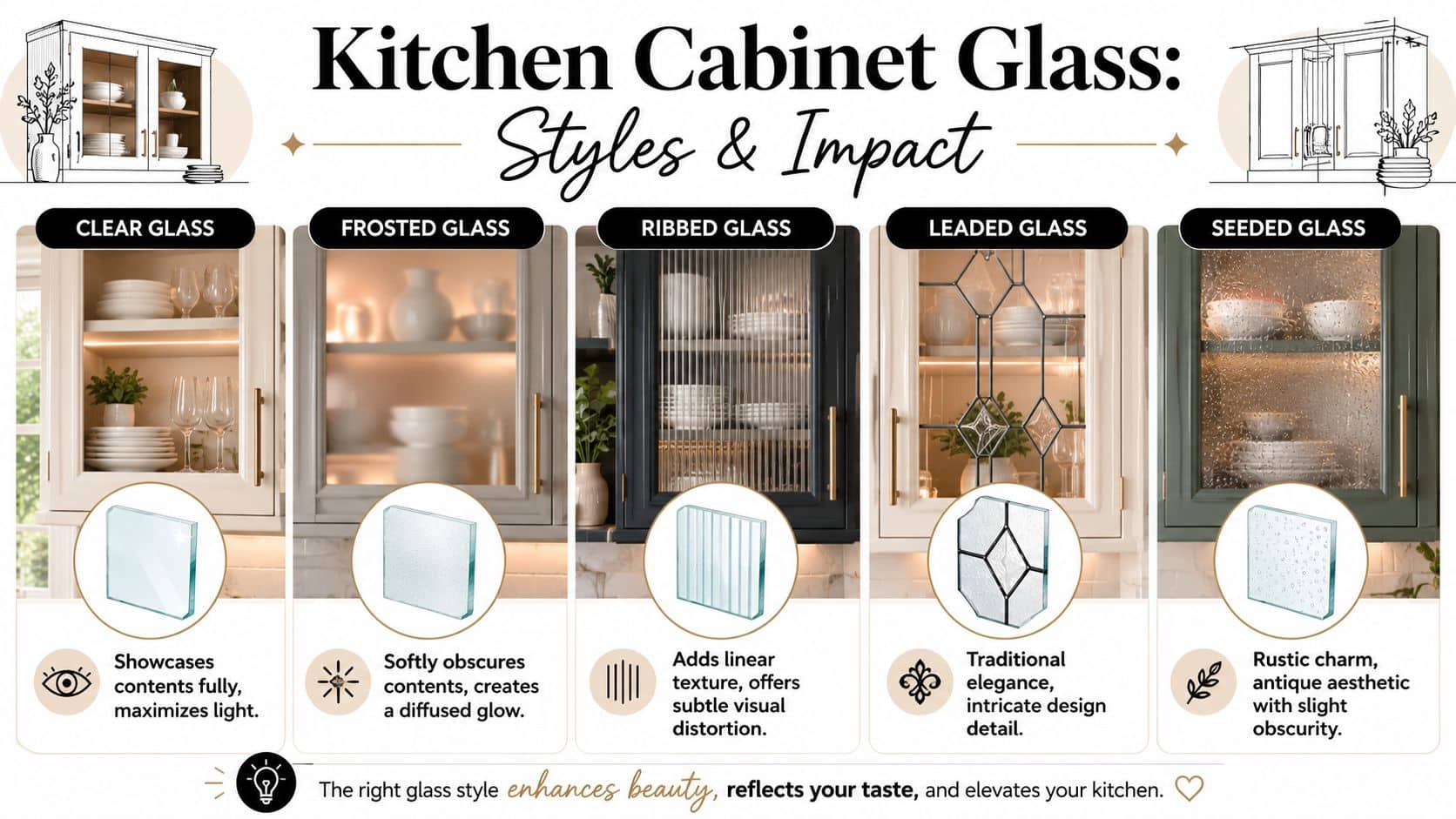
Clear glass is the most straightforward option. It shows everything, brings in the most visual openness, and works best when you plan to keep shelves orderly. It's also the least forgiving if cabinet interiors are crowded.
Frosted or etched glass softens the contents. You still get lightness, but you don't have to stage every plate and mug. This is one of the easiest ways to get the look of glass without committing to a full display cabinet.
Ribbed glass adds movement. It creates vertical texture and a mild blur, which is useful in kitchens that need detail but not visual clutter. It can be a strong fit in transitional and modern spaces.
Seeded glass has a more casual, older-home character. It pairs nicely with warm woods, painted finishes, and kitchens where a slightly collected look feels right.
Leaded glass is more decorative. It can be beautiful in the right house, especially if you want a traditional focal point, but it needs restraint so it doesn't compete with backsplash tile, ornate hardware, or busy stone patterns.
The technical side matters too. For cabinet applications, tempered glass is widely recommended because it's 4 to 5 times stronger than regular glass and breaks into blunt granules rather than sharp shards. Cabinet glass also typically falls in the 3 mm to 6 mm thickness range, with thicker panels adding durability and weight. Designers often recommend limiting glass fronts to about 20% to 30% of total upper cabinetry to keep the room visually balanced, according to Fab Glass and Mirror's cabinet glass guidance.
Glass looks best when it has a clear job. Show something, soften something, or highlight a section of the kitchen.
Cabinet Glass Type Comparison
| Glass Type | Visibility | Maintenance Level | Best For |
|---|---|---|---|
| Clear | High | Higher | Displaying dishware, brightening dark kitchens |
| Frosted | Low to moderate | Moderate | Homeowners who want softness without full visibility |
| Ribbed | Moderate | Moderate | Transitional or modern kitchens that need texture |
| Leaded | Moderate | Moderate to higher | Traditional focal-point cabinets |
| Seeded | Moderate | Moderate | Cottage, farmhouse, or vintage-leaning kitchens |
Practical Pros and Cons for a Real Household
Glass cabinet doors win people over quickly in photos. Daily life is a tougher test. The right answer depends less on trends and more on whether your kitchen has to absorb school mornings, frequent cooking, guests, resale goals, or all of the above.
Where glass works beautifully
Glass does an excellent job breaking up long runs of upper cabinetry. That matters in kitchens where too many solid doors create a boxed-in feeling. A few glass-front sections can make a room feel more open without changing the footprint.
They're also useful for creating visual hierarchy. If every cabinet door looks identical, the kitchen can read flat. Glass lets you feature a coffee station, a serving zone, or the cabinets flanking a hood. That gives the room rhythm.
Some homeowners also like the accountability that glass creates. Shelves stay neater because the contents stay visible. If you're naturally organized, that's not a burden. It becomes part of why the kitchen looks polished.
Where homeowners get frustrated
The same visibility that makes glass appealing can become the biggest drawback. A style-focused source on cabinet glass notes that glass-front cabinets lighten a kitchen's look, but they also make clutter visible and can increase the need for organized storage, which is a real decision point for busy families or resale-minded remodels, as discussed by Cabinet Select's overview of glass kitchen cabinet doors.
That issue shows up fast in real kitchens. Kids put cups back in a hurry. Food-storage containers don't stack neatly. Everyday mugs migrate. If the cabinet sits at eye level and faces the main living space, disorder reads louder behind glass than behind a painted panel.
A few trade-offs are worth weighing directly:
- Cleaning demand: Clear glass shows fingerprints, dust, and shelf disorder sooner than solid doors.
- Storage pressure: The cabinets behind glass usually work best for coordinated dishes, glassware, or serving pieces.
- Privacy loss: Some homeowners don't want anyone seeing what they store.
If the idea of editing a shelf every few days sounds annoying, choose obscured glass or keep glass to one small display zone.
Glass isn't impractical. It just isn't invisible. In households with active cooking, tight routines, and a lot of shared use, smaller doses usually work better than a full bank of exposed uppers.
Designing with In-Cabinet Lighting and Displays
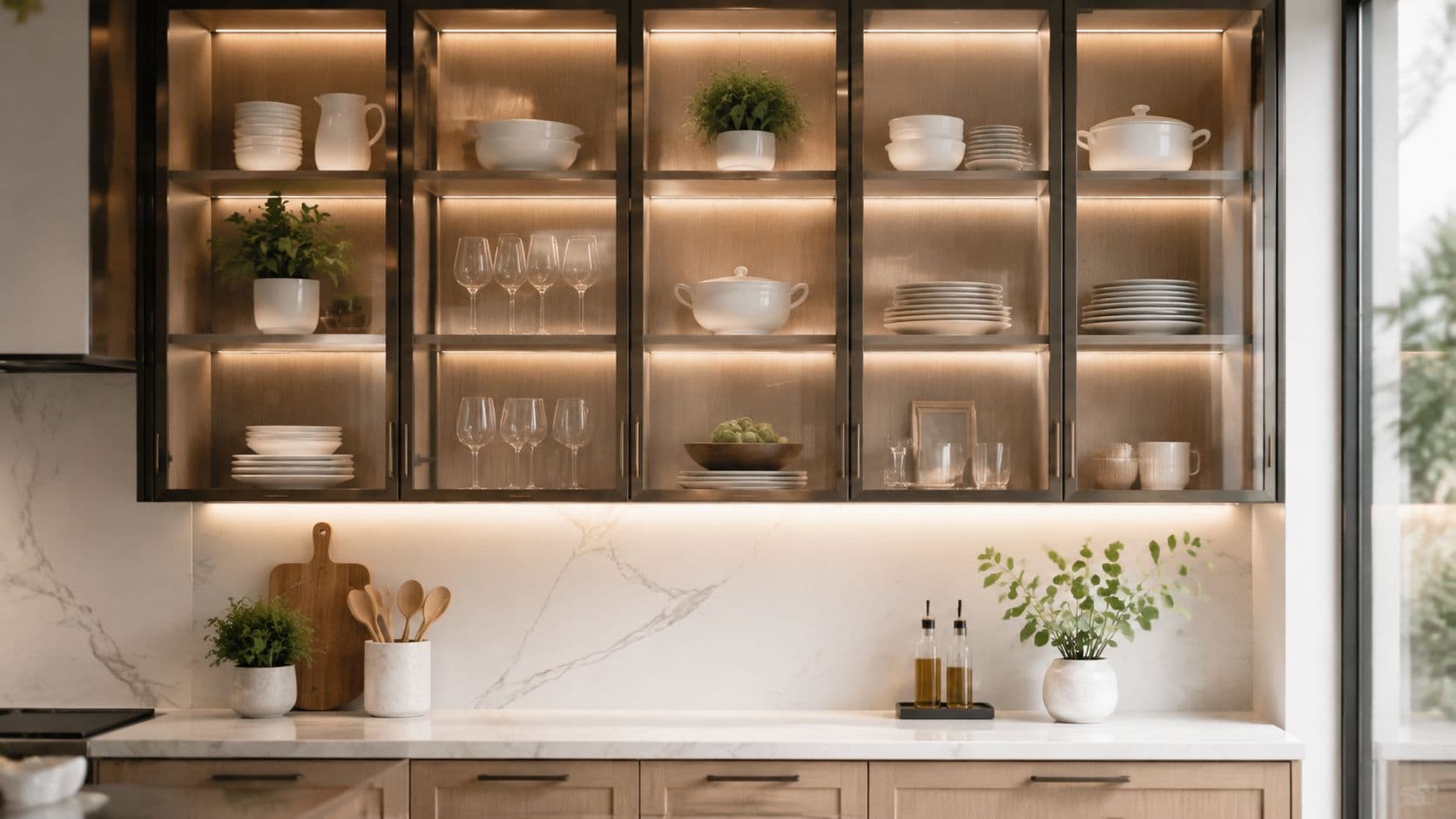
Lighting is what turns glass cabinets from a nice feature into one of the best-looking parts of the kitchen. During the day, the glass reflects ambient light. At night, the cabinet itself can become part of the room's lighting plan.
Lighting choices that make cabinets glow
Low-profile LED strip lighting usually gives the cleanest result. It washes the shelves evenly and avoids the spotlight effect that can make dishes look over-lit. In kitchens with simple cabinet interiors and a contemporary feel, this is often the most refined choice.
Puck lights create more focused pools of light. They can work well if you want to draw attention to specific items like glassware, ceramics, or a decorative collection. They also suit more traditional cabinetry, where a little drama feels appropriate.
Wiring should be part of the conversation early. If you're planning new cabinetry, it's much easier to conceal wiring paths and switch locations before installation. If you're adding lighting later, the design may need to adapt to how power can be brought into the cabinet cleanly. Homeowners comparing options for layered task and accent lighting often find it helpful to review under-cabinet lighting installation ideas alongside in-cabinet plans so the whole kitchen feels coordinated.
Designer note: Soft, even light usually looks more expensive than bright, hot spots.
A short visual walkthrough can help you picture the effect in a real kitchen:
How to style shelves so they stay useful
Good cabinet displays don't look stuffed, and they don't look precious either. The goal is a shelf that still works on a Tuesday night.
Try these display habits:
- Group by function: Keep dinner plates together, bowls together, and glassware together so the arrangement feels intentional.
- Repeat materials: White dishes, clear glass, wood serving pieces, or one metal tone create visual calm.
- Leave breathing room: A shelf packed edge to edge looks cluttered, even if every item matches.
Mixing functional and decorative pieces usually lands best. A stack of everyday plates can sit next to a ceramic pitcher or serving bowl. That keeps the cabinet from looking staged while still giving the eye something to settle on.
Interior cabinet color matters too. A lighter cabinet interior bounces more light and helps objects stand out. A darker interior creates contrast and can look dramatic, but it asks for more deliberate styling.
Budgeting for Your Glass Cabinet Doors
Glass-front cabinetry is a premium feature. That doesn't mean it has to blow up the remodel budget, but it does mean the numbers need to be understood before anyone falls in love with a whole wall of display cabinets.
What the price premium really means
One industry guide states that glass cabinet doors typically cost 25% to 50% more than comparable solid alternatives. That same guide lists complete installations at $125 to $800+ per linear foot, with basic clear glass doors around $75 to $150 per piece and premium leaded designs reaching $200 to $400 per door, according to Artline Kitchen & Bath's glass kitchen cabinet cost guide.
Those ranges are broad for a reason. Material choice, customization, cabinet construction, glass type, finish quality, and labor all affect where a project lands. A simple clear insert in a standard-size upper cabinet is a very different budget item from decorative leaded glass in a custom painted kitchen.
That cost premium is why glass is usually strongest as an accent. Most homeowners get a better visual return by placing it strategically instead of treating it as the default for every upper cabinet.
Where to spend and where to hold back
Budgeting goes more smoothly when you decide where glass matters most.
- Spend near focal areas: Cabinets around a hood, coffee zone, or dining-facing wall usually deliver the biggest design payoff.
- Hold back on utility storage: Cabinets that hide food containers, school bottles, or pantry overflow are better left solid.
- Match the glass to the cabinet value: Expensive decorative glass can feel wasted on a cabinet location that doesn't get much visibility.
If you're already weighing refacing or selective door replacement, this is also where the math matters. A budget can stretch further when you reserve glass for the doors people notice first and compare that choice against the cost considerations involved in kitchen cabinet refacing.
One broader market note adds context. The same industry guide says the global kitchen cabinets market is projected to reach USD 79.36 billion in 2025 and USD 100.76 billion by 2030, with a projected 4.89% CAGR. That's a projection, not a local pricing promise, but it does reinforce that cabinetry remains a major area of kitchen spending in remodels.
New Installation Versus Retrofitting Existing Cabinets
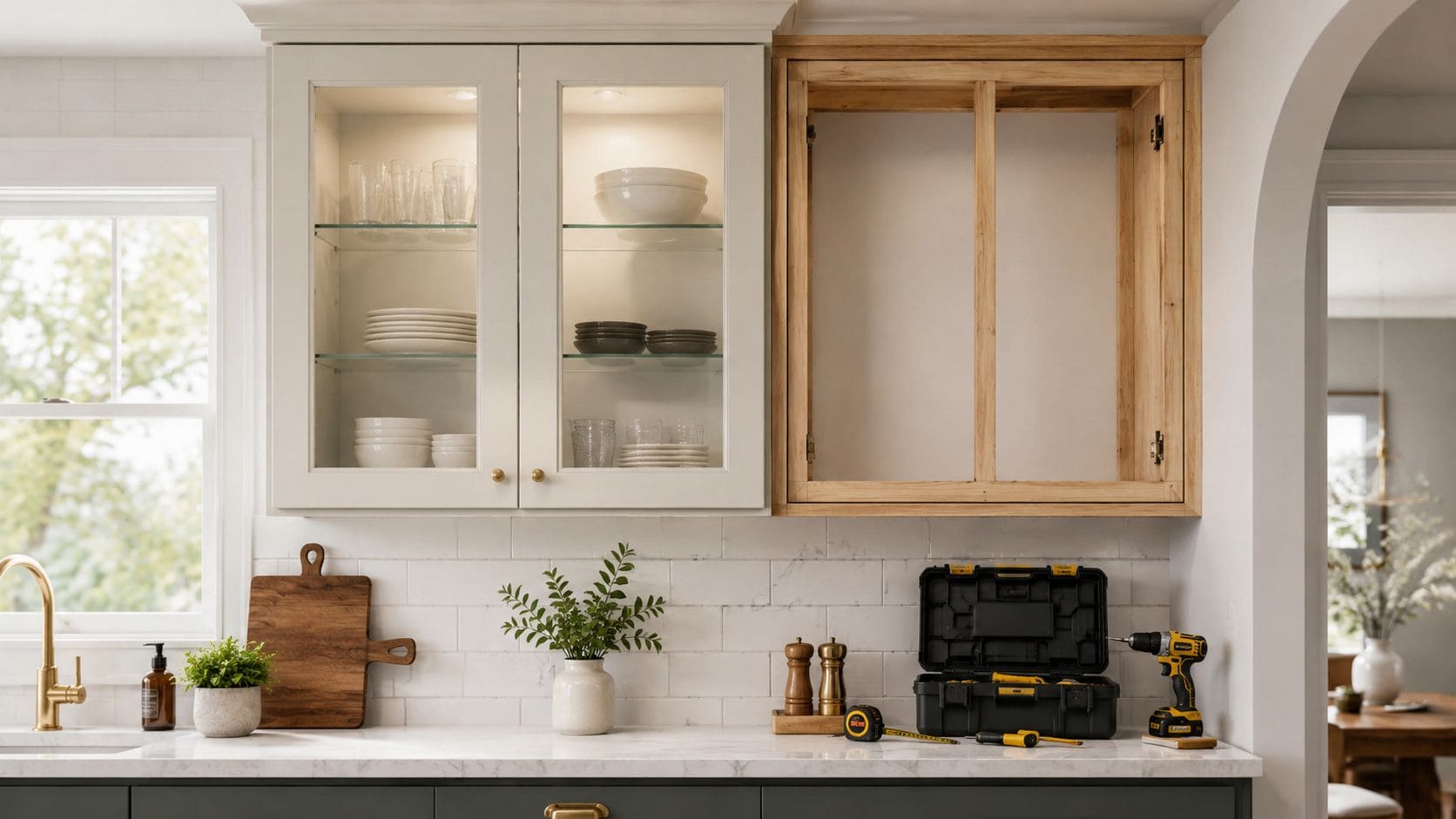
Many homeowners start with the same question. Should you order new doors built for glass, or cut the center out of existing doors and insert glass later? On paper, retrofitting sounds simple. In practice, it isn't always the bargain it appears to be.
Why new glass doors are the cleaner path
Factory-built glass doors usually fit better, hang better, and finish better. The frame is designed for the insert from the start, the proportions look intentional, and the hinge setup is chosen with the final door weight in mind.
That matters most when the kitchen is already getting updated cabinetry, fresh finishes, or a more custom look. New doors also reduce the risk of odd rail widths, rough interior cuts, or visible modifications on older cabinet fronts.
If you're already deciding between keeping cabinet boxes or replacing more of the system, it's worth comparing cabinet refacing versus replacement before assuming retrofit work is the most sensible route.
Why retrofit jobs can go sideways
The hidden problem with retrofitting is that removing the center panel changes the structure of the door. A DIY-focused video source highlights challenges: keeping the frame structurally sound after cutting out the panel, sealing the glass properly against humidity, and managing the extra hinge load so alignment doesn't drift over time, as noted in this retrofit discussion on YouTube.
Older cabinet doors are especially risky. Wood movement, existing wear, out-of-square frames, and tired hinges all make the job less forgiving. A door can look acceptable on installation day and still become the one cabinet that never lines up quite right.
A retrofit can make sense in some situations, particularly when the door style is worth preserving and the frame has enough substance to support the modification. But this is not a casual cut-and-silicone project if the cabinets see heavy daily use.
New doors usually cost more upfront. They also remove a lot of the small failure points that show up months later.
Start Your South Jersey Kitchen Design Today
The best glass cabinet projects come from good editing. Pick the right locations. Choose a glass type that matches your tolerance for visibility. Plan the lighting before the electrician and cabinet installer are done. Keep the budget focused on the doors that will change the room most.
For homeowners in Cherry Hill, Haddonfield, Moorestown, and surrounding parts of Camden and Burlington Counties, the hardest part usually isn't finding inspiration. It's narrowing the choices inside your own kitchen, with your own light, your own cabinet layout, and your own budget priorities.
Bring the decision into your actual kitchen
Samples matter more with glass than many people expect. Clear, frosted, ribbed, seeded, and leaded inserts all react differently to wall color, cabinet finish, and natural light. The same door style can feel elegant in one home and too busy in another.
That's why seeing options in person is so useful. A mobile showroom approach makes the comparison easier because you can look at cabinet finishes, hardware, countertop samples, and glass choices together instead of trying to piece the decision together from separate visits and screenshots.
A simpler next step for local homeowners
If you're serious about adding glass doors for kitchen wall cabinets, the most useful next move is a design conversation in your home, not another hour of guessing online. You can sort out whether glass belongs in two cabinets or ten, whether retrofit work is worth considering, and how to make the look fit the rest of the remodel.
South Jersey homeowners who want that kind of guided planning can start with a kitchen design consultation and review options with someone who understands local homes, local remodel priorities, and the realities of getting from sample to finished installation.
If you're ready to compare cabinet styles, glass options, and finishes in your own space, contact The Cabinet Coach for a guided next step. Their mobile showroom serves South Jersey homeowners with a more practical way to plan a kitchen that looks bright, works hard, and feels right for everyday life.