
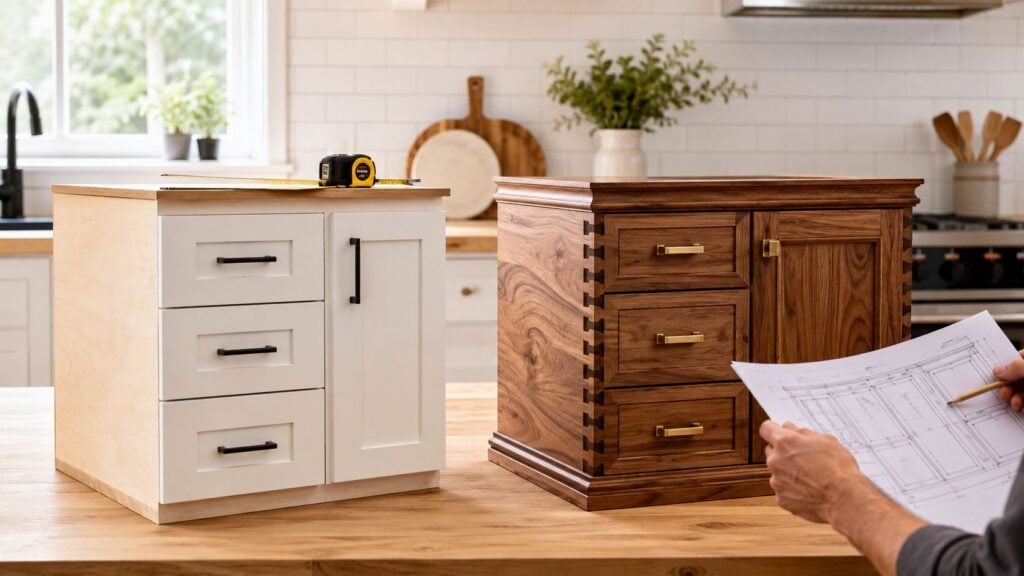
If you're standing in a South Jersey kitchen right now, looking at dated oak doors, awkward corner cabinets, and a layout that never quite worked, you're probably hearing the same three words from every direction: stock, semi-custom, and custom. For most homeowners in Cherry Hill, Haddonfield, Moorestown, and the surrounding area, the primary decision usually narrows to custom vs semi custom cabinets.
That choice isn't just about style. It's about how the cabinets are made, how much flexibility you need, how long you're willing to wait, and how much compromise your kitchen can tolerate. A lot of confusion starts because people compare cabinet types by door style or finish color, when the smarter place to start is the production model behind them.
Semi-custom cabinets begin with a manufacturer's established cabinet system. You choose from a catalog of sizes, styles, finishes, and upgrades, then adjust within those rules. Custom cabinets are built from scratch to your exact specifications, which changes nearly every part of the process, from design freedom to installation planning.
If you're sorting through samples, quotes, and opinions, this cabinet selection guide for choosing kitchen cabinets is a useful companion. The goal here is simpler: help you understand what works, what doesn't, and which option fits your home without paying for the wrong level of customization.
Table of Contents
- Introduction
- Custom vs Semi Custom Cabinets Defined
- Comparing Key Decision Factors
- Analyzing the Investment and Cost Breakdown
- Decision Guide Who Each Cabinet Type Is Best For
- Navigating Your Project in South Jersey
- Smart Questions to Ask Your Cabinet Professional
Introduction
South Jersey homeowners often start with the same assumption: custom must be better, and semi-custom must be the compromise. Sometimes that's true. Often it isn't.
A cabinet line can look beautiful in a showroom and still be wrong for your room, your budget, or your renovation schedule. In older homes around Haddonfield or Collingswood, the issue might be uneven walls, older trim details, or a room that wasn't laid out around modern appliances. In newer homes around Cherry Hill or Moorestown, the challenge is usually different. Homeowners want a cleaner look, better storage, and a more personalized finish without stretching the project longer than necessary.
The practical difference comes down to manufacturing. Semi-custom works by modifying a standard system. Custom works by creating the entire cabinet from scratch. That distinction affects size options, finish choices, accessories, labor, and how much problem-solving happens before installation day.
If you keep that one idea in mind, the rest of the decision gets clearer.
Custom vs Semi Custom Cabinets Defined
How Semi-Custom Cabinets Are Built
Semi-custom cabinets are built from an established product line. The manufacturer sets the cabinet sizes, construction methods, door styles, finishes, and storage accessories first. From there, you choose from approved options and, in some lines, make limited size adjustments.
That structure matters in real projects. In many South Jersey kitchens, semi-custom works well because the room does not need every cabinet built from scratch. A homeowner in Cherry Hill might want a painted shaker kitchen with rollout trays, a trash pullout, and taller uppers, but still want a process that stays more predictable on budget and lead time.
The trade-off is straightforward. You get a lot of design flexibility, but it happens inside the rules of that cabinet line.
For many homeowners, that is a smart place to be. Semi-custom usually covers the design decisions people care about most, while keeping manufacturing, ordering, and replacement parts simpler than a fully custom program.
How Custom Cabinets Are Built
Custom cabinets are built around the room itself. Cabinet sizes, proportions, details, and functions are drawn for your kitchen rather than selected from a preset catalog. That approach gives you more control over how the cabinetry fits difficult corners, uneven walls, older trim conditions, ceiling heights, and specialty appliances.
I see this come up often in older South Jersey homes. A kitchen in Haddonfield, Collingswood, or Merchantville may have settled floors, plaster irregularities, or a layout that never anticipated a 48-inch range, panel-ready refrigeration, or a furniture-style island. Custom cabinetry gives the designer and shop more freedom to solve those issues cleanly instead of covering them with fillers or changing the plan to suit a standard box.
It also asks more from the homeowner up front. More choices need to be made earlier, and those choices affect both schedule and cost.
The Core Difference That Affects Everything Else
The clearest way to define the difference is this. Semi-custom is a manufacturer-driven system with selected modifications. Custom is a room-driven process built to exact specifications.
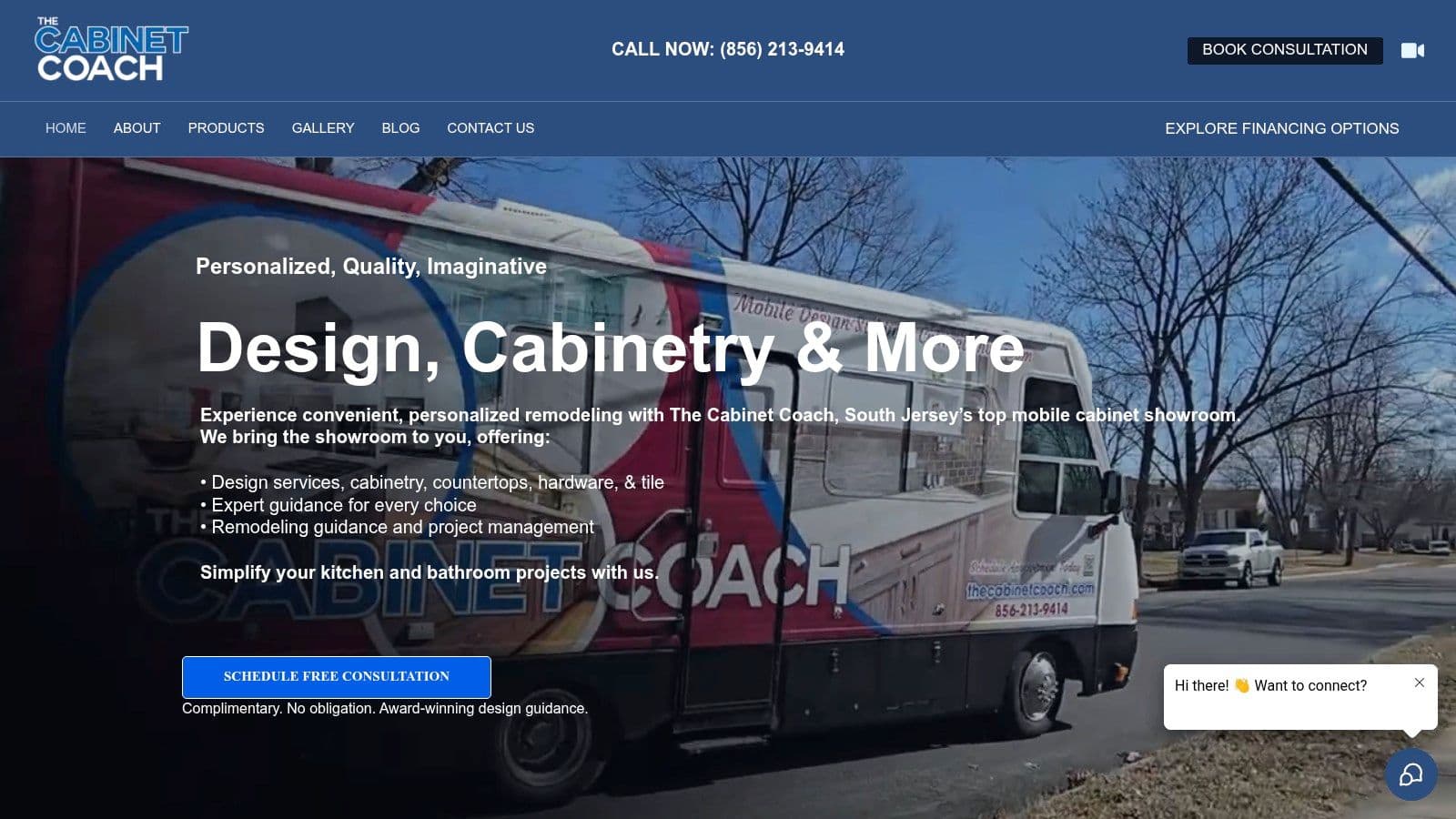
That distinction shapes almost every part of the project, including how the kitchen is measured, how many design revisions make sense, how tightly cabinets fit the space, and how much coordination happens before installation. It also affects how quickly homeowners can make decisions. That is one reason a mobile showroom model can help. Seeing door styles, finishes, and construction samples in your own South Jersey home often makes it easier to sort out whether your project needs full custom work or whether a strong semi-custom line will do the job well.
If you want broader context before choosing, this guide to prefab kitchen cabinets vs custom cabinetry gives a useful side-by-side view of where each category fits.
Comparing Key Decision Factors
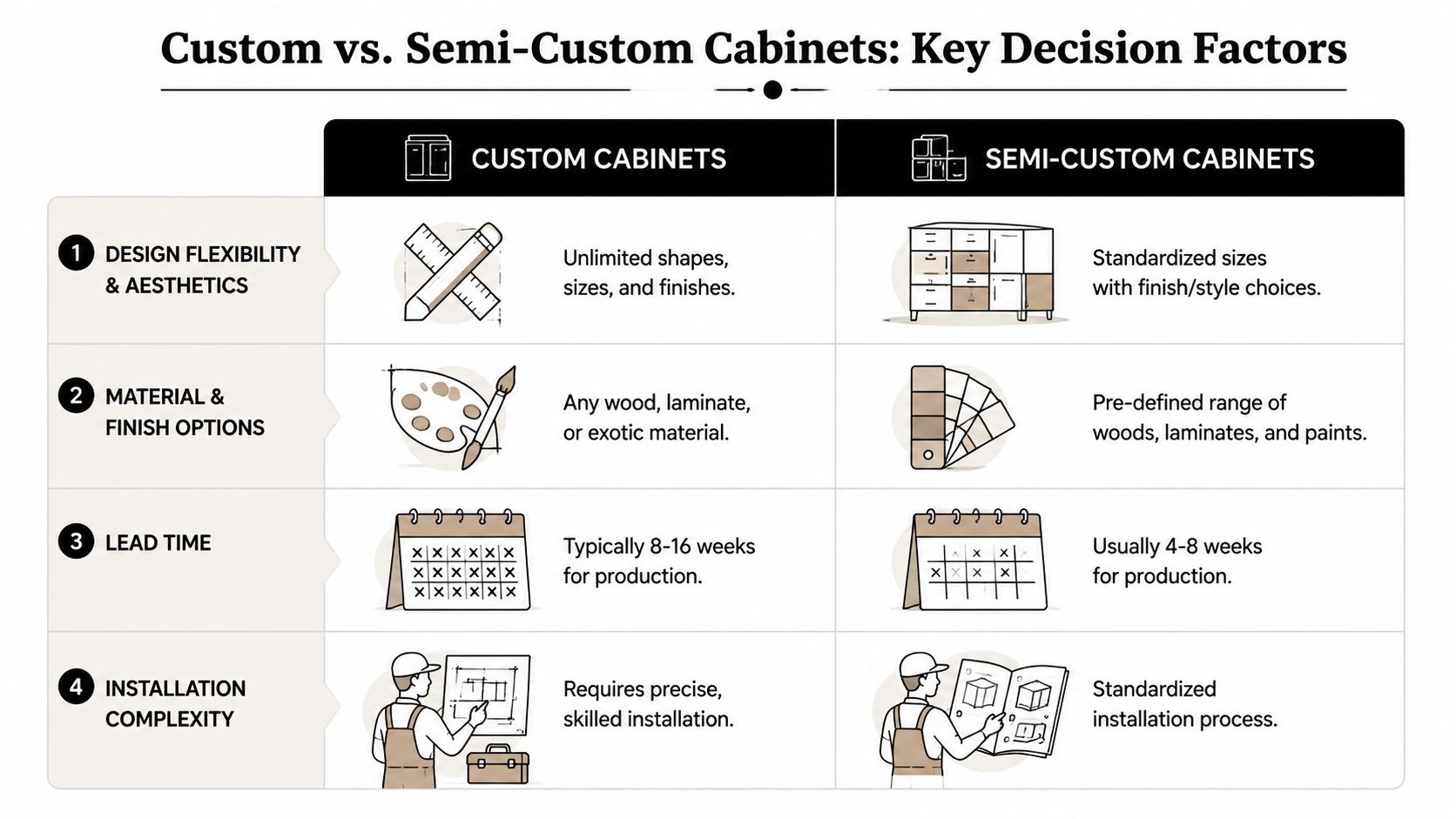
Choosing between semi-custom and custom usually comes down to three pressures that show up in almost every South Jersey project. How closely the cabinets need to fit the house. How much design freedom you need. How long you're willing to wait while your kitchen is out of commission.
Quick Comparison Table
| Factor | Semi-Custom Cabinets | Custom Cabinets |
|---|---|---|
| How they're made | Built from a standard catalog with selectable modifications | Built from scratch to exact specifications |
| Best for | Standard or near-standard layouts that need personalization | Unique layouts, detailed design goals, exact fit requirements |
| Sizing | Standard sizes with set adjustments | Any size needed |
| Style range | Broad but brand-specific | Virtually open-ended |
| Material choices | Curated by manufacturer | Determined project by project |
| Installation | More predictable when layout fits the line well | More exacting, especially when every cabinet is unique |
| Timeline feel | More streamlined | More involved from design through install |
| Who benefits most | Homeowners balancing design, cost, and schedule | Homeowners prioritizing precision and full control |
Design Flexibility and Aesthetics
Semi-custom works well for a large share of kitchen remodels in towns across South Jersey. In many homes, the layout is close enough to standard that a good cabinet line can deliver the look homeowners want without forcing them into the price and decision load of full custom. Door style options are usually broad enough to cover shaker, slab, transitional, and more traditional looks, along with glass accents, decorative panels, and useful storage accessories.
That said, "a lot of choices" is not the same as "any choice."
Custom makes sense when the design intent is specific and the room refuses to cooperate with standard planning. Older homes in Haddonfield, Moorestown, or Collingswood often have walls that are not perfectly true, windows set at awkward heights, or ceiling details that make stock dimensions look clumsy. A custom approach lets the cabinetry respond to the room instead of asking the room to accept fillers, odd reveals, or a compromised focal wall.
A quick way to judge this. If you care most about getting close to a style you love, semi-custom may do the job very well. If you care about exact proportions, exact alignment, and details that need to match the architecture of the house, custom usually earns its keep.
Material Quality and Construction
Homeowners often use "custom" as shorthand for better quality. In practice, the better cabinet is the one with the better specifications, cleaner finish work, and more disciplined construction standards.
Start with the box material, drawer box joinery, back panel thickness, hardware brand, and finish process. Those are the details that affect how the cabinets feel after five years of cooking, kids, humidity swings, and constant use. If you're sorting through material options, this breakdown of plywood vs MDF cabinets helps clarify one of the most common decisions that gets lost behind door style and paint color.
Semi-custom lines can be built very well. Custom shops can also do excellent work, but quality depends heavily on the shop's standards and consistency. I tell homeowners to read the cabinet specs before they fall in love with the rendering. A beautiful drawing can hide a weak cabinet box.
Installation and Lead Times
Installation day reflects every decision made before the first cabinet arrives. Good planning shows up here fast. So do mistakes.
Semi-custom usually gives installers a more predictable path because the line has known parts, known modifications, and a familiar ordering system. That matters in a busy remodel, especially when flooring, countertops, appliances, and electrical work all need to stay coordinated. In many South Jersey projects, that predictability is what keeps a renovation from dragging on longer than it should.
Custom can produce a tighter fit, especially in difficult rooms, but it asks for more precision from everyone involved. Field measurements need to be right. Shop drawings need to be right. Fabrication needs to be right. Installation needs to be right. If one step slips, the schedule often feels it.
Lead times also matter more than homeowners expect. Semi-custom lines are often the easier choice when the family wants the project moving on a realistic schedule. Custom usually takes longer because more decisions, approvals, and fabrication steps happen before delivery. That does not make custom the wrong choice. It means the timeline needs to match the level of customization.
This is one area where a mobile showroom model helps in a very practical way. Reviewing finishes, construction details, and door styles in your own home can shorten decision time and reduce change orders later. Homeowners see samples in their actual light, next to their flooring, wall color, and existing trim, which makes sign-off easier and helps the project stay on track.
Warranty and Maintenance
Warranty terms vary more than many homeowners expect. A semi-custom manufacturer may offer clearer written coverage because the finish system and hardware package are standardized. A custom shop may offer more personal follow-through, but the written warranty can be narrower and more dependent on the individual fabricator.
Maintenance deserves equal attention because these cabinets have to hold up to daily life, not just look good on install day.
- Painted finishes wear in predictable stress points: Sink bases, trash pull-outs, and top drawer fronts usually show use first.
- Natural wood changes over time: Light exposure and seasonal humidity can shift color and grain appearance.
- Replacement parts are often easier with a manufacturer: Reordering a matching door or drawer front years later can be simpler in a semi-custom system than with a one-off custom build.
The right choice is usually the cabinet that fits the house, the design goals, and the actual schedule of the family using it.
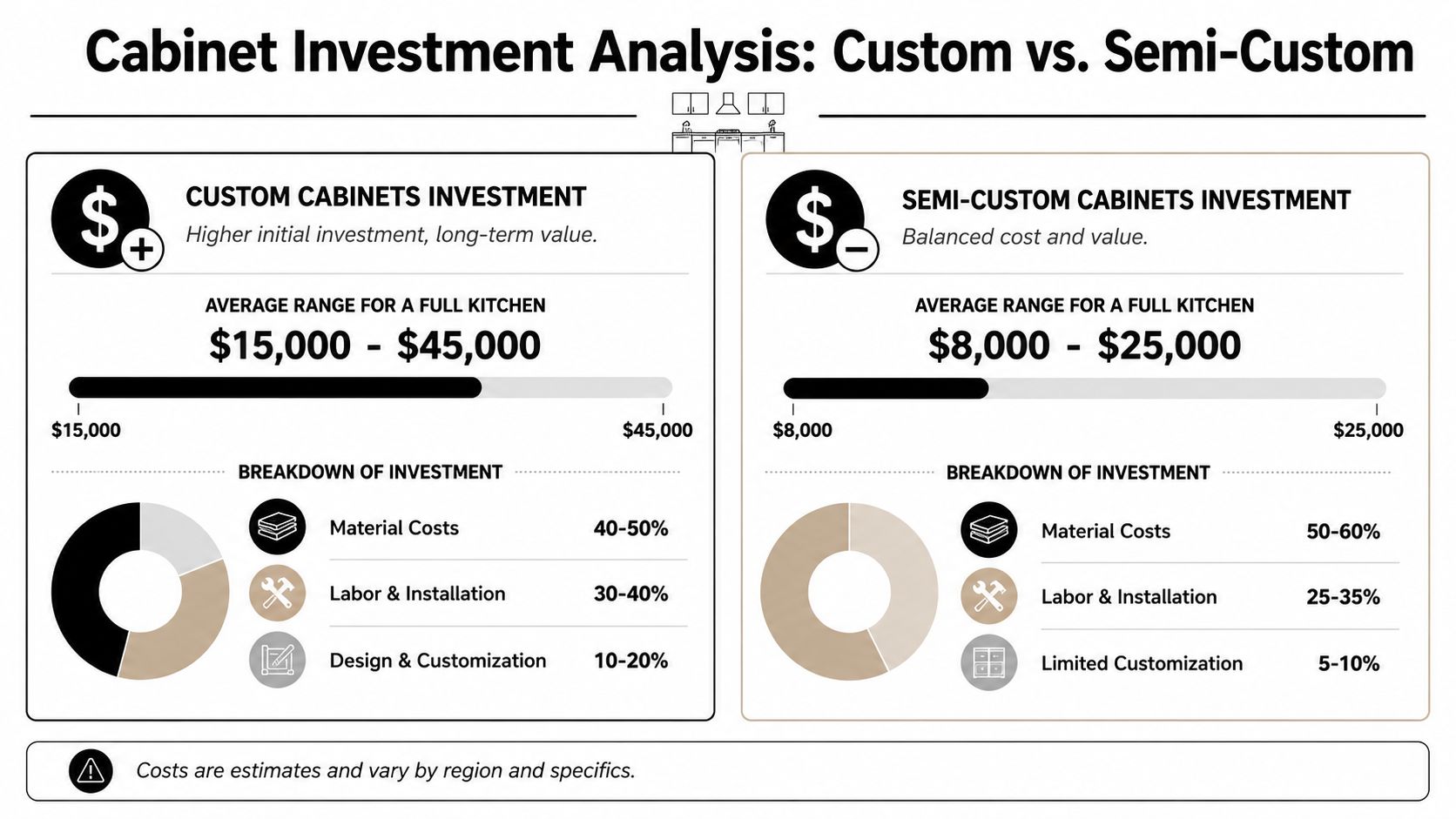
Analyzing the Investment and Cost Breakdown
For many South Jersey homeowners, this is the point where the cabinet decision gets real. A kitchen can look straightforward on paper, then the estimate comes back and forces harder choices about where the money should go.
Custom costs more because the work behind it is heavier. The price difference reflects more than aesthetics. It covers added design hours, made-to-order sizing, more material and finish decisions, and a fabrication process with fewer factory efficiencies.
Semi-custom usually lands lower because the manufacturer has already done part of that setup work. The cabinet line has standard widths, tested modifications, and a controlled finish program. You still have room to personalize the kitchen, but you are buying within an existing system instead of paying to create one from scratch.
What the Price Difference Really Reflects
In practice, homeowners are paying for three things. Fit, freedom, and labor.
Fit matters most in older South Jersey homes, especially in places like Collingswood, Haddonfield, or Merchantville, where walls are rarely as straight as anyone hopes. Semi-custom can solve many of those conditions with fillers, panels, and selected modifications. Custom gives you tighter control when the room has enough quirks that every fraction of an inch matters.
Freedom affects both design and budget. If you want a painted inset kitchen with unusual depths, furniture details, a fully integrated hood, or cabinetry that has to tie into existing millwork, custom often earns its keep. If your priorities are strong storage, good proportions, and a polished finish package, semi-custom often gets you there without consuming as much of the remodel budget.
Labor is the quiet cost driver. Someone has to measure, revise, engineer, order, coordinate, inspect, and solve surprises. Custom usually adds more of that labor at the front end and again during production. Semi-custom reduces some of it because the catalog, sizing rules, and accessory options are already established.
If you want to see how cabinets affect the full renovation budget, this kitchen remodeling cost breakdown shows where cabinetry sits alongside counters, flooring, lighting, and installation.
Where Semi-Custom Often Wins on Value
Semi-custom is often the better financial decision when the kitchen needs to work hard, look finished, and stay within a broader remodel budget.
That is usually the case when homeowners:
- Have a workable layout: The room may need updates, but it does not require every cabinet to be built from raw dimensions.
- Want smart upgrades without full custom pricing: Drawer organizers, pull-outs, finish choices, glass doors, and selected modifications can cover a lot of daily function.
- Need to keep the project moving: Factory programs are usually easier to price, order, and schedule with fewer open-ended decisions.
That last point matters locally. In South Jersey, cabinet timing affects everything from counter templating to appliance install. A mobile showroom model helps here because decisions happen in the house, with samples against your flooring, paint, and natural light. That tends to shorten the approval cycle and reduce expensive changes after ordering.
Where Custom Justifies the Spend
Custom makes financial sense when standard options keep creating workarounds.
That often includes homeowners who:
- Are renovating an older or irregular home: Uneven walls, unusual ceiling lines, existing trim details, and tight dimensions can push a factory system past its comfort zone.
- Need cabinetry to solve architectural problems: Built-ins, odd transitions, appliance concealment, or room-specific storage can require one-off construction.
- Care about exact visual alignment: Flush fits, specific reveals, matching historic millwork, and furniture-style detailing are easier to control in a true custom build.
The strongest investment is not automatically the lower quote or the higher one. It is the cabinet plan that fits the house, protects the rest of the remodel budget, and avoids compromises you will notice every day.
Decision Guide Who Each Cabinet Type Is Best For
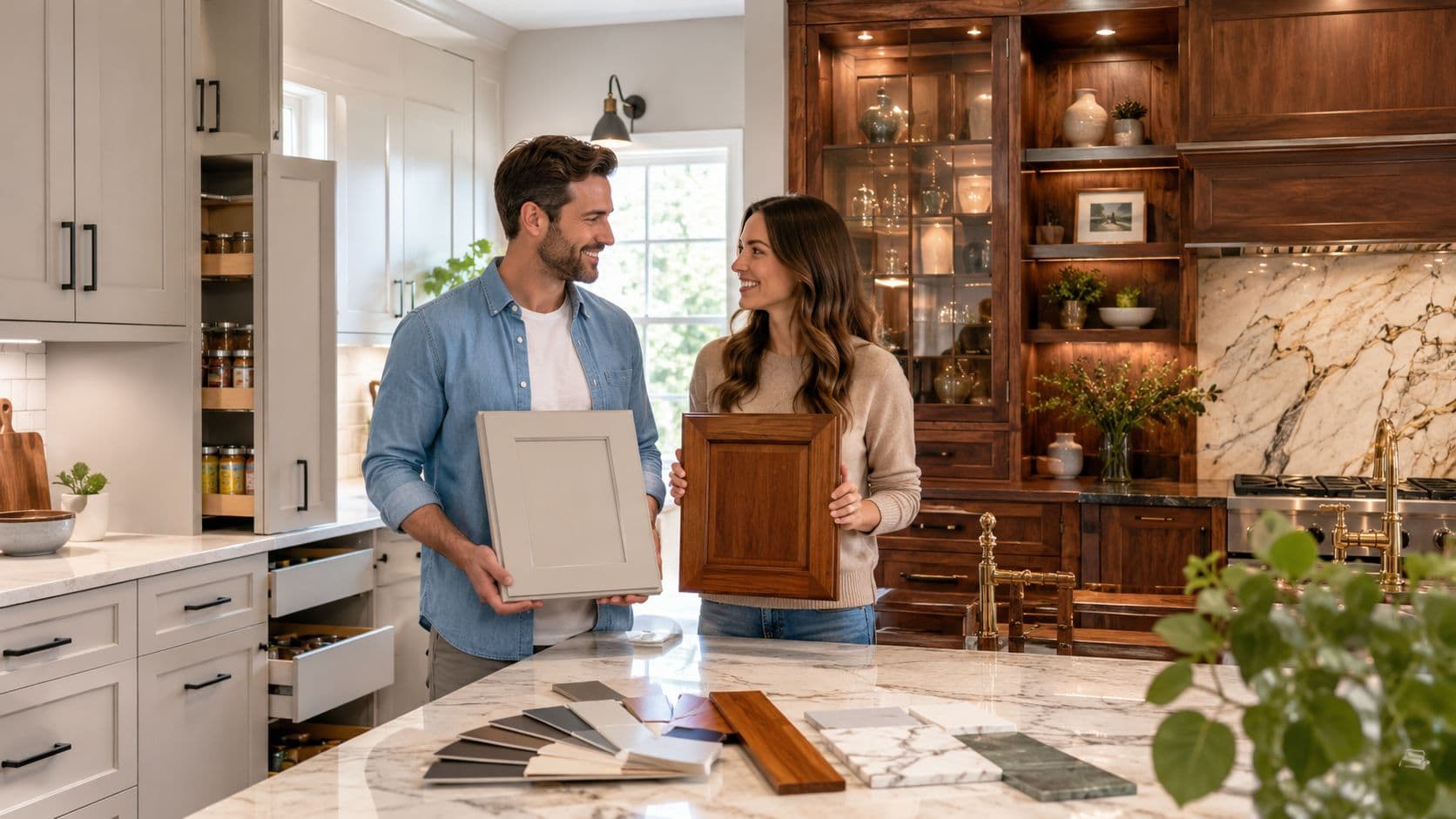
South Jersey homes vary more than many homeowners expect. A kitchen in a Haddonfield historic home doesn't present the same design conditions as a newer build in Mount Laurel or a renovation in Moorestown with an open-concept addition. That's why the best cabinet choice usually comes down to fit, tolerance for compromise, and how much customization your room needs.
When Semi-Custom Makes the Most Sense
Choose semi-custom when your kitchen is structurally straightforward, but you still want it to feel intentional and refined.
That's a strong fit if:
- You want flexibility with guardrails: Enough finish, storage, and size choice to personalize the room, without opening every decision to full custom complexity.
- Your budget has to cover more than cabinets: Many South Jersey remodels also include flooring, counters, lighting, tile, and layout updates. Semi-custom leaves more room to balance the whole project.
- You don't want the design process to become a second job: A curated selection can make decision-making easier and better.
For many first-time renovators, semi-custom feels less overwhelming because the best options are edited before you ever begin choosing.
When Custom Earns Its Higher Price
Choose custom when the room or the vision would suffer under standard sizing rules.
That usually applies when:
- The architecture gets in the way: Uneven walls, odd ceiling lines, alcoves, old radiators, deep window casings, and unusual appliance plans all push toward custom.
- The cabinetry is a design centerpiece: If the project depends on a very specific finish effect, integrated millwork look, or exact detailing, custom gives you the freedom to execute it.
- You notice fit details immediately: Some homeowners are meticulous about every reveal, filler width, and termination point. If that's you, custom can be worth it.
A short walkthrough on cabinet planning can help clarify what details matter most before you lock into a path:
What South Jersey Homeowners Often Miss
The biggest local mistake isn't choosing the wrong style. It's choosing the wrong level of cabinet system for the house.
In this region, many kitchens look standard at first glance but hide small complications. Floors can slope. Walls can be out of square. Old additions can create transitions that need careful cabinet planning. At the same time, not every quirky room demands custom. A thoughtful semi-custom design can often handle the conditions without overspending.
If you're weighing layout, function, and finish priorities together, this guide to the best cabinets for a kitchen remodel is a good next step because it frames the decision around the whole project rather than cabinet labels alone.
Navigating Your Project in South Jersey
Kitchen projects in Cherry Hill, Haddonfield, Moorestown, Voorhees, and nearby towns don't happen in a vacuum. They move through local contractor calendars, product availability, township expectations, and the challenges of coordinating several trades in one house. Homeowners who stay organized early usually make better cabinet decisions.
The most useful mindset is to treat cabinet selection as a planning exercise, not just a shopping exercise. If you only react to finishes and price tags, you'll miss the details that shape the final result.
A Better Way to Evaluate Your Options
Before comparing brands or cabinet lines, answer these questions in your own home:
- What does the room need? Is your problem storage, layout, visual style, or all three?
- Where can't you tolerate filler or dead space? Around windows, appliance panels, pantry walls, and islands, the answer matters.
- Which details affect daily use? Trash pull-outs, drawer depth, tray storage, spice storage, and landing space often matter more than decorative upgrades.
South Jersey homeowners with busy schedules often prefer a process that brings selections and guidance into the home instead of sending them across multiple showrooms. That approach makes sense because cabinet decisions are easier when samples, measurements, lighting, and existing finishes are all in the same room.
Questions That Reveal Whether a Plan Is Solid
Ask any cabinet professional to walk you through the practical side, not just the beautiful side.
Start with these:
- How are you accounting for out-of-square walls and floor variation?
- Where do you expect fillers, panels, or trim build-outs?
- What parts of this design depend on field modification during install?
- Which features are standard in this line, and which are upgrades?
- How will this cabinet system interact with appliances, countertops, and lighting placement?
A strong cabinet plan should sound calm and specific. If the answers stay vague, the project probably isn't developed enough yet.
If you want to compare service models as well as cabinet products, pay attention to how the design process is delivered. Some homeowners do better with showroom browsing. Others prefer a guided, in-home process that reduces guesswork and keeps decisions tied to the actual space.
Smart Questions to Ask Your Cabinet Professional
A good cabinet meeting shouldn't leave you more confused than when you walked in. The right questions force clarity fast. They also help you compare proposals that may look similar on the surface but differ in construction, customization limits, and installation responsibility.
Questions About Cabinet Construction
Ask these first, because cabinet quality starts under the finish:
- What are the cabinet boxes made from? Don't settle for broad terms like "all wood" without specifics.
- How are drawer boxes constructed? You want to hear clear details, not sales language.
- Which hinges and drawer slides are included? Hardware affects how the kitchen feels every day.
- Are end panels, finished sides, and interiors standard or optional? Those details can change both look and price.
A professional who knows the line well should answer these without hesitation.
Questions About Customization and Fit
Custom vs semi custom cabinets gains practical significance.
Ask:
- What size adjustments are available in this line?
- How do you handle odd corners, appliance gaps, and ceiling conditions?
- Can you show me where fillers will appear in my layout?
- If I want deeper drawers, specialty storage, or a furniture-style island, is that available in this program?
The best answer isn't always "yes." It's a clear explanation of what's possible, what's not, and what the trade-off will be.
Questions About Finish, Delivery, and Installation
A kitchen can look great on paper and still go sideways at the end if finish expectations and job responsibilities aren't defined.
Use this checklist:
- What is the finish process, and how should I expect painted cabinets to age?
- What warranty applies to the cabinet and the finish?
- What is the expected production timeline for this specific line?
- Who installs the cabinets?
- Who handles service if a door arrives damaged or a part needs replacement?
- Is installation included in the proposal, or quoted separately?
If you ask those questions and the answers feel organized, you're probably dealing with someone who understands the full job, not just the sale.
If you'd rather make these decisions with samples, measurements, and expert guidance brought directly to your home, The Cabinet Coach offers a mobile showroom experience for South Jersey homeowners. It's a practical way to compare cabinet options in your actual space, get help aligning style with budget, and move through a kitchen remodel with less guesswork and more confidence.