
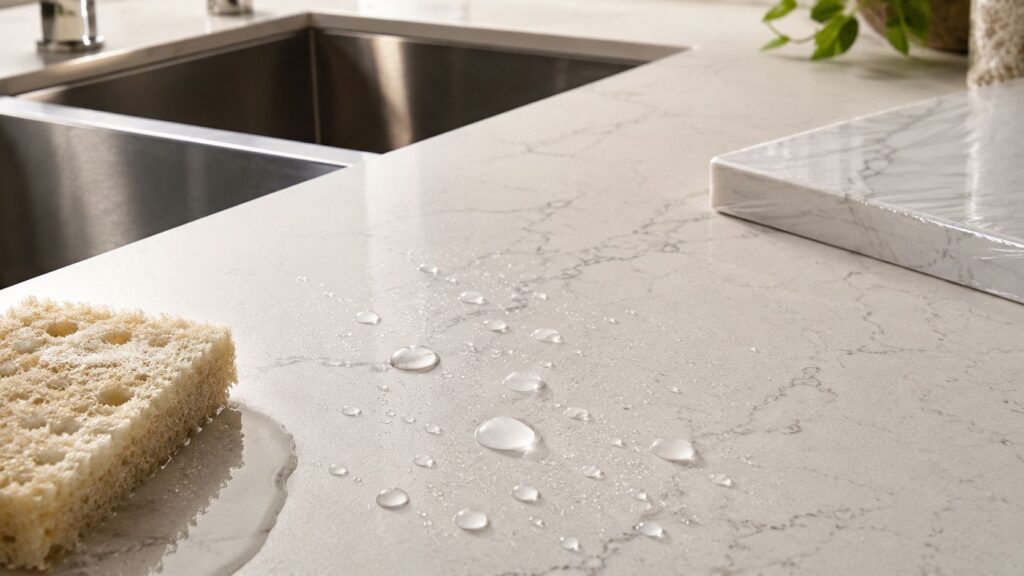
A non-porous surface has 0% porosity, which means it has zero void space for liquid or gas to enter. In plain English, it doesn't let water, oil, or bacteria soak in, so the surface acts like a sealed barrier instead of a sponge.
If you're picking out a countertop, shower tile, vanity top, or backsplash right now, you've probably heard someone say, "This material is non-porous," as if that settles everything. For most homeowners, that phrase sounds helpful but vague. You know it's supposed to be good, but you may not know what it means for spills, cleaning, stains, and long-term durability.
That confusion matters in a South Jersey remodel. A kitchen or bathroom looks beautiful on installation day no matter what. The true test comes later, when coffee splashes near the sink, shampoo bottles sit in puddles, or moisture hangs in the room week after week. Understanding what does non porous mean helps you cut through sales language and choose materials that fit the way your household lives.
Table of Contents
- What Non-Porous Means for Your Home Remodel
- Porous vs Non-Porous Materials A Simple Analogy
- Your Guide to Non-Porous Remodeling Materials
- Why Non-Porous Surfaces Are a Smart Investment
- Choosing Your Surface A Practical Homeowner Checklist
- Your Partner for Smarter Remodeling in South Jersey
What Non-Porous Means for Your Home Remodel
A homeowner choosing a countertop often hears two materials described in almost identical ways. One is called "easy care." Another is called "sealed." A third is labeled "non-porous." At first, they all sound like the same thing. They aren't.
Non-porous means the surface doesn't allow liquids to pass into it. That matters in the rooms where water, soap, oil, toothpaste, makeup, cooking spills, and humidity show up every day. If a surface resists absorption, cleanup stays on the surface too. You wipe it away instead of fighting what has already sunk in.
Why this term matters more than it seems
In a remodel, small material differences create big day-to-day consequences. A surface that absorbs moisture can stain, hold residue, or demand more maintenance. A surface that resists absorption is usually easier to keep looking clean.
For tile shoppers, water behavior is one of the most useful things to understand before you buy. If you want a deeper look at how tile performance is evaluated, Original Mission Tile on tile specifications offers a practical resource for understanding absorption and why it matters in wet areas.
Good remodel decisions start with performance, not just color.
Countertops are where many homeowners first run into this issue. A polished sample in a showroom can look flawless, but your real question is how it will behave around red sauce, hand soap, splashed water, and everyday mess. If you're comparing options side by side, this guide to different countertop materials helps frame the bigger decision beyond appearance alone.
Porous vs Non-Porous Materials A Simple Analogy
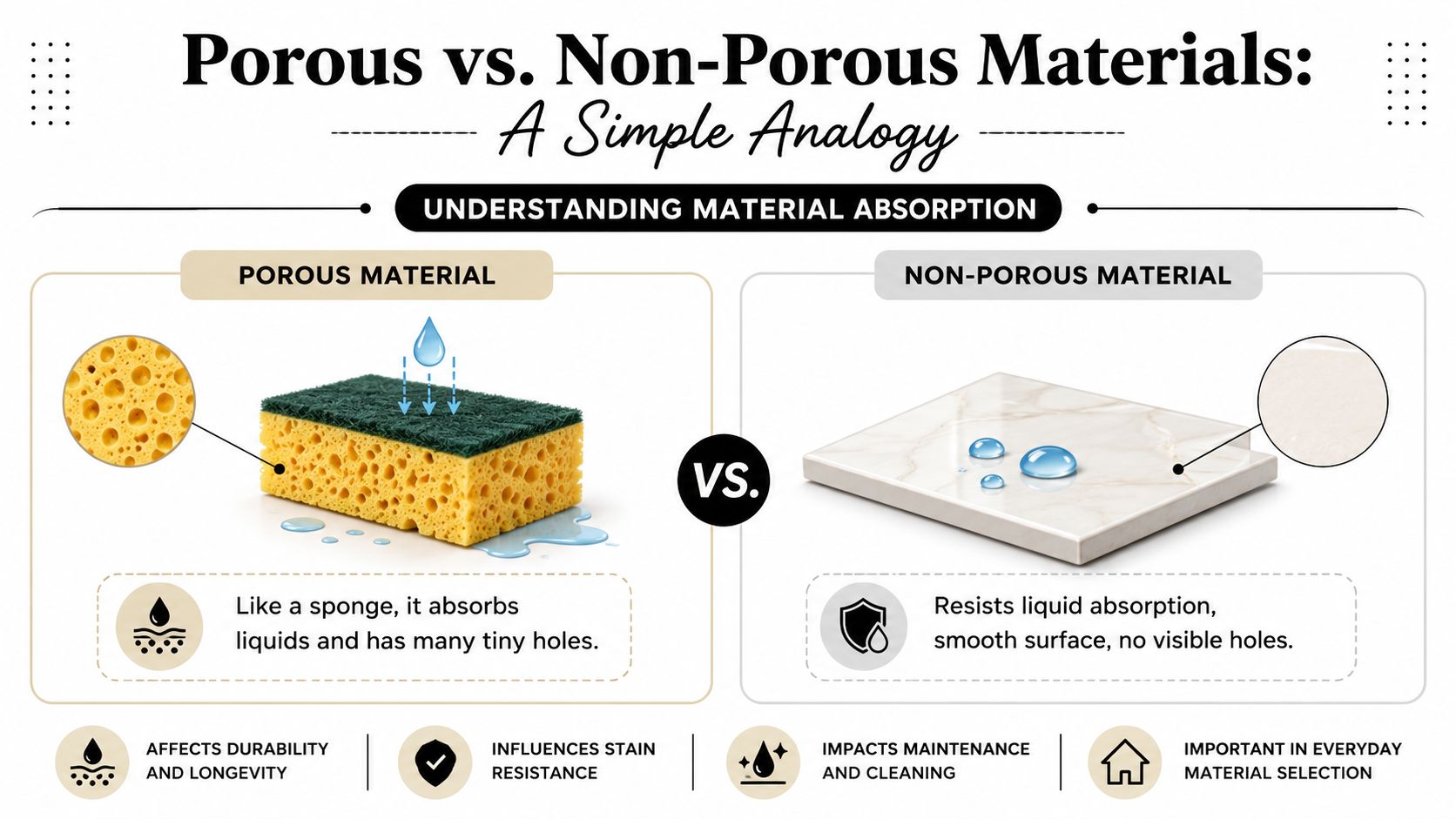
The easiest way to understand what non-porous means is to compare a sponge with a glass plate.
A sponge has lots of tiny openings. Water lands on it and gets pulled inside. A glass plate behaves differently. Water stays on top, forms droplets, and can be wiped away. That's the basic difference between porous and non-porous materials.
The simple science behind it
Scientifically, a non-porous material is defined by a porosity value of 0%, meaning it contains zero void volume relative to its total bulk volume, according to Hereford Granite's definition of non-porous materials. That dense structure creates an impermeable barrier, so liquids bead up on the surface instead of absorbing.
You don't need to remember the formula to use the idea. Just remember this. If there are openings inside the material, liquids can move in. If there aren't, liquids stay out.
What that looks like in real rooms
In a kitchen, a porous surface can take in cooking oils or colored spills. In a bathroom, it may hold moisture longer than you expect. On a non-porous surface, the mess usually stays where you can see it and clean it.
That also affects hygiene. When residue sits on top instead of soaking down inside, cleaning is more straightforward. If you're already dealing with moisture problems elsewhere in the home, this guide on safely cleaning household mold can help you think more carefully about how surfaces and moisture interact.
A good mental shortcut is this: porous acts like a sponge, non-porous acts like glass.
Many countertop comparisons become easier once you look at them through that lens. If you're weighing popular stone options, this breakdown of quartz vs granite countertops is a useful next step because it connects appearance to maintenance reality.
Your Guide to Non-Porous Remodeling Materials
Homeowners often assume materials fall into two clean buckets. Either they're porous or they're not. In practice, it's a little more nuanced, especially in kitchens and bathrooms.
Some materials are non-porous because of their dense structure. Others become functionally non-porous only after finishing or sealing. That distinction matters because it affects upkeep.
Materials that are naturally non-porous
Glass is a classic example. So are stainless steel, glazed ceramic, and polished metal surfaces commonly used where easy cleaning matters. These materials are often chosen because substances stay on top rather than sinking below the surface.
Solid surface products also come up often in remodel conversations. If you're curious how one of the best-known options fits into this category, this overview of Corian countertops is worth reading.
Materials that depend on sealing
Natural stone creates the most confusion. Granite may be marketed in ways that sound permanent and effortless, but the material itself is not automatically non-porous in every condition. In construction and remodeling, the classification often depends on sealing. As explained by HFM Magazine's discussion of porous and nonporous hard surfaces, natural materials like granite are porous, and applying a sealant fills interconnected pores so the surface resists liquid penetration.
That means two granite counters can behave differently depending on whether the surface has been properly sealed and maintained.
Practical rule: If a material needs sealing to resist absorption, ask how long that protection lasts and what happens when maintenance is skipped.
Comparing common countertop choices
Here's a simple way to think about popular options during a remodel.
| Material | Natural Porosity | Stain Resistance | Hygiene | Maintenance Level |
|---|---|---|---|---|
| Glass | Naturally non-porous | Strong surface resistance | Easy to wipe clean | Low |
| Stainless steel | Naturally non-porous | Strong surface resistance | Commonly chosen where cleanliness matters | Low |
| Solid surface | Generally treated as non-porous in use | Good day-to-day resistance | Smooth surface is easy to maintain | Low |
| Glazed ceramic or porcelain | Surface glaze resists absorption | Good when glaze is intact | Easy-clean finish | Low |
| Granite | Naturally porous | Good when properly sealed | Depends on ongoing seal performance | Moderate |
| Marble | Naturally porous | More care-sensitive in daily use | Depends on finish and upkeep | Moderate to high |
| Wood butcher block | Porous | More prone to absorption | Needs careful maintenance | High |
What this means for your lifestyle
If you want the lowest-fuss option, look for materials that are non-porous by nature or have a durable factory-finished surface. If you love natural stone, that's fine too. Just go in with open eyes.
A busy family kitchen in Cherry Hill or a bathroom used by kids before school usually benefits from surfaces that don't require much babysitting. A homeowner who loves the look of natural stone may still choose it, but should expect sealing and more attentive care to be part of the package.
Why Non-Porous Surfaces Are a Smart Investment
A non-porous surface pays you back in everyday convenience. This is its key benefit. It isn't just a technical feature on a spec sheet.
Cleaner surfaces with less effort
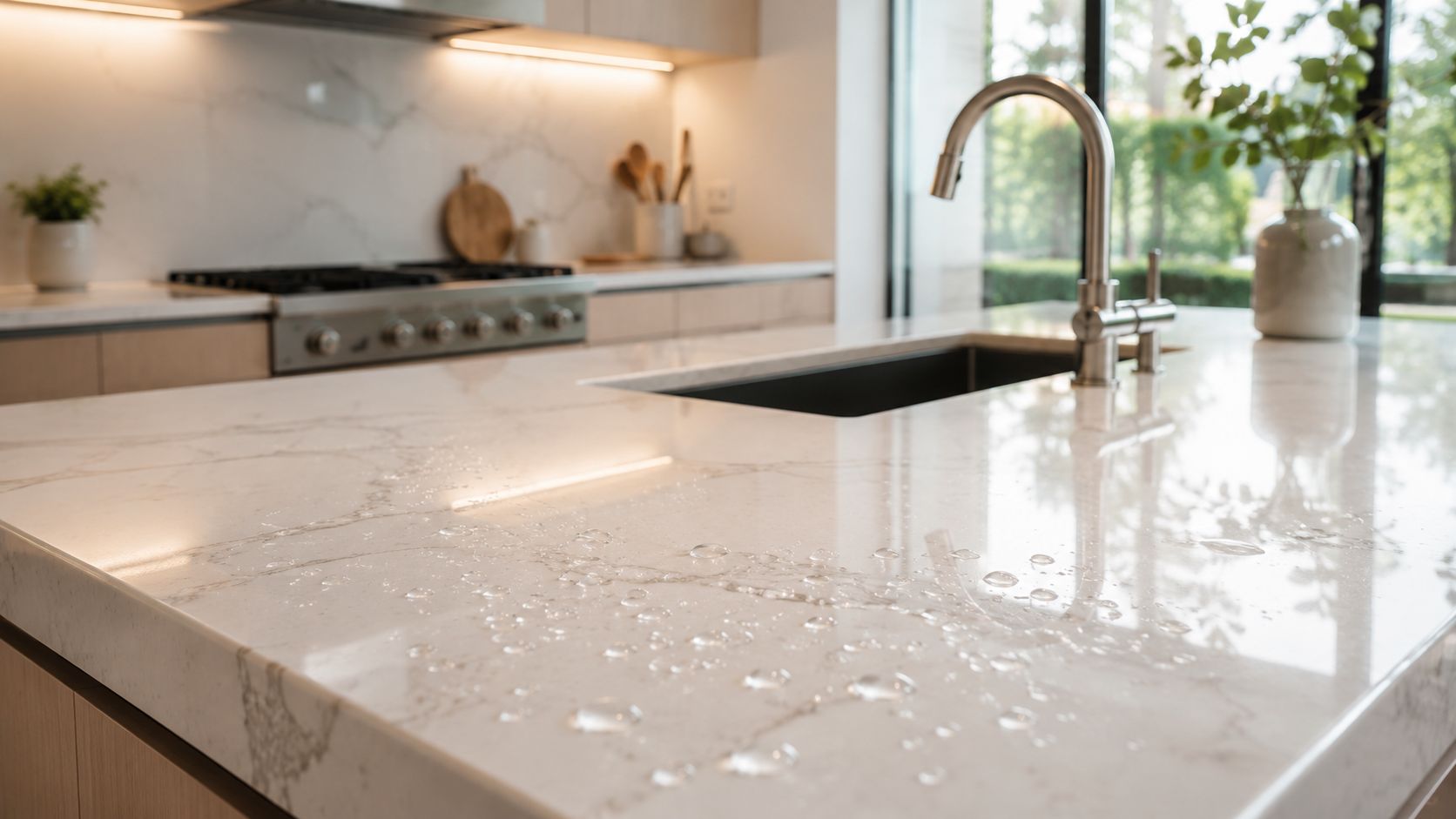
In kitchens and baths, messes happen fast. Toothpaste dries on vanities. Coffee drips near the maker. Soap collects near the faucet. On surfaces that resist absorption, those messes tend to stay superficial, which makes routine wipe-downs easier.
That's one reason non-porous finishes are so appealing in hardworking rooms. You spend less time wondering what soaked in and more time cleaning what's visible.
Better resistance to staining and moisture trouble
A surface that doesn't invite liquid inside is usually better equipped for common household spills. That doesn't mean any material is indestructible. It does mean you're working with a more forgiving starting point.
This matters in bathrooms especially, where humidity and standing water can test every finish in the room. If you're thinking about long-term value as well as everyday use, it's smart to consider how material choices affect upkeep in a remodel. This look at bathroom remodel return on investment is useful when you're weighing beauty against practicality.
When homeowners say they want something "easy to live with," they're usually describing a non-porous or properly sealed surface.
A quick visual explanation can help tie the idea together:
More peace of mind over time
The best remodeling materials don't just look good on reveal day. They still work for you months and years later, after dropped toothbrushes, splashed sauces, wet bath mats, and rushed cleanup.
That's why many homeowners end up valuing performance as much as style. A non-porous surface can reduce the friction of daily life. Less guesswork. Less worry. Fewer surprises.
Choosing Your Surface A Practical Homeowner Checklist
The biggest mistake homeowners make isn't choosing the "wrong" color. It's trusting a label without asking how the material performs.
Marketing language can blur the line between scientific reality and showroom shorthand. The phrase "100% non-porous" sounds absolute, but it often isn't that simple. As noted in Flyriver's discussion of porous vs non-porous surfaces, even high-density plastics and engineered quartz can have microscopic pores that can harbor bacteria if not maintained, so non-porous is better understood as a performance threshold, not absolute immunity.
Use a simple water test
A practical first step is the water drop test.
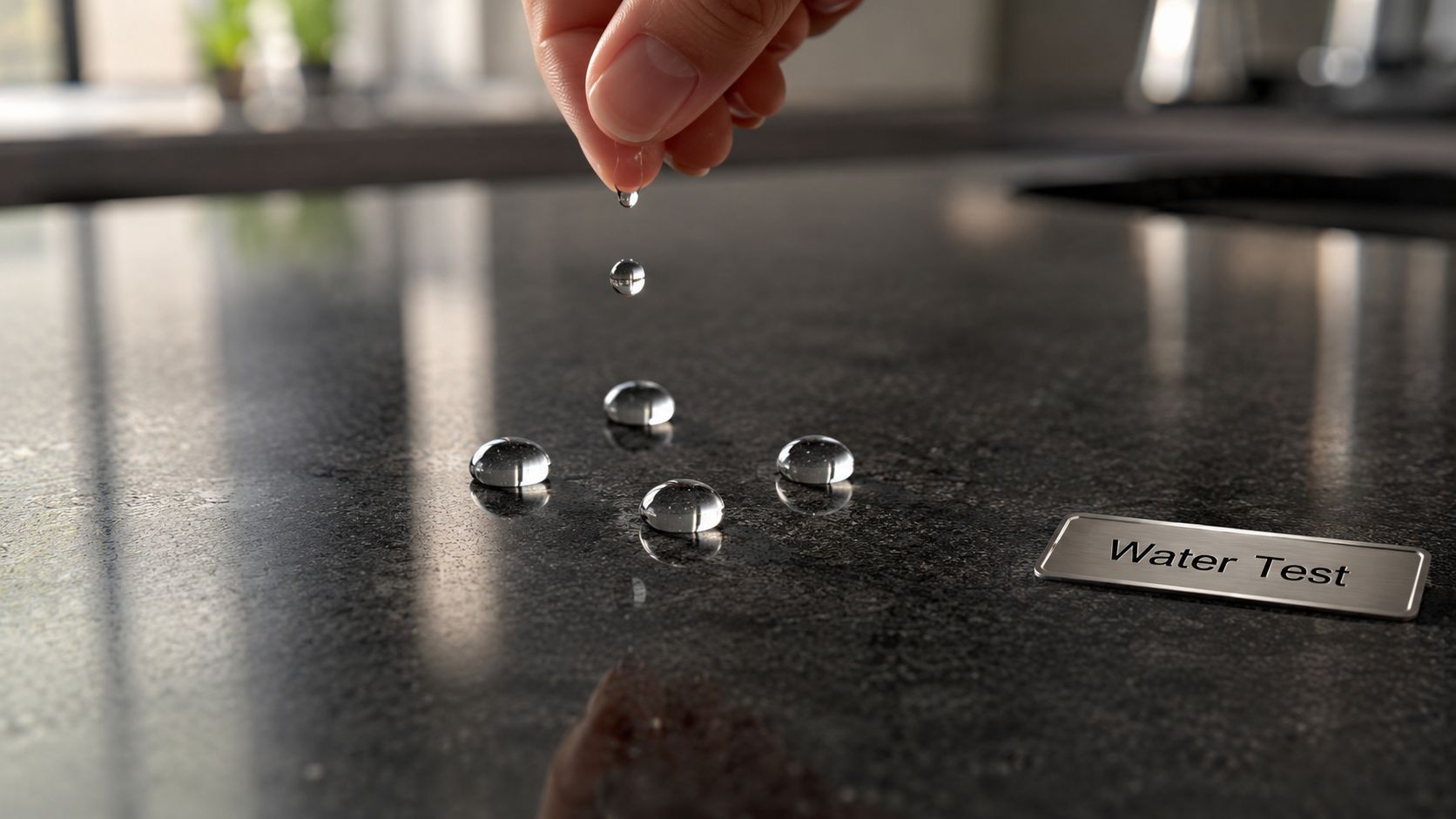
Put a few drops of water on a sample. If the water beads and stays near the surface, that's a good sign. If it flattens, darkens the material, or seems to disappear into it, the surface may be porous or may need sealing.
Questions worth asking before you buy
Don't stop at the display label. Ask the supplier or fabricator direct questions such as:
- Is this material naturally non-porous or sealed to behave that way?
- What maintenance does the finish require over time?
- Are edges, seams, and cutouts as resistant as the main surface?
- What cleaning products are recommended for daily use?
If you're sorting through several options, this guide on how to choose kitchen countertops can help you compare materials with real-life use in mind.
Match the material to your habits
A low-maintenance household doesn't always need the most expensive surface. It needs the right one. If your home sees constant cooking, kids leaving puddles by the sink, or a bathroom that never fully dries out, easy-clean performance matters more than marketing buzzwords.
Cleaning products matter too, but they can't fix a poor material choice. If you're comparing household cleaners and what they can realistically do, this article on whether Pine-Sol kills germs is a helpful reminder that cleaning results depend on both the product and the surface you're cleaning.
Ask for proof of performance, not just a brochure phrase.
For South Jersey homeowners, expert guidance proves most valuable. A good advisor helps you spot the difference between a surface that only sounds durable and one that will reliably hold up in your kitchen or bath.
Your Partner for Smarter Remodeling in South Jersey
By now, the term should feel a lot less abstract. Non-porous means a surface resists absorption. In remodeling, that affects cleanliness, maintenance, stain resistance, and how confidently you can use the room every day.
It also explains why so many homeowners get tripped up during material selection. Some surfaces are naturally non-porous. Some only perform that way after sealing. Some are marketed with absolute language that sounds stronger than their actual performance. Those details matter when you're investing in a kitchen or bathroom you want to enjoy for years.
For homeowners in Cherry Hill, Voorhees, Haddonfield, and nearby communities across Camden and Burlington counties, good decisions come from seeing materials up close, asking direct questions, and comparing options in the context of your own home. Samples, finishes, edges, and maintenance expectations are easier to judge when someone walks you through them in plain language.
A remodel gets much less stressful when you don't have to decode every term on your own. The right guide helps you look past labels, compare materials effectively, and choose surfaces that suit your style, budget, and tolerance for upkeep.
If you're planning a kitchen or bathroom update in South Jersey, The Cabinet Coach can help you compare cabinetry, countertops, tile, and finishes with expert guidance brought directly to your home through its mobile showroom. That kind of hands-on support makes it easier to choose materials that don't just look great in a sample, but work beautifully in real life.