
You’re probably looking at countertop samples that all seem beautiful for about five minutes, and then the decision starts to feel expensive. One slab looks clean and modern. Another has dramatic veining. A third seems practical, but maybe too safe. The hard part is that countertops aren’t just a style choice. They affect how your kitchen works every single day.
That’s why how to choose kitchen countertops should start with your real life, not a showroom wall. In South Jersey homes, I see the same pattern often. A homeowner falls in love with a surface under store lighting, then gets it home and realizes it doesn’t suit the way they cook, clean, entertain, or live with kids and pets. The better approach is simple. Match the material to the household first, then refine the look in the actual space where it will be installed.
Table of Contents
- Start by Assessing Your Kitchen Lifestyle
- A Practical Comparison of Countertop Materials
- Finalizing Style Details for a Cohesive Look
- Integrating Countertops with Sinks and Backsplashes
- Budgeting and Partnering with a Local Professional
- Frequently Asked Questions About Kitchen Countertops
Start by Assessing Your Kitchen Lifestyle
The fastest way to make a bad countertop choice is to shop by color first. A better method starts with how the kitchen gets used on an average Tuesday, not how you hope it will look in a photo.
Use your kitchen honestly, not aspirationally
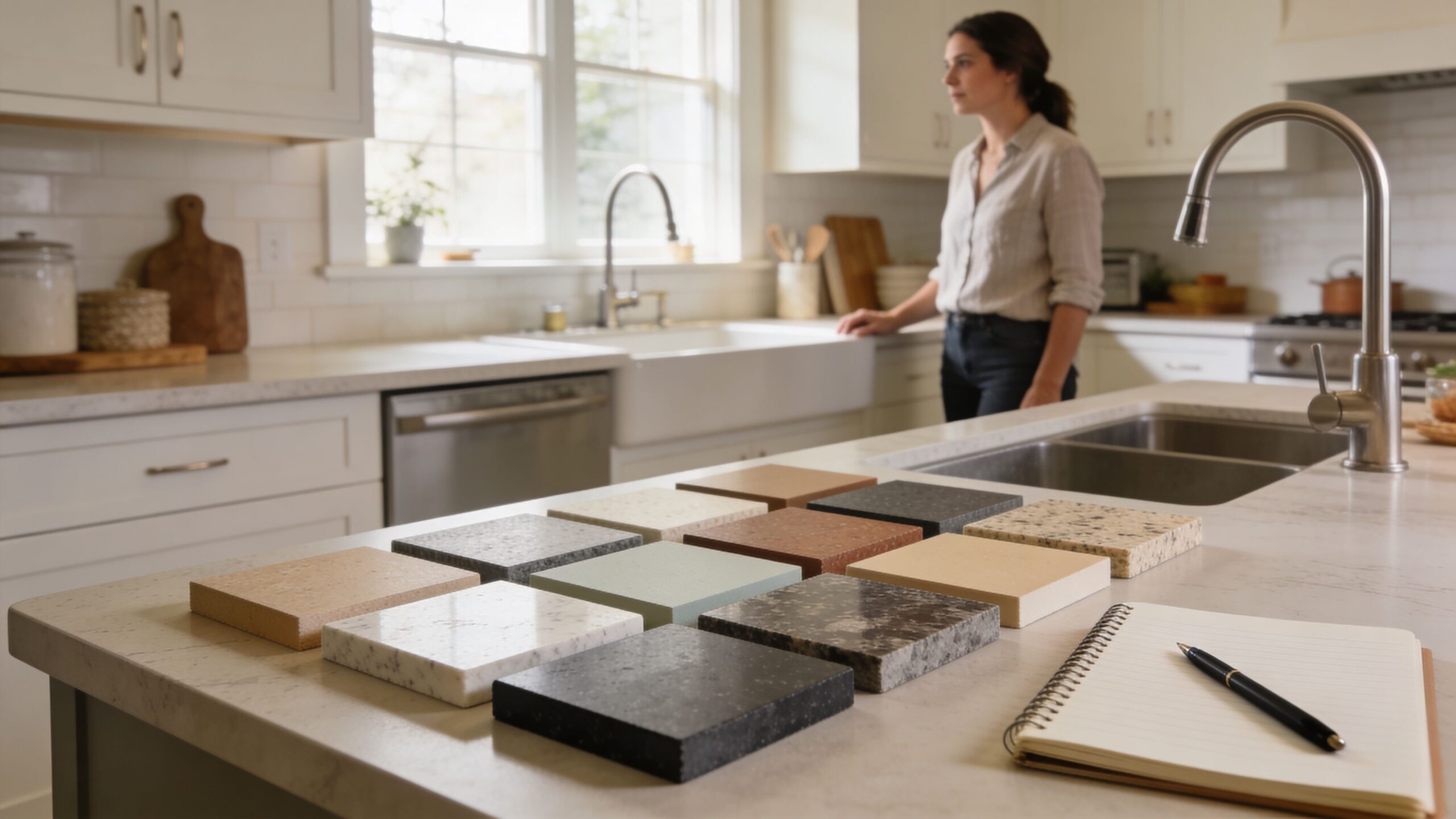
Think through the habits that put the most stress on a surface. Do you cook most nights for a full family. Do people drop backpacks and groceries on the island. Do you host and open wine bottles at the counter. Do kids do homework there with markers, glue, and snacks. Those answers tell you more than any sample board.
A lifestyle-first process is the most reliable way to narrow the field. Cosentino’s countertop selection guide recommends a step-by-step lifestyle assessment first, and notes that quartz is Mohs 7 with 95% stain resistance without sealing, while granite is Mohs 6 to 7 and requires annual sealing. The same guide says the process can improve remodel success rates to 92% when homeowners view in-home samples under actual lighting.
Practical rule: If your kitchen is a work zone, not a display piece, choose for cleanup and durability first. The look can still be beautiful.
Build your needs list before you shop
Use a short checklist and answer it without overthinking:
- Heat exposure: You regularly set down hot pans or baking sheets.
- Spill frequency: Coffee, oil, tomato sauce, citrus, or wine hit the counters often.
- Cleaning style: You want simple wipe-down maintenance, not regular sealing reminders.
- Surface abuse: Kids, guests, or heavy cookware put wear on the island.
- Visual preference: You like movement and natural variation, or you prefer a quieter, more controlled pattern.
- Light conditions: Your kitchen gets strong morning sun, low natural light, or mixed artificial lighting.
If several of those point toward durability and easy maintenance, start your search with practical surfaces. If your kitchen is gentler and you’re willing to accept some patina, you have more freedom to choose for character.
This same thinking should happen at the very beginning of the remodel, not after cabinets are selected. If you’re still organizing the larger plan, this kitchen remodel planning guide helps you line up layout, materials, and budget in the right order.
A simple way to define your profile
Most households fall into one of these groups:
Busy family kitchen
You need stain resistance, forgiving maintenance, and a surface that doesn’t require much babysitting.Frequent entertainer kitchen
You need a countertop that still looks good after spills, serving trays, and lots of traffic around the island.Style-led kitchen
You care a great deal about veining, texture, and how the surface reads with the cabinetry, and you’re willing to trade some convenience for that look.Mixed-use kitchen
This is common in South Jersey. The kitchen handles real family life, but the island is also a focal point. In those homes, mixing priorities often works better than trying to force one surface to do everything perfectly.
A Practical Comparison of Countertop Materials
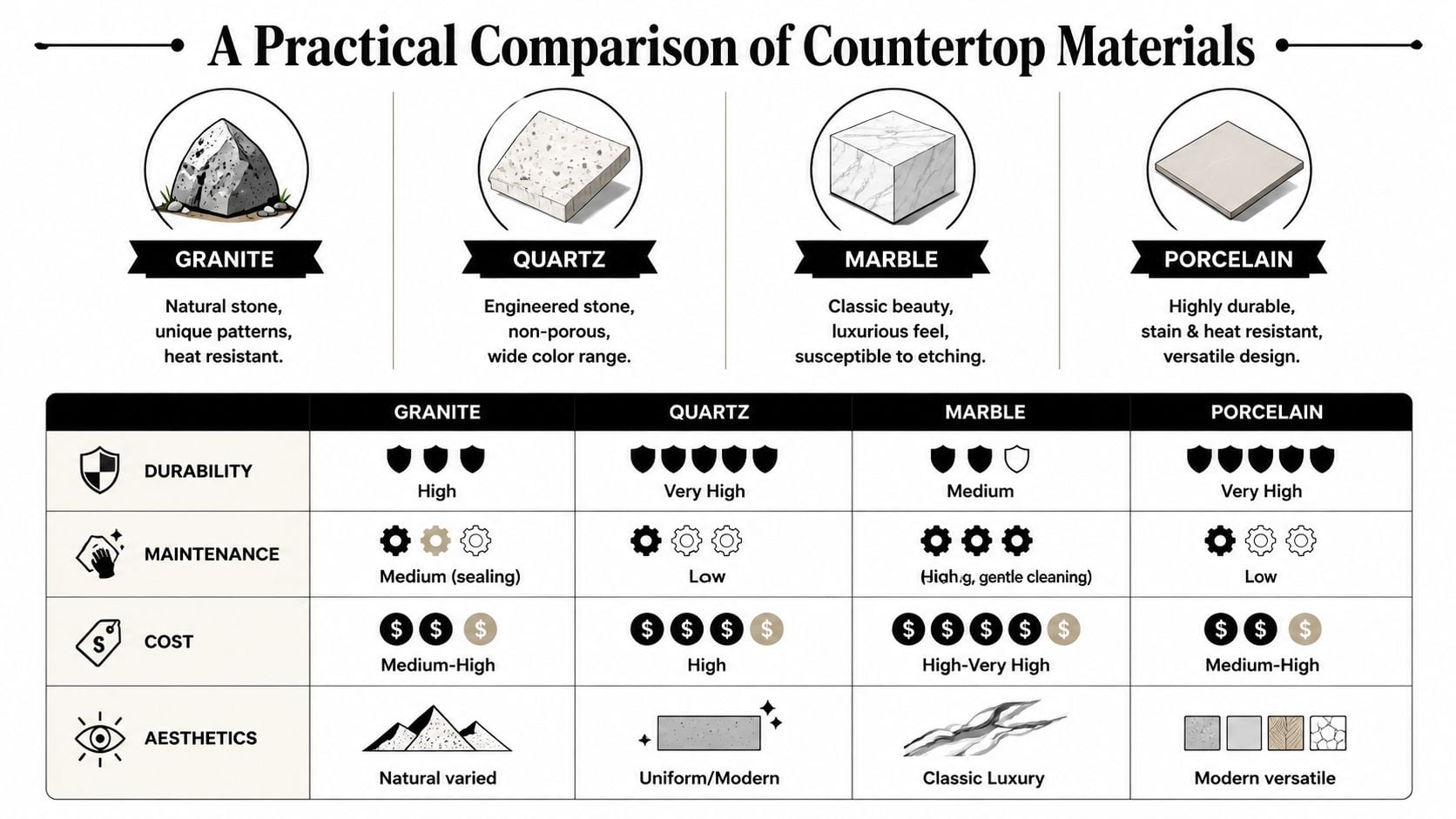
The countertop market is large because homeowners keep investing in kitchens. Grand View Research reports that the global countertops market was valued at $157.74 billion in 2025 and is projected to reach $267.38 billion by 2033, with a 6.8% compound annual growth rate from 2026 to 2033. The same report says granite led the market with a 28.0% share in 2025, which reflects how strong demand remains for natural stone even as engineered surfaces continue to grow.
Here’s the comparison homeowners usually need most. Not which material is trendy, but which one performs well for a specific kind of kitchen.
Granite
Granite is the homeowner who wants natural stone and doesn’t mind some routine care. It brings movement, variation, and heat resistance. No two slabs are exactly alike, which is part of the appeal.
What works well: kitchens where homeowners want a natural material with personality and are comfortable sealing it as recommended. What doesn’t work as well: households that want a completely low-maintenance surface and don’t want to think about upkeep.
Quartz
Quartz is the easy recommendation for many busy homes because it’s non-porous and consistent. It feels like the dependable option. Not boring, just practical in the best way. If marble is a silk shirt, quartz is a well-made pair of jeans. It handles daily life better.
For many South Jersey families, especially in active homes around Cherry Hill and nearby towns, quartz is often the easiest fit because cleanup is straightforward and patterns are predictable from sample to installation. If you want a deeper side-by-side read, this breakdown of Quartz vs Granite Countertops is useful for understanding where each one wins.
A local comparison also helps if you’re choosing among the most common premium surfaces. This Cherry Hill countertop guide covering quartz, granite, and quartzite is a good next step if your shortlist is already down to those categories.
The video below gives a quick visual overview before you compare the details.
Marble
Marble is still one of the most beautiful countertop materials available. It also asks for a certain mindset. If you love a crisp, formal, luxurious look and can accept etching and wear as part of the material’s story, it can be the right choice.
If that idea makes you tense, marble usually isn’t the right kitchen work surface. It’s often better for homeowners who value appearance first and don’t expect a spotless, unchanged finish over time.
Marble can be the right decision when the homeowner likes living materials. It’s the wrong decision when they want the surface to look untouched.
Porcelain
Porcelain is the sharp, modern option that more homeowners are considering when they want durability and design flexibility. It handles heat and stains well and fits many contemporary kitchens.
Where homeowners get into trouble is underestimating slab handling, freight, and fabrication complexity. Porcelain can be a smart choice, but it needs careful planning from the beginning.
Countertop Material At-a-Glance Comparison
| Material | Average Cost (per sq. ft. installed) | Durability (Scratch/Heat/Stain) | Maintenance Level | Best For |
|---|---|---|---|---|
| Granite | Varies by slab, fabrication, and installation scope | Strong scratch and heat performance, but needs sealing to help with staining | Medium | Homeowners who want natural stone and unique patterning |
| Quartz | Varies by brand, design, and fabrication details | Strong scratch and stain performance, but use protection around high heat | Low | Busy family kitchens and low-maintenance daily use |
| Marble | Varies widely based on slab and fabrication | More vulnerable to etching and wear in active kitchens | High | Style-led spaces and homeowners who accept patina |
| Porcelain | Varies by slab size, fabrication, and freight | Strong heat and stain performance with a durable surface | Low | Modern kitchens and homeowners who want a sleek look |
A smart shortlist usually lands on two materials, not ten. Once you know your top contenders, the rest of the decision gets easier because you’re comparing real trade-offs instead of every slab in the warehouse.
Finalizing Style Details for a Cohesive Look
A countertop can be the right material and still look off in the room. That usually happens when the color, edge, thickness, or finish was chosen in isolation instead of with the cabinets, flooring, hardware, and lighting.
Color and pattern should support the cabinets
If your cabinets already carry a lot of detail, a quieter countertop usually gives the kitchen more balance. If the cabinetry is simple, the countertop can carry more visual weight. The mistake is letting both compete.
In-home viewing matters here. Under showroom lighting, many surfaces read flatter or warmer than they will in your actual kitchen. South Jersey homes vary a lot in natural light. Some have bright open-plan layouts. Others have older window placement and warmer interior lighting that can shift a slab’s undertone.
If you’re deciding both together, this guide on how to choose kitchen cabinet colors helps keep the countertop and cabinetry from fighting each other.
Edge profiles, thickness, and finish matter more than most people expect
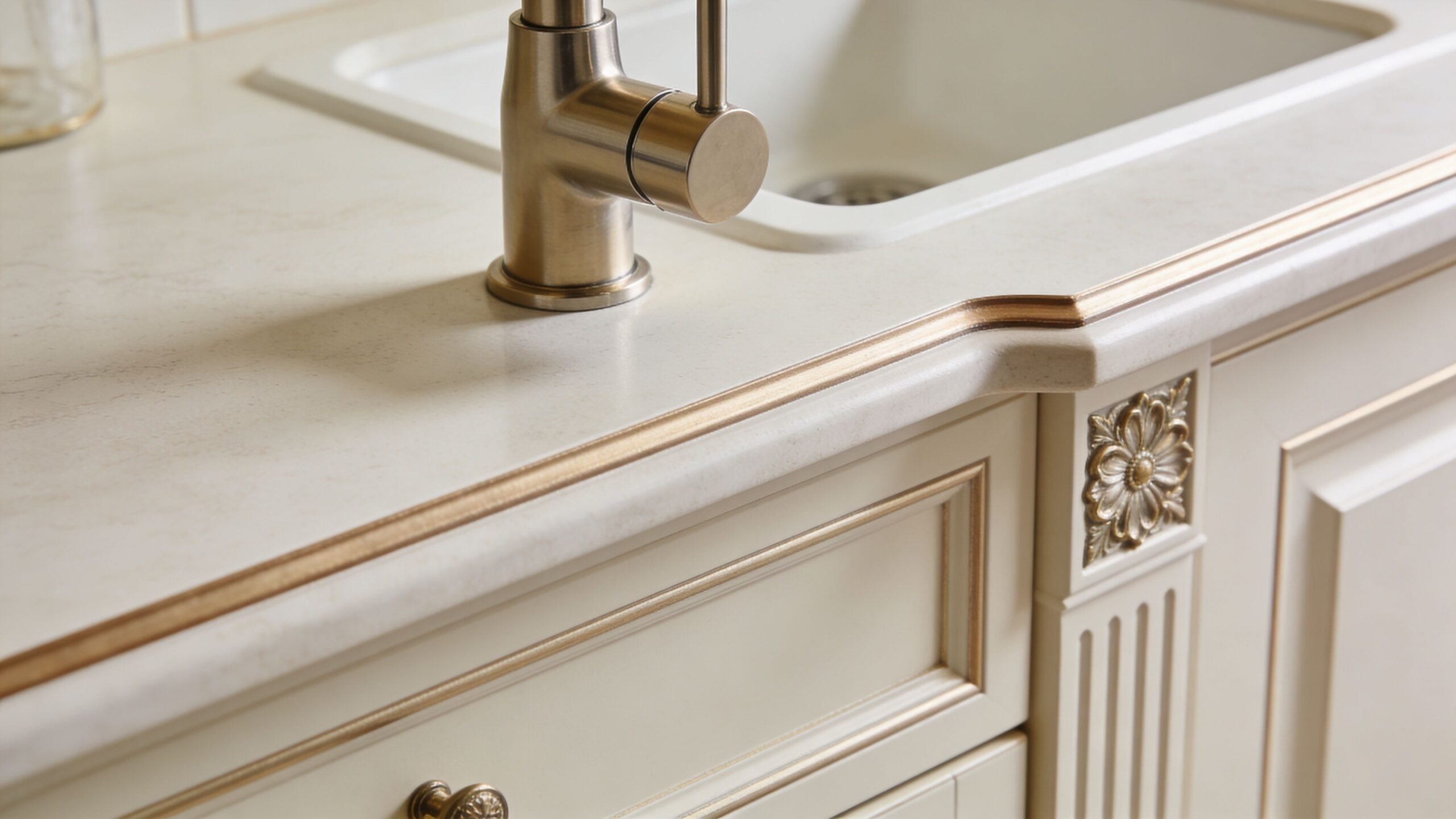
Edge profile sounds minor until you see the whole room. A simple edge usually keeps the kitchen looking cleaner and more current. In fact, this South Jersey edge profile article cites a 2025 NJ Real Estate Report showing that simple eased or flat quarter-round profiles correlate with 12% faster sales in Cherry Hill and Voorhees, because buyers tend to prefer timeless, low-maintenance looks over ornate edges.
That matches what works in many local remodels. An eased edge disappears nicely into shaker cabinetry, wipes clean easily, and doesn’t make the kitchen feel overdesigned.
Consider these finishing details carefully:
- Edge profile: Eased edges are versatile and easy to clean. Rounded options can feel softer in family kitchens. More decorative profiles work best when the whole design leans traditional.
- Thickness: The slab thickness changes the visual weight of the kitchen. A thicker look can make an island feel more substantial. A thinner profile often reads cleaner and more contemporary.
- Finish: Polished finishes bounce more light and feel crisp. Honed finishes look softer and can be a better match for homeowners who want a quieter, more relaxed surface appearance.
A high-end kitchen usually doesn’t come from adding more details. It comes from choosing the right details and repeating them consistently.
Integrating Countertops with Sinks and Backsplashes
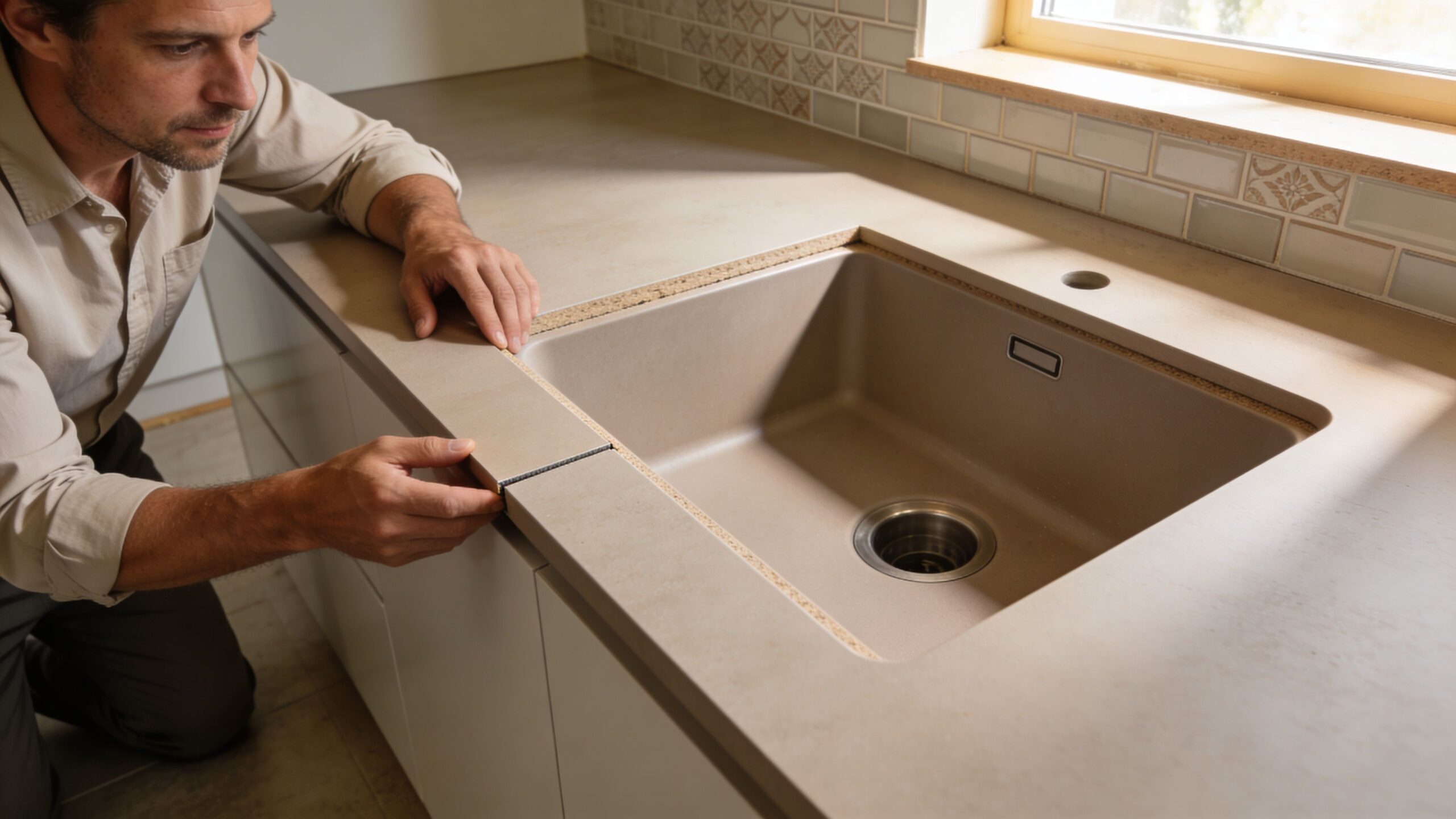
Many countertop problems don’t start with the slab. They start with planning gaps. A homeowner picks a material, but no one has fully thought through sink cutouts, seam placement, faucet reach, disposal depth, or where the backsplash should begin and end.
Plan seams and sink cutouts early
Seams are normal. The question isn’t whether you’ll have one. The question is whether it’s placed thoughtfully. A good fabricator puts seams where they’ll be less noticeable and less disruptive to the pattern.
Sink choice matters just as much. Undermount sinks create a clean transition and make wipe-down easier. Farmhouse sinks become a design feature, but they require very deliberate cabinet and countertop coordination. Top-mount sinks are practical in some situations, though they create a different visual line and cleaning edge.
If you’re also replacing the disposal, it helps to understand the plumbing implications before final measurements. This overview of a sink garbage disposal is helpful for thinking through clearances, connection points, and how the sink area functions as a whole.
Backsplash decisions change the whole install sequence
Homeowners often ask whether the countertop and backsplash should be chosen together. In most kitchens, yes. They don’t have to match, but they do need to cooperate. A loud counter plus a loud backsplash usually creates visual noise.
A short stone backsplash can feel simple and practical. A full-height tile backsplash creates more design presence. Neither is automatically better. The right choice depends on cabinet style, wall space, and how much pattern is already in the room.
When you’re coordinating these surfaces, this guide on how to select tile backsplash is useful because it helps narrow shape, texture, and scale before installation day.
A few details professionals think about early:
- Faucet spread and reach: Make sure the sink and faucet don’t crowd window trim or upper cabinets.
- Rear countertop depth: Confirm you have enough working space behind the sink if the faucet sits farther forward.
- Outlet and switch placement: Full-height backsplashes can affect where cuts and trim details land.
- Visual stopping points: On open walls, decide where backsplash tile should terminate so it looks intentional.
Budgeting and Partnering with a Local Professional
A South Jersey kitchen budget usually goes sideways in one of two places. The homeowner falls in love with a slab price that does not include fabrication and installation, or the material is chosen before anyone has verified field conditions in the actual house.
The slab is only part of the number. Final cost is shaped by sink cutouts, edge details, delivery access, seam placement, tear-out, plumbing reconnects, backsplash timing, and whether the fabricator needs extra labor to handle a heavy or fragile surface. I tell homeowners to budget for the whole install, not just the stone yard tag.
What homeowners forget to include
Porcelain is a good example. Construction Resources notes that budget overruns hit 28% of countertop projects when hidden costs like freight for large porcelain slabs are ignored. That same source says professional templating at a ±1/16" tolerance boosts fit success to 99%.
That gap matters. Once cabinets are installed and plumbers, tile setters, or appliance deliveries are on the calendar, one bad assumption can trigger change orders and delays.
A realistic countertop budget should account for:
- Material cost: Slab pricing, remnant options, and any premium color upcharges
- Fabrication: Sink and faucet cutouts, edge profiles, polishing, seam work, and finish details
- Installation: Delivery, carrying, placement, and special handling for upper-floor kitchens or tight entries
- Related work: Old top removal, plumbing disconnect and reconnect, backsplash adjustments, and touch-up work if walls are out of square
Why local measuring and templating matter
Countertops are custom-built to your kitchen, and real houses rarely give perfect conditions. In older South Jersey homes, I often see walls that are slightly bowed, corners that are not exactly 90 degrees, and floors with enough movement to affect cabinet level. Those are not unusual problems. They are normal field conditions, and they need to be measured before anyone signs off on a slab layout.
That is also why in-home planning saves money. Good decisions happen faster when the material is reviewed with your cabinet color, wall paint, flooring, and natural light all in front of you. A quartz sample that looks soft gray in a showroom can read blue in a Cherry Hill kitchen, or flat beige in a Haddonfield home with warm afternoon sun.
If you are still organizing scope and sequence, this guide on how to get started before hiring a contractor helps sort priorities before materials are ordered.
The Cabinet Coach uses a mobile showroom model, which lets homeowners compare cabinetry, countertops, hardware, and tile inside the house instead of under showroom lighting. That is a practical advantage, not a sales extra. It helps catch mismatches early, before fabrication starts and changes get expensive.
Local guidance often prevents the mistakes that cost the most. The wrong seam location near a cooktop. A sink cutout that leaves too little stone at the rail. A slab selection that looked right under store lights but feels too busy once it is next to your cabinets.
Frequently Asked Questions About Kitchen Countertops
What’s the difference between quartz and quartzite
Quartz is an engineered surface. Quartzite is a natural stone. In practical terms, quartz usually appeals to homeowners who want consistency and simpler maintenance. Quartzite appeals to homeowners who want the variation and character of real stone. If you love natural movement but don’t want the delicacy associated with softer materials, quartzite often ends up on the shortlist.
How do I protect new countertops from damage
Use trivets for high heat, wipe spills promptly, and don’t cut directly on the surface. The exact care routine depends on the material. Natural stone may need sealing. Lower-maintenance surfaces still benefit from good habits, especially around hot cookware and heavy impact near sink cutouts or corners.
Are there eco-friendly countertop options in South Jersey
Yes, and the category is getting more attention locally. This sustainable countertop overview notes that demand is rising for low-VOC, recycled-content quartz due in part to NJ’s 2025 Green Building Incentives offering rebates in Camden County. It also advises homeowners to look for verified certifications such as Cradle-to-Cradle, because non-certified green claims have shown higher failure rates in New Jersey’s humid climate.
If sustainability is part of your decision, ask to see documentation for certifications instead of relying on marketing language.
Should I choose my countertop or backsplash first
Choose the countertop first in most kitchens. It usually covers more square footage visually, has fewer interchangeable options once fabrication starts, and sets the tone for the rest of the palette. After that, choose a backsplash that supports it rather than trying to compete with it.
If you’re narrowing down materials and want to see what works in your home’s lighting, layout, and day-to-day routine, The Cabinet Coach is a practical next stop. A guided consultation can help you compare surfaces, edges, cabinet colors, and backsplash options in a way that feels clear instead of overwhelming.