
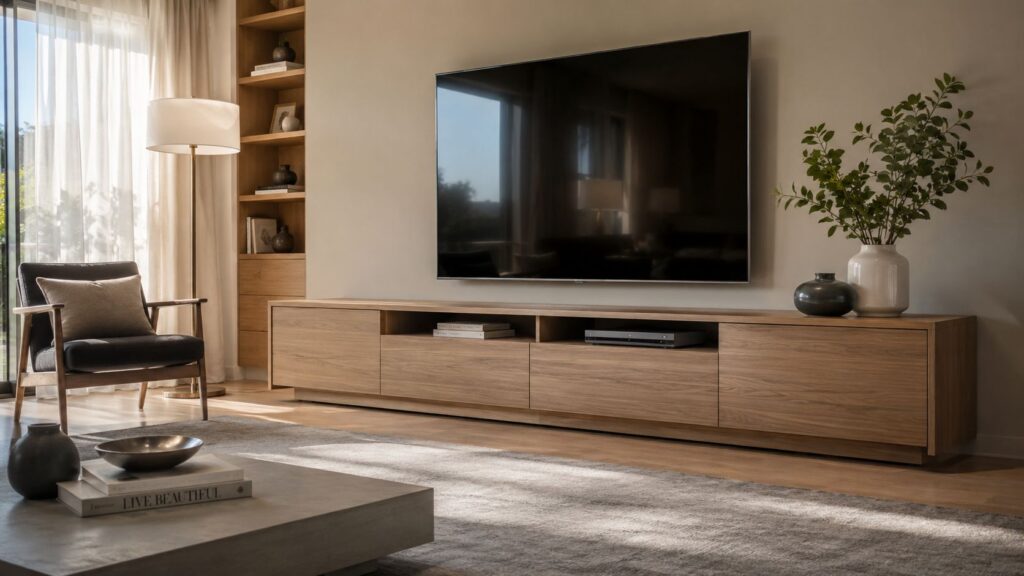
You're probably staring at a wall in your living room and realizing the TV isn't the hard part. The hard part is making the whole setup feel intentional, with a cabinet that fits the room, hides the clutter, and doesn't look too small once everything's in place. A modern TV cabinet does all of that at once, which is why it's become a serious design decision rather than a last-minute purchase.
The category has grown because homeowners want multifunctional living-room furniture that combines storage and display. The global TV cabinet market was valued at USD 8.33 billion in 2024 and is projected to reach USD 10.52 billion by 2034, a trajectory tied to demand for furniture that manages media without sacrificing style (Intel Market Research). If you're comparing options, a practical starting point is shopping for a new TV stand with the room, not just the screen, in mind.
Table of Contents
- Finding the Perfect Modern TV Cabinet
- Defining Your Modern Design Style
- The Art of Sizing and Placement
- Choosing Materials Finishes and Storage
- A Smarter Process for South Jersey Homeowners
- Installation and Smart Cable Management
Finding the Perfect Modern TV Cabinet
A good modern TV cabinet doesn't just hold a screen. It sets the tone for the whole seating area, especially when the television is wall-mounted and the cabinet becomes the anchor that keeps the room from feeling unfinished. That's why this purchase should be treated like core furniture, not an accessory.
The market tells the same story. The global TV cabinet market was valued at USD 8.33 billion in 2024 and is projected to rise to USD 10.52 billion by 2034, which points to steady demand for furniture that integrates storage and display in modern homes (Intel Market Research). In plain terms, people want one piece to do several jobs, and they want it to look good while doing them.
Start with the room, not the product page
The right cabinet depends on how the room works day to day. A family room with game consoles, streaming boxes, remotes, and chargers needs a different solution than a formal sitting room where the cabinet is mostly visual balance under a mounted display.
Practical rule: the cabinet should solve clutter first, then style, then convenience. If it only looks good in a listing photo, it probably won't stay useful.
That's why a cabinet with closed storage, open shelving, or a mix of both often makes more sense than a simple stand with no planning behind it. The piece should support the way people live, including where they sit, how they watch, and how many devices need to stay connected.
What to prioritize first
A reliable decision order makes the process easier:
- Style match: the cabinet should sit naturally with the sofa, rug, and lighting.
- Size discipline: the piece needs to look proportionate to the wall, not just the TV.
- Material choice: the finish has to suit cleaning habits, pets, kids, and sunlight.
- Storage layout: doors, drawers, and shelves should match the gear you own.
- Cable planning: visible cords can make even a nice cabinet look temporary.
For homeowners who want a guided approach, that's the value of comparing options through a more structured design process rather than buying by impulse. The key is to choose a cabinet that makes the wall feel finished, because the room will read that way every day.
Defining Your Modern Design Style
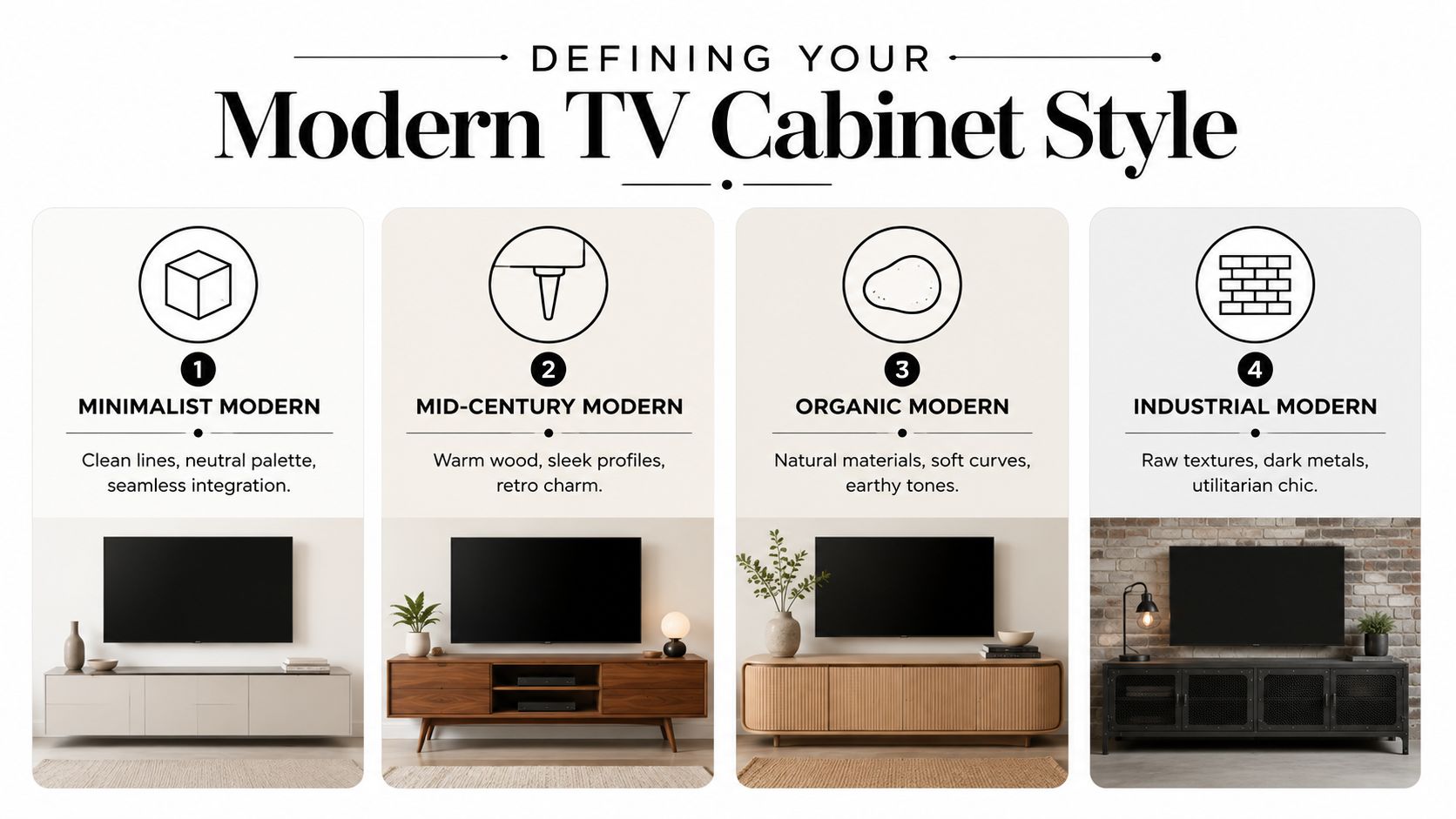
“Modern” covers a lot of ground, and that's where many homeowners get stuck. A cabinet that feels sleek in one home can look cold in another, while a warm wood piece can feel too rustic if the rest of the room leans sharp and minimal. The easiest way to narrow the field is to identify the visual language you already like.
Four modern looks that work in real homes
Minimalist modern favors handleless fronts, flat planes, and quiet colors. It works well when the rest of the room already has texture, because the cabinet acts like a visual rest stop rather than the main event.
Mid-century modern leans on tapered legs, clean geometry, and warm wood tones. It's a strong fit when you want character without ornament, especially if your furniture already uses wood or black metal accents.
Organic modern softens the look with rounded edges, natural finishes, and a calmer palette. This style works when a room needs warmth, especially in homes where hard lines dominate the architecture.
Industrial modern brings in darker metals, rougher textures, and a more utilitarian feel. It can look excellent in loft-like spaces or rooms with brick, concrete, or darker flooring, but it needs balance so it doesn't feel heavy.
Use your current furniture as the filter
The best style choice is often the one that repeats what's already working in the room. If your sofa is low and neatly upholstered, a slim cabinet with simple faces will probably feel right. If you already own a walnut coffee table or accent chair with visible grain, a wood-forward cabinet will tie the room together more easily.
For a deeper style comparison, the Cabinet Coach has a useful modern cabinet styles guide. Use it as a visual check, not a shopping shortcut.
A cabinet doesn't need to shout to feel designed. It just needs to repeat the room's strongest visual cues in a calmer, more resolved form.
If you're undecided, start with the materials and leg shape before you get distracted by hardware. Those two details usually tell you more about the style than the sales title does.
The Art of Sizing and Placement
A lot of cabinet regret starts with scale. The piece looked fine online, then arrived and either shrank against the wall or crowded the room so much that the seating area felt tight. Good sizing fixes that before it becomes an expensive mistake.
Measure the screen, then the wall
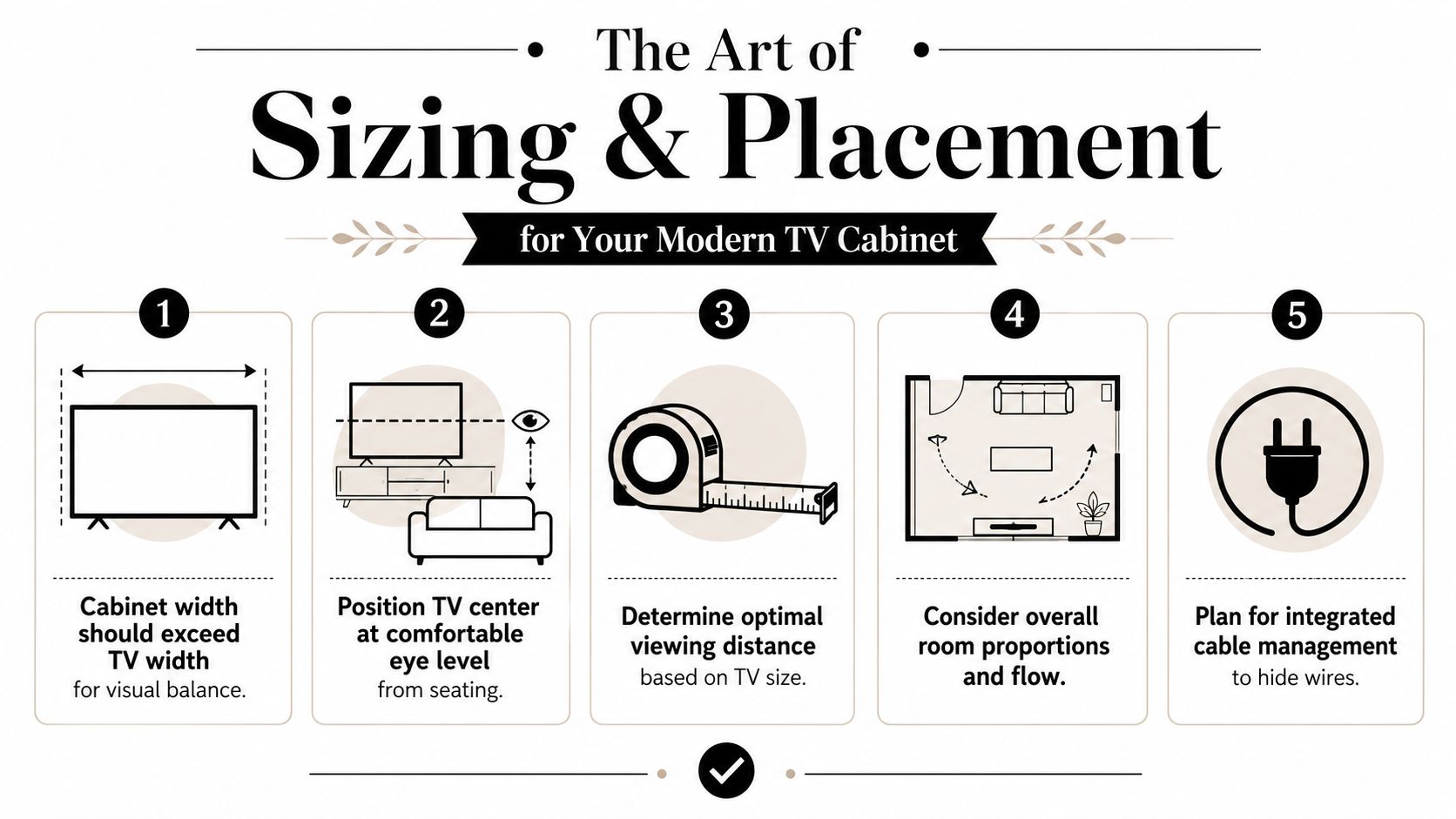
A technically sound layout starts with the TV itself. The cabinet should be wider than the TV by about 10 to 15 cm per side, the screen center should sit around 42 to 48 inches from the floor for sofa viewing, and floating units are commonly set 8 to 16 inches above the floor with a cabinet depth of roughly 12 to 18 inches to house devices without protruding too much (Sainik 710).
Those numbers help, but they're only the starting point. The goal is to keep the TV comfortable to watch while giving the cabinet enough visual presence to feel stable. If the piece looks cramped, the whole wall can feel underplanned.
Size the cabinet to the seating wall
One design rule gets skipped too often, the cabinet should relate to the sofa or sectional, not just the screen. Editorial design guidance points out that a media cabinet can roughly match the size of the sofa and may even be wider in larger modern rooms, because a TV-sized cabinet can look visually underscaled once the television is wall-mounted (DesignCafe).
That matters most in open-plan homes. In those rooms, the cabinet often becomes the main furniture anchor on the wall, so its visual width matters almost as much as its function. If the room has a large sectional, a cabinet that stretches more broadly can make the whole setup feel deliberate.
Use a simple placement checklist
- Confirm viewing height: sit on the main sofa and check whether the screen feels natural, not too high.
- Check clearances: make sure doors, drawers, and side panels can open without hitting nearby furniture.
- Map the wall width: the cabinet should feel related to the wall span, not stranded inside it.
- Plan the tech zone: gaming consoles, routers, and streaming boxes need breathing room.
- Mark the visual center: the cabinet and TV should line up with the main seating position, not with a random wall outlet.
The Cabinet Coach's cabinet measurement guide is helpful if you want a more methodical measuring process. The exact room context is different, but the discipline is the same, measure first, then choose.
Choosing Materials Finishes and Storage
Material choice affects how the cabinet feels in the room, how it ages, and how much day-to-day maintenance it asks of you. A beautiful finish that scratches easily can become annoying fast, while a more forgiving surface can keep the room looking calm even when life gets busy.
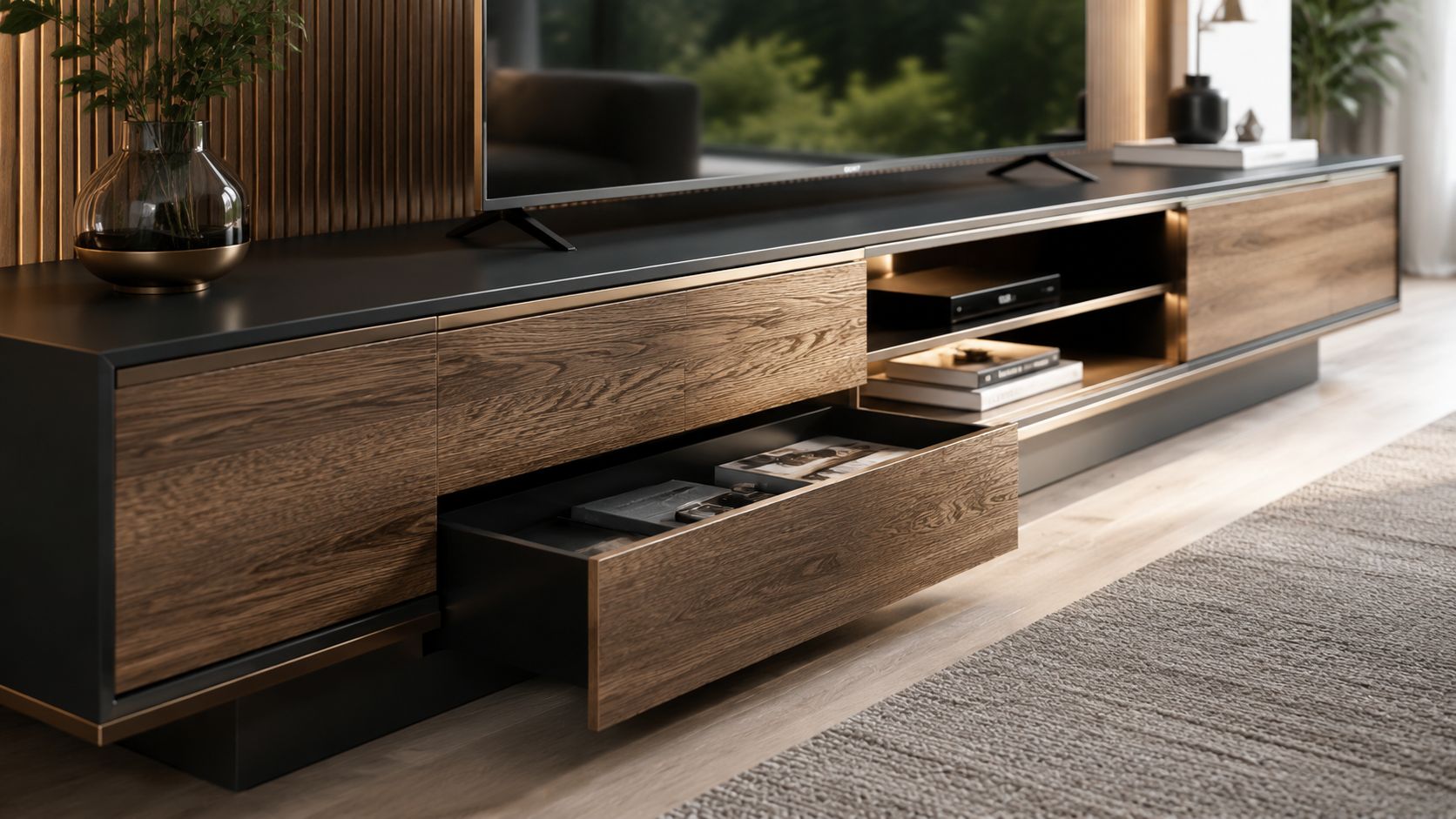
The wider market confirms that this is no longer just about a stand. The modern TV cabinet now sits inside the broader entertainment furniture category, valued at USD 24.10 billion in 2024, which reflects the shift toward units that handle media storage, display, and technology management (Grand View Research).
How the main materials differ
High-pressure laminate is practical and easy to live with. It's a smart choice if you want a consistent finish that handles regular cleaning and doesn't demand much attention, especially in a busy household.
Wood veneer gives you the look of real wood with a lighter, more accessible build. When the veneer is done well, it can look refined without pushing the cabinet into solid-wood pricing.
Solid wood brings the richest feel and the most traditional cabinet presence. It tends to suit homeowners who want longevity and don't mind a piece with more weight and a stronger material presence.
Lacquered finishes feel sleek and contemporary, especially in minimalist rooms. They can look sharp, but they also make fingerprints and glare more noticeable, so they reward careful upkeep.
Choose storage by what you need to hide
Open shelving works when devices need easy access and the room can tolerate a bit of visual activity. It's useful for a streaming box, a soundbar, or a console that gets used often.
Drawers are the best answer for smaller items that make a room feel messy, like controllers, chargers, and spare remotes. Cabinets with doors handle bulkier electronics and anything you'd rather not see from the sofa.
Practical takeaway: the cleanest setups usually mix open and closed storage. Put the active tech where it's reachable, then hide the rest.
For homeowners comparing core carcass materials, it also helps to understand the difference between plywood and MDF construction. The Cabinet Coach has a focused plywood vs MDF cabinet guide that can help you judge the structure behind the finish.
A cabinet that looks calm but can't contain the everyday clutter won't stay elegant for long. The right combination is the one that makes maintenance easy without making the room feel overbuilt.
A Smarter Process for South Jersey Homeowners
Online shopping can make a cabinet look simple right up until it's situated in a physical room. Lighting changes the finish, the wall color affects the tone, and the scale that looked right on a screen can feel wrong once it lands beside your sofa. That's why many South Jersey homeowners benefit from a more hands-on process.
Why the home visit changes the decision
A mobile showroom lets you compare cabinet samples in the same light that will shape the finished room. That matters because wood tone, sheen, and hardware color all behave differently in a Cherry Hill living room than they do under a warehouse light or a laptop screen.
The Cabinet Coach brings that process into the home and pairs it with design guidance, which is useful when the wall has to work with existing flooring, trim, and nearby furniture. For homeowners in South Jersey, that local, in-home approach is a practical option when the goal is a cabinet that fits the room rather than a catalog image.
How the process removes guesswork
The biggest advantage is clarity. Instead of trying to imagine how a sample might look later, you can compare materials where the cabinet will live, then decide on proportions, storage, and finish with the room in front of you.
That kind of process helps when the project has several moving parts, like a wall-mounted TV, a low cabinet, hidden wiring, and enough storage for devices and accessories. It also gives homeowners a way to balance function and style without having to become their own cabinet designer.
A good cabinet decision is rarely just about the cabinet. It's about how the wall, the seating, and the technology all read together once the room is finished.
The Cabinet Coach's mobile showroom approach is relevant here because the same principle applies to media walls, see the options in context, then decide. For South Jersey residents who want expert input without the back-and-forth of showroom visits, that's a useful middle ground.
This is the point where generic advice stops being enough. A room-specific consultation can turn a decent idea into a cabinet plan that fits the space, the budget, and the way the home is used.
Installation and Smart Cable Management
A clean cabinet can still look unfinished if the installation is sloppy or the wires are visible. That's why the final stage matters as much as the shopping stage. The goal is a setup that looks stable, ventilated, and easy to maintain.
The Cabinet Coach's cabinet hardware installation guide is a useful reference if you want to understand the level of precision involved in a clean install.
Check the structure before anything goes on the wall
Floating cabinets need proper anchoring, and freestanding units still need to sit level on the floor. If a piece is wall-mounted, the wall fasteners and load-bearing approach have to match the cabinet weight and the contents it will hold.
A level installation matters more than many homeowners expect. Even a slight tilt can make doors look misaligned, and a wall-mounted cabinet that isn't square to the room will show it immediately. That's why installers measure twice, adjust once, and then check the fit again after hardware is in place.
Hide the tech without trapping heat
Cable management should start before the cabinet is fully installed. Route power cords, HDMI cables, and device leads through the back of the unit or through wall plates if the setup calls for a cleaner finish.
Recessed outlets help reduce visible clutter, while cord concealers can tidy up smaller runs where a full wall solution isn't necessary. At the same time, electronics need ventilation, so don't seal devices inside a tight box with no airflow. Routers, consoles, and streaming devices all perform better when they can breathe.
Use a simple pre-install checklist
- Confirm anchoring points: know where the studs or secure mount points are before drilling.
- Test the floor level: a freestanding cabinet should sit flat before the TV goes on top.
- Plan cable paths early: decide where power and signal cables will enter and exit.
- Leave service access: devices need to be reachable without dismantling the whole cabinet.
- Check airflow: warm electronics need space, especially in closed compartments.
Clean wiring is part of the design, not a finishing touch. If the cords are visible, the cabinet never feels fully integrated.
A floating unit can look especially sharp in a modern room, but only if the installation is accurate and the wiring disappears cleanly. Freestanding units are more forgiving, yet they still need the same discipline around cord routing and ventilation.
A CTA for The Cabinet Coach. If you're in South Jersey and want a modern TV cabinet plan that perfectly fits your room, schedule a consultation with The Cabinet Coach and review materials, sizing, and layout in your own home before you commit.