
Finding Your Signature Style: A South Jersey Cabinet Guide
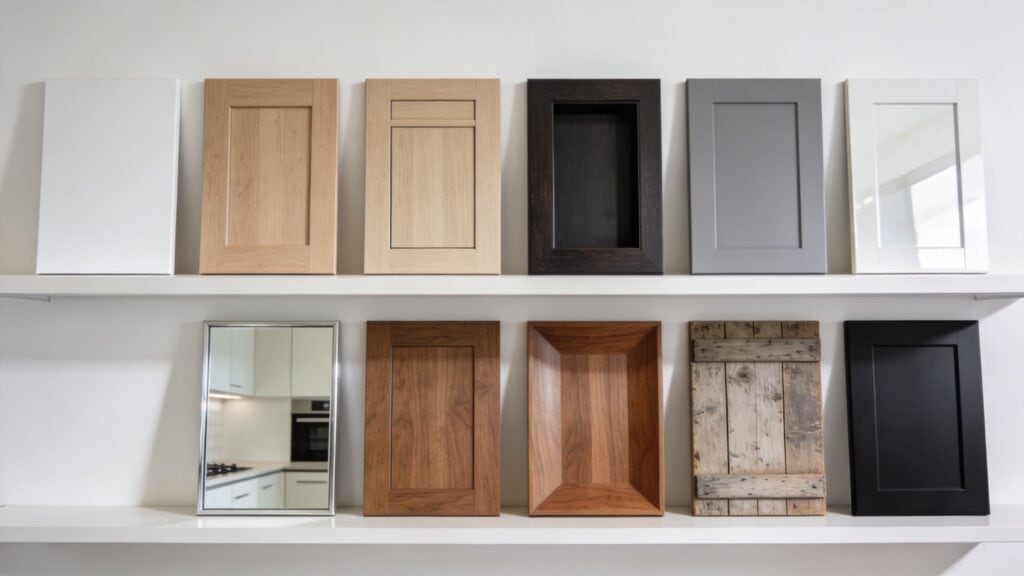
Planning a kitchen or bath remodel in South Jersey usually starts the same way. You save a few photos, notice that one looks too cold, another feels too busy, and suddenly every cabinet door starts blending together. That confusion is normal, especially when you're trying to match a new design to a Cherry Hill colonial, a Haddonfield historic home, or a newer Voorhees build that wants a cleaner look.
Cabinetry sets the tone faster than almost anything else. Door style, finish, color, and construction all shape whether a room feels calm, refined, warm, or sharp. That matters here because South Jersey homes aren't all cut from the same mold. A style that looks perfect in a sleek Moorestown addition can feel out of place in an older Collingswood kitchen if the details aren't handled carefully.
From the mobile showroom side of the business, one thing comes up constantly. Homeowners don't just want modern cabinet styles. They want modern cabinets that still make sense for how they live, how much maintenance they can tolerate, and what fits the character of the house.
This guide gets right to the point. These are the eight cabinet styles that come up most often in real South Jersey projects, along with the trade-offs that matter once the samples are on the table and the renovation gets real.
Table of Contents
- 1. Minimalist Modern
- 2. Industrial Modern
- 3. Scandinavian Modern
- 4. Contemporary Farmhouse
- 5. Mid-Century Modern
- 6. Contemporary Glam
- 7. Modern Transitional
- 8. Modern Organic
- 8 Modern Cabinet Styles Comparison
- From Vision to Reality with The Cabinet Coach
1. Minimalist Modern
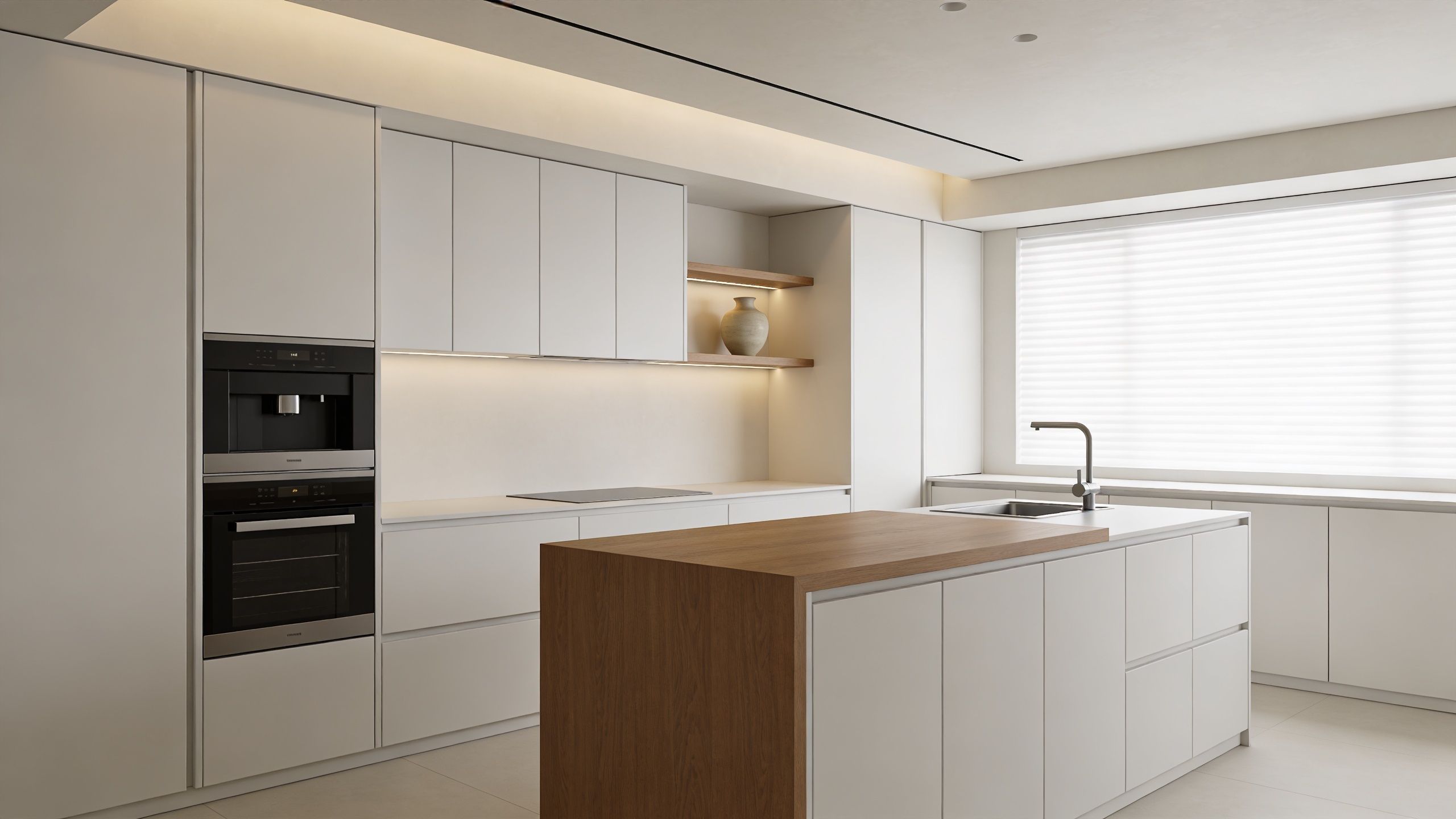
Minimalist modern cabinets are what many people picture first when they hear modern cabinet styles. Flat fronts, quiet hardware, clean reveals, and as little visual interruption as possible. In South Jersey, this look lands especially well in updated Cherry Hill kitchens, newer Voorhees homes, and primary baths where homeowners want the room to feel lighter and less crowded.
A slab door is the backbone of this style. Flat-panel cabinets are also the fastest-growing modern style, with projected growth at a 6.8% CAGR through 2030 according to Grand View Research market reporting. That growth makes sense on the ground because homeowners keep asking for simple surfaces that don't fight with bold countertops, large-format tile, or integrated appliances.
Early in the process, it helps to look at the finish in a real room.
Why it works in South Jersey
White still has a strong hold in remodels. A Kitchen & Bath Design News survey cited in 2025 trends reporting found that white cabinets, largely in Shaker style, were chosen by 68% of homeowners for their light-reflecting effect, especially in compact spaces, as noted in this cabinet trends overview. Even if you go slab instead of Shaker, that same instinct applies in smaller kitchens in Haddon Township, Merchantville, or older homes with tighter footprints.
The trick is keeping minimalism from turning sterile. Warm quartz, a wood island, ribbed tile, or a soft-touch matte finish usually does that job better than adding more decorative detail.
Practical rule: If the doors are plain, the surrounding materials need texture.
For homeowners browsing modern cabinet options from The Cabinet Coach, the most successful versions usually combine handle-less or low-profile fronts with smart drawer storage. A minimalist exterior only works when the inside is organized enough to support it.
Where it can go wrong
This style isn't forgiving when layout details are weak. Uneven filler pieces, exposed side panels in the wrong place, or poor appliance alignment stand out immediately because there isn't ornament to hide behind.
A few choices usually make the difference:
- Choose matte over glossy in busy homes: Matte and soft-touch finishes are usually easier to live with when kids, pets, and frequent cooking are part of the routine.
- Plan hidden storage early: Trash pull-outs, spice storage, tray dividers, and deep drawers keep the look clean without making the kitchen less functional.
- Use one warm element: White slab cabinets paired with white counters and a cool gray floor can feel clinical fast.
If you want to see the style in motion, this gives a useful visual reference after the material discussion above.
2. Industrial Modern
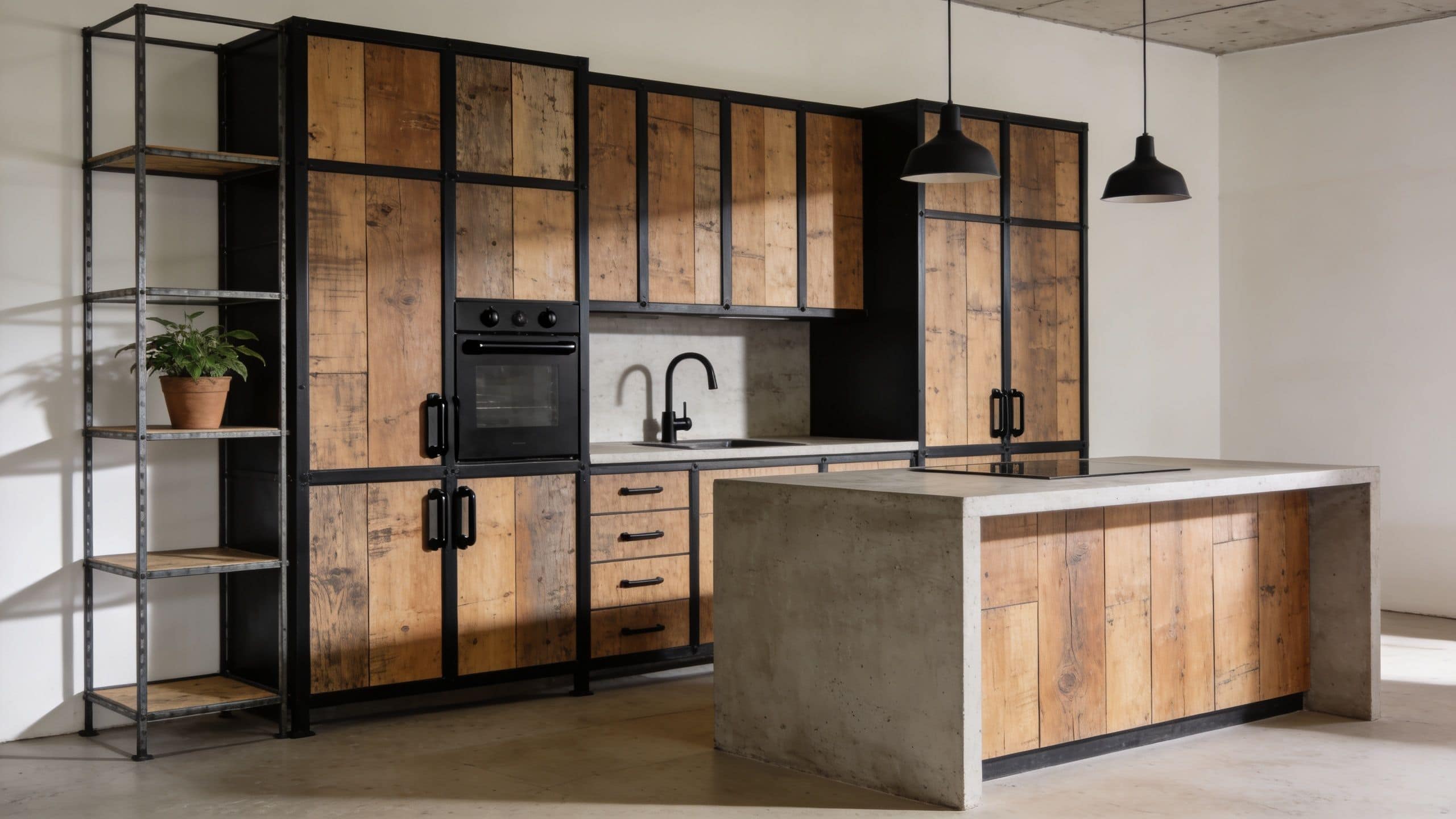
Industrial modern isn't for every house, but in the right setting it has real character. Think black metal framing, wood grain, concrete-inspired surfaces, smoked glass, and a palette that feels a little tougher and less polished than standard contemporary cabinetry. It suits creative homeowners in Collingswood, Merchantville, and pockets of Cherry Hill where people want something moodier than white-on-white.
The appeal is contrast. Raw-looking materials give a kitchen or bath some grit, while the cabinet lines keep it current. In a rowhome update, loft-like condo, or finished basement bar, industrial modern can feel more grounded than a sleek minimalist scheme.
Best homes for this look
This style works best when the house already has some architectural backbone. Exposed brick, larger windows, darker floors, or a strong open-plan layout all help. In a traditional Moorestown colonial, industrial elements usually work better as accents than as a full-room commitment.
A common South Jersey version is black or charcoal lower cabinets with a wood island and metal details. That mix gives the room weight without making it feel like a commercial space.
Industrial style needs warmth somewhere. Wood is usually the easiest place to add it.
What to watch with materials
Experience proves vital. Industrial modern often pushes homeowners toward darker laminates, textured thermofoils, metal mesh inserts, and MDF-painted doors. Those can all work, but they don't behave the same way over time, especially in high-use family kitchens.
If you're comparing materials, this breakdown of MDF vs. wood cabinet doors for your home helps frame the trade-offs. Painted MDF can deliver a smoother, more uniform look for modern doors, while wood gives you more natural variation and can feel more authentic in mixed-material industrial spaces.
A few practical notes matter here:
- Use brushed or matte metals: Shiny chrome usually feels too polished for this style.
- Seal concrete-look surfaces properly: Bathrooms and prep zones need materials that can handle moisture and daily cleaning.
- Limit heavy finishes to one or two focal points: Black cabinets, black counters, black fixtures, and black floors usually close a room in.
Industrial modern is strongest when it's edited. Too many rough surfaces and the room starts feeling themed instead of designed.
3. Scandinavian Modern
Scandinavian modern is one of the easiest styles to live with. It isn't loud, it isn't precious, and it works beautifully in South Jersey homes that need brightness and calm more than drama. Light wood tones, simple door profiles, white walls, and practical storage make this a natural fit for family kitchens in Haddonfield, Medford, and Moorestown.
This style also lines up with a broader return to warmth. Natural wood cabinets, especially those with visible grain such as white oak, saw a 37% increase in popularity according to 2025 NKBA data cited in this kitchen cabinet trends report. You can see why. After years of cooler, stark palettes, many homeowners want kitchens that feel softer and more human.
Why light woods feel right locally
A lot of South Jersey homes don't need more visual weight. They need relief. In older houses with divided rooms or modest window openings, a pale oak or maple cabinet can brighten the space without relying on a fully painted kitchen.
This is also where Scandinavian modern overlaps nicely with local architecture. In a Haddonfield home with original trim, light wood cabinets can respect the age of the house without trying to imitate it. In a newer Evesham or Mount Laurel home, the same look reads fresh and easy.
For homeowners considering wood species and tone, modern kitchens with maple cabinets are a useful reference point because maple can bridge that clean Scandinavian look without feeling overly rustic.
How to keep it from feeling flat
Scandinavian design is simple, but it isn't empty. The rooms that work best layer in texture through tile, woven stools, soft lighting, and a little contrast.
Try these moves if you want the style to feel finished:
- Use a quiet grain, not a busy one: White oak, maple, and ash usually read cleaner than heavily varied species.
- Keep hardware restrained: Brushed stainless, matte black, or small wood pulls tend to suit the style.
- Add texture outside the cabinets: Linen Roman shades, subtle zellige, or a lightly textured backsplash stop the room from looking one-note.
The mistake is going so minimal that the kitchen loses warmth. Scandinavian modern should feel serene, not sparse.
4. Contemporary Farmhouse
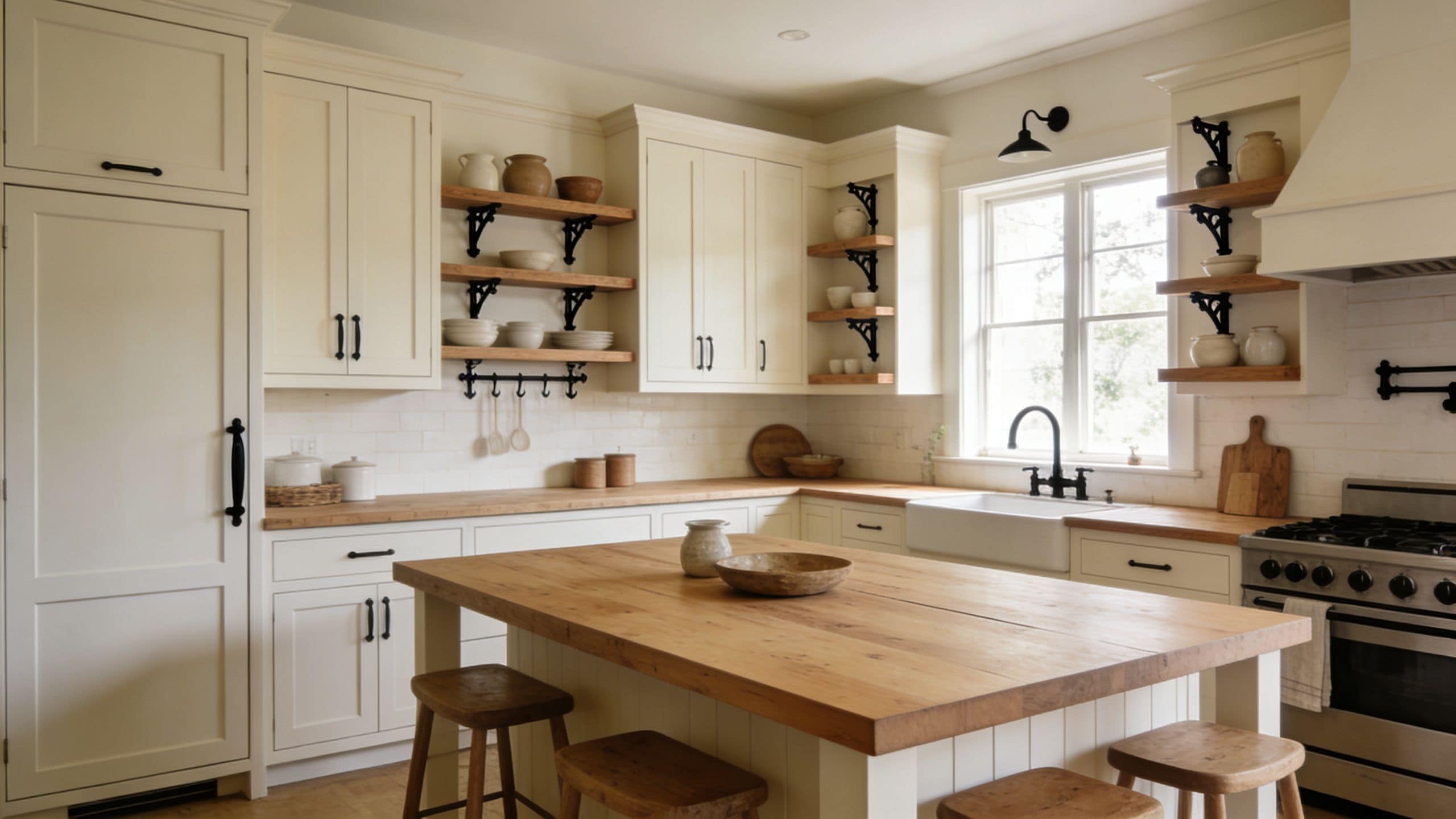
Contemporary farmhouse has stuck around because it solves a real design problem. Many homeowners want warmth and familiarity, but they don't want ornate cabinetry or a full rustic look. This style gives them a middle ground. It combines modern restraint with touches that feel lived-in, approachable, and right at home in South Jersey family houses.
In practice, this often means painted cabinets, open shelving used carefully, warm woods, and hardware with a little presence. It works especially well in Cherry Hill kitchens, Medford renovations, and Moorestown homes where the architecture already leans classic.
Why this style still has staying power
One reason is simple. Shaker doors continue to dominate the market. Industry reporting notes that Shaker cabinets account for nearly 40% of global kitchen cabinet sales, according to Strategic Market Research's kitchen cabinet market report. That matters because contemporary farmhouse usually starts with a Shaker base and then adjusts the finish, color, and accessories.
The style also makes sense in homes that need a bridge between old and new. Cream cabinets, a stained wood island, and simple black pulls can feel more natural in a traditional South Jersey home than a full slab-door composition.
The farmhouse mistakes to avoid
This is the style most likely to get overdone. Too many signs, too much distressed wood, too many open shelves, and the room starts feeling staged instead of practical.
A better approach looks like this:
- Use open shelving sparingly: One shelf run near a range wall or coffee station is plenty in most kitchens.
- Choose cleaner colors: Soft white, warm white, mushroom, and muted gray tend to age better than trendier painted finishes.
- Mix rustic with refined: A wood island and simple painted perimeter create balance. Rustic everything becomes heavy fast.
The best farmhouse kitchens don't announce themselves. They just feel comfortable and well resolved.
In Haddonfield and older parts of Cherry Hill, this style often works because it respects traditional architecture while still giving the room a current cabinet layout and better function.
5. Mid-Century Modern
Mid-century modern has a loyal following for good reason. It has shape, warmth, and a point of view. When homeowners in Haddonfield, Collingswood, or older Cherry Hill neighborhoods want modern cabinet styles with more personality, this is usually the direction they mean.
Warm walnut tones, horizontal grain, simple profiles, and furniture-like details are the signatures. In a bathroom vanity, tapered legs can work beautifully. In a kitchen, the look usually needs a more grounded adaptation so it can handle present-day storage and appliance needs.
Where this style fits best
Not every house should lean hard into mid-century. It looks most natural in homes with lower rooflines, wide windows, brick fireplaces, or original features from the middle of the twentieth century. In a house that doesn't have those cues, the cabinetry can still borrow the language without turning into a period set.
One useful local move is to use mid-century ideas in selected moments. A walnut vanity in a Moorestown bath, a white oak island with sculptural pulls, or a built-in bar in a Collingswood dining room can capture the style without forcing the whole house in that direction.
How to make it feel current
The strongest versions keep the warmth but tighten the details. That means flatter doors, integrated storage, simple backsplash choices, and lighting that nods to the era without copying it too directly.
A few combinations work especially well:
- Warm wood with crisp counters: White quartz or a quiet solid surface keeps the cabinetry from feeling dated.
- Brass used carefully: A little unlacquered or satin brass can add depth. Too much starts to feel costume-like.
- One accent color, not five: Sage, rust, or mustard can support the palette through tile or stools.
Mid-century modern can go wrong when every surface competes. The cabinetry should do most of the talking. Let the tile, lighting, and hardware support it, not distract from it.
6. Contemporary Glam
Contemporary glam is the most selective style on this list. It asks for confidence, good lighting, and a homeowner who doesn't mind a little drama. High-gloss or polished finishes, rich color, metallic accents, and a sharper sense of luxury define the look. In South Jersey, it tends to show up more often in powder rooms, primary baths, and high-end kitchens in Haddonfield, Moorestown, and parts of Mount Laurel.
The key is restraint. A glam room should feel polished, not flashy. Deep jewel tones, reflective surfaces, and statement hardware can look fantastic, but only when the composition has enough discipline to hold them together.
When glam works beautifully
This style does its best work in spaces that already have some polish. Good ceiling height, strong natural light, clean trim details, and quality stone all help. A navy or emerald cabinet with warm metal hardware can look elegant in a primary bath where you want a little more personality than a standard painted vanity.
Color selection matters more here than in almost any other style. If you're trying to decide whether a darker cabinet finish will age well, this guide on how to choose kitchen cabinet colors is a practical starting point.
How to avoid an overdone look
Most glam mistakes come from too many competing finishes. Mirrored surfaces, bold veining, bright brass, glossy cabinets, and sparkle-heavy lighting all in one room is usually too much.
Keep the hierarchy clear:
- Pick one hero finish: Let the cabinets be the statement, or let the stone be the statement.
- Balance gloss with matte: Matte hardware or honed stone often makes glossy cabinetry look more expensive.
- Use metallics in small doses: Hardware, sconces, or a frame detail is enough in most rooms.
A glam cabinet style needs clean lines underneath the shine. Without that structure, it quickly feels dated.
For busy family kitchens, ultra-matte painted finishes often deliver the mood of glam with less maintenance than a full high-gloss lacquer look.
7. Modern Transitional
A lot of South Jersey projects start the same way in my mobile showroom. A homeowner in Cherry Hill or Moorestown points to a flat-panel door and says it feels too stark, then points to a more traditional raised panel and says it feels too formal. Modern transitional usually solves that problem because it keeps the room current without fighting the character of the house.
That balance matters in this part of New Jersey. A Haddonfield home may have older trim profiles and narrower room transitions. A newer Mount Laurel kitchen may be more open and need cleaner sightlines. Modern transitional can work in both because the cabinet details stay restrained while the overall room still feels warm and familiar.
Why so many homeowners land here
Modern transitional usually relies on simple framed doors, soft paint colors, natural wood, and hardware that has presence without stealing attention. The style sits comfortably between formal traditional cabinetry and sharper contemporary looks, which gives it a long shelf life in family kitchens and primary baths.
It also handles real remodeling constraints well. In older homes, I often see homeowners trying to connect original millwork, existing oak floors, and a new kitchen layout that functions better for daily use. In newer homes, the challenge is usually the opposite. The layout is open, but the finishes feel generic. Transitional cabinetry helps tie those conditions together without making the renovation feel disconnected from the rest of the house.
For homeowners comparing door styles and finish combinations, these transitional cabinet design ideas give a good sense of how flexible the style can be.
What makes it look intentional
The best modern transitional kitchens have discipline. The lines are clean, but the room does not feel flat. The palette is warm, but not muddy.
A few choices usually make the difference:
- Use softer whites and taupes: They sit better with hardwood floors, colonial trim, and the warmer light you get in many South Jersey homes.
- Mix paint with one wood tone: A walnut or white oak island, hood detail, or vanity accent keeps the room from looking one-note.
- Keep the door profile quiet: A slim shaker or simple frame reads cleaner than heavy panel detailing.
- Choose hardware that supports the architecture: A polished nickel pull can suit a Haddonfield renovation, while warm brass or matte black often fits newer homes in Voorhees or Medford.
This style also holds up well for homeowners who care about resale, but the bigger advantage is daily livability. It gives you room to bring in modern lighting, better storage, and updated surfaces without making the cabinets feel like they belong to a completely different house.
8. Modern Organic
Modern organic has become a favorite for homeowners who want a calm room that still feels current. It borrows the clean lines of modern cabinet styles, then softens them with wood grain, earthy color, stone, and finishes that don't look overworked. In South Jersey, this style feels especially right in homes where people want the renovation to feel restorative instead of showy.
It also fits the larger move back toward natural materials. Shaker's long popularity comes from simplicity and function, but many homeowners now want that same clarity with more texture and less paint. That's where modern organic separates itself.
Why this look is gaining momentum
The best versions lean on authentic surfaces. White oak, maple, walnut accents, clay-toned tile, and warm off-whites are common ingredients. In Haddonfield or Moorestown, this can soften a renovated kitchen so it still feels connected to the house. In newer homes in Voorhees or Medford, it adds character that builder-grade finishes often lack.
This style is also good for people who don't want a kitchen that feels trend-chasing. A matte natural finish, quiet stone, and soft layered lighting tend to age gracefully because they aren't trying to make a loud statement.
What makes it feel finished
Modern organic isn't just about picking wood cabinets and stopping there. The room needs a full palette that supports the mood.
The choices that usually help most are:
- Use visible grain intentionally: Let the wood be seen. Heavy stain or too much glazing works against the look.
- Pair hard and soft textures: Stone, plaster-look tile, woven seating, and warm lighting all support the cabinetry.
- Protect natural materials properly: Bathrooms and hardworking kitchens still need practical sealers, ventilation, and durable finishes.
Natural materials only look relaxed when the installation is tight and the details are disciplined.
This style works especially well for homeowners who want modern cabinets without the sharper edges of true minimalism. It feels current, but it also feels settled.
8 Modern Cabinet Styles Comparison
| Style | Implementation Complexity 🔄 | Resource Requirements ⚡ | Expected Outcomes 📊 | Ideal Use Cases ⭐ | Practical Tips 💡 |
|---|---|---|---|---|---|
| Minimalist Modern (Handle-less & Flat-Panel) | Moderate–High: precision joinery and integrated hardware | High: custom finishes, push-to-open systems | Clean, spacious, high aesthetic resale appeal | Contemporary homes, small kitchens, modern apartments | Pair with warm textures, matte finishes, plan hidden storage |
| Industrial Modern (Metal Frames & Mixed Materials) | Moderate: metal fabrication and material coordination | Medium–High: metal work, concrete/reclaimed materials | Bold, character-driven, highly durable spaces | Loft conversions, creative professionals, urban renovations | Balance metal with warm woods, use matte metals, waterproof key areas |
| Scandinavian Modern (Light Woods & Functionality) | Low–Moderate: simple forms, emphasis on function | Medium: quality light woods, sustainable sourcing | Bright, airy, timeless and broadly appealing | Families, eco-conscious homeowners, minimalist interiors | Use FSC woods, integrate soft lighting, protect light finishes |
| Contemporary Farmhouse (Rustic-Modern Hybrid) | Low–Moderate: mixed finishes and open shelving styling | Medium: painted cabinetry, optional reclaimed accents | Warm, approachable, strong mass-market appeal | Suburban family homes, resale-focused renovations | Use two-tone palettes, limit open shelving, choose durable finishes |
| Mid-Century Modern (Tapered Legs & Warm Woods) | Moderate–High: period details and custom reproductions | Medium–High: quality warm woods and hardware | Distinctive vintage-modern character with design pedigree | Period homes, design enthusiasts, boutique renovations | Select period-appropriate hardware, ensure structural joinery |
| Contemporary Glam (High-Gloss & Metallic Accents) | High: lacquer finishes and integrated lighting | High: premium lacquers, metallic hardware, lighting | Luxurious, dramatic, photo-ready spaces | Luxury renovations, affluent clients, statement kitchens | Choose timeless jewel tones, balance gloss with matte elements |
| Modern Transitional (Bridge Between Styles) | Moderate: careful balance of classic and contemporary | Medium–High: quality materials for longevity | Versatile, timeless, investment-grade results | Clients seeking flexible, long-term appeal | Invest in quality materials, subtle hardware, use design expertise |
| Modern Organic (Natural Elements & Biophilic Design) | Moderate–High: specialized material handling and installation | High: sustainably sourced wood, stone, low‑VOC finishes | Calming, wellness-focused, sustainably appealing spaces | Eco-conscious homeowners, wellness‑oriented projects | Source FSC materials, use low‑VOC finishes, seal and maintain natural surfaces |
From Vision to Reality with The Cabinet Coach
Choosing among modern cabinet styles gets easier once you stop treating them like abstract trends and start measuring them against your actual house. A sleek slab door may be perfect in a Voorhees renovation with an open layout and integrated appliances. The same door might feel too stark in a Haddonfield kitchen that still has original trim and a more traditional floor plan. That's where context matters.
The right cabinet style also has to hold up to real life. Busy cooks need finishes that won't frustrate them. Families need storage that supports the look instead of undermining it. Homeowners preparing for resale usually want something broad in appeal, while others want a room that feels more personal and customized. None of those goals are wrong, but they do point toward different solutions.
In practice, the strongest projects usually strike a balance. Minimalist modern can look better with one warm wood element. Contemporary farmhouse often works best when the rustic details are dialed back. Mid-century modern needs enough restraint to feel current. Glam needs enough structure to stay elegant. Transitional and organic styles often win because they give homeowners room to blend function, warmth, and longevity.
That's also why seeing materials in person matters so much. Cabinet color, sheen, grain, and door style read very differently in a showroom than they do in your own light, against your own floors, with your own trim and wall color nearby. A sample that looked perfect online can feel completely wrong once it's sitting in a Cherry Hill kitchen with eastern morning light or in a Moorestown bath with darker stone and limited daylight.
The Cabinet Coach serves homeowners across South Jersey with a mobile showroom approach, bringing cabinet, countertop, hardware, and tile selections directly into the home. That makes style decisions more practical because you're comparing options in the actual space where they'll live, not guessing from a screen or a display wall.
If you're planning a remodel in Cherry Hill, Haddonfield, Moorestown, Mount Laurel, Medford, Collingswood, or nearby communities in Camden and Burlington Counties, the smartest next step is to narrow the style direction first. Once that decision is solid, the finish details, storage features, and layout refinements become much easier to manage.
A good cabinet plan should make your home feel more like itself, just better organized, better built, and better suited to the way you live now.
If you're ready to sort through modern cabinet styles with real samples and practical guidance, connect with The Cabinet Coach. The mobile showroom process helps South Jersey homeowners compare cabinetry, countertops, hardware, and tile in their own space so design decisions feel clearer from the start.