
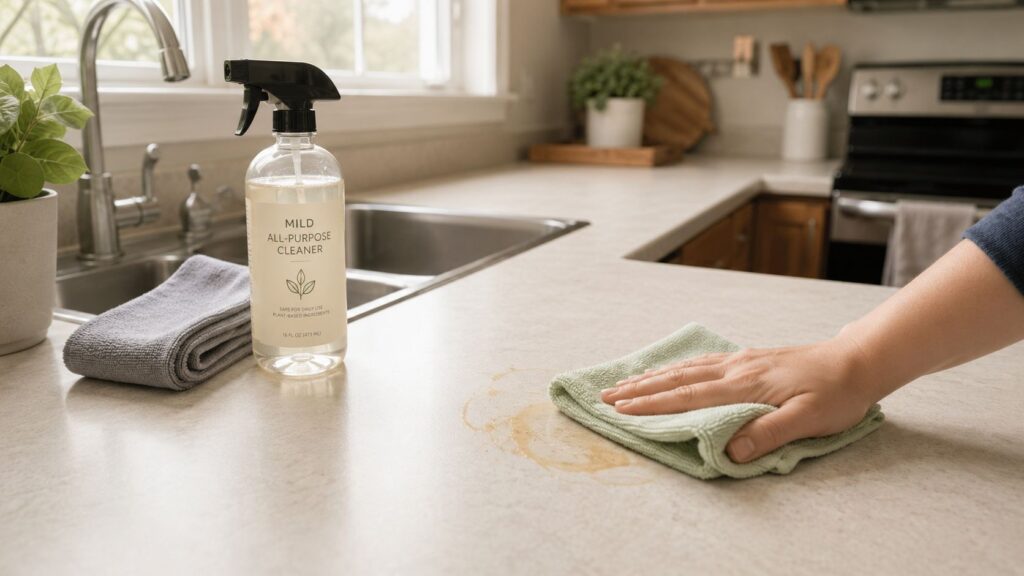
Saturday morning in a Cherry Hill ranch, a homeowner is leaning over a pale laminate island with a yellow sponge, working on a coffee ring that refuses to disappear. Her sister's quartz counter handled a similar spill with little more than a wipe, so the comparison feels unfair. The problem usually isn't that laminate is difficult to clean. It's that laminate has a printed wear surface, vulnerable seams, and a substrate that reacts badly to excess moisture, harsh chemicals, heat, and abrasive scrubbing.
The right approach to laminate countertops cleaning is controlled and repeatable. Use mild products, remove residue, dry the surface promptly, and treat stains in stages instead of attacking them with the strongest cleaner in the cabinet.
Table of Contents
- What Makes Laminate Countertops Different to Clean
- Daily Laminate Countertops Cleaning Routine
- Removing Common Stains Without Damaging the Finish
- Disinfecting Laminate Countertops Safely
- Hard Water, Residue, and Why Your Laminate Looks Dull
- Fixing Burns, Scratches, and Swollen Seams
- A Simple Care Plan and When to Call a Pro
What Makes Laminate Countertops Different to Clean
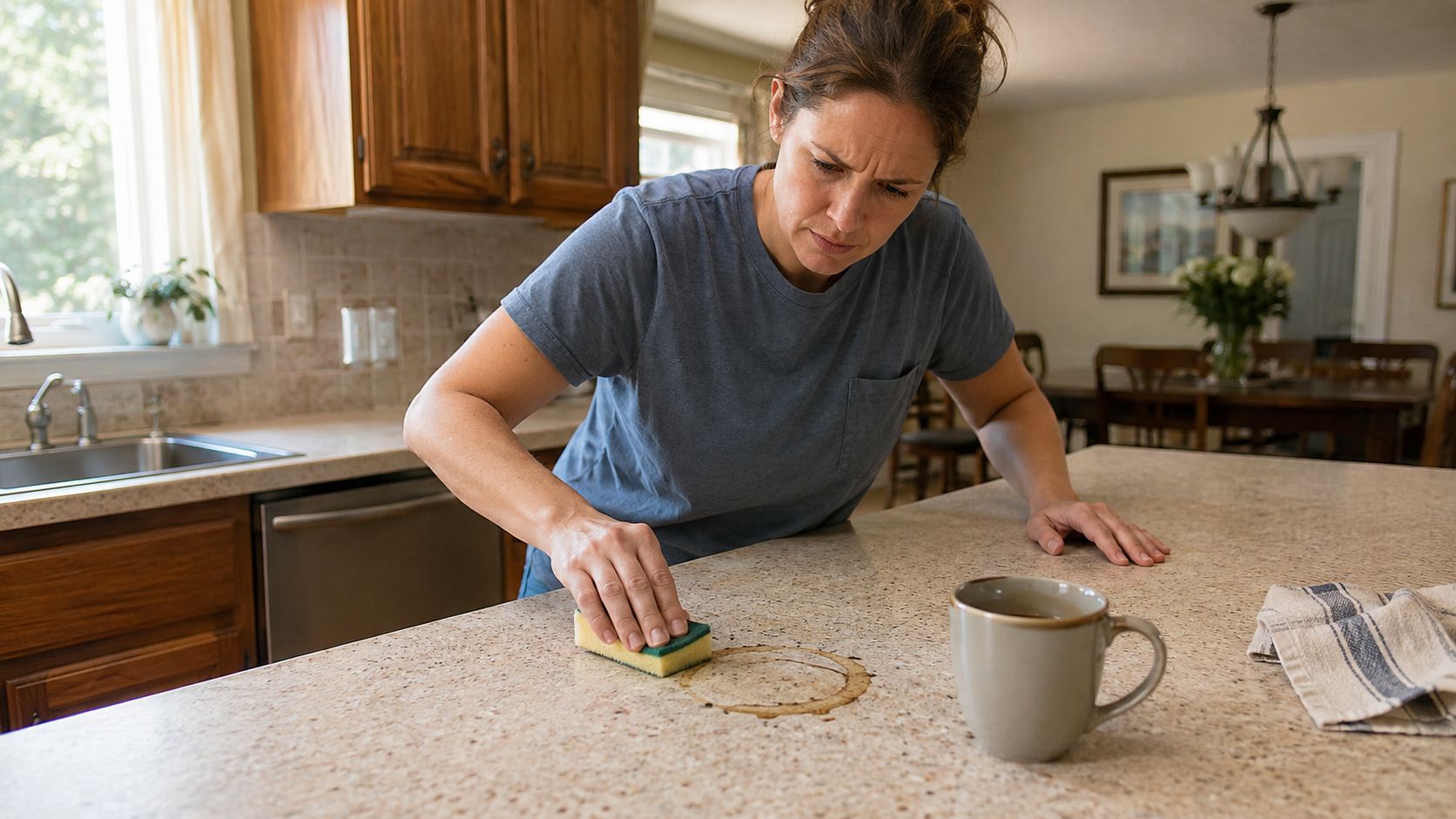
Laminate is built from layers of kraft paper fused under heat and pressure, with a decorative pattern protected by a melamine wear surface. That construction makes it practical and affordable, but it also explains why the cleaning rules differ from those for stone or quartz. The pattern is printed rather than carried through the entire material, so aggressive scrubbing can wear the surface and reveal the brown substrate underneath.
Formica's introduction in the 1930s as the first laminate product marketed for routine care with only soap and water established a cleaning model that remains familiar today. Current guidance still centers on a clean, damp, non-abrasive cloth and mild liquid detergent, with minimal moisture rather than waxes, sealers, or heavy-duty chemical cleaners. (Historical and care guidance for laminate surfaces)
The weak points are edges and seams
A laminate field can look perfectly sound while trouble starts at the sink cutout, backsplash joint, or front edge. Water can wick into a seam and reach the particleboard core, where swelling may lift an edge strip or create a darkened line. That's why a wet rag left beside the sink is more concerning than a quick damp wipe across the middle of the counter.
Heat presents a separate risk. A hot pan can scorch or blister the finish, while a knife can cut the decorative layer. Stone and quartz have their own limitations, but laminate generally offers less tolerance for direct heat, sharp blades, and abrasive pads.
Practical rule: Laminate rewards frequent gentle cleaning and punishes shortcuts.
Homeowners considering a surface refresh without removing the entire kitchen may also find useful context in this guide to a kitchen update without demolition. For design comparisons, a granite-look laminate countertop can deliver a stone-inspired appearance, but it still needs laminate-specific care.
Daily Laminate Countertops Cleaning Routine
The best daily routine is short because residue becomes harder to remove when it dries. Work in manageable sections instead of spraying the entire counter and allowing cleaner to evaporate before you wipe it away. Guidance from VT Industries follows the same basic sequence, clear the surface, use warm water with mild detergent or diluted cleaner, wipe gently, rinse, and dry immediately. (Laminate countertop cleaning instructions from VT Industries)
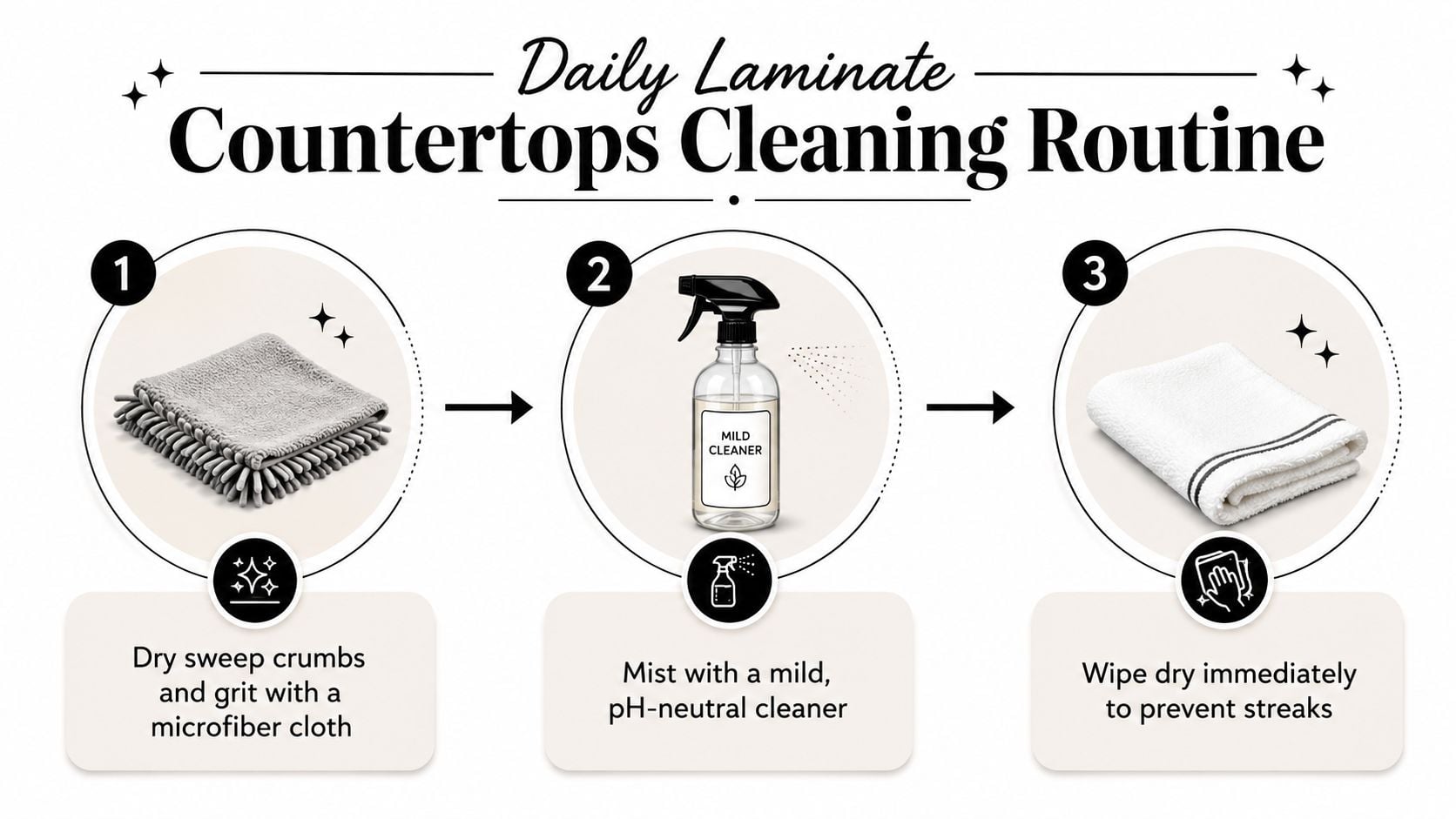
Use this end-of-day sequence
Remove dry debris first. Sweep crumbs, grit, and food particles away with a soft microfiber cloth. Dry debris can act like fine sandpaper under a wet sponge, creating tiny scratches that collect residue later.
Apply a mild cleaner sparingly. Use warm water with a few drops of mild dish soap, or choose a dedicated pH-neutral counter spray. Mist the cloth rather than flooding the surface, especially around seams and backsplash caulk.
Wipe with overlapping passes. Use a clean microfiber cloth or soft sponge. Rotate the cloth to a fresh side as grease and food film transfer onto it.
Make a water-only pass. A second cloth dampened with clean water lifts soap film that otherwise dries into streaks or a cloudy layer.
Dry immediately. Finish with a fresh microfiber towel. This matters in South Jersey kitchens where mineral-rich water can leave spots as it dries.
Avoid vinegar as a daily cleaner, abrasive products such as Magic Eraser on the exposed face, straight bleach, scouring powders, and soaking-wet rags. A weekly wipe with a laminate-safe polish can refresh the appearance, but polish shouldn't replace rinsing and drying. For another product-focused perspective, compare this cleaning advice from Canes Cleaners.
This short demonstration shows the basic hand technique and cloth movement:
Removing Common Stains Without Damaging the Finish
Stain removal should move from mild to stronger treatment. Baking soda paste and a soft nylon brush are safer starting points than a green scrub pad, and manufacturer guidance commonly recommends a baking soda and water paste for persistent marks. One care guide specifies a 3:1 baking-soda-to-water paste left on the stain for five minutes, followed by gentle wiping and thorough rinsing. (Laminate care and stain guidance)
Laminate Stain Removal Playbook
| Stain | Treatment | Dwell Time | Stop If |
|---|---|---|---|
| Coffee or tea | Apply baking soda paste, wipe gently, rinse, and repeat only if the pattern remains | Five minutes | The finish looks lighter, hazy, or uneven |
| Wine or fruit juice | Test a small hidden area, then blot with hydrogen peroxide on cotton | Two to three minutes | Color transfers from a dark pattern |
| Ink or marker | Dab rubbing alcohol onto a cotton swab and blot the mark | Brief contact | The printed design starts lifting or smearing |
| Grease or cooking oil | Apply mild dish soap directly, then rinse with warm water | Three minutes | The area remains tacky after rinsing |
| Food dye or turmeric | Use baking soda with a few drops of hydrogen peroxide | Five minutes maximum | The surface changes color or loses sheen |
The most common mistake is turning a stain into a finish repair. Circular scrubbing with a green Scotch-Brite pad can permanently dull the melamine surface. A bleach poultice left overnight can discolor the pattern, while acetone used near a seam can move into the joint and attack the surrounding finish or substrate.
For a stubborn mark, use a soft-bristled brush with light pressure and keep the treatment localized. Technical care guidance recommends gentle baking-soda scrubbing for 10 to 20 strokes and limiting harsher spot treatments to no more than two minutes. (Stain-removal guidance for laminate countertops)
Stop before the surface changes. A stain is cosmetic. A worn-through wear layer is permanent damage.
If a mark has been sitting for more than 48 hours, or if it's beside a seam or edge, stop escalating. A professional can assess whether the discoloration is removable or whether repeated chemicals and abrasion are creating a larger problem. Care principles for another wood-based countertop material also illustrate why gentle, material-specific treatment matters, so review this guide to butcher-block countertop care before borrowing a method from another surface.
Disinfecting Laminate Countertops Safely
Cleaning and disinfecting are different jobs. Detergent removes grease, food soil, and visible residue. Disinfection requires the product to remain wet for the contact time stated on its label, which means a quick wipe with a nearly dry disposable wipe may not accomplish what you expect.
Use a decision tree rather than disinfecting every time you prepare a sandwich:
- Daily crumbs, fingerprints, and ordinary cooking film: Clean with mild detergent, rinse, and dry.
- Raw chicken or other raw-food preparation: Clean the area first, then disinfect with a product approved for the surface and follow its label contact time.
- A shared household during cold or flu illness: Disinfect high-touch preparation areas after cleaning, while keeping liquid away from seams.
- After illness or contamination: Clean visible soil, disinfect according to the product label, then rinse if the label or surface-care guidance calls for it and dry thoroughly.
Laminate Disinfecting Decision Table
| Scenario | Clean Only? | Disinfect With | Dwell Time |
|---|---|---|---|
| Daily wipe-down | Yes | Not normally needed | Not applicable |
| Raw chicken preparation | No, clean first | A laminate-compatible disinfectant | Follow the product label |
| Cold and flu in the household | Usually clean, disinfect high-touch areas | A surface-approved disinfectant | Follow the product label |
| Post-illness cleanup | No, clean first | A suitable labeled disinfectant | Keep the surface wet for the labeled time |
Some care guidance discusses isopropyl alcohol, hydrogen peroxide products, or properly diluted household bleach as options, while also warning against excessive moisture and harsh chemicals. Product labels and the countertop manufacturer's instructions should control the choice. Never combine bleach with ammonia-based products, and don't pour undiluted bleach directly onto laminate.
Keep pooled liquid away from seams, sink cutouts, and backsplash caulk. A neutral maintenance guide specifically warns that flooding joints can allow water into the substrate, while disinfectant guidance emphasizes maintaining wet contact time. The practical compromise is controlled application, a timer, quick removal when the label permits, and immediate drying. (Laminate care and disinfection considerations)
The word “non-porous” can also be misleading in a kitchen. The exposed laminate face may resist absorption, but the joints and edges still deserve protection, as this explanation of what non-porous means makes clear.
Hard Water, Residue, and Why Your Laminate Looks Dull
Many homeowners blame an aging laminate pattern when the culprit is a film sitting on top of it. Soap residue, ammonia-based cleaner residue, and minerals from tap water can create a cloudy appearance that makes a sound surface look worn. Care guidance increasingly emphasizes pH-neutral cleaners, rinsing, and drying because residue and mineral deposits can build up when homeowners rely on spray-and-wipe habits. (Compact laminate maintenance guidance)
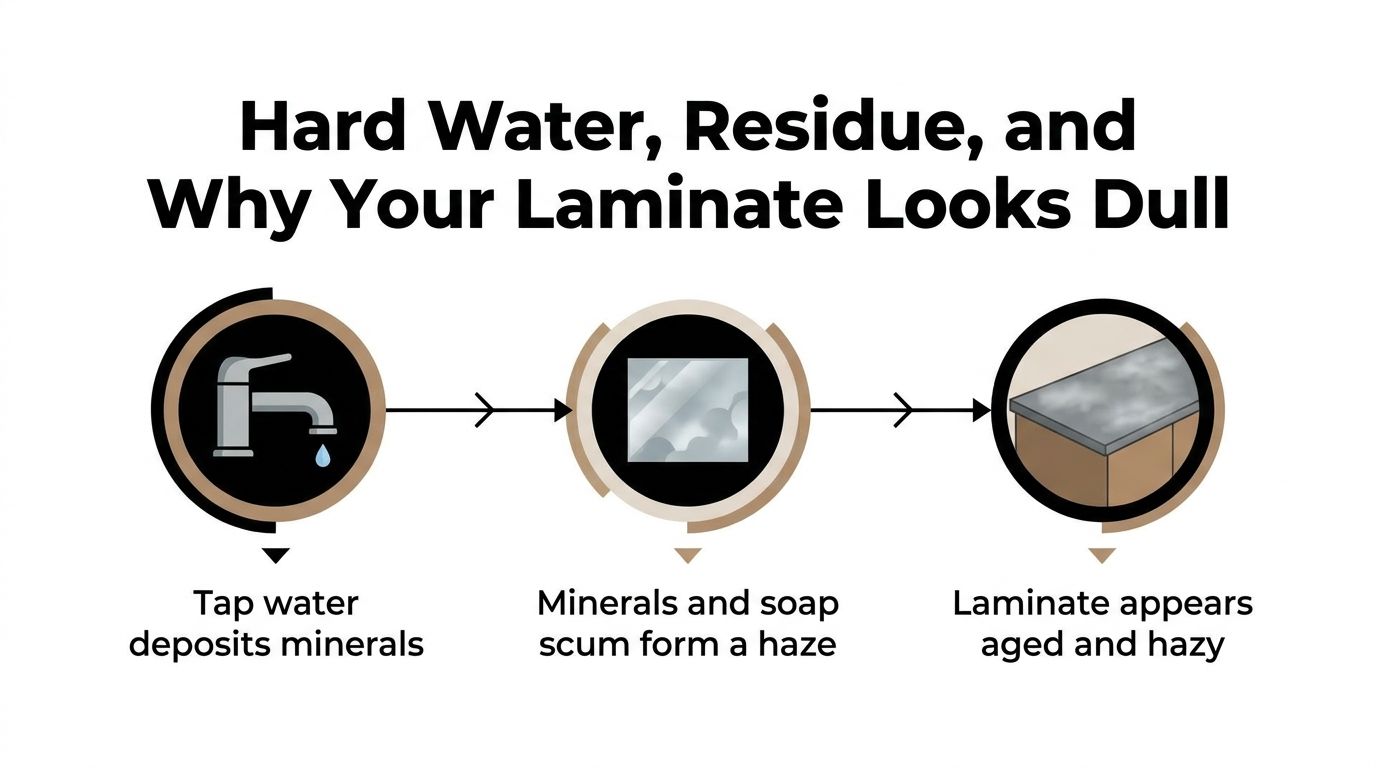
Diagnose the film before treating it
Mist a small area with clean water and watch how it behaves as it dries. If the surface wets evenly and then looks clear after drying, the laminate face may be fine. If droplets leave spots or a cloudy outline, water minerals or cleaner residue are likely contributing to the dull appearance.
For light mineral buildup, use a diluted white vinegar rinse rather than making vinegar your everyday cleaner. Mix vinegar and water equally, apply it to a cloth, leave it on the affected area briefly, then wipe with clean water and dry. Test first in an inconspicuous place, and keep the solution away from seams and unsealed edges.
A carnauba-based paste wax may add temporary depth and a sacrificial layer against spotting, but it's not a sealer and it won't repair a damaged wear surface. Too much wax can also create its own haze, so apply it sparingly and buff completely.
The counter may not be dull. Your cleaning process may be leaving the dullness behind.
South Jersey homes don't all receive water from the same source. A well-water household and a Camden County municipal-water household may face different mineral conditions, so observe the residue on faucets and glassware rather than assuming the countertop itself has failed. The same household habit applies outside the kitchen too. Seasonal maintenance such as keeping gutters flowing for spring storms depends on removing buildup before it becomes a larger problem.
Before replacing a surface, compare how laminate behaves against other materials with this countertop material comparison. A careful rinse and dry may solve a film that only appears to be permanent.
Fixing Burns, Scratches, and Swollen Seams
Laminate damage falls into two categories: superficial appearance problems and failures that expose the substrate. The first group may respond to careful touch-up. The second group usually requires repair or replacement because cleaning can't restore the moisture barrier.
Triage the damage
| Damage Type | DIY Fix | Call a Pro When | Typical Cost Range |
|---|---|---|---|
| Light heat mark | Clean gently, then test a baking soda paste or mild toothpaste in a hidden area | The finish is blistered, bubbled, or charred | Varies by repair scope and material |
| Shallow scratch | Use a color-matched laminate repair pen and wipe away excess | The scratch exposes dark substrate or spreads across a work area | Varies by repair scope and material |
| Small edge chip | Use a compatible laminate filler or touch-up compound | The chip is wider than a pencil eraser or the edge strip is lifting | Varies by repair scope and material |
| Swollen or darkened seam | Keep dry and avoid further chemical treatment | Swelling extends along a seam, bubbling is present, or moisture damage reaches the cabinet | Varies by repair scope and material |
A light scorch may be surface-level, especially if the pattern remains intact. Clean it gently and test a small amount of baking soda paste or mild toothpaste without circular pressure. If the decorative layer is blistered or the brown substrate is charred, polishing won't reverse the damage.
For scratches, match the repair pen to the pattern rather than choosing a generic solid color. Apply a small amount, let it settle, and remove excess from the surrounding face. Don't use a melamine sponge or abrasive pad to blend it, because that can enlarge the dull area.
Know when moisture has won
A swollen seam longer than six inches, bubbling, an edge chip wider than a pencil eraser, or any dark substrate showing through means the top has lost part of its protection. These are not good candidates for repeated DIY filling. The repair may involve seam filler, edge replacement, or a new top, depending on how far water has traveled.
There's no honest universal cost range for laminate repair versus replacement because the price depends on access, layout, matching material, sink configuration, and labor. Treat any quote that ignores those variables with caution. The rational comparison is not “repair is always cheaper.” It's whether a localized cosmetic fix will hold, or whether the same moisture problem will keep returning.
A Simple Care Plan and When to Call a Pro
A sustainable maintenance plan prevents most laminate problems before they become remodeling problems. Clean daily, inspect vulnerable areas regularly, and reserve stronger products for situations that justify them.
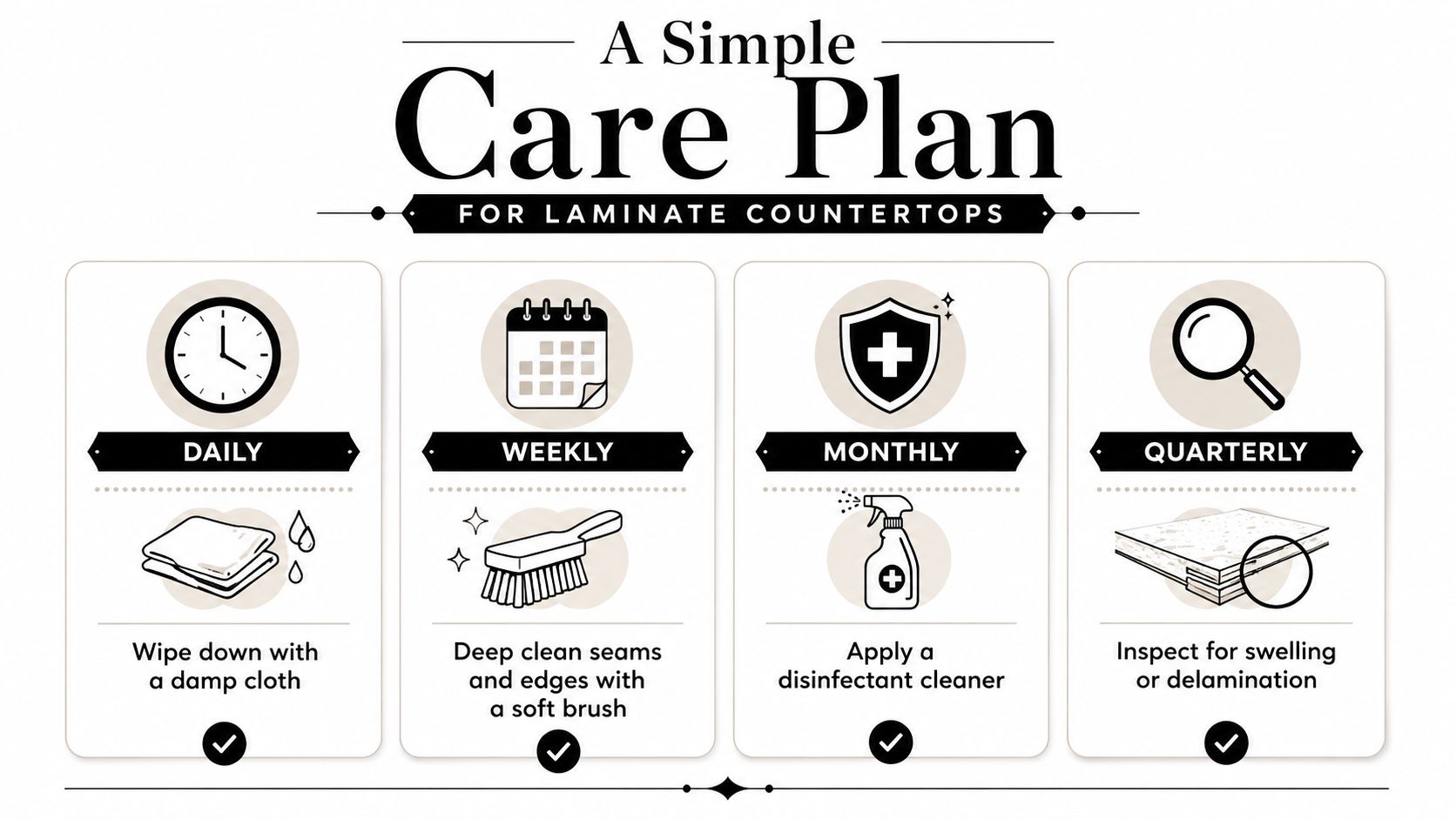
Match the task to the calendar
- Daily: Wipe with a damp microfiber cloth and mild detergent, then dry the surface and the area around the sink.
- Weekly: Deep-clean seams, edges, and backsplash joints with a soft brush and controlled moisture.
- Monthly: Use a suitable disinfectant when your household's cooking or health circumstances require it. Follow the label contact time.
- Quarterly: Inspect for swelling, lifting, bubbling, dark seams, and changes around the sink cutout.
Keep these supplies available:
- Soft microfiber cloths: Use separate cloths for cleaning and final drying.
- Mild pH-neutral dish soap: Choose a product that rinses clean without leaving a heavy film.
- Baking soda: Make a fresh paste for appropriate stubborn stains.
- Isopropyl alcohol: Keep it for controlled spot treatment or a surface-compatible disinfection use, not casual flooding.
- Water conditioner: Consider one if mineral spots persist throughout the kitchen.
- Laminate repair pen: Match it to the printed pattern before using it on the visible face.
Keep bleach, abrasive powders, scouring pads, and acetone out of the routine. Call a remodeling professional when seam swelling persists, water damage appears near the sink cabinet, delamination covers more than a few square inches, a burn reaches beneath the wear layer, or a surface over 15 years old develops recurring staining despite careful maintenance.
Cleaning can extend the useful life of a laminate top, but it can't rebuild swollen substrate or replace a failed edge. If replacement becomes the sensible path, this guide to how to replace kitchen countertops can help you think through the project.
The Cabinet Coach helps South Jersey homeowners evaluate countertop repairs, plan replacements, and coordinate cabinetry and finish selections when cleaning is no longer enough. Visit The Cabinet Coach to arrange a complimentary video consultation and get practical guidance for your kitchen update.