
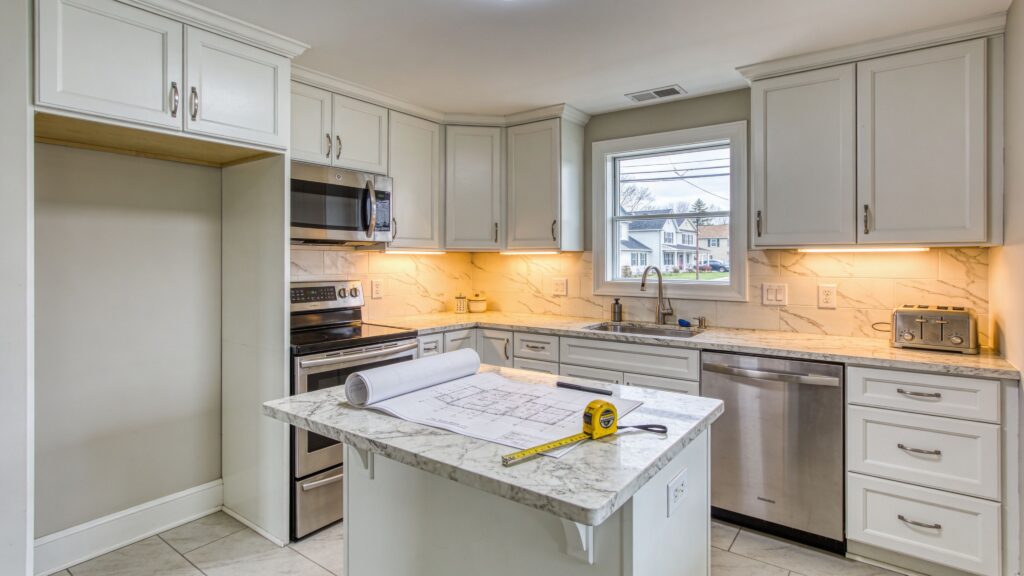
If you are standing in a kitchen that feels tight, dated, and harder to use than it should be, you are not alone. Many South Jersey homeowners start in the same place. The room is not huge, there is not much forgiveness in the layout, and every decision seems to matter more because there is so little wasted space.
That is exactly why a kitchen 10 x 10 remodel deserves careful planning. In a compact kitchen, the right cabinet width, appliance depth, and traffic flow can make the room feel calm and efficient. The wrong choices can make a fresh remodel feel cramped on day one.
Table of Contents
- Understanding the Potential of a 10×10 Kitchen
- First Steps Measuring and Planning Your Space
- Choosing the Best Layout for Your 10×10 Kitchen
- Selecting Cabinets and Appliances That Fit
- Budgeting and Timeline for Your South Jersey Remodel
- Your Partner for a Stress-Free Kitchen Remodel
Understanding the Potential of a 10×10 Kitchen
A small kitchen can either work beautifully or fight you every morning. In most homes, the difference is not square footage alone. It is whether the layout was planned around how people cook, unload groceries, pack lunches, and clean up.
The good news is that a 10×10 kitchen is not some oddball problem room. It is a familiar format in the industry. The 10×10 kitchen, measuring exactly 10 feet by 10 feet or 100 square feet, serves as the industry-standard benchmark for estimating cabinetry pricing and kitchen remodeling costs, typically incorporating 10 to 12 cabinets (pkcabinet.com). That matters because it gives homeowners and designers a shared starting point.
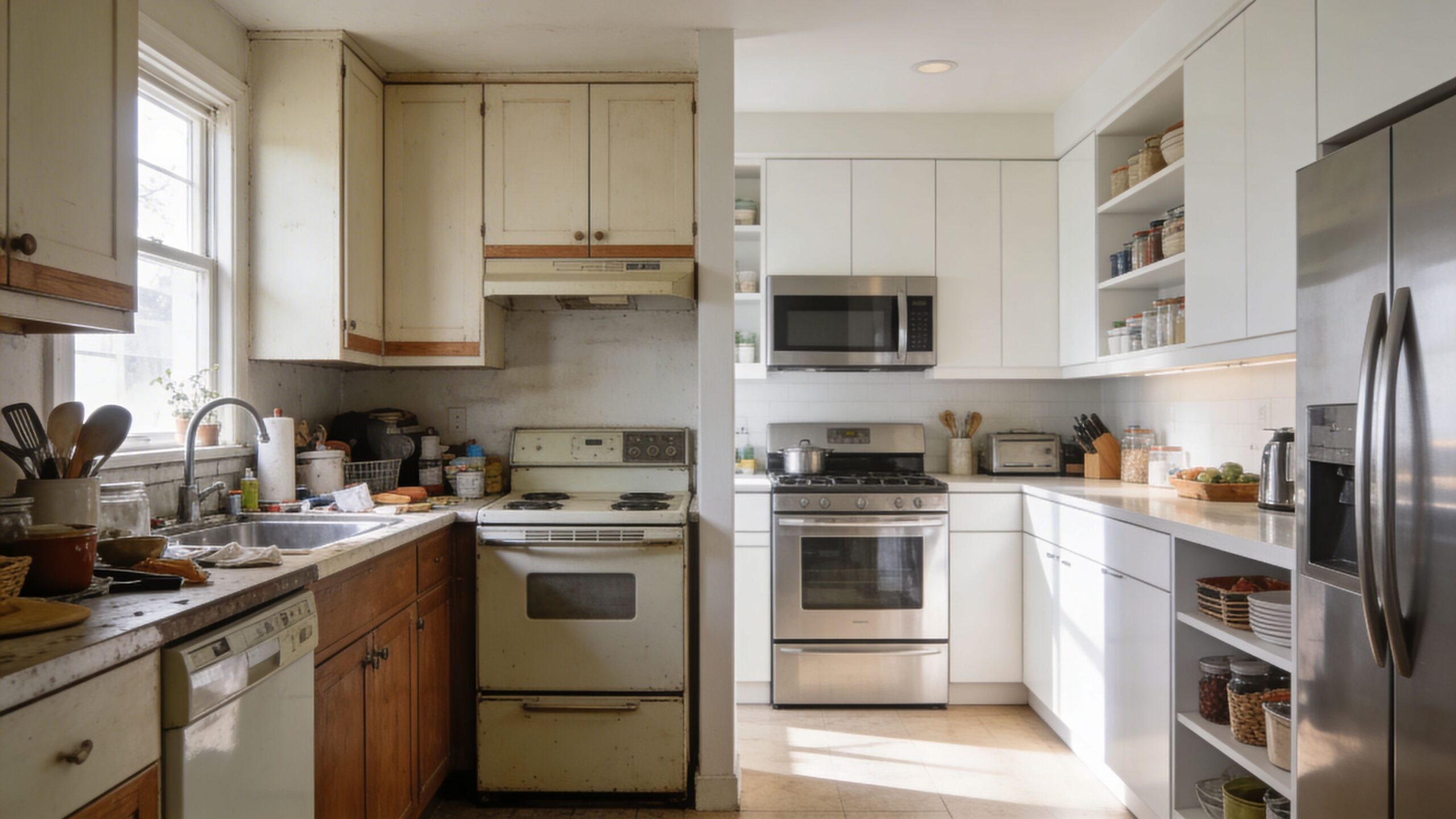
Why this size is easier to plan than you think
A well-designed kitchen 10 x 10 can support serious daily use. It can hold prep space, storage, cleanup zones, and a practical appliance mix without feeling overbuilt.
What usually goes wrong is not the room size. It is the attempt to force oversized features into it.
- Too many visual breaks: Upper cabinets of different heights, bulky trim, and busy finishes can make a compact room feel chopped up.
- Overscaled appliances: A deep refrigerator or a wide range can steal more usable space than homeowners expect.
- Poor corner planning: Dead corners waste storage and often create awkward clearances.
Tip: In a compact kitchen, every inch should either support movement, storage, or prep. Decorative extras only work after those three basics are solved.
There is also a mindset shift that helps. A 10×10 kitchen does not need to mimic a large open-concept kitchen to feel successful. It needs to function cleanly. That often means fewer interruptions, smarter storage, and better proportion.
For homeowners trying to organize small kitchen spaces efficiently, the best remodels usually start with editing, not adding. If your current room feels crowded, that same lesson often applies to the design itself.
What a compact room can do well
Compact kitchens often outperform bigger kitchens in daily efficiency because less walking is required and the work zones stay close together. That is especially helpful in South Jersey homes where older footprints are common and every wall opening matters.
If your home includes other tight utility areas, this same planning mindset shows up in projects like small-space cabinet ideas for South Jersey homes. The principle is consistent. Tight rooms reward discipline.
First Steps Measuring and Planning Your Space
Before choosing a door style or countertop color, get the room documented correctly. Most expensive kitchen mistakes start with a bad field measure, not with a bad finish choice.
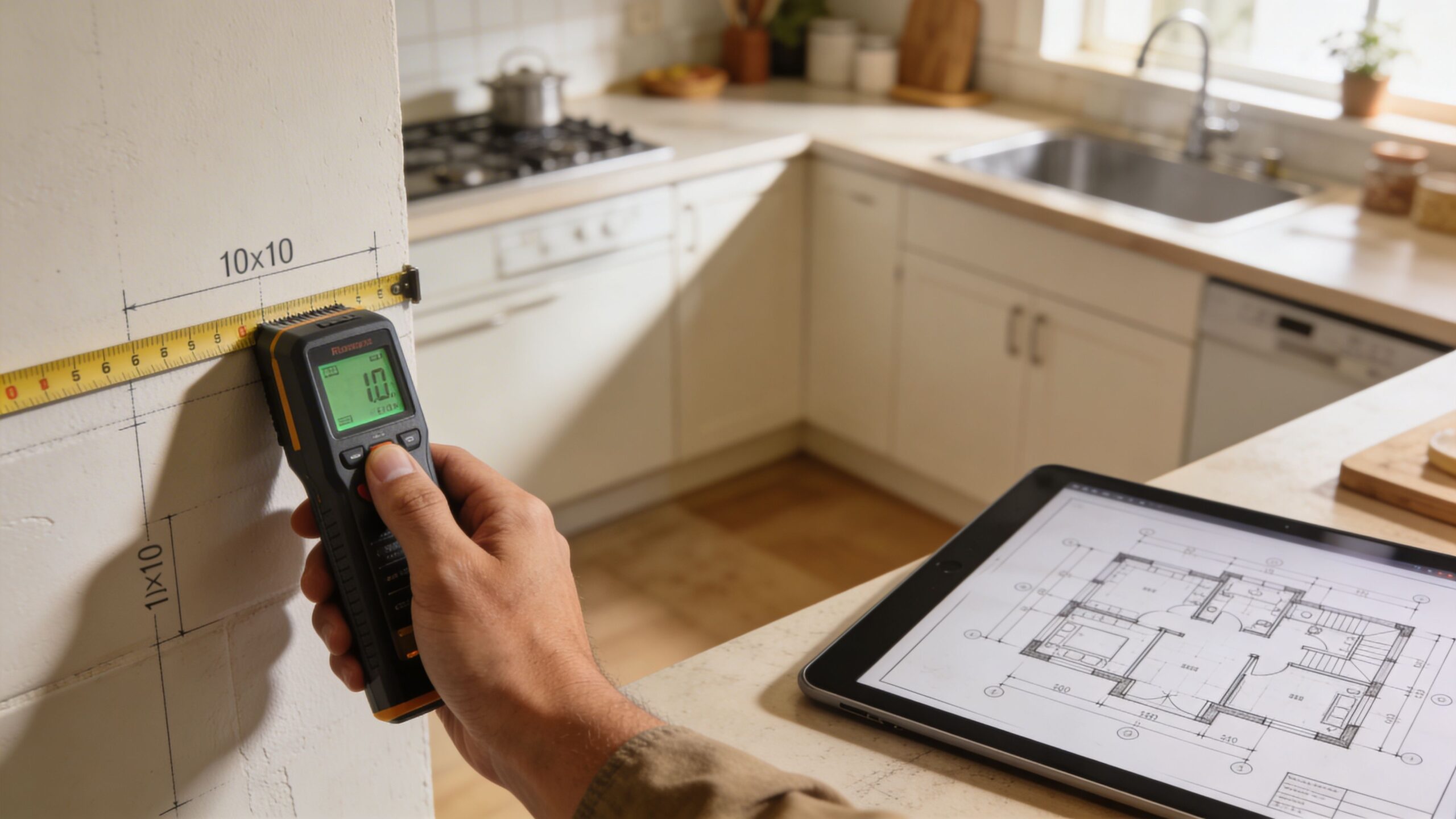
Start with the room you have
Measure the full length of each wall. Then measure again where cabinets will sit. Older homes in Cherry Hill, Haddonfield, Collingswood, and surrounding areas often have walls that are not perfectly square, and that matters when you are fitting cabinet runs tightly.
Write down more than wall lengths.
- Mark openings: Include every doorway, window, cased opening, and trimmed edge.
- Locate utilities: Note plumbing lines, drain position, gas if present, receptacles, switches, and any vents.
- Record obstacles: Baseboard heat, radiators, soffits, exposed pipes, and uneven flooring all affect the plan.
- Measure ceiling height: Tall cabinets can look great, but only if crown, soffits, and lighting allow them.
A quick sketch on graph paper is enough if it is clear. Label each wall. Add dimensions directly onto the sketch. Then take photos from every corner of the room.
Separate must-haves from nice-to-haves
This step saves more frustration than almost anything else. Many homeowners list everything they want, then discover the room cannot support all of it comfortably.
Use two lists.
| Priority type | What belongs on it |
|---|---|
| Must-have | Better pantry storage, more prep space, dishwasher, improved lighting, easier trash access |
| Nice-to-have | Open shelving, statement hood, island seating, extra-wide fridge, glass cabinet doors |
A kitchen 10 x 10 rewards honesty. If you cook every night, counter space matters more than decorative display. If you host casually and need the kitchen to open visually to another room, that may matter more than adding one more upper cabinet.
A practical planning guide like how to plan your kitchen remodel can help homeowners organize priorities before design meetings. It is much easier to refine a plan when the household already agrees on what matters most.
Tip: If two features compete for the same space, choose the one you will use every single day.
Watch the planning process in action
Homeowners often understand the room better once they see a remodel workflow step by step. This walkthrough is useful before you lock in a layout.
Good planning also means deciding what should stay put. In many smaller kitchens, keeping the sink, range, or refrigerator in roughly the same zone can protect the budget and simplify construction. That does not mean the design stays the same. It means the best version of the room often works with the bones of the house instead of fighting them.
If you want a more detailed framework for organizing decisions, this kitchen remodel planning guide is a useful reference point. The key is simple. Measure carefully, document everything, and decide early where you are flexible and where you are not.
Choosing the Best Layout for Your 10×10 Kitchen
You walk into a 10×10 kitchen with grocery bags in both hands, someone opens the dishwasher behind you, and the refrigerator door blocks the only clear path. That is a layout problem, not a storage problem.
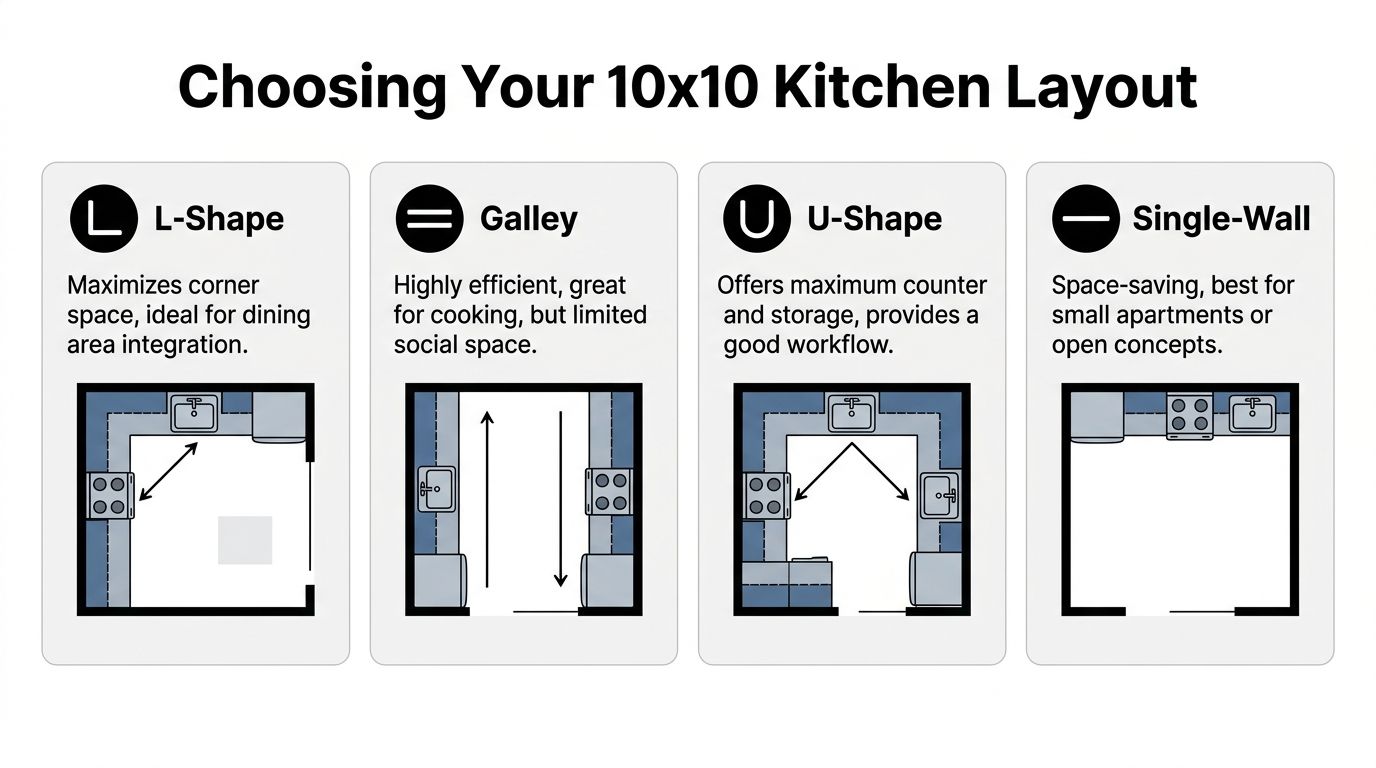
In a room this size, a few inches decide whether the kitchen feels easy or frustrating. I tell South Jersey homeowners to judge layouts by clearances and daily routines first. Cabinet count comes second. A plan that looks full on paper can still cook badly if the sink, range, and refrigerator fight each other.
Most 10×10 kitchens fall into four workable patterns. The right one depends on how you use the room, how many people cook at once, and whether the kitchen opens to another space.
L-shape for the best balance
For many homes, the L-shape is the safest starting point because it gives you two working runs without closing off the room. It usually fits well when one wall has a window or when the kitchen opens toward a dining area.
A practical version often uses one longer run for the sink and dishwasher, then a shorter leg for the range or extra prep space. That setup leaves better circulation than forcing cabinets onto every wall.
Why it works
- Keeps the center of the room open.
- Gives you two countertop zones instead of one long crowded run.
- Usually handles a standard 30-inch range and 36-inch refrigerator without making the room feel boxed in.
What to watch
- Corner cabinets can waste space if the adjoining cabinets are too narrow.
- A refrigerator at the far end can pull traffic through the prep area.
- Windows can break up one leg and leave you short on landing space.
If the room opens to a family room or breakfast area, an L-shape often feels right because it protects movement. That matters more than squeezing in one extra cabinet.
Galley for strong one-cook efficiency
A galley can work extremely well in a 10×10 kitchen if the room is more rectangular than square. It gives you two straight runs, which makes storage planning simple and keeps most tasks within a few steps.
The catch is aisle width. In practice, I want homeowners to pay close attention to the space between the two cabinet runs, especially once handles, open dishwasher doors, and oven doors are in the picture. A galley that looks neat in a drawing can feel cramped fast.
Pros
- Easy to separate prep from cleanup.
- Long cabinet runs make drawer storage easier to plan.
- Works well when you want the sink on one side and the range on the other.
Cons
- Two cooks can collide at the sink and range.
- Door swings need to be checked carefully.
- Through-traffic turns the kitchen into a pass-through corridor.
Tip: In a galley, check the refrigerator door swing, dishwasher opening, and oven clearance on the plan before you approve anything. Those three moves cause a lot of regret in small kitchens.
U-shape or peninsula for more storage
Homeowners who want more base cabinets usually ask about a U-shape or a peninsula. In a 10×10 room, that can be the right move if storage is the top priority and the room has enough width to keep walkways comfortable.
A peninsula often makes more sense than a full island here. It adds landing space and cabinet storage without demanding clearance on all four sides. In open-concept homes, it also gives the kitchen a clean edge without building a full wall.
This layout earns its keep when you need:
- More drawer base cabinets for pots, pans, and food storage
- A better spot for trash and recycling pullouts
- Extra counter space next to the refrigerator or sink
- A visual boundary between the kitchen and the next room
The trade-off is weight. Too many cabinets around the perimeter can make a small room feel closed in, especially in older South Jersey homes where ceiling heights and window placement already limit openness.
Single-wall for simple, open plans
A single-wall layout is usually chosen because the architecture leaves few other options, or because the homeowner wants the room to stay visually open. It can look clean and modern, but every inch has to work.
In a 10×10 kitchen, a single-wall plan often means placing the sink, range, and refrigerator in one line with tighter landing areas. That can be fine for lighter cooking habits. It is harder for families who cook often, use several countertop appliances, or need two people in the kitchen at once.
Here is the honest trade-off. You keep the room open, but you give up some separation between prep, cooking, and cleanup.
| Layout | Best for | Common problem |
|---|---|---|
| L-shape | Balanced daily use | Corner planning gets sloppy |
| Galley | Focused one-cook workflow | Tight door and aisle clearances |
| U-shape / Peninsula | More storage and landing space | Room can feel enclosed |
| Single-wall | Open sightlines | Prep space is limited |
One more practical note. A 10×10 kitchen rarely has room for a true island once you account for cabinet depth and walk space. A peninsula usually solves the same problem with fewer compromises.
If you are deciding between two layouts, sketch the sink, range, and refrigerator with their actual widths. A standard sink base is often 30 or 36 inches, most ranges are 30 inches, and many refrigerators need a 36-inch opening plus breathing room for the doors. Then review your spacing against the kitchen work triangle principles for real kitchens. The best plan is the one that fits your habits, your room, and your budget at the same time.
Selecting Cabinets and Appliances That Fit
A 10×10 kitchen gets tight fast once real products replace the sketch. I see this happen all the time in South Jersey. A homeowner chooses a full-depth refrigerator, a big decorative hood, and a few oversized door cabinets, then wonders where the prep space went.
Cabinets and appliances have to be chosen as a set. If one piece grows, something else usually has to shrink, shift, or disappear.
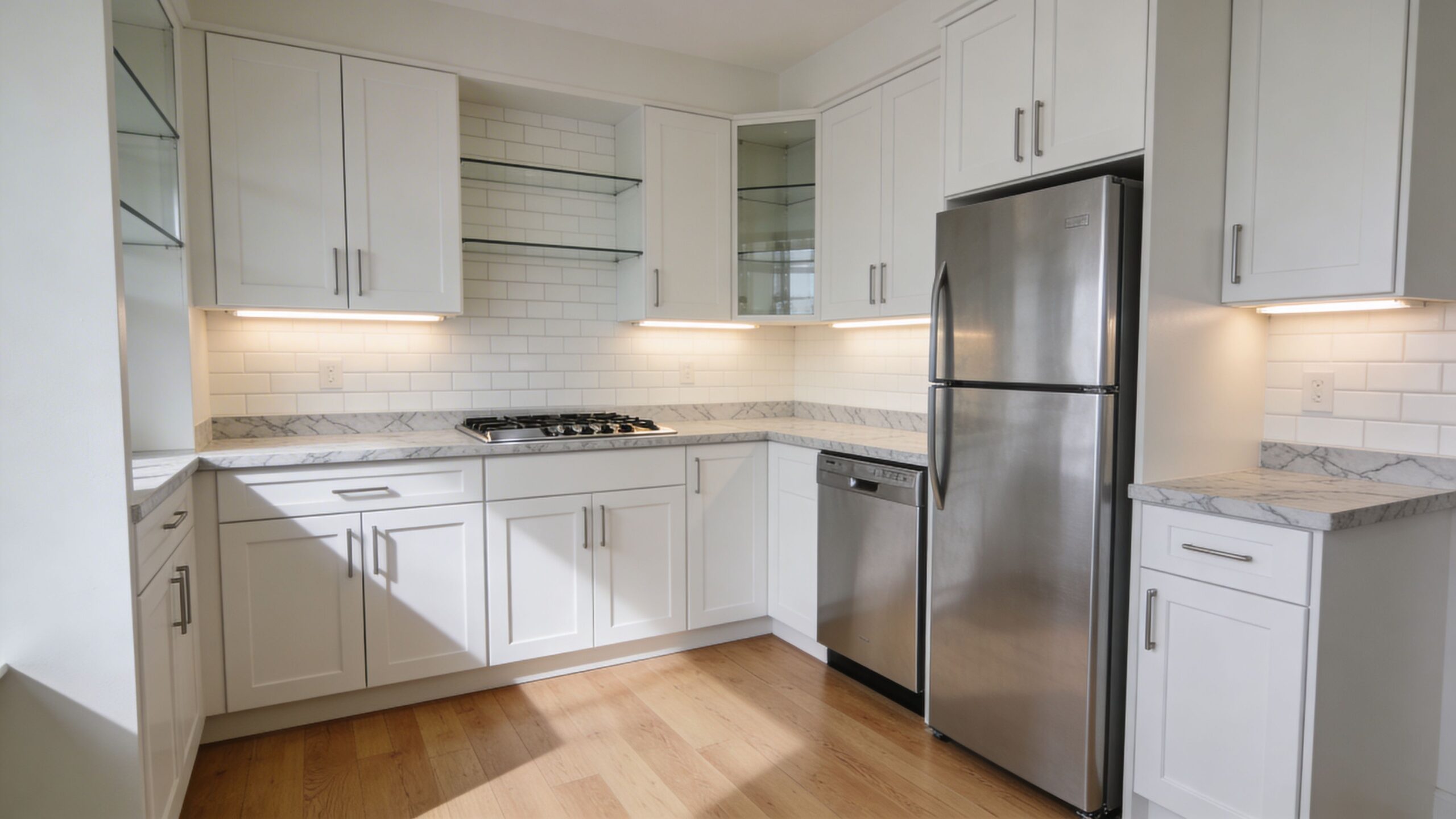
Industry sizing standards from the Kitchen Cabinet Manufacturers Association cabinet planning resources give you a useful starting point because most kitchen cabinets are built in predictable width increments. Base cabinets are commonly available in widths such as 12, 15, 18, 24, 30, 33, and 36 inches. Wall cabinets usually follow similar increments. That matters in a 10×10 room because small sizing changes affect fillers, drawer function, and how clean the finished run looks.
How cabinet sizing affects the whole room
The best cabinet plan usually looks boring on paper. That is a good sign.
In a compact kitchen, clean sizing beats novelty. A 36-inch sink base, a 30-inch drawer base by the range, and a few properly sized uppers often work better than squeezing in specialty cabinets that eat up width and create awkward fillers. Fillers are sometimes necessary near walls and corners, but if a plan needs them in several places, the cabinet run probably was not solved well.
Drawer bases earn their keep in a 10×10 kitchen. Pots, pans, food storage containers, and mixing bowls are easier to reach in wide drawers than behind narrow hinged doors. I usually steer homeowners toward at least one larger drawer stack, even if that means giving up a small upper cabinet somewhere else.
Corners deserve discipline too. A blind corner can work. A lazy Susan can work. Neither works well if the adjacent cabinet sizes were picked without checking door clearance and usable storage inside. That is where a lot of first remodels go wrong.
For homeowners sorting through box construction, finishes, and door styles, this guide on how to choose the best kitchen cabinets in South Jersey helps narrow the field before you pay for upgrades that will not improve daily use.
Appliances that help instead of hurt
Appliances should be selected from the spec sheet, not from the showroom photo.
A refrigerator listed at 36 inches wide may also need room for door swing, hinge clearance, and ventilation around the case. In a 10×10 kitchen, that extra space can decide whether an aisle feels comfortable or cramped. Counter-depth models usually help the room feel calmer because they sit closer to the cabinet line, but you give up some interior storage.
Dishwashers create another common trade-off. A 24-inch model is the standard choice for busy households, but an 18-inch dishwasher can free up cabinet space in a one- or two-person home. I only recommend the smaller unit when the storage gain solves a real problem, not just because it seems clever on the plan.
Microwaves need the same scrutiny. An over-the-range microwave saves counter space and cost. It also lowers the visual height above the range and can make that wall feel crowded. A drawer microwave cleans up the sightline, but it uses a valuable base cabinet location and usually costs more to install.
One practical rule saves headaches. Finalize appliance models before the cabinet order goes in. That includes handles, door swing, and depth.
A compact kitchen does not need undersized everything. It needs the right pieces in the right places. One refrigerator that sits neatly within the run and one well-placed drawer base will usually do more for daily function than a longer list of upgrades.
Budgeting and Timeline for Your South Jersey Remodel
A South Jersey homeowner can walk into a showroom with a $25,000 internet budget in mind, then get rattled when real proposals land closer to the mid-$30,000s. In a 10×10 kitchen, that gap usually comes from scope, not sales pressure. Small rooms still need full trades, full coordination, and full-price materials.
Start with a benchmark, then price the room you have
National cost guides are useful for early planning. The 2024 kitchen remodeling data from Remodeling Magazine’s Cost vs. Value report shows kitchen costs vary widely by project level and market, which is why broad national averages only work as a rough reference point.
In South Jersey, the actual cost depends on a few decisions that get expensive fast.
Keeping plumbing and electrical in place usually protects the budget. Moving a sink to a new wall, shifting a range, or adding recessed lighting where none existed changes the labor picture right away. In older homes around Camden and Burlington County, opened walls can also reveal wiring updates, patching needs, or floor corrections that were not visible during the first walkthrough.
Cabinet choice has the same effect. A stock 30-inch base cabinet is cheaper than a better-planned run with a 33-inch sink base, a 24-inch drawer stack, and a narrow pull-out filler used to make every inch count. The second option often functions better in a 10×10 kitchen. It also costs more.
I usually tell homeowners to protect three things first: layout, cabinets, and installation. Fancy pendant lights and a dramatic backsplash photo well, but poor clearances and weak storage show up every morning.
Where the money tends to go
A practical budget usually breaks down like this:
| Budget priority | What it affects in a 10×10 kitchen |
|---|---|
| Layout and labor | Whether the room works without tight aisles, awkward corners, or expensive mid-project changes |
| Cabinetry | Storage capacity, drawer access, filler use, and how cleanly the kitchen fits the walls |
| Countertops and finishes | Daily appearance and maintenance, but with less impact on function than the layout itself |
| Appliances and lighting | Performance and convenience, especially if sizes force cabinet or electrical changes |
| Contingency | Protection when demolition uncovers repair work or lead times force substitutions |
That contingency line matters. In compact kitchens, one surprise can affect several trades because everyone is working in the same few feet.
For homeowners who want a clearer sense of how a guided process handles budgeting, selections, and scheduling, the kitchen remodeling experience we use with South Jersey clients shows what gets decided early and what stays flexible until the right point in the job.
A timeline that matches real job conditions
A smooth 10×10 remodel usually follows a predictable order, even if the exact calendar shifts.
- Initial consultation and field measure
- Layout development and budget alignment
- Cabinet, countertop, and appliance selections
- Final ordering and trade scheduling
- Demolition, rough work, and installation
- Punch list, adjustments, and final walkthrough
The mistake I see most often is treating lead time like install time. Cabinet production, countertop templating, and appliance availability often control the schedule more than the demolition itself. A homeowner may only see two or three active weeks in the house, but the planning and ordering period before that is what keeps the install from turning chaotic.
Municipal approvals can add time too, depending on the scope of electrical or plumbing work.
The projects that stay calm are the ones with fewer open decisions. Once cabinet orders are placed, changes to appliance size, hood width, or sink location usually cost time and money. In a 10×10 kitchen, there is not much slack in the plan. That is why the early decisions carry so much weight.
Your Partner for a Stress-Free Kitchen Remodel
You notice stress in a 10×10 kitchen remodel long before demolition starts. It shows up when the refrigerator door clears by half an inch, when a 36-inch range gets picked for a wall that really needed a 30-inch model, or when cabinet choices look good in a showroom but feel heavy once they are sitting inside a compact South Jersey kitchen.
That is why the right remodeling partner does more than sell cabinets. The job is to protect the layout, the budget, and the daily function of a small room where every inch has a purpose.
Good remodels come from guided decisions
In a 10×10 kitchen, small choices have outsized consequences. A deeper pantry cabinet can tighten a walkway. A larger sink base can reduce drawer storage. An over-the-range microwave may save space, but a dedicated hood often gives better capture if the homeowner cooks often. These are the trade-offs that need to be discussed before orders are placed, not after.
Good guidance starts with how you live. A family that packs school lunches every morning usually needs different landing space than a homeowner who wants a clean entertaining kitchen with paneled appliances and fewer visual breaks. I have seen plenty of projects improve because the conversation shifted from "What style do you like?" to "Where do you set groceries, coffee gear, and the air fryer?"
Selections also need editing. In a compact room, too many options slow decisions and increase the chance of mixing products that fight each other on scale, finish, or lead time. A strong process narrows the field to cabinet lines, countertop colors, hardware, and appliances that fit the plan and hold up to daily use.
Then comes coordination. On a 10×10 job, there is rarely extra room to absorb a bad field measurement or a late appliance change. If the dishwasher panel, hood insert, or refrigerator depth changes late, the whole run can be affected.
Why a local guided process matters
South Jersey homes come with patterns. Older homes in Cherry Hill and Haddonfield often have tight openings, uneven walls, and existing conditions that do not show up on the first sketch. Parts of Camden and Burlington Counties bring their own mix of older plumbing locations, modest footprints, and homeowners who want better storage without pushing the project into a full addition.
That local experience matters because the best solution is not always the biggest one. Sometimes a 24-inch pantry and wider drawer base outperform a pair of narrow cabinets. Sometimes keeping a sink on the same wall protects the budget better than chasing a more dramatic layout change. Sometimes the smartest call is to skip an oversized island plan and improve the perimeter instead.
Seeing materials in your own home also helps. Natural light, floor color, nearby paint, and even the way your hallway opens into the kitchen can change what looks right. That is one reason a mobile, in-home selection process tends to produce calmer decisions and fewer regrets.
For homeowners who want to see how that works from consultation through installation, the guided kitchen remodeling process for South Jersey homeowners gives a clear picture of what gets decided, when it gets decided, and how the job stays organized.
A kitchen 10 x 10 remodel should feel controlled. With the right partner, it does.
Prepared with the Outrank tool