
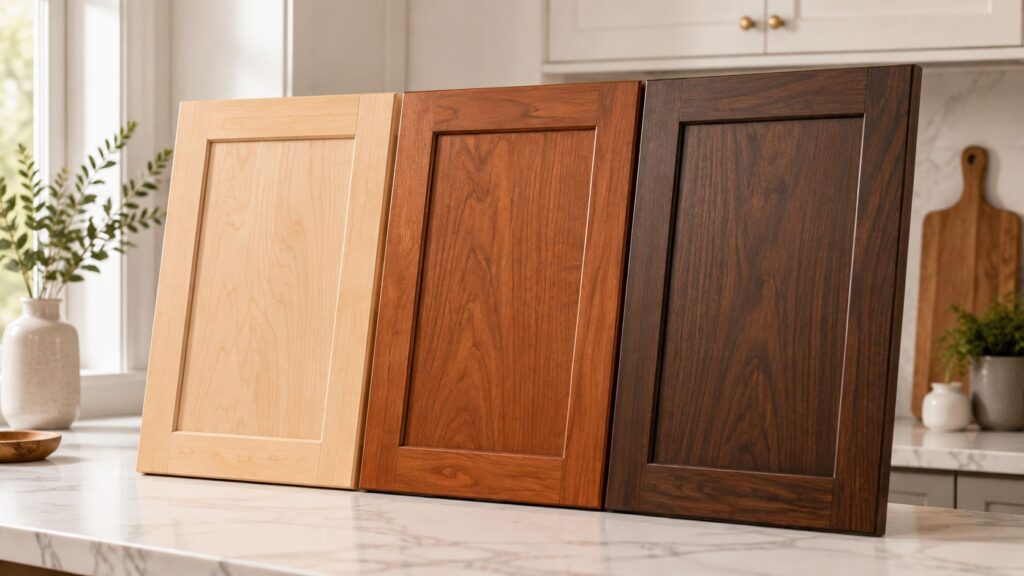
Most advice about kitchen cabinet wood types starts in the wrong place. Homeowners ask, “What's the hardest wood?” or “What's the most popular?” and end up picking a species that fights the finish they want. A cabinet isn't a flooring board or a dining table. In a kitchen, the core question is whether the wood supports the look you want, handles moisture where it matters, and stays maintainable in a house that gets used every day.
That's the mindset I use with South Jersey homeowners at the table, sample by sample. If you want painted cabinets, you need a different substrate than if you want a clear natural finish or a rich stain. If your sink run gets splashed daily, that changes the shortlist. If your kitchen gets strong afternoon sun, that changes it again. For a related furniture-side perspective on long-term wood choice, selecting wood for long-lasting furniture makes the same core point, durability only matters when it matches the job.
A lot of cabinet confusion also comes from mixing up wood species with box construction. Plywood, MDF, and solid wood each have a role, and the box material affects stability in ways species alone can't solve. If you're still sorting out what belongs in the cabinet box versus the door face, this breakdown on plywood vs MDF cabinets is worth a look before you fall in love with a door sample.
Table of Contents
- Why the Hardest Wood Is Not Always the Best Choice
- The Major Hardwood Species Used in Kitchen Cabinets
- Choosing Wood by Your Desired Finish Outcome
- How Cabinet Wood Performs in Real Kitchen Conditions
- Design Pairings and Sustainability Considerations
- Your Next Steps for a South Jersey Kitchen Remodel
Why the Hardest Wood Is Not Always the Best Choice
Start with the finish, not the hardness chart
Hardness matters, but it doesn't decide the whole cabinet conversation. Hard maple is a technical benchmark in busy kitchens because it's dense, fine-grained, and rated around 1,450 Janka. Birch is about 1,260, white oak about 1,290, and cherry about 995. That hierarchy tells you maple is strong against dents on drawer fronts and toe kicks, but it doesn't automatically make it the smartest choice for every cabinet finish or style.
The mistake I see is people treating hardness like a single scorecard. A very hard species can be a headache if you want a rich stain and even color. A slightly softer wood can be exactly right if you want a smooth painted surface or a warmer, more traditional look. The point is to match the wood to the job, not worship a chart.
Practical rule: choose the wood that helps the finish behave, not the wood that wins a competition for toughest sample board.
For South Jersey kitchens, this gets real fast. A sink base near a dishwasher needs moisture tolerance. A sunny wall of cabinets needs a species and finish that won't look patchy under changing light. Drawer fronts and door rails need wear resistance because they're touched constantly. Those are different stresses, and one species doesn't solve all of them equally well.
Why style and maintenance belong in the same decision
A good cabinet wood choice has to balance three things, finish goal, moisture exposure, and maintenance. That's why a seasoned designer won't ask only what wood you like. They'll ask how you cook, how often the kitchen gets cleaned, and whether you're trying to keep the grain visible or hide it under paint.
That same logic shows up in broader cabinet advice from warmth of white oak cabinets, where the appeal isn't just species popularity, it's how the finish reads in the room. White oak works because it supports a specific look and a practical use case at the same time.
If you want a clean painted kitchen, don't start with rustic character woods and hope the painter can “fix” them later. If you want a stained kitchen that feels grounded and natural, don't start with a species chosen only for dent resistance. The wrong wood can still look expensive, but it often looks expensive in the wrong way.
The Major Hardwood Species Used in Kitchen Cabinets
The cabinet industry has long leaned on a few reliable hardwoods. A USDA study of U.S. cabinet manufacturing estimated 484 million board feet of hardwood lumber were used in 1999 to 2001, with nearly 95% of those hardwood purchases being No. 1 Common or better. It also found red oak at 44% of hardwood lumber purchases and hard maple at 24%, which shows how strongly those species anchored North American production, while white pine made up 40% of softwood use on that side of the market. USDA cabinet manufacturing study
That history still matters because it explains why you keep seeing the same woods in showroom samples. Oak, maple, cherry, birch, hickory, and walnut keep showing up because they're workable, familiar, and proven in cabinet making. If you want the quick scan first, use the table below, then read the practical notes after it.
Cabinet Wood Species at a Glance
| Wood Species | Janka Hardness | Grain Type | Best Finish Application |
|---|---|---|---|
| Hard Maple | About 1,450 | Fine, closed grain | Painted or controlled stain systems |
| Birch | About 1,260 | Fine, generally straight grain | Painted and some stained looks |
| White Oak | About 1,290 | Tight, open-to-moderate grain | Natural, light stain, transitional styles |
| Red Oak | Noted for open grain | Open grain | Stained looks with visible character |
| Cherry | About 995 | Fine, smooth grain | Natural and warm stained finishes |
| Hickory | Hard domestic hardwood | Strong, contrasting grain | Rustic or character-rich stained looks |
| Walnut | Often used for premium natural looks | Rich, varied grain | Natural or clear-coated contemporary kitchens |
Maple is the cleanest all-purpose choice for painted cabinets because its grain is subtle and its surface reads smooth after prep. The trade-off is that stain can look blotchy if the finish system isn't dialed in. Birch sits in a similar lane, though it can show more color variation under stain. Maple is the safer bet if you want a crisp, uniform painted kitchen.
Red oak and white oak are not the same cabinet story. Red oak has a more open, porous grain, which gives stained cabinets a strong traditional character but also makes it less forgiving in moisture-prone areas. White oak has a tighter grain and is more moisture resistant, which is why it's favored in kitchens and other damp spaces. That tighter grain also helps it read more current in lighter, more transitional finishes, which is part of why designers keep leaning on it. For a deeper look at how the species reads in today's cabinetry, the Cabinet Coach's warm wood kitchen cabinets guide is a useful companion.
Cherry is the refined choice. It's smoother, more uniform, and often selected when a homeowner wants a warmer, softer stained cabinet with less visual noise. It's easier to mark than maple, but it often wins when the goal is elegance instead of brute resistance. Hickory is the opposite mood, full of contrast and visual movement, which makes it strong in rustic kitchens and less predictable in modern ones. Walnut is the dark, dimensional option, usually chosen for natural or clear-coated looks that let the grain do the work.
If you're comparing species for a remodel, ask your cabinet maker one blunt question. Which species makes this finish look intentional, not forced? That's the one that belongs in your kitchen.
Choosing Wood by Your Desired Finish Outcome
Painted cabinets need a calm surface
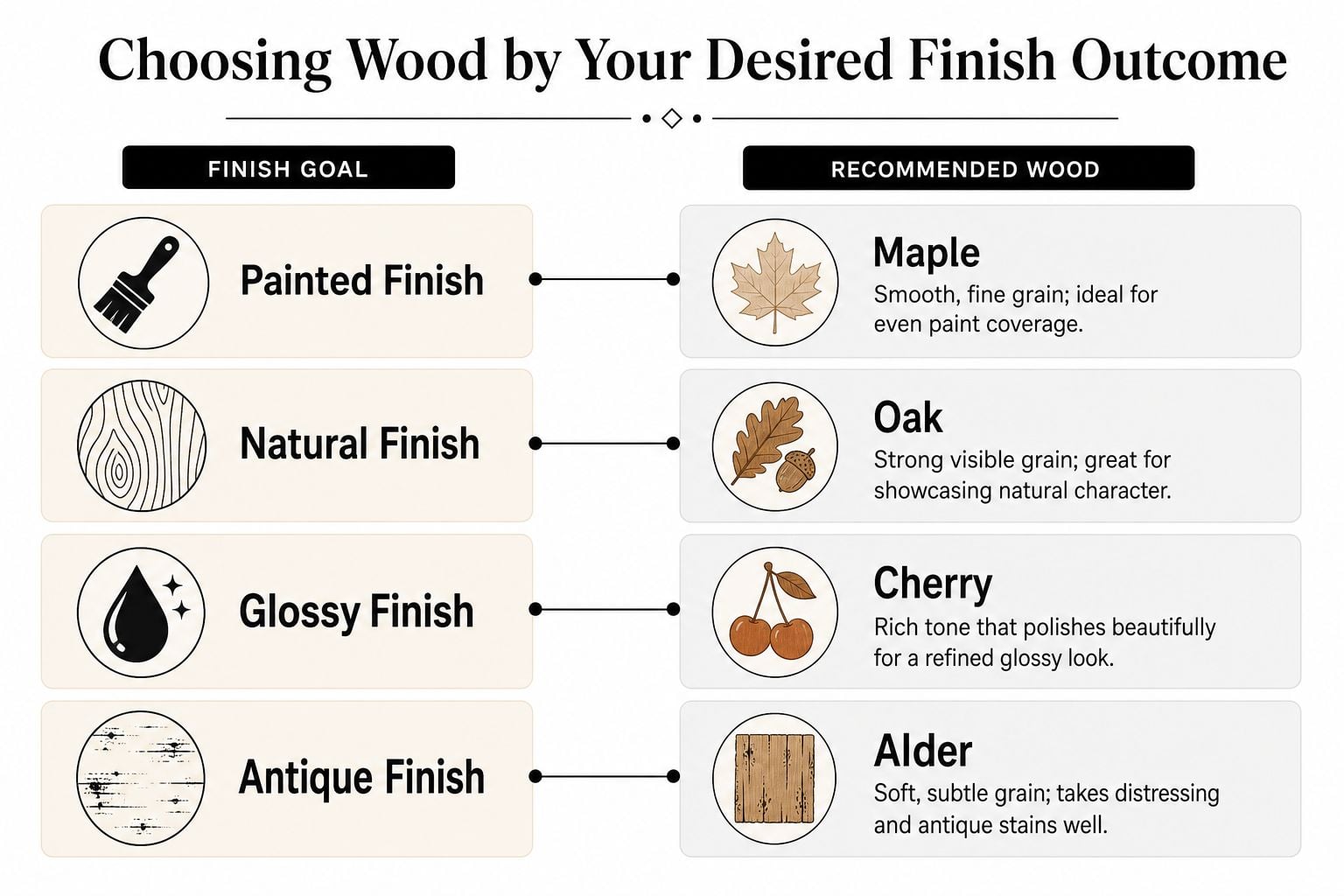
Painted cabinets call for wood that stays visually quiet under primer and topcoat. Maple and birch usually belong at the top of that list because their fine grain gives the painter a smoother canvas, so the finished door reads more even and controlled. That matters if you want a flat white, a soft greige, or a saturated color that does not fight the wood underneath.
Open-grain woods can still be painted, but they ask for more filling, sanding, and prep. That extra labor can make sense on a custom job, but it is not the easiest route. If the goal is a crisp painted kitchen, choose a species that helps the finish behave instead of asking the finish to hide the wood.
Stained cabinets need visible character
Stained cabinets call for oak, cherry, and hickory because these woods bring their own surface character into the finish. Oak gives you structure and grain movement. Cherry gives you a warmer, smoother stained look. Hickory brings contrast and a more rustic feel. These woods do not disappear under stain, they carry the finish.
The wrong species can still disappoint. A stain that looks rich on a sample card can blotch or read unevenly on a wood that is not a good fit for that color or prep process. A good cabinet maker talks about stain systems, not just stain color. If you are sorting through those choices, paint and stain cabinets is worth a close look before you approve the finish.
Best question to ask: “Will this species make the stain look even, or will it need extra prep to behave?”
Natural or clear-coated cabinets are about grain and tone
Natural finishes favor walnut and white oak because the wood itself has enough depth to stand on its own. Walnut gives you contrast and richness without leaning on a heavy stain. White oak brings a lighter, more current warmth that feels settled instead of trendy. Both work because the material can carry the room without extra help.
Cherry can also work well here if you want a warmer tone and a smoother grain. The risk with natural finishes is choosing a board from a pretty sample and assuming it will look the same across the whole kitchen. Ask to see the actual species in the intended finish, not a generic swatch. Color, grain, and light all shift once the topcoat lands on full cabinet doors.
For a quick visual reference on how those choices line up with different finishes, the A chart showing recommended wood types for different furniture finishes including painted, natural, glossy, and antique. image makes the finish-first approach plain. The wood should serve the finish, not compete with it.
How Cabinet Wood Performs in Real Kitchen Conditions
Moisture and movement are the primary stress test
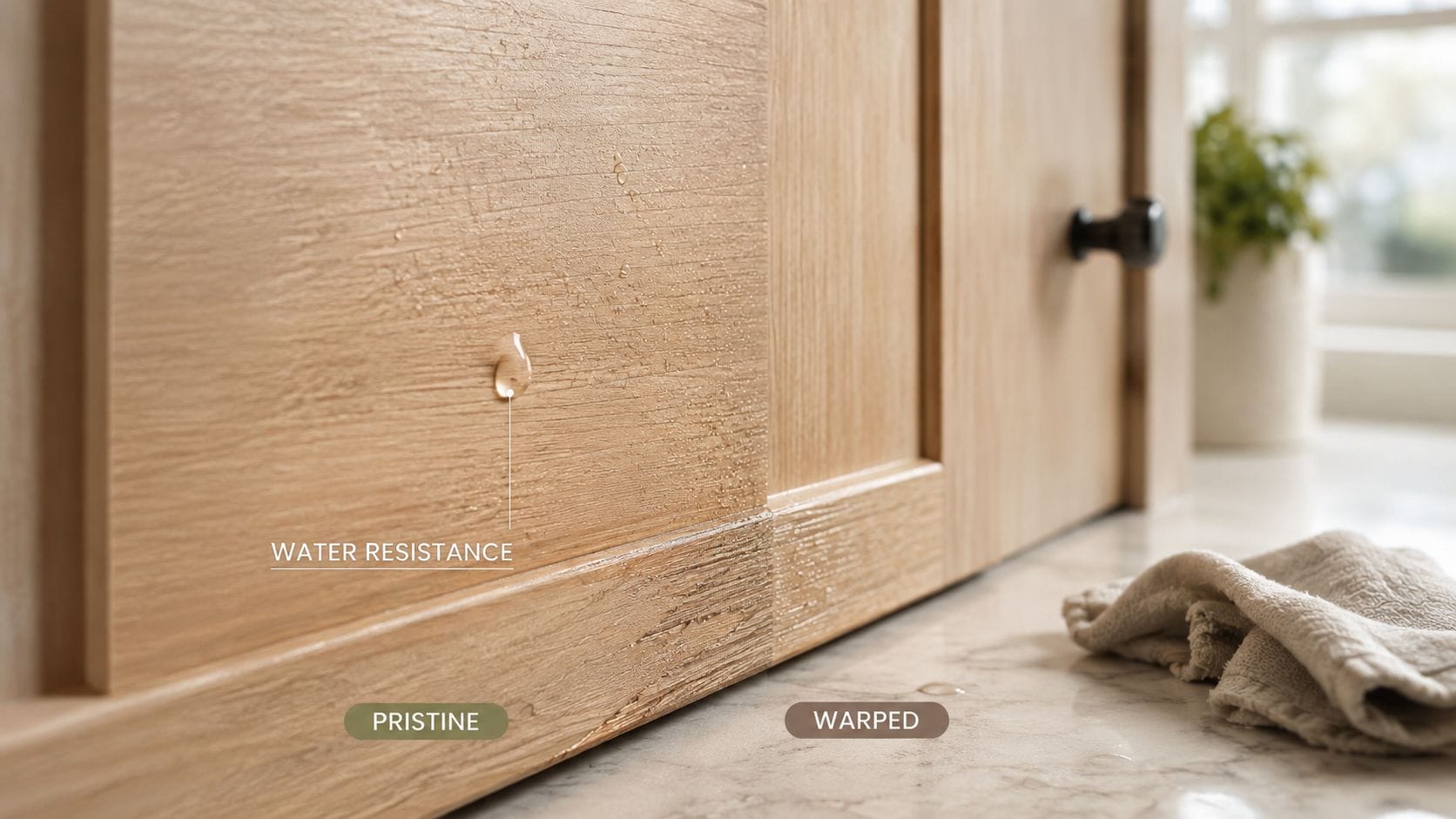
Kitchen wood lives next to steam, splashes, dishwashers, and seasonal humidity swings. White oak has a tighter grain and resists water better than red oak, which is why it shows up so often in kitchens and other moisture-prone spaces. Cherry also handles moisture well and takes finish cleanly. Red oak, by comparison, is more porous and needs more care if you place it near sinks or other wet zones. Cabinetry wood species and their characteristics
Solid wood still moves. It expands and contracts as humidity changes, and that movement can leave hairline cracks at joints. Those cracks do not automatically mean the cabinet is failing. In many cases, they point to a finish issue, not a structural one. In South Jersey, where indoor conditions shift with the seasons, I plan for that movement instead of pretending it will never show up.
Maintenance gets easier when the species matches the zone
I place wood species by zone, not by sentiment. Near the sink, I want better moisture behavior. On a long wall of cabinets, I care more about finish consistency and how the color reads in daylight. On drawer fronts, I care about dent resistance because those are the surfaces people grab every day.
A few practical habits keep cabinets from taking unnecessary abuse.
- Use a mild cleaner: Skip harsh abrasives and aggressive degreasers that can dull the topcoat.
- Keep humidity stable: Run your ventilation fan during cooking and after steamy tasks.
- Protect the sink run: Wipe splashes quickly so water does not sit at the finish line.
- Match the repair level to the problem: Small scuffs may need a touch-up kit, while widespread finish failure needs a pro refinish.
The repair call matters because homeowners often overreact to cosmetic wear. A tiny finish crack at a joint is not the same thing as a swollen cabinet box. A dull patch on a toe kick is not the same thing as a failed door. Those are different problems, and they should be treated differently.
Installation quality matters just as much as species choice. Good sealing, proper finishing, and sensible ventilation can make a middle-of-the-road wood perform better than a premium species that was poorly finished. For a related planning step, see how countertop and cabinet combinations affect the finished room. The wood is only part of the story.
Design Pairings and Sustainability Considerations
Wood cabinets don't live alone, they sit inside a design system. In South Jersey homes, I see the cleanest results when the cabinet wood talks to the countertop, hardware, backsplash, and flooring instead of shouting over them. White oak fits easily with quartz and softer metal finishes in a transitional kitchen. Cherry still reads beautifully with warmer stone and traditional details. Walnut pairs well with simpler lines and darker accents when the goal is a more modern, grounded room.
The current preference in the market also backs up what many designers are already seeing. In the 2026 Houzz Kitchen Trends Study, 29% of 1,780 homeowners chose wood cabinets for their most recent remodel, edging out white at 28%. Among those wood choices, medium tones led at 15%, light wood at 11%, and dark wood at 3%. In the NKBA 2026 Kitchen Trends Report, 59% of 634 industry professionals identified wood grain as a growing trend, and white oak was the preferred species at 51% of professional specifications. Those numbers point in the same direction, wood is back, and white oak is the current shorthand for contemporary cabinet taste. Houzz and NKBA wood cabinet trend data
The practical pairing rules that actually work
- Countertops: Choose a wood tone that either supports the stone or deliberately contrasts it. If both are loud, the kitchen feels busy.
- Hardware: Brushed brass warms up oak and cherry. Matte black sharpens white oak and walnut.
- Backsplash: Simple tile lets figured woods breathe. Busy tile competes with oak grain fast.
- Overall style: Colonial and traditional kitchens can carry cherry well. Modern transitional kitchens usually feel calmer with white oak or walnut.
- Sustainability: Choose species that are locally available and ask for responsible sourcing and certification. Shorter supply chains usually mean less waste and fewer delays.
For more on matching surfaces without creating visual noise, countertop and cabinet combinations is the right next stop. Wood choice should make the entire room easier to resolve, not harder.
One more thing homeowners underestimate, consistency beats novelty. A wood that works with your floor, hardware, and countertop will look better over time than a trendy species that only looks good in isolation. That's the difference between a kitchen that settles in and one that keeps asking for updates.
Your Next Steps for a South Jersey Kitchen Remodel
If you're planning a remodel in Cherry Hill, Haddonfield, Moorestown, Voorhees, or nearby South Jersey towns, don't start by chasing cabinet color swatches. Start by gathering three things, photos of kitchens you like, a rough budget range, and notes on how your kitchen gets used daily. A family that cooks heavily near the sink needs different wood behavior than a light-use kitchen that's mostly for hosting.
Then look at the room. Is the cabinet run getting afternoon sun. Is the dishwasher close to a corner door. Do you want painted calm, stained warmth, or a natural wood look that lets the grain lead. Those answers narrow the species list faster than any showroom display can.
A guided planning process also saves time. The Cabinet Coach offers a mobile showroom model, so curated cabinet samples, countertop options, hardware, and tile can come to the house instead of forcing you to drive all over Camden and Burlington counties. If you want the broader planning sequence behind a remodel, how to plan a kitchen remodel gives you the right framework before design decisions get locked in.
What I'd do next is simple. Book a consultation, bring your inspiration, and be direct about the finish you want the cabinets to deliver. The right wood choice gets a lot easier when someone walks the room with you and ties the finish, the usage, and the layout together.
If you want a kitchen that looks right on day one and still makes sense five years from now, talk with The Cabinet Coach. They help South Jersey homeowners sort through cabinet wood types, finishes, countertops, hardware, and tile with a local, in-home process that's built around real kitchens, not just sample boards.