
You're probably in the same spot most Indianapolis homeowners hit at the start of a kitchen remodel. You know the room isn't working. The pantry is cramped, the corner cabinets waste space, the drawers don't fit modern cookware, and every “simple” online search for custom cabinets turns into a maze of styles, wood species, box construction, and vague promises about lead times.
That's where custom kitchen cabinets in Indianapolis become both exciting and intimidating. On one hand, custom work can solve the exact problems that show up in older homes, uneven walls, narrow layouts, and kitchens that were never designed for how people cook now. On the other hand, “custom” gets used so loosely that many homeowners don't know what they're purchasing, how to compare shops, or how to keep the project on schedule once demolition starts.
The part many guides skip is project management. Cabinets aren't just a style choice. They affect plumbing locations, appliance fit, flooring transitions, electrical planning, countertop templating, and the order in which every trade enters the room. If you're still sorting through fixtures and layout options, these kitchen plumbing tips are worth reviewing early, because sink placement and appliance changes can ripple through the whole cabinet plan.
Table of Contents
- Your Indianapolis Kitchen Remodel Dream
- Decoding Custom Cabinets vs Stock and Semi-Custom
- The Indianapolis Market Costs and Timelines
- Navigating Materials Construction and Finishes
- The Custom Cabinet Process Step by Step
- How to Choose Your Indianapolis Cabinet Maker
- Frequently Asked Questions About Custom Cabinets
Your Indianapolis Kitchen Remodel Dream
A lot of Indianapolis kitchens have one thing in common. They ask the room to do more than it was originally built to do. A bungalow may have charm but not enough pantry depth. A mid-century home may have clean lines but awkward appliance clearances. A newer suburban kitchen may be large enough, yet still waste space with generic cabinet sizes that leave dead corners and filler strips everywhere.
That's why custom work appeals to people who aren't chasing luxury for its own sake. They want a kitchen that fits the house and how the household moves through the day. Coffee station near the fridge. Trash pullout where prep happens. Drawers that hold mixing bowls instead of making you kneel on the floor to reach a dark lower shelf.
The dream usually starts with finishes and inspiration photos. The actual project starts when someone asks better questions. Where will the microwave land so it doesn't block traffic? Will the dishwasher door trap the sink base? If the walls are out of square, do you want to lose storage to fillers or have the cabinets built to fit the room?
Indianapolis homes rarely reward generic sizing
In Indianapolis, plenty of remodels happen in homes with quirks that stock sizing doesn't handle cleanly. Older plaster walls can wander. Floors can dip. Window trim can steal space where a standard-depth cabinet looked fine on paper.
Custom cabinetry makes the most sense when the room itself refuses to behave like a showroom box.
Homeowners often think the hard part is picking a door style. Usually, the hard part is coordinating decisions early enough that nothing collides later. Cabinets affect lighting layout, hood width, sink base size, refrigerator surround depth, and whether you can open two things at once.
The best remodels feel calm because they were planned hard
A well-run project doesn't feel mysterious. It feels organized. You know what's being measured, what's being ordered, what can still change, and what can't.
That's the mindset to bring into custom kitchen cabinets in Indianapolis. Not “How do I make this look expensive?” but “How do I make this room work for the next phase of life without getting blindsided by preventable mistakes?”
Decoding Custom Cabinets vs Stock and Semi-Custom
The easiest way to understand cabinet categories is to think about clothing.
Stock cabinets are off-the-rack. You buy from a fixed menu of sizes, colors, and features.
Semi-custom cabinets are adaptable. You begin with a standard system, then adjust some details.
Custom cabinets are bespoke. The cabinetmaker builds for your room, your dimensions, and your use cases.
That sounds simple, but in kitchen remodeling the labels get fuzzy fast. A showroom may call something “custom” because you can choose paint color and hardware. That isn't the same thing as true custom fabrication.
Why the labels confuse people
Homeowners tend to focus on the visible surface. Door profile, stain, paint, glass inserts. The bigger distinction is what you can and cannot change behind the face of the door.
With stock cabinets, the catalog drives the layout. If the room needs a cabinet width the line doesn't offer, the installer solves the gap with fillers, panels, or by shifting the whole composition. Semi-custom gives more flexibility, but you're still working inside a manufacturer's system.
True custom lets the room lead. That matters if you're trying to line up with existing windows, preserve more drawer space, fit around old framing conditions, or create storage around a specific appliance package. If you want a plain-English breakdown of where prefab fits in that decision, this guide on prefab kitchen cabinets vs custom is useful.
Cabinet Comparison Stock vs Semi-Custom vs Custom
| Feature | Stock | Semi-Custom | Custom |
|---|---|---|---|
| Sizing | Fixed standard sizes | Limited modifications | Built to the room |
| Layout flexibility | Lowest | Moderate | Highest |
| Storage features | Basic options | Broader menu | Tailored to your habits |
| Finish choices | Limited | Wider selection | Highly personalized |
| Fit in older homes | Often requires fillers | Better fit | Best fit when measured well |
| Design control | Manufacturer-led | Shared control | Homeowner and designer led |
| Lead time clarity | Often easier to quote | Usually clearer than custom | Depends on design, fabrication, and installation coordination |
A useful reality check: not every kitchen needs full custom. If the room is straightforward and your priorities are speed and budget control, semi-custom can be a smart middle path.
Practical rule: Pay for custom where the room or your storage needs actually demand it. Don't pay bespoke prices for a wall that standard sizes already solve cleanly.
What doesn't work is buying the cheapest category while expecting custom-level fit. That's where disappointment starts. If your house has irregular conditions, a standard cabinet line won't magically become precise just because the display looked polished under showroom lighting.
The Indianapolis Market Costs and Timelines
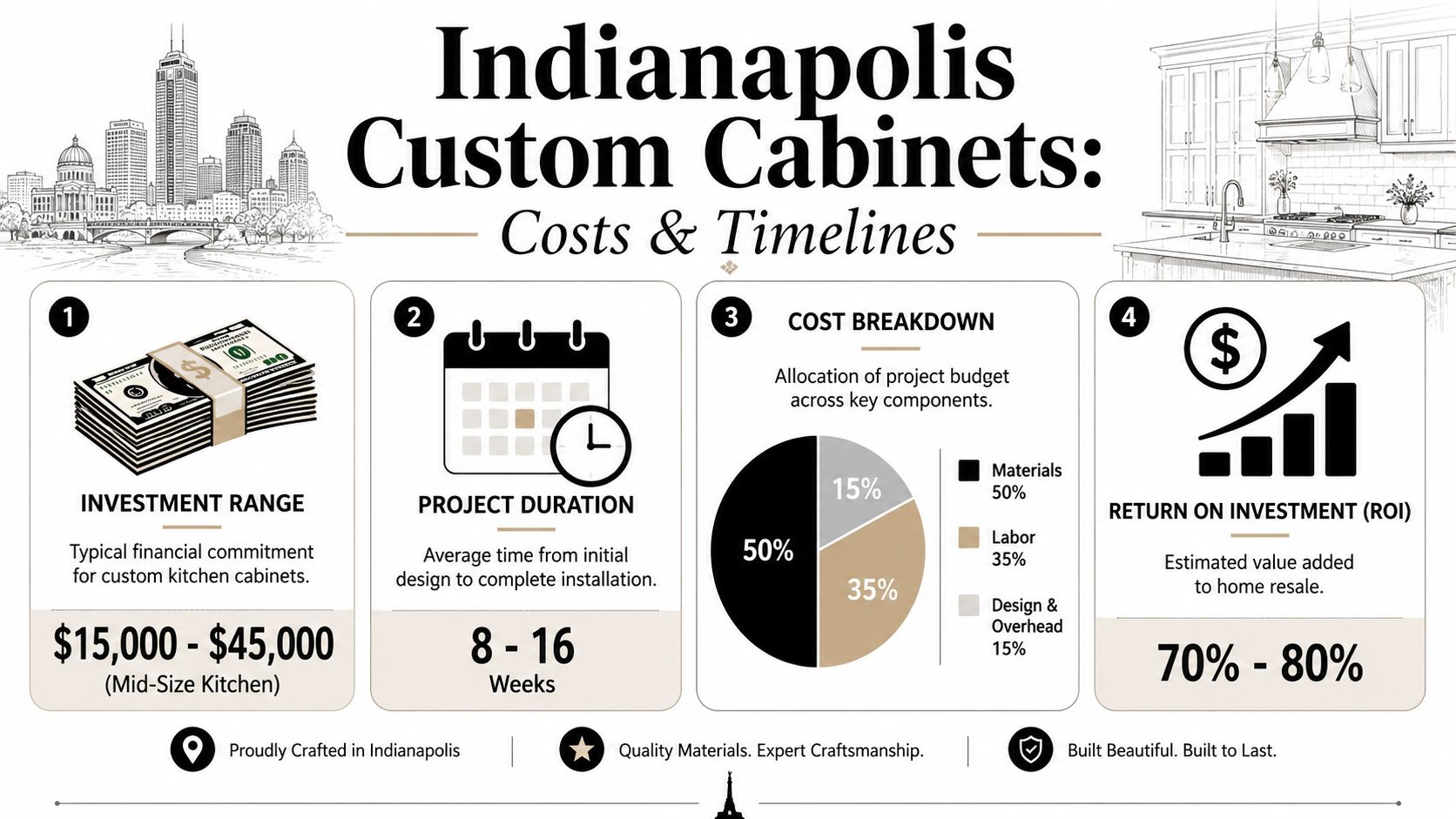
A custom kitchen project in Indianapolis usually gets stressful at the handoff points, not at the inspiration stage. The trouble starts when cabinets are discussed as a product instead of a schedule. If you want this project to stay on budget and keep the rest of the remodel from drifting, ask every shop to explain timing in plain English before you sign anything.
Indianapolis gives homeowners plenty of options, which is helpful and risky at the same time. A crowded market means strong shops are available. It also means polished photos can hide weak scheduling, vague allowances, and installation crews that are stretched too thin.
What you're really paying for
Custom cabinetry costs more because more people touch the job, and each step takes labor that stock lines do not require. Design time, site measurement, revisions, shop drawings, fabrication, finishing, delivery coordination, and installation all show up in the final number. In older Indianapolis homes, the price also reflects the effort required to deal with walls that are out of plumb, uneven floors, and ceiling lines that punish sloppy measuring.
One Indianapolis cabinet source makes the long-term case clearly. It says custom cabinetry can last decades and often costs far more up front than stock, with the premium tied to better fit, construction, and service life (Indianapolis custom cabinetry lifespan and cost trade-offs).
That framing is useful, but homeowners still need a working budget. Cabinets affect appliance placement, electrical changes, countertop square footage, flooring transitions, and labor at several stages. A practical starting point is this breakdown of kitchen remodeling cost categories, which shows where cabinetry sits inside the full project instead of treating it like a stand-alone purchase.
Why timeline transparency matters more than most showrooms admit
The cabinet lead time itself is only part of the schedule. The bigger issue is sequencing.
A good shop will tell you exactly what has to happen before fabrication starts, what can delay signoff, when final field measurements occur, and how installation fits around flooring, drywall, countertops, and appliance delivery. If they cannot explain that chain clearly, expect confusion later.
For custom work, ask for dates or date ranges for each phase:
- Initial design and revisions
- Final scope approval and deposit
- Field measurement after the room is ready to measure
- Shop drawings or final production documents
- Fabrication and finishing
- Delivery and installation
- Punch list and adjustments after install
That list sounds basic. It is also where projects go sideways.
I tell homeowners to press on one question: "What has to be true before you release this job to production?" In a disciplined shop, the answer is specific. Appliances are selected. Layout is approved. Plumbing and electrical locations are confirmed. Any structural changes that affect measurements are complete. In a loose process, you get a vague promise that the job can move quickly, and the homeowner ends up absorbing the delay when one missing decision stalls the whole chain.
A better way to vet timeline promises in Indianapolis
Before hiring a cabinet maker, ask for a sample schedule from a recent kitchen project similar in size to yours. Not client names or private drawings. Just the phase structure and typical duration. Good shops usually have this ready because they use it internally.
Then ask these practical questions:
- Who takes final field measurements, the designer, installer, or shop owner?
- At what point are cabinet dimensions locked?
- How are change orders handled after drawings are approved?
- Are finish samples approved before production starts?
- Who installs the cabinets, in-house employees or a subcontracted crew?
- What happens if appliances arrive late or dimensions change?
- How many active kitchen jobs is the installer running at the same time?
Those answers tell you more than a gallery page ever will. In Indianapolis, the difference between a smooth custom project and a frustrating one often comes down to whether the shop manages workflow tightly or builds good-looking boxes.
One more practical note. Do not schedule demolition around a verbal cabinet estimate alone. Wait until design is approved, long-lead items are selected, and the cabinet shop has given you a realistic production window in writing. That single decision prevents a lot of expensive downtime.
Navigating Materials Construction and Finishes
Materials decide how your cabinets age. Construction decides how they hold up when drawers get slammed, trash pullouts take daily abuse, and Indianapolis humidity shifts through the year.
Choose materials by wear pattern, not just color
A sample door in a showroom tells you very little about how the full kitchen will live. The better question is where the kitchen will get touched, bumped, wiped, and splashed every day.
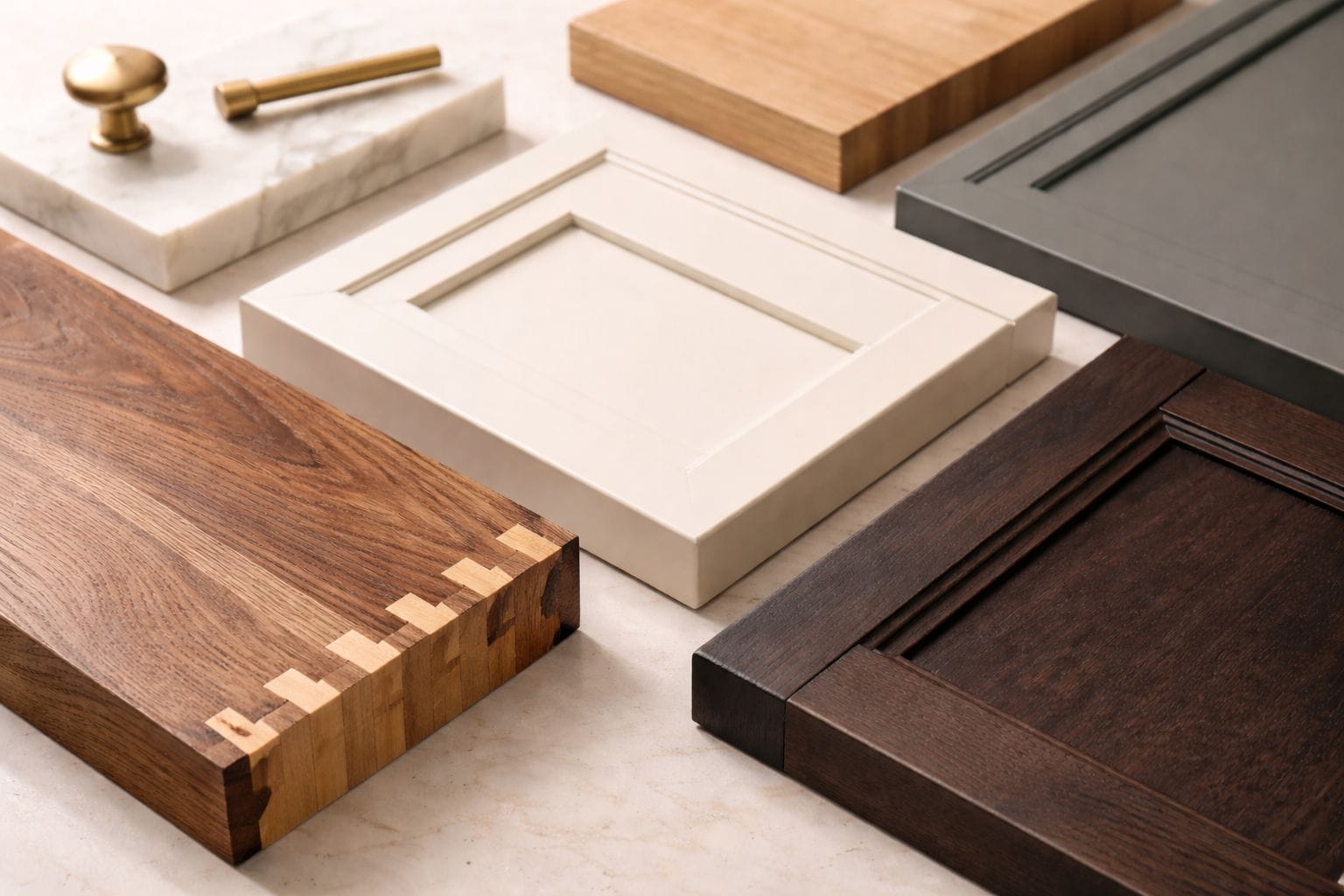
Painted cabinets give a crisp look that fits many Indianapolis remodels, especially in older homes where homeowners want a brighter kitchen without changing the whole character of the house. They also show chips and rub marks sooner around sink bases, island corners, and pullout trash cabinets. Stained wood hides small wear better and is usually easier to touch up, but grain pattern and color variation are part of the package. If you want a uniform painted finish, that natural variation can feel like a flaw even when it is not.
Door material matters here too. Solid wood moves with seasonal humidity. MDF stays more stable under paint and usually gives a smoother painted face. It is not the right answer for every door style or every budget, but the trade-offs are real. This breakdown of MDF vs wood cabinet doors for painted and stained kitchens is useful if you are deciding between the two.
I usually tell clients to review specs in this order:
- Door and drawer front material affects appearance, movement, and repair options
- Cabinet box material affects screw holding, weight, and long-term durability
- Back panel thickness affects how securely cabinets mount to the wall
- Shelf thickness and span affect sagging under dishes, mixers, and pantry loads
- Drawer box joinery and slide rating affect how the kitchen feels after a few years of use
- Interior finish affects cleanability and visibility inside the cabinet
That order helps keep the conversation practical. Pretty finishes are easy to sell. Strong cabinet boxes are what keep call-backs down.
Construction choices that affect installation and daily use
The framed versus frameless decision is not just a style question. It changes usable opening width, how drawers clear adjacent doors, and how forgiving the installation will be if your walls are out of square. Inset cabinetry raises the precision requirement even more because reveals are visible everywhere. In older Indianapolis homes, that precision has cost implications. More scribing, more adjustment time, and sometimes more filler planning.
Drawer construction deserves the same scrutiny. Ask whether the drawer boxes are solid wood, plywood, or engineered material. Ask how the corners are joined. Ask the load rating on the slides. A wide drawer under a cooktop or a deep drawer stack near the island gets stressed hard in a family kitchen. If the answer is vague, assume the spec is basic.
A beautiful finish does not correct a weak cabinet box, poor drawer hardware, or sloppy appliance clearances.
Finish application also affects schedule, not just appearance. Some shops spray in-house. Some outsource finishing. Some do one standard topcoat system and do it well. Others offer many finish options but add time every time a client requests a specialty sheen, glaze, or color match. That is not automatically bad. It just needs to be discussed before approvals are signed, because finish complexity can stretch production windows.
A good way to frame the conversation is to borrow the same logic used in the Lucas Furniture custom order process. Selections have consequences. Every added choice can affect lead time, pricing, and the number of approvals required before fabrication starts.
Finish questions that prevent expensive disappointment
Reviewing a finish sample should be hands-on. Open the sample door. Look at the back. Check edges and corners. Ask how the shop handles touch-up kits, color matching on future additions, and minor damage after installation.
These are the questions worth asking:
Where will water and steam hit most often?
Sink runs, dishwashers, coffee stations, and beverage centers need tougher planning than a low-use pantry wall.How hard will this kitchen get used?
A family that cooks every night should choose differently than a homeowner building a showpiece for occasional entertaining.Do you want grain to show or disappear?
Oak, maple, cherry, walnut, and paint-grade materials all telegraph texture differently under finish.How repairable is the finish after move-in?
Some painted finishes hide touch-ups well. Some do not, especially on dark colors and flat sheens.Who is responsible if the installed finish does not match the approved sample?
Get that answer before production, not after delivery.
The common mistake is approving a door sample in isolation. A finish that looks perfect under showroom lighting can feel too cold, too flat, or too fragile once it is covering an entire kitchen. The better approach is to evaluate materials, construction, and finish as one package, with your budget, use pattern, and schedule all on the table at the same time.
The Custom Cabinet Process Step by Step
A custom kitchen usually feels exciting right up until the first preventable delay. The common pattern in Indianapolis is simple. Cabinets get blamed for problems that originated with late appliance decisions, loose measurements, unclear approvals, or a room that was not ready for install.
That is why the process matters as much as the product.
What happens before the shop starts building
Step 1 is discovery and scope control.
The first meetings should answer practical questions, not just style questions. How do you cook, where do groceries land, which appliances are confirmed, and what parts of the room are staying? In custom work, every undecided item can become a schedule problem later. If you have ever ordered made-to-order furniture, the same logic applies. The Lucas Furniture custom order process shows why signed selections matter before production starts.
Step 2 is field measurement.
This happens after the layout is far enough along to measure for real, and in many remodels it should happen after demolition exposes what the old room was hiding. Indianapolis homes often have walls that are out of square, floors that slope, and soffits or utility lines that were not obvious at the first visit. Good shops measure the actual site, then adjust fillers, panel widths, and clearances so the cabinets fit the room you have, not the room shown on a rough sketch.
Step 3 is final approval.
This is the point where homeowners need to slow down and read everything. Confirm the plan view, elevations, appliance model numbers, insert choices, hardware responsibility, finish, end panels, moldings, and any specialty storage. If the project includes refacing or a partial cabinet update instead of full replacement, cabinet remodel planning support can help clarify sequencing and scope before anyone starts cutting material.
One practical rule helps here. If a decision affects cabinet size, door swing, electrical locations, plumbing, or venting, it should be settled before fabrication is released.
Later in the process, seeing cabinet installation in motion helps people understand why details on paper matter so much.
What happens from fabrication to final signoff
After approval, the shop turns drawings into production information. That usually means shop drawings, material allocation, door and finish scheduling, and coordination with installers. Ask one direct question at this stage: When does the job freeze for changes? Every cabinet maker handles that line differently, and it affects both cost and lead time.
Fabrication goes better when someone is managing dependencies outside the cabinet shop. Countertop template timing, flooring height, appliance delivery dates, and paint completion all affect the install window. I tell homeowners to treat the cabinet install date as conditional until the room is fully ready. A promised week on paper means very little if the electrician is still moving outlets behind the range wall.
Installation is where earlier discipline pays off. The room should be clean, dry, and accessible. Appliance rough-ins should be checked against the approved plans. If flooring is going in after cabinets, that decision needs to be coordinated early so island height, dishwasher opening, and panel alignment do not get thrown off.
The closeout phase deserves more attention than it usually gets. Walk every run of cabinetry with the installer or project manager. Open every door and drawer. Check reveals, drawer action, accessory fit, finish touch-ups, and panel joints. Then put any incomplete item on a written punch list with a named responsibility and a target date. Verbal promises are easy to forget once the crew leaves.
How to Choose Your Indianapolis Cabinet Maker
A lot of Indianapolis cabinet problems start before a single box is built. The homeowner approves a pretty rendering, assumes the shop will handle the details, and finds out too late that install was never coordinated with flooring, appliance delivery, or final measurements. Choosing the right cabinet maker is less about who has the nicest photos and more about who can run a disciplined project.
Local options are broad, which makes screening more important than shopping. Some shops are true custom fabricators. Others are design firms selling manufactured lines with limited modification. Either approach can work if the scope is clear, but problems start when the homeowner thinks they are hiring one model and gets the other.
What to ask before you sign anything
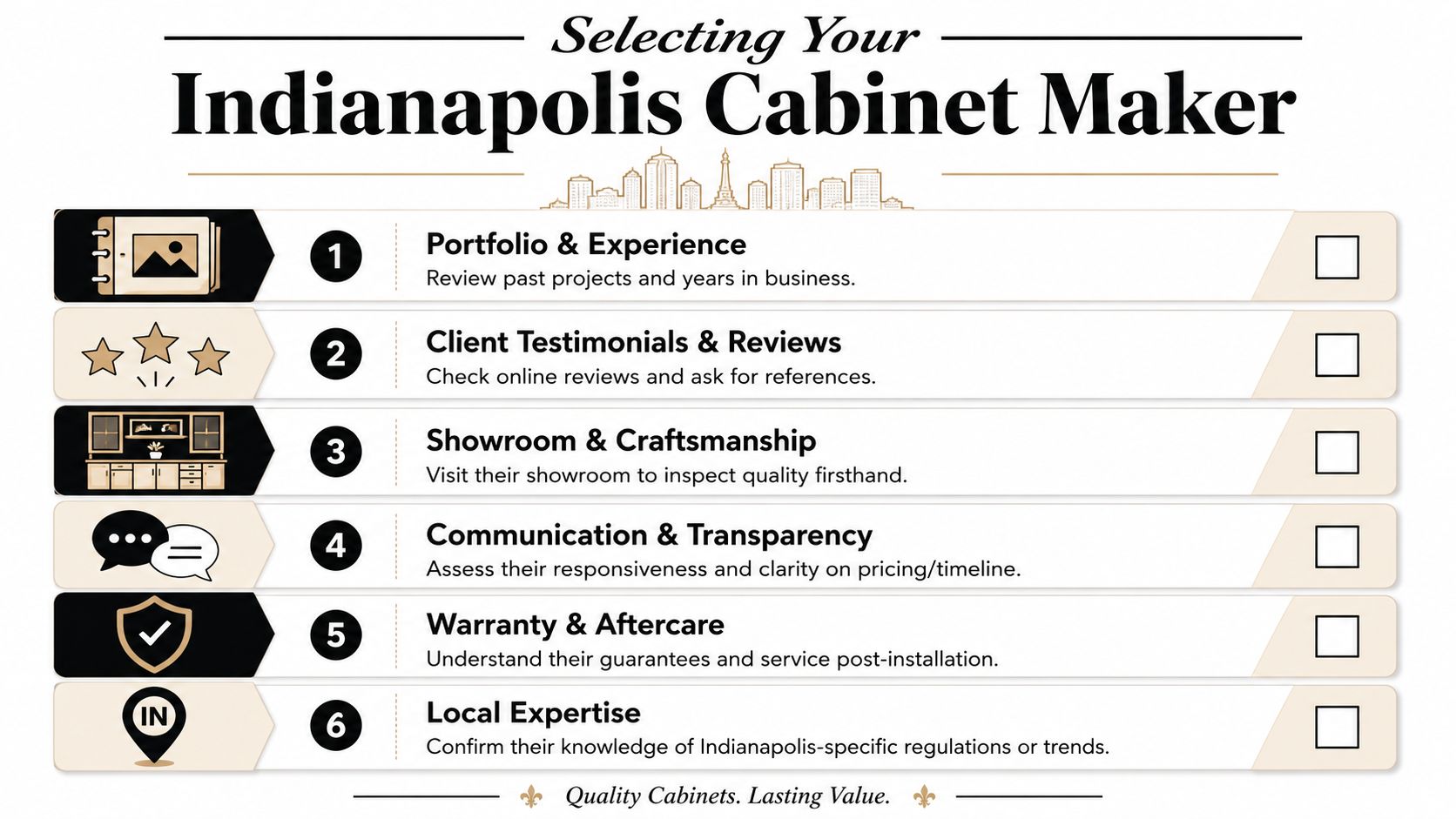
Ask these questions in writing and compare answers side by side. A good cabinet maker should be able to answer them plainly, with examples from recent jobs.
Who owns the field dimensions
Do not assume the designer, installer, and fabricator are working from the same measurements. Someone needs clear responsibility for final site verification.What is included in the proposal, line by line
Confirm cabinet boxes, door style, finished ends, fillers, crown or stacked details, hardware, delivery, installation, and punch-list adjustments. If it is not written down, treat it as excluded until proven otherwise.What drawings will I approve before production
Renderings sell the project. Shop drawings build it. Ask what level of detail you will see before materials are ordered.When is the change-order cutoff
Every shop has a point where edits become expensive or push the schedule. You need that date early.How is the timeline shown
Ask for milestones such as design approval, field measure, drawing approval, production start, finish completion, delivery, and install. One promised completion week is not enough.How are delays handled
Indianapolis projects routinely run into backordered appliances, old-house framing issues, and scope changes from other trades. Ask what happens if your room is not ready when the cabinets are.Who handles service after install
Doors need adjustment. Touch-ups happen. Drawer fronts sometimes need fine-tuning after the house settles into normal use.
If you want a practical system for documenting decisions and keeping the trades aligned, this guide on how to manage contractors during a remodel is worth reading before you sign a cabinet contract.
Red flags that usually lead to trouble
Vague paperwork usually leads to expensive misunderstandings.
Watch for these warning signs:
- A deposit request that comes before a clear scope and drawing set
- A proposal with allowances but no explanation of what those allowances cover
- No written install process
- No discussion of lead times for doors, finishes, or specialty hardware
- Different answers from the salesperson, designer, and installer
- A heavy focus on inspiration photos with very little talk about measurements, sequencing, or site readiness
- No local references from projects that match your budget and level of complexity
- No place to review finish samples, construction details, or hardware in person
One more practical test helps. Ask the cabinet maker to walk you through a recent job that hit a problem. Maybe the range changed sizes, the flooring height shifted, or the drywall was out of square. The answer matters. Shops with solid systems can explain exactly how they caught the issue, priced the fix, and kept the schedule from slipping further than necessary.
The right partner gives you clear drawings, clear responsibilities, and a schedule you can manage. Good craftsmanship matters. So does knowing who is calling for final measure, who is checking appliance specs, and who is updating you when the room is not ready for install.
Frequently Asked Questions About Custom Cabinets
Do custom cabinets help resale value in Indianapolis
They often do when the work fixes how the kitchen functions. Buyers notice drawers that hold real cookware, panels that fit appliances correctly, and a layout that does not waste corners or aisle space. A custom kitchen usually earns its keep when it solves everyday problems and looks clean on installation day.
Can I use my own interior designer
Yes. Set roles in writing before the design work gets too far.
The cabinet maker, designer, and homeowner should agree on who controls the final layout, who confirms appliance specifications, who approves finish samples, and who signs the final measure. If those handoffs stay fuzzy, small errors turn into schedule delays and change orders.
How long should I expect a true custom project to take
Plan in phases, not in one broad promise. Design revisions, field measure, shop drawings, material ordering, fabrication, finishing, delivery, and installation each take time. A realistic cabinet partner in Indianapolis should explain where the schedule can slip, especially if appliances arrive late, drywall is not ready, or finish approvals drag.
As noted earlier, true custom work usually runs longer than the marketing timelines attached to stock or semi-custom lines. Ask for a written schedule with decision deadlines. That is the only timeline you can manage.
Should I choose custom for every part of the kitchen
No. Use custom where it solves a real problem.
Custom makes sense for tricky walls, odd ceiling heights, appliance garages, integrated panels, and storage built around how you cook. Standardized options can work well for simple perimeter runs or secondary spaces where exact fit matters less. That mix often protects the budget without giving up the parts that make the kitchen work better.
What should be finalized before fabrication
Everything that changes sizing, clearances, or finish outcome should be locked down. That includes the layout, appliance model numbers, sink and faucet selections, door style, wood species or material choice, finish color, sheen, hardware placement, accessory inserts, and any decorative panels or trim details.
If one of those items is still floating, fabrication should wait.
What's the biggest mistake homeowners make
Starting demolition before the cabinet plan is fully buildable. A rendering can look finished and still miss filler requirements, panel thickness, outlet conflicts, or appliance clearance problems.
The next mistake is treating cabinet installation like the end of the cabinet job. It is really the point where planning gets tested. Good projects stay on track because someone has already checked flooring height, wall condition, appliance delivery dates, and who is responsible for punch-list items after install.
If you want help turning cabinet ideas into a workable remodel plan, The Cabinet Coach offers cabinet design guidance, product selection support, and project coordination so homeowners can make decisions with clearer scope, budget awareness, and timeline expectations.