
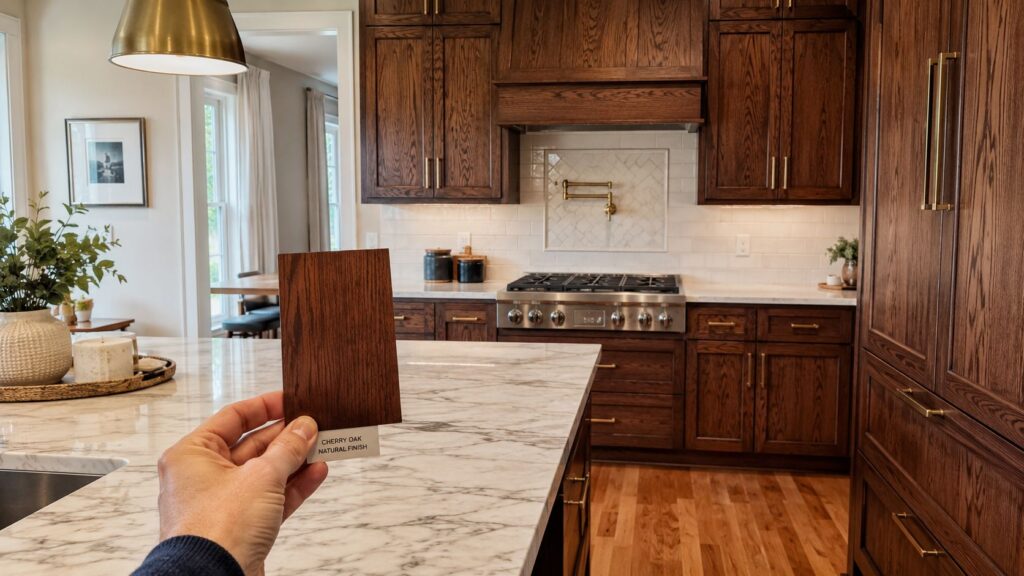
You're standing in a Cherry Hill showroom with two cabinet samples on the counter. One is a smooth, flat-panel door. The other has a rich reddish-brown stain over pronounced oak grain. You like both, but the key question isn't which one looks good today. It's which one will still look intentional after years of family meals, humidity changes, and the occasional rushed cleanup.
That's why cherry oak cabinets deserve a closer look for South Jersey kitchens. They combine oak's visible grain and practical workability with a cherry-inspired color, giving homeowners a furniture-like finish without committing to solid cherry. The right choice depends on more than stain color. Door profile, grain, topcoat, lighting, countertops, and the surrounding architecture all determine whether the result looks custom or dated.
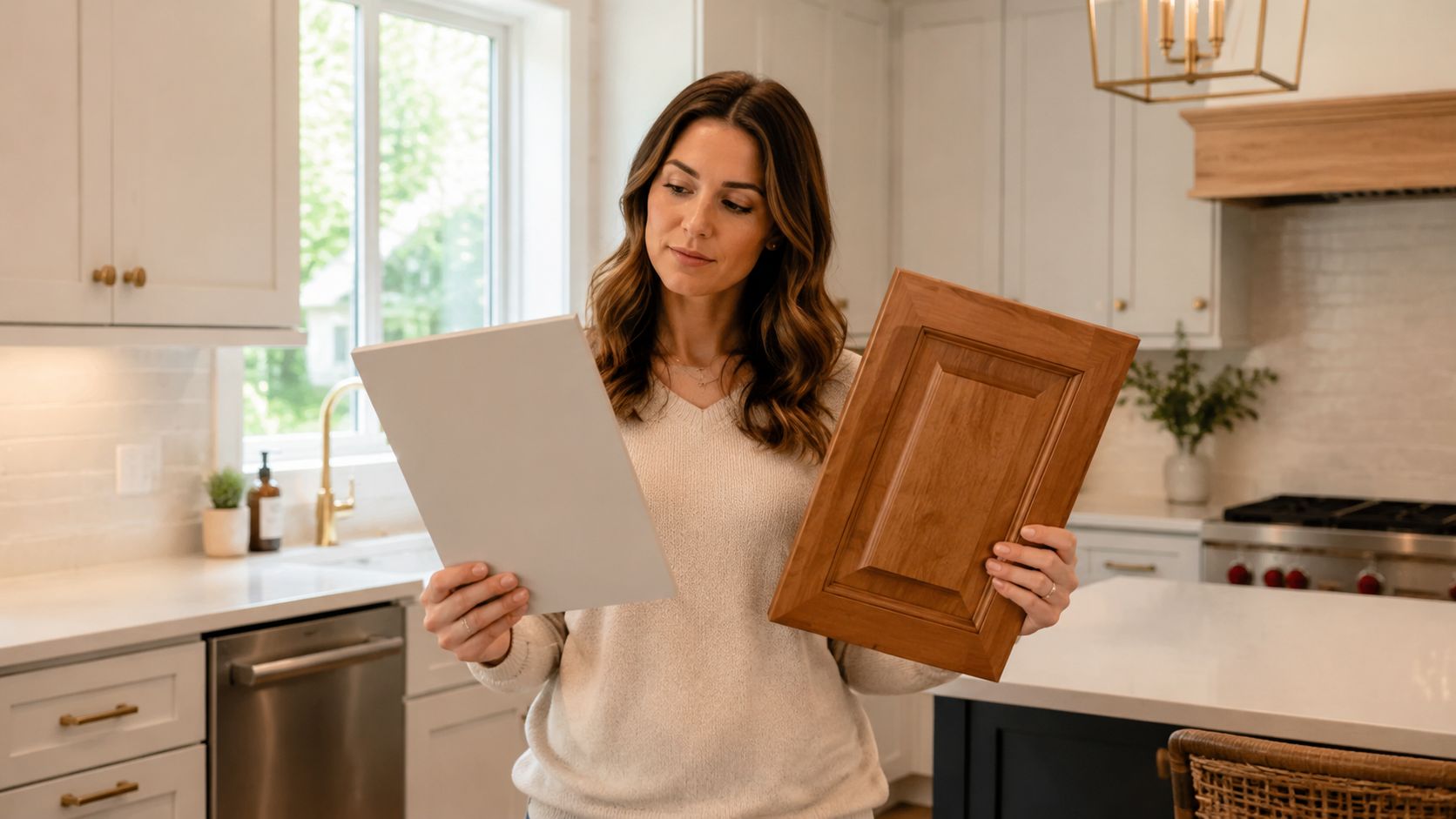
Table of Contents
- Why Cherry Oak Cabinets Are Back on South Jersey Shortlists
- What Cherry Oak Means
- Stain and Finish Choices That Make Cherry Oak Work
- Cherry Oak Compared to Similar Wood Species
- Durability and Maintenance in a Real Kitchen
- Pairing Cherry Oak Cabinets with Countertops, Hardware, and Paint
- Working with a Mobile Cabinet Showroom in South Jersey
- Budget Framework and Next Steps for Your Remodel
Why Cherry Oak Cabinets Are Back on South Jersey Shortlists
Oak has deep roots in American kitchens. One furniture history source identifies 1500 to 1660 as England's “age of oak,” a period spanning about 160 years (Bohaglass furniture history). In the United States, oak cabinetry became established in the late 1800s and was especially fashionable during the 1940s, 1950s, 1970s, and 1980s, according to the same historical reference.
That history matters in South Jersey. Oak was a familiar workhorse in mid-century capes, ranches, and practical suburban kitchens. Homeowners aren't necessarily bringing back the orange oak finish their parents chose. They're taking the material's familiar grain and giving it a more controlled stain, quieter hardware, and cleaner surrounding finishes.
The practical case for oak
A cherry-toned oak door solves several design problems at once:
- It adds warmth without looking flat. Oak's open grain gives the stain movement, which keeps a large cabinet run from reading like a single solid block of color.
- It disguises everyday wear. In an active kitchen, the grain breaks up the appearance of tiny scuffs better than an ultra-smooth, uniform surface.
- It photographs with depth. Rich wood tones and visible grain tend to read clearly in listing photography, especially when paired with a light countertop and restrained backsplash.
- It connects older homes to updated design. The material feels familiar, while the stain and door construction can look current.
Cherry itself has also remained commercially important. A 1999 industry report recorded more than 197 million board feet of cherry harvested in one year, reinforcing that cherry continued to play a substantial role in furniture and cabinet supply chains (Tampa Bay Times report on cherrywood).
Design rule: Treat cherry oak as a complete material strategy. Don't choose a reddish stain first and hope the countertop, floor, and paint will cooperate later.
The best way to evaluate it is sequentially. Start with the door style, inspect the grain under your actual lighting, compare stain samples beside the countertop, then review the finish and construction details. A mobile showroom visit is particularly useful because large door samples reveal how the tone changes across an entire kitchen, not just on a small showroom chip.
What Cherry Oak Means
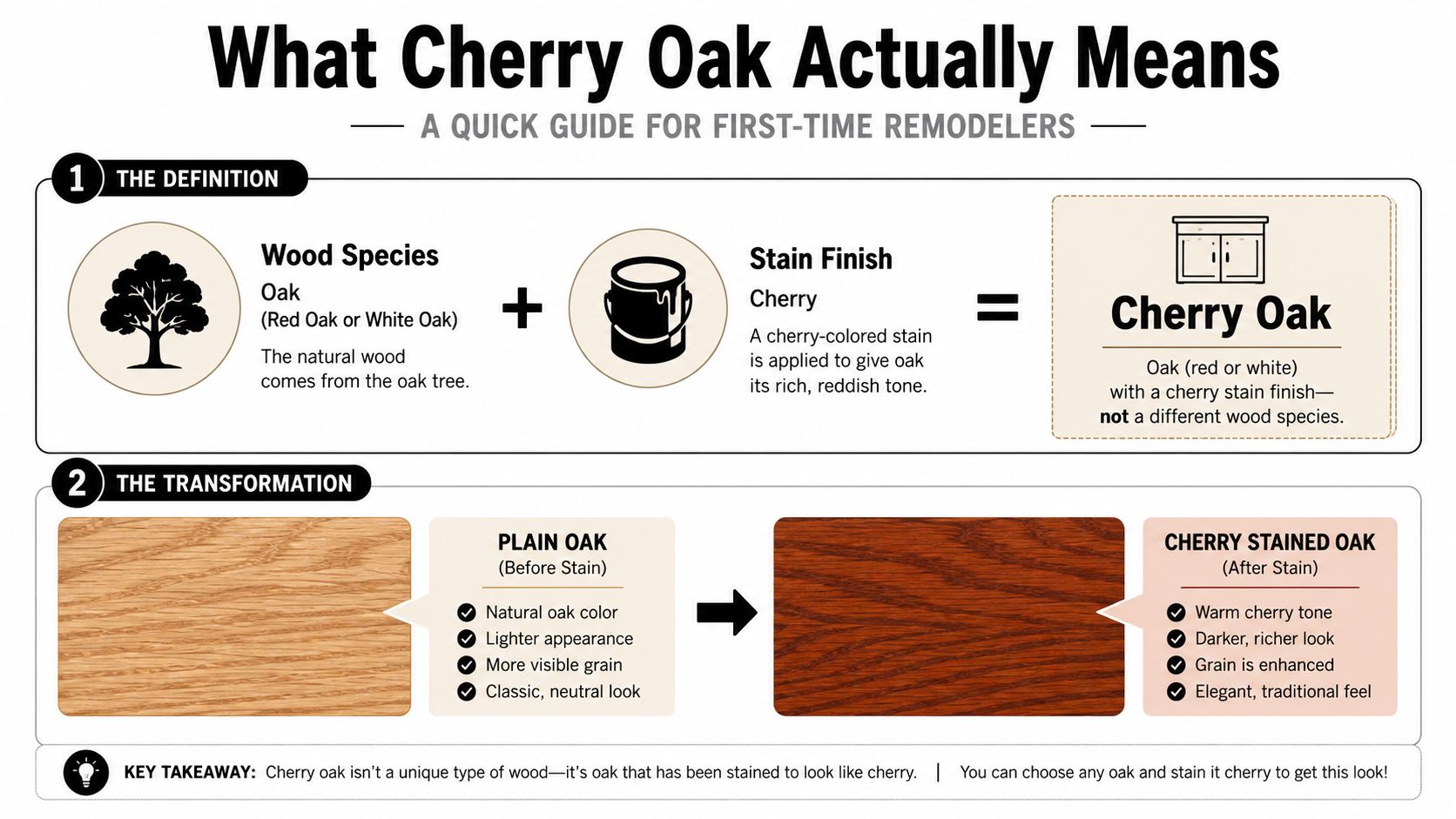
Cherry oak is not a hybrid wood species. In cabinet work, the term usually means red oak or white oak finished with a stain that creates cherry's warm, reddish-brown appearance. The cabinetmaker selects oak for its grain and physical performance, then uses color to give the room a cherry-inspired look.
Oak's open pores and pronounced grain stay visible beneath the stain. Cathedral patterns, darker lines, and, depending on the cut, ray flecks remain part of the door's character. That makes cherry oak a poor fit for anyone seeking a quiet, nearly textureless surface. For homeowners who want cabinets to read as real wood furniture, the grain is the advantage.
Oak and cherry behave differently
American cherry has a relatively tight, generally straight grain and naturally develops a deeper red-brown tone with age. A guide to cabinet wood types helps remodelers compare those traits with oak, maple, and other cabinet materials before choosing a door.
Cherry oak begins with a more assertive grain pattern. Its reddish color comes mainly from the stain, while the oak underneath remains visible. Sample approval therefore matters. The same stain can look dramatically different on red oak and white oak because their grain, undertones, and absorption vary.
Cherry also responds to moisture changes in ways cabinetmakers must account for. Published wood data lists approximately 3.7% radial shrinkage and 7.1% tangential shrinkage, with a tangential-to-radial ratio of about 1.9 (Woodworking Network on American cherry). Those measurements describe solid cherry, but they show why sound cabinet construction allows seasonal movement. Wide panels should not be trapped rigidly inside a frame.
Practical rule: Approve a full-size door sample, not just a stain name. The wood species underneath controls the final character.
The distinction shapes long-term satisfaction. Homeowners expecting smooth solid cherry may dislike the installed result. Those who want warm color over visible, durable oak grain usually get the intentional design strategy they were after. In a 2026 kitchen, that combination gives oak a more considered role than a stain-only decision suggests.
Stain and Finish Choices That Make Cherry Oak Work
Oak gives you plenty of stain possibilities, but not all of them belong in a busy South Jersey kitchen. I recommend choosing based on traffic, natural light, and how much visual drama the room can carry.
Light cherry washes work well in compact galley kitchens or rooms with limited daylight. They bring warmth without closing in the walls, but they can look weak if the countertop and backsplash are also pale and low-contrast.
Medium cordovan and chestnut tones are the reliable choice. They soften oak's orange tendencies, preserve enough grain contrast, and pair easily with warm quartz, soft white tile, and aged metal hardware. For most homeowners, this is the safest long-term direction.
Deep garnet and merlot stains create a formal, dramatic kitchen. They're less forgiving, though. Dust, fingerprints, and uneven light become more visible against a deep saturated surface, so I reserve them for lower-traffic rooms or homeowners willing to maintain a more deliberate look.
Driftwood and weathered cherry blends give oak a contemporary edge. These blends mute the traditional country association, but they need careful sampling because gray undertones can fight existing floors and make the red-brown color look muddy.
The topcoat decides whether the work feels custom
Oak's open pores remain part of the design unless the finisher uses a pore-filling process. If you want a smooth, closed-pore surface, specify that step before the topcoat. Skipping it is one of the fastest ways for a stained oak kitchen to look unfinished rather than custom.
For a working kitchen, my finish ranking is straightforward:
- Catalyzed conversion varnish offers the strongest professional-grade protection and is my preferred specification for new cabinetry.
- Pre-catalyzed lacquer provides a good balance of appearance, repairability, and moisture resistance.
- Polyurethane can work, but the product and application quality matter greatly. I'm cautious when it's presented as an automatic upgrade without clear preparation and curing details.
| Stain Family | Topcoat | Best For | Watch Out |
|---|---|---|---|
| Light cherry wash | Pre-catalyzed lacquer | Small, dim kitchens | Can look too pale on a large cabinet run |
| Medium cordovan or chestnut | Conversion varnish | Most family kitchens | Requires careful sample approval for undertone |
| Deep garnet or merlot | Conversion varnish | Formal or low-traffic spaces | Shows dust and fingerprints |
| Driftwood cherry blend | Conversion varnish | Contemporary transitional kitchens | Can turn muddy beside cool floors |
For a deeper discussion of finish preparation and color direction, review this guide to painted and stained cabinets. My default recommendation in 2026 is medium cordovan under conversion varnish, with a full-size sample viewed beside the finished countertop.
Cherry Oak Compared to Similar Wood Species
Cherry oak earns its place in a kitchen when warm color, visible grain, and a controlled budget all matter. Its open grain gives stained doors furniture character, while oak's established cabinetry performance makes the material a practical long-term design choice.
Solid cherry creates a quieter, more refined surface. Its grain is generally more restrained, and the wood develops a deeper, richer color over time. Cherry is a medium-density hardwood with a Janka hardness of about 950 lbf and a specific gravity around 0.58, a workable range for cabinetry, machining, and joinery (Decore cherry wood material guide). That workability comes with lower dent resistance than harder species, so specify a durable finish for frequently handled doors and exposed corners.
Maple suits homeowners who want painted cabinetry, a smooth surface, or a restrained stained look. Its tighter grain supports a clean contemporary door. Choose it when the cabinetry should blend into the room rather than supply the visual texture.
Birch can lower material costs, but stain absorption is less predictable than oak. Reddish stains make uneven absorption especially obvious. I would not approve birch from a small showroom sample alone. View a larger finished sample under the kitchen's actual lighting before committing.
| Wood | Grain Character | Janka Hardness | Avg Cost/Lin Ft | Best For |
|---|---|---|---|---|
| Cherry oak | Pronounced open grain and cathedral patterns | Varies by oak substrate | Varies by construction and market | Warm stained kitchens with visible texture |
| Solid cherry | Tighter, generally straighter grain | About 950 lbf for cherry | Varies by construction and market | Furniture-like natural wood cabinetry |
| Hard maple | Fine, restrained grain | Verify with cabinetmaker | Varies by construction and market | Painted doors and clean contemporary rooms |
| Birch | Subtle to moderate grain | Verify with cabinetmaker | Varies by construction and market | Value-oriented cabinetry with controlled finishing |
The table should guide the design decision, not create a false price promise. Cost varies with construction and market conditions. Compare each option by grain, traffic tolerance, finish behavior, and how convincingly it supports the room's style.
For a broader comparison of cherry and maple as furniture woods, Vinson Fine Furniture helps you decide. My recommendation is direct: choose cherry oak when grain carries the design, maple when the doors should recede into the architecture, and solid cherry when natural color change is part of the appeal.
Durability and Maintenance in a Real Kitchen
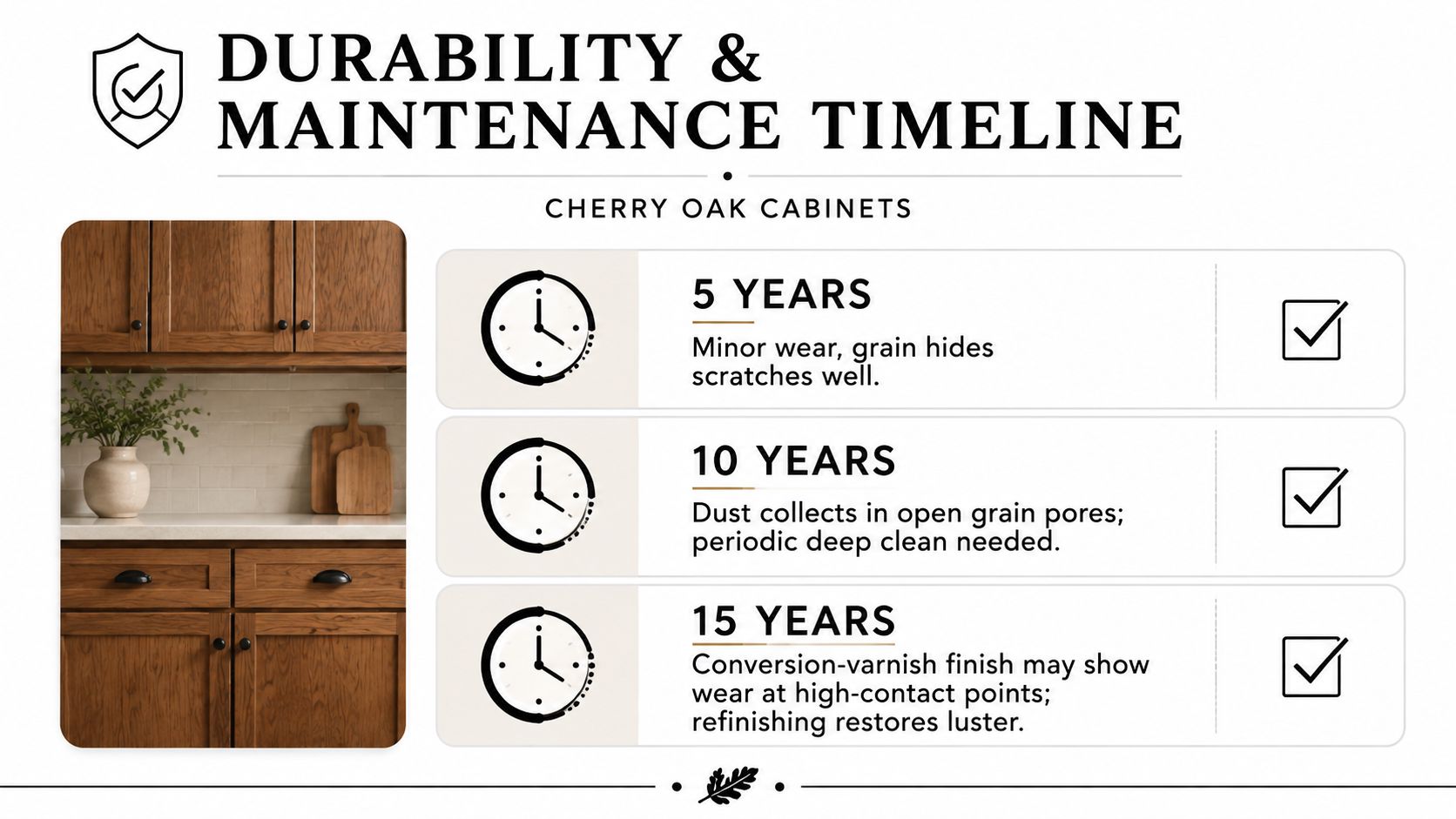
A properly specified topcoat determines whether cherry oak cabinets age gracefully or show wear within a few years. Oak's open grain adds visual texture and helps disguise minor surface marks, while its pores can hold dust and cooking residue when cleaning is rushed. In a busy kitchen, the substrate, joinery, and finish specification matter more than the stain label.
Cherry is workable rather than exceptionally hard. Its approximately 950 lbf Janka rating makes it suitable for cabinetry, though it offers less dent resistance than harder woods. For cherry oak doors, ask the cabinetmaker which oak substrate and protective finish are being used before approving the color.
A sensible care routine
- Use pH-neutral soap: Mix a small amount with water and apply it to a soft cloth, never directly to the door.
- Choose microfiber: Wipe with the grain, then dry the surface so moisture does not remain in the open pores.
- Avoid abrasive sponges: Keep Magic Erasers, scouring pads, and powdered cleaners away from stained wood.
- Treat the sink zone differently: Dry splashes near the sink, dishwasher, and range promptly.
- Repair small damage early: A cabinet professional can often correct a worn edge or isolated chip without refinishing the entire kitchen.
High-contact points should show wear first. Door edges, drawer pulls, sink-base doors, and the cabinet beside the dishwasher take the most abuse. A quality conversion varnish generally provides a stronger moisture barrier than ordinary consumer-applied polyurethane, though no finish makes wood waterproof.
Color change also affects future repairs. Natural cherry develops a deeper red-brown tone over time, so replacement fillers or later additions may not match a newly finished door. Keep the original stain formula and finish information with your remodeling documents.
Here's a visual explanation of the maintenance pattern:
Treat cherry oak as a long-life cabinet surface, not a disposable coating. Consistent cleaning, prompt repairs, and a properly specified topcoat will do more for its service life than any finish marketed as indestructible.
Pairing Cherry Oak Cabinets with Countertops, Hardware, and Paint
Cherry oak needs partners that calm the grain and support its warmth. My strongest recommendation is warm quartz with restrained veining, not busy granite. A Calacatta Gold-style quartz or a soapstone-look suede surface gives the eye a clean landing place while repeating the cabinet's warm undertone.
Busy granite usually creates too many competing lines. Oak already supplies movement through its grain, so a heavily mottled countertop can make the kitchen feel visually crowded. Use a cabinet and countertop combination guide to compare the materials together, not as isolated samples.
Hardware should add definition
Choose brushed champagne brass when you want a softer, updated warmth. Choose matte black when the room needs stronger contrast and the cherry stain is medium to deep. I'd skip polished chrome in most cherry oak kitchens because its blue-white reflection can make the wood look more orange by comparison.
For wall color, Benjamin Moore's White Dove is the safest starting point. Natural Cream works when you want a warmer, quieter envelope. A pale sage can be excellent in a transitional kitchen because its green undertone balances the red-brown cabinet color without turning the room cold.
Cool grays are the mistake I see most often. They can make cherry oak look excessively red, especially under cool bulbs or north-facing daylight. Test every paint color beside the actual door and countertop. A paint chip alone doesn't reveal how it will react to the wood.
Keep the backsplash disciplined
- Traditional South Jersey homes: Use a soft-white 3-by-6 subway tile with a restrained grout color.
- Transitional layouts: Consider zellige for gentle variation or a large-format porcelain slab for fewer visual interruptions.
- Busy countertops: Keep the backsplash simpler rather than adding another pattern.
My formula is dependable: medium cherry-stained oak, warm white quartz with subtle gold movement, brushed champagne brass or matte black hardware, White Dove or Natural Cream walls, and a soft-white backsplash. That combination lets the cabinets look deliberate instead of trapped in an early-2000s palette.
Working with a Mobile Cabinet Showroom in South Jersey
A mobile cabinet consultation should begin at your house, not with a tiny sample under showroom fluorescents. The consultant arrives with door styles, stain blocks, finish boards, and construction examples, then lays the materials near the kitchen's existing floor, backsplash, and countertops.
That location changes the decision. Warm under-cabinet lighting can make a cherry stain look deeper and redder, while cool daylight can expose orange or gray undertones. A large door sample also shows how the grain pattern reads across rails, stiles, and the center panel. A two-inch chip can't tell you whether the complete run will feel calm or busy.
What the appointment should cover
Expect the consultant to measure the room, photograph the light, and discuss:
- Stock versus semi-custom construction: Ask what dimensions, finishes, and storage modifications are available.
- Drawer boxes: Confirm the material, joinery, and load expectations rather than assuming every soft-close drawer is built the same way.
- Hardware: Review the hinge and slide systems, including adjustment access after installation.
- Color consistency: Ask how the team manages stain variation across doors, panels, fillers, and end skins.
- Installation planning: Clarify who installs the cabinets and how the crew coordinates with plumbing and electrical trades.
The mobile format also lets you compare the stain against the room's permanent elements before committing. That's particularly valuable when existing flooring has a strong red, yellow, or gray undertone.
If the project includes glass doors or a showroom-style display area, homeowners can also review practical showroom glass cleaning pros for maintaining clear surfaces around the finished cabinetry. For a closer look at the in-home process, read about mobile cabinet showrooms in South Jersey.
The Cabinet Coach is one South Jersey option that brings cabinet, countertop, hardware, and tile selections to the homeowner for in-home review. That approach won't replace careful specification, but it does reduce the risk of approving a color that only worked under artificial showroom lighting.
Budget Framework and Next Steps for Your Remodel
Don't approve cherry oak cabinets from a stain card alone. The final decision should include the door profile, oak species, stain formula, pore treatment, topcoat, hardware, panels, and installation scope. Those details determine whether the finished kitchen feels like a considered renovation or a collection of disconnected upgrades.
The supplied project brief doesn't provide verified cabinet pricing, so I won't attach invented dollar amounts to linear feet or countertop allowances. Ask each remodeler for a written estimate that separates cabinetry from installation, trim, panels, hardware, countertops, backsplash, painting, demolition, and trade work. A useful kitchen remodeling cost breakdown can help you organize those categories before comparing proposals.
Use this approval checklist
- Approve two physical doors: Request full-size samples in the selected stain and topcoat.
- Check the grain: View red oak or white oak samples beside the actual countertop and floor.
- Confirm the pore treatment: Decide whether you want visible open grain or a smoother closed-pore appearance.
- Read the finish warranty: Look specifically for coverage involving finish wear, peeling, moisture, and color variation.
- Specify the installation crew: Confirm whether installers are factory-trained employees or subcontractors.
- Finalize rough-ins first: Complete plumbing and appliance locations before the final cabinet measurement.
- Protect the color record: Keep the stain formula and finish information for future repairs or additions.
| Cabinet Tier | Cost Per Linear Foot Installed | What's Included |
|---|---|---|
| Stock | Request a written local estimate | Standard sizes and limited finish choices |
| Semi-custom | Request a written local estimate | More dimensional flexibility, selected door and finish options |
| Full custom | Request a written local estimate | Project-specific sizing, detailing, and material coordination |
For most South Jersey homeowners, the smartest investment isn't the darkest stain or the most elaborate door. It's a well-built oak cabinet with a medium cherry tone, a professional topcoat, clean proportions, and surrounding finishes that won't fight the grain. Approve the materials in your home, verify the construction in writing, and compare complete scopes instead of isolated cabinet prices.
If you're considering cherry oak cabinets, The Cabinet Coach can bring door samples, stain options, countertops, hardware, and tile to your South Jersey home for a coordinated review. Schedule a consultation before you order, so the finish is evaluated in your lighting and against the materials you're keeping.