
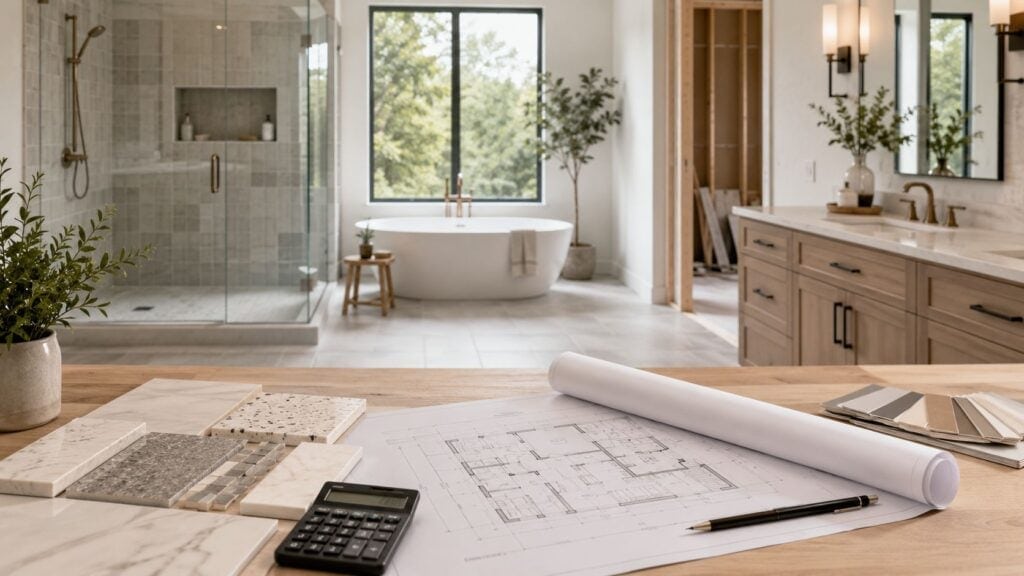
You're probably doing what most South Jersey homeowners do at the start of a bathroom remodel. You've got screenshots saved, a few tile ideas you love, maybe a vanity style picked out, and one big question hanging over everything: what is this going to cost me?
That anxiety is justified. Generic online calculators don't help much because they flatten very different projects into one average. A hall bath in Cherry Hill with a simple vanity swap is not the same job as a full primary bath redesign in Haddonfield with custom tile, waterproofing, and relocated plumbing. If you want a useful bathroom remodel cost breakdown, you need to look at scope, labor, finish level, and local permit reality together.
Table of Contents
- Your Bathroom Remodel Dream vs The Budget Reality
- The Anatomy of a Bathroom Remodel Cost Breakdown
- Sample South Jersey Budgets From Basic to Luxury
- The Hidden Cost Drivers Behind the Quote
- Navigating the Remodel Timeline and Local Permits
- Smart Savings Strategies Without Sacrificing Quality
- How The Cabinet Coach Streamlines Your South Jersey Remodel
- Begin Your Bathroom Transformation with Confidence
Your Bathroom Remodel Dream vs The Budget Reality
Most remodels start with confidence and stall at the first estimate.
A homeowner in Moorestown might say they “just want to freshen things up,” then mention a curbless shower, a floating vanity, heated flooring, niche lighting, and better storage. That's not a refresh. That's a serious remodel. The sooner you separate nice ideas from actual scope, the better your budget decisions get.

That tension between vision and budget isn't your imagination. In 2023, the median expenditure for home renovation projects, including bathroom remodels, reached $24,000, up from $15,000 in 2020, according to the 2024 U.S. Houzz and Home Study summary. Homeowners are spending more because they're taking on deeper projects, choosing better finishes, and expecting more from the space.
The problem with national averages
National numbers are fine for conversation. They're bad for planning.
They don't tell you whether your quote is high because you picked premium tile, because your house needs plumbing updates, or because your scope turned into a gut remodel. They also don't reflect the day-to-day realities of South Jersey homes, where age, layout, and township requirements can swing the project path quickly.
A bathroom budget fails when the homeowner prices the room by appearance instead of by work.
What homeowners in South Jersey actually need
You need a line-item bathroom remodel cost breakdown tied to your house and your goals. Not a vague total.
Start with these questions:
- What stays in place: Vanity location, toilet location, tub or shower footprint.
- What changes behind the wall: Plumbing, electrical, framing, ventilation.
- What changes in plain sight: Tile, cabinetry, countertops, glass, fixtures, paint.
- What the township may require: Permits, inspections, and licensed trade work.
If you get those four buckets clear early, the project gets easier to control. If you skip them, you'll spend half the remodel reacting.
The Anatomy of a Bathroom Remodel Cost Breakdown
A bathroom remodel cost breakdown works like a pie chart. The total number matters, but the slices matter more. If you don't know what each slice covers, every allowance feels random and every upgrade feels harmless until the final number lands.
Why averages mislead homeowners
A standard bathroom remodel in 2026 is projected to range from $6,600 to $18,000, and labor typically accounts for about 20% of the total project budget, based on National Kitchen and Bath Association data cited by NerdWallet. That range is useful as a starting frame, not as a quote.
A South Jersey homeowner should read that figure and immediately ask: what kind of remodel? Cosmetic? Full replacement? Layout change? Guest bath? Primary bath? Fixed layout or moved plumbing? Those answers determine whether you stay near the lower end or move well beyond it.
Where the money usually goes
Here's the practical breakdown I'd want any client to understand before choosing a single faucet.
| Cost Category | Percentage of Total Budget |
|---|---|
| Labor & Project Management | 20% |
| Cabinetry & Countertops | Varies by scope |
| Tile & Flooring | Varies by scope |
| Plumbing & Electrical | Varies by scope |
| Fixtures | Varies by scope |
| Permits, Demolition & Disposal | Varies by scope |
Only labor has a verified standard share here, so I'm not going to make up the rest. But I will tell you where budgets usually get stressed.
Labor and project management
Labor is never just “installation.” It includes demolition, prep, waterproofing, setting tile, plumbing connections, electrical work, finish carpentry, punch work, and the coordination that keeps one trade from undoing another.
If your contractor doesn't explain labor clearly, ask harder questions. You're not buying hours alone. You're buying sequencing, accountability, and reduced mistakes.
Cabinetry and countertops
The vanity wall sets the tone for the room. It also drives decisions about storage, sink placement, mirror size, lighting, and countertop material.
If you're still comparing tops, this guide on countertop cost per square foot is useful because countertop pricing changes fast once you move from basic surfaces to more design-forward options. In bathrooms, small square footage fools people into thinking countertops won't matter much. The fabrication details often matter more than the slab size.
Tile and flooring
Tile is one of the easiest places to overspend without noticing. Bigger format tile, shower niches, accent walls, herringbone layouts, and full-height surrounds all look great. They also add labor pressure.
Practical rule: If you want to save money, simplify tile layout before you downgrade every fixture in the room.
Plumbing, electrical, and fixtures
Function is key. New shower valves, upgraded lighting, GFCI protection, exhaust fan corrections, and fixture swaps are all normal. But once you start moving locations, cost jumps.
Accessibility planning belongs here too. If your remodel includes aging-in-place or mobility needs, reviewing options for bathtubs for handicap access can help you compare safer bathing setups before the design is finalized.
Soft costs homeowners forget
These are the line items people hate because they aren't glamorous:
- Permits: Required for many plumbing, electrical, and structural changes.
- Demolition: Tearing out cleanly still takes skill and disposal planning.
- Waterproofing: Hidden, necessary, and never optional.
- Debris removal: Somebody has to haul the old room away.
Ignore those, and your “budget” isn't a budget. It's wishful thinking.
Sample South Jersey Budgets From Basic to Luxury
The fastest way to understand a bathroom remodel cost breakdown is to compare actual scope levels. Not fantasy numbers. Scope.

In towns like Cherry Hill, Haddon Township, Medford, and Moorestown, I see homeowners underestimate one thing more than anything else: how quickly a few “nice upgrades” move a project into a different tier.
Smart Refresh
Think of this as the disciplined version of “we need this bathroom to feel new.”
A smart refresh usually keeps the layout in place. The vanity stays where it is. The toilet stays where it is. The tub or shower footprint stays put. You may replace visible finishes, improve lighting, swap a vanity, update a mirror, refresh hardware, and repaint.
This tier works best when the room is dated, not broken.
Typical choices in this range include:
- Vanity selection: Stock or straightforward prefab styles
- Surface choices: Simple countertop selections and basic tile
- Wet area approach: Regrout, selective repair, or modest replacement
- Fixture plan: Cleaner, newer plumbing trim without layout changes
Mid-Range Remodel
This is the sweet spot for many South Jersey homeowners. You want the room to function better, look current, and hold up for years.
That usually means replacing the vanity with better storage, installing new flooring, updating the shower or tub area, improving lighting, and creating a more cohesive finish palette. Semi-custom cabinetry starts to make sense here because bathrooms need every inch to work hard.
One upgrade can shift this category fast. A tiled walk-in shower alone can cost between $3,170 and $9,220, based on this bathroom remodel cost guide. That's why two bathrooms of the same size can get very different quotes.
For homeowners thinking about value as well as cost, this look at bathroom remodel return on investment helps frame where mid-range choices often make the most sense.
A good mid-range remodel is not “middle of the road.” It's targeted. You spend on the moves you'll feel every day.
Later in the process, visual walkthroughs can help homeowners compare feature levels more clearly:
Luxury Transformation
Luxury starts when the project stops being mostly replacement and becomes full redesign.
You're looking at custom cabinetry, premium stone tops, designer plumbing trim, frameless glass, dense tile coverage, specialty lighting, upgraded shower systems, and often a different layout. This tier also tends to include more decisions, more lead times, and tighter coordination.
Here's what usually pushes a project into luxury:
- Custom wet area work: Full tile shower builds, benches, niches, specialty drains
- Higher-end materials: Stone, designer hardware, large-format tile, custom millwork
- Expanded scope: Reworking walls, changing plumbing locations, adding premium features
- Detail expectations: Flush transitions, integrated storage, layered lighting, cleaner sightlines
If you want luxury results on a mid-range budget, keep the layout and spend on the surfaces you touch and see most.
The point isn't to avoid luxury. It's to know when you've crossed into it. A lot of homeowners think they're choosing “a few upgrades” when they're really authorizing an entirely different construction category.
The Hidden Cost Drivers Behind the Quote
Tile gets the attention. Labor changes the number.
If you've ever looked at two remodel quotes and wondered why one is dramatically higher, the answer is often buried in what's happening behind the walls and under the floor. This is where many bathroom remodel cost breakdown articles fail. They talk about finishes and skip the work that makes those finishes possible.
Finish upgrades versus mechanical changes
A finish upgrade is straightforward. New vanity in the same location. New mirror. Better faucet. New floor tile. New wall tile in the same shower footprint.
A mechanical change is different. Move the toilet. Shift the shower drain. Change the valve wall. Add recessed lighting where there wasn't proper wiring. Open framing to correct what an older house is doing.
Those aren't cosmetic decisions. They trigger licensed trade work, inspections, coordination, and more repair work after the rough-in is done.
If you're still deciding whether your shower can expand or shift, reviewing typical shower stall dimensions helps clarify whether your design goal fits the room without forcing a more expensive rework.
Why labor jumps fast
The National Kitchen and Bath Association guideline suggests about 20% of the total project cost for labor, but heavy remodels involving plumbing relocations or custom tile can push labor above 50% of the total budget, according to this FastExpert breakdown.
That tracks with what experienced remodelers see every day. A small bathroom can still become a labor-heavy project because labor isn't priced by visual simplicity. It's priced by complexity.
Common labor multipliers include:
- Plumbing relocation: Moving drains and supply lines adds skilled time fast.
- Custom tile work: Niches, benches, patterns, and full-height tile all increase install time.
- Waterproofing demands: Wet areas require disciplined prep, not shortcuts.
- Inspection corrections: If the township flags something, the schedule and labor hours shift.
The room may be small. The work often isn't.
Old-house surprises matter more in South Jersey
A lot of homes across Camden and Burlington County have age-related issues that don't show up until demolition starts. Uneven framing, tired subfloors, questionable previous repairs, hidden moisture, and outdated venting all create scope changes.
That's also why plumbing concerns outside the bathroom can matter. If a remodel exposes bigger drainage issues, understanding the broader cost of sewer line replacement gives homeowners context before they dismiss a plumber's warning as upselling.
The blunt advice is simple. If you want cost control, don't start by asking which faucet to cut. Start by asking which mechanical changes you can avoid.
Navigating the Remodel Timeline and Local Permits
A good bathroom remodel isn't just a design exercise. It's a sequence. And in South Jersey, sequence matters because one delayed product, one missed permit, or one failed inspection can jam the whole calendar.

What the process usually looks like
Most bathroom projects move through the same basic stages, even if the scope differs.
Design consultation
You define priorities. Storage, shower type, vanity size, finish style, and budget boundaries all get clarified here.Material selection
Material selection is the stage where people either keep the project organized or blow it up. Tile, vanity, countertop, plumbing trim, lighting, and hardware should be selected in a coordinated pass, not piecemeal.Permit review and approvals
If plumbing, electrical, or structural work is involved, permit planning needs to happen before demolition.Demolition and rough-in
Old materials come out. Then plumbing, electrical, framing corrections, and substrate prep happen before any finish work starts.Installation
Tile, cabinetry, tops, trim, fixtures, paint, and accessories go in.Final walkthrough
Punch list. Adjustments. Final inspections where required.
For homeowners managing multiple bids or trade conversations, this guide on how to manage contractors is worth reading because coordination mistakes usually cost more than product mistakes.
What South Jersey homeowners should expect with permits
Permits are not red tape for the sake of red tape. They protect you from unsafe work and ugly surprises when you sell the house.
In many South Jersey municipalities, permits commonly come into play when you:
- Alter plumbing lines
- Change electrical wiring or fixture locations
- Modify framing or structural components
- Install work that requires inspections under local code
Camden County and Burlington County townships don't all move at the same pace. Cherry Hill, Voorhees, Haddonfield, Moorestown, and Medford can have different review expectations and inspector preferences. That doesn't mean the job should stop. It means your remodel needs realistic scheduling from the start.
A permit delay is frustrating. An unpermitted bathroom is worse.
Homeowners often want exact calendar promises early. That's understandable, but it's the wrong focus. The better question is whether your team has a process for approvals, selections, lead times, and inspection sequencing. That's what keeps the project moving.
Smart Savings Strategies Without Sacrificing Quality
The cheapest bathroom remodel usually looks cheap. That's not a win.
If you want real savings, control scope first. Materials matter, but the biggest cost swings usually come from what you ask the trades to do. Angi reports most bathroom remodels at $70 to $250 per square foot, and notes that fixed-cost items like demolition and waterproofing make smaller bathrooms more expensive per square foot, as explained in this cost analysis from Angi. That's why obsessing over a faucet price while changing the entire layout is backwards.
Savings that actually work
These are the moves I recommend most often:
- Keep the plumbing where it is: Same toilet location. Same vanity wall. Same shower drain if possible. This is the strongest cost-control move in bathroom remodeling.
- Use porcelain strategically: If you love marble looks but not marble upkeep, quality porcelain can get you close visually with a more practical ownership experience.
- Limit tile complexity: Clean field tile with one focused accent usually beats three competing tile ideas and a bloated labor bill.
- Choose one hero feature: Pick the shower, vanity, or countertop as the star. Not all three.
Where not to cut corners
Some savings are fake savings.
Don't cheap out on waterproofing, ventilation corrections, or installation quality. Don't buy bargain fixtures that are hard to service later. Don't mix a premium vanity with weak prep work behind the walls and expect a premium result.
A smarter budget usually looks like this:
- Spend on function: Storage, layout discipline, durable surfaces.
- Spend on what gets touched daily: Faucets, drawer hardware, lighting, shower controls.
- Save on trend chasing: Too many special finishes, too many statement materials, too many decorative add-ons.
The best remodels feel calm because the choices were edited. Not because the homeowner bought the most expensive thing in every category.
How The Cabinet Coach Streamlines Your South Jersey Remodel
Most bathroom remodel stress comes from three points of failure. Too many product choices. No clear budget alignment. Weak coordination once the job starts.
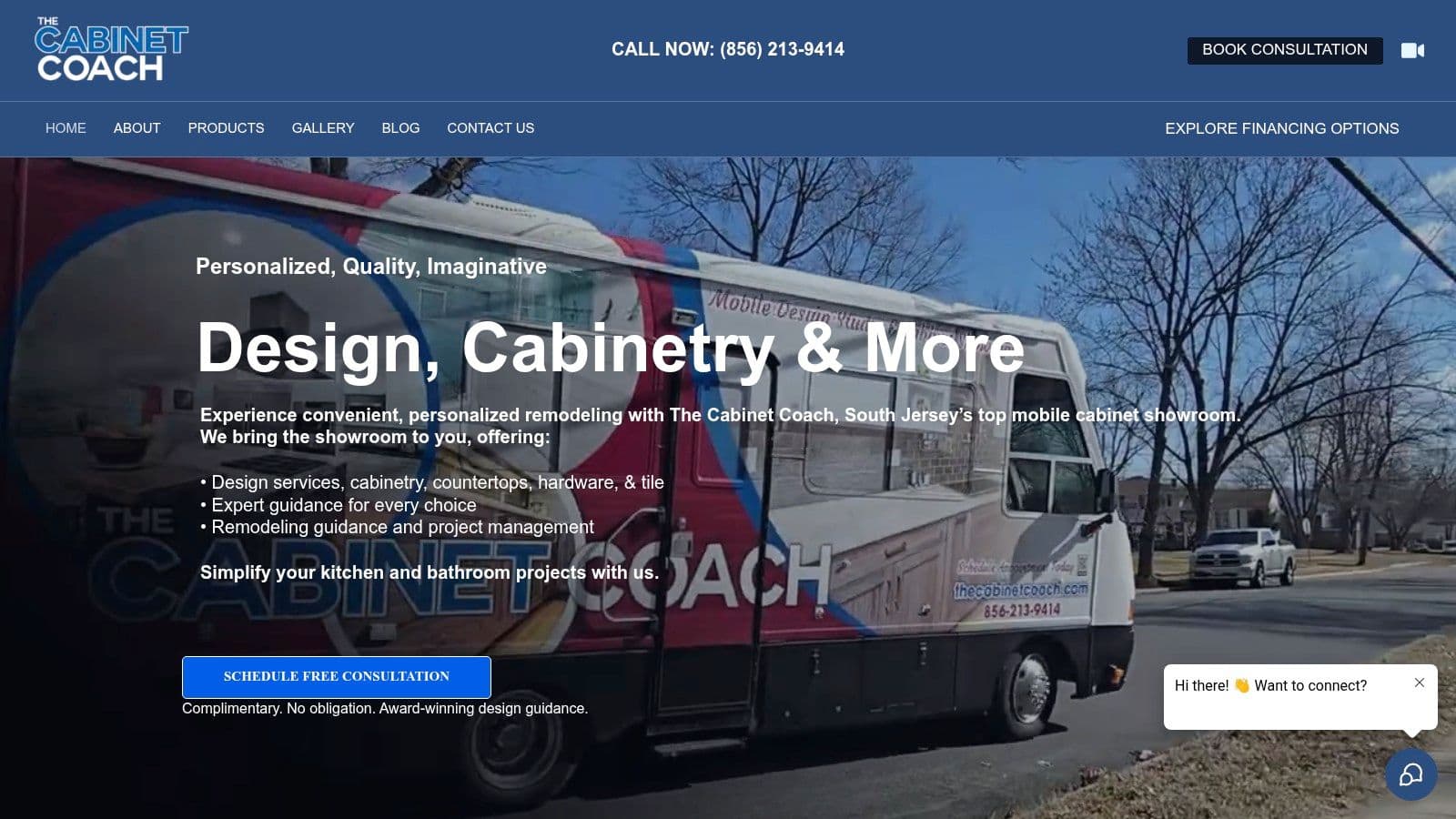
That's why a mobile showroom model makes sense for busy South Jersey homeowners. Instead of bouncing between showrooms, screenshots, and sample boards that never quite match your room, the process comes to your house where the lighting, proportions, and existing conditions are real.
Why the mobile showroom matters
Seeing cabinetry, countertop, hardware, and tile options in your own space cuts out a lot of bad decisions. It helps homeowners compare finish combinations faster and keeps the design grounded in what fits the house.
You can learn more about that approach through The Cabinet Coach experience, especially if you want a guided process instead of a patchwork one.
Why project management changes the outcome
Good design is only half the job. Somebody still has to keep selections organized, align scope with budget, coordinate trade sequencing, and prevent the usual remodel drift.
That's the difference between a project that feels controlled and one that feels like a string of expensive surprises. In a room as compact and detail-heavy as a bathroom, that coordination isn't a luxury. It's the reason the final result looks intentional.
Homeowners don't need more options. They need better decisions in the right order.
Begin Your Bathroom Transformation with Confidence
A solid bathroom remodel cost breakdown isn't one number on a quote. It's a clear understanding of what you're changing, what stays put, what requires skilled labor, and where your material choices affect the total.
That's the part most homeowners miss. They focus on visible products first and construction scope second. The smarter approach is the reverse. Get the scope right, respect the labor, then choose finishes that fit the plan.
If you're remodeling in Cherry Hill, Haddonfield, Moorestown, Voorhees, Medford, or anywhere nearby, the winning formula is simple. Keep the layout when you can. Spend where function and durability matter. Don't underbudget the boring parts. Those “boring” parts are what keep the room performing years from now.
When the process is organized, the budget gets clearer. When the budget gets clearer, the decisions get easier.
If you want help turning ideas into a realistic plan, The Cabinet Coach offers South Jersey homeowners a more practical way to approach bathroom remodeling, with in-home product selection, design guidance, and project management that keeps the budget tied to the actual scope of work.