
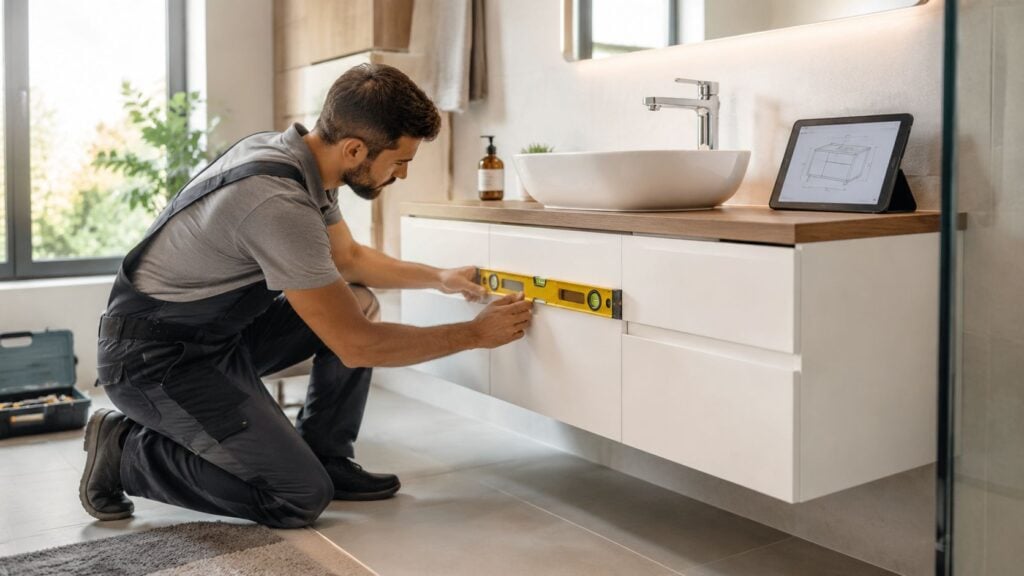
Professional labor for a bathroom vanity installation typically runs $200 to $1,000, and the full installed cost averages about $1,500, with projects ranging from $300 to $4,000 depending on the scope. If you're looking at your bathroom and hoping this will be a quick vanity swap, that's possible, but only when the new unit fits the room, the plumbing lines up, and the finish work stays simple.
That's where many homeowners get stuck. The old vanity looks tired, storage is poor, the countertop has seen better days, and the room feels overdue for an upgrade. Then the questions start. Will the new vanity fit? What if the drain is off-center? Do you choose the cabinet first, the top first, or the faucet first? In older South Jersey homes, those questions matter because vanity replacement often turns into a small remodeling project with real coordination behind it.
A smooth result comes from treating the vanity as part of the bathroom, not as a box to slide into place. That means checking layout, confirming plumbing locations, planning around wall and floor conditions, and making sure the cabinet, countertop, sink, hardware, and finishes all work together. If you're also trying to make a compact room feel larger, these clever small bathroom design tricks can help you think beyond the vanity footprint itself. It also helps to look at practical sizing and style options before you buy, especially if you're comparing bathroom vanity ideas and configurations.
Table of Contents
- Your Guide to a Flawless Bathroom Vanity Upgrade
- What Professional Vanity Installation Services Include
- The Professional Installation Process Step by Step
- Understanding Vanity Installation Timelines and Costs
- Navigating Permits Trades and Project Coordination
- Why South Jersey Homeowners Choose The Cabinet Coach
- Frequently Asked Questions About Vanity Installation
Your Guide to a Flawless Bathroom Vanity Upgrade
A bathroom vanity upgrade sounds simple until you start matching the new cabinet to the old room. Homeowners usually begin with the visible problem. Worn doors, poor storage, dated color, or a top that no longer looks clean no matter how much you scrub it. The hidden problems tend to surface later, when the back of the cabinet hits a pipe, the wall bows, or the floor drops out of level.
That's the difference between buying a vanity and planning an installation. A clean result depends on how the cabinet meets the plumbing, how the top meets the wall, and how the whole assembly works with lighting, mirror height, faucet reach, and storage needs. If one part is off, the room can look patched together even when every individual product is attractive.
Practical rule: The right vanity is the one that fits your room conditions and your daily routine, not just the one that looks good in a product photo.
In real projects, the best decisions happen before anything gets ordered. Measure first. Confirm rough-in locations. Check door swing and drawer clearance. Think about who uses the bathroom and what ends up on the countertop every day. When those basics are handled early, the installation goes from stressful to predictable.
What Professional Vanity Installation Services Include
Some homeowners call for bathroom vanity installation services expecting a simple remove-and-replace job. Others need design help, custom sizing, countertop coordination, plumbing updates, and finish decisions. Those are very different scopes, and it helps to separate them before you request estimates.
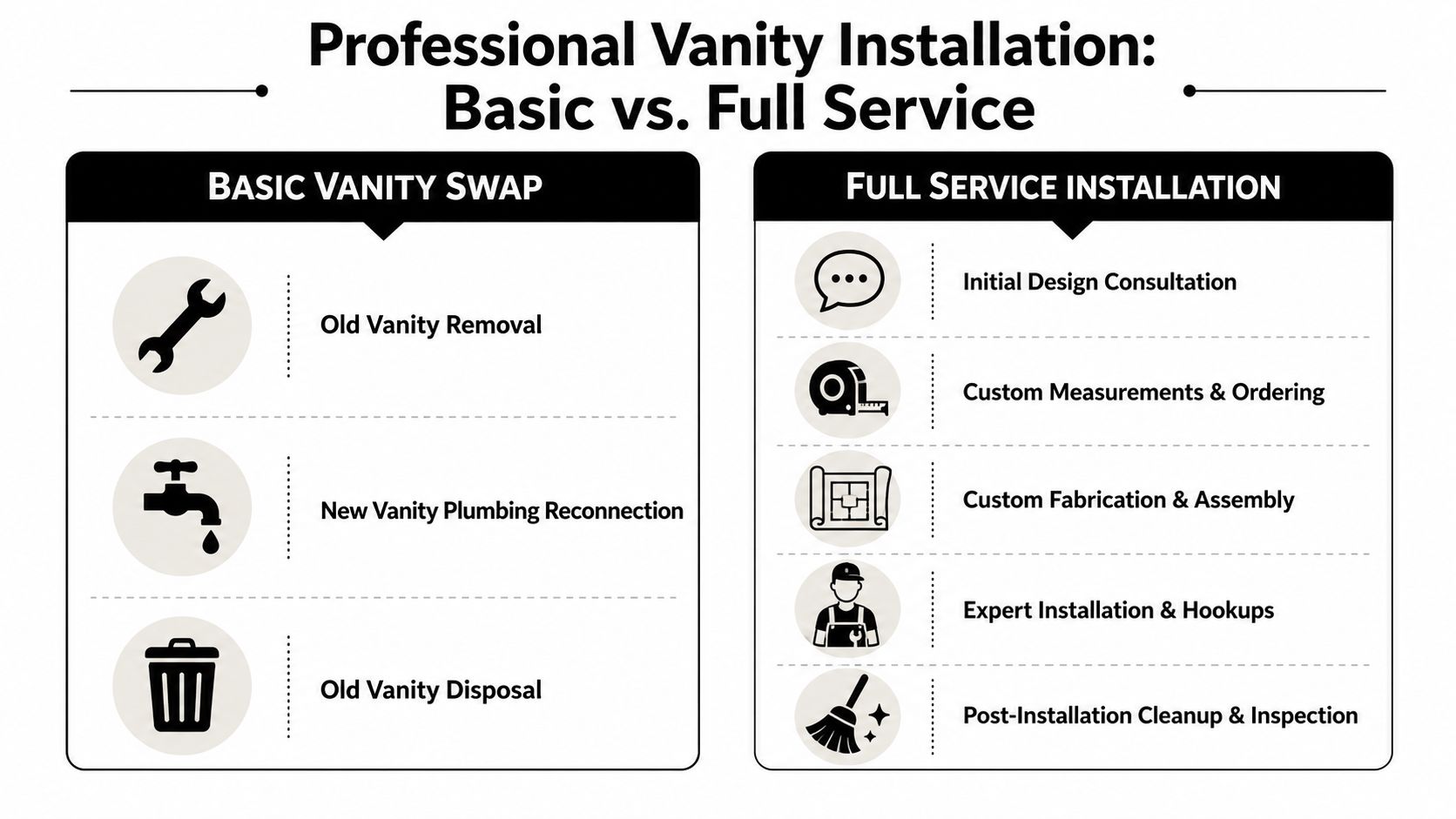
Basic swap versus managed installation
| Service level | What you get | Where it works well | Where it often breaks down |
|---|---|---|---|
| Basic vanity swap | Old vanity removal, new vanity set in place, plumbing reconnected if existing lines align, debris hauled away | A prefab vanity replacing a similar-size unit in a newer bathroom | Off-center drains, uneven floors, damaged walls, top and backsplash gaps, custom-fit needs |
| Comprehensive installation service | Consultation, field measurements, product selection, cabinet and countertop coordination, fixture planning, installation, hookups, finish work, final review | Older homes, upgraded finishes, changed layout priorities, custom sizing | Rarely the issue is too much planning. The issue is usually too little |
A basic swap can be the right answer if the new vanity closely matches the old footprint and the plumbing lands where the cabinet expects it. That kind of job is narrow. Remove, set, reconnect, test, clean up.
A complete service handles the room as a system. That can include cabinet sizing, countertop fabrication, sink and faucet selection, mirror and light alignment, and scheduling the right trades in the right order. If you're comparing full-scope renovation help, it's worth reviewing what bathroom renovation contractors near you should coordinate.
What homeowners usually need in real life
Most bathrooms fall somewhere in the middle. The homeowner may already have a vanity picked out, but still needs answers to questions like these:
- Will the new sink location work: A drawer bank can conflict with the drain or trap assembly if the cabinet interior wasn't planned around the rough-in.
- Will the wall accept the top cleanly: If the wall isn't straight, the backsplash joint can look uneven without careful fitting and sealant work.
- Does the floor support a level install: A cabinet that rocks or twists creates trouble for drawers, countertop seams, and plumbing connections.
- Are the finishes coordinated: A vanity door style can clash with the mirror, light fixture, and tile if those decisions happen in isolation.
A vanity install goes better when one person is paying attention to fit, function, and sequence, not just whether the cabinet can be carried through the door.
That's why the strongest service model isn't just installation labor. It's guided selection, technical verification, and trade coordination wrapped into one process.
The Professional Installation Process Step by Step
The actual install is only one part of the job. Good bathroom vanity installation services start before demo day, when measurements, finish choices, and rough-in conditions are still easy to adjust on paper.
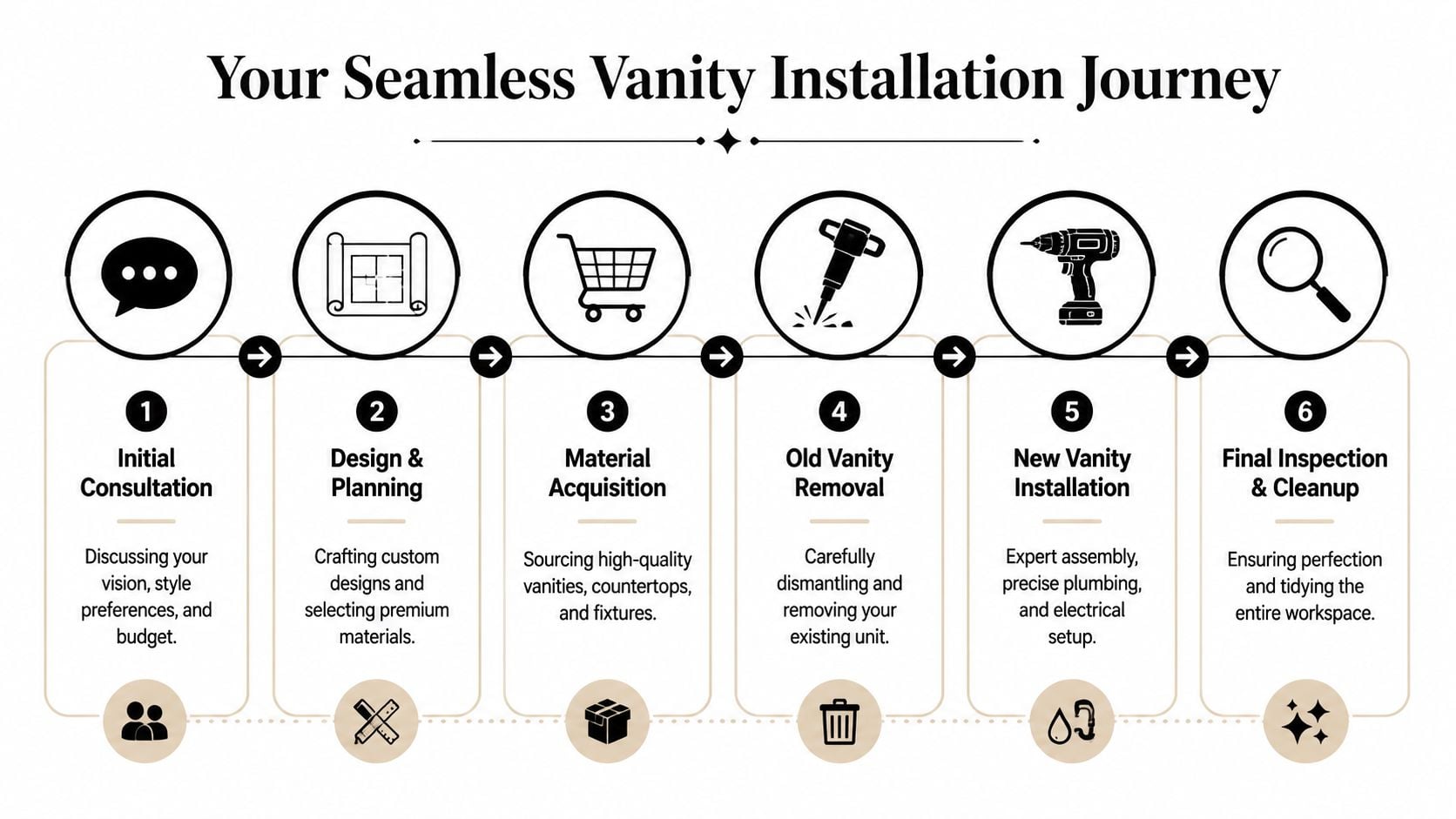
Before installation day
The first step is a real discovery conversation. Not just, “What size vanity do you want?” but, “Who uses this bathroom, what storage is missing, what bothers you now, and what else in the room needs to align with the vanity?” In many homes, that discussion changes the product choice right away.
Then comes site verification. Installers confirm width, depth, plumbing locations, wall condition, floor level, and clearance around the toilet, shower door, and entry door. If you're planning a larger cabinet or a shared setup, reviewing double vanity sizing considerations helps avoid crowding the room.
A careful pre-install review also prevents expensive ordering mistakes. A vanity that looks perfect online can still fail in the field if the drawers hit the trap arm or the countertop overhang blocks movement around the room.
What happens on installation day
Demo starts with shutting off water, disconnecting supply lines, removing the P-trap, and taking out the old vanity without damaging the surrounding tile or wall finish more than necessary. After that, the wall and floor get another hard look because existing conditions often reveal themselves only after the cabinet is gone.
The technical setup matters here. Professional installers locate studs, level the base with shims, and fasten the vanity to wall framing with 3-inch screws. They also pre-mark drain and supply locations before cutting openings so the cabinet aligns with existing rough-ins, which reduces plumbing stress and leak risk, as shown in Home Depot's installation guidance on how to install a bathroom vanity.
If the vanity isn't level before the top goes on, the rest of the job is already fighting uphill.
That's why experienced installers spend time on shimming and alignment instead of rushing to hook up the faucet. A crooked base can telegraph into drawer gaps, countertop seams, and drain connections.
Here's a helpful visual walkthrough of the process in action:
Final connections and walkthrough
Once the vanity and top are set, the sink, faucet, supply lines, and trap are connected. This is also where finish quality shows. Clean penetrations, accessible shutoffs, and sensible alignment under the sink all matter later when service is needed.
Installers then apply a thin, even bead of silicone where the countertop meets the wall or backsplash. That seal keeps moisture from slipping behind the cabinet and causing long-term swelling or finish damage. After that, every joint gets checked for drips before the bathroom goes back into use.
A proper closeout includes:
- Hardware check for doors, drawers, and pulls.
- Leak test at all plumbing joints and supply connections.
- Caulk inspection along the wall line and backsplash edge.
- Cleanup inside the cabinet, around the floor, and on the countertop.
- Walkthrough so the homeowner sees what was done and what to watch during the first days of use.
Understanding Vanity Installation Timelines and Costs
Costs move fast on vanity projects because the cabinet itself is only one part of the bill. Labor, plumbing alignment, countertop handling, and the amount of corrective work behind the wall or under the cabinet can change the number quickly.

According to Angi, professional labor for vanity installation usually runs $200 to $1,000, or about $45 to $200 per hour, and the full installed cost averages around $1,500 with an overall range of $300 to $4,000. Angi also notes that the work generally takes three to six hours, although that can stretch when supply lines need to move or custom components are involved, as outlined in this Angi guide to bathroom vanity installation labor costs.
What affects price most
The biggest cost drivers are usually scope and fit, not just product grade.
- Prefab versus custom: A stock vanity can reduce fabrication complexity. A custom cabinet often solves awkward dimensions better, but it adds planning and build coordination.
- Plumbing changes: If the new sink or drawer layout conflicts with the old rough-in, labor rises because the install is no longer a straightforward reconnect.
- Top and sink choices: Integrated tops simplify some installs. Separate tops, vessel sinks, or specialty edges can add handling and fitting demands.
- Finish repair: Patchwork around wall gaps, old flooring lines, or backsplash transitions can turn a short install into a broader punch-list project.
One useful way to think about budgeting is return, not just price. If this vanity upgrade is part of a larger bathroom refresh, a broader view of bathroom remodel return on investment can help you prioritize where to spend and where to keep things simple.
How to think about timing
A homeowner hears “three to six hours” and often assumes the whole decision-to-completion timeline is that short. The installation window may be short. The project timeline usually isn't.
Ordering, verifying measurements, coordinating the top, confirming fixtures, and scheduling trades often take longer than the cabinet set itself. That's normal. What matters is whether the work is sequenced well so you don't end up with a vanity installed before the mirror height is settled or the light fixture location is confirmed.
Navigating Permits Trades and Project Coordination
The vanity may be the visible centerpiece, but the hard part is often everything around it. Once a project includes plumbing moves, electrical changes, wall repair, tile touch-up, or countertop templating, the job stops being a simple fixture replacement and starts acting like a compact renovation.
Why a simple swap often is not simple
One of the most underexplained parts of vanity work is compatibility. A new cabinet can arrive exactly as ordered and still not fit the room cleanly. Misaligned plumbing, uneven floors, out-of-plumb walls, and backsplash gaps are common field issues. That hidden adjustment work is a major reason homeowners feel surprised by scope, as highlighted in this video discussion of bathroom vanity installation challenges.
In older South Jersey homes, those issues show up often. Floor settling can throw a vanity off level. Previous repairs can leave walls wavy. Plumbing may sit too high, too low, or too far to one side for the cabinet interior. None of that means the project is in trouble. It means someone needs to identify and manage it before the finish materials are committed.
The stress usually doesn't come from one big problem. It comes from five small problems discovered out of sequence.
If you've been researching renovation logistics more broadly, even a market-specific resource like this guide for Sydney homeowners on renovations is a useful reminder that plumbing work, sequencing, and approvals matter long before the final fixture goes in.
Where project management saves headaches
Permits depend on the scope and the local municipality. If the work stays within a direct replacement, permit needs may be limited. If plumbing or electrical is being altered, homeowners should expect a more formal process and should confirm requirements before work begins.
Trade coordination is where many small jobs go sideways. The plumber can't finish until the vanity is set correctly. The vanity can't always be finalized until the top is ready. Wall repair may need to happen before backsplash caulk looks right. If the electrician is involved for vanity lighting, that work needs to be synchronized with mirror height and cabinet placement.
A lot of homeowners try to juggle this themselves. Some do it well. Many would rather hand the schedule, troubleshooting, and communication to one person. If that sounds familiar, practical advice on how to manage contractors can help you see where the friction points usually occur.
Why South Jersey Homeowners Choose The Cabinet Coach
A homeowner orders a vanity online, books a plumber, and assumes the job will take an afternoon. Then the cabinet arrives half an inch deeper than expected, the drain lands behind a drawer bank, the countertop template has to be pushed back, and the bathroom stays torn up longer than anyone planned. That gap between a simple vanity swap and a coordinated project is where many jobs get expensive and frustrating.
The broader remodeling market has shifted toward coordinated service instead of isolated labor, as noted in Luxe C.S. reporting on bathroom remodeling coordination. That preference is easy to understand in South Jersey homes, where older framing, patched walls, and previous remodel work can turn a straightforward replacement into a small chain of decisions that needs one person overseeing it.

Homeowners often choose The Cabinet Coach because the service covers more than setting a cabinet in place. The process combines in-home selection help, field measurements, finish review, and coordination around the parts of the job that tend to create delays. That matters when the vanity choice affects countertop fabrication, faucet spread, mirror width, storage layout, and how the room looks once the work is done.
A good installer should be able to answer a few practical questions without hesitation:
- Who confirms final field measurements before anything is ordered: That answer defines who is responsible if the vanity, top, or filler plan is off.
- Who owns coordination with the countertop fabricator, plumber, and electrician: If that role is unclear, the homeowner usually ends up managing calls, schedule changes, and problem-solving.
- How are out-of-level floors, out-of-plumb walls, and rough-in conflicts handled: Experienced installers should be comfortable explaining shimming, scribing, trim decisions, and when plumbing changes are the better fix.
- Can materials and finishes be reviewed in the room itself: Paint color, countertop pattern, and hardware finish can look very different under the bathroom's actual lighting.
That kind of review is especially helpful in older South Jersey homes.
A plan that works in a newer hall bath can fall apart in a Haddonfield colonial or a Cherry Hill ranch that has been updated in stages over the years. Existing tile may not be perfectly square. Wall surfaces may show old vanity lines after removal. Plumbing may sit too high, too low, or too far off center for the drawer configuration the homeowner wants. Those are not unusual problems. They just need to be identified before materials are locked in.
Homeowners in Cherry Hill, Haddonfield, Voorhees, Collingswood, and Haddon Township often ask for help because the room has history. In Moorestown, Medford, Mount Laurel, Maple Shade, and Cinnaminson, the challenge is often balancing a cleaner, updated look with storage needs and a layout that still makes sense for daily use.
That is why many homeowners ask a bigger question than "Can you install this vanity?" They want to know who will help choose the right cabinet, verify that it fits the room, catch likely conflicts early, and keep the job organized from selection through installation. That is the difference between hiring labor for a swap and hiring guidance for a project.
Frequently Asked Questions About Vanity Installation
Can I buy my own vanity and hire someone just to install it
Yes, but it works best when the installer reviews the specifications before you purchase. The biggest risks are depth, plumbing interference, drawer layout conflicts, and top compatibility. A vanity can be beautiful and still be wrong for the room.
What happens to the old vanity and debris
In many projects, removal and disposal are part of the installation scope. It's worth confirming that upfront, along with whether the price includes haul-away of the old cabinet, top, sink, and packaging from the new materials.
How should I prepare the bathroom before the crew arrives
Clear personal items from the vanity, medicine cabinet, and floor area. Remove fragile décor, empty the area under the sink, and make sure there's a path from the entry door to the bathroom. If the bathroom is the main one in the house, ask how long the sink and water will be unavailable.
Should I replace the vanity only, or update other finishes at the same time
That depends on what's driving the project. If the cabinet is the only problem, a focused replacement may be enough. If the mirror, light, countertop, and storage all feel dated or disconnected, it's usually more efficient to coordinate those decisions together so the finished room looks intentional.
What's the biggest mistake homeowners make
Ordering first and measuring second. The next most common mistake is assuming an old vanity can come out and a new one can go in with no adjustments. Bathrooms rarely cooperate that neatly.
If you're planning a vanity upgrade in South Jersey and want help sorting out fit, finish choices, and the moving parts behind installation day, The Cabinet Coach is a practical place to start. A guided consultation can help you decide whether your project is a true swap or a more coordinated bathroom update, so you can move forward with fewer surprises.