
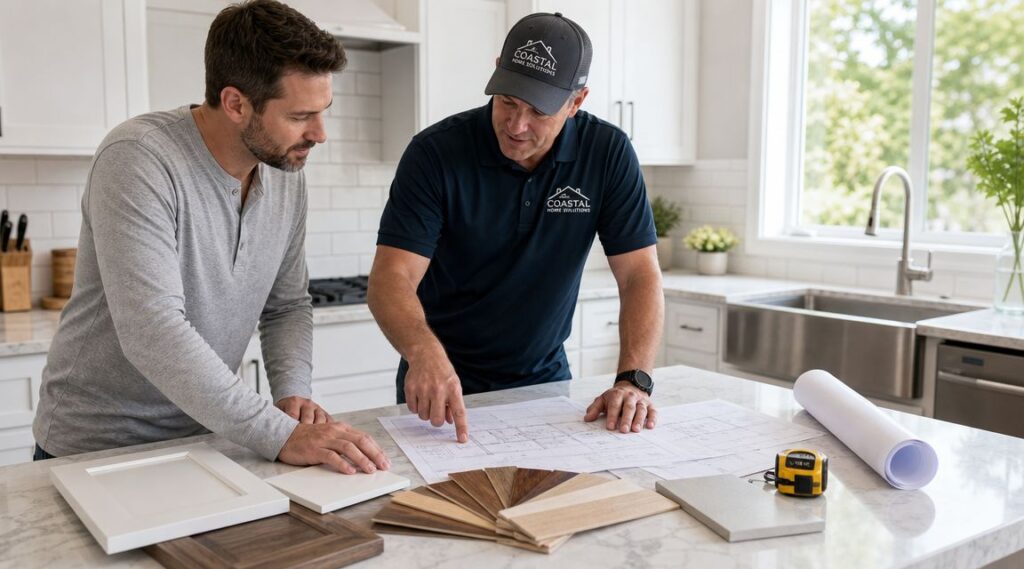
You're probably staring at a kitchen that still functions, but only if everyone in the house agrees not to use it at the same time. The cabinets are tired, the layout wastes steps, and the lighting makes everything look dull by late afternoon. You want a better kitchen, but the minute you start searching for kitchen remodeling contractors in New Jersey, the process gets noisy fast. Every company sounds polished. Every gallery looks good. Then the worry starts. Who knows South Jersey permits, who can manage cabinets and trades in the right order, and who's going to keep the job from dragging on?
That concern is reasonable. New Jersey has a big remodeling market, which means homeowners have plenty of options and plenty of variation in how contractors plan, price, and run jobs. IBISWorld projects the state's remodeling industry at $4.7 billion in 2026, with 21,783 businesses operating in the sector, and says the number of businesses grew at an average annual rate of 2.5% from 2021 to 2026 in its New Jersey remodeling industry outlook. A crowded market gives you choice. It also means you need a sharper filter.
A kitchen remodel in Cherry Hill, Haddonfield, Voorhees, Moorestown, or Medford isn't just a style project. It's a sequencing project. Cabinets affect plumbing. Lighting affects wall work. Appliance selections affect electrical planning. Township permits affect schedule. If those pieces don't line up early, the job gets expensive and frustrating in a hurry.
This guide is built for that reality. It's practical, local, and focused on what helps homeowners make good decisions before demolition starts.
Table of Contents
- Starting Your South Jersey Kitchen Remodel Journey
- Setting a Realistic Budget and Timeline in New Jersey
- Understanding Local NJ Permits for Your Kitchen Project
- How to Find and Thoroughly Vet Your Contractor
- Interview Questions and Key Contract Clauses
- How a Mobile Showroom Simplifies Your Remodel
Starting Your South Jersey Kitchen Remodel Journey
A lot of South Jersey kitchen projects start the same way. A homeowner says they want “new cabinets,” but after a short conversation, the underlying problems come out. The fridge door blocks the walkway. The sink isn't where it should be. The island they want won't work unless traffic flow changes. Someone wants better task lighting, but there's no plan for new switching or wiring.
That's why a smart remodel starts before anyone talks about door styles or paint colors.

What South Jersey homeowners usually wrestle with first
In Camden and Burlington County homes, especially older ones, kitchens often carry layers of past decisions. A previous owner may have added flooring without leveling transitions, replaced cabinets without fixing the layout, or updated surfaces while leaving electrical capacity untouched. What looks like a straightforward refresh can turn into a coordination job.
The most useful first step is to separate wish list items from layout problems. Those aren't the same thing.
- Wish list items might include shaker cabinets, quartz countertops, a tile backsplash, or under-cabinet lighting.
- Layout problems are things like tight clearances, poor prep space, appliance doors colliding, or a sink and dishwasher location that fights daily use.
- House-specific issues include out-of-square walls, older wiring, uneven floors, and township review requirements.
If you want a practical place to organize those thoughts before meeting anyone, this kitchen remodel planning guide is a useful starting point.
Practical rule: If you can't clearly explain what isn't working in the current kitchen, you're not ready to compare contractors yet.
What works and what usually doesn't
What works is beginning with field conditions and real use. How many people cook at once? Do kids unload dishes? Are you adding storage or fixing workflow? A contractor who starts by measuring, asking how you live, and checking constraints is usually thinking the right way.
What doesn't work is hiring from photos alone. A beautiful online gallery doesn't tell you whether that contractor builds accurate scopes, plans utility moves correctly, or manages township paperwork well.
A South Jersey kitchen remodel gets easier once you treat it like a local construction project, not a generic makeover. The right contractor isn't just selling style. They're solving for sequence, supervision, and the details that keep the project moving.
Setting a Realistic Budget and Timeline in New Jersey
A South Jersey kitchen budget usually gets in trouble before demo starts. The pattern is familiar. A homeowner prices cabinets and counters, then gets surprised by electrical updates, plumbing moves, floor repair, permit-related delays, and the labor it takes to make an older house square enough for new work.
That gap is common in Camden and Burlington County homes, especially where kitchens have been updated in layers over the years. On paper, the job looks straightforward. On site, the walls are out of square, the floor dips near an exterior wall, the panel has limited space for added circuits, or the sink move that seemed minor pulls in more plumbing work than expected.
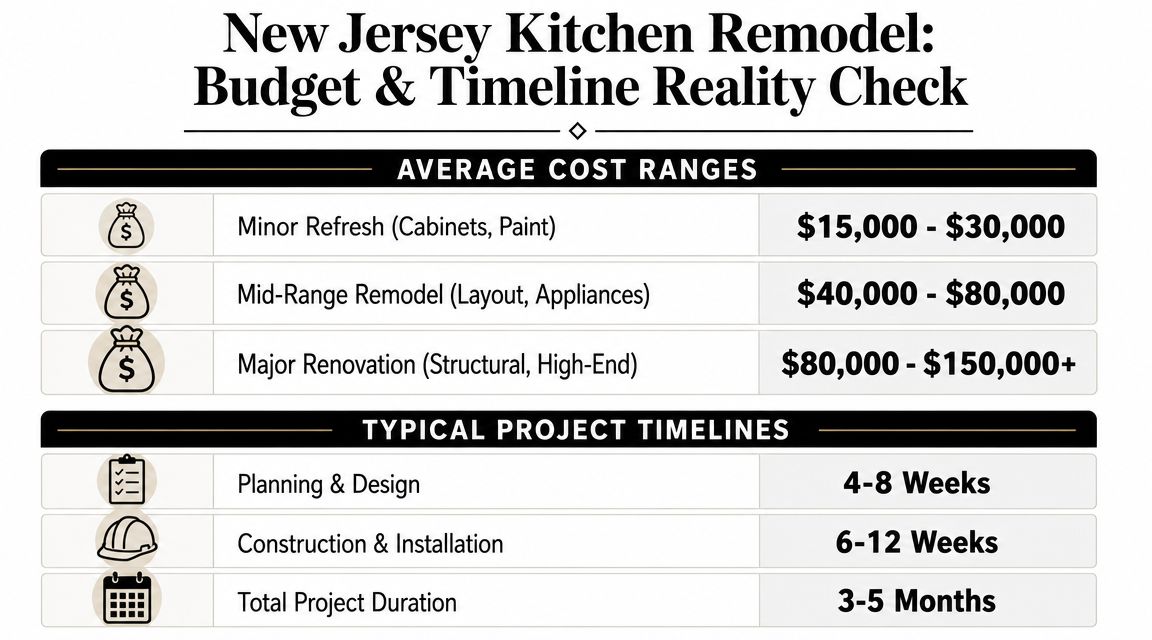
Remodeling Magazine's Cost vs. Value report regularly places major kitchen remodels in the Northeast well above what homeowners see in generic national articles, which is one reason broad online averages can mislead people in New Jersey. The local market carries higher labor and overhead costs, and kitchens stack multiple trades into a tight schedule.
Where the budget usually changes
Cabinetry drives more than style. It affects layout, storage, trim details, countertop templating, appliance clearances, and how much correction work the installer has to do in an older room.
Labor is the other big mover. A kitchen is one of the most trade-heavy rooms in the house, and even a fairly standard project can involve demolition, carpentry, electrical, plumbing, cabinetry, countertops, tile, paint, and finish punch work. If the scope includes moving a sink, adding recessed lighting, changing appliance locations, or correcting subfloor issues, the budget moves fast.
A practical early estimate starts by separating the job into parts.
| Budget area | What usually drives cost |
|---|---|
| Cabinetry | Stock, semi-custom, or custom sizing, organizers, trim, filler work |
| Countertops | Material, cutouts, edge profile, seam placement, install difficulty |
| Electrical | New circuits, service capacity, lighting plan, outlet relocation |
| Plumbing | Fixture upgrades, drain or supply relocation, shutoff updates |
| Finish work | Backsplash, flooring transitions, patching, paint, trim corrections |
If you want a clearer way to scope those categories before signing anything, this kitchen remodeling cost breakdown lays out the cost buckets in plain terms.
Keep a contingency line. In South Jersey's older housing stock, hidden conditions are not rare. They are part of the job.
How to set a timeline that matches the work
Homeowners usually want one clean start date and one clean finish date. Real kitchen schedules do not work that way.
A workable timeline has three parts. First comes planning and selections. Then materials are ordered and township review runs in the background if the job involves permit-triggering work. After that, field work starts, and several steps cannot happen until the previous trade is fully done. Countertops are a good example. Fabricators usually template after base cabinets are set and level, not when the contract is signed.
For a full kitchen remodel in this market, plan in phases instead of assuming a single uninterrupted sprint:
- Planning and selections: layout, cabinets, appliances, lighting, plumbing fixtures, finish choices
- Ordering and approvals: cabinet lead times, appliance availability, permit processing where required
- Construction: demolition, rough work, inspections where applicable, drywall repair, cabinet install, template, countertop install, backsplash, finish trim, punch list
The jobs that stay on track usually have decisions locked before demolition. The jobs that drift are the ones where appliance specs are still changing, the cabinet order is not fully approved, or no one has confirmed whether the existing electrical and plumbing can support the new plan.
If the cabinet layout is approved but appliance specs, lighting locations, and faucet or sink sizes are still unsettled, the schedule is still soft.
What keeps the project under control
Set priorities early. If cabinetry and layout matter more than premium backsplash tile, protect money for the cabinets first.
Price utility moves before finish upgrades. A pot filler, island sink, relocated range, or added lighting looks simple on a mood board and costs real money in the field.
Ask for exclusions in writing. Haul-away, minor drywall repair, trim extension, paint touch-up, appliance hookups, and permit fees are common gray areas if the scope is vague.
Do not remove the old kitchen until ordered materials and key measurements are confirmed. Waiting a little longer before demo is usually cheaper than living with a torn-apart kitchen while cabinets or appliances are still floating in the supply chain.
A realistic New Jersey kitchen budget is less about chasing one magic number and more about controlling decisions, sequence, and scope before the work starts.
Understanding Local NJ Permits for Your Kitchen Project
The permit question trips up a lot of homeowners because they hear broad advice like “you might need one” without anyone explaining what triggers review. In South Jersey, permit handling matters because township expectations can vary in process even when the underlying categories are familiar.
For New Jersey kitchen remodels, permits are typically required for building, electrical, and plumbing changes, and the hardest projects are the ones where cabinetry layout, utility rerouting, and finish selections aren't coordinated early, as noted in this New Jersey kitchen remodeling permit overview.
Cosmetic work versus permit-triggering work
Purely cosmetic changes are usually the least complicated. Swapping cabinet hardware, painting walls, replacing backsplash tile in kind, or installing new finishes without altering systems is one category. Once you start changing how the kitchen functions, permit conversations usually follow.
Common examples that often trigger review include:
- Building-related changes such as removing or altering a wall, changing openings, or modifying framing to support a new layout
- Electrical changes like adding dedicated appliance circuits, relocating outlets, changing lighting plans, or adding under-cabinet lighting tied into new wiring
- Plumbing changes such as moving a sink, relocating a dishwasher line, or rerouting supply and drain lines for an island or new cabinet run
In towns like Cherry Hill, Haddonfield, Voorhees, Moorestown, and Medford, the exact paperwork path can feel different from one municipal office to another. That's why the right question for a contractor isn't “Do permits matter?” It's “Which parts of my kitchen plan trigger which permits, and who is coordinating that paperwork?”
The coordination problem most homeowners don't see
Cabinets aren't just millwork. They establish locations for sink bases, appliance openings, venting paths, filler needs, countertop seams, and outlet placement. If a homeowner picks cabinetry first without locking utility changes, or starts utility planning before cabinet details are settled, rework becomes likely.
A simple way to pressure-test the plan is to ask your contractor these three things before permits are submitted:
- What exact layout is being permitted
- Which utility locations are changing
- Which finish selections must be finalized early to avoid field changes
The permit issue usually isn't the permit itself. It's whether the layout and trade plan were clear before the application went in.
What good permit planning looks like
A disciplined contractor will tie permits to the working layout, not to rough ideas from an early conversation. They'll also identify owner selections that affect the rough phase, especially appliances, sink placement, hood requirements, and lighting.
If a contractor shrugs off permit detail or says they'll “figure it out during the job,” that's a warning sign. In South Jersey kitchens, vague early planning often turns into change orders, inspection rescheduling, and cabinets waiting on trades that should have been scheduled correctly the first time.
How to Find and Thoroughly Vet Your Contractor
Finding kitchen remodeling contractors in New Jersey isn't hard. Narrowing that list to people who can run your project well is the true challenge.
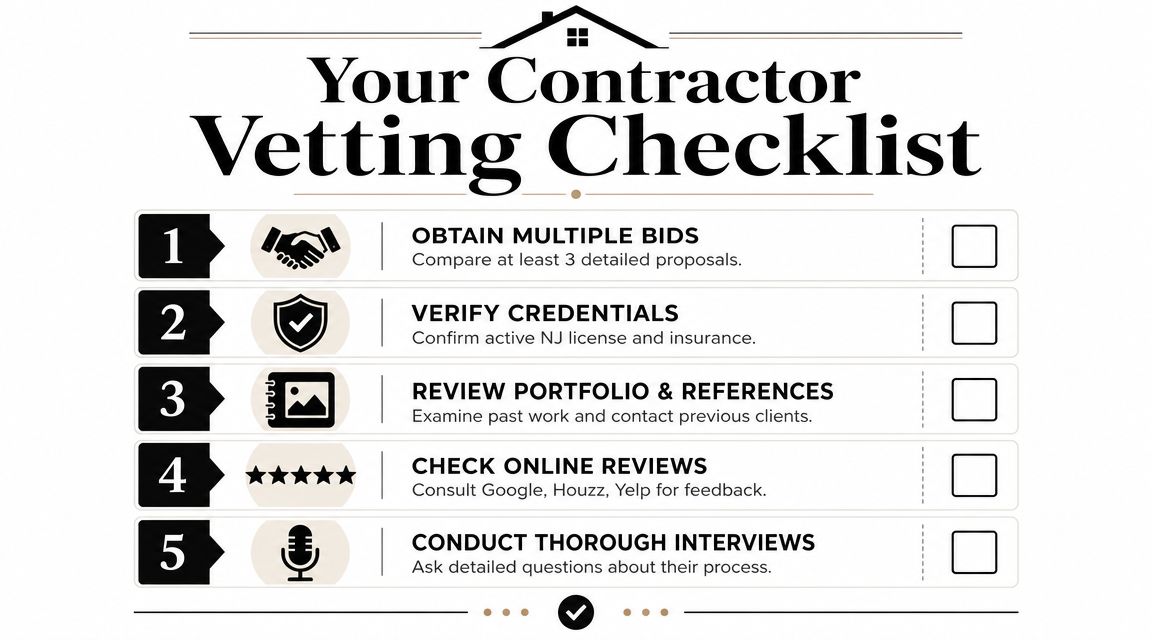
Industry guidance for New Jersey homeowners recommends vetting at least 3 to 5 local contractors before selecting one, which is a practical benchmark for comparing scope coverage, communication style, and pricing assumptions, according to this contractor selection guide for NJ homeowners.
Start with local relevance, not broad search results
A contractor can have strong reviews and still be a poor fit for your kitchen if their main work is elsewhere or if they don't regularly manage projects in Camden or Burlington County. Local familiarity matters when permit offices, trade partners, and project expectations vary by municipality.
That's also why online visibility can be misleading. Companies that win remodeling jobs with local SEO often appear first because they've built strong location signals, not necessarily because they're the best operational fit for your specific job. Search results are a starting point. They aren't a decision.
A better shortlist usually comes from a mix of neighbor referrals, local designer recommendations, and focused searches by town or county.
The vetting checklist that actually helps
You're not just checking whether a business exists. You're checking whether they run kitchen jobs with enough discipline to protect your budget and schedule.
- Check registration and insurance. Confirm the contractor has active New Jersey registration and current insurance documents. Ask to see them, not just hear that they exist.
- Review relevant project photos. Look for kitchens with similar layout complexity, not just pretty finishes. A simple cabinet swap is not the same as a kitchen that required coordinated electrical, plumbing, and cabinetry changes.
- Call references with sharp questions. Ask whether the crew showed up consistently, whether change orders were explained before work proceeded, and whether the home was kept reasonably organized.
- Compare scope detail, not just price. One proposal may include demolition, disposal, trim, permit handling, and punch-list work, while another leaves half of that out.
- Ask who supervises the job daily. The salesperson, designer, owner, and project manager are not always the same person.
For homeowners who want more structure around oversight and expectations, this guide on managing contractors during a remodel is worth reviewing before interviews begin.
What to listen for in early conversations
Contractors reveal a lot in the first meeting. The strongest ones usually ask better questions than the homeowner expects. They want to know what's changing in the layout, whether appliances are selected, whether walls may need work, and how realistic the desired budget is for the scope.
Weak vetting conversations often sound polished but thin. You hear broad promises. You don't hear much about permits, sequencing, measurements, or trade coordination.
One underserved part of the hiring process is quality verification beyond a simple license check. Independent review guidance for New Jersey contractors emphasizes checking active licenses, credentials, and customer ratings in Best Pick Reports' New Jersey contractor review guidance, but that still leaves homeowners with a more practical question: who is transparent about supervision, communication, and schedule reliability?
That's where comparisons get real. Ask each contractor to walk you through how a kitchen moves from signed agreement to cabinet order to rough-in to installation. The details matter. So does the confidence and clarity of the answer.
Interview Questions and Key Contract Clauses
A South Jersey kitchen can go sideways after the contract is signed, not because the contractor lacked a license, but because the agreement never nailed down who orders cabinets, who pulls permits, or what happens when the electrician finds old wiring that has to be brought up to code. That shows up a lot in Camden and Burlington County homes, especially in older houses where the walls rarely look the way anyone hoped once demolition starts.
A good interview helps you find out how the contractor runs a job when real problems show up. A good contract puts those answers in writing.
Ask questions that expose the job process
By this stage, the weak candidates should already be gone. The remaining choice usually comes down to who has a tighter system and who explains it clearly.
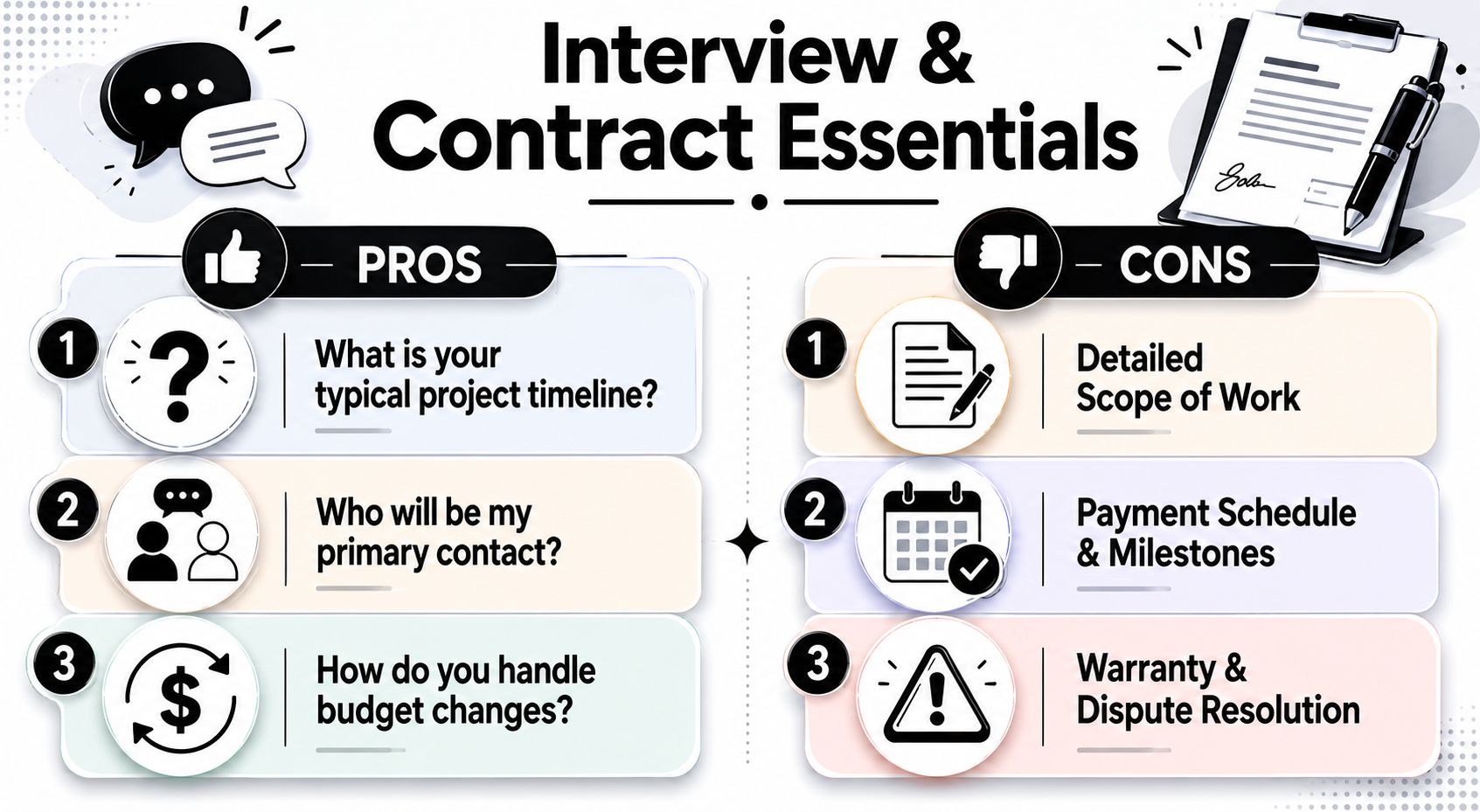
Ask each contractor the same set of questions, then compare the answers side by side:
- Who will supervise the job day to day, and how often will that person be on site?
- Who orders cabinets, countertops, and fixtures, and when are those orders placed?
- What has to be selected before demolition starts?
- How do you handle schedule changes caused by backordered materials or failed inspections?
- If framing, plumbing, or electrical problems show up after walls are opened, how is that documented and priced?
- Who schedules township inspections, and who is present for them?
- How often will I get updates, and by phone, text, email, or a project portal?
Listen for specifics. In a well-run kitchen remodel, cabinetry, plumbing, electrical, flooring, and countertop templating all have to land in the right order. A contractor who speaks in general promises usually has not thought through that sequencing.
One more point matters in New Jersey. Ask for a realistic timeline in phases, not just a start date and an end date. The National Association of Home Builders outlines how remodeling timelines often stretch because of product availability, permitting, inspections, and field conditions in its remodeling project timeline guidance. That applies directly to kitchens here, where one delayed cabinet delivery can push plumbing trim, countertop install, and final inspections behind it.
Contract clauses that deserve close review
A kitchen contract should read like a work plan, not a sales summary. If the proposal says “full kitchen remodel” without spelling out materials, responsibilities, and change procedures, expect disputes later.
These clauses matter:
| Contract item | Why it matters |
|---|---|
| Detailed scope of work | Defines exactly what is included, such as demolition, disposal, rough-ins, trim, and finish work |
| Payment schedule tied to milestones | Keeps payments tied to real progress instead of calendar dates |
| Material specifications or allowances | Shows what cabinet line, countertop material, fixtures, and finishes were actually priced |
| Schedule language | Sets expectations for ordering, lead times, rough work, installation, and final punch work |
| Change order procedure | Requires added work or added cost to be approved in writing |
| Permit responsibility | States who pulls permits and who handles inspection coordination |
| Cleanup and closeout | Clarifies debris removal, protection of adjacent rooms, and punch list expectations |
South Jersey homeowners should read the permit clause carefully. I have seen contracts that say permits are “if needed,” which is too loose to be useful. If the project includes layout changes, new circuits, plumbing moves, or mechanical work, the contract should say who is responsible for filing, paying, and meeting inspectors.
Low-detail contracts usually cost more later
Some homeowners leave parts of the contract vague because they want flexibility on finishes or layout details. That tends to backfire. The missing detail turns into allowances that were too low, verbal approvals no one remembers the same way, or owner-supplied items that arrive late and stall the whole build.
A better approach is to lock down the major decisions that control schedule and price, then define how changes will be handled if you revise something later. That protects both sides and keeps the project moving.
Before signing, it also helps to review a few common remodeling mistakes homeowners make before and during a renovation. It is a useful final check for gaps in expectations, scope, and communication.
How a Mobile Showroom Simplifies Your Remodel
A lot of kitchen stress comes from fragmentation. One person measures. Another person sells cabinetry. Someone else handles counters. The electrician sees the plan later. The plumber gets called after cabinet details change. The homeowner becomes the traffic controller whether they wanted that role or not.
That's why an integrated process matters, especially in South Jersey kitchens where layout changes, local permits, and product decisions tend to overlap. A mobile showroom model solves part of that problem by bringing design selections into the home where the project is taking place. Materials look different under your lighting than they do in a retail display. Door styles, countertop samples, hardware finishes, and tile choices are easier to judge when they're next to your flooring, wall color, and natural light.
Why in-home selection changes the quality of decisions
Homeowners make better choices when they can compare products directly in the room. You can see whether a painted finish feels too stark, whether a wood tone fights the floor, or whether a countertop sample reads warmer or cooler than expected.
That convenience also reduces decision drag. Instead of making multiple showroom trips and trying to remember what looked right, you can narrow options on site with the actual kitchen conditions in front of you.
One example is The Cabinet Coach's mobile showroom approach in South Jersey, which combines in-home product selection with design guidance and project coordination. That kind of model won't fit every homeowner, but it directly addresses many of the pain points that slow kitchen projects down.
The bigger advantage is coordination
Value isn't just convenience. It's alignment.
When the same process connects discovery, layout planning, product selection, and trade coordination, fewer decisions get made in isolation. Cabinet details can be checked against plumbing moves. Finish choices can be tied to timeline reality. The homeowner gets a cleaner path from concept to installation instead of juggling separate conversations that don't always connect.
For busy households in Cherry Hill and surrounding communities, that kind of structure usually makes the remodel feel more manageable. You still need careful vetting, a solid contract, and realistic expectations. But when the planning and product process are organized around the home itself, the job tends to run with fewer avoidable surprises.
If you're planning a South Jersey kitchen remodel and want a more guided process, The Cabinet Coach offers a mobile showroom, in-home design support, and coordinated remodeling guidance for homeowners who'd rather make decisions with real samples in the actual space than piece the project together on their own.