
Your 2026 South Jersey kitchen remodel starts here. Thinking about a kitchen refresh but feeling overwhelmed by endless Pinterest boards and conflicting trends? You're not alone. Most homeowners don't need more inspiration. They need a filter that separates pretty ideas from decisions that are practical for Cherry Hill colonials, Haddonfield historic homes, Moorestown family kitchens, and Mount Laurel new builds.
The biggest gap in conventional advice is simple. National trend roundups rarely tell you what fits South Jersey housing stock, local lifestyles, or renovation priorities. A dramatic layout might look great online and fail the moment it meets an older footprint, a low ceiling, or a family that uses the kitchen as command central.
This guide gets practical fast. You'll find 10 of the latest kitchen design ideas, plus the trade-offs behind each one, where they work best, and what I'd recommend before you commit. If you're still at the planning stage, start with this guide to successful kitchen renovation so your wishlist and your budget stay aligned.
Table of Contents
- 1. Open Concept Kitchen Design with Island
- 2. Transitional Cabinet Style with Shaker Doors
- 3. Smart Kitchen Technology Integration
- 4. Two-Tone and Mixed Finish Cabinetry
- 5. Sustainable and Eco-Friendly Kitchen Materials
- 6. Bold Backsplash and Accent Tile Design
- 7. Hidden Storage and Organization Solutions
- 8. Luxury Countertop Materials and Finishes
- 9. Mixed Metal Hardware and Fixtures
- 10. Personalized Workspace Zones and Kitchen Stations
- 10 Latest Kitchen Design Ideas Comparison
- Ready to Design Your South Jersey Dream Kitchen?
1. Open Concept Kitchen Design with Island
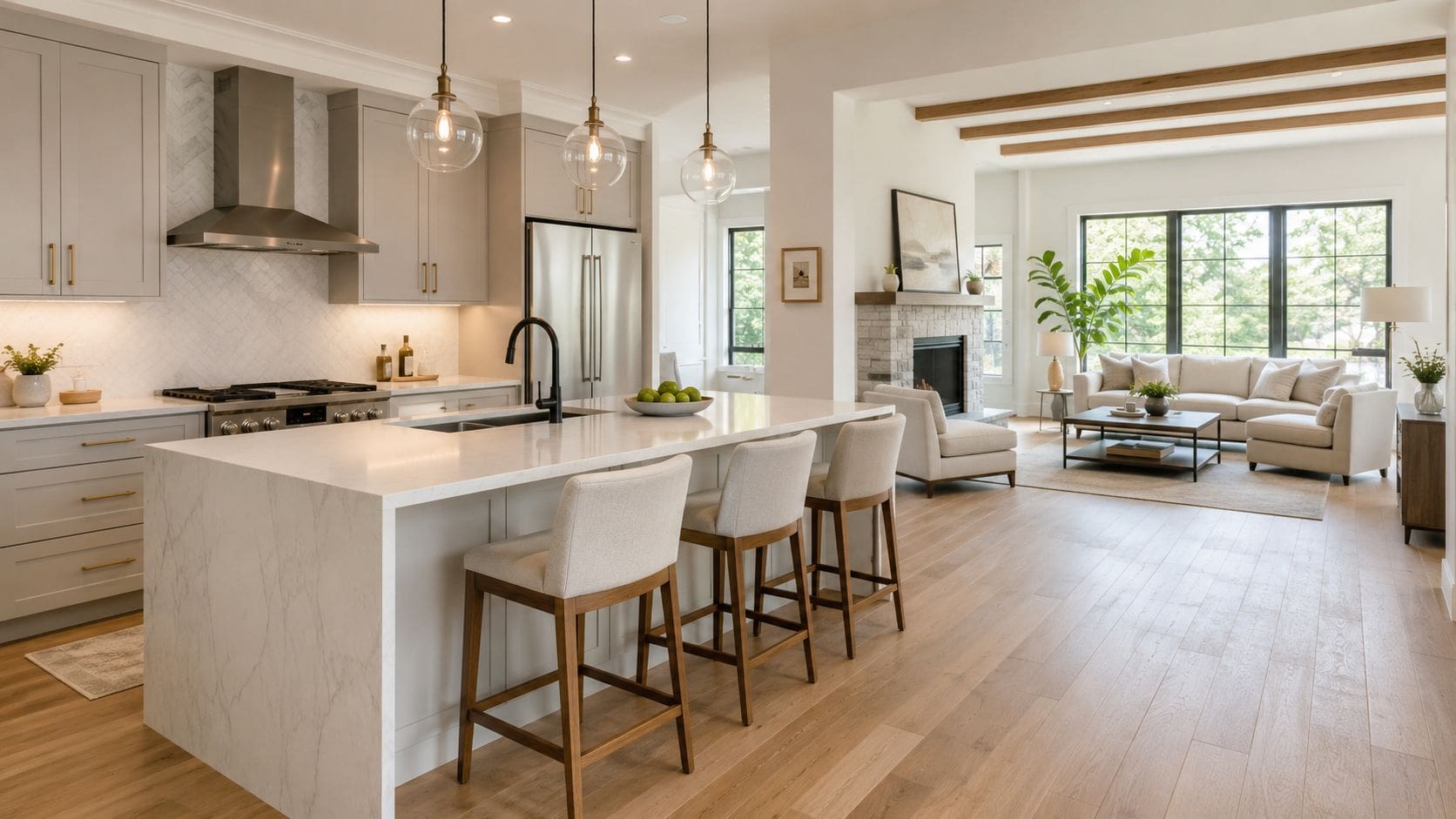
Open concept isn't new, but the way South Jersey homeowners use it has changed. The kitchen is no longer a closed-off work room. In Cherry Hill and Voorhees, I see more remodels that open the kitchen to the family room so the island becomes the place for homework, serving, casual meals, and conversation.
That works best when the island does real work. A decorative island that's too small for prep or too tight for circulation becomes expensive furniture. If you're opening a wall in a Mount Laurel home, plan the island around sink placement, dishwasher clearance, trash pullout access, and where people naturally walk.
Why open concept works in South Jersey
The strongest version of this layout borrows light from adjacent spaces. That matters in older Camden County homes where kitchens often sit at the back of the house and feel boxed in. Remove visual barriers, add pendants over the island, and the whole first floor reads larger.
The trade-off is exposure. Every countertop, appliance finish, and pile of mail is visible from the living area.
Practical rule: If you want an open kitchen, invest early in ventilation and storage. People budget for the island and forget the hood, cabinet interiors, and cleanup zones that keep the room looking calm.
A few details make this layout hold up:
- Ventilation first: Use a serious hood, not the cheapest insert your builder offers, especially if the range is on a visible wall.
- Work surface balance: Leave usable landing space on both sides of the sink or cooktop.
- Living-room durability: Choose countertop and cabinet finishes that still look good from across the room, not just up close in a sample.
For homeowners in Moorestown or Cinnaminson who like to entertain, the easiest next move is to have The Cabinet Coach review your footprint through its mobile showroom process and show island layouts that fit your actual room, not a generic plan.
2. Transitional Cabinet Style with Shaker Doors
Want a cabinet style that still looks right ten years from now in a Cherry Hill colonial or a Haddonfield foursquare? Start with transitional cabinetry and keep the detailing disciplined. It gives South Jersey homeowners enough warmth for older architecture and enough restraint for updated fixtures, cleaner counters, and modern appliances.
Design professionals continue to favor transitional kitchens because they hold value across style changes. The National Kitchen and Bath Association's 2024 Kitchen Trends Report notes that transitional remains the most popular kitchen design style among surveyed professionals. In practice, that popularity comes from flexibility. Transitional cabinets can sit comfortably beside original millwork, wider-plank flooring, or a more contemporary lighting plan without making the room feel split between two eras.
Why Shaker still wins
Shaker doors stay at the center of this look for a simple reason. They are easy to adapt. Houzz reports in its 2024 U.S. Kitchen Trends Study that Shaker remains the door style homeowners choose most often in kitchen remodels. I recommend it often in South Jersey because the frame gives the kitchen structure, but the profile is quiet enough to work with painted finishes, white oak, warmer brass, polished nickel, or a full-height stone splash.
The trade-off is proportion. A standard Shaker profile can look right at home in Moorestown or Haddon Township, but in a very sleek space, a slimmer rail and stile usually reads cleaner. In a more traditional house, the narrower version can feel a little underdressed unless the rest of the room is pared back.
A few rules keep this style from drifting off course:
- Choose one area for ornament: Let the interest come from hardware, hood detail, or backsplash tile. Not all three.
- Match the door profile to the house: Slim Shaker fits newer additions and cleaner interiors. A more classic Shaker profile suits older homes with visible trim and character.
- Use wood with intention: A stained island or pantry run adds warmth faster than scattering wood accents around the room.
- Be careful with open shelving: One short section can break up a wall of cabinetry. Too much shelving turns daily storage into a styling project.
I see the best results when homeowners compare door samples in their actual kitchen, under their lighting, against their floors and wall color. That is especially true in South Jersey homes where natural light changes a lot from room to room. If you are deciding between a classic painted Shaker and a slimmer transitional version, The Cabinet Coach can bring the mobile showroom to your home and help you make that call with real samples instead of a guess from a display wall.
3. Smart Kitchen Technology Integration
What would make your kitchen work better tomorrow morning. A voice command, or a light that comes on exactly where you prep coffee at 6 a.m.?
In South Jersey kitchens, the best smart features are usually the quiet ones. Good lighting control, leak alerts, reliable charging, and appliances that send a useful notification beat novelty screens almost every time. A recent Houzz overview of current smart kitchen features reflects the same shift toward practical technology that supports daily routines instead of showing off.
Here's a quick look at the category in action:
What to automate first
Start with lighting. I usually recommend three scenes: bright prep lighting, softer evening lighting, and under-cabinet task lighting on its own switch or app control. That setup changes how the room works every day, especially in Cherry Hill and Haddonfield homes where kitchens often serve as cooking space, homework zone, and late-night landing spot.
Next, plan the parts nobody sees after install. Smart kitchens depend on outlet placement, WiFi strength, appliance specs, and cabinet clearances. If the router barely reaches the back wall or the charging drawer has no ventilation, the technology becomes a maintenance issue instead of a convenience.
Buy the smart features that solve a recurring problem in your house. Skip the ones that only looked good in a showroom demo.
The priorities I usually set for Moorestown and Mount Laurel homeowners are straightforward:
- Keep one ecosystem: Apple Home, Google Home, or Alexa-compatible products are easier to manage when they speak the same language.
- Place power before cabinets are finalized: Add outlets in appliance garages, charging drawers, island ends, and any pantry area that may hold countertop appliances.
- Require manual backup: Lights, faucets, and appliances should still be easy to use if the app glitches or the internet drops.
- Add leak protection in the right spots: Under the sink, behind the dishwasher, and near the refrigerator water line are the first places I specify sensors.
The trade-off is budget discipline. It is easy to spend on connected features that do very little while missing the wiring and layout decisions that improve the kitchen. In older Collingswood and Haddon Township homes, I often advise clients to put money into electrical upgrades and lighting circuits before adding premium connected appliances.
The Cabinet Coach's mobile showroom helps with these decisions because smart planning touches cabinetry, electrical access, appliance fit, and daily workflow at the same time. If you want to see which tech upgrades make sense for your South Jersey kitchen, book the mobile showroom service and review those choices with samples and layout options in your own home.
4. Two-Tone and Mixed Finish Cabinetry
Want a kitchen that feels custom instead of builder-basic? Two-tone cabinetry is one of the most reliable ways to get there, especially in South Jersey homes where the kitchen opens to a family room, breakfast area, or sunroom.
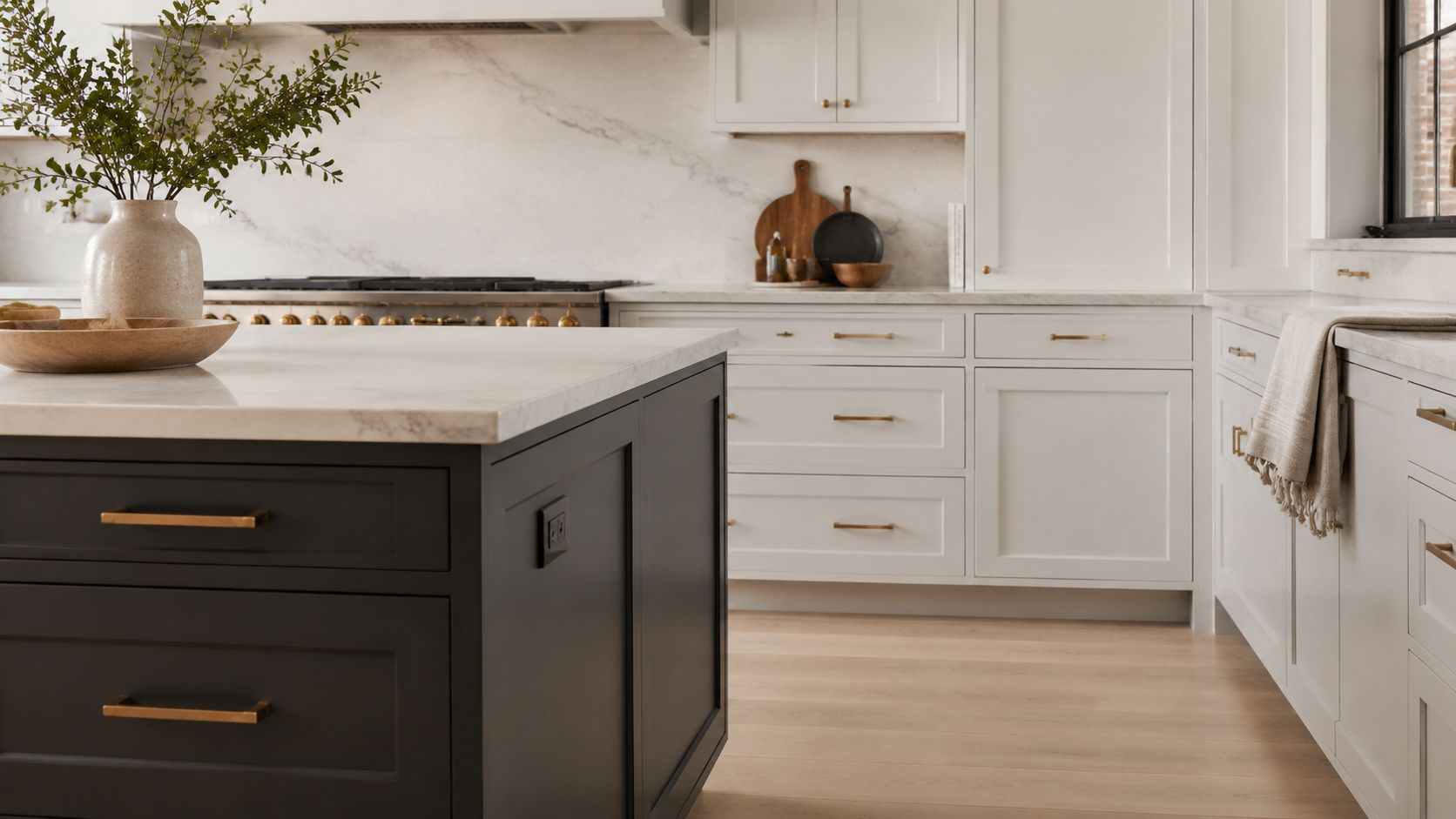
A single cabinet color can make a larger room feel long and flat. Mixing finishes solves that. It gives the island a furniture feel, breaks up heavy cabinet runs, and lets homeowners bring in wood warmth without committing to a full stained kitchen. In Cherry Hill and Voorhees, I often use this approach to define the kitchen visually without adding walls or sacrificing light.
How to mix finishes without regret
The best combinations have a clear lead and a supporting finish. That usually means one dominant cabinet color across the perimeter, then one accent finish on the island or a smaller furniture-style wall. Problems start when every surface asks for attention. If the backsplash has movement and the countertop has strong veining, the cabinetry should stay controlled.
I'm also seeing more South Jersey homeowners ask for wood tones again, particularly white oak, walnut looks, and medium stained finishes that soften painted kitchens. That shift makes sense. In Haddonfield and Moorestown, older homes benefit from some natural texture, while newer homes in Medford and Mount Laurel often need warmth to keep large open spaces from feeling sterile.
A few combinations that hold up well:
- Wood perimeter with a painted island: Works well when the island is the focal point and the surrounding cabinetry needs warmth.
- Light uppers with darker lowers: Useful in kitchens that need visual weight down low without making the whole room feel dark.
- Cream paint with stained oak: Easier to live with than bright white, especially in rooms with changing natural light.
- Charcoal or deep green island with a neutral perimeter: A good fit for open layouts where the island should read like furniture.
There are trade-offs. Mixed finishes usually cost a little more because paint and stain are being matched across different materials and door samples. They also require better lighting decisions. A stain that looks warm in a showroom can read orange in a Collingswood kitchen with older floors, and a painted cream can turn yellow next to the wrong quartz.
That is why I prefer to review these combinations in the actual home. The Cabinet Coach's mobile showroom lets South Jersey homeowners compare painted and stained door samples in their own kitchen, against their floor, wall color, and natural light. If you're considering two-tone cabinetry in Haddon Township, Marlton, or Cherry Hill, book the mobile showroom service before you finalize the finish schedule.
5. Sustainable and Eco-Friendly Kitchen Materials
Sustainable design works best when it's treated as a quality standard, not a decorative style. Homeowners often expect eco-friendly materials to look rustic or overly niche. In reality, the smartest sustainable choices are often invisible once the kitchen is complete. They show up in cabinet construction, finish chemistry, wood sourcing, and how long the materials last.
In South Jersey, this matters for two reasons. First, families want healthier interior air. Second, nobody wants to replace a kitchen early because a trendy material didn't hold up. Low-VOC finishes, responsibly sourced wood products, and durable surfaces are the kinds of choices that age well in Haddonfield and Medford homes.
Health first, trend second
Ask tougher questions than “Is this green?” Ask where the wood comes from, what finish is used, whether replacement parts are available, and how the product performs after years of cooking, humidity, and cleanup. A sustainable kitchen isn't one filled with labels. It's one that doesn't need to be redone prematurely.
What works:
- Low-VOC paints and finishes: Better for indoor air quality, especially right after installation.
- Durable cabinet construction: Long-lasting boxes, quality hinges, and repairable components reduce waste over time.
- Local or regional sourcing where practical: Shorter transport chains can simplify lead times and product support.
What often disappoints:
- Novelty materials with weak maintenance records: If it stains, chips, or warps easily, it's not a responsible long-term choice.
- Overly precious surfaces: Families in active homes need materials they can use.
- Trend-driven “green” purchases: A product isn't sustainable just because marketing says it is.
For Burlington County homeowners who want sustainability without the guesswork, The Cabinet Coach can narrow the field to cabinetry, counters, and finishes that align with both health priorities and real-world use.
6. Bold Backsplash and Accent Tile Design
What gives a kitchen real personality without turning the whole remodel into a dated time capsule? In many South Jersey homes, the answer is a bold backsplash used with restraint.
Backsplashes have shifted away from busy, small-format installs that cover every wall. Homeowners are asking for larger tile, full-height applications, and stone surfaces that are easier to wipe down after daily cooking. Industry reporting from the NKBA Kitchen & Bath Market Outlook has also pointed to continued interest in slab backsplashes, largely because they reduce grout lines and create a cleaner look.
Where bold tile works best
In Cherry Hill colonials and Haddonfield homes with more traditional trim, statement tile usually works best in a controlled zone. Behind the range is the obvious choice, but I also like it at a coffee station, bar area, or a short return wall near a window. That approach gives the kitchen a focal point without covering the room in pattern.
The strongest kitchens usually have one visual lead and one supporting finish. If the backsplash has movement, color variation, or a handmade edge, keep the cabinet door style and countertop quieter. If you want a full stone slab on the wall, that can carry more visual weight and often pairs better with mixed metals and simpler paint colors.
A backsplash should finish the kitchen, not compete with it.
A few combinations hold up particularly well in South Jersey remodels:
- Plain cabinet fronts with expressive tile: A smart match for zellige-look tile, geometric patterns, or deep color.
- Stone slab backsplash with painted cabinetry: Easier to maintain, especially behind a serious cooktop.
- Accent tile in one station only: A practical way to introduce personality in smaller kitchens or homes headed for resale.
Installation decides whether bold tile looks custom or careless. Layout at outlets, inside corners, shelf returns, and cabinet endings needs to be planned before material is ordered. The same goes for transitions near windows and vent hoods. I also tell clients to think through appliance placement early. A backsplash and beverage area should work together, especially if you are also choosing an under bench fridge for entertaining or overflow storage.
For homeowners in Moorestown, Medford, or Marlton, the safest way to judge a bold tile is to see it next to your cabinet finish, countertop, and lighting conditions. The Cabinet Coach can bring those combinations to your home through the mobile showroom service, so you can make the call with real samples instead of guessing from a phone screen.
7. Hidden Storage and Organization Solutions
What makes a kitchen feel bigger in a Cherry Hill ranch or an older Haddonfield colonial? Usually, it is not more square footage. It is storage planned around daily use.
Hidden storage works best when it removes friction from cooking, cleanup, and school-night traffic. South Jersey homeowners ask for pantry storage more than almost any other cabinet upgrade because they are tired of crowded counters, overstuffed wall cabinets, and corners that waste usable room. In practice, a well-designed pantry cabinet often does more work than an extra run of upper cabinets.
Storage that earns its footprint
A tall pantry with rollouts, interior drawers, and adjustable shelves gives you visibility at eye level and better use of depth down low. I recommend drawer banks for pots, dishes, and dry goods whenever the layout allows it. They cost more than basic door cabinets, but they save time every day and reduce the back-of-cabinet black hole that frustrates so many families.
Older homes in Collingswood, Haddon Township, and Merchantville bring another challenge. Corners are rarely perfect, walls can run out of square, and appliance clearances get tight fast. The National Kitchen & Bath Association addresses this directly in its guidance on kitchen storage and cabinet planning, and that matters in real remodels where every inch has to justify itself.
Appliance garages help too, but only if they are sized for the actual equipment in the house. A garage that cannot handle the espresso machine, toaster oven, or mixer becomes expensive decoration.
For practical planning, think through adjacent materials as well. Wood floors and storage-heavy cabinetry need to work together, especially in kitchens where pantry walls and large islands add visual weight. These Buff & Coat recommendations for kitchen wood are a useful reference when you are balancing durability, color variation, and cabinet tone.
A few upgrades consistently pay off in South Jersey remodels:
- Pantry cabinets with interior rollouts: Better access than deep fixed shelves.
- Drawer banks instead of lower-door cabinets: Stronger function for cookware, dishes, and snacks.
- Vertical tray storage near the prep zone: Cleaner storage for sheet pans, cutting boards, and platters.
- Pullouts beside the range or refrigerator: Smart use of narrow filler space that usually gets lost.
If you are adding a beverage station or overflow prep area, choosing an under bench fridge affects cabinet width, ventilation clearance, and door swing. Those measurements should be decided before cabinetry is ordered, not after.
The Cabinet Coach's mobile showroom is especially useful here. Homeowners in Medford, Moorestown, and Marlton can compare inserts, pullouts, and cabinet depths in their own kitchen, with their own measurements, before making a decision. That is usually the fastest way to turn hidden storage from a nice idea into a layout that works every day.
8. Luxury Countertop Materials and Finishes
Want a kitchen that feels high-end in Cherry Hill or Haddonfield without choosing a countertop you'll regret in a year? Start with how the surface will be used. A polished slab can look perfect under showroom lights and still be the wrong choice for a busy South Jersey kitchen with heavy meal prep, kids doing homework at the island, and constant traffic around the sink.
Natural stone continues to draw attention because it brings variation, depth, and a less manufactured look than many uniform surfaces. Quartzite is a common front-runner for homeowners who want that organic movement but still need better day-to-day durability than marble usually offers. It is not maintenance-free, though. Sealers, slab variation, edge chipping risk, and seam locations all need to be discussed before the order goes in.
The finish matters as much as the material. Honed surfaces soften glare and hide light wear better than high polish, but they can show oils more easily on darker colors. Polished tops reflect more light, which helps smaller kitchens in towns like Collingswood and Haddonfield, yet they also make smudges and crumbs more visible.
Marble, soapstone, butcher block, quartzite, and engineered quartz all have a place. The right choice depends on your tolerance for etching, scratching, patina, heat, and upkeep.
Designer's note: I narrow countertop options fast by asking one question first. Will you enjoy the material more after real use, or spend a year trying to keep it looking untouched?
Flooring should be part of the same decision. If you're keeping or adding wood floors nearby, review Buff & Coat recommendations for kitchen wood before finalizing the palette. Countertop undertone, cabinet finish, and floor color need to read as one plan, especially in open layouts where the kitchen is visible from the family room.
In Moorestown and Medford remodels, I usually bring the field down to two realistic slabs and compare full-size samples in the home, not in the showroom. That is where green undertones, warm veining, and true cabinet color become obvious. The Cabinet Coach's mobile showroom makes that process easier for South Jersey homeowners because you can review door styles, finishes, and countertop options in your own light, with your own measurements, before making the call.
9. Mixed Metal Hardware and Fixtures
Want a kitchen that feels collected instead of copied from a showroom wall? Mixed metals can do that fast, but only if the finish plan is tight from the start.
The best results come from hierarchy. Pick one primary metal for most of the hardware, then use a second finish for the faucet or light fixtures. A third finish can work, but only in small amounts and only if it repeats somewhere else in the room. Otherwise, the kitchen starts to read as a series of separate purchases instead of one design.
This approach works especially well in South Jersey's transitional kitchens, where homeowners often want warmth without giving up clean lines. In Cherry Hill and Haddonfield, I often see brushed brass pulls paired with a polished nickel faucet, or matte black lighting paired with warmer cabinet hardware. Both combinations can work. The difference is whether the cabinet color, countertop undertone, and sheen level support the mix.
Neutral kitchen palettes are still driving a lot of these choices, and many of those neutrals are warmer now than they were a few years ago. That shift is one reason brass, bronze, and softer nickel finishes continue to show up in current kitchens.
How to keep mixed metals cohesive
Start with the undertone. Warm metals usually sit better with off-whites, taupes, stained wood, and creamy stone. Cooler metals fit bright whites, grays, and sharper black-and-white palettes more easily. Get that relationship wrong, and the room can feel slightly off even when every individual selection looks good on its own.
A few rules keep the mix under control:
- Assign clear jobs: Use one finish for cabinet hardware, another for plumbing or lighting.
- Repeat each finish: If a metal appears only once, it usually looks accidental.
- Keep sheen in check: Satin, brushed, and matte finishes are easier to mix than several high-polish surfaces competing for attention.
- Watch sightlines: In open kitchens, metals should relate to nearby dining and family room fixtures too.
I also advise homeowners to decide which element should get the visual attention. If the faucet is meant to stand out, let the cabinet hardware stay quieter. If the statement is in the lighting, keep the rest more restrained.
In Voorhees and Cinnaminson remodels, the strongest mixed-metal kitchens are tested in the actual home before anything gets ordered. The Cabinet Coach's mobile showroom makes that much easier for South Jersey homeowners. You can compare hardware samples against your cabinet door, paint color, and countertop selection in your own light, then book the service and make the finish decisions with more confidence.
10. Personalized Workspace Zones and Kitchen Stations
Could your kitchen work better if it had a job for every corner?
The most efficient kitchens I design in South Jersey are arranged around routines, not just appliances. A coffee setup near the refrigerator, a landing spot for school lunches, a prep run between sink and trash, or a baking area with sheet-pan storage can change how the room feels day to day. Homeowners in places like Haddonfield, Moorestown, and Collingswood are asking for kitchens that support breakfast rushes, work-from-home hours, and weekend entertaining without everything piling onto one stretch of counter.
Industry reporting has also pointed to growing demand for dedicated functional areas in and around the kitchen, including beverage stations and other purpose-built spaces. In real projects, that shows up less as a trend label and more as a planning decision. Which tasks happen every day, who does them, and where do traffic patterns break down?
A good zone needs three things. Storage that supports the task. Counter space to use it. Power and lighting in the right spot. If one of those is missing, the zone usually turns into visual clutter.
That matters even more in older South Jersey homes with tighter footprints.
In Cherry Hill colonials and Haddon Township capes, I often see one common mistake. Homeowners add a coffee machine or charging area after the renovation instead of planning it into the cabinetry. The result is cords on the backsplash, overflow mugs in the wrong cabinet, and family members cutting through the main cooking lane to grab what they need. A well-planned station fixes that by giving the activity a defined home.
A few workspace zones consistently earn their keep:
- Beverage station: Place it near refrigeration or a pantry edge so guests and early risers stay out of the cook's path.
- Kid access zone: Keep snacks, lunch containers, and cups low and away from the range and sink traffic.
- Baking station: Include mixer lift storage, tray dividers, and a nearby drawer for measuring tools and parchment.
- Homework or charging zone: Tuck outlets inside a drawer or cabinet section so devices have a place without taking over the island.
- Prep zone: Protect clear counter space beside the sink, trash pullout, and cooktop for the work that happens every day.
The trade-off is straightforward. More zones can improve flow, but every station takes space from something else. In a smaller Medford or Audubon kitchen, I usually advise clients to build one excellent secondary zone instead of three cramped ones. A well-placed beverage center will do more for daily function than several mini-stations fighting for room.
The Cabinet Coach's mobile showroom helps South Jersey homeowners test these ideas in their kitchen before orders are placed. You can review cabinet options, storage inserts, and layout choices in your own light, then book the service and map out stations that fit the way your household lives.
10 Latest Kitchen Design Ideas Comparison
Which kitchen idea gives South Jersey homeowners the best return in daily use, budget control, and long-term appeal? The answer depends less on trend reports and more on your house, your routine, and how much disruption you are willing to take on in towns like Cherry Hill, Haddonfield, Medford, or Moorestown.
This comparison table helps sort the ideas by effort, cost pressure, and where each one makes the most sense. I use this kind of side-by-side review with clients before we finalize selections in the mobile showroom, because a strong remodel usually comes from choosing the right few upgrades, not trying to force all ten into one kitchen.
| Design / Feature | Implementation Complexity 🔄 | Resource Requirements ⚡ | Expected Outcomes ⭐📊 | Ideal Use Cases 💡 | Key Advantages ⭐ |
|---|---|---|---|---|---|
| Open Concept Kitchen Design with Island | High. Often includes structural work, ventilation updates, and sightline planning | High. Contractor team, possible engineer input, HVAC work, custom island | Better flow, more shared light, stronger resale appeal. Cooking noise and odors travel farther | Families who entertain often. Smaller homes that feel closed off | Island seating, better circulation, strong gathering space |
| Transitional Cabinet Style with Shaker Doors | Low to Moderate. Standard cabinet installation with finish and hardware choices doing the heavy lifting | Low to Moderate. Cabinet package, paint or stain, hardware | Lasting look, broad buyer appeal, easy future updates | Homes that need a classic and current balance | Flexible style, good value, easy to refresh |
| Smart Kitchen Technology Integration | High. Requires electrical planning, device compatibility, and reliable setup | High. Smart appliances, outlet planning, network support, pro installation | Easier daily use, monitoring, remote control. Some systems age out faster than others | Tech-friendly households and owners who want convenience tied to a real routine | Efficiency, control, safety features |
| Two-Tone and Mixed Finish Cabinetry | Moderate. Requires clear finish hierarchy and careful coordination | Moderate. Multiple finishes, skilled cabinet finishing, careful install | More visual depth and a custom feel. Poor color balance can date the kitchen | Homeowners who want the island or a wall of cabinetry to stand out | Custom character, better focal points, flexible styling |
| Sustainable and Eco-Friendly Kitchen Materials | Moderate. Product sourcing takes more planning | Moderate to High. Certified materials, low-VOC finishes, possible price premium | Healthier material choices, lower environmental impact, long wear when selected well | Families prioritizing indoor air quality and durability | Cleaner material profile, solid longevity, appeal for eco-conscious buyers |
| Bold Backsplash and Accent Tile Design | Low to Moderate. Selection is simple. Installation quality matters | Low to Moderate. Tile budget varies widely, especially with handmade products | Strong focal point and easier style update than replacing cabinets | Homeowners who want personality without rebuilding the whole kitchen | Big visual payoff, wide design range, wall protection |
| Hidden Storage and Organization Solutions | Moderate to High. Best results come from detailed cabinet planning | Moderate. Pull-outs, dividers, specialty hardware, custom inserts | Cleaner sightlines, better access, less counter clutter | Smaller kitchens and households that want tighter organization | Better storage use, cleaner appearance, stronger day-to-day function |
| Luxury Countertop Materials and Finishes | Moderate. Templating and installation must be exact | High. Premium slabs and skilled fabrication | Premium look, resale appeal, good durability with the right care routine | Higher-end remodels and owners who care about material impact | Strong visual anchor, durable surface options, broad material range |
| Mixed Metal Hardware and Fixtures | Low to Moderate. Coordination matters more than labor | Low to Moderate. Fixture and hardware selections across finishes | Layered, collected look. Wrong undertones can make the room feel mismatched | Homeowners who want detail without major construction | Adds character with a relatively small spend |
| Personalized Workspace Zones and Kitchen Stations | Moderate. Requires layout planning, outlet placement, and appliance decisions | Moderate. Cabinet changes, added outlets, specialty storage, small appliances | Better efficiency for households with multiple users and overlapping routines | Busy families, serious home cooks, frequent hosts | Better workflow, safer circulation, more order |
One pattern shows up often in South Jersey projects. Older Haddonfield and Collingswood kitchens usually benefit more from layout correction and storage planning than from piling on smart features. In newer Cherry Hill or Mount Laurel homes, the footprint may already be workable, so finishes, lighting, and organization upgrades can do more with less construction.
That is also why the mobile showroom matters. South Jersey homeowners can compare door styles, finishes, hardware, and practical add-ons in their own kitchen, under their own lighting, then book The Cabinet Coach's mobile showroom service to narrow the list to the upgrades that fit the house and the budget.
Ready to Design Your South Jersey Dream Kitchen?
The latest kitchen design ideas aren't just about what's trending online. They're about building a room that works harder, feels better, and still looks right years from now. That's especially true in South Jersey, where one homeowner may be updating a traditional Haddonfield home and another may be opening up a newer Mount Laurel layout for easier entertaining. The same trend won't land the same way in both spaces.
That's why the smartest remodels start with trade-offs, not mood boards. Open concept kitchens can transform flow, but only if the island, ventilation, and storage are planned correctly. Transitional cabinetry lasts, but it still needs the right finish and hardware mix to avoid looking generic. Smart tech can be useful, but only if it solves a routine problem instead of adding another app to your phone. Bold backsplash tile can give a kitchen personality, yet it needs a calm supporting cast.
The same practical thinking applies to every other decision. Two-tone cabinets work when the finish hierarchy is clear. Sustainable materials work when durability leads the conversation. Hidden storage matters more than decorative storage. Countertops should match your maintenance tolerance, not just your inspiration board. Mixed metals need undertone discipline. Kitchen stations need to reflect how your household moves through the day.
South Jersey homeowners also have one challenge national articles usually ignore. The local housing mix is varied. Some kitchens sit in older homes with awkward corners, tighter widths, or rooms that weren't built for modern appliances. Others are part of more open suburban plans that can support islands, beverage zones, and broader visual palettes. Good design respects those conditions instead of fighting them.
That's where guided, in-home decision-making changes everything. Samples behave differently in your house than they do in a showroom. White paint can turn cold. Wood stain can go orange. Brass can feel elegant in one room and too yellow in another. Cabinet depth, appliance doors, and pantry access are much easier to judge when you're standing in your own kitchen.
Stop guessing and start designing with context. The Cabinet Coach brings the showroom experience directly to South Jersey homeowners, which makes it easier to compare cabinetry, countertops, hardware, and tile where the decisions matter most. If you're in Cherry Hill, Haddonfield, Moorestown, Voorhees, Mount Laurel, or nearby Camden and Burlington County communities, this is the easiest way to move from scattered ideas to a kitchen plan that fits your home and your life.
The Cabinet Coach makes the latest kitchen design ideas practical for real South Jersey homes. If you want expert help with cabinets, countertops, hardware, tile, layout choices, and finish coordination, schedule a complimentary consultation with The Cabinet Coach and get a mobile showroom experience that comes directly to your door.