
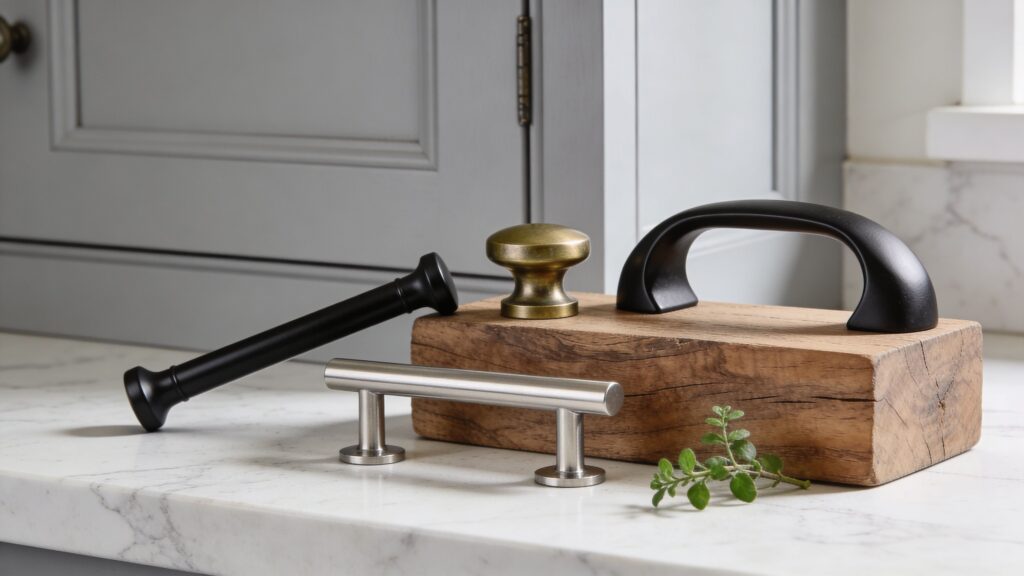
You’ve picked the cabinet color. You may even have the countertop sample sitting on the kitchen table. Then the hardware decision shows up and suddenly the “small details” are not small at all. A pull can make a painted shaker kitchen feel complete, a slab door feel sharper, or a beautiful renovation feel slightly off every time you open a drawer.
This is true in South Jersey homes, where one kitchen may sit inside a classic Haddonfield colonial, another inside a Cherry Hill split-level, and another inside a newer Moorestown open-plan space. The right choice has to do more than look good in a showroom. It has to work with your cabinet style, your daily habits, your climate, and your budget.
Table of Contents
- Your Guide to Choosing Kitchen Cabinet Hardware
- The Top Hardware Styles and Finishes for 2026
- Beyond the Shine Materials and Sustainability
- Creating a Cohesive Look Pairing Hardware with Cabinets
- Practicality Meets Style Selection and Installation Guide
- Smart Investments Budgeting and Maintaining Your Hardware
- Bring Your Vision to Life with The Cabinet Coach
Your Guide to Choosing Kitchen Cabinet Hardware
A lot of homeowners reach the hardware stage tired of making decisions. Cabinets are in. The big money choices are done. Hardware feels like something that should be easy.
It rarely is.
The reason is simple. Cabinet hardware now plays a much bigger role in kitchen design. Industry coverage of 2025 trends describes a clear shift toward mixed metal finishes and statement pieces, with designers treating hardware as “jewelry for the kitchen” rather than a background detail (industry overview). That change matters because the hardware is one of the few elements you touch every day.
In practical terms, homeowners usually juggle three questions at once:
- How will it look: Does it sharpen the style of the cabinetry or fight it?
- How will it feel: Is it comfortable on heavy drawers, pantry doors, and busy prep zones?
- How will it age: Will the finish still suit the house years from now?
A Cherry Hill kitchen with painted shaker doors often wants something different from a sleek slab-door renovation in Mount Laurel. The same matte black pull can look crisp and architectural in one setting, but too stark in another. A warm brass finish can soften a kitchen beautifully, but only if it fits the other fixed elements in the room.
That is why hardware should be selected the same way you would choose tile or a faucet. It needs context. Cabinet profile, room lighting, wall color, countertop movement, and household habits all matter.
Practical rule: Do not choose hardware from a small online thumbnail. Hold the finish next to the actual cabinet sample and countertop sample whenever possible.
For homeowners who want a stronger framework before deciding, this detailed guide to choosing the perfect kitchen or bathroom fixture is a useful companion read because it approaches fixtures as part of the whole room, not as isolated parts.
The best kitchen cabinet hardware trends are not the loudest ones. They are the ones that still make sense after the remodel dust settles. Good hardware finishes the room. Great hardware improves it every single day.
The Top Hardware Styles and Finishes for 2026
A Cherry Hill homeowner might walk into the kitchen at 7 a.m., switch on the pendants, and notice two things right away. Hardware either adds quiet polish to the room, or it pulls too much attention. The best 2026 choices do more than look current. They hold up to fingerprints, daily use, and the mix of styles common in South Jersey homes.
Mixed metals have become a design tool
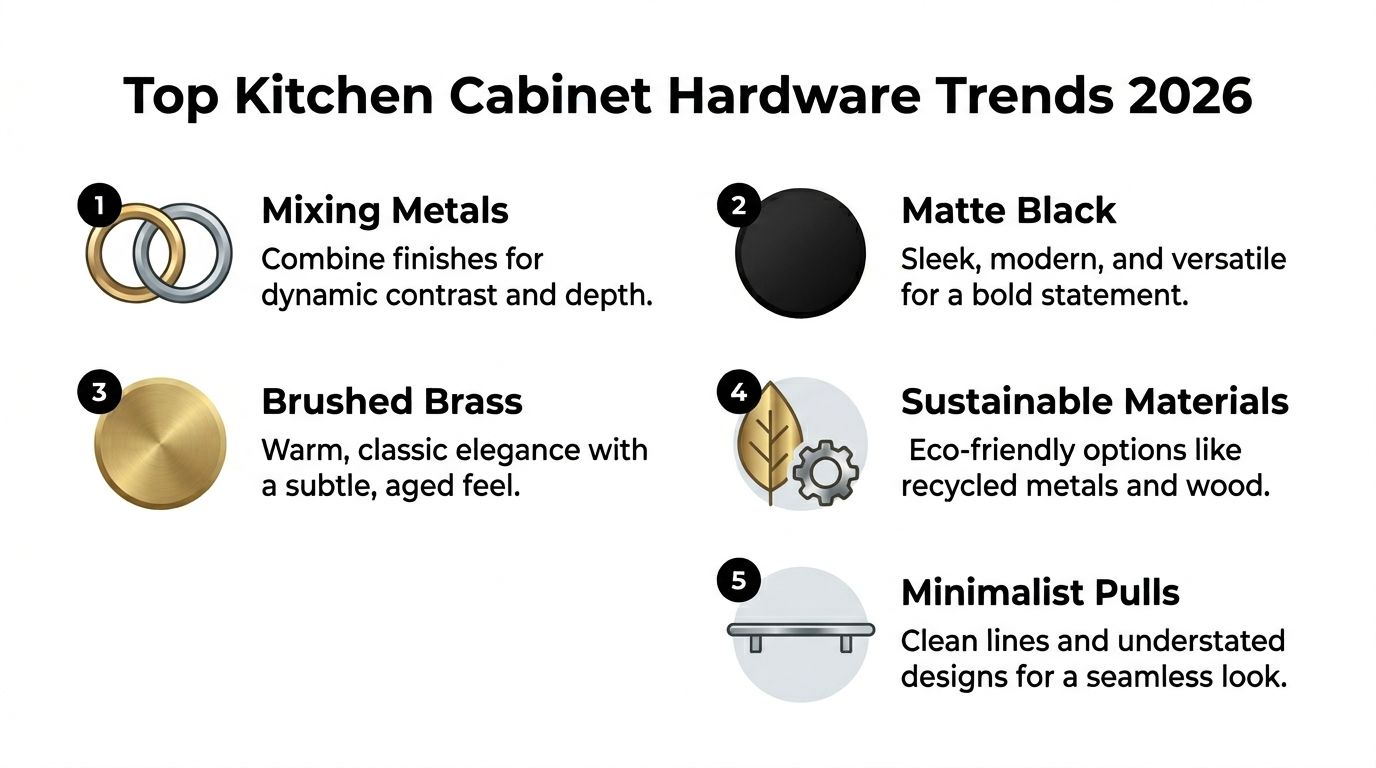
Mixed metals are now part of good kitchen planning, not a styling trick. Used well, they help a kitchen feel collected instead of flat, especially in homes where the kitchen opens to older trim details, a traditional dining room, or a more modern family room addition. One finish should lead, one should support, and a third should stay in the background, a balance noted in this hardware trend summary that also highlights the day-to-day appeal of brushed finishes (design guidance and material data).
In practice, that often looks like this:
- Main finish: Brushed brass on primary drawer pulls
- Secondary finish: Matte black on a few knobs or lighting accents
- Accent finish: Satin nickel on small supporting details
This approach works especially well in South Jersey, where many kitchens sit between styles. A Haddonfield colonial may need warmth and restraint. A newer Mount Laurel remodel can handle stronger contrast. Mixed metals give both homes flexibility without making the room feel undecided.
For homeowners comparing hardware to the broader room palette, our guide to 2026 kitchen trends every South Jersey homeowner should know shows how these finish choices connect to cabinet color, layout, and the overall direction of the remodel.
Brushed and matte finishes keep earning their place
Some finishes ask for constant wiping. Brushed and matte options usually ask for less.
That matters in real kitchens. Under pendant lights or strong morning sun, polished hardware tends to show every touch and streak. Brushed brass, brushed nickel, and matte black are popular partly because they soften that effect and feel less fussy from one cleaning day to the next.
There is a trade-off. Matte black can look sharp on white or light wood cabinetry, but in a smaller kitchen with little natural light, it can read heavy if used everywhere. Brushed brass brings warmth, but it needs the right supporting finishes nearby so the room does not drift too yellow. Satin nickel remains one of the safest choices for homeowners who want flexibility and a finish that rarely feels dated.
If you are watching the larger style direction for 2026, the broader list of influences in Top 10 Interior Design Trends 2026 helps explain why quieter, lower-glare finishes continue to show up across kitchens and adjoining living spaces.
Practical rule: If you want hardware that looks clean between wipe-downs, brushed and matte finishes are usually the smarter long-term pick.
Statement hardware works best on simple cabinet fronts
Longer pulls and sculptural shapes are getting more attention because they solve two problems at once. They create a focal point, and they give you a better grip on wide drawers and tall pantry doors.
They work best on:
- wide pot-and-pan drawers
- tall pantry doors
- slab fronts
- simple shaker doors
Scale matters here. A bold pull on a flat or quiet cabinet front can look intentional and refined. The same pull on a heavily detailed door can crowd the eye and make the cabinetry feel busy.
In such instances, I usually steer homeowners toward restraint. If the cabinet profile already carries a lot of character, simpler hardware often finishes the room better. If the door style is clean and understated, hardware can take on more of the visual work. That is the difference between a kitchen that feels current and one that feels forced.
Beyond the Shine Materials and Sustainability
Finish gets the attention. Material determines whether the hardware feels substantial in your hand and whether you still like it after years of use.
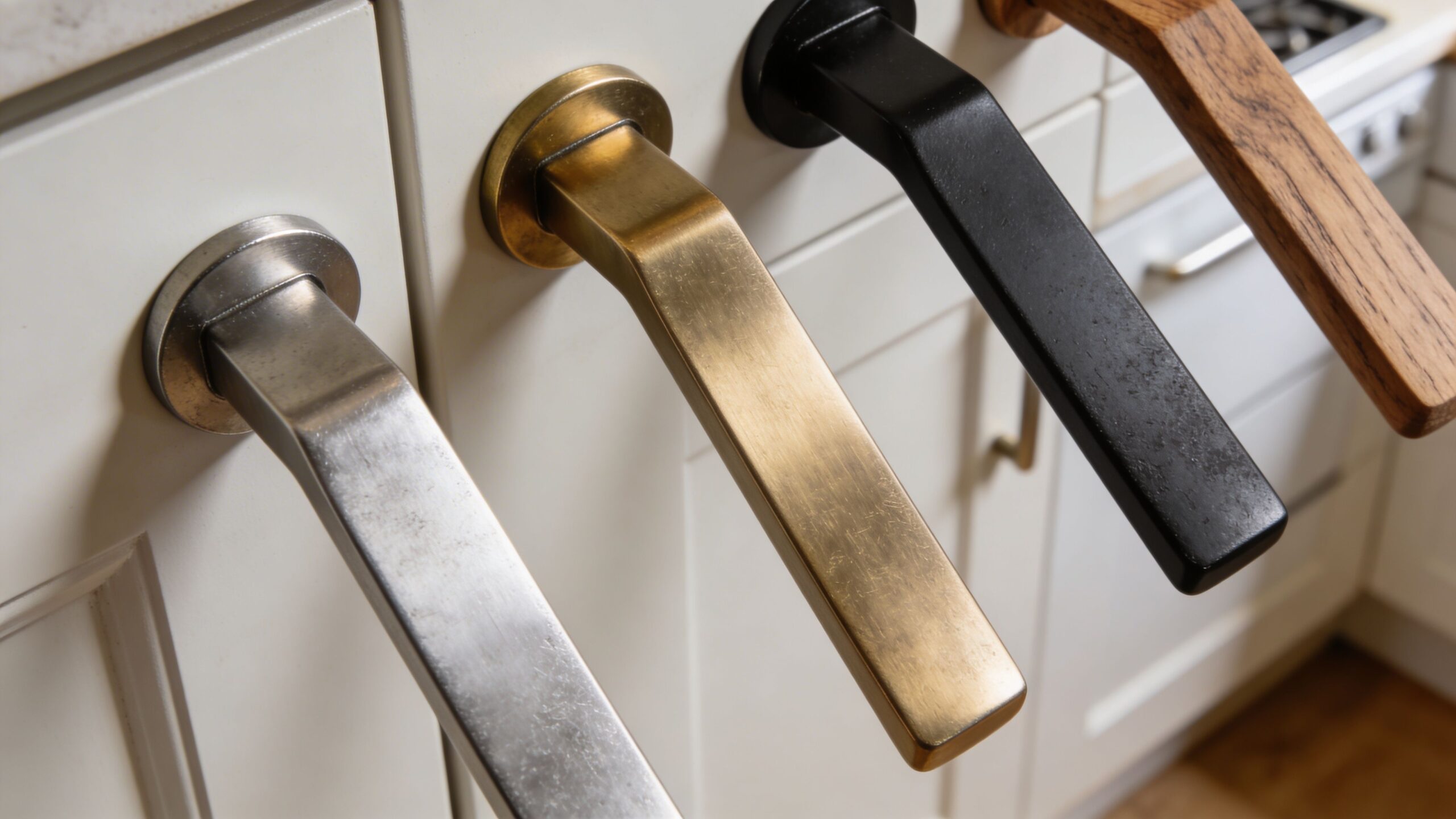
The market has moved toward warmer metals and more character-rich pieces, but there is another shift underneath that aesthetic change. Architectural Digest has reported growing demand for conscious craftsmanship, with designers and homeowners favoring small-batch, artisan-made hardware in materials such as reclaimed brass and hand-forged metal over mass-produced alternatives (trend summary). That trend makes sense in kitchens where homeowners want the room to feel collected rather than generic.
Material affects both feel and longevity
Not all hardware materials behave the same way in a working kitchen.
| Material | What it tends to offer | Best fit |
|---|---|---|
| Brass | Warm tone, solid feel, classic range from polished to aged looks | Traditional, transitional, and mixed-metal kitchens |
| Bronze | Depth and warmth, often softer-looking than black | Homes that want an older, grounded character |
| Stainless steel | Clean, restrained appearance, easy to pair with modern appliances | Contemporary kitchens and simple palettes |
| Wood accents | Softer visual break from all-metal rooms | Organic, Scandinavian, or casual kitchens |
The right choice depends on the cabinets and the house. In a painted kitchen with lots of cool white and gray, warmer metals can keep the room from feeling flat. In a wood-heavy kitchen, understated hardware often lets the cabinetry remain the focal point.
Sustainable does not have to mean rustic
Many homeowners still assume eco-conscious hardware looks handmade in a rough or niche way. That is outdated. Reclaimed brass, artisan bronze, and thoughtfully produced wood details can read polished, refined, and architectural.
Small-batch hardware often brings another benefit. It carries subtle variation. That can make a kitchen feel more custom because the hardware has texture and individuality rather than a generic factory look.
For readers watching broader design movements, this roundup of Top 10 Interior Design Trends 2026 is useful because it shows how craftsmanship, warmth, and material authenticity are shaping more than kitchens.
Key takeaway: Sustainable hardware makes the strongest impact when it supports the room’s overall material story. It should not feel like a separate statement piece dropped into the design.
If you are also comparing cabinet door materials, this guide on MDF vs wood cabinet doors and which one is right for your home helps clarify how cabinet construction and hardware choices should work together.
The smartest material choice is not always the flashiest one. It is the one that looks right, feels right, and fits the way the kitchen will be used.
Creating a Cohesive Look Pairing Hardware with Cabinets
The easiest way to get hardware wrong is to choose it in isolation. Pulls and knobs should answer the cabinet style, not compete with it.
In South Jersey, that matters because kitchen architecture varies so much from town to town. A Collingswood foursquare and a newer Medford kitchen do not ask for the same visual language. The cabinet profile sets the first rule.
Match the shape to the door style
Slab doors usually want restraint. Sleek bar pulls, edge pulls, or simple linear hardware reinforce the clean geometry.
Inset and shaker cabinets can handle more shape. Rounded knobs, classic pulls, and softer silhouettes often feel more natural there. The goal is alignment between the cabinet line and the hardware line.
A few rules of thumb help:
- Slab cabinets: Choose clean pulls with minimal ornament.
- Shaker cabinets: Use either knobs or pulls, but keep the shape crisp and proportionate.
- Inset cabinetry: Favor hardware with a bit more tradition and a tighter sense of scale.
Countertop movement matters too. If the stone has strong veining, quieter hardware usually gives the room better balance. If the countertop is calm and uniform, hardware can carry more of the personality.
For homeowners still working through room flow, this guide on planning your kitchen layout is worth reading because hardware placement only works well when the cabinet and traffic plan already make sense.
Use placement to improve everyday function
Placement changes how the kitchen feels to use. It is not just an aesthetic choice.
For South Jersey homeowners, one practical issue often gets missed. Humid conditions can be hard on some finishes, and trendy materials such as unlacquered brass can corrode. Oversized pulls are also popular, but they can add to hardware costs and need careful ergonomic placement, such such as vertical on tall cabinets for better reach (South Jersey hardware considerations).
That guidance has real day-to-day implications:
- Tall pantry doors: Vertical placement is usually easier to grab.
- Wide drawers: Longer pulls often feel better than small knobs.
- Upper cabinets: Lighter visual hardware keeps the room from feeling top-heavy.
Practical advice: If a pull looks great but forces you to pinch your fingers on a heavy drawer, it is the wrong pull.
Here is a useful visual reference for thinking about placement and style in motion:
If your kitchen leans between classic and modern, this gallery of transitional cabinets can help you see why certain hardware profiles bridge both styles better than others.
Cohesion does not come from matching everything exactly. It comes from making each choice answer the cabinet, the room, and the hand that uses it.
Practicality Meets Style Selection and Installation Guide
A beautiful pull can still fail if the working parts behind the cabinet door are cheap or poorly installed. Hardware selection is only half the job. Installation quality determines how long the result feels solid.
Where hardware pays for itself
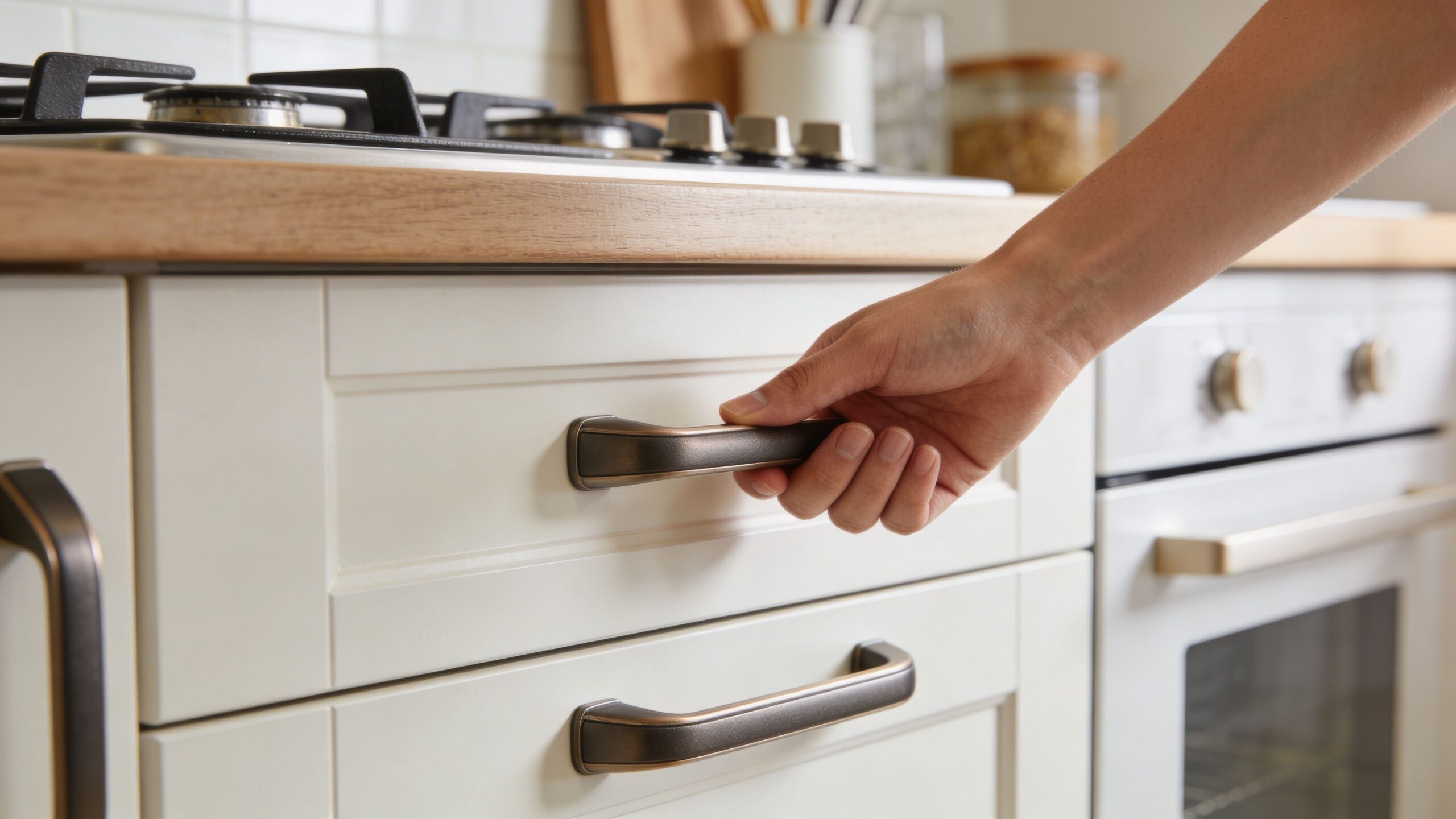
Soft-close hinges and drawer slides are no longer viewed as a luxury add-on in quality renovations. They use hydraulic dampening systems, and they can reduce impact force by a significant amount while helping hardware maintain consistent performance for many years, compared with fewer years for standard hinges. They also cost more upfront (performance and cost data).
That trade-off is usually worth it in a busy kitchen.
The value is not only quieter doors. Repeated slamming wears on joints, fasteners, drawer boxes, and alignment. Soft-close systems help protect the cabinetry itself.
Consider this breakdown:
- Standard hardware saves money early
- Soft-close reduces wear over time
- Long-term kitchens benefit most from the upgrade
Installation details that matter
Knobs need one hole. Pulls need two. That sounds simple until a row of drawer fronts is slightly off and your eye catches it every time you walk into the room.
Three details matter most:
- Hole spacing: Pull centers have to be selected early so the scale fits the drawer front.
- Template accuracy: Consistent drilling keeps banks of drawers looking clean.
- Weight and calibration: Hinges need to suit the door and be adjusted properly for smooth action.
Poor installation can make premium hardware feel cheap. Crooked pulls, uneven reveals, and badly adjusted hinges ruin the effect of otherwise good design.
Installer mindset: Measure from fixed reference points, not from assumptions. One small error repeated across a kitchen becomes a visible pattern.
If you are mapping out the renovation as a whole, this planning guide on how to plan a kitchen remodel is useful because hardware decisions land better when they are timed correctly within the larger project.
The best kitchens make hardware feel effortless. That only happens when style choices and technical execution are treated with equal care.
Smart Investments Budgeting and Maintaining Your Hardware
Cabinet hardware is one of the smaller line items in a renovation. It still has the power to create daily annoyance or daily satisfaction. That is why it deserves a real budget.
The smartest approach is not to chase the lowest ticket price. It is to decide where better hardware improves function enough to matter. Heavy drawers, trash pull-outs, and main prep areas usually justify better pieces and better mechanisms. Decorative secondary storage often gives you more room to simplify.
Where to save and where to spend
One current temptation is integrated or push-to-open hardware. It gives cabinetry a very clean face, and in the right kitchen it looks excellent. But there is a trade-off. Hidden push-to-open mechanisms can fail sooner in high-use homes without proper installation, which is why lifecycle cost matters as much as first cost (longevity guidance).
That does not mean avoid them. It means use them carefully.
Spend more where the kitchen gets handled most. Save where the use is occasional and the visual payoff is still strong with a simpler piece.
Simple care for popular finishes
Maintenance should match the finish.
- Matte black: Wipe gently and avoid harsh cleaners that can leave residue or streaking.
- Brushed brass: Clean lightly and consistently. Abrasive products can change the look you chose in the first place.
- Living finishes: Expect change over time. Patina is part of the appeal, not a defect.
A maintenance-friendly finish often beats a trendier one if your household is busy, your water is hard, or you do not want another thing to fuss over.
Good hardware is an investment because it sits at the intersection of style and use. You see it every day. You touch it every day. When it works, the whole kitchen feels more finished.
Bring Your Vision to Life with The Cabinet Coach
A kitchen can have beautiful cabinetry, strong countertops, and the right layout, yet still feel unfinished until the hardware is right. That final layer carries more visual weight than many homeowners expect. It also affects the parts of the room you interact with most.
For homeowners in Cherry Hill, Haddonfield, Moorestown, and throughout Camden and Burlington counties, the easiest way to choose well is to stop guessing from isolated samples. Hardware should be evaluated next to your cabinet finish, your countertop, your lighting, and the architecture of your actual home.
That is where an in-home process makes a real difference. Seeing options in context helps clarify scale, finish, and feel far better than a display wall ever can. It also makes the practical trade-offs clearer. You can compare statement pulls against simpler profiles, test whether a warmer metal balances the cabinetry, and decide whether the added cost of a larger pull is earning its keep.
The best result is not the trendiest result. It is the one that feels resolved, durable, and appropriate to the way you live.
If you’re planning a kitchen update in South Jersey, The Cabinet Coach brings a mobile showroom experience directly to your home so you can compare cabinetry, countertops, tile, and hardware where the decisions matter. Schedule a complimentary video consultation to get expert guidance on finishes, function, budget alignment, and the details that make a kitchen feel complete.