
A full custom bathroom vanity project typically costs between $2,000 and $10,000+, and the vanity cabinet itself often runs from $1,500 to over $7,000 before installation. If you're renovating a bathroom in South Jersey, that range is a realistic starting point, not a scare tactic.
You may be standing in a Cherry Hill ranch bath with a too-small stock vanity, or in a Haddonfield home where nothing is square and the plumbing sits exactly where you wish it didn't. That's usually the moment homeowners start searching for custom bathroom vanity cost and run into the same problem. Most guides are too broad, too generic, and not very helpful when your house has real quirks.
In South Jersey, those quirks matter. Older homes in Camden and Burlington counties often need true made-to-measure cabinetry, careful on-site fitting, and sometimes plumbing changes just to make a better layout possible. That doesn't mean custom is the wrong move. It means the best budget starts with a clear picture of what you're paying for, what's optional, and where a smart design can keep costs under control.
Table of Contents
- Planning Your Custom Vanity Project
- Deconstructing the Total Custom Vanity Cost
- Key Factors That Drive Your Vanity Price
- How South Jersey Realities Affect Your Budget
- Sample Custom Vanity Budgets From Entry-Level to Luxury
- How to Save Money on Your Custom Vanity
- Get a Tailored Estimate for Your South Jersey Home
Planning Your Custom Vanity Project
A lot of vanity projects start with frustration, not inspiration. The cabinet doors are swollen, the drawer boxes barely open, the countertop is too tight for daily use, and the room still feels unfinished no matter how much you clean it.
What homeowners are usually dealing with
In South Jersey, I see two common situations. One is the older bathroom where the dimensions don't match stock sizes, so a prefabricated vanity leaves filler strips, awkward gaps, or blocked trim. The other is the newer bath where the vanity technically fits, but the storage, sink placement, and proportions don't work for how the family uses the room.
That's where custom starts making sense. It gives you control over width, drawer layout, sink centering, toe kick or floating design, finish, and how the piece meets the wall. If you're still sorting out the broader remodel, a visual planning process like online bathroom vanity design ideas can help you narrow the style before you request pricing.
Practical rule: Start with function. If the vanity doesn't solve storage, traffic flow, and sink usability, the finish choice won't rescue the project.
Plumbing matters early too. If you're changing sink locations, adding a second basin, or shifting from an open-leg vanity to a drawer-heavy cabinet, the rough-in locations can shape the whole design. Homeowners who want a plain-English overview of what to expect from the trade side should read this essential plumbing guide for homeowners before they lock in a final layout.
What a good first plan looks like
The strongest projects begin with four decisions:
- Room purpose: A powder room vanity can prioritize looks and a compact footprint. A busy hall bath needs tougher storage logic.
- Must-have storage: Deep drawers, pull-outs, and open shelving all behave differently in small bathrooms.
- Sink setup: Single sink keeps things simpler. Double sink can be worthwhile, but only if the room supports it.
- Finish tolerance: Painted maple, stained walnut, and engineered materials can all work. The right answer depends on budget and use.
A custom vanity isn't just a cabinet purchase. It's part furniture, part construction decision, part plumbing coordination. Once you treat it that way, the cost becomes much easier to understand.
Deconstructing the Total Custom Vanity Cost
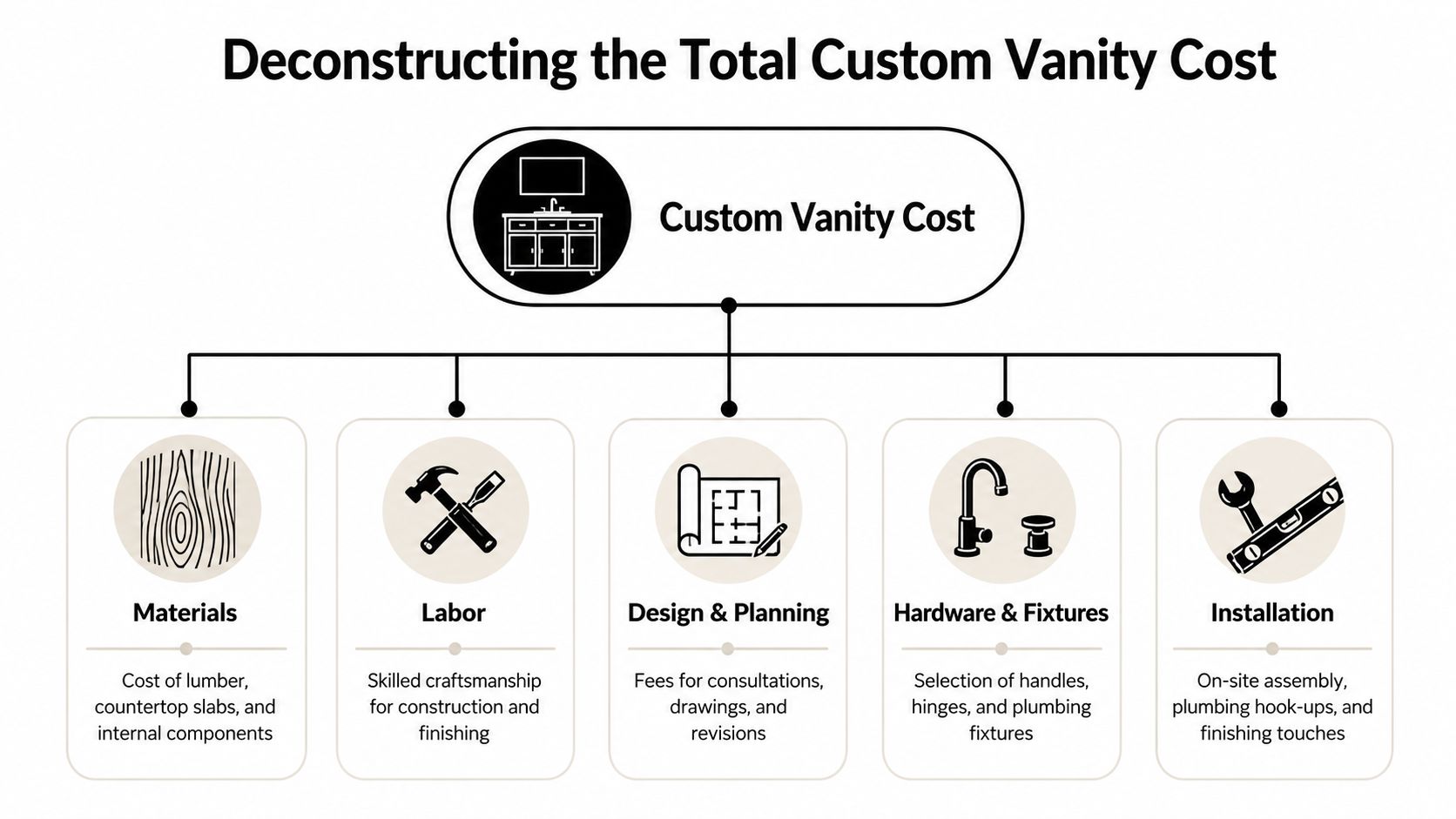
Most homeowners look at one number and ask whether it's high or low. A better way to judge custom bathroom vanity cost is to treat it like a pie made of separate choices. When you split the total into components, you can see exactly where the budget is going and where you still have room to adjust.
The six parts of the price
One of the clearest breakdowns comes from Kitchen & Bath World's custom vanity cost guide, which notes that the total installed cost includes cabinet fabrication ($2,000 to $8,000+), countertops ($300 to $2,000+), sinks/faucets ($200 to $1,500+), hardware ($50 to $300), installation ($500 to $1,500), and potential design fees.
That list matters because homeowners often compare one quote that includes only the cabinet against another that includes more of the full package. Those are not equal comparisons.
If you want to see how vanity pricing fits into the broader room budget, a larger bathroom remodel cost breakdown helps put the vanity in context with tile, plumbing, lighting, and labor.
Why cabinet cost gets the most attention
The cabinet usually drives the conversation because it's the most custom part of the build. It reflects the size, the species or material, the finish process, the number of drawers, the interior layout around plumbing, and whether the design is simple or furniture-like.
A practical way to think about the total is this:
| Cost component | What it covers | Why it moves up |
|---|---|---|
| Cabinet fabrication | Box, doors, drawers, finish | Custom sizing, premium materials, detailed joinery |
| Countertop | Surface above the cabinet | Stone choice, edge profile, cutouts |
| Sinks and faucets | Functional fixtures | Brand level, number of sinks, mounting style |
| Hardware | Pulls, knobs, hinges | Decorative finish and quality level |
| Installation | Delivery, fitting, trim, hookups coordination | Uneven walls, tight spaces, old-house conditions |
| Design fees | Drawings, revisions, planning | More customization and layout development |
A quote that looks lower at first glance may simply be less complete.
That's why I always tell homeowners to ask one question first. Does this number include only the vanity cabinet, or does it include the whole installed vanity project? If you don't clarify that up front, you'll think you're comparing apples to apples when you're not.
Key Factors That Drive Your Vanity Price
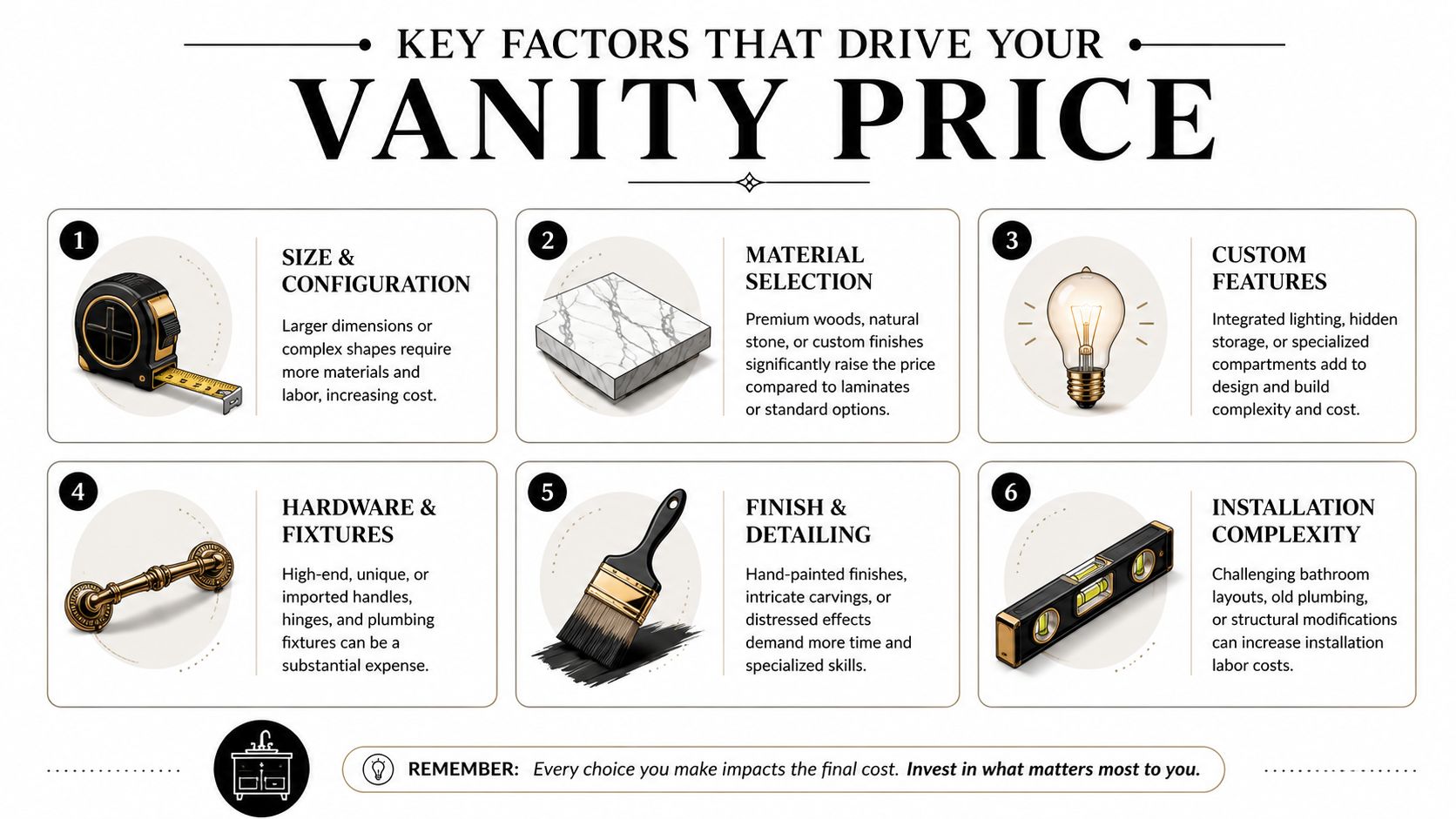
A custom vanity can land at the lower end of the range or climb into premium territory fast. The reason isn't mystery markup. It's usually the result of very specific design choices.
Size and layout change everything
Size is one of the clearest price drivers. A small vanity uses fewer materials, needs less countertop, and usually installs with fewer complications. Once you move into wider cabinets, double sinks, more drawer banks, or unusual shapes, cost rises because the build and fitting both get more demanding.
A useful benchmark from Fin Home Contracting's bathroom vanity cost guide is that a straightforward 48-inch painted maple vanity with full-extension drawers may cost $1,800 to $3,500 for the cabinet alone. That's a good example of how even a clean, practical design can vary based on execution.
For homeowners comparing widths for a shared bath or primary bath, this double vanity size guide is a helpful way to judge whether a larger layout will improve daily use.
Here's a quick look at what tends to raise cost fastest:
- Going wider: More material, longer countertop runs, and often a more involved installation.
- Adding a second sink: You lose some drawer flexibility and increase coordination around plumbing.
- Choosing floating construction: Wall-mounted designs look lighter, but they can require more planning and support.
- Requesting non-standard depths or offsets: Older homes often need this, and that's where true custom earns its keep.
Later in the process, it helps to see details in motion rather than on a static plan. This walkthrough is useful for understanding how design choices affect the build.
Materials and details separate basic from premium
A painted maple vanity and a figured walnut vanity aren't just different looks. They involve different material costs, different finishing expectations, and different buyer goals.
The same goes for details that seem small on paper:
- Drawer construction: Full-extension drawers improve access, especially in a family bath.
- Interior organization: Built-in dividers and grooming storage help, but they add labor.
- Lighting or power integration: Useful in the right project, but they push the piece toward a more complex build.
- Finish style: Clean painted slabs are simpler than decorative bead details or furniture-style feet.
If you want the look of luxury without paying for every luxury feature, put the money into cabinet function first and visible materials second.
Installation complexity is where surprises happen
The vanity itself isn't always the hard part. Fitting it into a real bathroom is where the job can turn.
Walls in older homes may lean. Floors may not be level. Existing baseboard heat, trim returns, or awkward door swings can force design changes. When the room has one odd angle or one off-center drain line, standard assumptions stop working. That's why two vanities of similar size can have very different final prices.
How South Jersey Realities Affect Your Budget
A generic national article won't tell you much about a vanity going into a Moorestown colonial, a Cherry Hill split-level, or an older Camden County bath that was renovated halfway sometime in the past. In South Jersey, homes often carry a mix of original construction, partial updates, and hidden compromises.
Older housing stock changes the math
Many bathrooms in Cherry Hill, Haddonfield, Collingswood, and nearby towns weren't built around today's vanity sizes. Alcoves can be tight, plaster walls can run out of square, and old pipe locations often dictate what can happen without opening more of the room.
That's why plumbing layout has such a strong effect on custom bathroom vanity cost here. As Badeloft's vanity buying guide notes, plumbing relocation can add $400 to $2,200 if the vanity layout changes, which is especially important in older South Jersey homes where pipe locations are often fixed.
If your renovation includes layout rethinking, this South Jersey bathroom remodel planning resource helps homeowners think through room-specific constraints before they commit to a vanity style.
Why local measuring matters more here
In a newer, more standardized bathroom, a semi-custom or stock-like solution can sometimes work well. In an older South Jersey bath, the difference between "close enough" and "made for the room" is often visible the moment the vanity goes in.
Look for these warning signs before you assume a stock cabinet will save money:
- Tight side clearances: If trim, casing, or an adjacent tub crowds the vanity, exact width matters.
- Off-center drain lines: Drawers and sink placement may need to be built around them.
- Uneven walls: Scribes and custom fillers can make the difference between polished and patched.
- Historic proportions: A vanity that feels oversized can make a small room harder to use.
In older South Jersey bathrooms, a custom vanity often solves fit problems that a lower-priced cabinet simply moves to the installer.
That's the local trade-off. Custom costs more up front, but it can prevent the visual compromises and field modifications that make a bathroom look pieced together.
Sample Custom Vanity Budgets From Entry-Level to Luxury
A Cherry Hill powder room and a 1960s family bath in Camden County should not be budgeted the same way. The room size is different, the daily use is different, and the amount of custom work that pays off is different.
I usually see three budget lanes in South Jersey. They are less about “good, better, best” and more about what the room needs to do.
Three common South Jersey project paths
The first path is a small powder room or guest bath. In these spaces, the value of custom work usually comes from fit. A narrower vanity, a reduced depth, or a cabinet built around a tight wall can make the room feel settled instead of squeezed. Costs stay more controlled when the cabinet design is simple and the materials are practical.
The second path is the working family bathroom. Storage considerations begin to influence the price. Homeowners usually get the best return from wider drawers, a durable painted finish, and a top that holds up to daily use. In many South Jersey homes, this category also covers hall baths that need to serve kids, guests, and morning traffic without feeling overbuilt.
The third path is the primary bath. Here, the vanity often becomes a focal point, with a longer run, stronger symmetry, furniture-style details, and higher-end materials. That can be a beautiful result, but it also means more labor, more finish work, and often a more demanding countertop package. If you're collecting visual ideas before committing, this article on selecting luxury bathroom vanities is a useful style reference.
Sample custom vanity project costs
| Project Scenario | Vanity Size | Key Features | Estimated Total Cost |
|---|---|---|---|
| Smart powder room update | 24 to 30 inches | Custom width, simple painted cabinet, modest top, single sink | Often starts at the lower end of custom vanity pricing |
| Functional family bathroom | Mid-size vanity | Better drawer storage, durable finish, practical hardware, single or shared-use layout | Usually sits in the middle of the custom range, depending on materials and site conditions |
| Primary bath statement piece | 60 to 72 inches | Premium finish, larger top, double-sink potential, furniture-style detailing | Commonly reaches the upper end of the range for custom cabinetry and tops |
Those ranges shift fast once the design gets more specialized.
A compact vanity can stay relatively efficient if it uses a straightforward box, standard hardware, and a painted finish. A family bath tends to cost more because homeowners ask more of it. Better drawer organization, stronger finishes, and more usable storage add labor, but they usually improve the room in ways you notice every day.
Large primary vanities are where budgets widen the most. Width alone is not the whole story. Double sinks, furniture detailing, upgraded wood species, more complex finishes, and premium stone can all move the project into a different price tier.
A few patterns show up again and again in South Jersey projects:
- Small baths benefit from exact sizing: In a tight room, custom dimensions often matter more than decorative upgrades.
- Family baths reward practical storage: Deep drawers and a durable finish usually outperform fancier details.
- Primary baths carry finish-driven costs: The look homeowners want in these rooms often adds more than the cabinet size itself.
For homeowners still comparing layouts and styles, this guide to the best bathroom vanities for different needs can help narrow the right direction before you price a custom build.
How to Save Money on Your Custom Vanity
The cheapest vanity usually isn't the best value. The smarter goal is to spend where the room benefits every day and simplify the parts that don't need to be custom theater.
Where to spend and where to simplify
Save money by reducing complexity, not by stripping out the core function. A well-built painted vanity with a straightforward door and drawer layout often performs better than a showpiece design loaded with details you won't notice after a month.
Here are the moves that usually help most:
- Keep the plumbing layout if you can: Moving fixtures adds cost and coordination.
- Choose a simpler silhouette: Flat panels, clean drawer fronts, and standard proportions reduce labor.
- Put your budget into the cabinet box and drawers: Good storage and durable construction outlast trend-driven upgrades.
- Be selective with premium materials: A dramatic wood species or luxury top can be beautiful, but not every bath needs both.
- Avoid late changes: Revisions after materials are selected tend to ripple through the job.
A custom project stays affordable when the design is disciplined, not stripped down.
The buffer that keeps a project calm
One of the most practical budgeting habits has nothing to do with style. It has to do with uncertainty. According to George Build Shop's custom vanity cost article, homeowners are often unaware of total landed costs, and adding a 25% buffer to estimates helps cover unforeseen issues.
That advice matters in South Jersey, where older bathrooms can reveal wall repairs, plumbing complications, or small field adjustments once demolition begins.
A calm budget usually has three layers:
- The vanity allowance for cabinet, top, fixtures, and install.
- The room allowance for tile, paint, lighting, and related work.
- The contingency so one surprise doesn't force you into rushed compromises.
That last layer is what keeps a project from feeling good on paper and stressful in real life.
Get a Tailored Estimate for Your South Jersey Home
Once you understand the moving parts, custom bathroom vanity cost becomes much less intimidating. You're no longer staring at one broad number. You're choosing size, layout, materials, installation approach, and how much customization your room needs.
What to have ready before you ask for pricing
A good estimate starts with a few practical inputs:
- Basic measurements: Width, depth, ceiling height, and door swing clearance.
- Photos of the current bath: Especially the vanity wall and nearby trim or obstacles.
- Your sink plan: Keep one sink, shift the sink, or consider two.
- Style direction: Painted, wood tone, floating, furniture-style, modern, or traditional.
- Your target investment range: Not an exact number. Just the lane you want to stay in.
If you're budgeting the whole renovation rather than cabinetry alone, a planning tool like this home flooring budget tool can also help you think about how separate finish categories add up across the room.
What a useful estimate should include
A solid estimate should be clear about what's included and what still needs confirmation. That means separating cabinet work from countertop, fixtures, installation, and any likely trade coordination. It should also flag whether the existing plumbing location supports the design you want.
The best next step is a guided design conversation, not blind shopping. A measured discussion around fit, finish, and room conditions will always produce a better number than guessing from a photo or trying to compare your bathroom to a generic online example.
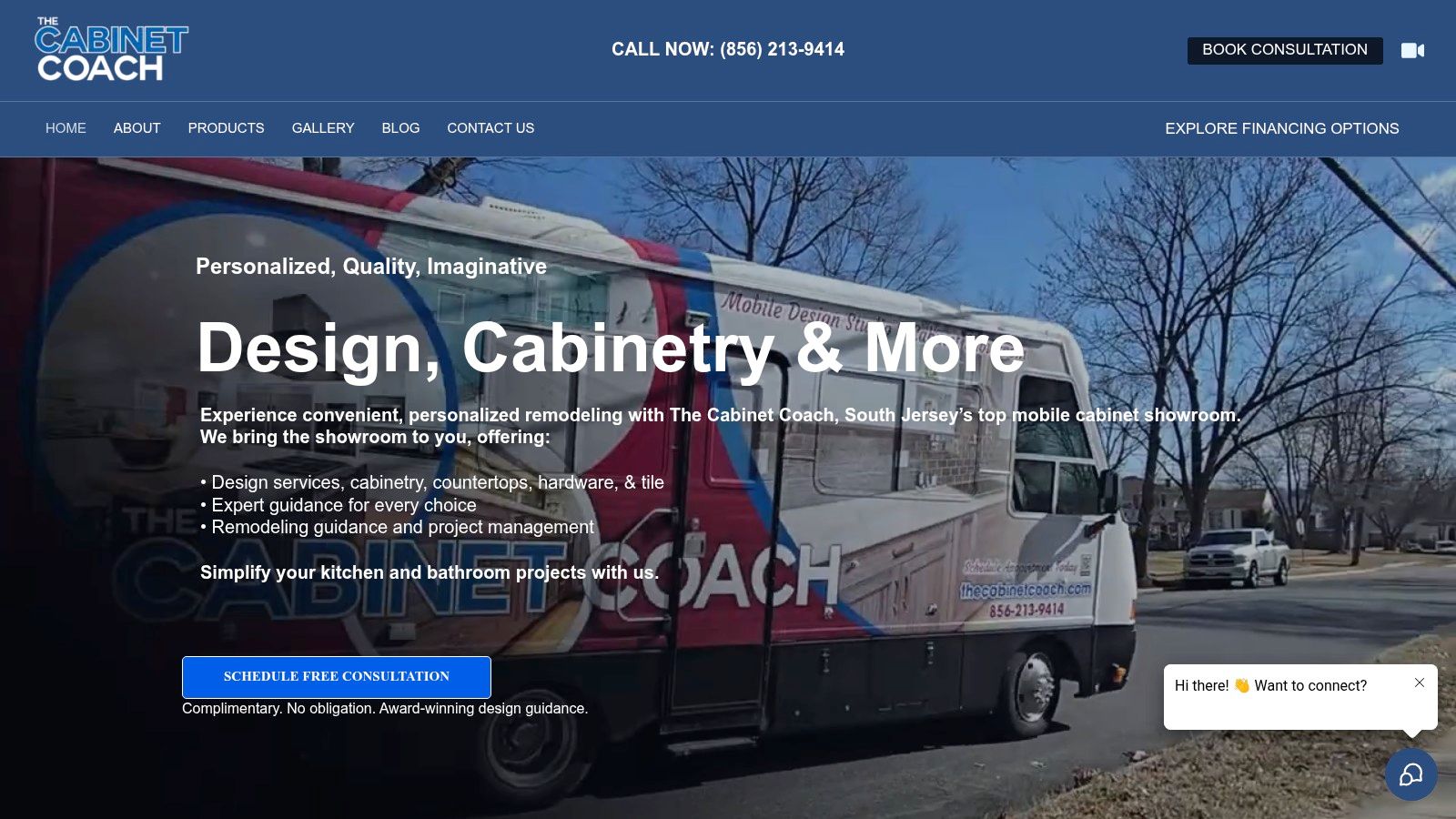
If you're ready to price a vanity that fits your South Jersey bathroom, The Cabinet Coach offers a practical next step. Their mobile showroom and complimentary video consultation make it easier to review styles, materials, layout options, and budget priorities without turning the process into another full-time job.