
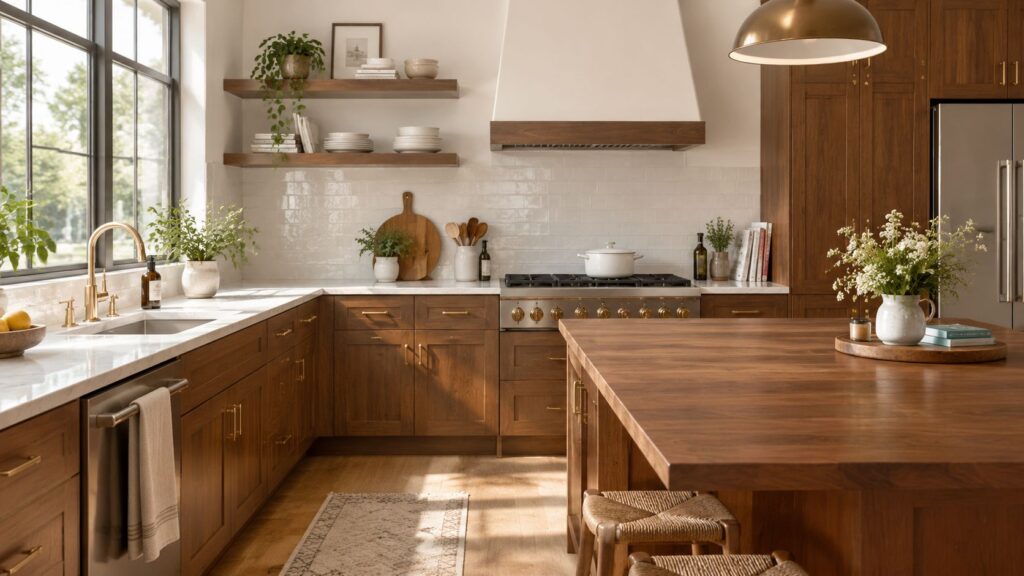
A homeowner in Cherry Hill wants the warmth of brown cabinetry, but not a kitchen that feels dim, dated, or locked into an older decorating era. That concern is reasonable. Brown can look bright and contemporary in one room, then heavy and flat in another, depending on the stain, door profile, natural light, layout, countertop, backsplash, hardware, and the architectural character of the home.
The most successful brown kitchen cabinets ideas treat brown as a design strategy rather than a single color. The photo-led examples below show how the same general palette can become farmhouse, transitional, rustic, contemporary, or subtly timeless in homes around South Jersey, from older Colonials in Haddonfield to renovations in Mount Laurel and Moorestown.
The Cabinet Coach can bring curated cabinetry, countertops, hardware, and tile selections directly to homeowners through its mobile showroom service. The process begins with a complimentary video consultation, so you can discuss the room before comparing finishes in person. If you're also weighing ways to make white cabinets pop, brown can provide the warmer contrast that keeps a white scheme from feeling sterile.
Table of Contents
- 1. Two-Tone Brown and White Kitchen Cabinets
- 2. Rich Chocolate Brown Shaker-Style Cabinets
- 3. Warm Caramel and Natural Wood Brown Cabinets
- 4. Espresso and Dark Walnut Contemporary Brown Cabinets
- 5. Brown Cabinets with Mixed Materials and Open Shelving
- 6. Brown Cabinets with Coordinated Hardware and Fixtures
- 7. Brown Cabinets with Quartz or Marble Countertops
- 8. Brown Cabinets with Tile or Stone Backsplash
- 9. Brown Cabinets with Island and Accent Colors
- 10. Brown Cabinets in Transitional Design Style
- Brown Kitchen Cabinets: 10-Option Comparison
- Turn Inspiration Into a Cabinet Plan
1. Two-Tone Brown and White Kitchen Cabinets
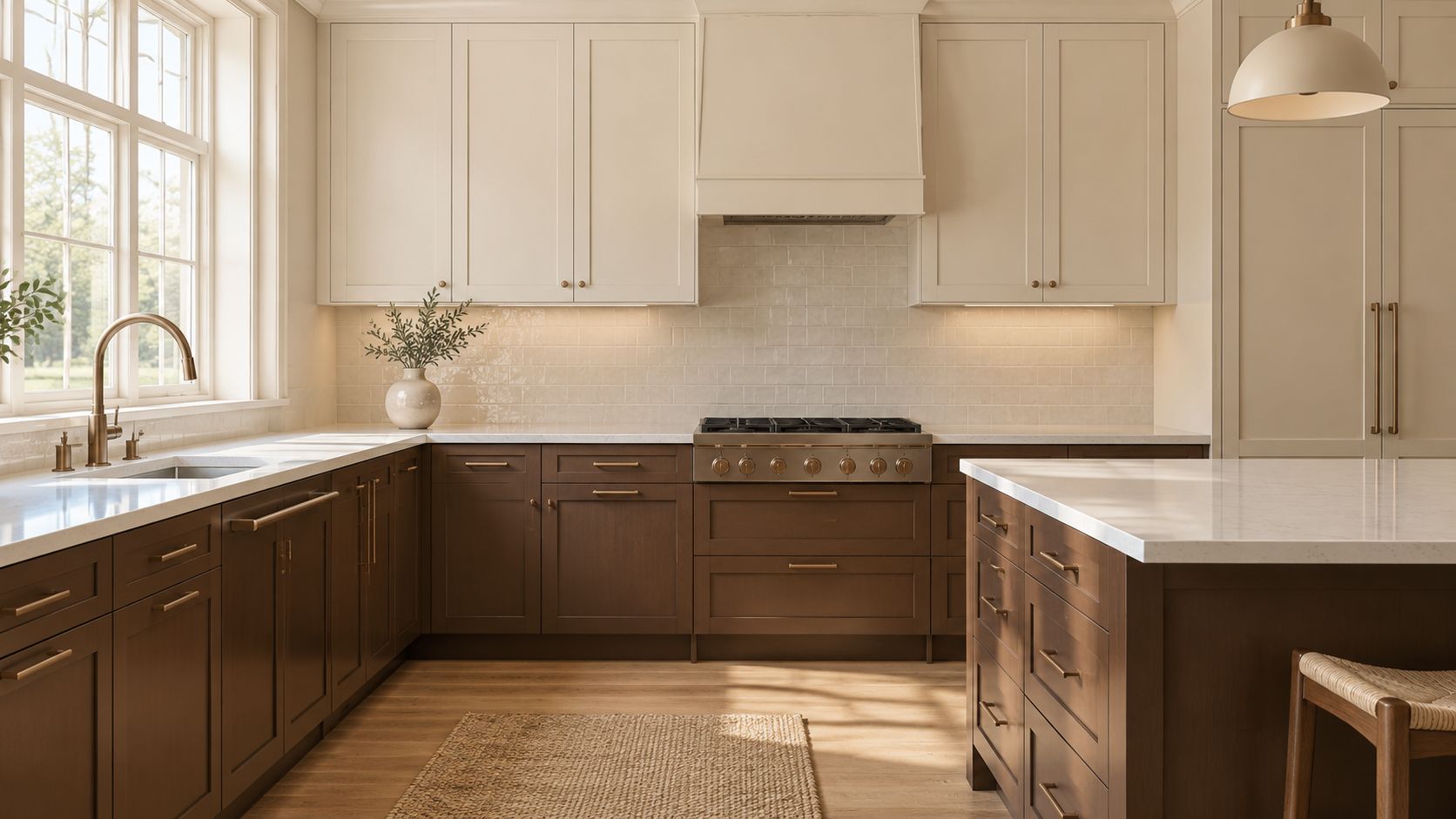
Two-tone cabinetry is one of the safest ways to introduce brown without allowing it to dominate the room. Use a warm brown stain on the base cabinets and island, then choose ivory, cream, or soft white uppers to keep the upper half visually open. The arrangement works especially well in Cherry Hill-area modern farmhouse kitchens, transitional renovations in Voorhees and Mount Laurel, and older Colonial homes throughout Camden County that need a fresher layout without losing architectural warmth.
A warm white is usually more cohesive than a stark, blue-white paint. It can connect the cabinet finish to a beige floor, a warm quartz pattern, or existing wood trim. A neutral countertop, such as a softly veined quartz or light granite, should run through both cabinet colors so the room feels intentional rather than divided.
Bridge the two cabinet finishes
Hardware can unify the palette. Brushed nickel creates a cleaner transitional look, while antique bronze or muted brass adds warmth to the brown stain. Use the same finish on pulls, knobs, the faucet, and visible lighting where possible. That repetition matters more than choosing a fashionable metal in isolation.
Practical rule: Let the countertop and hardware connect the brown and white cabinets. If every surface introduces a new undertone, the kitchen will look assembled instead of designed.
Lighting deserves early attention. Under-cabinet fixtures should wash the backsplash evenly, while pendants or recessed fixtures should prevent the brown bases from becoming a dark band. Before ordering, compare brown samples beside the room's flooring and trim in both daylight and evening light. For more layout examples, review two-tone kitchen cabinet design.
2. Rich Chocolate Brown Shaker-Style Cabinets
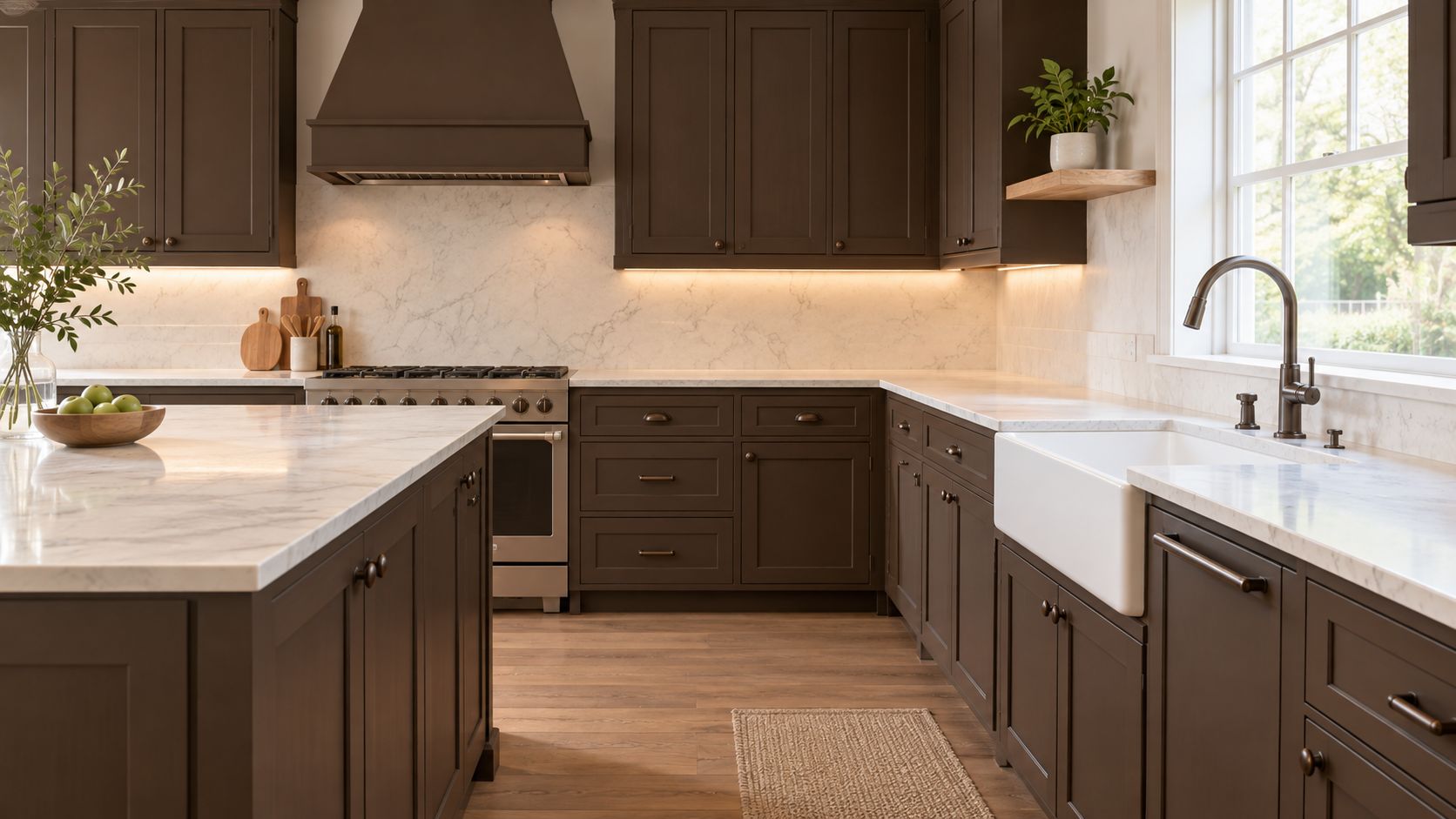
In a narrow Haddon Heights kitchen with limited daylight, a full wall of chocolate Shaker cabinets can feel heavy by evening. The same recessed-panel profile can look composed and welcoming in a brighter Haddonfield home, where its clean lines support traditional architecture without the ornament of a raised-panel door. For historic restorations in Bordentown or Burlington City, that restraint often suits the house better.
The finish needs balancing. Pair dark doors with a light countertop, such as white quartz or light granite, and choose a backsplash with some reflection but no high-gloss glare. A warm, softly veined surface can connect the brown to existing wood trim, while a cooler white creates sharper contrast. Under-cabinet lighting should wash the backsplash evenly, and ceiling fixtures should keep the base cabinets from reading as one dark band.
Add relief to a dark run
Open shelving or a few glass-front cabinets can interrupt a long wall of solid doors. Keep the change selective so needed storage remains protected behind closed fronts. Shelves suit displayed ceramics, wood boards, and everyday glassware, but they also collect dust and demand more visual upkeep.
A matte or satin surface usually handles daily kitchen use more comfortably than a reflective finish. It softens glare and makes fingerprints less prominent. Oil-rubbed bronze and antique brass support a traditional direction. Brushed nickel gives the same cabinet profile a cleaner transitional edge. Coordinate the chosen metal across pulls, knobs, the faucet, and visible lighting.
For South Jersey homes, review the cabinet sample beside flooring, trim, and countertop material in daylight and evening light before ordering. In a resale-focused renovation, durable construction and a finish that can tolerate regular use may matter more than choosing the darkest stain. The cabinet box, door material, and finish all influence how long the installation serves the household. Cabinet durability guidance from Martha Stewart places upgraded plywood-box and durable factory-finish cabinets in the 15 to 25-plus year service range, while custom, higher-end construction can reach 30-plus years with proper installation and care.
3. Warm Caramel and Natural Wood Brown Cabinets
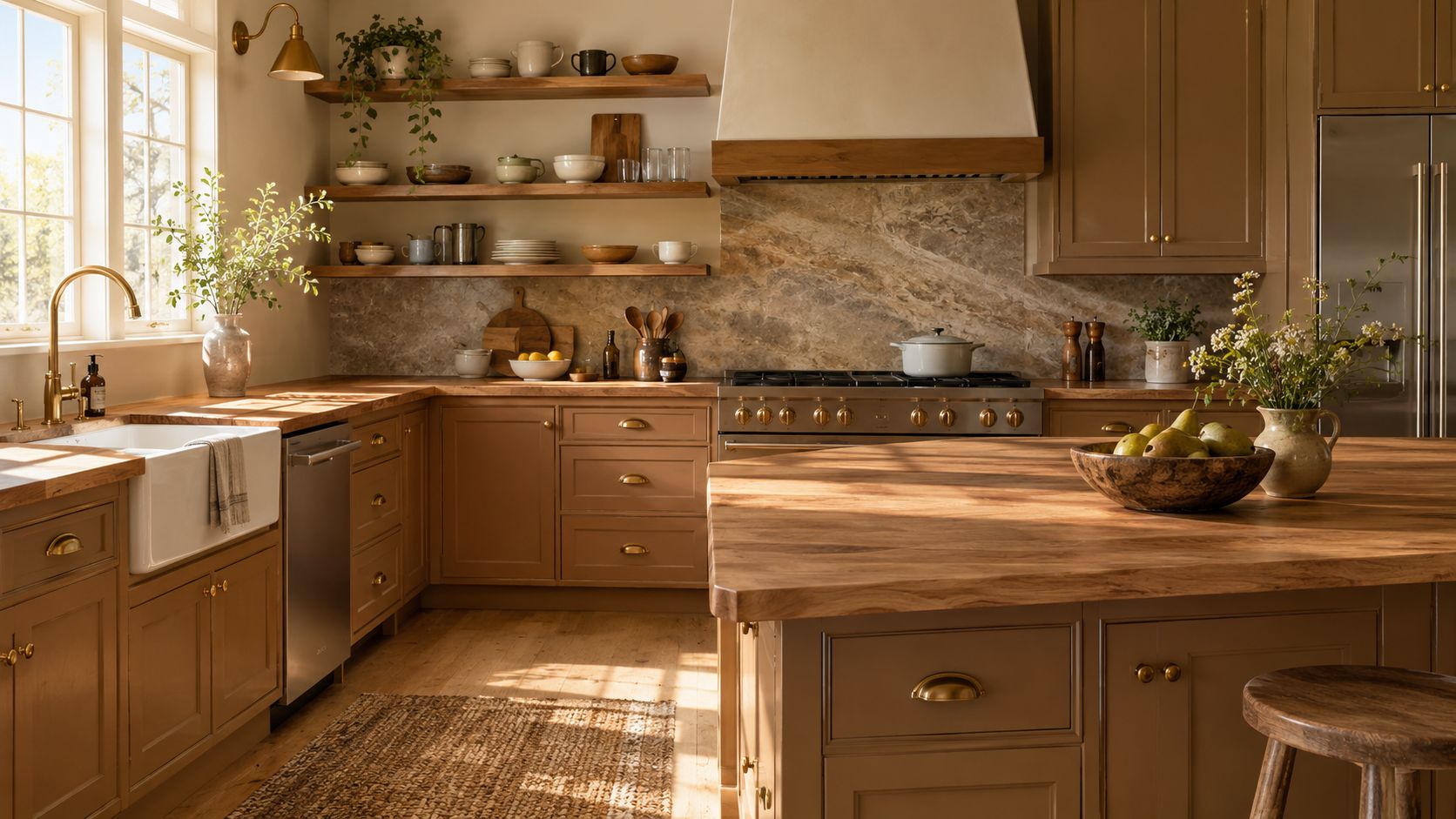
Caramel, honey, and medium wood tones bring a softer expression to brown cabinetry. Instead of relying on a solid painted color, this approach lets grain supply variation across the doors. That organic quality fits farmhouse kitchens in Medford and Evesham Township, rustic-modern rooms in Moorestown and Mount Laurel, and transitional renovations in Collingswood and Haddonfield where homeowners want warmth without a heavily traditional appearance.
Natural wood also works well beside other tactile materials. A butcher-block section can echo the cabinet tone, while a full stone countertop keeps the room practical around the sink and cooking areas. For the backsplash, white subway tile, travertine, slate, or another quiet natural stone can reinforce the earthy direction. Avoid choosing a backsplash that has a competing yellow or red cast unless the sample is tested beside the cabinet door.
Make the grain intentional
Reclaimed or hand-scraped wood-look doors can add character, but too much distressing may make a new kitchen look themed. A low-gloss or matte finish usually feels more current than a shiny surface, and it hides day-to-day smudges more gracefully. The wood hood or range surround can become an architectural feature, although it should relate closely to the cabinet stain rather than introduce another brown.
Warm lighting supports this palette. Fixtures with a warm glow can make caramel cabinetry welcoming, but excessive warmth may exaggerate yellow undertones. Use under-cabinet lighting to illuminate the work surface, then judge the finish at night before committing.
Brown wood looks best when the grain has room to breathe. Pair it with quieter surfaces instead of making every material rustic, patterned, and textured.
Open shelves are useful here for ceramics, cutting boards, and cookbooks, particularly near a coffee station or breakfast area. Keep the displayed pieces restrained so the grain remains the main visual feature. In South Jersey homes with existing hardwood flooring, bring a cabinet sample to the room rather than assuming two wood finishes will coordinate automatically.
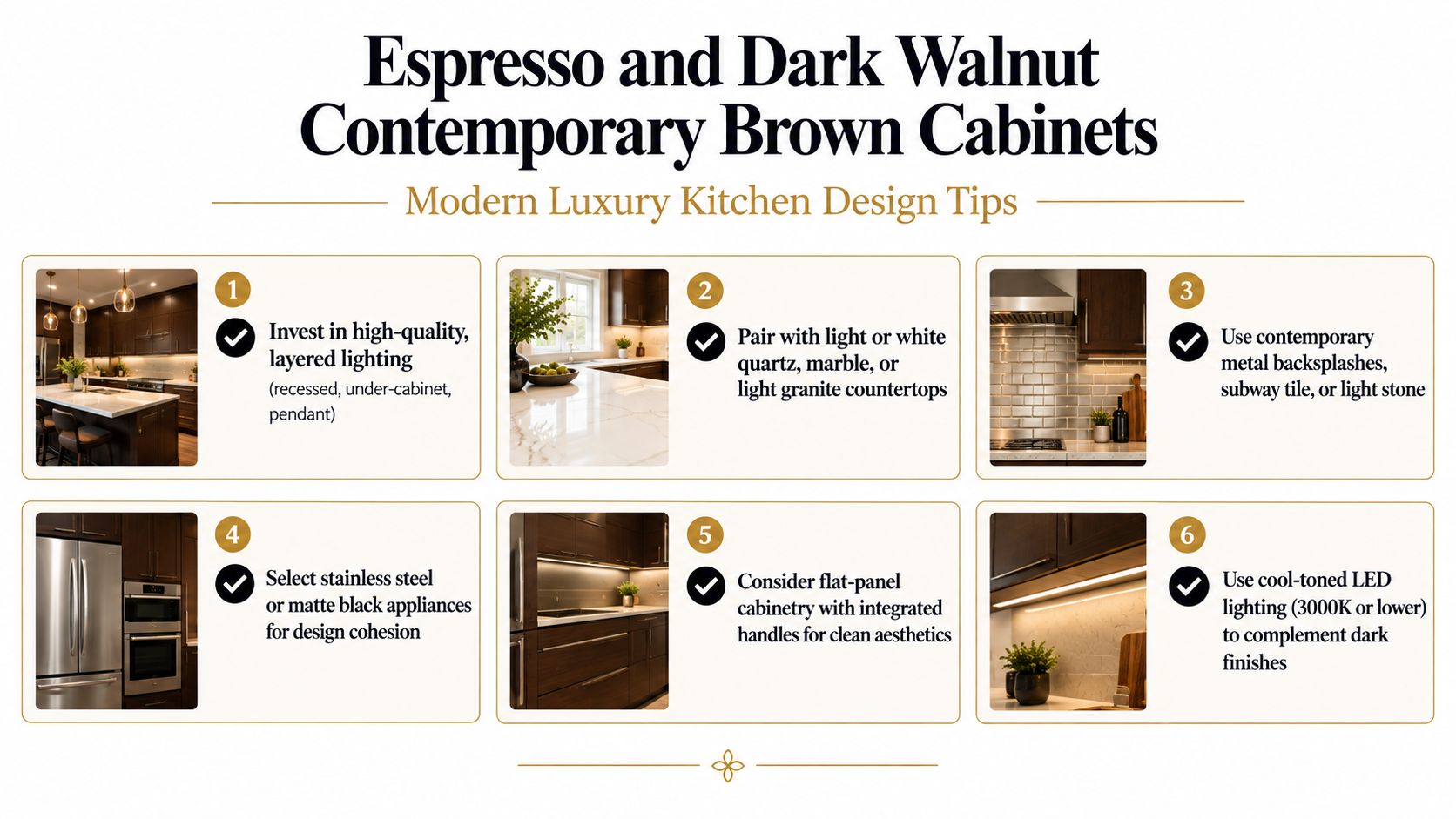
4. Espresso and Dark Walnut Contemporary Brown Cabinets
Espresso and dark walnut create a confident, modern kitchen when the cabinetry has a simple profile and the room has enough visual relief. Flat-panel doors, integrated pulls, and restrained seams keep the finish from drifting into an ornate or overly themed look. The palette suits luxury renovations in Haddonfield and Medford, modern homes in Mount Laurel and Moorestown, and upscale new construction around Cherry Hill.
Dark cabinetry needs layered lighting, not just a central ceiling fixture. Combine recessed or surface-mounted general lighting with under-cabinet illumination and pendants over the island. Stainless steel appliances can add a crisp technical note, while matte black appliances create a more monochromatic composition. The choice should follow the rest of the room, including window frames, lighting, and plumbing fixtures.
Keep the dark finish from closing the room
Light quartz, marble, or light granite gives espresso cabinets a clear visual counterweight. A pale stone backsplash can extend that brightness, while a metal backsplash introduces a sharper contemporary edge. If the entire perimeter is dark, consider a light wood or cream island, or use open shelving to interrupt a tall run of upper cabinetry.
Cool lighting can help dark finishes retain definition, but an overly blue cast can make brown look gray or lifeless. Select fixtures in a neutral, comfortable range and test them with the actual stain. The same finish may appear reddish under one lamp and nearly charcoal under another.
A practical disadvantage is that dark smooth doors can reveal dust, crumbs, and streaks more readily than a medium wood grain. That doesn't make espresso impractical, but it does make finish quality and cleaning expectations important. Choose durable construction, use appropriate manufacturer-approved cleaners, and plan strong task lighting so the countertop remains easy to use.
For buyers concerned that brown may be temporary, the broader direction is more useful than a single color forecast. Houzz's 2026 U.S. Kitchen Trends Study places wood cabinetry ahead of white in renovated kitchens, supporting natural and stained wood approaches rather than treating every brown finish as a dated holdover.
5. Brown Cabinets with Mixed Materials and Open Shelving
Brown cabinetry becomes lighter and more expressive when paired with open shelving, metal, and stone. Use closed brown doors for pantry goods, cookware, and less presentable storage, then reserve floating shelves for objects you use often or enjoy seeing. This arrangement works in industrial-modern kitchens in Collingswood and Haddonfield, transitional farmhouse rooms in Medford and Moorestown, and Mount Laurel kitchens with a dedicated coffee bar.
The shelves should have a job. Place mugs, bowls, or serving pieces near the area where they're used, rather than creating a display that requires constant rearranging. Strong brackets or properly installed concealed supports matter because shelves carrying stoneware become heavy quickly. Keep the material consistent with the room, such as walnut shelves with bronze brackets or stained wood beside a stone countertop.
Use openness selectively
Open shelving can make a dark kitchen feel less crowded, but it removes a layer of protection from dust and cooking residue. Don't place delicate or rarely used objects directly beside a cooktop. A shelf near the range should be easy to wipe, and the area should receive under-shelf lighting if it doubles as a work zone.
A mixed-material kitchen can become chaotic when every surface competes. Choose one primary brown, one metal family, and one countertop or backsplash texture. Ceramic dishware in cream, charcoal, or muted green will usually sit more comfortably against brown than a collection of unrelated bright colors.
A coffee station can be a useful application because the open shelf supplies display space while the lower cabinets conceal supplies and small appliances. Add a dedicated outlet plan before construction, and consider a drawer for filters, scoops, and accessories.
The following video can help you study how dark cabinetry, shelving, and contrasting surfaces read together in a finished kitchen.
6. Brown Cabinets with Coordinated Hardware and Fixtures
Hardware can make a brown kitchen feel polished, traditional, relaxed, or distinctly contemporary. The cabinet stain comes first, but its undertone should guide the metal choice. Warm brown with red or caramel notes often works naturally with aged brass, bronze, or copper, while a cooler walnut can support brushed nickel, chrome, or matte black.
Don't select pulls in isolation. A faucet, pendant, cabinet knob, light fixture, and range hood can all occupy the same sightline, especially in an open-concept Cherry Hill or Moorestown renovation. Coordinating those elements doesn't require every finish to be identical, but the differences should look deliberate.
Match the metal to the room
A designer kitchen in Haddonfield may benefit from antique brass that emphasizes the cabinet warmth. A cleaner Medford or Mount Laurel renovation might use brushed nickel to keep the room brighter. Matte black can outline brown cabinetry effectively, but it may feel stark if the countertop and backsplash are also cool and high contrast.
Hardware scale matters as much as finish. Long linear pulls suit slab doors and contemporary kitchens, while cup pulls or smaller knobs can support a farmhouse or traditional profile. Use consistent proportions across drawers and doors, and consider how the hardware feels in the hand, not just how it photographs.
Finish test: Photograph cabinet samples with the proposed faucet and light fixture. A metal that looks soft in a showroom can look harsh beside a reddish stain or a bright white countertop.
Extend the metal decision to hinges, shelf supports, backsplash trim, and appliance handles where those parts remain visible. Before ordering, compare physical samples under the kitchen's installed lighting. The cabinet hardware selection guide can help organize the choice around style, function, and finish coordination.
7. Brown Cabinets with Quartz or Marble Countertops
Light quartz or marble gives brown cabinetry a modern surface to work against. The pairing is especially useful when the cabinets carry strong grain or a deep stain and the room needs visual brightness. Contemporary kitchens in Cherry Hill and Voorhees, modern farmhouse renovations in Medford and Evesham, and upscale projects in Haddonfield and Mount Laurel can all use this contrast, provided the stone's undertones relate to the cabinets.
White quartz creates the clearest separation, but a soft white is usually easier to integrate than a stark, cool white. Subtle veining can connect the countertop to a warm backsplash or cabinet undertone without overwhelming the room. Dramatic veining has a stronger personality, so it should be evaluated against the cabinet grain and the amount of visual activity already present.
Plan the edge and backsplash together
A waterfall edge on an island can showcase the stone, but it also makes the island a major focal point. Use it when the layout has enough space for the slab to read clearly and when the side panel won't interfere with seating or circulation. For a quieter transitional kitchen, a standard eased or softly rounded edge may be more appropriate.
Marble offers natural variation and an established material character, but it requires a homeowner who accepts patina and follows care guidance. Quartz is engineered and generally selected for a consistent appearance and straightforward maintenance routine. Neither choice removes the need for accurate templating and skilled installation.
The backsplash should bridge, not compete. A creamy tile can echo the countertop background, while a warm gray or taupe tile can connect brown cabinets to existing flooring. Bring cabinet, countertop, and backsplash samples into the actual South Jersey home before finalizing. The quartz kitchen work surface guide provides additional context for coordinating a worktop with the rest of the kitchen.
8. Brown Cabinets with Tile or Stone Backsplash
A backsplash gives brown cabinets texture, contrast, and a second opportunity to control the room's brightness. Light subway tile is a dependable choice for farmhouse kitchens in Medford and Moorestown, while a restrained mosaic can suit transitional designs in Haddonfield. In contemporary Cherry Hill or Voorhees renovations, large-format stone-look tile can create a calmer background than a small, busy pattern.
The grout color changes the effect. Warm tan, khaki, or soft beige grout can blend with a caramel or walnut stain, while a lighter grout emphasizes the tile pattern and makes the backsplash more prominent. With dark cabinets, very high contrast between tile and grout may create visual noise across a large wall.
Let the backsplash carry the right amount of pattern
Natural stone introduces variation that can make a brown kitchen feel layered and established. Slate, travertine, and textured stone work best when their colors repeat elsewhere, such as in the countertop, floor, or hardware. A raised pattern or mosaic can be attractive behind a range, but using it across every wall may compete with wood grain.
Extend the backsplash behind the cooktop for continuity and easier cleaning. A 4-by-8 subway tile can feel more current than a smaller traditional format, while pencil or chair-rail trim can give exposed edges a finished transition. Use trim only where it solves an edge condition or frames a deliberate feature.
A brown cabinet already grounds the room. The backsplash should add light, texture, or connection, not introduce a completely unrelated color story.
Test tile in the room with the cabinet door and countertop sample. Glossy ceramic reflects light and can brighten a dim wall, while matte tile produces a quieter, more tactile effect. For more pairing guidance, review backsplashes for dark cabinets.
9. Brown Cabinets with Island and Accent Colors
A contrasting island breaks up a large field of brown cabinetry and gives an open-concept kitchen a clear center. Keep the perimeter in warm brown, then use a white, light gray, softer wood, navy, green, or charcoal island depending on the room's architecture and daylight. White islands suit bright Cherry Hill and Voorhees kitchens, while muted gray can feel calmer in Medford and Moorestown homes.
The island isn't only a color opportunity. It can define seating, food preparation, storage, and the transition between kitchen and living space. Choose the countertop after considering both cabinet colors. A light stone may connect brown perimeter cabinets to a painted island, while a wood surface can make a lighter island feel less formal.
Use the island to solve a layout problem
Add drawers where cooks work, deep storage for pots, and seating only where circulation remains comfortable. An island that looks impressive in a photo can make a narrow kitchen frustrating if it blocks appliance doors or creates an awkward path between the sink, range, and refrigerator.
Lighting can reinforce the distinction. A linear pendant or a pair of fixtures over the island gives the accent color a clear zone, while matching hardware keeps it connected to the perimeter. Open shelving on one end can reduce the visual mass, but it should be planned around storage needs rather than added purely for decoration.
Navy and green are useful accent colors because they provide contrast without forcing the room into a black-and-white scheme. The broader move toward earthy and organic palettes supports this kind of restrained color layering. One 2025 designer color report identifies green, blue, and brown as significant parts of that wider palette, so brown can act as a stable base rather than the room's only color.
10. Brown Cabinets in Transitional Design Style
Transitional design gives brown cabinetry its most flexible setting. The style combines the comfort of traditional materials with cleaner contemporary lines, which makes it especially useful in suburban Cherry Hill and Moorestown kitchens, Colonial renovations in Haddonfield and Haddon Heights, and Mount Laurel or Medford homes that need a timeless update.
Choose a brown finish with subtle character rather than exaggerated distressing. A Shaker or restrained recessed-panel door can acknowledge the home's architecture, while contemporary appliances, simple lighting, and organized storage keep the room from feeling historically staged. Neutral countertops in white, beige, or soft gray allow the cabinet stain to remain warm without turning the entire kitchen brown.
Balance old and new deliberately
Crown molding can connect new cabinets to an older home's trim, but too much ornament makes the room feel formal. Pair traditional cabinet details with sleek pulls, integrated appliances where practical, and a backsplash with quiet texture. A combination of closed storage and carefully placed open shelving provides both function and visual relief.
The floor deserves attention. Wood-toned flooring can coordinate beautifully with brown cabinetry, but it doesn't need to match exactly. Contrast in value or grain helps each surface remain distinct. Existing hardwood in a South Jersey Colonial should be viewed beside cabinet samples at several times of day before the stain is selected.
This style also supports a sensible resale strategy. Houzz's 2024 and 2026 cabinet trend comparison shows a multi-year shift from white-dominant kitchens toward wood, while neutral walls and surfaces remain common. That combination suggests a practical path: choose warm brown cabinetry, then keep the countertop, backsplash, and wall colors adaptable.
For a more detailed look at the style, explore transitional kitchen cabinets.
Brown Kitchen Cabinets: 10-Option Comparison
Brown cabinetry changes character with the surrounding surfaces and the available light. Use the comparison below by visual strategy and application, then judge each option beside the flooring, trim, appliances, and lighting in the South Jersey home.
| Style | Implementation 🔄 | Resource Requirements ⚡ | Expected Outcomes ⭐📊 | Ideal Use Cases 💡 | Key Advantages ⭐ |
|---|---|---|---|---|---|
| Two-Tone Brown and White Kitchen Cabinets | Moderate, requiring coordinated paint and stain selection | Moderate, with two finishes, matching hardware, and added labor | Brighter, more spacious appearance with broad buyer appeal | Transitional and modern farmhouse kitchens | Brown adds warmth while white keeps the room visually open |
| Rich Chocolate Brown Shaker-Style Cabinets | Low–Moderate, with standard construction and straightforward installation | Moderate, including quality stain, wood, hardware, and suitable lighting | Durable, timeless appearance that conceals everyday wear | Traditional, farmhouse, and Colonial renovations | Shaker lines keep the dark finish practical and restrained |
| Warm Caramel and Natural Wood Brown Cabinets | Moderate, requiring careful wood and finish selection | Moderate–High, with quality wood and periodic maintenance | Welcoming, organic appearance with visible grain | Farmhouse, rustic, and transitional kitchens | Grain adds texture and makes small marks less noticeable |
| Espresso and Dark Walnut Contemporary Brown Cabinets | High, requiring precise detailing and planned lighting | High, including premium cabinetry, finishes, lighting, and appliances | Dramatic, upscale modern appearance | Luxury renovations and contemporary homes | Strong contrast with stainless steel and light countertops |
| Brown Cabinets with Mixed Materials and Open Shelving | Moderate–High, requiring secure shelving and material coordination | Moderate, with wood, metal, stone, and styling work | Airier, more personal kitchen with display space | Curated kitchens and farmhouse-modern interiors | Open shelving breaks up a solid cabinet wall and adds texture |
| Brown Cabinets with Coordinated Hardware and Fixtures | Moderate, requiring detailed finish and fixture planning | Moderate–High, depending on hardware and fixture quality | Cohesive, polished appearance that creates a high-end impression | Designer kitchens and detailed renovations | Consistent metal finishes make later updates easier to manage |
| Brown Cabinets with Quartz or Marble Countertops | Moderate, requiring accurate templating and skilled installation | High, especially for material and professional installation | Quartz offers durable, low-maintenance performance; marble supplies a luxurious focal surface | Kitchens planned for long-term use and formal entertaining | Countertop selection controls whether the brown reads casual or refined |
| Brown Cabinets with Tile or Stone Backsplash | Moderate, with careful tile layout and grout work | Moderate, varying by material and installation labor | Wall protection with a customizable focal point | Homeowners wanting a visible update without replacing cabinets | Tile can introduce light, pattern, or natural texture |
| Brown Cabinets with Island and Accent Colors | Moderate–High, requiring layout and color coordination | High, including island cabinetry, countertop, and labor | Clear work zones and a defined gathering point | Larger kitchens and open-concept layouts | An island provides contrast and a controlled place for color |
| Brown Cabinets in Transitional Design Style | Moderate, balancing traditional details with current materials | Moderate, with carefully matched cabinetry and surfaces | Adaptable, enduring appearance with broad appeal | Homeowners combining older South Jersey architecture with updated function | The style connects existing trim with simpler hardware and surfaces |
For a bright result, pair brown cabinets with a light quartz countertop, restrained backsplash, and layered task lighting. In a shaded kitchen or narrow galley, dark walnut and espresso finishes need stronger overhead and under-cabinet illumination. Warm caramel works well with existing wood floors, but compare samples in daylight and evening light so yellow or red undertones do not clash with the room.
Maintenance also varies by strategy. Quartz is easier to maintain than marble, while open shelving demands regular dusting and orderly storage. A backsplash can protect the wall behind a range, but textured grout requires more cleaning. In South Jersey Colonials, farmhouses, and newer open-plan homes, brown cabinetry can support resale appeal when permanent surfaces remain neutral and the accent color stays controlled.
Turn Inspiration Into a Cabinet Plan
A brown cabinet plan should begin with the room, not the saved photograph. Dark walnut may feel airy beside a large window, yet heavy in a shaded galley kitchen. Caramel stain can complement natural flooring, then look too yellow beside cool gray surfaces. Choose a finish that supports the South Jersey home's existing light, trim, flooring, and architecture.
Begin with the lighting plan. Record where daylight enters, then review under-cabinet, ceiling, and island fixtures. Brown shifts under warm, neutral, and cool bulbs, so assess samples in the actual room at different times of day.
Next, identify the cabinet's undertone. Place reddish, golden, neutral, and gray-brown samples beside the floor, trim, appliances, countertop, and backsplash. A close match is not always necessary, but competing undertones can make the whole kitchen feel unsettled.
Storage should guide the layout. Open shelving can break up a solid wall and make brown cabinetry feel lighter, but it should not displace pantry capacity or frequently used storage. Specify drawers, pull-outs, corner storage, and tall cabinets where they improve preparation and cleanup.
Review the complete surface group together. Cabinets, countertop, backsplash, hardware, faucet, and lighting should either repeat a finish or provide deliberate contrast. Light quartz and restrained tile help dark brown read brighter. Marble adds movement but requires more care. Brushed metal hardware can soften a rustic scheme, while black hardware reinforces a contemporary one.
Cabinet construction belongs in the decision as well. Brown-stained wood or plywood-veneer doors may offer repair and refinishing advantages over lower-grade assemblies. The cabinet box, finish system, installation quality, and maintenance routine also affect long-term performance. As noted earlier, construction quality influences how cabinetry holds up over time, so compare materials rather than judging color alone.
Hold physical samples beside the countertop in daylight, under backsplash lighting, and next to the flooring before approving the stain. If the existing kitchen remains functional but looks dated, compare a targeted kitchen cabinet makeover on a budget with full replacement. Base that choice on storage, cabinet condition, layout, and the amount of work required.
In Cherry Hill, Haddonfield, Voorhees, Mount Laurel, Medford, Moorestown, and nearby Camden or Burlington County communities, The Cabinet Coach provides a mobile showroom and personalized design process. The team brings cabinetry, countertops, hardware, and tile selections to the home, then develops options around the room, budget, materials, and construction requirements. Seeing samples in the kitchen is useful when similar brown finishes respond differently to natural and installed light.
Prepare room photographs, rough measurements, saved inspiration images, and a working budget before the complimentary video consultation. Those details make it easier to compare a two-tone plan, natural wood, espresso contemporary cabinetry, or a transitional design on equal terms.
The Cabinet Coach brings a mobile showroom experience to South Jersey homeowners, with coordinated cabinetry, countertops, hardware, and tile for kitchen and bath renovations. Schedule the complimentary video consultation through The Cabinet Coach, with room photos, measurements, inspiration images, and a working budget ready for review.