
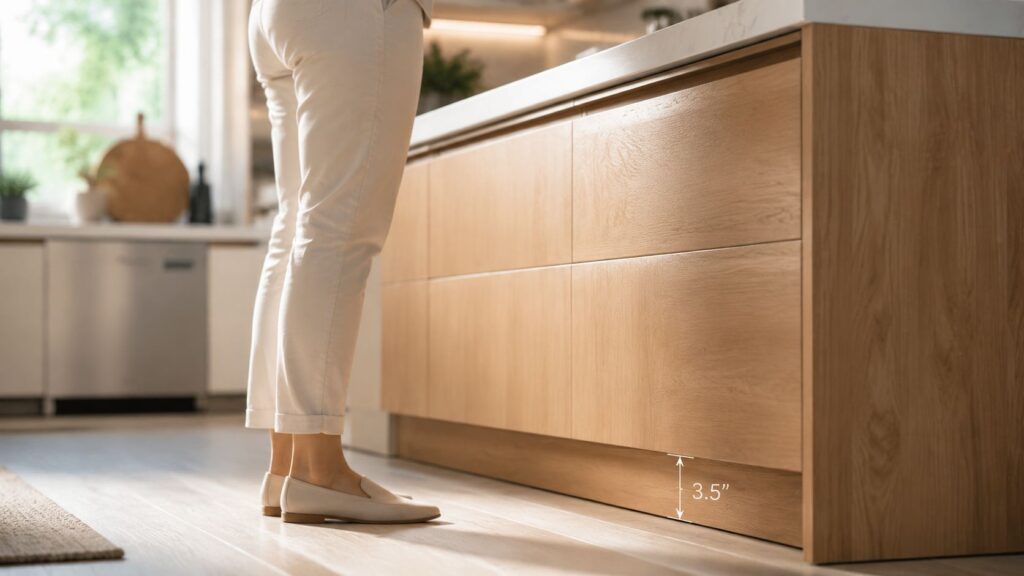
The standard cabinet toe kick height is 3.5 inches, and the standard depth is 3 inches. Those dimensions aren't random. They create the foot room that lets you stand closer to the counter comfortably instead of leaning forward into every prep task.
If you're reviewing kitchen plans in Cherry Hill and your eye keeps catching that recessed strip under the base cabinets, you're asking the right question. Homeowners often focus on door styles, paint colors, and countertops first, then realize a small detail at floor level affects how the whole kitchen feels to use. The toe kick is one of those details. Get it right, and the kitchen functions smoothly in the background. Get it wrong, and you feel it every day in your back, your stance, and even in how appliances line up.
Table of Contents
- That Little Notch Under Your Cabinets
- The Standard Toe Kick Explained
- Adjusting Dimensions for Accessibility and Custom Needs
- Innovative Toe Kick Designs and Functions
- Common Toe Kick Mistakes and How to Avoid Them
- Getting Your Cabinet Details Right
That Little Notch Under Your Cabinets
A homeowner will often sit down with a cabinet layout, point to the bottom of the drawing, and ask, “Do we really need that recess?” The short answer is yes. That little notch under the cabinets does more than finish off the base neatly. It changes how your body meets the kitchen.
In real renovations, this usually comes up late. The cabinet style is chosen. The island size is set. Appliance panels are being discussed. Then someone notices the toe kick and wonders whether it can be made taller, shorter, flush, deeper, hidden, or more decorative. It can, sometimes. But every change has consequences.
The toe kick is one of the smallest lines on the plan and one of the most noticeable details in daily use.
For South Jersey homes, especially older homes where floors may not be perfectly level, that recessed area also becomes part of the practical build strategy. It helps the kitchen look settled and intentional, even when the room itself has a few quirks. In newer homes, it still matters because it affects comfort, visual flow, and the way a long run of cabinetry meets the floor.
The main question isn't just what the number is. It's why cabinetmakers and designers keep coming back to the same basic dimensions, and what happens when your kitchen needs something different.
The Standard Toe Kick Explained
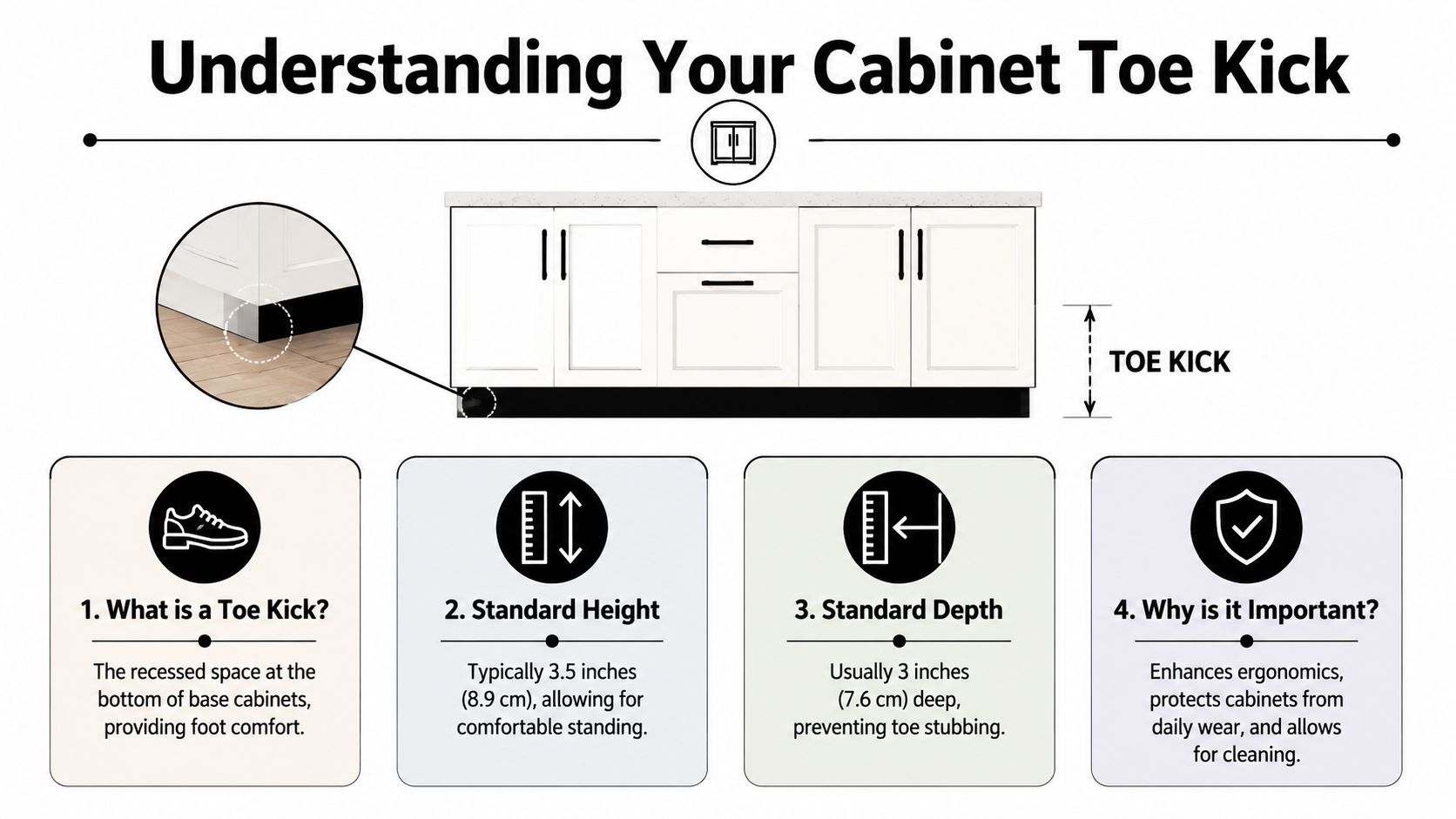
A toe kick is the recessed panel set back under floor cabinets. In standard North American kitchen design, the most widely cited dimension is 3.5 inches high, with a typical acceptable range of 3 to 4 inches, and one guide also notes a standard depth of 3 inches used across most American cabinet manufacturers for ergonomic comfort and full-width base-cabinet runs. That guide explains that the recess lets users stand closer to the counter without pressing their toes against the cabinet face, which helps preserve a more upright posture during cooking and prep work, and describes the toe kick as usually 3 to 4 inches deep and 3.5 inches tall in practice, as outlined in this toe kick dimension guide.
To make that easier to picture, think of it as standing room for your feet. Without that recess, your shoes hit the cabinet front before your body gets close enough to the work surface. Then your upper body compensates. You lean. Your shoulders come forward. The counter starts feeling farther away than it should.
Here's a visual that helps many homeowners understand what they're looking at in drawings and elevation views.
Why the standard works
The standard works because it balances two competing goals.
- Comfort at the counter: You can stand close enough to chop, rinse, mix, and plate without bracing your toes against the cabinet face.
- Storage inside the cabinet: The recess doesn't eat up more cabinet box than necessary.
- Visual consistency: Across a full run of base cabinets, the shadow line at the bottom stays clean and intentional.
If you're planning to update existing cabinetry rather than replace everything, it's worth looking at how cabinet remodeling options affect the lower portion of the cabinet run as well. Toe kick details often get overlooked when homeowners focus only on doors and drawer fronts.
What homeowners should picture
A good toe kick should disappear when you're using the kitchen and show up only when you look for it. That's usually the sign that the dimensions are doing their job.
Later in the planning process, a short video explanation can also help if you're reviewing layouts with a spouse or contractor.
Adjusting Dimensions for Accessibility and Custom Needs
A standard toe kick works well for many kitchens in Cherry Hill, but it is not the right answer for every household. The moment a project includes aging-in-place planning, a seated prep area, or a family member who uses a wheelchair, the numbers at the bottom of the cabinet stop being a small trim detail and start affecting how the whole room functions.
Standard kitchens and accessible work areas are not the same
A typical residential toe kick and an accessible knee or toe clearance solve different problems. Standard base cabinets usually keep a modest recess for standing comfort. Accessible work surfaces need much more open space below so a wheelchair user can pull in safely and work without hitting footrests or knees. The difference is laid out clearly in this ADA and standard toe kick comparison.
That change affects more than the cutout itself. It changes cabinet support, sink placement, plumbing locations, and often the finished counter height too. Homeowners sometimes assume accessibility means making the standard detail a little larger. In practice, true access usually means designing that work zone differently from the start.
Here is the simplest way to compare them:
| Specification | Standard Residential | ADA-Compliant | Common Custom Range |
|---|---|---|---|
| Height | 3.5 to 4 inches | At least 9 inches | Variable, depending on cabinet system |
| Depth | Commonly 3 inches | At least 6 inches | Variable |
| Primary purpose | Standing comfort | Wheelchair footrest clearance | Fit, ergonomics, or design adjustments |
For a South Jersey remodel, I usually advise homeowners to decide early whether they want one accessible station or a broader universal-design approach. That decision affects layout, not just cabinetry. Homeowners planning for long-term use should review universal design ideas for Cherry Hill kitchens and baths before cabinet drawings are finalized.
Where custom work gets tricky
Custom work gives you options, but it also removes the guardrails that come with standard cabinet sizing.
The biggest mistake is changing toe kick height in isolation. Raise the recess and fail to rebalance the cabinet box, and the finished counter can end up fighting the dishwasher, range, or adjacent cabinet run. I see this most often in partial remodels where one trade adjusts the cabinetry and another assumes the appliance openings stayed standard.
That is why the full stack has to be checked together. Cabinet height, finished floor buildup, countertop thickness, and appliance specs all need to agree before fabrication starts.
A taller or deeper toe kick can make good sense in the right spot. A sink base for seated use is one example. A baking area for a shorter primary cook is another. In many projects, the best answer is selective customization instead of changing every base cabinet in the room.
What usually works well:
- Purpose-driven changes: Adjust the toe kick to solve a real use problem, such as seated access or a better working height.
- Coordinated measurements: Review cabinet box dimensions, floor finish, countertop thickness, and appliance clearances as one system.
- Zone-based decisions: Change one cabinet run or one work area when that is all the household needs.
What usually causes trouble:
- Mixing dimensions casually: Different recesses across one visible run can look like a mistake unless the design intentionally breaks the line.
- Ignoring adjacent components: Dishwashers, panel-ready appliances, and end panels still have to fit cleanly.
- Using accessibility details as a style feature: Accessible clearances are functional requirements, and they should be designed with that level of care.
A good custom toe kick should feel intentional in use and in appearance. If the dimensions support the person using the room, the whole kitchen works better.
Innovative Toe Kick Designs and Functions
Once the cabinet layout is set, the toe kick can do more than provide foot room. In the right South Jersey kitchen, it can add storage, improve nighttime use, and help the whole base run look cleaner.
Storage in an unexpected place
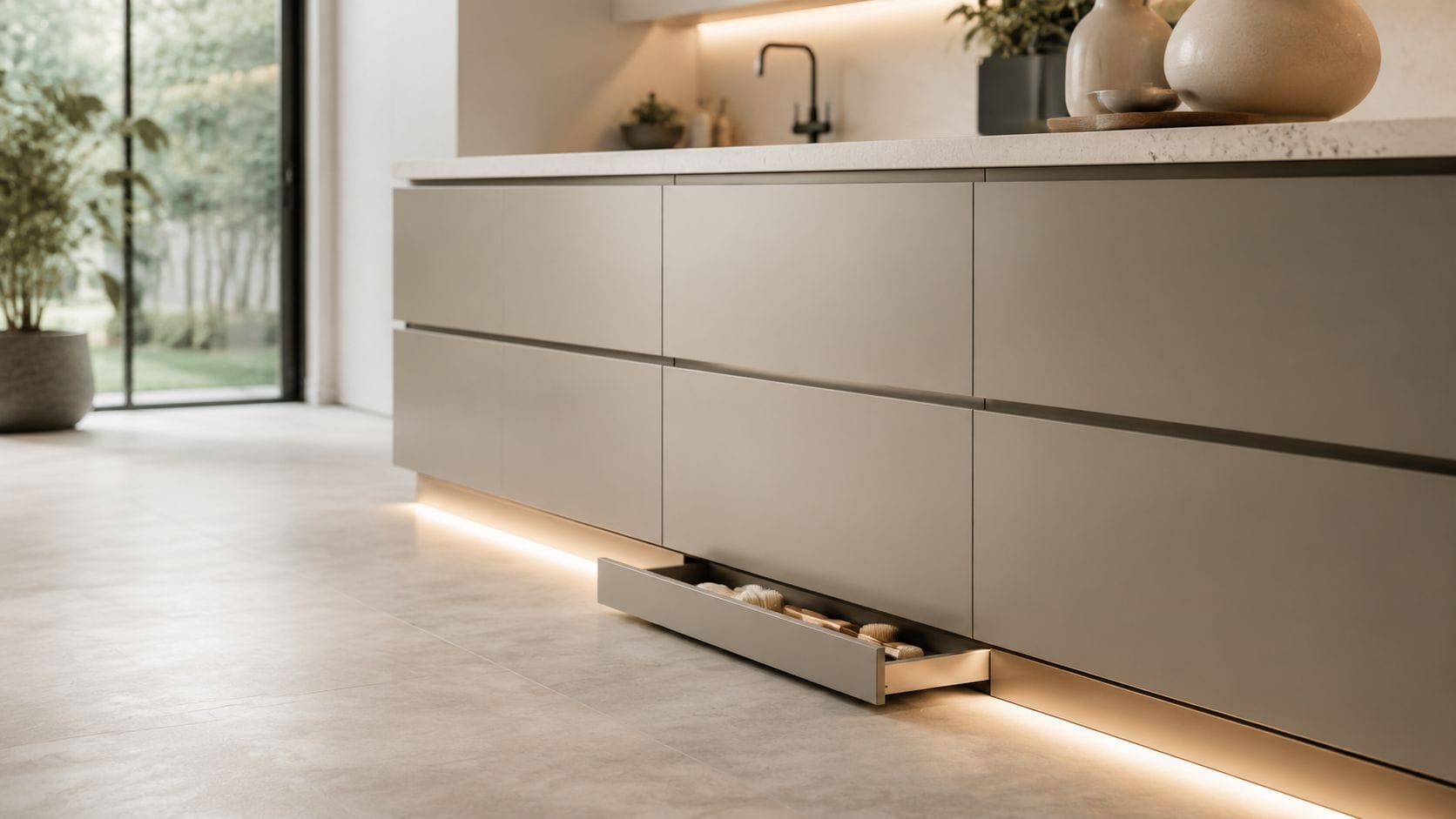
Toe kick drawers work best for long, flat items that waste space in standard drawers. Sheet pans, serving boards, placemats, cooling racks, and pet feeding mats are all good candidates. I usually recommend them in islands or in a clean cabinet run where the drawer can open fully without fighting a dishwasher door, a nearby range, or a busy walkway.
They are not a good default everywhere. Toe kick drawers add cost, reduce some of the visual shadow at the cabinet base, and need enough uninterrupted width to feel worth building. In a tight Cherry Hill kitchen, one well-placed drawer often works better than trying to run them across the whole room.
If you are exploring other low-profile storage details, tip-out trays and other hidden cabinet storage options can pair nicely with a toe kick drawer plan.
A toe kick detail should solve a real problem and still look like it belongs with the rest of the cabinetry.
Lighting and utility details
Toe kick lighting is one of the few upgrades that adds both function and atmosphere. A warm LED strip tucked behind the recess gives enough light for early mornings, late-night snack runs, and households that do not want the ceiling cans blazing after dark. In a bathroom vanity, the same detail can make the cabinet feel lighter without adding trim that competes with the door style.
The trade-off is planning. The wiring path, transformer location, and access for future service all need to be sorted before fabrication and installation. Good toe kick lighting should feel quiet and useful, not like a stage set.
The toe kick zone can also help hide practical elements. Return-air grilles, appliance supports, and panel transitions sometimes fit better in that lower band than they do across the face of the cabinet. That only works when the cabinetmaker, designer, and installer are all working from the same plan.
Design choices that usually hold up well over time include:
- Matched finish toe kicks: These keep the base run calm and consistent.
- Dark recessed bases: These create shadow and make cabinets feel less heavy.
- Low-level lighting: This helps with visibility first and mood second.
Problems show up when too many details compete in the same strip near the floor. Storage, lighting, venting, and decorative accents can each work on their own. Combining all of them in one run usually makes the room feel busy.
Common Toe Kick Mistakes and How to Avoid Them
A toe kick usually gets attention only after something feels wrong. The dishwasher rubs, the cabinet line looks uneven across the room, or the finished floor leaves the base looking shorter than planned.
The mistakes that show up on real jobs
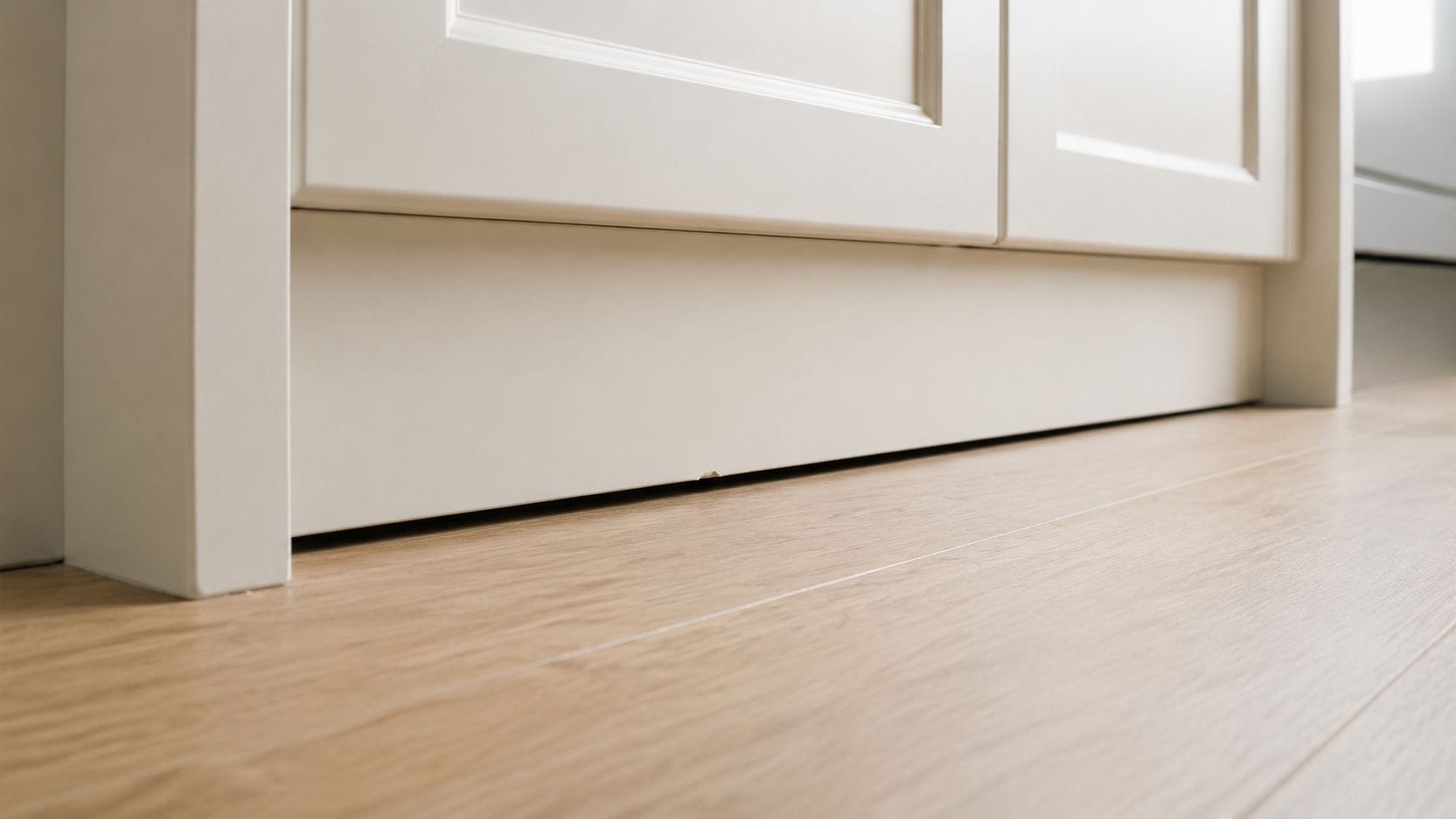
In Cherry Hill remodels, the mistake I see most often starts before the cabinets arrive. The floor assembly changes, sometimes because tile is thicker than expected or the hardwood build-up was not finalized, and nobody updates the base cabinet heights to match. The result is a cramped-looking recess, tighter appliance clearances, and a finished kitchen that feels slightly off even when the homeowner cannot immediately name why.
Another problem is inconsistency across a run. On paper, a small variation at the bottom of one cabinet does not look serious. In the room, your eye catches it fast. Long walls, islands, and sightlines into an open kitchen make an uneven toe kick line stand out more than many people expect.
Field adjustments create a different kind of trouble. Installers sometimes try to correct height issues on site by changing the recess or shimming cabinets unevenly. That can solve one problem and create two more, especially if countertop height, panel alignment, and appliance fit were already based on the original dimensions. As noted earlier, changing toe kick dimensions without rebalancing the cabinet box affects more than the notch at the floor.
What to confirm before installation starts
The fix is coordination, not guesswork.
Before installation, confirm these details:
- Finished floor height: Verify the actual material and thickness, not the allowance noted early in design.
- Appliance clearances: Check dishwashers, refrigerator panels, and undercounter appliances against final cabinet and floor heights.
- Moisture exposure: Around sinks, dishwashers, and mudroom cabinetry, use a toe kick material and attachment method that can handle routine water exposure.
- Continuous sightlines: Make sure the island and perimeter runs relate to each other, even if one area includes custom storage or applied panels.
Homeowners who want to ask better questions during planning often benefit from essential advice for homeowners, especially when comparing cabinet construction and finish details.
I tell clients the same thing on nearly every renovation. If the toe kick is treated as a minor detail, someone will end up making design decisions in the middle of installation. That is expensive, and it is avoidable. Many of the same planning habits show up in broader remodeling mistakes homeowners should avoid.
Getting Your Cabinet Details Right
A toe kick usually gets attention after the cabinet door styles, finish color, and countertop are decided. In real projects, that order causes trouble. By the time a kitchen in Cherry Hill reaches installation, the toe kick affects how comfortably you stand at the sink, whether the dishwasher fits cleanly under the counter, and whether the whole run looks settled or slightly off.
The right dimension is rarely just a code or catalog question. Standard sizing works well in many homes because it balances comfort, appliance compatibility, and cabinet proportions. Custom sizing makes sense when a homeowner needs easier access, when an older floor is out of level, or when a furniture-style design calls for a different visual base. The job is to make those choices early enough that the cabinet box, finished floor, panels, and appliance openings all agree.
I tell clients to look at the lower third of the kitchen as one system, not a collection of separate decisions. Toe kicks, end panels, decorative legs, and hardware all affect how the room reads once everything is in place. If you want better questions to ask before you commit, this essential advice for homeowners is a useful companion while comparing cabinet construction and finish details.
Small details carry weight.
Hardware is a good example. Pull placement will not change toe kick height, but it does change how the cabinetry feels to use day after day, especially on deeper drawers and wide base cabinets. Homeowners finalizing layouts often benefit from practical guidance on installing cabinet hardware correctly so the finished kitchen works as well as it looks.
If you're planning a remodel in Cherry Hill or elsewhere in South Jersey and want help sorting through cabinet sizing, layout, materials, and finish details, The Cabinet Coach offers a mobile showroom and guided design process that brings those decisions into one coordinated plan.