
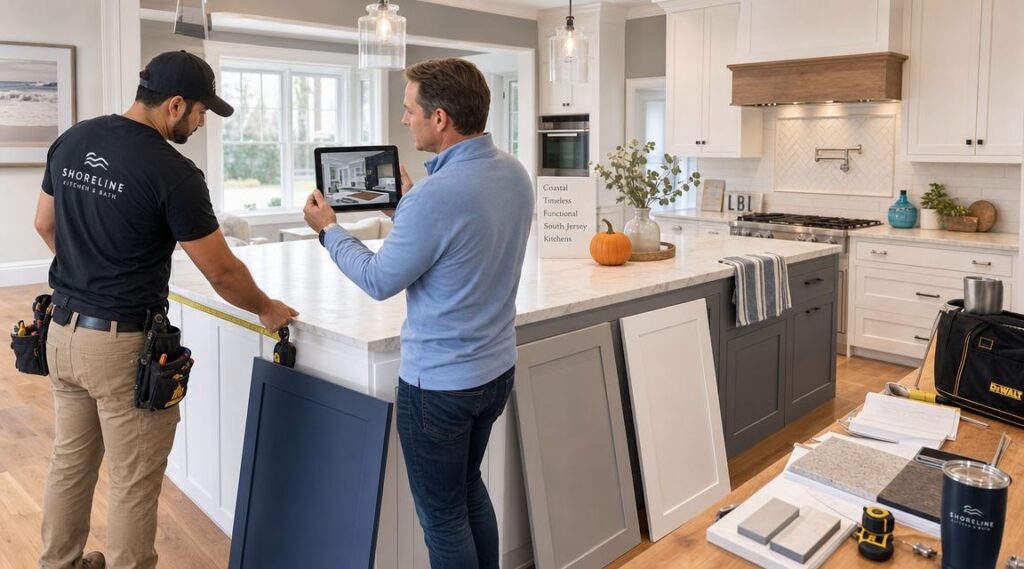
If you're standing in your kitchen thinking, “We can't keep working around this layout for another year,” you're not alone. A lot of South Jersey kitchens still have the same pain points: tight walkways, tired cabinet boxes, wasted corners, doors that bang into each other, and storage that looks decent until you try to use it every day.
That's usually the point where kitchen cabinet remodeling stops being a vague someday idea and starts feeling like a real project. You want cabinets that fit the room, not cabinets that force you to live around bad decisions made decades ago. You also want straight answers on cost, sequencing, and whether you need a full replacement or a smarter refresh.
This guide is built for homeowners in Cherry Hill, Haddonfield, Moorestown, Medford, Voorhees, and the surrounding area who want a kitchen that works better without getting lost in showroom jargon or generic national advice.
Table of Contents
- Your South Jersey Kitchen Remodel Starts Here
- Charting Your Course With a Solid Plan and Timeline
- Decoding the Costs of a South Jersey Kitchen Remodel
- Cabinet Replacement vs Refacing Making the Right Call
- Defining Your Style With Modern Cabinets and Materials
- Experience a Stress-Free Remodel With The Cabinet Coach
Your South Jersey Kitchen Remodel Starts Here
A dated kitchen can wear you down in small ways. The drawer sticks every morning. The corner cabinet hides things you forgot you owned. The uppers feel crowded, but the room still doesn't store what you need. In South Jersey, that's common in older colonials, split-levels, ranchers, and additions where the kitchen was changed one piece at a time instead of rethought as a whole.
A cabinet remodel works best when you treat it as a function-first project. The finish matters. The door style matters. But the bigger win is getting the storage, circulation, and daily workflow right. That's what turns a kitchen from “updated” into useful.
There's also a reason more homeowners are moving forward with professional work instead of trying to patch the room together themselves. The kitchen and bath industry is projected to generate $235 billion in revenue in 2025, with repair and remodeling spending up 2.6%, and professional remodels forecast to grow 2.9% according to the NKBA 2025 kitchen and bath market outlook. That matters because kitchen cabinet remodeling is rarely just about swapping boxes. It usually involves design choices, field measurements, coordination, and sequencing that affect the whole room.
Practical rule: Cabinets are not the decorating layer. They're the framework that determines how the kitchen functions.
If you're still sorting out what you want before talking to anyone, it helps to get your thoughts organized first. A simple starting point is reviewing how to get started before hiring a contractor. That kind of prep can save a lot of second-guessing later.
Charting Your Course With a Solid Plan and Timeline
Most kitchen problems don't start on installation day. They start earlier, when a homeowner chooses finishes before locking in the layout, or orders cabinets before confirming appliance specs, or assumes demolition can begin before the plumbing and electrical plan is settled.
Start with the problems you actually live with
Write down what isn't working in plain language. Don't start with “we want white cabinets” or “we like modern kitchens.” Start with the friction.
- Storage failures: Pots buried in deep base cabinets, no useful pantry space, unusable blind corners.
- Traffic issues: Dishwasher door blocks the walkway, island crowds the range zone, refrigerator swing cuts through prep space.
- Workstation conflicts: Trash is too far from prep, microwave placement is awkward, drawers can't open when an appliance door is down.
- Aging finishes or structure: Peeling thermofoil, water damage near the sink, sagging shelves, warped doors.
Once those issues are clear, the cabinet plan gets sharper. You can decide whether you need more drawers instead of doors, a wider sink base, a pantry wall, reduced upper cabinetry, or a simpler run of cabinets that opens the room.
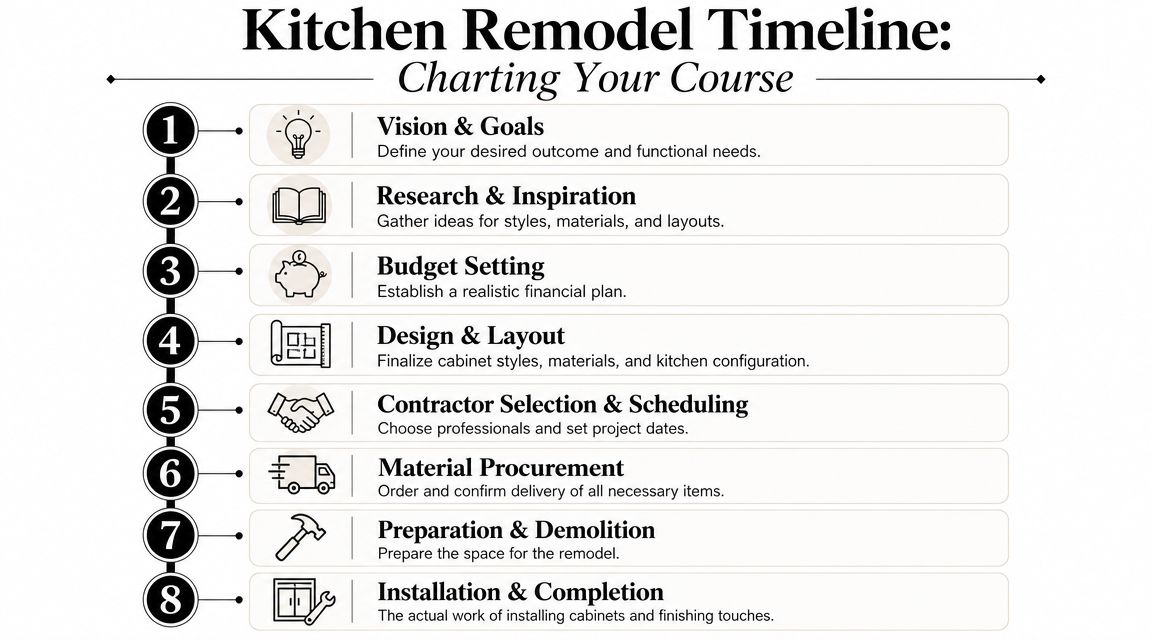
A sound workflow follows a fixed order: define goals and budget, finalize layout and product selection, complete demolition, rough-in plumbing or electrical if needed, then install cabinets before countertops and finish work, as outlined in this kitchen remodel order-of-operations guide. That order matters because cabinet placement sets the dimensions for the rest of the room.
Build a timeline around decisions, not demolition
Homeowners often think the project starts when the old kitchen comes out. In practice, the heavy lifting starts before that.
A realistic timeline usually has these decision checkpoints:
Scope locked in
Are you keeping the same footprint, or moving walls, plumbing, or electrical locations?Measurements verified
Angled walls, out-of-square corners, low windows, soffits, and uneven floors need to be accounted for.Products selected
Cabinet line, door style, finish, hardware, countertop material, sink, faucet, appliances, and any interior accessories all need to align.Job sequencing confirmed
Trades need to know what's happening first and what can't happen yet.
A remodel feels slow when decisions trail behind construction. It feels controlled when materials, measurements, and trade handoffs are settled before the first cabinet comes out.
If you want a homeowner-friendly way to think through those early decisions, planning a kitchen remodel is a useful reference point.
Know when permits enter the picture
Cabinet-only cosmetic work may not trigger permits. But once the project includes moving plumbing, altering electrical locations, adding lighting, changing ventilation, or doing structural work, permit requirements can enter the job.
That's especially important in Camden and Burlington County towns where older homes often hide surprises behind walls. A sink shift that looks minor on paper can affect drain lines, venting, or receptacle placement. Under-cabinet lighting, appliance upgrades, and island outlets can also change the electrical scope.
A practical approach is simple:
- Ask early: Confirm permit needs before final pricing, not after demolition.
- Tie permit questions to layout changes: If the cabinet plan moves appliances or sink locations, ask what else moves with them.
- Document appliance specs: Installers and electricians need exact information, not assumptions.
The cleanest remodels are usually the ones where the cabinet design, field conditions, and permit path are aligned from the beginning.
Decoding the Costs of a South Jersey Kitchen Remodel
Cost gets confusing when homeowners compare a cosmetic refresh, a cabinet refacing job, and a full layout-changing remodel as if they're the same project. They're not. The cabinet line matters, but labor, site conditions, layout changes, and finish coordination often shape the final number just as much.
What the median spend tells you and what it doesn't
A 2025 Houzz-based study reported a median spend of $22,000 on kitchen projects, and industry guidance commonly allocates about one-third of the budget to cabinets, one-third to installation, with a 10% to 20% contingency for unexpected conditions according to the 2025 Houzz study summary and Home Depot's kitchen remodel budgeting guidance.
That doesn't mean your kitchen should cost that exact amount. It does give you a framework. A straight swap in a compact kitchen behaves differently than a South Jersey remodel involving older walls, uneven floors, appliance upgrades, and a revised layout.
Sample Kitchen Remodel Budget Allocation
| Expense Category | Percentage of Total Budget | Example Cost (on a $40,000 project) |
|---|---|---|
| Cabinets | About one-third | About $13,333 |
| Installation | About one-third | About $13,333 |
| Other project costs | Remaining budget before contingency | About $13,334 |
| Contingency | 10% to 20% | $4,000 to $8,000 |
Use that table as a planning model, not a promise. The “other project costs” bucket often includes countertops, plumbing fixtures, electrical updates, backsplash, finish carpentry, patching, paint, flooring transitions, and disposal.
Where South Jersey budgets usually get stressed
In older homes around Cherry Hill, Collingswood, Haddon Township, Moorestown, and Medford, these are the budget pressure points I'd tell any neighbor to expect:
- Out-of-square rooms: Walls and floors rarely behave like a showroom display. That affects fillers, scribing, and installation time.
- Hidden damage: Water issues around sink bases, subfloor damage near dishwashers, and old wiring show up after demolition.
- Appliance-driven changes: A new refrigerator depth, larger range, or venting requirement can push cabinet revisions.
- Finish coordination: Hardware, sinks, and countertops seem separate on paper, but they need to work together in detail.
If you're comparing fixture options while building a cabinet budget, it can help to review outside design examples too. Even though it's market-specific, this expert guide to Melbourne kitchen sinks is useful for thinking through sink styles, bowl configurations, and how sink choices affect cabinet planning.
Budget warning: The most expensive mistake isn't choosing a premium door style. It's pricing the job without enough room for field conditions and change orders.
For a more complete breakdown of what belongs in the numbers from the start, this kitchen remodeling cost breakdown is worth reading before you request estimates.
Cabinet Replacement vs Refacing Making the Right Call
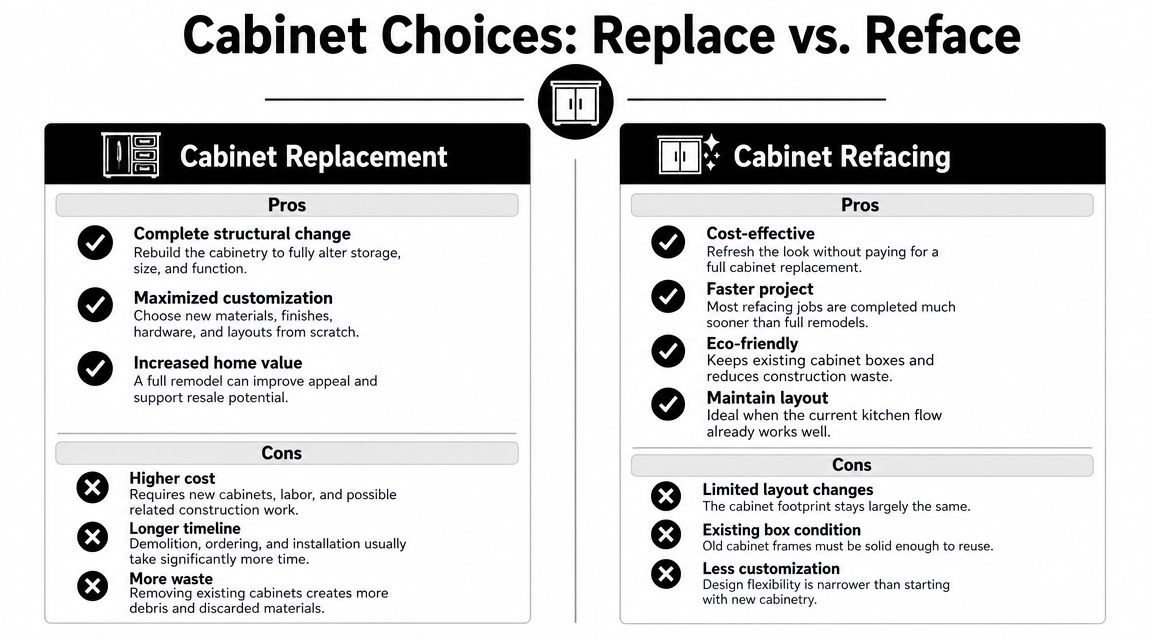
This is the fork in the road that changes everything. Some kitchens need a full replacement. Others can get excellent results from refacing. The right answer depends less on trends and more on the condition of the existing boxes, the layout, and what you're trying to fix.
When refacing makes sense
Refacing is usually the smarter move when the cabinet boxes are structurally sound, the layout already works, and the homeowner wants a fresh look with less disruption.
That often fits kitchens where the main complaints are cosmetic. Maybe the doors are dated, the finish is tired, the hardware feels old, or the room needs a cleaner style. If storage function is decent and the traffic flow isn't broken, replacing doors, drawer fronts, veneers, and hardware can be a practical path.
Refacing also tends to work well when homeowners want to keep counters, flooring, or backsplash in place. It's not a layout solution. It's a skin-deep transformation done on a stable foundation.
When replacement is the better investment
Replacement makes more sense when any of these are true:
- The layout is wrong: The sink, range, refrigerator, or dishwasher relationship doesn't work.
- The boxes are failing: Water damage, swelling, weak shelves, poor construction, or worn interiors are already telling you the answer.
- Storage needs have changed: You want more drawers, better pantry storage, integrated waste pull-outs, or improved accessibility.
- The room itself is awkward: Angled walls, additions, soffits, and non-standard dimensions need a redesign, not a cosmetic update.
Replacement gives you more freedom to solve the room instead of decorating around it. That matters in South Jersey homes where kitchens were often modified over time and don't follow standard cabinet assumptions.
If you're changing how the kitchen works, replacement usually makes more sense than asking old cabinet boxes to support a new plan.
Homeowners who are still weighing whether surface updates can carry the room might find this outside perspective on update your kitchen surfaces helpful. The examples are a good reminder that surface work has a place, but it can't correct structural or layout problems.
A simple test helps. Open every cabinet and drawer in your kitchen and ask two questions: does this box still have life in it, and would I keep this exact layout if the finish looked new? If the answer to either is no, replacement is usually the cleaner decision.
For a closer look at what a refacing scope can include, kitchen cabinet refacing services outlines the typical path.
Defining Your Style With Modern Cabinets and Materials
Style decisions get easier when you stop asking, “What's popular?” and start asking, “What belongs in this house, and how do we want to live in it?” A South Jersey kitchen in a brick colonial usually wants something different than a condo renovation or a contemporary addition.
Pick a cabinet style that fits the house
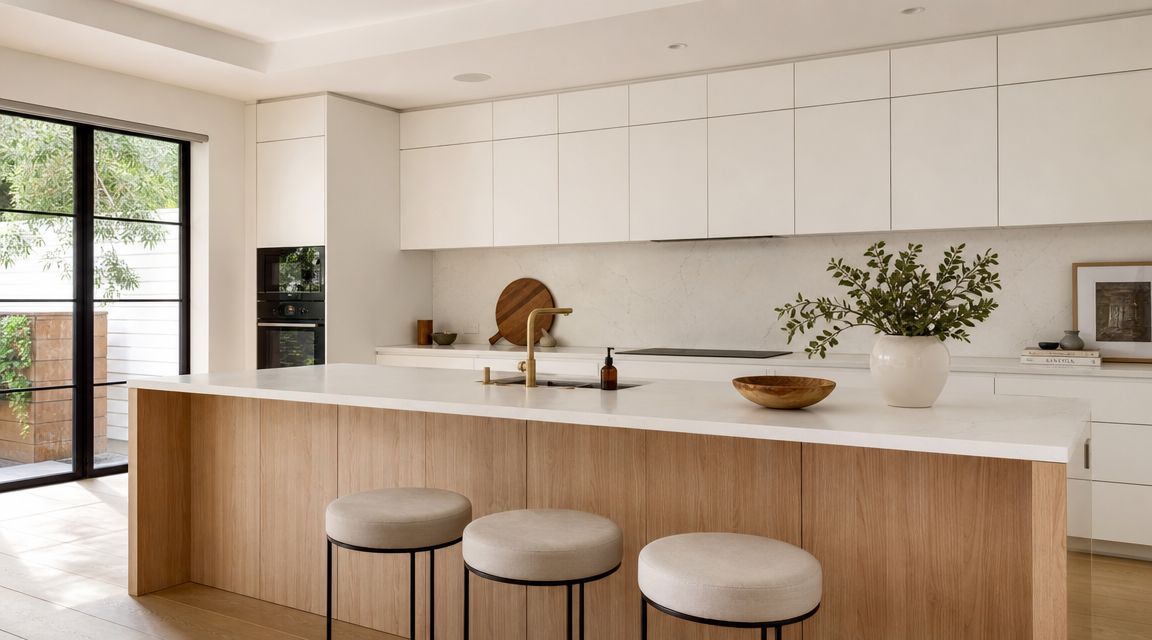
Shaker cabinets remain easy to live with because they can lean traditional, transitional, or modern depending on finish, hardware, and surrounding materials. They work well in many South Jersey homes because they don't fight older architecture.
Flat-panel cabinets can look excellent too, especially when the goal is a cleaner visual line and less interruption across the wall. In smaller kitchens, that simpler face can help the room feel calmer. It's often a better move than adding extra detail just because a door sample looks impressive under showroom lighting.
That's why modern cabinet selection is less about chasing novelty and more about restraint. In many remodels, the most effective design choice is simplifying the cabinet plan rather than layering on decorative complexity. If you want to compare current looks in a practical way, modern cabinet styles is a useful starting point.
Materials that hold up in real kitchens
Material choice should match how the kitchen gets used.
- Solid wood doors: Great for warmth and longevity, especially in painted or stained Shaker applications. They still need proper finishing and climate-aware installation.
- MDF painted doors: Often a good painted option because the surface is smooth and stable. They're common where a crisp painted finish matters more than visible grain.
- Laminate and textured engineered surfaces: Good for sleek, low-maintenance designs, especially in modern kitchens where flat panels and uniform finishes are the goal.
- Plywood cabinet boxes: A durable upgrade when structure and moisture resistance matter.
Door style and box construction should also line up with maintenance expectations. A high-gloss slab door may look sharp, but fingerprints, edge wear, and cleaning habits should be part of the conversation. Profiled doors can collect grime. Open shelving looks airy until a busy household has to keep it presentable.
A short video can help if you're still narrowing down the visual direction for your cabinets.
Awkward kitchens need better geometry, not more cabinets
Many generic cabinet articles stumble here. They assume every kitchen is rectangular and forgiving. A lot of South Jersey kitchens aren't.
Many homeowners struggle with odd angles, dead corners, and conflicting door swings, and successful solutions depend on embracing the room's geometry instead of forcing standard cabinet modules into it, as discussed in this Houzz layout discussion on odd-angled kitchens. That advice matters in older homes and additions where walls don't line up neatly and every inch has to earn its place.
Good design in these spaces often means:
- Reducing cabinet count to improve function: Fewer cabinets, placed better, can outperform a crowded wall.
- Using drawers instead of hard-to-reach bases: Deep drawers usually beat dark lower cabinets for daily use.
- Treating corners carefully: Not every corner needs a complex mechanism. Sometimes the smarter move is a cleaner adjacent run and less forced cabinetry.
- Checking appliance and door clearances on paper before ordering: This is not optional in angled kitchens.
A kitchen can look “full” on a plan and still work poorly. The right layout often feels simpler than the homeowner first expected.
That's one reason mobile, in-home selection can be useful for this kind of kitchen cabinet remodeling. Seeing samples, door styles, countertop materials, and hardware in the actual light of your room helps people make better decisions than they often do under showroom spotlights.
Experience a Stress-Free Remodel With The Cabinet Coach
A lot of remodeling stress comes from fragmentation. You visit one place for cabinets, another for counters, another for hardware, then try to picture all of it together while juggling measurements, schedules, and installer questions. That's where a mobile showroom model changes the experience.
With The Cabinet Coach, the process starts with a conversation about how the kitchen functions now, what isn't working, and where the budget needs to stay. From there, the design work moves into the home, where cabinet, countertop, hardware, and finish selections can be reviewed against the actual room instead of guessed at from memory.
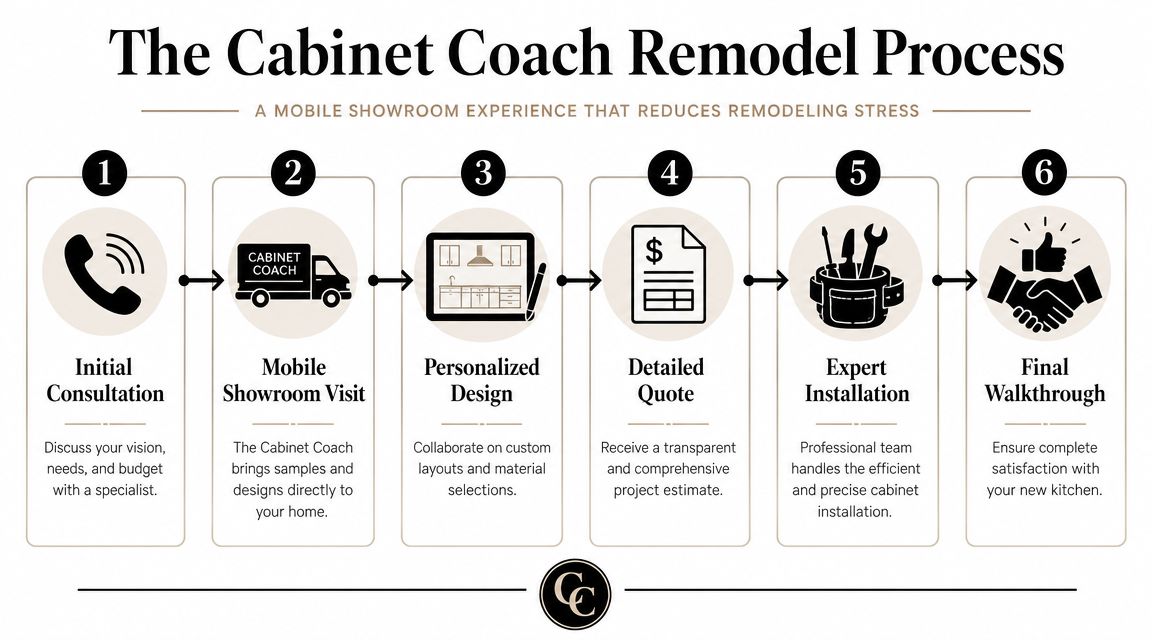
That approach tends to help in the places where South Jersey projects often get complicated:
- Real-world selection: Finishes look different under your own lighting, next to your flooring, wall color, and adjacent rooms.
- Field-based design: Measurements, angles, trim conditions, and appliance relationships can be reviewed where they exist.
- Coordinated scope: Cabinets don't get designed in isolation from counters, hardware, and installation planning.
It also helps communication stay cleaner during the project. Homeowners who want a broader perspective on that part of the process may find CS1 Real Interiors' advice on contractor communication useful. The main takeaway is simple: projects go better when expectations, responsibilities, and decisions are documented early.
For homeowners in Camden and Burlington County, that local coordination matters. Kitchen work in Cherry Hill, Haddonfield, Collingswood, Voorhees, Moorestown, Mount Laurel, Medford, Maple Shade, Cinnaminson, and nearby towns often involves existing-home conditions that don't show up in a neat showroom vignette. Having selections, measurements, and project management tied together reduces guesswork.
The smoother jobs usually aren't the simplest kitchens. They're the kitchens where someone has taken ownership of the details before demolition begins.
If you're planning a kitchen cabinet remodeling project in South Jersey and want a process that starts with your actual home, not a generic display wall, The Cabinet Coach offers a practical way to begin with guided design, in-home selections, and clear next steps.