
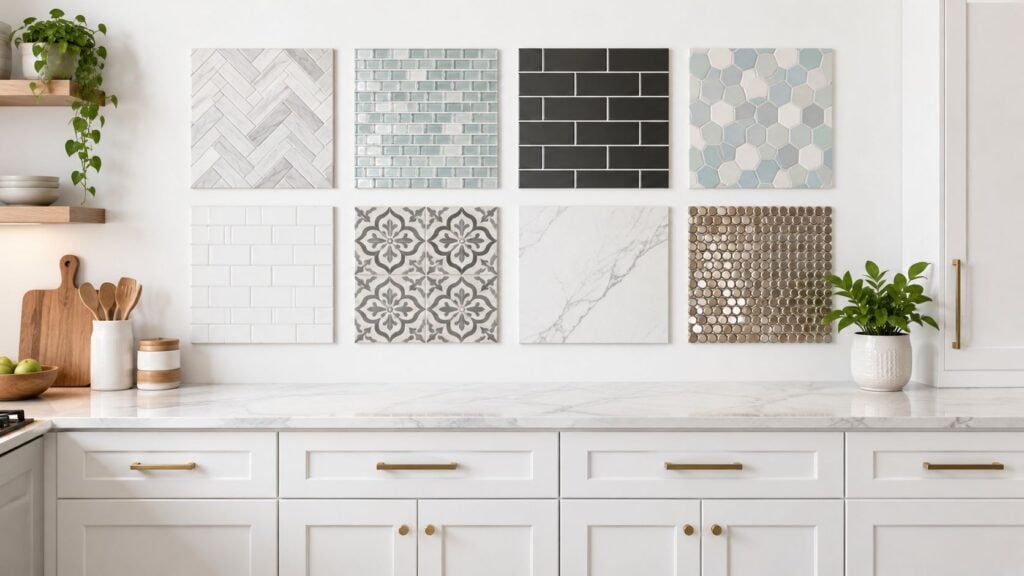
You've chosen white shaker cabinets, a quartz countertop, and hardware that looked perfect in the showroom. Then you stand in the unfinished kitchen and realize the wall behind the range will influence how every one of those choices feels. The wrong backsplash can make white cabinetry look gray, yellow, flat, or disconnected. The right one adds texture, warmth, contrast, or continuity without competing with the room.
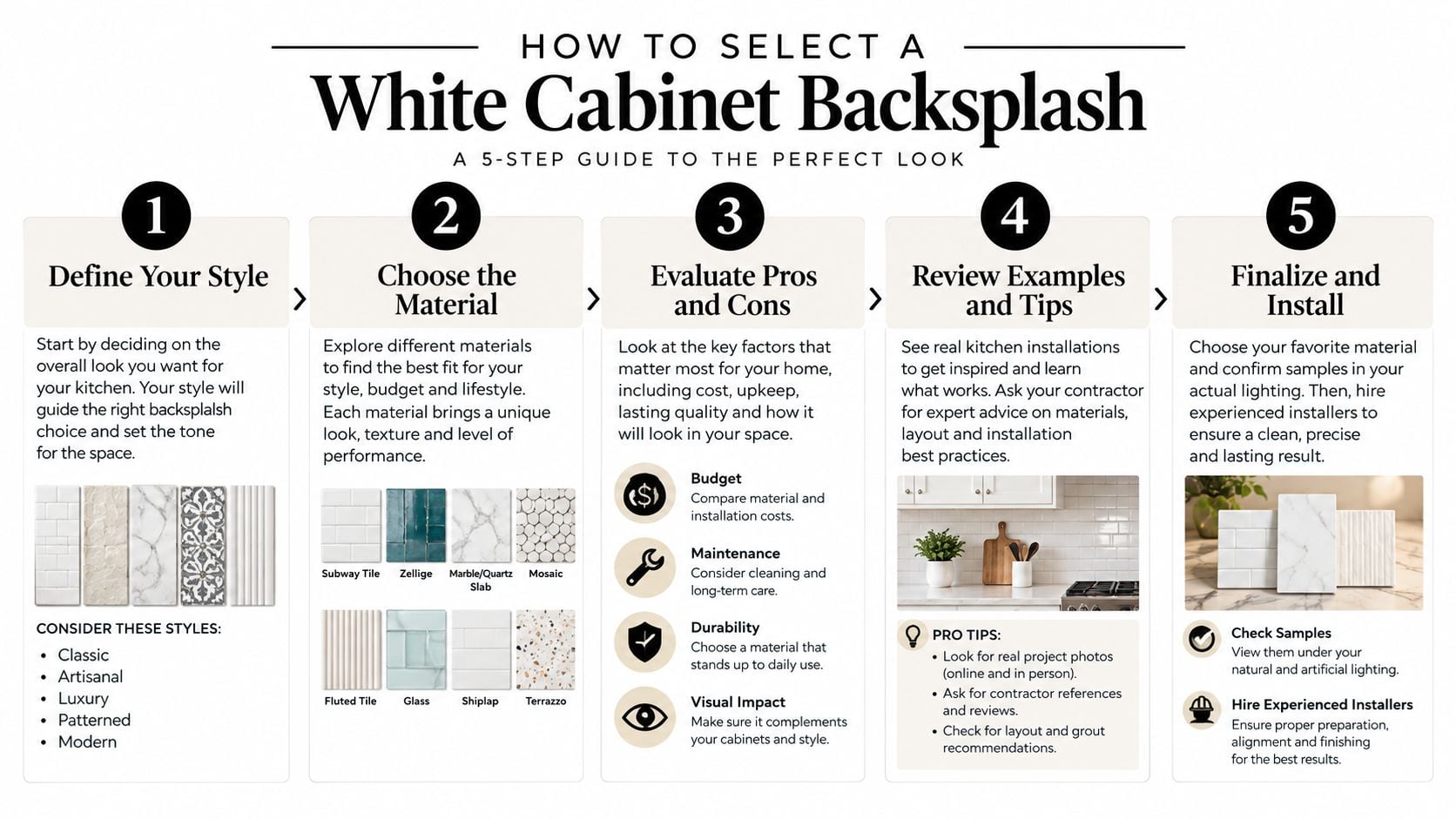
These white cabinet backsplash ideas match a specific cabinet style, grout decision, and placement zone, so you can compare more than appearance. Each option also has practical trade-offs involving cleaning, installation tolerance, material selection, and the demands of a South Jersey kitchen remodel. For broader planning inspiration, you can also explore modern kitchen remodel ideas.
Table of Contents
- 1. Classic White Subway Tile
- 2. Handmade Zellige Tile
- 3. Full-Height Calacatta Marble or Quartz Slab
- 4. Hexagon and Penny Round Mosaic
- 5. Vertical Fluted or Ribbed Tile
- 6. Glass Tile and Iridescent Backsplash
- 7. Shiplap or Beadboard Wall Panel
- 8. Terrazzo Backsplash
- White Cabinet Backsplash: 8-Option Comparison
- Narrowing Your White Cabinet Backsplash Choice
1. Classic White Subway Tile
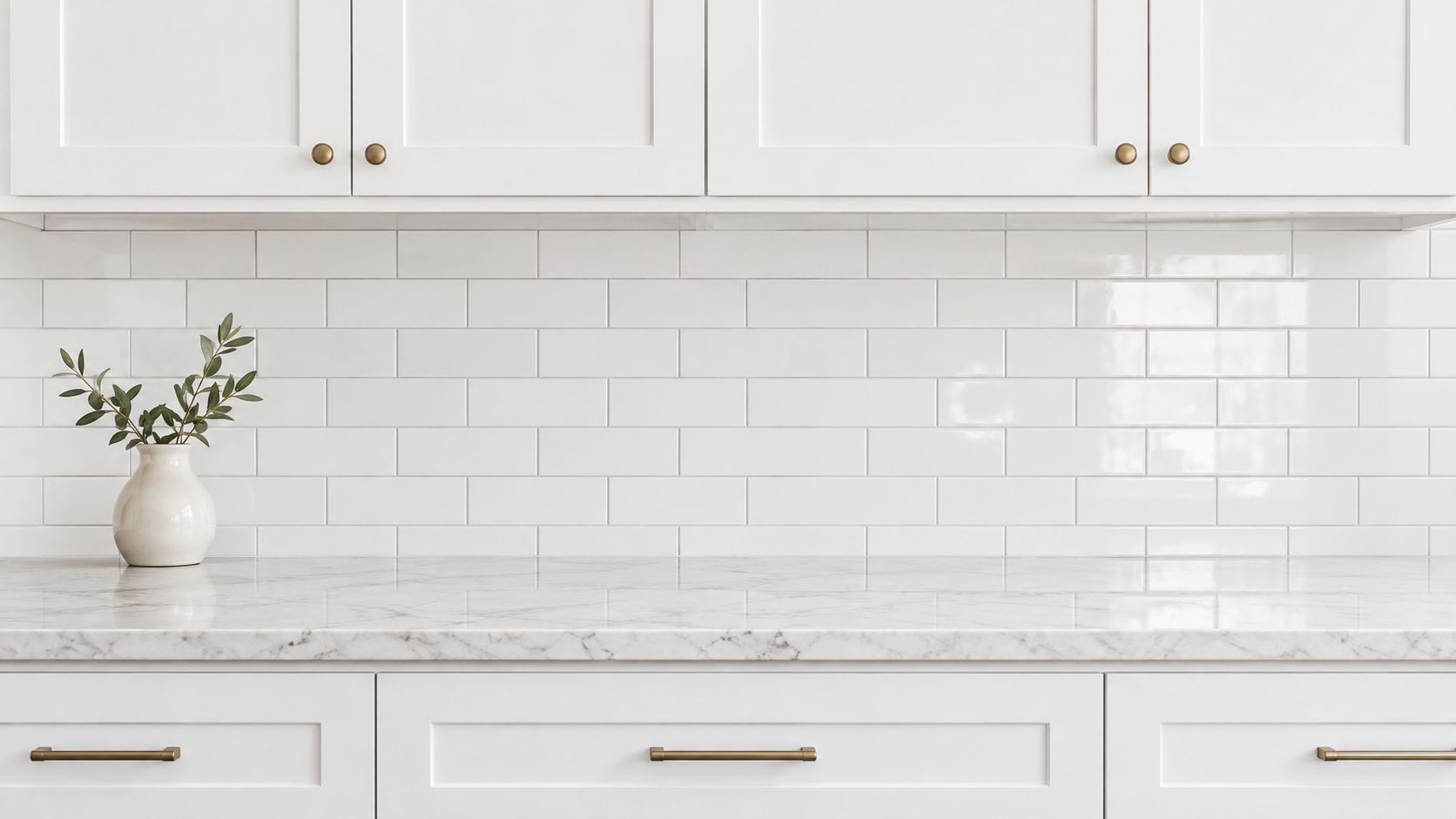
White subway tile remains the dependable choice for white shaker cabinets because the shape adds structure without introducing another strong color. A glossy ceramic or porcelain tile reflects light between the cabinet runs, while the rectangular format gives a simple kitchen enough visual rhythm to avoid looking unfinished.
A traditional 3-by-6-inch running bond creates the familiar farmhouse look. A longer rectangular tile or a straight stacked layout feels cleaner with flat-panel cabinets. Behind a range, continue the same tile to the underside of the hood or upper cabinets. If the kitchen has open shelving, taking the tile higher can turn the wall into a deliberate backdrop rather than a narrow strip.
Practical rule: Match the tile's temperature to the cabinet finish. A creamy shaker door usually needs a warm white or bone-colored tile, while a crisp white door can handle a cooler white or soft gray.
Grout determines whether this backsplash disappears or becomes part of the design. A grout close to the tile creates a quiet, continuous surface and is easier to live with than stark white grout in a busy cooking zone. Charcoal grout outlines each rectangle and works particularly well with black hardware, dark countertops, or farmhouse kitchens with an apron-front sink.
The trade-off is visual familiarity. Subway tile is adaptable and resale-friendly, but it won't provide the same individuality as handmade tile or a patterned mosaic. Choose a quality ceramic or porcelain surface, plan the outlet cuts carefully, and review current kitchen backsplash trends before finalizing the format.
2. Handmade Zellige Tile
Handmade Zellige tile gives white shaker cabinets a softer, more collected appearance. Each Moroccan glazed clay tile has slight differences in color, thickness, and edge, so the finished wall catches light unevenly. That variation is the feature, not a defect.
A cream or pale blue-white glaze works well when bright white cabinetry feels too stark. In a kitchen with warm wood shelves, aged brass, or a natural stone countertop, Zellige adds an artisanal layer without requiring a bold pattern. Install it across the range wall when you want the cooking zone to feel special, or carry it around the full backsplash for a relaxed Mediterranean or cottage effect.
The grout should usually stay close to the tile color. A contrasting line can make handmade edges look busier than intended, especially on a small wall. A suitable thin-set mortar and careful wall preparation matter because variations in thickness can create a more irregular surface during installation.
Zellige also requires more planning than standard factory-made tile. Order extra material for breakage and variation, and mix pieces from different boxes so one section doesn't look noticeably lighter or darker than another. Ask to see the sample beside the cabinet door, countertop, flooring, and hardware under the kitchen's actual lighting.
Zellige works best when you want the wall to feel alive. It's less suitable if you want a perfectly uniform surface or the fastest, most predictable installation.
The maintenance trade-off is mostly about texture. The glazed face wipes clean, but uneven edges and recessed joints may require more attention near the range. For a South Jersey homeowner who cooks frequently, use it behind a hood with effective ventilation and keep the grout selection practical rather than purely decorative.
3. Full-Height Calacatta Marble or Quartz Slab
A full-height slab changes the backsplash from a tiled surface into an architectural backdrop. Calacatta-style white stone with gray veining creates a gallery-like setting for white flat-panel or transitional cabinets, particularly when the countertop continues into the backsplash with a coordinated pattern.
This approach is strongest behind the range, where a slab can run from the counter to the hood or ceiling. It can also wrap onto a hood surround, creating one uninterrupted focal zone. In a kitchen with a waterfall island, a full-height Calacatta-look quartz backsplash can connect the island's clean geometry to the perimeter cabinetry.
Natural marble offers authentic variation and a surface that develops character over time. Quartz provides a more controlled appearance and generally requires less upkeep, but the pattern should still be reviewed across a full slab. A small sample won't show how veins travel behind outlets, shelves, or a range hood.
Plan the fabrication before the finish
Large slabs demand accurate wall templating. Confirm that the wall is properly prepared, that the fabricator has planned the outlet cutouts, and that the installation team understands where seams should fall. A seam near a sink or cooking area can attract attention and may be harder to keep visually quiet.
The cost trade-off involves more than the material. Slab installation requires transportation, templating, precise cutting, and secure handling. It can reduce grout-joint maintenance, but it leaves less room for correction once the stone is cut. Review backsplash height guidance before deciding whether the slab should stop at the upper cabinets or continue higher.
Use this option when the countertop and backsplash should read as one material story. It isn't the best choice if you prefer easy localized replacement, have irregular walls that need flexible tile cuts, or want a low-commitment update.
4. Hexagon and Penny Round Mosaic
Small-format mosaic brings pattern and texture to white cabinets without relying on a saturated color. White hexagons suit mid-century modern and transitional kitchens, while penny rounds soften the straight lines of shaker doors and rectangular countertops.
Use this material selectively. A single range wall, coffee station, or sink zone can become a focal point without making the entire kitchen visually busy. In a compact galley kitchen, extending a light mosaic across one wall can add depth, but a small pattern on every surface may compete with cabinet hardware, counters, and open shelving.
A close grout color produces a calmer field. Dark grout makes the geometry more obvious and can be effective behind a range, but it also highlights every cut and sheet transition. In a high-splash area, epoxy grout can improve stain resistance, although installation requires a contractor comfortable working with the material.
Control the sheet layout
Mesh-mounted sheets speed installation, but they don't eliminate planning. Check how the sheet dimensions fit the wall, where the pattern will break around outlets, and whether the edge pieces will be narrow or awkward. A good installer will dry-lay the sheets and adjust the starting point so the most visible areas receive balanced cuts.
Design decision: Let the mosaic provide the pattern, then keep the countertop and cabinet hardware comparatively restrained.
A white hexagon behind a white range hood can feel crisp and graphic. A warm ivory penny round works better with antique white cabinets, beige flooring, and brass fixtures. The main trade-off is maintenance. More joints create more grout to clean, so this option deserves extra care in kitchens with heavy cooking activity. For layout examples and installation considerations, review these mosaic kitchen backsplash ideas.
5. Vertical Fluted or Ribbed Tile
Vertical fluted tile adds dimension through shadow rather than color. Its raised ribs create changing lines across the wall as daylight moves through the kitchen, making it an effective partner for white flat-panel cabinets and modern-classic cabinetry.
Behind a range, vertical ribs can emphasize the height of a hood and make the cooking zone feel more substantial. In a kitchen with brass hardware, a white or soft warm-gray fluted tile can provide enough texture to keep the palette interesting without introducing another pattern. A matte finish usually feels calmer than a highly reflective glaze, especially under strong under-cabinet lighting.
The best placement is often a feature wall rather than every backsplash surface. Use the tile behind the range or on the wall beneath open shelves, then use a quieter material at the sink if the kitchen needs visual relief. This also limits the amount of textured surface that must be cleaned.
Sample the shadows
A fluted sample can look subtle in a showroom and much stronger once installed across a full wall. View it in the morning, afternoon, and evening, with task lighting switched on. The rib depth, tile spacing, and finish all affect how much contrast the shadows create.
Plan edge conditions before ordering. Corner trims, bullnose pieces, exposed ends, and transitions to plain tile can determine whether the finished installation looks intentional. Deep grooves may collect cooking residue more readily than a flat glazed tile, so position the material where ventilation is strong and wiping access is practical.
For a Cherry Hill or surrounding South Jersey project, compare the sample with the cabinet door and countertop in the home rather than choosing from a screen. This fluted tile kitchen design guidance can help you judge whether the texture suits the rest of the room.
6. Glass Tile and Iridescent Backsplash
Glass tile gives white cabinets a luminous quality that works particularly well in smaller kitchens or rooms with limited daylight. Frosted glass creates a soft, modern surface, while iridescent glass shifts subtly as light moves across the wall. With under-cabinet lighting, the backsplash can become a gentle glow rather than a flat white plane.
Pair a frosted glass tile with high-gloss white flat-panel cabinets for a sleek contemporary room. An iridescent mosaic behind the range adds more visual energy while keeping the overall palette light. If the countertop has strong veining, limit the glass to a single feature zone so the countertop and backsplash don't compete.
Installation details matter
Light glass can reveal the surface behind it. Use an appropriate white or gray backer so the finished color looks intentional, and make sure the installer follows the tile manufacturer's setting requirements. Small imperfections in the substrate may become visible through translucent pieces.
Grout close to the glass keeps the effect polished. Seal compatible grout where recommended, especially around the sink and range, and plan lighting before installation. A poorly positioned light can create glare or reveal unevenness, while well-placed task lighting can emphasize the glass's reflective quality.
The maintenance trade-off depends on the finish. Smooth glass wipes down easily, but reflective surfaces show splashes, fingerprints, and streaks more readily than a matte ceramic tile. Use it behind the range or sink if you're willing to clean the surface regularly. If not, a small feature panel can deliver the effect with less upkeep. See these glass tile backsplash ideas for ways to control the amount of reflective material.
7. Shiplap or Beadboard Wall Panel
Shiplap and beadboard bring warmth to white shaker cabinets through painted or stained wood texture. Horizontal shiplap supports a farmhouse kitchen with butcher-block counters and an apron-front sink. Vertical beadboard feels more cottage or coastal, particularly behind a farmhouse sink or along a wall with open shelving.
Painting the panel to match the cabinets creates a soft monochrome look, but an exact match isn't required. A slightly warmer white can connect to wood flooring, while a muted painted tone can separate the backsplash from bright white doors. Stained wood introduces stronger contrast and works best when the same wood tone appears elsewhere in the kitchen.
Wood-based panels need more protection than ceramic or porcelain. Use a moisture-resistant primer and durable enamel paint in areas exposed to water. Behind the range, install a tile or stainless steel panel rather than relying on painted wood alone. Heat, grease, and repeated cleaning can damage a finish that looks suitable in a low-splash zone.
Wood texture belongs in the kitchen, but it needs a protected cooking zone. Don't treat a decorative wall panel as a substitute for a heat-resistant range backsplash.
Align the shiplap joints with cabinet lines where possible. Misaligned seams can make the installation look improvised, especially beneath a long run of upper cabinets. Seal natural wood if you want to preserve the grain, and clarify how the panel will meet the countertop, outlets, and side walls before installation.
This is a character-driven option, not the lowest-maintenance choice. It suits homeowners who value farmhouse or coastal style and are comfortable giving the range wall a more durable material treatment.
8. Terrazzo Backsplash
Terrazzo gives white cabinets a speckled, artful backdrop without the visual weight of a dark stone. Marble, quartz, or glass chips suspended in cement or resin create a surface that can feel both retro and current. With simple white shaker cabinets, terrazzo becomes the decorative element while the cabinetry keeps the room grounded.
A cream and gray terrazzo tile works with brass hardware and warm white cabinets. A cooler white terrazzo with gray chips can support stainless steel, nickel, or black accents. In a mid-century revival kitchen, use terrazzo behind open shelving or across the full range wall so the chip pattern has enough space to register.
The material can be made calmer or more expressive through chip scale. Smaller, closely distributed chips create a quieter field. Larger chips create stronger movement and may compete with a veined countertop. Review a sample panel under the kitchen's actual lighting because the balance of cream, gray, white, and darker fragments can change noticeably between showroom and home.
Keep the supporting finishes simple
Terrazzo pairs best with uncomplicated white cabinetry, restrained hardware, and a countertop that doesn't introduce another dominant pattern. It's less successful when combined with elaborate cabinet door detailing, busy granite, and several competing metal finishes.
A fabricator experienced with terrazzo can help maintain a smooth, even surface and coordinate seams or panel transitions. Ask about sealing and cleaning requirements before ordering, particularly if the material is cement-based. Tile may offer easier localized replacement than a large panel, while a slab can reduce visible joints.
Terrazzo is a strong choice when plain white tile feels too predictable but a bold colored backsplash feels excessive. Its trade-off is commitment. The chip pattern will influence the entire room, so order physical samples and place them beside the cabinet, countertop, flooring, and hardware before approving the design.
White Cabinet Backsplash: 8-Option Comparison
| Backsplash Option | 🔄 Implementation Complexity | ⚡ Resource & Cost | ⭐ Expected Outcome | 📊 Ideal Use Cases | 💡 Key Advantages / Tips |
|---|---|---|---|---|---|
| Classic White Subway Tile | 🔄 Low, standard tile install; DIY or pro | ⚡ Low ($3–$15/sq ft); widely available ceramic/porcelain | ⭐⭐⭐⭐, Clean, versatile, strong resale appeal; reflective (gloss shows spots) | Resale-focused, classic or farmhouse kitchens; broad compatibility | Use 50% running bond; consider warm white tint or contrasting grout; easy to replace |
| Handmade Zellige Tile | 🔄🔄🔄 High, irregular pieces, needs experienced setter | ⚡ High ($20–$40+/sq ft); imported, artisanal production; extra waste | ⭐⭐⭐⭐, Unique, artisanal depth; subtle shimmer; durable when sealed | Design-forward kitchens; Mediterranean or artisanal feature walls | Order +10–15% extra; mix boxes during install; verify samples under your lighting |
| Full-Height Calacatta Marble or Quartz Slab | 🔄🔄🔄 High, heavy slabs, skilled fabrication and seam planning | ⚡ Very high, natural marble: several $100s/sq ft installed; quartz: high but lower upkeep | ⭐⭐⭐⭐⭐, Luxurious, seamless, gallery-like; quartz offers low maintenance | High-end remodels; seamless countertop-to-backsplash applications | Review full slabs in person; choose quartz for durability; plan support and seam locations |
| Hexagon and Penny Round Mosaic | 🔄🔄 Moderate, mesh sheets speed install but many cuts around edges | ⚡ Moderate, small-format tiles; mesh reduces labor time | ⭐⭐⭐⭐, Adds pattern and texture; can feel busy; more grout to maintain | Accent behind range or sink; compact kitchens needing a focal point | Limit to a feature zone; match grout color or use epoxy grout for splash areas |
| Vertical Fluted or Ribbed Tile | 🔄🔄 Moderate, special profiles; corner and trim planning needed | ⚡ Moderate–High, availability varies; specialty profiles may cost more | ⭐⭐⭐⭐, Sculptural depth and vertical emphasis; modern designer look | Contemporary or modern-classic kitchens; feature walls to add height | Use as a feature, view samples at different times of day; choose matte for easier care |
| Glass Tile and Iridescent Backsplash | 🔄🔄 Moderate, careful cutting/installation; grout and backer matter | ⚡ Moderate–High, pricier than basic ceramic; recycled options exist | ⭐⭐⭐⭐, Brightens and visually expands space; non-porous but shows fingerprints | Small urban or modern kitchens; under-cabinet lighting to create glow | Use light grout; plan lighting; install in feature areas if concerned about maintenance |
| Shiplap or Beadboard Wall Panel | 🔄🔄 Low–Moderate, carpentry install; DIY-friendly with proper backing | ⚡ Low–Moderate, wood/MDF, paint/stain; generally more affordable than stone | ⭐⭐⭐, Warm, cottage/farmhouse character; less suited to heavy splash zones | Farmhouse, coastal, or cottage kitchens; owners seeking warm texture | Use moisture-resistant primer/enamel; protect behind range with tile or metal panel |
| Terrazzo Backsplash | 🔄🔄🔄 High, custom fabrication or precise tile/slab work | ⚡ Moderate–High, custom terrazzo costly; pre-cast tiles simplify cost | ⭐⭐⭐⭐, Distinctive, artful, durable; resin versions are low-maintenance | Design-forward, retro-modern kitchens; custom focal backsplashes | Request sample panels for chip size; work with experienced fabricator; choose chip scale to adjust visual busyness |
Narrowing Your White Cabinet Backsplash Choice
Start with the cabinet style, but don't stop there. White shaker cabinets can support subway tile, Zellige, mosaics, slab surfaces, and terrazzo, yet each option creates a different balance of texture, maintenance, and visual focus. Flat-panel cabinets often benefit from a backsplash with texture or veining, while a detailed traditional door may need a quieter surface.
Your cooking habits should influence the material and grout. Smooth ceramic, porcelain, glass, and slab surfaces are generally easier to wipe than highly textured tile or wood panels. Small-format tile gives flexibility around outlets and uneven walls, but it also creates more joints. A slab minimizes visible joints, yet it demands accurate templating, careful transportation, and precise fabrication. Wood panels can bring warmth, but they need durable protection and a heat-resistant treatment behind the range.
The placement zone matters just as much as the material. A full-height slab or continuous subway tile can unify the room behind open shelves. A mosaic, fluted tile, or terrazzo pattern may work better as a range-wall focal point. A shiplap backsplash can suit the sink wall while a more durable material protects the cooking area. Don't assume the same installation height should apply to every wall.
Color selection deserves special attention because white is not one fixed color. The 2025 U.S. Houzz Kitchen Trends Study surveyed 1,620 homeowners who had completed, were undertaking, or were planning a kitchen renovation. White was the selected backsplash color for 31%, while off-white represented 26%, so white-family neutrals accounted for 57% of reported choices. The study also found that white led cabinet colors at 33%, supporting the continued popularity of coordinated white-on-white kitchens. Read the 2025 U.S. Houzz Kitchen Trends Study.
Those figures support white and off-white as established choices, but they don't mean stark white is always safest. A slightly warm tile may look more natural with creamy cabinets, beige flooring, warm veining, or north-facing light. A cool white or soft gray may work better with crisp cabinetry, blue-gray veining, stainless steel, and cooler lighting.
Coverage has also expanded. The same study reports that 67% of renovating homeowners extended the backsplash to the cabinets or range hood, while 12% carried it to the ceiling. Tile was selected by 76%, and rectangular tile by 68%, making full-height rectangular tile, stacked layouts, and range-wall extensions practical choices for white cabinetry. Review the Houzz backsplash coverage findings.
For your own project, narrow the list to two or three options. Order samples and place them vertically against the cabinet door, countertop, and flooring. Review them in morning daylight, afternoon light, and evening light with the under-cabinet fixtures on. Check the grout sample beside the tile rather than judging the tile alone.
South Jersey homeowners also need to account for the way homes differ from one room to another. A bright Cherry Hill kitchen with strong daylight may handle reflective glass or glossy subway tile. A darker interior kitchen may benefit from a warm off-white, light slab, or carefully controlled under-cabinet lighting. Busy households may prefer fewer joints, while homeowners planning a resale-oriented renovation may favor a neutral surface that coordinates with different hardware and flooring styles.
The Cabinet Coach offers a complimentary video consultation to begin this comparison process. Its mobile showroom brings cabinetry, countertops, hardware, and tile selections to homeowners in and around Cherry Hill, with design guidance and transparent preliminary estimates that make it easier to compare backsplash options alongside the rest of the remodel.
The Cabinet Coach brings a mobile showroom experience to South Jersey homeowners, with personalized guidance on white cabinetry, countertops, grout, tile, and backsplash placement. Start with a complimentary video consultation and visit The Cabinet Coach to compare practical design options for your kitchen remodel.