

You are standing in a small kitchen with a grocery bag on one counter, a coffee maker taking up the other, and no clear spot to prep dinner. That is the moment homeowners in Cherry Hill, Haddonfield, and Collingswood usually start asking whether an island can fit, or whether it will just make a tight room harder to use.
In many South Jersey homes, both outcomes are possible. I have seen compact kitchens work better with a carefully sized island, and I have seen good kitchens become frustrating because the island was too deep, too long, or placed without enough clearance for appliance doors and foot traffic.
The first decision is not style. It is function and spacing. A small kitchen island needs to earn its footprint by solving a real problem, whether that is adding prep surface, creating storage for cookware, or giving you one dependable landing zone for mail, groceries, and school bags. If it cannot do that without crowding the room, it is the wrong island.
Clearances decide whether an island feels useful or annoying. In practice, I tell homeowners to pay close attention to the walking space around all sides, the swing of the dishwasher and oven, and whether two people can pass each other without turning sideways. That matters even more in older South Jersey layouts where room dimensions often look workable on paper but feel tighter once cabinet doors and stools are in place.
Storage planning matters too. Deep island cabinets can become dead space fast if the interior is not organized well. A good starting point is to review smart ways to organize deep kitchen cabinets before you commit to island storage you may not use efficiently.
The ideas below go past inspiration photos. They focus on what practically fits in a small kitchen, what dimensions tend to work best, where the trade-offs show up, and how a custom solution from The Cabinet Coach can be built around the way your South Jersey home is laid out.
Table of Contents
- 1. Rolling Kitchen Island with Storage
- 2. Narrow Galley-Style Island
- 3. Fold-Down or Drop-Leaf Island
- 4. Compact Kitchen Island with Built-In Appliances
- 5. Open Shelving Island
- 6. Peninsula-Style Island Alternative
- 7. Kitchen Island with Integrated Seating Nooks
- 8. Waterfall Edge Island with Minimalist Design
- 8-Point Comparison: Small Kitchen Island Ideas
- Find Your Perfect Island with an Expert Guide
1. Rolling Kitchen Island with Storage
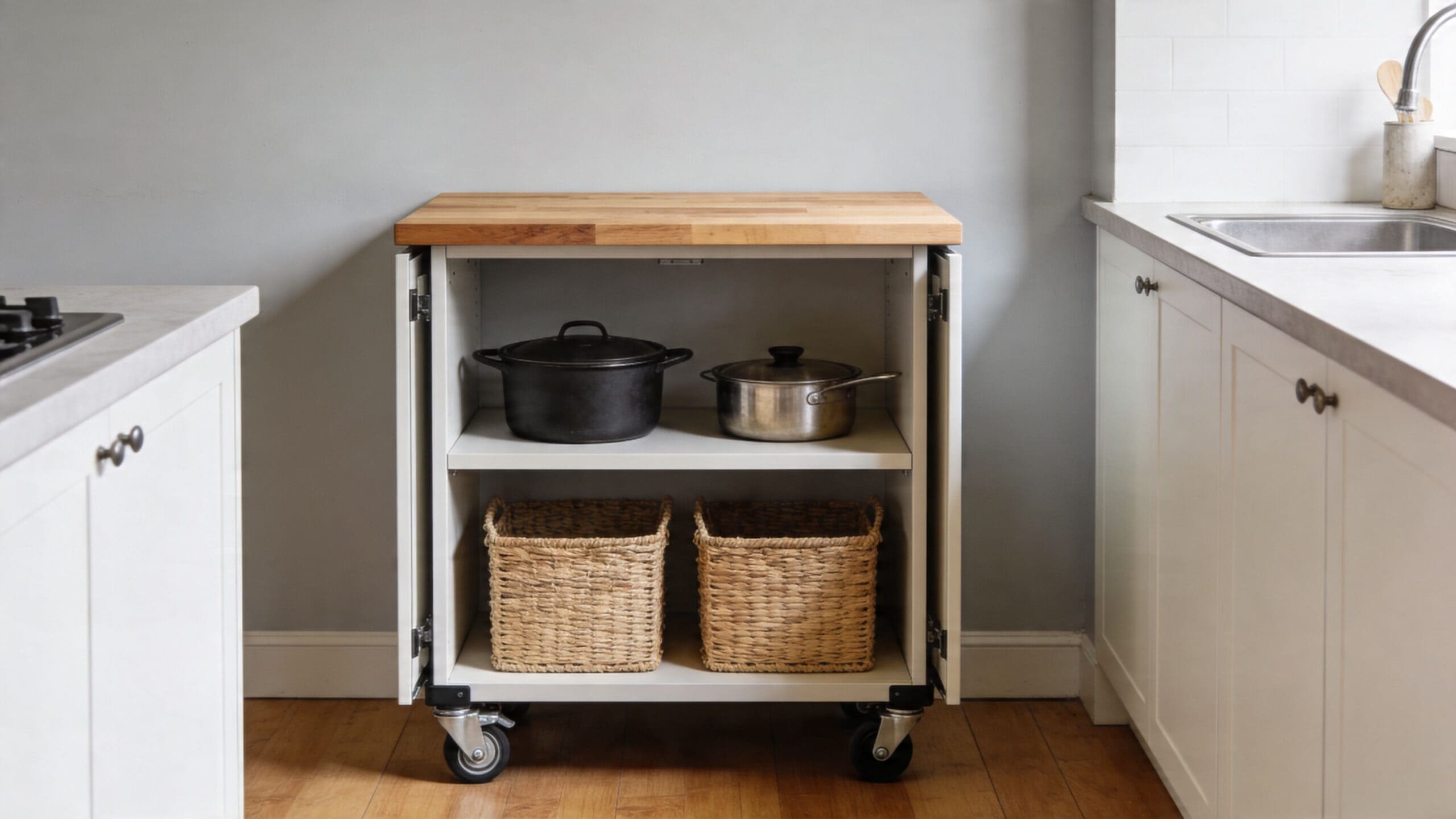
A rolling island is usually the safest entry point for homeowners who want kitchen island ideas for small kitchens without committing to built-in cabinetry. In compact homes around Cherry Hill and Pennsauken, I often see this work best when the kitchen needs more flexibility than permanence. You can pull it into the center for prep, then park it against a wall when guests show up or when you need the floor open.
This option works especially well in rentals, first-phase remodels, and kitchens that double as family traffic zones. A Crosley Furniture island, a Threshold rolling cart adapted from Target, or a custom piece from a local woodworker can all do the job if the proportions are right and the wheels lock firmly.
Why rolling islands work in tight rooms
Mobile pieces help you test island placement before you invest in a fixed design. That's valuable in older South Jersey homes where door swings, radiator locations, and uneven flooring can change the whole plan.
Practical rule: If you're not sure a permanent island belongs in your kitchen, live with a movable version first. You'll learn fast whether the extra surface feels helpful or constantly in the way.
A few details separate a useful cart from a frustrating one:
- Lockable casters matter: The island should stay planted while you're chopping or mixing.
- Drawer function matters more than shelf count: Closed storage keeps a small room calmer than open cubbies stuffed with everyday clutter.
- Height should match your habits: Standard counter height is common, but some cooks prefer a slightly lower work surface for repetitive prep.
If you choose deeper drawers, organize them well. Deep storage becomes a junk pit unless the insert layout matches what you use. The Cabinet Coach's guide to organizing deep kitchen cabinets is useful for planning what belongs in a movable island and what should stay on the perimeter.
What doesn't work? Oversized carts with bulky towel bars, exposed baskets on every side, or cheap wheels that wobble on hardwood. In Haddonfield and Moorestown homes with finished wood floors, that setup gets old quickly.
2. Narrow Galley-Style Island
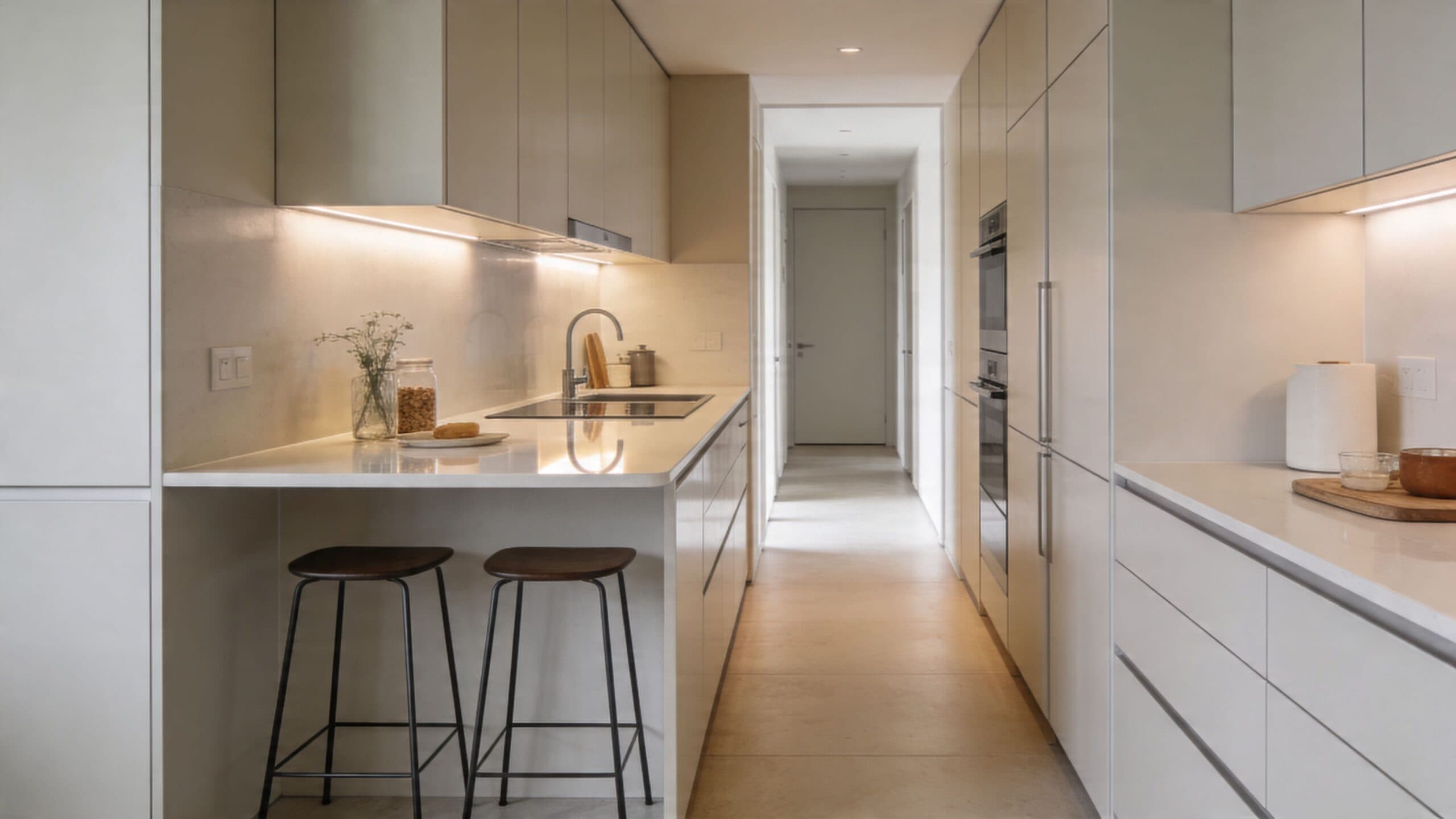
You walk into a long, narrow kitchen in Cherry Hill or Haddonfield and the problem is obvious. There is room for more workspace, but not room for a bulky center block. A narrow galley-style island solves that specific layout issue if the proportions are disciplined.
I use this approach in kitchens that have length to spare but limited width between cabinet runs. In many South Jersey homes, that means keeping the island closer to a prep table than a full gathering hub. The goal is extra function without pinching the aisle.
Width matters more than homeowners expect. A slim island often lands in the low-20-inch range for simple prep and storage. If you want deeper cabinets, seating, a sink, or an appliance, the footprint grows fast and the walkway usually suffers first. Before settling on a size, compare your room against a standard 10×10 kitchen layout guide to see how quickly clearances disappear in a compact plan.
Where a narrow island works best
A galley-style island earns its keep when the kitchen already has a clear work line and only needs one extra landing zone. It is also a good fit for homeowners who want one or two stools on a single side, not full wraparound seating.
The clearances decide whether this idea works. I like to see enough room to open doors, pass another person, and unload the dishwasher without turning sideways every day. If the room cannot support comfortable circulation on both sides, a narrow island stops being useful and starts acting like a hallway obstacle.
A few design choices make these islands perform better:
- Keep the base visually light: White oak, soft paint colors, and simple panel profiles reduce visual weight in the center of the room.
- Limit storage to what the width can handle: One bank of drawers or shallow cabinets usually works better than trying to cram storage on every face.
- Use a modest seating overhang: Too much projection steals knee space from the aisle behind it.
- Choose compact lighting: Small pendants or a clean surface-mounted fixture often fit the scale better than large decorative fixtures.
The bigger planning issue is traffic flow. Understanding the kitchen work triangle helps you avoid placing the island where it interrupts the route between sink, fridge, and range. In remodels I have seen in Moorestown and Collingswood, that mistake shows up most often when homeowners center the island visually instead of positioning it around how they cook.
For homeowners comparing layout ideas beyond kitchens, Townhouse Plans For Narrow Lots shows why long, efficient footprints depend on careful sizing instead of oversized features.
A narrow island should support prep, provide a landing spot, and maybe seat one or two people. It should not try to hold full dining seating, a microwave, big decorative legs, and oversized pendants all at once. That is usually the point where a slim island becomes expensive clutter.
If you want this look without the usual fit problems, The Cabinet Coach can size the island to your exact aisle widths, storage needs, and appliance locations instead of forcing a stock dimension into a room that cannot spare it.
3. Fold-Down or Drop-Leaf Island
Some kitchens don't need a bigger island. They need a smarter one. A fold-down or drop-leaf island is one of the most practical kitchen island ideas for small kitchens when the room only needs extra surface occasionally.
I've seen this approach make sense in homes where one person cooks most days, but the family still needs overflow space for baking, holiday prep, or setting out buffet-style meals. A drop-leaf gives you a compact base most of the time and a larger worktop only when you need it.
When an expandable top makes sense
This style is especially useful when the kitchen sits near a major traffic path. In a compact South Jersey layout, that might mean the route from the back door to the refrigerator or from the mudroom into the main living area. A fixed island can become a daily annoyance there. A leaf that folds down solves the traffic problem.
The most important question isn't style. It's swing space. The extending side needs enough room to open without clipping stools, appliances, or another person walking by.
A drop-leaf island is great for kitchens that feel crowded only part of the day. It isn't the best choice if you need constant prep space from morning to night.
Here's the kind of visual setup many homeowners find helpful before committing to custom cabinetry:
Material choice matters more here than people expect. The hinges and support hardware need to feel solid, and the top can't be so heavy that lifting it becomes a chore. For many kitchens, a simpler table-style base or an adapted IKEA NORDEN-type concept works better than an ornate cabinet base.
Before buying anything, compare the folded and open dimensions against your room. The Cabinet Coach's article on kitchen 10 x 10 planning is a good reality check for understanding how quickly circulation disappears when one feature claims too much floor space.
The downside is obvious. Fold-down designs usually sacrifice some cabinetry strength, continuous stone detailing, and integrated appliance potential. If your priority is hidden storage, another island type will outperform it.
4. Compact Kitchen Island with Built-In Appliances
This is the idea homeowners love on paper. A small island that also holds a microwave drawer, a beverage fridge, or even a cooktop sounds like peak efficiency. Sometimes it is. Sometimes it's the fastest way to overbuild a small kitchen.
A compact appliance island can work in open-concept homes in Cherry Hill, Mount Laurel, and Voorhees where perimeter walls are already crowded with tall cabinets and windows. Moving one appliance into the island can free up the main run and make the room feel less packed. The catch is that mechanical planning has to happen early.
The wiring and clearance trade-off
Electrical planning is the part most inspiration galleries skip. That's a problem, because wiring and outlet placement are often what make or break this choice in a small footprint. Existing content on this topic often ignores that issue, even though custom wiring is frequently required for islands in small remodels, and the verified research notes added cost and code considerations such as GFCI placement near sinks.
That doesn't mean you should avoid appliance islands. It means you should be selective about what earns a spot there. A microwave drawer or beverage cooler is usually easier to justify than a full cooking setup in a very compact room.
A few practical realities matter:
- Service access matters: An appliance that can't be removed without dismantling cabinetry will frustrate you later.
- Heat and seating don't mix well: If the island also functions as a social spot, hot surfaces and kids' stools are a poor combination.
- Counter landing space matters: Appliances consume top space and storage below, so the remaining surface has to work harder.
If you want a cooktop in the island, ventilation deserves a serious conversation. Downdraft systems can save visual space, but they still require coordinated planning with the cabinet layout, mechanical runs, and countertop openings.
What doesn't work is adding appliances just because the rendering looks impressive. In small kitchens, every island feature has to justify the space it steals.
5. Open Shelving Island
An open-shelving island can make a small kitchen feel lighter, but only if the household can maintain it. In design photos, this style looks clean and airy. In real homes, it either reads curated or chaotic.
This option fits kitchens where the island needs to stay visually quiet. In Collingswood farmhouses, Haddonfield renovations, and Scandinavian-inspired updates, open shelves can reduce the blocky feel of a full cabinet base. You keep sight lines open, and the room doesn't feel as visually dense.
What looks airy and what turns messy
Open shelving performs best when it holds a narrow category of items. Think stacked mixing bowls, cookbooks you use often, or matching serving pieces. It performs badly when it becomes overflow storage for protein powder tubs, school papers, and random water bottles.
Designer note: Open shelving isn't less work than closed cabinetry. It's more visible work.
The best results usually come from disciplined styling and realistic expectations:
- Store attractive everyday items: Matching dishware, wood boards, and woven baskets age better visually than plastic packaging.
- Keep heavy items low: Dutch ovens and small appliances belong near the bottom for safety and balance.
- Protect the shelves from splatter: Place the island outside the heaviest cooking zone if possible.
In very small kitchens, open shelving also has a psychological benefit. It can make the island feel more like furniture and less like another cabinet wall dropped into the center of the room. That's useful when you want the kitchen to feel connected to adjoining dining or living space.
The trade-off is dust, grease, and visual noise. If your family prefers quick cleanup and closed-door storage, don't force this style because it looks good online. In that case, a partially open island often works better than a fully exposed one.
6. Peninsula-Style Island Alternative
You open the refrigerator, someone is at the sink, and a freestanding island would trap both of you in the middle. That is usually the moment a peninsula starts to make more sense than a true island.
I suggest this layout often in South Jersey kitchens where the room needs more function but cannot spare full walking space on all four sides. In Cherry Hill condos, Haddonfield colonials, and Mount Laurel townhomes, a peninsula can add prep surface, base storage, and casual seating while keeping the center of the kitchen more open.
This design offers a simple advantage: One side is attached, so you do not have to spend precious floor area on extra clearance that a freestanding island would require. In a small L-shaped kitchen or a one-wall kitchen that opens to a dining area, that can be the difference between a layout that works every day and one that feels tight every time the dishwasher, oven, or refrigerator door is open.
Dimensions matter here. I usually want at least about 42 inches of clear working aisle in the main traffic and prep zones, and more if multiple people cook at once. A peninsula can also be narrower than many homeowners expect. In some kitchens, a 24-inch-deep cabinet run with a modest overhang does the job better than forcing a bulky centerpiece into the room.
A few design choices make or break this option:
- Place it where it improves workflow: The peninsula should support prep or serving, not block the route between the sink, refrigerator, and cooking surface.
- Use the end wisely: A finished panel, shallow bookshelf, or rounded end cabinet helps it read like built-in furniture from the adjoining room.
- Plan seating realistically: Two compact seats often work better than trying to squeeze in three and stealing knee room or walkway space.
- Check appliance clearance first: Refrigerator doors, dishwasher drop-downs, and oven handles need room before you commit to stool placement or overhang depth.
The trade-off is closure. A peninsula defines the room more than an island does, which can be helpful in an open-plan home but can also make a tight kitchen feel boxed in if the massing is too heavy. That is why I often specify lighter finishes, reduced-depth cabinetry on the back side, or decorative panels that soften the blocky look.
For homeowners comparing island and peninsula layouts side by side, The Cabinet Coach has a useful guide to kitchen island ideas and layout planning.
The mistake I see most often is treating a peninsula like a catch-all feature. Add oversized corbels, deep seating, and bulky storage on both sides, and the kitchen loses the breathing room you were trying to protect in the first place.
7. Kitchen Island with Integrated Seating Nooks
A seating nook built into the island can work beautifully in a small kitchen, but it has to be designed as furniture, not as an afterthought. This concept is strongest in homes where a separate breakfast table would crowd the room or where loose stools constantly migrate into walkways.
In family kitchens around Moorestown and Cherry Hill, integrated bench seating can create a compact breakfast spot that feels more settled than bar stools. It also cuts down on visual clutter because the seating is built into the form instead of floating around it.
How to make seating feel intentional
Comfort matters more than novelty here. A bench that looks smart but feels cramped won't get used. Seat depth, upholstery choice, and leg room have to support actual meals, homework sessions, and casual conversation.
A nook style island works best when the rest of the room is relatively uncluttered. If every other surface is already busy, adding built-in cushions and curved seating can tip the kitchen into overdesigned territory.
The practical upside is social use. People can sit without blocking circulation as much as loose chairs often do. The practical downside is flexibility. You can't easily move a built-in bench if the layout changes later.
For inspiration around seating layouts and proportions, The Cabinet Coach's guide to kitchen islands ideas and layout is a useful reference when you're comparing benches, stool overhangs, and family-friendly configurations.
A tucked-in seating nook works best for households that will use it daily. If you only need seating a few times a year, standard stools are usually the simpler solution.
What usually doesn't work is forcing a bench into an island that's already too small. If the seating steals needed prep area or creates awkward knee space, the island stops serving the kitchen first.
8. Waterfall Edge Island with Minimalist Design
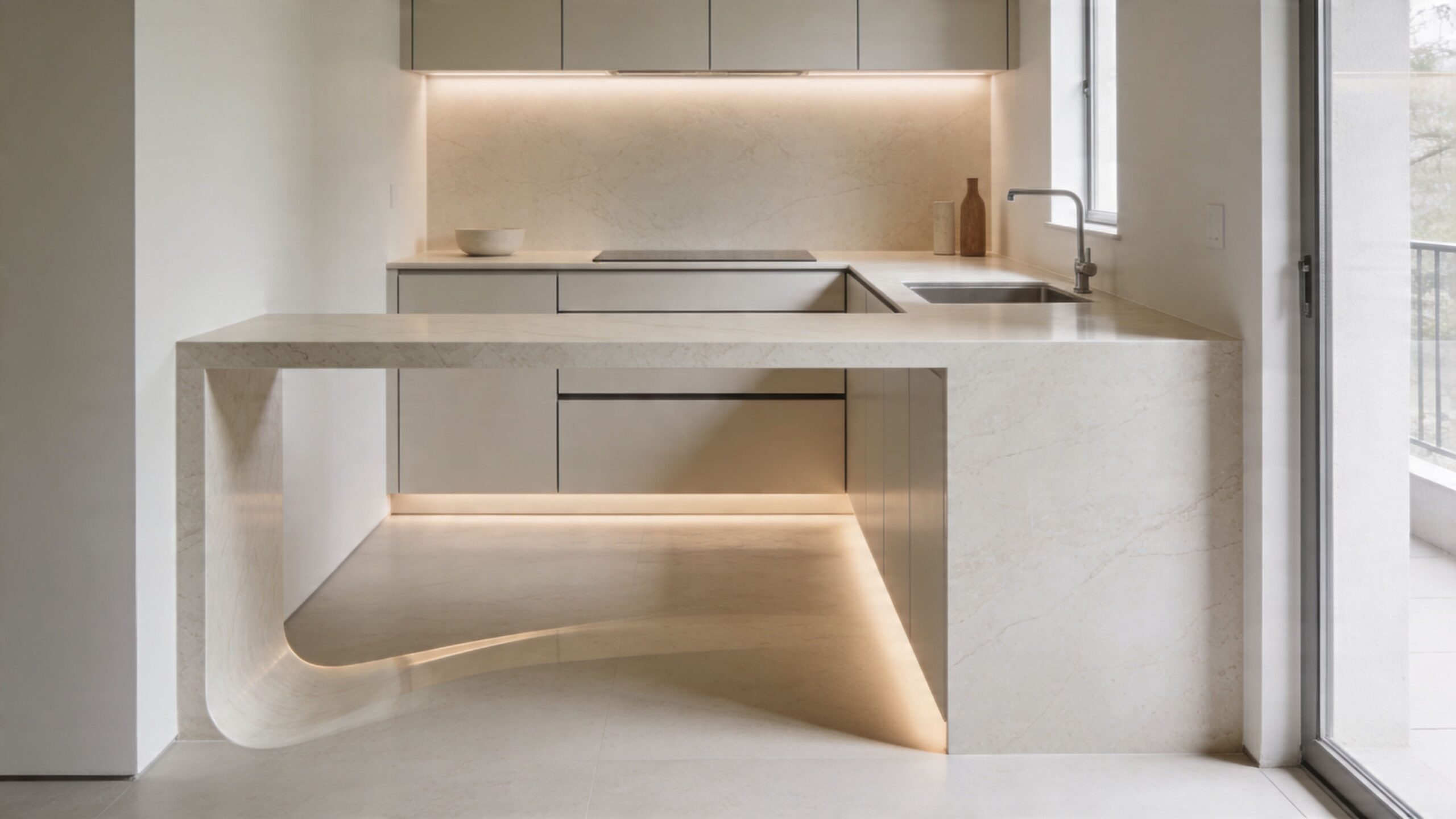
A waterfall island can absolutely work in a small kitchen. The trick is keeping the form simple and the footprint disciplined. When homeowners in Haddonfield, Voorhees, or Mount Laurel want a more modern look, this is often the island style that delivers the biggest visual payoff with the least decorative clutter.
The clean vertical slab edge can make the island read as one sculpted piece instead of a box with add-ons. In a small room, that simplicity helps. You don't have legs, brackets, corbels, or busy trim interrupting the view.
Where this look earns its keep
This design works best when the rest of the kitchen supports it. Flat-panel or simple shaker cabinetry, restrained hardware, and controlled material choices keep the island feeling intentional. If the room is traditional and highly detailed, a waterfall edge can look dropped in from another project.
Visual lightness matters in compact kitchens. One reason minimalist islands perform well is that lighter finishes and reflective surfaces can help the room feel more open. That aligns with a documented small-kitchen case where lighter finishes and reflective materials made the space feel perceptually larger after the island was installed, as discussed in this small kitchen island design example from Normandy Remodeling.
A few cautions matter here:
- Precision fabrication matters: Waterfall seams need to line up cleanly or the whole effect falls apart.
- Storage should stay hidden: Handleless or low-profile hardware keeps the back side calm.
- Scale must stay modest: A sleek island that's too large still overwhelms the room.
This isn't the most forgiving island style for budget shortcuts. It depends on clean cuts, careful countertop installation, and strong material selection. When it's done well, though, it can make a small kitchen feel more finished and more spacious than a busier island ever could.
8-Point Comparison: Small Kitchen Island Ideas
| Design | Implementation Complexity 🔄 | Resource Requirements ⚡ | Expected Outcomes ⭐ / 📊 | Ideal Use Cases 💡 | Key Advantages ⭐ |
|---|---|---|---|---|---|
| Rolling Kitchen Island with Storage | Low 🔄, plug-and-play, no structural work | Low ⚡, off-the-shelf or custom cart, minimal install | ⭐⭐, increases prep & storage; flexible footprint 📊 moderate | Renters, small kitchens, frequent entertainers | Mobility and low cost; easy access and cleaning |
| Narrow Galley-Style Island | Medium 🔄, must fit corridor dimensions precisely | Low–Medium ⚡, standard cabinetry, minimal MEP work | ⭐⭐, optimizes workflow and adds seating 📊 moderate | Long, narrow kitchens, condos, galley layouts | Preserves walkway, adds seating without bulk |
| Fold-Down / Drop-Leaf Island | Medium–High 🔄, hinge hardware and clearance planning | Medium ⚡, custom hardware and durable surfaces | ⭐⭐⭐, expandable prep area when needed 📊 good | Small kitchens that entertain occasionally | Max utility with minimal permanent footprint |
| Compact Island with Built-In Appliances | High 🔄, requires professional gas/electrical/plumbing | High ⚡, appliances, ducting, licensed trades | ⭐⭐⭐, centralizes cooking; raises value 📊 high | Serious cooks, open-concept, luxury renovations | Integrates appliances for a multifunctional hub |
| Open Shelving Island | Low–Medium 🔄, simple construction, styling-focused | Low ⚡, less cabinetry, more shelving/display | ⭐⭐, airy look, easy access; needs upkeep 📊 moderate | Minimalist, farmhouse, hosts who display items | Visually light, affordable, accessible storage |
| Peninsula-Style Island Alternative | Medium 🔄, anchored to wall/cabinets, layout-sensitive | Medium ⚡, cabinetry tie-in, easier utility access | ⭐⭐, adds counter & seating with limited footprint 📊 good | L- or U-shaped kitchens, families, tight spaces | Space-efficient, stable, simpler utility integration |
| Island with Integrated Seating Nooks | Medium 🔄, custom seating and upholstery considerations | Medium ⚡, built-in benches, cushions, storage | ⭐⭐, dining + storage in compact footprint 📊 moderate | Families, small-dining homes, busy households | Saves floor space, creates cozy dining area |
| Waterfall Edge Island with Minimalist Design | High 🔄, precision fabrication and installation | High ⚡, premium slab materials, skilled installers | ⭐⭐⭐, high-end look; perceived spaciousness 📊 high | Luxury or modern minimalist renovations | Seamless, contemporary aesthetic; premium statement |
Find Your Perfect Island with an Expert Guide
The best kitchen island ideas for small kitchens don't start with a Pinterest image. They start with your floor plan, your daily routine, and the things that frustrate you most in the room right now. Maybe that's nowhere to prep vegetables. Maybe it's countertop clutter. Maybe it's the lack of seating, or the fact that every family member cuts through the kitchen while you're trying to cook.
That's why island planning has to be practical before it's pretty. In a small kitchen, inches matter. Clearance matters. Appliance doors matter. The way your family moves through the room matters even more. An island that looks beautiful but blocks the dishwasher, crowds the refrigerator, or leaves no safe landing space near a cooktop isn't a smart upgrade.
For some South Jersey homes, the right answer is a rolling island or drop-leaf piece that preserves flexibility. In others, a narrow fixed island or peninsula gives you more value because it uses the room effectively. If you're drawn to open shelving, integrated seating, or a waterfall edge, those ideas can work too, but only when the proportions and storage strategy support them.
In such decisions, an experienced design partner makes a real difference. The Cabinet Coach doesn't ask you to guess from a showroom aisle. The mobile showroom approach brings cabinetry, countertop, hardware, and finish options directly to your home, where the actual light, traffic patterns, and room dimensions are right in front of you. That's a much better way to make decisions about scale and function.
For homeowners in Cherry Hill, Haddonfield, Collingswood, Moorestown, Voorhees, and nearby Camden and Burlington County communities, that local perspective matters. Older homes often have quirks that generic online advice doesn't address. Uneven walls, radiator placements, tight entry points, and mixed-use family spaces all affect what kind of island will succeed.
The Cabinet Coach can help measure the room, translate your priorities into a layout that works, and turn broad inspiration into a cabinetry plan that fits your budget and style. If you want to compare a slim galley island against a peninsula, or test whether a movable island makes more sense than a built-in one, that's exactly the kind of decision that benefits from guided design.
A small kitchen can absolutely support an island. It just has to be the right one. The smartest projects don't force a trend into the room. They build a solution that makes the kitchen easier to use every single day.
If you're ready to explore a small-kitchen island that fits your space, schedule a consultation with The Cabinet Coach. Their mobile showroom brings expert guidance, curated materials, and practical layout planning right to your South Jersey home so you can make confident decisions without the usual showroom runaround.