
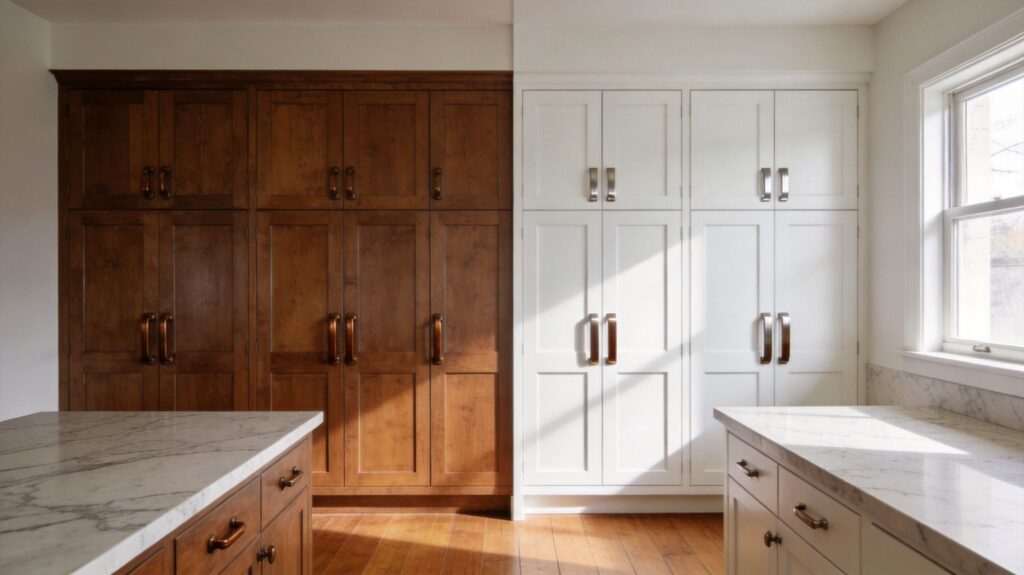
Cabinet refacing is usually the smartest answer if your kitchen layout still works, because it typically costs 50 to 70% less than full replacement. In real numbers, many refacing projects fall around $4,000 to $9,500, while full cabinet replacement for a standard kitchen often lands around $10,000 to $25,000+.
If you're in Cherry Hill, Haddonfield, Moorestown, Medford, or nearby, you're probably in the same position as a lot of South Jersey homeowners. You like your house. You like your neighborhood. You may even like your kitchen's footprint. What you don't like is staring at dated oak doors, worn finishes, bulky soffits, tired hardware, and a room that makes the whole house feel older than it is.
That's where people get stuck. They search for kitchen cabinet refacing near me, then get hit with two extremes. One side says paint everything and hope for the best. The other side pushes a full tear-out as if every kitchen needs to be gutted. My advice is simpler. If your cabinet boxes are solid, refacing is often the strategic move. You get the visual transformation people care about, without paying for demolition you may not need.
Table of Contents
- Is Your Outdated Kitchen Holding Your Home Back?
- What Exactly Is Kitchen Cabinet Refacing?
- Refacing vs Replacement A South Jersey Cost and Value Comparison
- The Cabinet Coach Process A Stress-Free Transformation
- How to Choose the Right Refacing Contractor in South Jersey
- See Our Work Serving Camden and Burlington Counties
- Frequently Asked Questions About Cabinet Refacing
Is Your Outdated Kitchen Holding Your Home Back?
A lot of homeowners call when they've reached the same breaking point. The cabinets still open and close. The kitchen still functions. But every time they walk in, the room feels dark, heavy, and behind the rest of the house.
That's especially common in South Jersey. You'll see a well-kept home in Cherry Hill or Moorestown with great bones, good flooring, and a solid layout, but the kitchen still looks like it belongs to another decade. The homeowner doesn't want a construction zone for weeks. They just want the room to feel current, clean, and worth walking into every day.
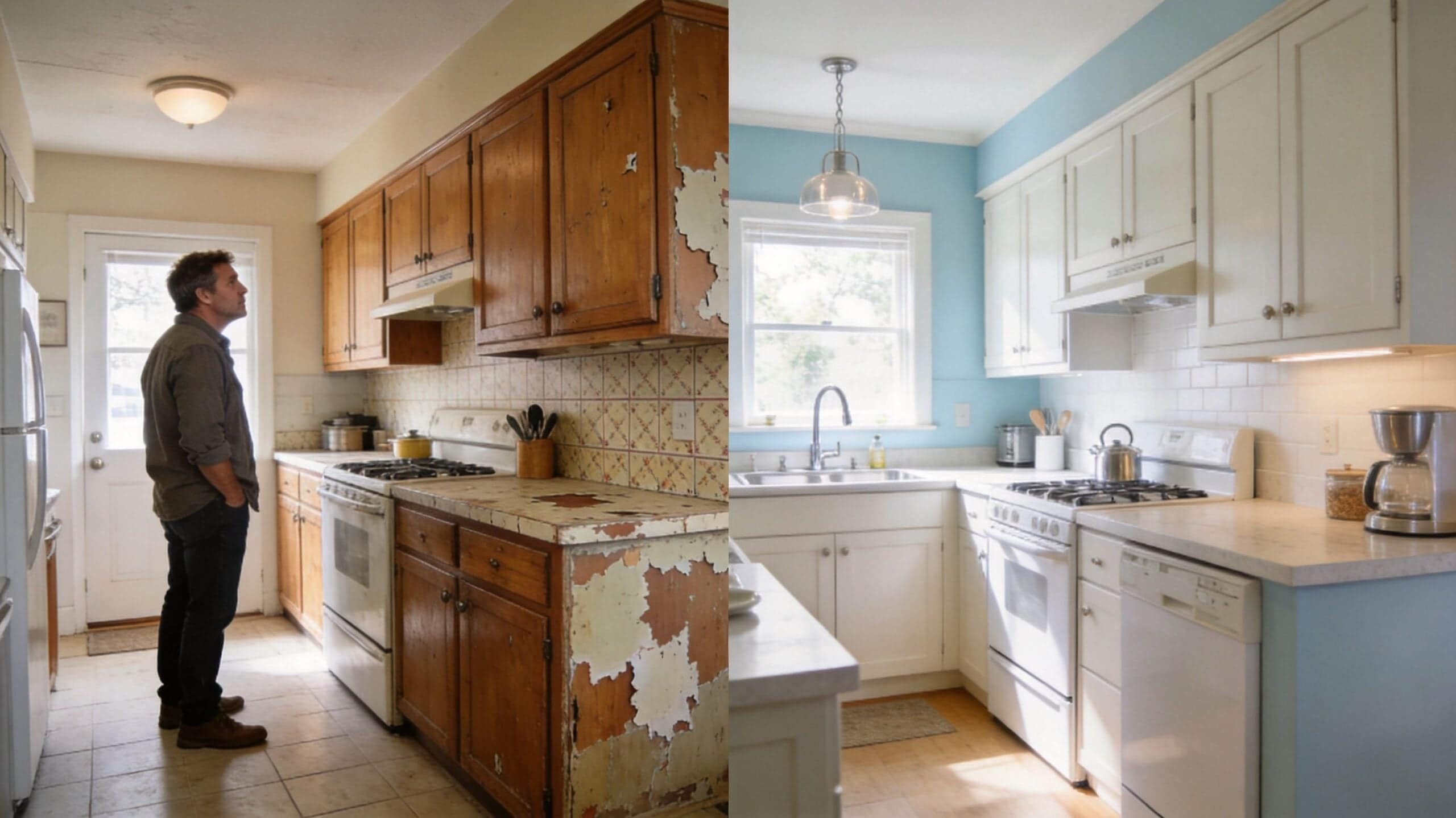
When the kitchen feels older than the house
I've seen this pattern again and again. A family updates paint, lighting, floors, and furniture throughout the home, but the kitchen still drags everything down because the cabinet fronts take up so much visual space. That doesn't mean the right answer is a full gut renovation.
Sometimes the smarter move is targeted. Keep what still works. Change what dates the room.
Your kitchen doesn't need more demolition. It needs better decisions.
If you're trying to sort through ideas before committing, it helps to design your kitchen online so you can test layout and style direction without pressure. And if you're looking at practical ways to update the room without overspending, this guide on budget kitchen upgrades is worth reading.
Why homeowners hesitate
The hesitation is understandable:
- They assume renovation means upheaval: Noise, dust, strangers in the house, and a project that keeps stretching.
- They worry about wasting money: Nobody wants to pay for a cosmetic fix that won't last.
- They don't know what's possible: Homeowners can often picture painting or replacing. Refacing sits in the middle, and that middle option is often the right one.
If your cabinet boxes are structurally sound and your layout still serves you, refacing is not settling. It's a disciplined upgrade.
What Exactly Is Kitchen Cabinet Refacing?
Cabinet refacing means keeping the cabinet boxes that are still in good shape and replacing the parts you see. That usually means new doors, new drawer fronts, new hardware, and a new finish layer on the exposed surfaces of the existing boxes.
The simplest way to think about it is this. Your kitchen keeps its skeleton, but gets a completely new exterior.
What stays and what changes
Here's the breakdown:
- What stays: The existing cabinet boxes, assuming they're solid, level, and worth keeping.
- What gets replaced: Doors, drawer fronts, hinges, pulls, knobs, and visible exterior surfaces.
- What can be upgraded at the same time: Crown molding, fillers, end panels, light rail, valances, and often countertops or backsplash if the overall design calls for it.
That's why refacing looks far more complete than painting. Paint changes color. Refacing changes the surfaces, profile, feel, and style language of the whole kitchen.
Why professional refacing is not just a cosmetic shortcut
The quality of the result depends on the method and materials. Professional refacing methods can use wood veneer on cabinet faces and 1/8" or 1/4" plywood on the sides, which creates a more uniform and structurally sound finish than a thin, improvised skin. That matters in New Jersey, where humidity can punish shortcuts. Improper thickness can lead to warping, and that's one reason a legitimate refacing job needs proper material selection and process from the start, as outlined by WalzCraft's cabinet refacing methods.
Practical rule: If a contractor talks about refacing but can't clearly explain what goes on the faces, what goes on the sides, and how edges are handled, keep looking.
This is also where homeowners confuse refacing with repainting. They're not the same service. If you want a cleaner understanding of where painting fits and where it falls short, compare it against a dedicated cabinet painting company approach.
What a good reface should accomplish
A proper reface should do more than cover old wood. It should make the kitchen feel intentionally redesigned.
That means the door style should match the home. The finish should work with your countertop and flooring. The hardware shouldn't feel like an afterthought. And the exposed ends, seams, and transitions need to look finished, not improvised.
If you've been typing kitchen cabinet refacing near me into Google, this is the distinction that matters. You're not just buying new doors. You're buying a complete visible reset of the room.
Refacing vs Replacement A South Jersey Cost and Value Comparison
Most homeowners don't struggle with style first. They struggle with the decision. Should you reface, or should you replace everything?
My opinion is straightforward. Replace cabinets when the boxes are failing, the layout is wrong, or the storage plan needs a complete rethink. Reface them when the structure works and the problem is mostly visual.
The numbers that matter
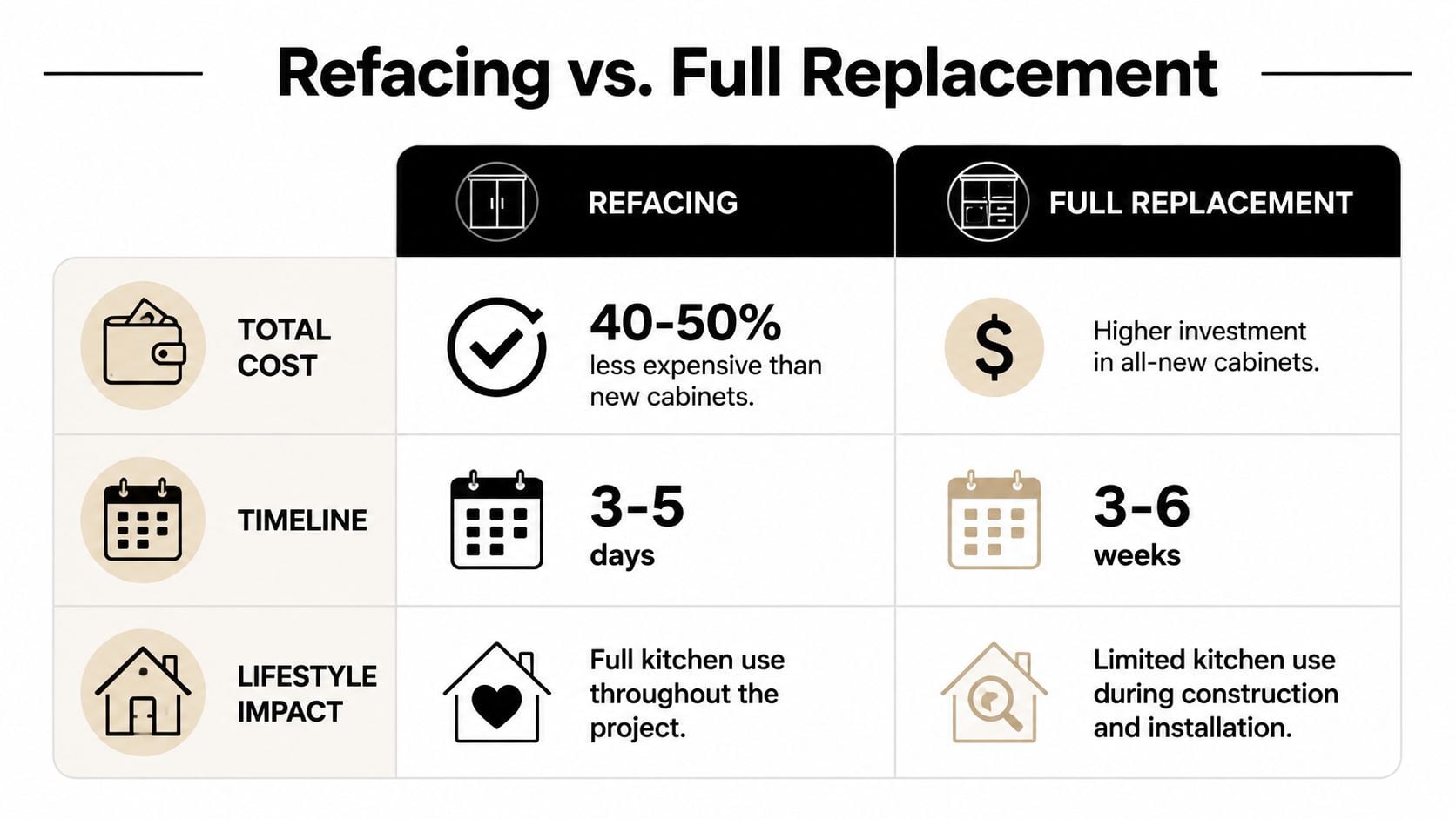
Cabinet refacing typically costs 50 to 70% less than full replacement, with refacing projects often averaging $4,000 to $9,500, while a standard full replacement can range from $10,000 to $25,000+, according to this cabinet refacing cost guide.
That gap matters because most homeowners don't stop at cabinets. Once you improve the cabinetry, you start looking at backsplash, counters, lighting, flooring, and paint. Saving money on the cabinet portion gives you flexibility where it really shows.
For some households, the point isn't just spending less. It's spending smarter.
Cabinet Refacing vs. Full Replacement at a Glance
| Factor | Cabinet Refacing | Full Cabinet Replacement |
|---|---|---|
| Primary approach | Keeps solid existing boxes and updates visible surfaces | Removes existing cabinets and installs all new cabinetry |
| Typical cost range | $4,000 to $9,500 | $10,000 to $25,000+ |
| Budget impact | Typically 50 to 70% less than replacement | Highest cost option |
| Best fit | Good boxes, workable layout, outdated appearance | Damaged boxes, poor layout, major redesign |
| Disruption level | Lower | Higher |
| Design freedom | Strong visual transformation within existing footprint | Full layout and storage redesign possible |
If you want to compare cabinet spending against the rest of a kitchen remodel, this kitchen remodeling cost breakdown helps put the cabinet decision in context.
What South Jersey homeowners should care about most
In Camden and Burlington Counties, the practical issues are usually these:
- Humidity: Materials and prep matter more here than a sales pitch.
- Household disruption: Families don't want to lose the kitchen for an extended stretch.
- Resale optics: Buyers notice cabinetry fast, especially when the rest of the home is updated.
- Scope creep: A full replacement often pulls you into electrical, flooring, drywall, and trim work you didn't plan to tackle.
If the cabinet boxes are sound and the layout works, replacement can be overkill.
When replacement is the right call
Refacing is not the answer to every kitchen. You should replace if:
- The boxes have water damage or structural problems.
- The layout is frustrating every day.
- You need different cabinet sizes or major storage reconfiguration.
- The existing installation was poor to begin with.
When refacing is the better move
Refacing wins when the core kitchen is still doing its job. You're not paying to rip out usable structure just to get a new look. You're putting budget into the parts people see and touch.
For many South Jersey homes, that's the sweet spot. The kitchen looks dramatically better, the cost stays grounded, and the project remains manageable.
The Cabinet Coach Process A Stress-Free Transformation
A lot of remodeling stress starts before any work begins. Homeowners drive to a showroom, look at small samples under artificial light, try to remember their wall color, forget the undertones in their countertop, and go home more confused than when they started.
That's why the in-home model makes sense. A mobile showroom lets you review door styles, finishes, hardware, and related materials where the kitchen exists.
What the process looks like in real life
It usually starts with a conversation about your kitchen, budget, priorities, and what bothers you most. Some homeowners want a brighter, simpler style. Others want to warm up a cold space, improve function, or coordinate cabinets with new counters and tile.
Then comes the useful part. Samples come to the house. You look at them next to your floors, paint, natural light, and fixed elements you're keeping. The Cabinet Coach uses that mobile showroom model for South Jersey homeowners who want to make decisions in the actual space instead of guessing from a wall of samples in a retail store. If that approach sounds more practical to you, read more about why a mobile cabinet showroom fits modern kitchen remodeling.
The prep work is where durability is decided
A reface lasts because the prep is handled correctly. Not because the color looked nice on a sample.
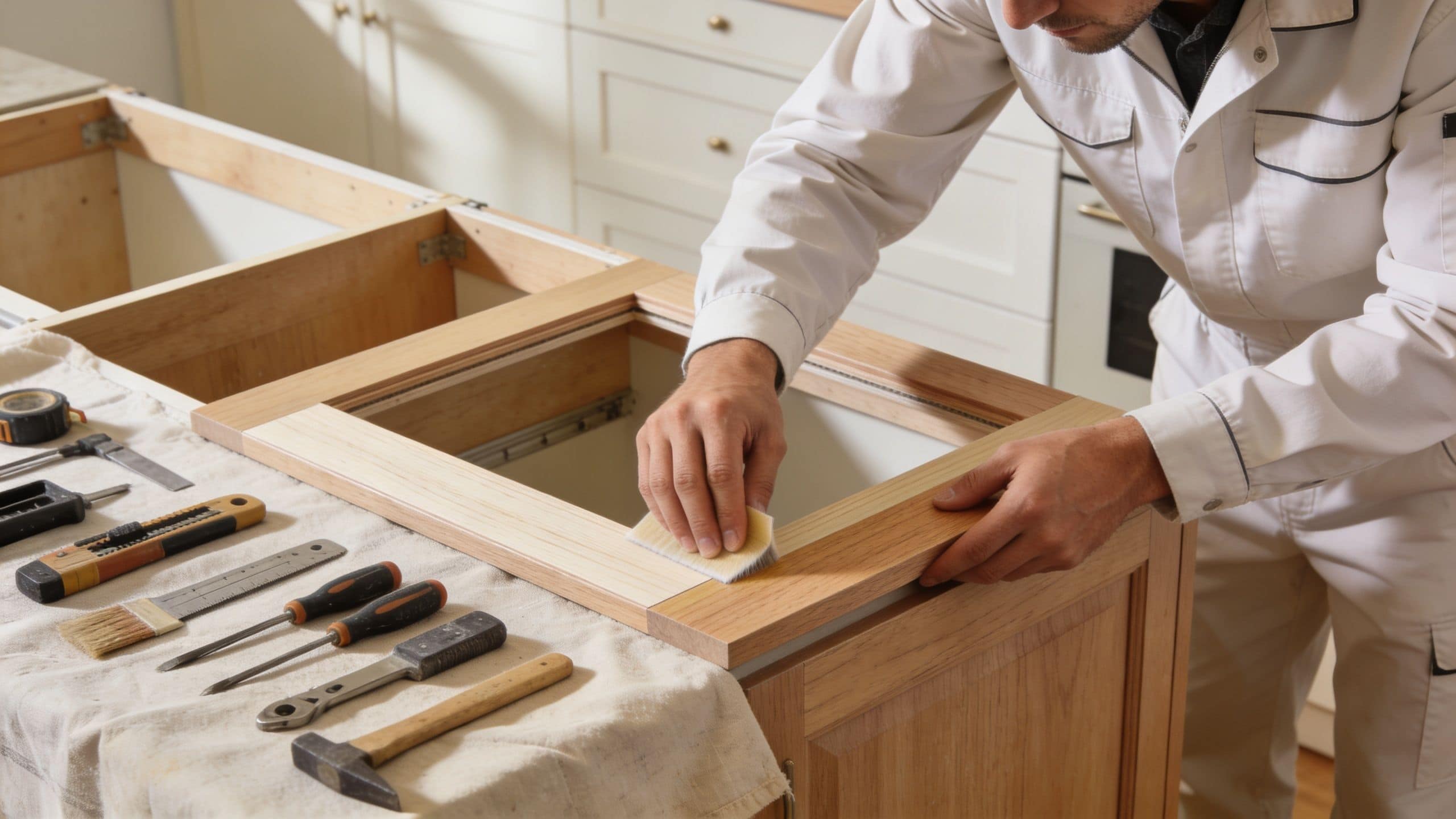
Professionals create bond strength by sanding cabinet faces with 100-grit paper, then applying a water-based glue before veneer application. That prep process can prevent 90% of peel failures common in humid areas and can help extend cabinet life by 10 to 15 years, based on the process demonstrated in this professional cabinet refacing video.
That should shape how you evaluate any installer. Ask what they sand with. Ask what adhesive they use. Ask how they handle edges, exposed ends, and final finishing. If they answer vaguely, they probably work vaguely.
Why in-home selection changes the result
Most design mistakes happen when materials are chosen out of context. White that looked crisp in a store can turn yellow against your existing counters. A warm wood tone can fight with your flooring. A door profile that seemed subtle on a sample board can feel busy across an entire wall of cabinets.
Seeing materials in your own kitchen solves that.
Here's a closer look at the kind of project flow homeowners usually want to understand before they commit:
A process that respects the house
The right refacing job should feel organized, not chaotic. Homeowners should know what's being changed, what's being protected, and what the finished details will look like. That includes trim transitions, hardware placement, matching around panels, and cleanup.
Good project management is not glamorous, but it's what keeps a kitchen upgrade from becoming a headache.
How to Choose the Right Refacing Contractor in South Jersey
If you search kitchen cabinet refacing near me, you'll find everybody claiming craftsmanship, quality, and customer care. Ignore the slogans. Ask sharper questions.
A refacing contractor should be able to explain materials, prep, scope, and finish details without dodging. If they can't, you're not talking to a specialist. You're talking to a salesperson.
Questions worth asking before you sign
Use this checklist:
- Ask for local project photos: Not stock images, not manufacturer shots. You want completed kitchens in South Jersey homes.
- Ask what happens to the existing boxes: Are they inspected for damage, alignment, and suitability before the project is sold?
- Ask for a written scope: New doors and drawer fronts are obvious. End panels, moldings, exposed sides, interiors, hardware, and cleanup should also be clear.
- Ask about finish and adhesive process: This tells you whether the contractor understands refacing.
- Ask about registration and insurance: In New Jersey, this is basic professionalism, not a bonus.
A vague quote is usually a warning that the unpleasant surprises are still coming.
Sustainability is not a fringe question anymore
More homeowners now ask about healthier and lower-waste material choices. That's a good sign. Refacing already reduces landfill waste by 70 to 90% compared to replacement, and some contractors also offer low-VOC finishes and FSC-certified wood options, as noted in this Houzz overview of cabinet refacing considerations.
That doesn't mean every project needs to become a sustainability lecture. It just means your contractor should be ready with sensible options if that matters to you.
Red flags I wouldn't ignore
Some warning signs are obvious, some are subtle:
- Heavy pressure to sign the same day
- No clear explanation of materials
- A price that sounds low because half the scope is missing
- No interest in your lighting, flooring, or existing finishes
- No process for helping you compare styles in your actual home
If you want an outside look at how contractors market and qualify projects, this piece on lead generation for contractors is useful because it shows how many companies focus on getting the lead first and sorting out fit later. As a homeowner, you want the opposite. Fit first. Sale second.
See Our Work Serving Camden and Burlington Counties
Local service matters here because homes, styles, and expectations vary from town to town. A kitchen in Haddonfield doesn't present the same design choices as one in Medford or Gloucester Township. The priorities also shift. Some homeowners want to preserve character. Others want a brighter, cleaner reset that makes the house feel more current without stripping out everything original.
That's why local experience is useful in practical ways. You need someone who understands how South Jersey kitchens are commonly laid out, what finishes work in these homes, and how to coordinate cabinet updates with the details homeowners typically keep.
Areas we commonly serve
Homeowners searching for kitchen cabinet refacing near me are often in:
- Camden County: Cherry Hill, Haddonfield, Voorhees, Collingswood, Haddon Township, Gloucester Township, Berlin, Pennsauken, Barrington, Oaklyn, and nearby communities
- Burlington County: Moorestown, Medford, Medford Lakes, Mount Laurel, Evesham, Maple Shade, Cinnaminson, Delran, Lumberton, and surrounding towns
What a before-and-after really looks like
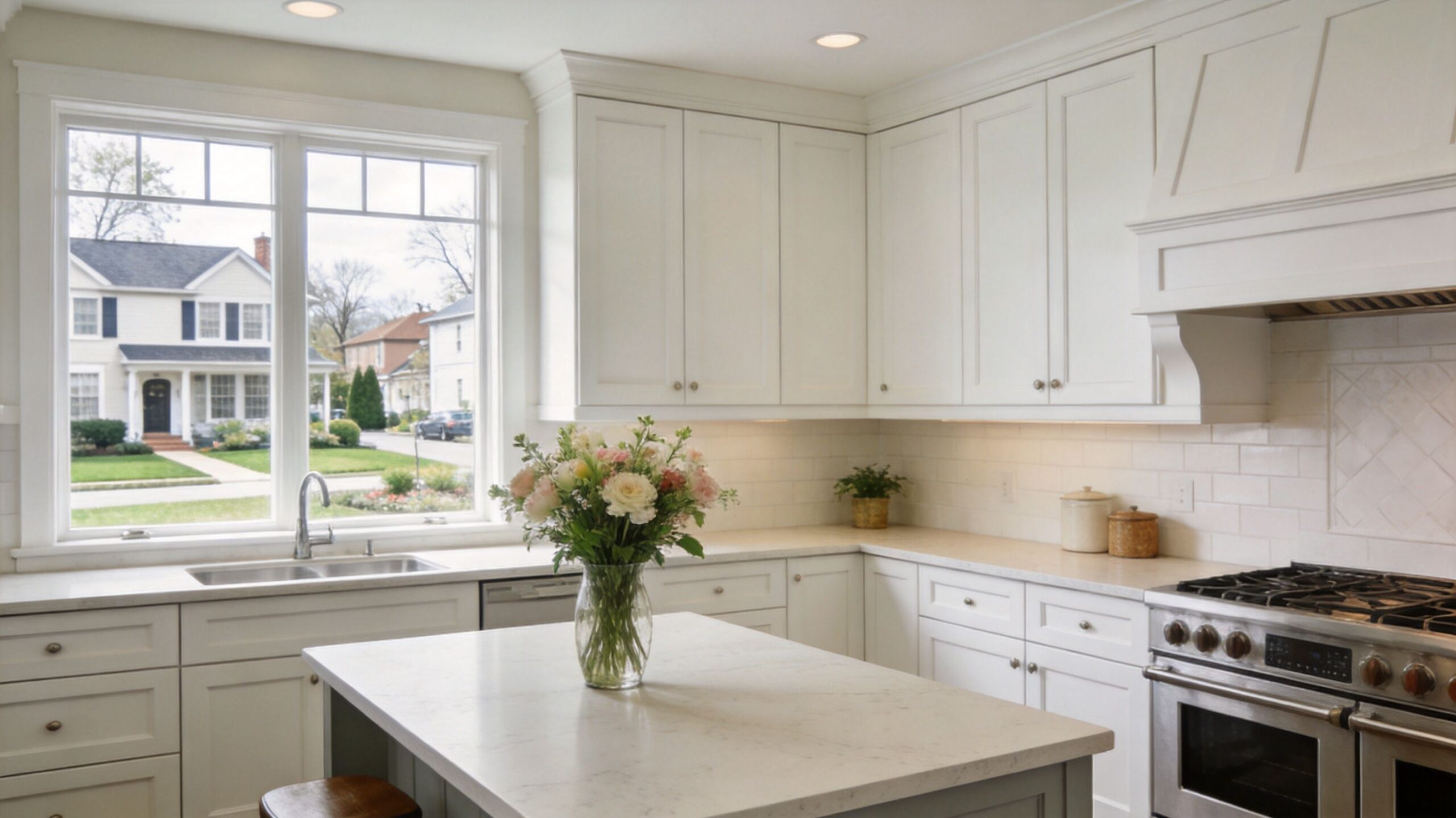
A typical project starts with a kitchen that feels heavy. Dark door profiles. Busy wood grain. Worn edges around sink areas. Old knobs that catch your eye for the wrong reason. The layout may still be fine, but the room looks tired.
After refacing, the biggest change is usually visual calm. Cleaner lines. Better contrast. Brighter finishes or a richer wood tone chosen intentionally. Updated hardware that fits the door style. End panels and trim that make the cabinetry look finished rather than patched together.
That kind of transformation is why a photo gallery matters more than generic promises. If you want to see examples of finished spaces and style direction, browse the kitchen and bath project gallery.
The next step should be simple
If your kitchen works but doesn't look the way you want, don't jump straight to demolition. Start by finding out whether your cabinets are good candidates for refacing. That one decision can save time, money, and a lot of unnecessary disruption.
Frequently Asked Questions About Cabinet Refacing
Can any kitchen be refaced?
No. The cabinet boxes need to be structurally worth keeping. If they're damaged, poorly installed, badly out of level, or the layout itself is a daily frustration, replacement may make more sense.
Will refacing make my kitchen look fully updated?
Yes, if the design is handled properly. The doors, drawer fronts, hardware, finish, and visible box surfaces dominate what people notice. If those elements are coordinated well, the kitchen can look dramatically different.
Is refacing better than painting?
Often, yes. Painting can help in the right situation, but it doesn't change door style, edge condition, hardware layout, or the visible wear built into older surfaces. Refacing gives you a more complete visual change.
How do I know if the finish will work in my house?
Review samples in your actual kitchen. Lighting changes everything. Natural light, wall color, flooring, and countertop undertones all affect how a finish reads.
Can I update other parts of the kitchen at the same time?
Yes. Many homeowners pair refacing with countertop, backsplash, tile, lighting, or hardware updates. That's often the smartest way to make the whole room feel cohesive without committing to a full gut job.
What should I bring to an initial consultation?
Bring your priorities. That matters more than a perfectly organized idea board. Know what bothers you most, what style direction you lean toward, and whether you want to stay close to the current look or move the kitchen in a new direction.
If you're ready to find out whether refacing is the right move for your kitchen, start with The Cabinet Coach. A focused consultation can tell you quickly whether your existing cabinets are worth saving, what style direction fits your home, and how to update the space without turning your house upside down.