
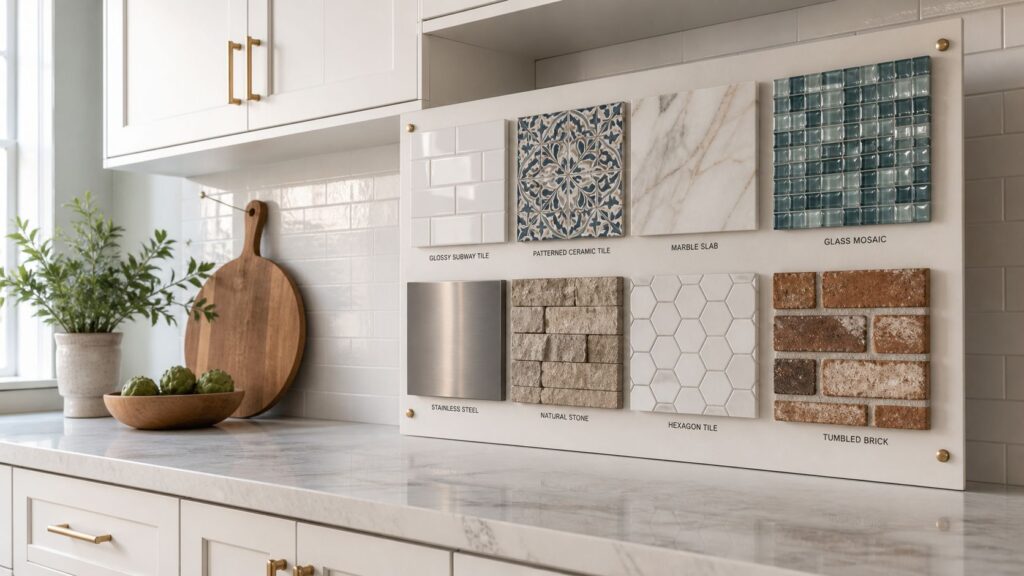
White cabinets don't automatically make backsplash selection easy. They create a bright, flexible starting point, but the wrong white can make a kitchen feel cold, while too much texture can compete with the countertop and too many grout lines can turn a clean design into a maintenance project. The best backsplash for white cabinets depends on the result you want, whether that's contrast, texture, luxury, artisan character, reflected light, or everyday practicality.
This guide compares eight strong options using the decisions that matter after the sample board looks attractive: style compatibility, undertone, grout visibility, cleaning demands, durability, approximate cost, installation complexity, lighting, and countertop coordination. Tile remains the mainstream choice, with 76% of renovating homeowners selecting tile backsplashes, while ceramic accounts for 34%, porcelain 17%, and engineered quartz 10%, according to Houzz's 2025 U.S. Kitchen Trends Study.
The eight choices below range from classic subway tile to slabs, glass, marble, handmade tile, recessed profiles, and brick-inspired relief. If you're also comparing practical finishing details, this guide to kitchen wall plate styles and materials can help you coordinate outlets and decorative wall elements with the backsplash.
Table of Contents
- 1. Classic White Subway Tile
- 2. Large Format Porcelain Slabs
- 3. White Mosaic and Textured Tile
- 4. White Glass and Glass-Tile Blends
- 5. White Marble and Natural Stone Tile
- 6. White Cement Tile and Handmade Artisan Tile
- 7. White Shaker and Recessed Tile
- 8. White Brick and Textured Relief Backsplash
- 8-Way Comparison: Backsplashes for White Cabinets
- Turn a Favorite Tile Into a Confident Plan
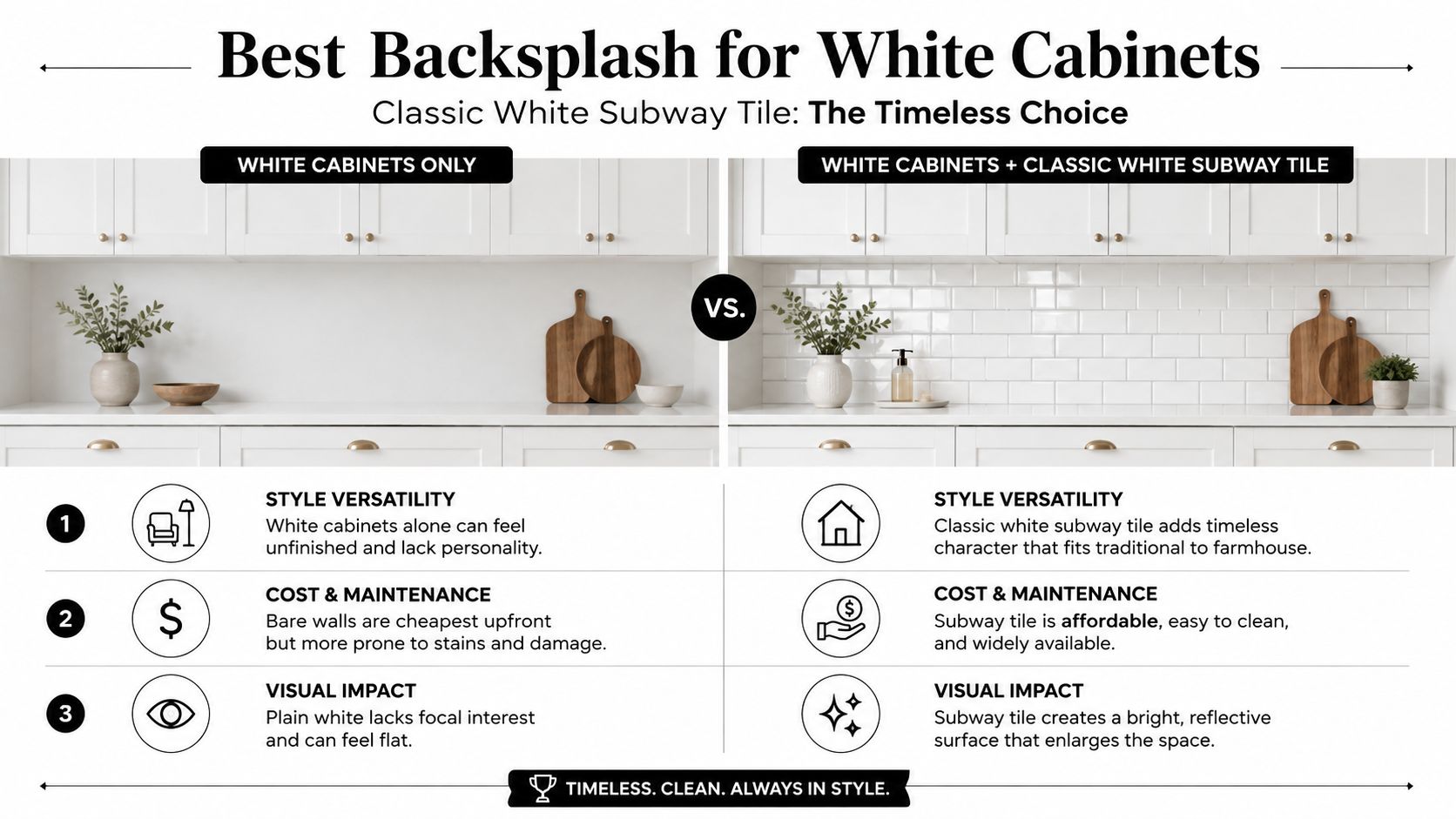
1. Classic White Subway Tile
White subway tile remains the safest starting point for white cabinetry because it supports almost any surrounding style. A traditional running-bond layout feels at home in a Cherry Hill colonial, while a herringbone installation adds movement to a modern farmhouse kitchen in Moorestown. The white-on-white combination keeps the room cohesive and lets the countertop, hardware, or island carry more visual weight.
The main decision isn't whether subway tile works. It's which white, finish, size, and grout work with your cabinets. A crisp cabinet finish can look clean beside bright white tile, but a warmer cabinet may need a creamy or softly toned tile. Always compare physical samples against the cabinet door, countertop, flooring, and wall paint under both daylight and evening lighting.
Grout determines the amount of pattern
White grout creates a quiet surface and hides minor layout complexity, but it can also make a large backsplash feel visually blank. Soft gray grout defines the tile without the hardness of black, while charcoal or black grout creates a stronger architectural pattern. Dark grout can look excellent in a traditional kitchen with dark hardware, but it demands accurate installation because uneven joints become more obvious.
Glossy ceramic is widely available and usually accessible in price. Matte or honed tile reduces glare and tends to make water spotting less noticeable. Porcelain is a sensible upgrade for a busy family kitchen when durability matters, although the installer may need different cutting methods.
Practical rule: Choose the grout contrast only after viewing a full sample board. A small showroom sample understates how strongly repeated grout lines will read across a wall.
Subway tile is generally straightforward for an experienced installer, but outlets, corners, window returns, and transitions behind the range still require careful planning. For layout ideas and current guidance, review these kitchen backsplash trends. This option works best when you want flexibility, broad style compatibility, and a controlled installation budget.
2. Large Format Porcelain Slabs
Large-format porcelain creates a cleaner visual field than conventional tile because the surface has fewer grout joints. Marble-look porcelain can give white cabinets a high-end appearance without introducing the same sealing routine as natural marble. Solid white and softly textured versions suit minimalist kitchens, while a restrained veined pattern can connect the backsplash to a quartz countertop.
The design payoff depends on scale. A slab looks intentional when it runs across the main backsplash wall, especially behind the range, rather than stopping awkwardly around one small work zone. It also pairs well with simple hardware and a countertop that doesn't have an equally dramatic pattern.
Fewer joints, more planning
Porcelain is durable and relatively easy to maintain, but large pieces don't make installation simple. The wall must be flat, the material needs proper support, and the crew must plan cuts around receptacles, windows, hood assemblies, and cabinet ends before setting the piece. A damaged slab can also be difficult to repair invisibly, so installer experience matters more than it does with a basic small-format tile.
A matching grout or closely coordinated joint keeps the slab effect quiet. A contrasting joint creates a deliberate modern detail, but it undermines the smooth appearance that attracts many homeowners to this option. Matte finishes usually hide splashes and reflections better than polished surfaces, while textured finishes can add character but may require more attention during cleaning.
Houzz's 2026 reporting identifies a growing premium alternative to tile. Tile remains the choice for 72% of homeowners, while slab backsplashes account for 28%, with engineered quartz leading slab materials at 39% and quartzite at 33% in that report. Those figures point to slabs as an established high-end direction, not a replacement for tile in every renovation.
Slabs look simple after installation. The difficult work happens during measuring, templating, transporting, cutting, and setting.
Expect a higher material and installation commitment than standard ceramic tile. Before approving the material, confirm the planned height and transitions with this practical guide to backsplash height in the kitchen.
3. White Mosaic and Textured Tile
White mosaic and textured tile add dimension without relying on a bold color. Beveled edges, raised surfaces, small-format herringbone, and subtle three-dimensional profiles catch light differently as the day changes. That makes them useful in a white kitchen that feels too flat, particularly when the countertop and cabinets are both quiet.
A transitional kitchen in Cherry Hill might use beveled white tile in a herringbone layout, while a farmhouse home in Haddon Township could use a softly raised geometric tile for shadow play. Contemporary kitchens can also use a small glass-and-ceramic mosaic as a controlled accent behind the range rather than covering every wall.
Texture works best with restraint
The more relief a tile has, the more it affects cleaning. Grease and cooking residue collect on projections, deep joints, and irregular surfaces, especially behind a range. A subtle wave or shallow bevel is easier to wipe than a sculpted mosaic. Grout color matters just as much. Matching grout keeps the eye on the tile's surface, while contrasting grout emphasizes every individual piece.
This option usually carries more installation labor than a basic rectangular tile because small pieces and irregular patterns require careful alignment. Sheet-mounted mosaics can speed installation, but the installer still needs to manage sheet seams and maintain consistent spacing. A detailed pattern can also create more waste around outlets and corners.
If the tile has a strong profile, keep at least one major neighboring surface smooth. A heavily veined countertop and deeply textured backsplash can compete rather than complement each other.
Use a flat quartz countertop, simple cabinet hardware, and controlled lighting to give the texture room to work. Glossy surfaces reflect more light and make relief noticeable, but they can also reveal splashes. Matte tile offers a softer look and usually feels less visually busy.
For help balancing pattern, finish, grout, and cabinet undertone, use this guide on how to select a tile backsplash. Textured white tile is a strong fit when you want personality without introducing a separate backsplash color.
4. White Glass and Glass-Tile Blends
Glass tile brings light reflection and visual depth to a kitchen with white cabinets. Opaque white glass looks crisp and contemporary, while frosted or opalescent finishes create a softer surface. Blending glass with ceramic or porcelain can prevent the backsplash from feeling too slick and adds subtle variation without abandoning the white palette.
This material is particularly effective when the kitchen has intentional lighting. Under-cabinet fixtures can skim across the surface, and pendant lights over an island can reinforce the reflective quality. In a dark or poorly lit work area, however, glass may not deliver the expected effect. It can look dull during the day and expose fingerprints or water marks if the finish is too glossy.
Coordinate reflection with the countertop
Glass works with smooth quartz, pale stone, and simple solid-surface countertops. If the counter already has prominent movement, choose a quieter glass tile with minimal color shifts. White or very light gray grout usually maintains continuity, but the joint color should still be tested because reflective tile can make grout appear more prominent than expected.
Cleaning is uncomplicated when the surface is flat. The challenge is visibility, not difficulty. Glossy glass can show smudges, splashes, and streaks, especially near the sink and cooktop. Frosted, satin, or lightly textured finishes are often more forgiving, although texture can add its own cleaning demands.
Installation requires precise cutting because glass can chip if the crew uses unsuitable blades or rushed techniques. The installer also needs to follow the manufacturer's adhesive and setting requirements. Mixed-media layouts increase the coordination burden, particularly where materials meet at corners or around outlets.
Watch this visual reference for glass tile backsplash ideas, then assess the sample under your actual lighting rather than relying on a showroom wall.
A glass backsplash suits homeowners who want brightness and contemporary polish. It's less suitable if you prefer a low-visibility surface that can go for long stretches without wiping.
5. White Marble and Natural Stone Tile
White marble adds something manufactured tile can't fully reproduce, natural variation. Veining shifts from tile to tile, and the stone can bring warm gray, cool gray, or subtle beige movement into an otherwise white kitchen. In a Haddonfield colonial, a restrained Carrara marble can support traditional hardware and cabinetry. In a more modern Cherry Hill renovation, dramatic veining can become the central feature behind the range.
The trade-off is maintenance. Marble is porous and can react to acidic substances, so homeowners need to accept prompt cleanup, professional sealing, and ongoing care. A honed finish usually feels more relaxed than polished stone and is less likely to make water spotting look glaring, but it won't remove the need for responsible maintenance.
Match stone to the way you cook
A lower backsplash can limit the amount of stone exposed to frequent splashes, while a full-height installation creates a stronger luxury statement and more visible maintenance responsibility. The most practical height depends on the range, hood, cabinet layout, and cooking habits. Behind a busy cooktop, dramatic stone may look beautiful but receive more oil and heat exposure than a quiet prep wall.
Marble tile can sit comfortably beside quartz, but the undertones need to agree. A cool gray-veined marble may make warm white cabinetry look yellow, while a warmer stone can soften a stark cabinet finish. Bring cabinet and countertop samples to the stone supplier, and inspect several pieces rather than approving from one tile.
Material cost varies widely by stone, finish, format, and availability. Installation also costs more when the layout includes book-matched movement, delicate cuts, or complicated transitions. Poor setting or inadequate substrate preparation can create avoidable problems, so this is not the place to choose an inexperienced installer.
Before selecting the stone, compare your countertop direction with countertop colors that work with white cabinets. Natural stone is the right choice when authentic variation and luxury matter more than the easiest cleaning routine.
6. White Cement Tile and Handmade Artisan Tile
Handmade tile gives a white kitchen character that uniform factory tile can't duplicate. Slight shifts in size, glaze, edge, and surface reflect the making process, which can make the backsplash feel collected rather than overly planned. White cement tile can provide a matte, grounded base, while artisan ceramic can introduce soft glaze variation without adding a loud color.
A Moorestown homeowner might pair handmade white tile with simple white cabinetry and understated hardware so the irregular glaze becomes the focal point. A more eclectic Cherry Hill kitchen could use a geometric cement pattern in pale neutrals, but the surrounding surfaces should stay controlled.
Beauty comes with tolerance requirements
Handmade tile isn't the best choice if you want every joint perfectly uniform. The installer must understand the material's variation and build a layout that looks intentional. A rigid grid can expose inconsistencies, while a more organic arrangement may better suit the product. The same variation that creates charm can make replacements difficult, so keep spare material after installation.
Cement tile is porous and needs sealing and attentive cleanup. Handmade glazed ceramic may be easier to maintain, but crackled glazes and irregular surfaces can still require specific care. Ask the supplier for written cleaning and sealing instructions, especially if the tile will sit behind a range.
Cost can range from accessible artisan collections to highly customized work. Labor may rise when the material needs careful sorting, hand trimming, or a complex pattern. Shipping, availability, and replacement lead times also deserve attention before the order is placed.
- Use a quiet countertop: Strong stone movement can compete with handmade variation.
- Review the full batch: One sample won't show the complete range of glaze or size differences.
- Plan for upkeep: Choose a sealing and cleaning routine you'll follow.
- Keep extra tile: Future repairs may be difficult if the collection is discontinued.
Handmade tile suits homeowners who value individuality over perfect uniformity. It doesn't suit a kitchen where the backsplash must disappear or require minimal attention.
7. White Shaker and Recessed Tile
Recessed and shaker-profile tile creates depth through form rather than color. A center field surrounded by a shallow inset edge produces a repeated shadow line that echoes the geometry of a Shaker cabinet door. The result bridges contemporary and transitional design, particularly when the homeowner wants more interest than flat tile but less movement than marble or mosaic.
A soft gray grout can clarify the profile without turning the backsplash into a strong graphic grid. White grout keeps the surface quieter, but it may also reduce the definition that makes recessed tile worthwhile. Test both options against the cabinet finish and countertop before committing.
Let the profile establish the rhythm
A consistent grid usually works better than an offset layout because it reinforces the tile's inset geometry. Horizontal rectangular formats can visually lengthen the wall, while a smaller square or vertical arrangement changes the rhythm and draws attention to individual pieces.
Cleaning falls between flat tile and deep relief. The recessed edges create additional lines where residue can settle, but the surface is generally easier to wipe than a heavily sculpted mosaic or brick texture. A matte finish can reduce glare and make water spots less conspicuous, although it may feel less bright than a glossy white.
Installation is moderately demanding. The installer needs to keep the pattern aligned across corners, outlets, and cabinet breaks so the profile doesn't drift. Misalignment is more visible when every tile repeats the same geometric frame. Confirm the backsplash height early, especially if the tile needs a finished edge near open shelving or a range hood.
This option works with white Shaker cabinetry, brass or nickel hardware, and countertops with limited pattern. It's a good compromise for homeowners who want texture that remains orderly, durable, and easier to live with than a more elaborate relief tile.
8. White Brick and Textured Relief Backsplash
White brick-inspired tile brings architectural character to a kitchen without the complications of exposed masonry. Glazed ceramic versions offer the look of painted brick in a surface designed for interior use, while subtle relief tile creates changing shadows across the wall. The style fits contemporary farmhouse, industrial, and transitional kitchens, especially when paired with wood shelving or dark metal hardware.
The strongest installations treat the brick texture as one major feature. A solid countertop, simple cabinet hardware, and restrained accessories keep the backsplash from feeling crowded. In a Moorestown kitchen with wood-tone flooring, a soft off-white relief can also connect the flooring's warmth to crisp white cabinets.
Choose texture you can clean
Deep embossing creates the most dramatic shadow play, but it also creates more ledges for grease and dust. A lightly raised brick profile usually delivers enough character while staying easier to wipe. Light grout close to the tile color reduces visual fragmentation, while contrasting grout emphasizes the brick pattern and makes every joint more prominent.
Under-cabinet lighting matters. Without it, the texture may read as uneven rather than intentional. With well-positioned lighting, shallow relief can add depth without making the kitchen feel heavy. Check the backsplash at different times of day because natural light can exaggerate shadows on one wall and flatten them on another.
Installation follows familiar brick patterns, but corners and exposed ends need finished solutions. A running bond layout generally looks more architectural than scattered placement. The installer should also account for receptacles, window trim, and transitions where the relief meets a flat wall.
White brick is a strong choice when you want visible texture and farmhouse or industrial character. It's a weaker fit for a sleek kitchen where a continuous slab or flat large-format tile better matches the architecture.
8-Way Comparison: Backsplashes for White Cabinets
| Style | Complexity 🔄 | Resources & Cost ⚡ | Expected Outcome 📊 | Ideal Use Cases 💡 | Key Advantages ⭐ |
|---|---|---|---|---|---|
| Classic White Subway Tile | Low, simple cuts and running-bond install | Low material cost; widely available; modest labor | Timeless, bright, cohesive backsplash; moderate grout maintenance | Budget-friendly remodels; traditional to modern kitchens; small spaces | Affordable, versatile, easy to clean, visually enlarges space |
| Large Format Porcelain Slabs | High, heavy panels, precise cutting and handling | High material & labor cost; specialized tools and installers | Seamless, luxury appearance with minimal grout; very durable | High-end contemporary kitchens; seamless focal walls; open-plan spaces | Luxury aesthetic, low grout maintenance, stain/scratch resistant |
| White Mosaic and Textured Tile | Medium–High, intricate patterns and more joints | Mid to high cost; increased installation time | Adds depth and tactile interest; hides grout imperfections | Accent backsplashes; transitional or personalized designs; focal areas | Dynamic texture, versatile styles, sophisticated detail |
| White Glass and Glass-Tile Blends | Medium, fragile handling and exact placement | Medium–high cost; lighting coordination advisable | Highly reflective, brightening effect; non-porous surface | Contemporary kitchens with good lighting; under-cabinet illumination | High reflectivity, modern elegance, easy surface cleaning |
| White Marble and Natural Stone Tile | High, expert installation and routine sealing | Very high upfront cost; ongoing maintenance (sealing) | Timeless, unique natural veining; luxurious focal point | Luxury renovations; buyers prioritizing authenticity and resale | Unmatched natural beauty, uniqueness, strong resale appeal |
| White Cement & Handmade Artisan Tile | High, size variation and careful grouting | High cost; possible long lead times; periodic sealing | One-of-a-kind artisanal character; pronounced visual statement | Bohemian/eclectic or custom-driven projects; feature walls | Unique craftsmanship, sustainable sourcing, strong personality |
| White Shaker & Recessed Tile | Medium, alignment critical to preserve profile | Mid-range cost; durable ceramic/porcelain options | Subtle shadow lines and dimensional depth; understated elegance | Transitional or contemporary kitchens seeking refined texture | Sophisticated without pattern, timeless profile, moderate cost |
| White Brick & Textured Relief Backsplash | Medium–High, dimensional grout and cleaning needs | Mid-range cost; glazed options reduce upkeep | Architectural character with shadow play and tactile interest | Farmhouse, industrial, or transitional kitchens wanting warmth | Distinctive architectural appeal, dynamic texture, complements white cabinets |
Turn a Favorite Tile Into a Confident Plan
The best backsplash for white cabinets isn't the tile that looks most impressive in an isolated photograph. It's the material that continues to look right beside your cabinet sample, countertop, flooring, hardware, wall color, and lighting after installation. White remains a leading cabinet and backsplash direction. Houzz's 2024 U.S. Kitchen Trends Study found that 46% of renovating homeowners selected white cabinets, while 52% selected white for upper cabinets, and the same study found that 86% replaced the backsplash during a kitchen remodel. That combination explains why backsplash planning deserves the same care as cabinet and countertop selection. See the 2024 Houzz U.S. Kitchen Trends Study for the broader renovation context.
Start with your priority. Subway tile offers flexibility, familiar styling, and a range of price and grout choices. Large-format porcelain provides a more continuous appearance with fewer joints and a higher installation commitment. Glass helps reflect available light, but it can reveal fingerprints and demands thoughtful lighting. Marble and natural stone deliver authentic variation and luxury, but they require sealing and a homeowner who accepts ongoing care.
Artisan tile is the most individual option. It rewards homeowners who appreciate irregularity and are willing to plan for batch variation, maintenance, and future replacement. Recessed tile offers controlled texture, while white brick and relief tile create stronger architectural presence. Both dimensional options need more cleaning attention than a flat surface, especially behind a cooktop.
Use this decision checklist
- Cabinet style: Decide whether the backsplash should echo Shaker geometry, soften traditional doors, or contrast with modern slab fronts.
- Countertop pattern: Pair a busy stone with a quieter tile, or let a restrained counter support a more expressive backsplash.
- Grout tolerance: Choose matching grout if you want a calm surface. Choose contrast only if you're comfortable making the layout part of the design.
- Cleaning habits: Flat tile and coordinated grout are easier to maintain than deep relief, porous stone, or heavily irregular surfaces.
- Budget: Account for material, waste, edge trim, substrate preparation, specialty cutting, sealing, and installation, not just the tile price.
- Lighting: Evaluate samples near the sink and range under daylight, under-cabinet lighting, and evening fixtures.
- Installer experience: Large slabs, natural stone, glass, handmade tile, and complex patterns all benefit from crews familiar with the specific material.
Backsplash height also deserves a deliberate decision. Houzz reporting indicates that most homeowners stop the backsplash at the cabinets or range hood, while a smaller group extends it to the ceiling. Full-height installations can create a stronger envelope, but they also increase material, labor, and coordination requirements around windows, hood systems, and open shelving.
For homeowners in Cherry Hill and surrounding Camden and Burlington County communities, a consultation can simplify the process before materials are ordered. The Cabinet Coach brings a mobile cabinet showroom experience to South Jersey homes and can coordinate cabinetry, countertops, hardware, and tile around the actual room, budget, lighting conditions, and remodeling schedule. A complimentary video consultation is a practical first step when you're comparing samples but aren't sure which undertone, height, grout, or installation approach will hold together.
The Cabinet Coach helps South Jersey homeowners compare backsplash materials alongside cabinetry, countertops, hardware, and room-specific lighting through personalized design guidance and preliminary estimate planning. Visit The Cabinet Coach to schedule a complimentary video consultation for your Cherry Hill area kitchen renovation.