
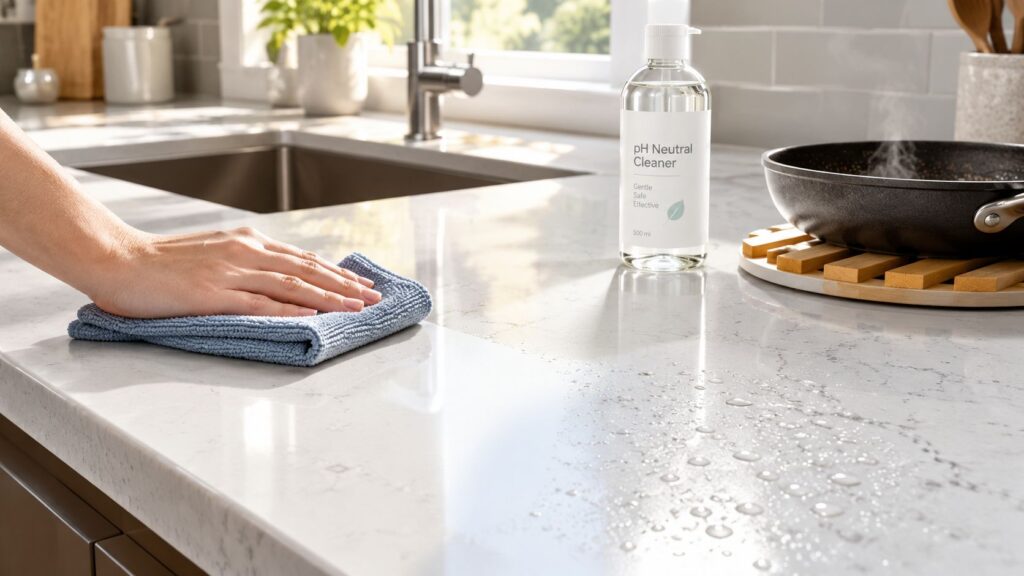
Quartz countertops are often sold as the answer for homeowners who want a beautiful surface without the upkeep associated with natural stone. That advice is only half right. Quartz usually doesn't need sealing, but it isn't maintenance-free, and the mistakes that cause the most damage rarely come from ordinary crumbs or spills. They come from a hot pan, the wrong spray, an abrasive pad, or an attempted DIY repair that turns a manageable mark into a permanent defect.
The practical approach is simple: clean gently, remove residue completely, protect the resin-bound surface from heat and aggressive chemicals, and understand when a stain is cleanable versus when the slab itself is damaged. Here's how to maintain quartz countertops without relying on myths that can shorten the life of the finish.
Table of Contents
- Why Quartz Countertops Are Not Truly Maintenance-Free
- Daily and Weekly Cleaning Routine for Quartz Surfaces
- Heat and Chemical Damage You Must Prevent
- Removing Stains and Marks Without Damaging the Surface
- Quartz Countertop Do's and Don'ts for Long-Term Care
- Seasonal Deep Care and When to Call a Professional
Why Quartz Countertops Are Not Truly Maintenance-Free
The most popular quartz advice is also the most misleading: “You never have to maintain it.” Homeowners hear that and assume the counter can tolerate anything because it's hard, dense, and non-porous. That assumption is exactly how the first year goes wrong.
Engineered quartz is generally made from roughly 90% ground quartz and 10% resin, as described in the background on quartz porosity and composition. The mineral content gives the slab its hardness and resistance to everyday staining, while the resin binds the material together and helps create the finished appearance. That resin is also the reason quartz has limits that a casual care guide may gloss over.
A non-porous surface doesn't absorb liquids the way porous natural stone can. One care reference describes finished quartz as having a water absorption rate of less than 0.5% (engineered quartz care guidance). In practical terms, that's why routine care usually involves warm water, mild dish soap, and a soft cloth instead of periodic sealing or polishing. You still need to wipe spills promptly because residue can remain on the surface, and repeated exposure to the wrong products can affect the resin binder.
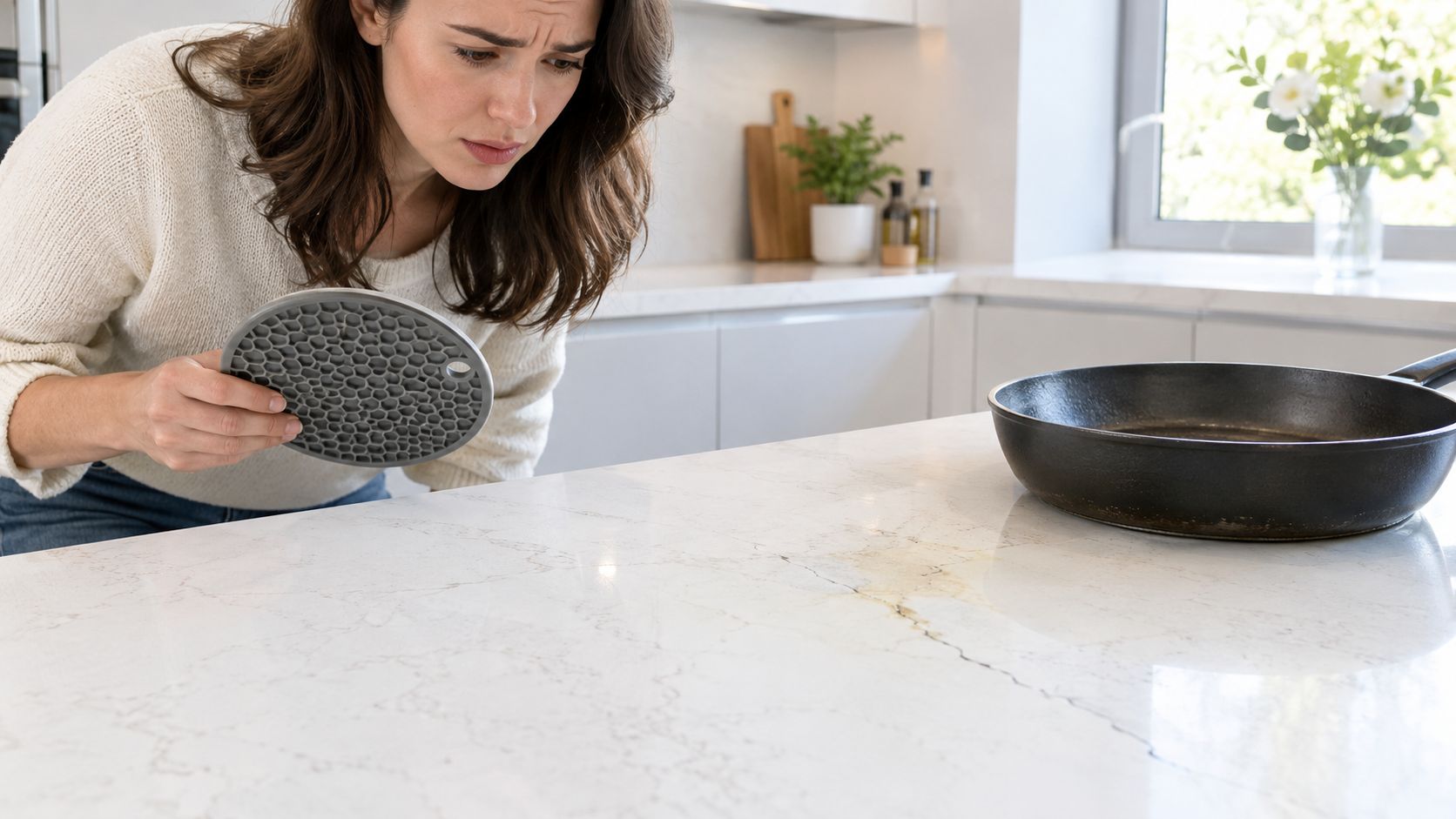
The material handles stains better than abuse
Quartz's low absorption makes it forgiving around coffee, sauces, and ordinary kitchen moisture, but it doesn't make the surface indestructible. Abrasive pads can dull the finish, harsh cleaners can attack the resin, and direct heat can discolor or crack the slab. Prolonged sunlight near a bright window can also alter appearance over time, especially where the surface receives repeated exposure.
That distinction matters during a renovation. When clients compare quartz with granite, I explain that the maintenance routines differ, but both materials still need sensible protection. Homeowners looking beyond quartz can also review these granite slab durability tips before choosing a countertop material.
Practical rule: Non-porous means liquids have a harder time penetrating the surface. It doesn't mean heat, solvents, or abrasive tools are safe.
If you want the material-science background in plain language, this guide to what non-porous means is useful. Think of quartz as a dense engineered finish that needs prevention rather than restoration. You aren't maintaining it with sealers. You're maintaining it by keeping damaging conditions away from the surface.
Daily and Weekly Cleaning Routine for Quartz Surfaces
Most quartz cleaning problems come from overcomplication. People reach for a strong disinfectant, scrub harder when the counter looks cloudy, or leave a wet surface to air-dry and then blame the material for streaks. A consistent, low-residue routine works better.
The everyday method
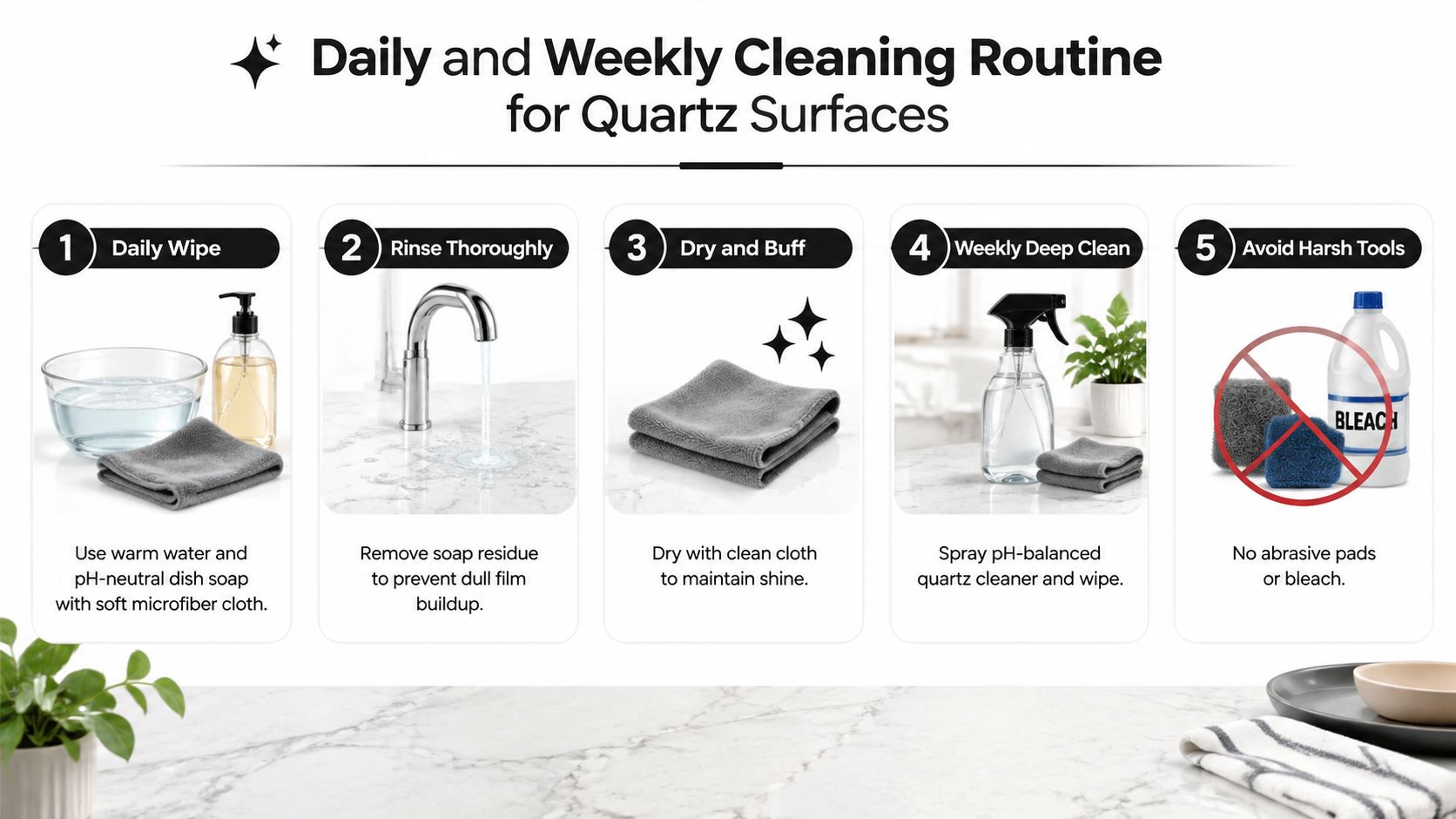
Keep a soft microfiber cloth, a non-scratch sponge, mild dish soap, and clean water near the kitchen. The recommended daily process is:
- Clear loose debris gently. Lift crumbs and dried food with a cloth or a plastic scraper. Don't use a knife, metal edge, or abrasive tool.
- Wash with mild soap. Use warm water and a small amount of mild, pH-neutral dish soap. The goal is to suspend grease and food residue, not chemically strip the finish.
- Wipe the full work area. Pay attention to the area around the sink, cooktop, faucet base, and backsplash line, where residue collects.
- Rinse thoroughly. Use clean water to remove the soap film. A counter can look dull even when it's clean if detergent remains behind.
- Dry and buff. Finish with a clean, dry microfiber cloth. Drying prevents water spots, streaks, and mineral residue from becoming the next cleaning problem.
Spills deserve immediate attention, particularly dark or strongly pigmented foods and drinks. Quartz resists staining, but residue becomes harder to remove when it dries and sits undisturbed.
A weekly reset
For stubborn film or residue, use a neutral, non-abrasive cleaner and a soft pad. Work in small areas, rinse completely, and dry the surface rather than letting cleaner evaporate. This is especially useful after a week of cooking when soap film, grease, and hard-water deposits have accumulated around the sink.
Hard-water calcium buildup needs a more targeted approach. Several care guides permit a 50/50 vinegar-and-water solution for mineral deposits around faucets, provided it's used specifically for that buildup, rinsed away promptly, and not adopted as an everyday cleaner (quartz care and maintenance guidance). If water spots are your recurring issue, this stain removal guide for quartz surfaces offers another practical reference.
For a quick household reminder, post this checklist inside the cabinet:
- Daily wipe: Warm water, mild pH-neutral soap, microfiber cloth.
- Rinse fully: Remove detergent residue.
- Dry immediately: Buff away streaks and mineral traces.
- Weekly clean: Use a neutral, quartz-safe cleaner for buildup.
- Avoid harsh tools: Skip abrasive pads, powders, and bleach.
If you care for other countertop materials in the same home, keep the product list separate. A cleaner suitable for laminate isn't automatically suitable for quartz, which is why this guide to cleaning laminate countertops shouldn't be treated as a universal quartz formula.
Heat and Chemical Damage You Must Prevent
The most expensive quartz mistakes often happen in seconds. Someone removes a roasting pan from the oven and sets it directly on the island. A slow cooker runs beside the prep area for hours. Nail polish remover spills near the bathroom vanity. None of these situations looks dramatic at first, but the surface can show discoloration, cracking, or dulling later.
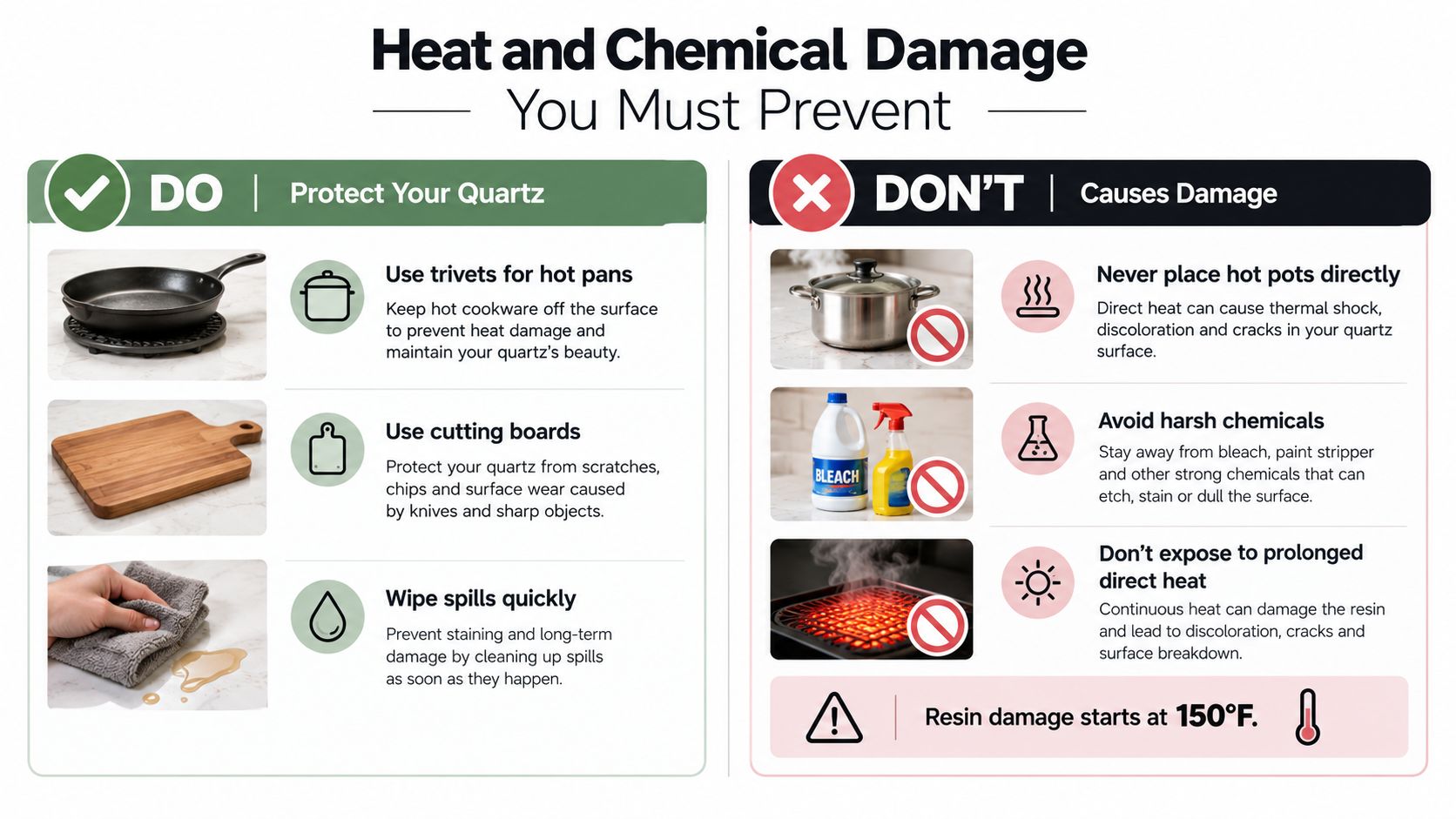
The practical direct-contact limit cited in newer quartz maintenance guidance is about 150°F, because resin binders can discolor or crack above that point (quartz countertop maintenance and heat guidance). The issue isn't only the temperature itself. A concentrated hot spot and sudden thermal change can create stress that ordinary cleaning won't reverse.
Build protection into the kitchen
Don't store trivets in a drawer across the room. Keep them beside the range, on the island, or wherever hot cookware lands. Use a broad, stable heat barrier under roasting pans, frying pans, countertop ovens, slow cookers, and electric griddles. A thin decorative mat isn't necessarily enough if it allows concentrated heat to transfer through.
Appliance placement matters too. A small appliance that produces sustained heat shouldn't sit directly on quartz for extended use. Position it on a protected area or use a heat-rated barrier designed for the appliance. This is a much safer habit than trying to judge whether a pan is “briefly” hot enough.
Chemicals require the same discipline. Keep these away from the countertop:
- Solvents: Acetone and paint removers can affect the resin-bound finish.
- Heavy-duty cleaners: Oven cleaners, drain cleaners, and caustic products are too aggressive for routine quartz care.
- Abrasives: Scouring powders and abrasive pads can leave microscopic scratches or dull the polish.
- Bleach and strong alkaline products: Repeated exposure can discolor or degrade the finish.
The manufacturer care and maintenance guide also emphasizes that sealers aren't necessary for non-porous quartz and may wear unevenly if applied. Don't use a granite sealer as a precaution.
Sunlight is a quieter risk. If a section sits beside a bright window, consider blinds, shades, or another form of shielding during intense exposure. For a broader material comparison, review quartz versus granite countertops before deciding which surface best matches your cooking habits and room conditions.
Removing Stains and Marks Without Damaging the Surface
A visible mark does not necessarily mean quartz has absorbed a liquid. Coffee, sauce, grease, and minerals often dry on the surface instead. Start with the mildest method, and stop once the mark lifts. Repeatedly escalating cleaners or pressure can create a second problem, especially on the polished finish.
For coffee, wine, tomato sauce, turmeric, and similar food residue, use warm water, mild dish soap, and a soft cloth. Rinse thoroughly and dry the area. If residue remains, apply a neutral, non-abrasive cleaner with a soft sponge. Work in small strokes rather than scrubbing hard.
Match the response to the mark
Labels, ink, grease, and nail-polish residue need a more targeted approach. Apply a small amount of diluted isopropyl alcohol to a cloth, not directly across the counter, and test an inconspicuous area first. This use is for lifting a specific mark, not for routine cleaning. Wipe carefully, then rinse and dry. Keep acetone and paint remover away from the surface.
Hard-water deposits around faucets require a different response from food stains. Use the targeted diluted vinegar method described earlier, keep contact brief, and rinse completely. Never mix vinegar with bleach or another cleaning product. Mineral buildup also makes it easy to mistake residue for permanent discoloration, so the Sunset Shine Home Cleaning guide is useful for comparing water-spot patterns on stone surfaces.
The following video shows a gentle approach for working on a stubborn mark.
Know when cleaning has stopped being the answer
A light scuff may improve with a non-abrasive cleanser or polishing compound. Fine-grit wet sanding is sometimes discussed for surface marks, but it is not a casual repair. Sanding can alter the sheen, leave a visible patch, and make the factory finish difficult to match.
Heat damage is different. If the resin has blistered, cracked, discolored, or changed texture, cleaning will not restore it. Professional refinishing may help with limited defects. Severe damage can require replacing the affected slab, and quartz does not offer the same repair expectations as every natural-stone material. A broader countertop material comparison helps explain those differences.
Compare the mark with an undamaged area under the same light. If it changes as you clean, residue is likely. If the color or texture remains altered, stop experimenting and arrange an assessment.
Quartz Countertop Do's and Don'ts for Long-Term Care
The safest quartz routine is deliberately boring. Use mild products, protect the surface from heat, use a cutting board, and don't apply treatments the slab doesn't need. The following reference is designed for quick decisions when you're standing in the kitchen with a hot pan or a questionable cleaner.
Quartz Countertop Care Quick Reference
| Category | Safe for Quartz | Avoid Completely |
|---|---|---|
| Everyday cleaning | Warm water, mild pH-neutral dish soap, soft microfiber cloth | Abrasive powders, steel wool, scouring pads |
| Stubborn residue | Neutral cleaner, non-abrasive pad, careful wiping | Aggressive scrubbing or metal scrapers |
| Hard-water buildup | Targeted diluted vinegar treatment, followed by thorough rinsing | Routine vinegar cleaning or leaving acid on the surface |
| Disinfecting and residue | Diluted isopropyl alcohol used carefully, then rinsed | Acetone, paint remover, and strong solvents |
| Hot cookware | Trivet or hot pad under pans and appliances | Direct contact with hot pots, pans, or griddles |
| Food preparation | Cutting board for chopping and slicing | Cutting directly on the quartz |
| Surface protection | Prompt spill cleanup and complete drying | Letting sauces, oils, or cleaners sit |
| Sealing | No routine sealer needed for non-porous quartz | Applying natural-stone sealer without manufacturer approval |
| Appearance care | Gentle cleaning and drying | Unapproved polishing compounds or abrasive restoration |
| Sun exposure | Shielding near bright windows when practical | Prolonged direct sunlight on vulnerable areas |
Common questions with direct answers
Does quartz need polishing? Routine polishing isn't part of normal care. A hazy appearance more often points to soap film, mineral residue, or product buildup, and rinsing plus drying is a better first response than adding another product.
Can bleach disinfect quartz? Don't make bleach your countertop cleaner. Care guidance warns against bleach and caustic cleaners because they can dull or affect the resin-bound finish.
Can I place a slow cooker on the counter? Use a suitable heat barrier. Sustained heat is different from ordinary room-temperature appliance storage, and the surface should be protected even when the appliance doesn't feel dangerously hot.
Can I chop directly on quartz? Use a cutting board. Quartz may resist ordinary scratches, but knives can mark the finish, and edge damage is harder to correct than a food stain.
Should I seal a new slab? No routine sealing is required for non-porous engineered quartz. If a fabricator or manufacturer gives product-specific instructions, follow those instructions rather than relying on advice intended for granite or marble.
Seasonal Deep Care and When to Call a Professional
Quartz doesn't need a complicated seasonal treatment, but a periodic inspection catches problems before they become restoration projects. During a deeper clean, check the sink perimeter, faucet base, backsplash joint, corners, and exposed edges. Look for persistent dull patches, resin discoloration, chips, cracks, or a seam that has become more visible.
A practical inspection rhythm
After periods of heavy cooking or entertaining, remove residue from edges and seams with a soft cloth and neutral cleaner. In humid conditions, pay attention to water buildup around the sink and dry those areas thoroughly. After contractors have worked nearby, inspect the slab for paint, adhesive, drywall compound, metal marks, or abrasive dust before attempting removal.
Call a qualified countertop or stone restoration professional when the surface has a heat mark, crack, deep chip, altered texture, or discoloration that doesn't change after gentle cleaning. A professional can determine whether the defect is residue, a localized finish problem, or damage to the slab itself. Don't wet-sand or use solvent-heavy products until you know which category you're dealing with.
Renovation work creates another preventable risk. If you're changing cabinetry, appliances, or the kitchen layout, coordinate surface protection with the installation team and review kitchen countertop installation services before work begins. A countertop can survive years of careful use and still get damaged by an unprotected tool, hot work light, adhesive, or careless material placement during construction.
For South Jersey homeowners planning a broader kitchen or bath update, The Cabinet Coach provides mobile showroom consultations, cabinetry and countertop selection, site visits, and project coordination. Visit The Cabinet Coach to discuss a renovation plan that protects your quartz investment from material selection through installation.