
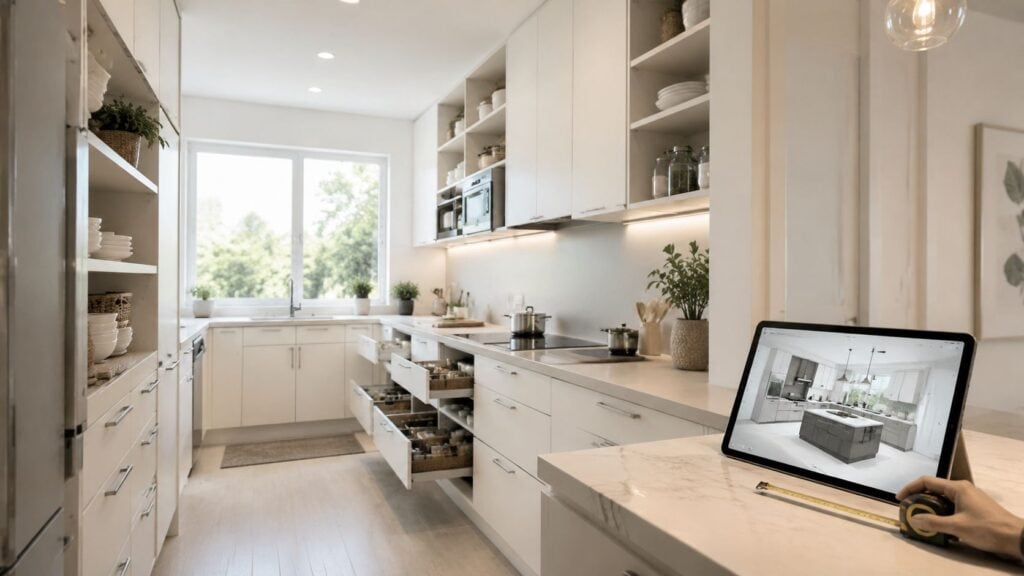
If you're standing in a small kitchen wondering why it feels crowded before dinner even starts, the problem usually isn't just square footage. It's friction. Cabinet doors collide, the microwave sticks out where your shoulder wants to go, the counters disappear under everyday items, and somehow the room still doesn't feel like it holds enough.
That's the part most online advice misses. Learning how to maximize small kitchen space isn't only about squeezing in more storage. In South Jersey homes, especially older ranchers, twins, and townhomes around Cherry Hill, Haddonfield, Moorestown, and Collingswood, the kitchens that work best balance three things at once: movement, storage, and perception. You need a room that functions better, stores smarter, and feels bigger the minute you walk into it.
Table of Contents
- Rethink Your Kitchen Workflow and Layout
- Implement Smart Cabinetry and Storage Solutions
- Choose Appliances That Work For You Not Against You
- Create Illusions of Space with Light and Finishes
- Plan Your Remodel Budget and Timeline
- Your Next Step for a Bigger-Feeling South Jersey Kitchen
Rethink Your Kitchen Workflow and Layout
You come home with groceries, set the bags on the only free counter, open the fridge, and now the dishwasher door, oven handle, and another person in the room all want the same patch of floor. That is how a small kitchen starts to feel smaller than it is. The fix usually starts with traffic flow, not finishes.
Start with movement, not cabinets
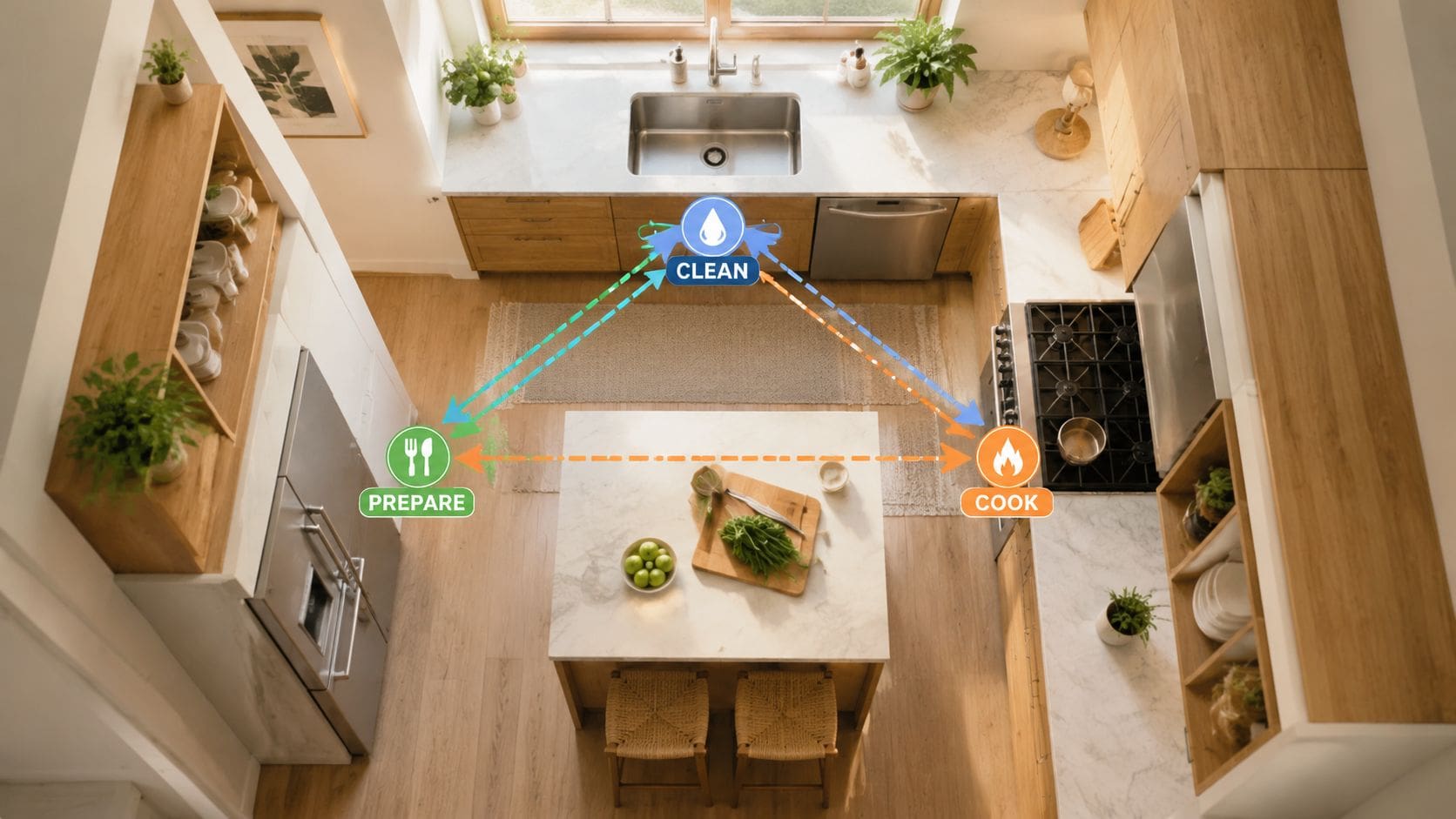
A good small kitchen lets one task lead cleanly into the next. Groceries come in, food gets washed, prep happens nearby, cooking happens without backtracking, and cleanup does not block everything else. The old triangle idea still helps, especially if you need a refresher on how the kitchen work triangle affects daily workflow, but in real homes I focus less on geometry and more on friction. Can you open the refrigerator without trapping the cook. Can the dishwasher run while someone uses the sink. Can a kid grab a snack without walking through the prep zone.
Clearance matters because doors and bodies take up space fast. In a galley kitchen, 36 inches between opposing counters is the bare minimum for one cook. If two people use the room often, or if the dishwasher and fridge doors swing into that aisle, more space is usually money well spent. I have seen plenty of kitchens that looked fine on paper and felt terrible in person because nobody tested them with doors open.
A simple walk-through catches this early. Tape the appliance depths on the floor if needed. Open every door. Stand where you would chop vegetables, unload groceries, or plate dinner. That five-minute test tells you more than a pretty rendering.
Practical rule: If somebody has to turn sideways every time another door opens, the layout is wasting square footage you already own.
Make small layout changes that punch above their weight
The biggest gains often come from modest adjustments, not a full gut remodel. A few inches in the right place can improve the room more than an expensive finish package.
- Protect the prep counter between sink and cooktop. That stretch does the heaviest daily work. If the toaster oven, knife block, or coffee setup lives there, meal prep always feels cramped.
- Check appliance swing before adding anything. A peninsula, rolling cart, or oversized hardware can create a choke point faster than homeowners expect.
- Move the microwave off the prime work surface if possible. Putting it below the counter, in a pantry wall, or in a small appliance garage often gives back the counter you frequently use.
- Remove one upper cabinet in the right location. Open shelving, a shallow ledge, or even blank wall space can relax the room visually and support the bigger goal of making the kitchen feel larger, not just hold more.
- Separate the snack zone from the cook zone. In family kitchens, shifting everyday items away from the range and sink reduces traffic jams better than another organizer insert.
That last point gets overlooked. Storage matters, but layout decides whether storage helps or gets in the way. If you want a practical companion piece on keeping those zones usable after the redesign, this guide to smart kitchen cabinet organization is worth reviewing.
In South Jersey homes, especially older colonials, twins, and shore-area cottages, the smartest layout plan usually respects the footprint and fixes the bottlenecks. Then the room can do double duty. It works better, and it sets up the lighting and finish choices that make the kitchen read bigger to the eye. That is the part many small-kitchen guides miss. A tighter plan should improve movement first, then support the visual tricks that make the room feel calmer and more open.
Implement Smart Cabinetry and Storage Solutions
Small kitchens get frustrating fast when the cabinet plan forces you to hunt for everything. The fix is not more accessories. The fix is better access, better placement, and less visual noise so the room works harder without feeling tighter.
Why drawers beat shelves in a small kitchen
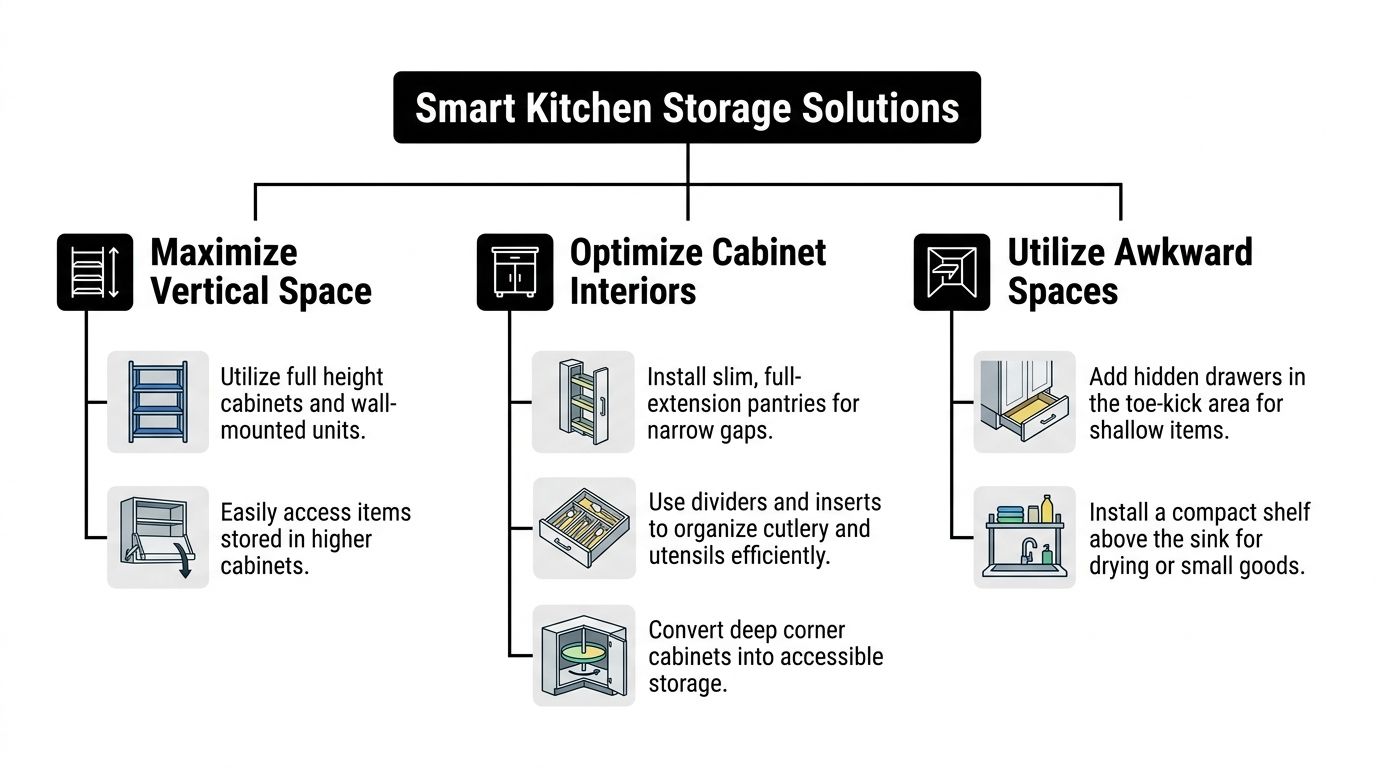
In compact remodels, I push clients toward drawers in base cabinets whenever the budget allows. Shelves hide the back of the cabinet, waste time, and make heavy items harder to reach. Deep drawers bring contents forward into view, which matters more than raw cubic inches.
That shift changes daily use. Pots, mixing bowls, storage containers, and small appliances stop disappearing into the back corner. Homeowners also make fewer duplicate purchases because they can see what they own.
If your lower cabinets are deep and chaotic now, this guide on organizing deep kitchen cabinets gives a solid framework for planning zones and inserts.
Good storage reduces bending, reaching, and rummaging. Capacity alone is not the goal. Easy access is.
Use the space inside the cabinet box first
Before adding more cabinetry, use the space you already paid for. Interior fittings usually give a better return than expanding the footprint, especially in older South Jersey kitchens where every inch of clearance matters.
A few upgrades hold up well in real homes:
| Storage move | Why it works |
|---|---|
| Shelf risers inside cabinets | They add a second layer for mugs, bowls, or pantry items, which helps short cabinets hold more without turning into stacks you have to unbuild. |
| Magnetic knife strips | They move knives off the counter and free up prep space, which is usually more valuable than the footprint of a knife block. |
| Back-of-door organizers | They give small items a home. Wraps, spices, cleaning supplies, and lid racks fit well here when depth is checked carefully first. |
| Full-height pantry pull-outs | They make narrow filler spaces usable and keep dry goods visible from both sides. |
| Adjustable drawer inserts | They keep utensils, wraps, lids, and tools from sliding into one mixed-up catchall. |
These upgrades do more than increase storage. They support what I call Spatial Illusion Engineering. When counters stay clearer and cabinet interiors stop spilling outward, the room reads calmer and larger to the eye. That psychological effect matters in a small kitchen just as much as capacity.
For homeowners comparing inserts, dividers, pull-outs, and shelf systems, this piece on smart kitchen cabinet organization is worth reviewing because it helps sort practical upgrades from nice-to-have extras.
What earns its keep and what usually disappoints
Some storage features look impressive in a showroom and underperform once groceries, lunch containers, and sheet pans move in.
The upgrades that usually earn their cost:
- Wide drawers for pots and pans
- Vertical tray dividers for cutting boards, lids, and baking sheets
- A narrow pantry pull-out where a standard cabinet will not fit
- One everyday dish zone near the dishwasher
- Pull-out waste and recycling tucked close to prep space
The ones I ask clients to reconsider:
- Complicated corner units that cost a lot and still waste space around awkward shapes
- Too many micro-compartments that force one storage pattern and frustrate the next homeowner
- Upper cabinets packed with daily-use items all the way to the ceiling, which make the room feel heavier and less open
- Bulky organizer gadgets that eat half the shelf they were supposed to improve
A smart cabinet plan should solve two problems at once. It should store what you use, and it should help the room feel less crowded. That second part gets missed in a lot of small-kitchen advice. Clean lines, calmer counters, and storage that disappears behind the right fronts set up the lighting and finish choices that make the kitchen feel bigger, not just fuller.
Choose Appliances That Work For You Not Against You
A small kitchen can look fine on paper and still feel cramped the first time two people try to cook in it. In my experience, appliances are often the reason. A refrigerator that sticks out too far, a dishwasher door that blocks the only path, or a microwave parked on the best stretch of counter can make the whole room work harder than it should.
Match appliance size to real cooking habits
Choose appliances by how you live, not by what filled the display kitchen at the showroom.
If you cook most nights, protect prep space first. If you rely on leftovers, coffee, and quick breakfasts, the microwave and refrigerator deserve prime consideration. If you rarely host, a massive range or oversized French door refrigerator usually gives up more than it gives back.
The common trouble spots are predictable:
- A counter microwave eating the only landing area near the sink or range
- A deep refrigerator body pinching an already-tight aisle
- A dishwasher that opens into the main work path
- A range with oversized handles and clearance needs that make nearby drawers harder to use
Stacking and combination units can solve some of that pressure. A microwave over a wall oven, a speed oven doing double duty, or a drawer microwave built into lower cabinetry can free up floor area and keep the counter usable. The trade-off is cost and planning. These setups usually need cleaner cabinet coordination, better electrical planning, and more attention to install heights so they stay comfortable to use.
Compact appliances also deserve a fair look. An 18-inch dishwasher can be the right call for a smaller household. A shallower refrigerator can improve circulation more than people expect. You give up some capacity, but you get a kitchen that feels easier to move through every day, which often matters more.
Quiet the visual noise
Appliances affect more than function. They shape how large the room feels.
That matters if your goal is more than storage. A small kitchen should not just hold more stuff. It should feel calmer and easier on the eyes. That is part of Spatial Illusion Engineering. Reduce bulky interruptions, keep sightlines cleaner, and the room reads larger even when the footprint stays the same.
Panel-ready or integrated appliances help with that. So do fewer shiny finishes fighting for attention, slimmer profiles, and better alignment between appliance fronts and cabinet faces. I do not push built-ins in every project because they can raise the budget fast, but one or two visually quieter choices in the right spots can change the whole read of the room.
Hot beverage routines are another place to save space if the layout is tight. If you're weighing a kettle against an in-sink option, this expert guide to instant boiling taps covers the benefits and the maintenance trade-offs clearly.
Technology should earn its footprint too. Charging drawers, appliance garages, and smarter control placement help only when they remove clutter or simplify daily use. For local homeowners comparing connected features with real remodeling decisions, this article on smart kitchen technology ideas for Cherry Hill homes is a useful next read.
This walkthrough is worth watching if you're weighing appliance placement and compact-kitchen decisions in a real space.
A good appliance plan leaves room to move, room to prep, and room for the kitchen to feel bigger than its measurements. If every door opens cleanly and the counters still have breathing room, the appliances are doing their job.
Create Illusions of Space with Light and Finishes
Most advice on how to maximize small kitchen space focuses on density. Add more cabinets. Fill the gap. Use every inch. Sometimes that helps. Sometimes it makes the room feel tighter, darker, and more exhausting.
That's where Spatial Illusion Engineering comes in. The idea is simple. Build enough storage to support daily life, then use light, finish, and restraint to make the kitchen feel bigger than it is.
Use Spatial Illusion Engineering on purpose
A compact kitchen doesn't only need capacity. It needs visual breathing room. Design psychology studies cited by Hello Chapter show that generous negative space can make rooms feel 20% larger because people read emptiness as volume.
That's why wall-to-wall cabinetry isn't always the smartest answer. In some kitchens, removing one upper run, adding a clean backsplash stretch, or leaving a section visually open does more for comfort than another storage box.
Layered lighting matters just as much. The same Hello Chapter discussion notes that combining task, ambient, and accent lighting creates functional zones that psychologically expand the room's perceived capacity.
A small kitchen feels smaller when shadows collect under cabinets, in corners, and across countertops.
A useful layered plan often looks like this:
- Ambient light for general brightness, usually from a ceiling fixture or recessed lighting.
- Task light under uppers or over prep surfaces where knives, measuring, and cleanup happen.
- Accent light inside glass cabinets, along toe kicks, or in select display areas to add depth.
For homeowners exploring fixture placement and installation choices, this guide to under-cabinet lighting installation is a practical next read.
Finishes that help and finishes that fight you
Finishes can either bounce light around the room or absorb it and flatten everything.
What usually helps:
- Light cabinet colors that reflect available daylight
- Glossy or satin surfaces used with restraint
- Reflective backsplashes, including glass or glazed tile
- Consistent finish transitions so the eye moves smoothly across the room
What often fights you:
- Too many finish changes in one small footprint
- Dark uppers paired with low lighting
- Busy veining, loud patterns, and heavy contrast on every surface at once
- Open shelving overloaded with everyday clutter
Design note: Open shelving only creates spaciousness when the items on it are edited. If the shelf becomes overflow storage, the room loses the effect immediately.
A bigger-feeling kitchen is often less about adding and more about editing. Better light, cleaner sightlines, and one deliberate patch of negative space can change the mood of the room faster than another organizer ever will.
Plan Your Remodel Budget and Timeline
A small kitchen remodel can get expensive in a hurry when decisions happen out of order. Homeowners often price cabinets before they've cut clutter, choose appliances before confirming clearances, or start demolition before every finish has been selected. That's when timelines drift and budgets start absorbing “small” changes that weren't small at all.
Declutter before you design
The cheapest storage is the storage you no longer need to build. Strategic decluttering before a remodel can reduce the required volume of stored goods by 30–40%, according to this discussion on decluttering a tiny kitchen before reorganizing. In real terms, that can simplify cabinet planning and reduce the overall complexity of the project.
Go through the kitchen in categories, not random drawers. Dishes, mugs, food containers, duplicate utensils, small appliances, serving pieces, and pantry overflow should each be reviewed separately. Most households find the same pattern. They're storing backups for a version of cooking they no longer do.
Before finalizing plans, make three lists:
- Use daily: Plates, glasses, pans, prep tools, coffee gear
- Use occasionally: Holiday platters, specialty bakeware, entertaining pieces
- Shouldn't return: Broken gadgets, duplicates, novelty tools, expired pantry containers
Budget pressure often starts with overbuilding for clutter instead of designing for how the kitchen is actually used.
Know what to DIY and what to leave alone
Some work is well suited to a capable homeowner. Painting walls, swapping hardware, or installing simple accessories can save money and feel manageable. Other tasks should stay in professional hands, especially anything involving electrical work, plumbing moves, appliance circuits, venting, and cabinet installation that has to line up precisely.
A useful way to consider this:
| Task | Usually safe for DIY | Better handled by a pro |
|---|---|---|
| Painting | Yes | If ceilings or patching are extensive |
| Backsplash | Sometimes | If tile layout is complex |
| Hardware installation | Yes | Rarely needed |
| Cabinet install | Only for very experienced DIYers | Usually yes |
| Electrical and plumbing | No | Yes |
Timelines also go smoother when selections are finished early. Cabinets, hardware, countertops, appliances, and lighting should all be decided before the room is torn apart whenever possible. If you're building a roadmap from scratch, this guide on how to plan a kitchen remodel lays out the decision flow clearly.
A remodel feels less overwhelming when you treat it like a sequence of commitments instead of one giant event. Edit first. Plan second. Order third. Demo last.
Your Next Step for a Bigger-Feeling South Jersey Kitchen
For many South Jersey homeowners, the hardest part isn't choosing a cabinet color. It's knowing where to start without making expensive mistakes. You don't want to drive from showroom to showroom collecting samples that look different in your house than they did under retail lighting. You want a clear plan, honest guidance, and someone who can translate ideas into a kitchen that fits your home.
What the process looks like in real life
A smoother remodel usually starts with conversation, not demolition. You talk through what isn't working. Maybe the pantry is too shallow, the microwave eats the counter, or the room feels closed in even after you declutter. Then the space gets measured properly and translated into a design that respects actual constraints.

From there, materials come into focus. Cabinet style, finish, hardware, countertop, and storage details all start making sense once they're tied to the room instead of viewed as separate products. That's especially helpful in towns across Camden and Burlington Counties, where no two kitchens seem to share the same quirks.
Why local guidance matters
Homes in Cherry Hill, Moorestown, Haddonfield, Voorhees, Medford, and Collingswood all bring different challenges. Some have older footprints with tight galley layouts. Some have additions that created awkward transitions. Others require only better planning, not a larger room.
The value of a local, in-home process is that decisions happen against your walls, your light, your traffic patterns, and your budget. That tends to produce better answers than generic showroom advice.
A lot of homeowners put off remodeling because they assume the process has to be chaotic. It doesn't. With the right sequence, a small kitchen can become easier to cook in, easier to maintain, and much more comfortable to be in every day.
If you're ready to turn these ideas into a real plan, The Cabinet Coach brings a mobile showroom experience directly to South Jersey homeowners, with personalized design guidance, in-home measurements, curated material selections, and project coordination that makes a small kitchen remodel feel far more manageable.