
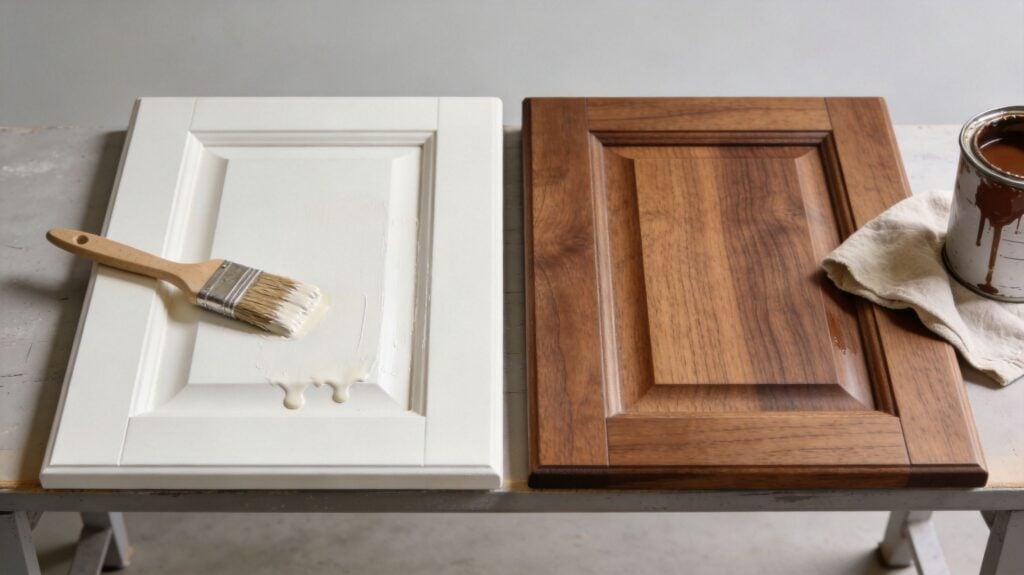
You're probably standing in that kitchen right now, looking at cabinet doors that still work fine but make the whole room feel older than it is. The boxes are solid. The layout may even be decent. But the finish is pulling everything backward, and the big question lands fast: should you paint them, or should you keep the wood look and stain them?
That choice affects more than color. It changes how your kitchen will wear in South Jersey humidity, how much prep the job will need, how easy future touch-ups will be, and how buyers will read the room if a sale is on your horizon. It also affects whether your budget goes toward a smart refresh or drifts into a bigger renovation than you wanted.
Homeowners in Cherry Hill, Voorhees, Haddonfield, Moorestown, and Mount Laurel run into this all the time. They don't necessarily need new cabinets. They need the right finish decision. If you're still sorting through colors, these kitchen cabinet paint color ideas for 2026 can help narrow the style direction before you commit to a process.
Table of Contents
- Your Kitchen Upgrade Starts With One Big Decision
- Paint vs Stain The Fundamental Differences
- Prep and Application A Tale of Two Processes
- Durability Maintenance and Long-Term Performance
- Cost Timeline and Return on Investment
- Common Mistakes When Refinishing Cabinets
- The DIY Challenge vs The Professional Advantage in South Jersey
Your Kitchen Upgrade Starts With One Big Decision
A lot of cabinet projects start the same way. A homeowner wants a cleaner, brighter kitchen, but once the doors come off and the samples hit the counter, the real issue shows up. They're not just choosing a color. They're choosing whether to hide the wood or work with it.
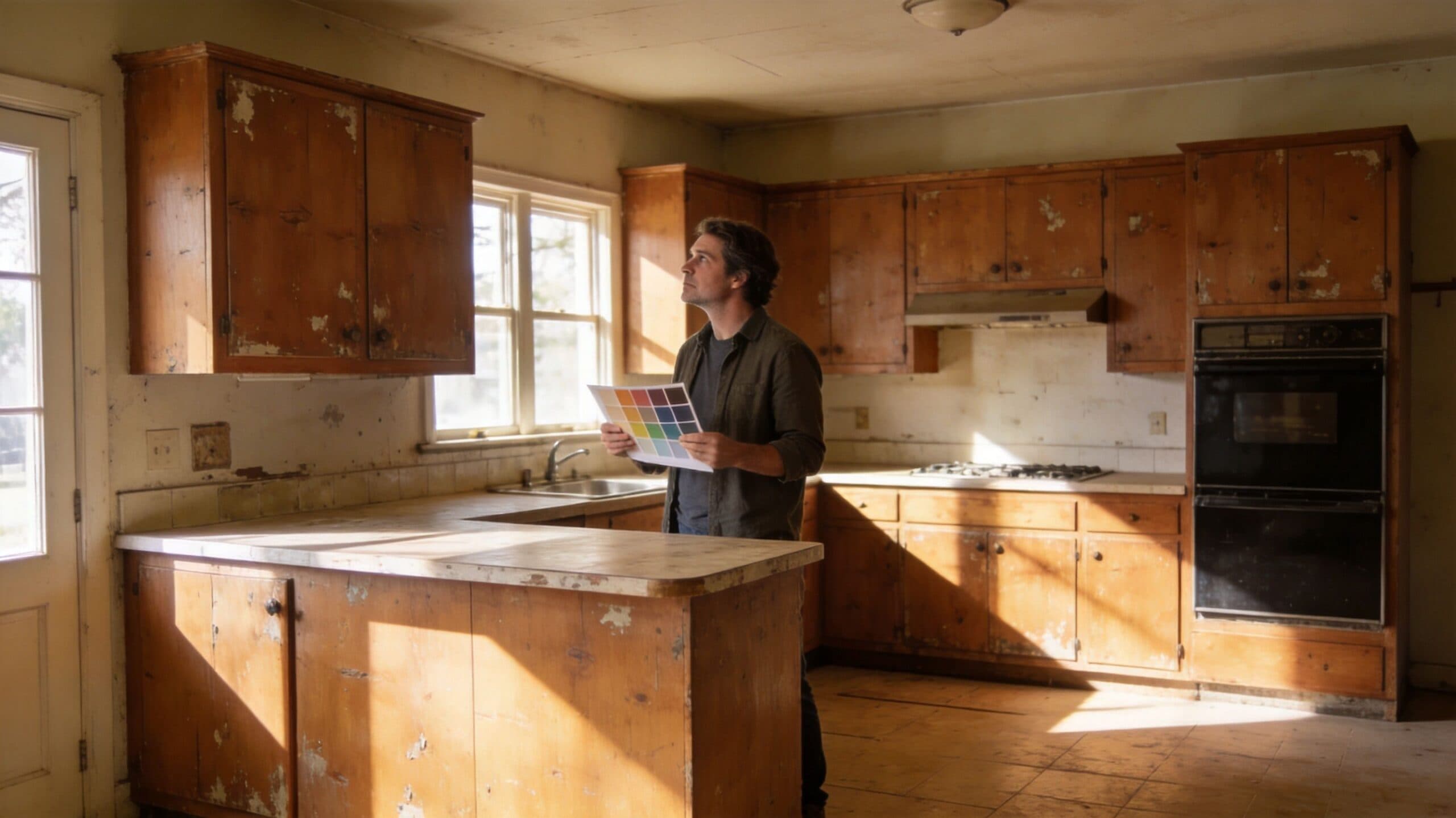
That is a more significant decision than many homeowners anticipate. In older South Jersey homes, especially around Cherry Hill and surrounding neighborhoods, cabinets often have decent structure but dated finishes. Golden oak, heavy red tones, worn clear coats, and mismatched side panels can make the kitchen feel tired even when the cabinets themselves still have life left in them.
Why this decision matters in the real market
If resale is part of the conversation, cabinet finish matters because buyers react fast to kitchens. According to 2026 cabinet painting statistics, homes with freshly refinished VOC-compliant cabinetry showed an average reduction of 18 days on the market, and 30% of Realtors recommended homeowners complete kitchen remodels before selling. That doesn't mean every kitchen should be painted white. It means visible kitchen updates influence speed and perception.
Practical rule: If your cabinets are structurally sound, the finish decision often creates more value than homeowners expect.
For some kitchens, paint is the right answer because it modernizes the space and softens visual clutter. For others, stain is the smarter move because the wood species, grain pattern, and overall style already support a natural finish. The right choice depends on the door style, the wood itself, the condition of the existing finish, and how long you plan to live with the result.
What homeowners usually get wrong at the start
The mistake isn't liking one look more than the other. The mistake is deciding too early.
Before choosing between paint and stain cabinets, check three things:
- Wood species: Oak behaves very differently from poplar or MDF.
- Door style: Some profiles look more current in paint, while others carry stain well.
- Project goal: Living in the home long-term is a different decision than prepping for sale.
A dated kitchen can become a strong kitchen without becoming a full gut renovation. But the finish needs to match the cabinet, the house, and the market.
Paint vs Stain The Fundamental Differences
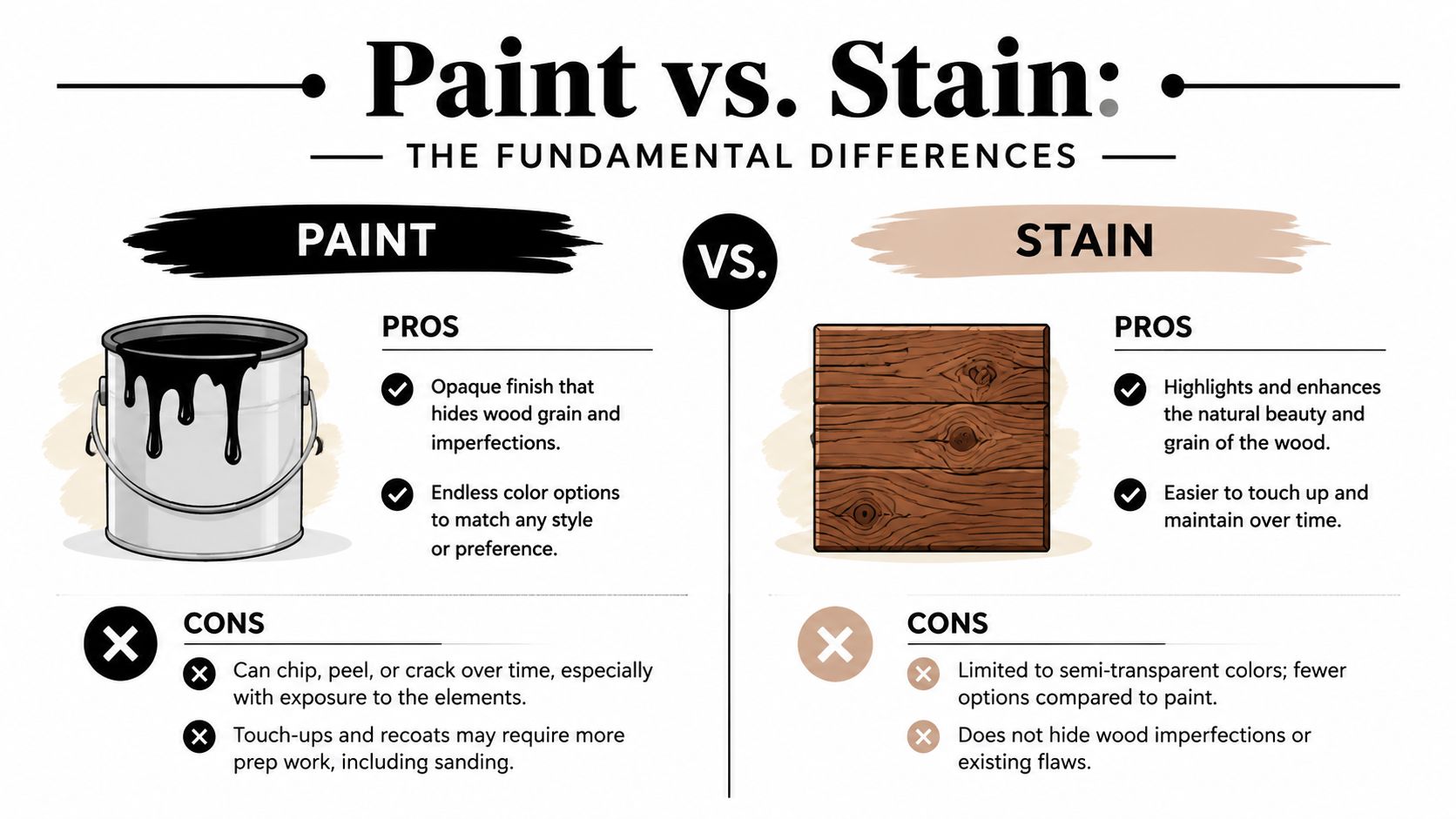
Paint and stain cabinets can both look excellent. They just solve different problems. Paint changes the cabinet into a design surface. Stain keeps the cabinet rooted in the wood itself.
What paint does
Paint sits on top of the substrate and creates an opaque finish. That means it can hide color variation, soften visual noise, and cover wood that isn't attractive enough to feature. It's often the better fit when the doors are made from smoother paint-grade materials, or when the room needs a stronger style reset.
Paint also gives you wider design flexibility. If you're comparing navy, slate, off-white, or muted blue kitchens, a look at 2026 blue kitchen design trends can help you judge where painted cabinetry fits into a more current palette.
What stain does
Stain penetrates into the wood and highlights grain rather than covering it. That's why the wood choice matters so much. According to cabinet wood guidance on paint-grade and stain-grade materials, stain-grade woods like oak feature open grains that absorb translucent stains, enhancing natural beauty, and can last 20-30 years. The same source notes that paint-grade woods like poplar have smooth surfaces ideal for opaque paint, which forms a protective barrier but may require touch-ups within 10 years as the wood moves.
That difference matters in older South Jersey kitchens. Oak often has enough grain and character to make stain worth considering. Poplar and MDF usually point toward paint because they don't offer much visual payoff under a clear or stained finish.
Stain shows what the wood is. Paint decides what the cabinet becomes.
Paint vs Stain At a Glance
| Attribute | Painted Cabinets | Stained Cabinets |
|---|---|---|
| Visual effect | Solid, opaque finish that hides grain | Transparent or semi-transparent look that highlights grain |
| Best material match | Paint-grade woods such as poplar and MDF | Stain-grade woods such as oak and maple |
| Surface imperfections | Hides color inconsistency better | Leaves wood variation more visible |
| Style direction | Cleaner, more tailored, often more contemporary | Warmer, more natural, often more traditional or transitional |
| Aging pattern | More likely to show chips at edges and movement lines | More likely to show wear and fading rather than chipping |
| Touch-ups | Can be tricky if sheen and color don't match perfectly | Often blends better when done carefully |
| Grain visibility | Low to none | High |
One decision most homeowners miss
Not every wood cabinet should be stained, and not every solid wood cabinet should be painted. If you're weighing the substrate before choosing a finish, this breakdown of MDF vs wood cabinet doors helps clarify why the base material changes the best path.
If the grain is beautiful and the door profile still feels current, stain can preserve that value. If the wood is busy, patched, uneven, or paired with dated styling, paint usually does more heavy lifting.
Prep and Application A Tale of Two Processes
The finish gets the attention. The prep decides whether the project lasts.
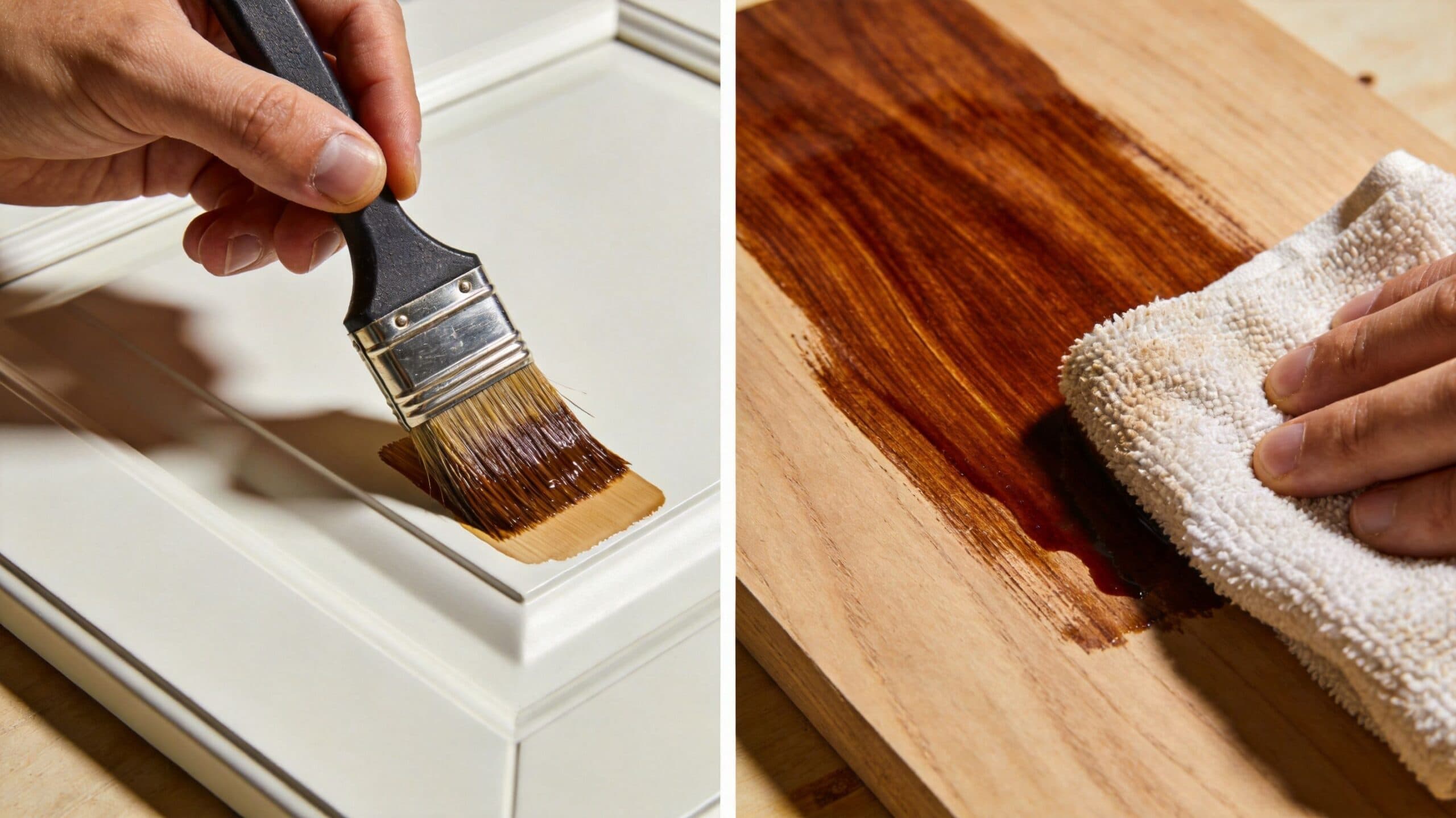
Painting demands surface control
Painting cabinets is less forgiving than most homeowners think. Grease, silicone residue, waxy cleaners, hand oils, and old clear coats all interfere with adhesion. That's why professional prep starts with degreasing, not sanding. If you sand contamination into the surface, you've made the problem harder to fix.
For stained wood cabinets being converted to paint, the prep needs to be even tighter. According to professional guidance on painting stained wood cabinets, using two-part catalyzed primers that incorporate a hardener is critical. The source explains that this cross-linking system forms a harder, more solvent-resistant film and can reduce topcoat failure rates by up to 50% in high-moisture kitchen environments compared to standard acrylic primers.
That's the kind of detail that matters in South Jersey, where kitchens deal with summer humidity, cooking moisture, and daily cleanup.
A sound paint process usually includes:
- Degreasing first: Krud Kutter or an equivalent cleaner removes kitchen buildup that primer won't bond through.
- Sanding with purpose: The goal isn't to destroy the old finish. It's to create a uniform profile for adhesion.
- Grain filling when needed: Oak and similar woods telegraph texture through paint if the grain isn't addressed.
- Spray application: Brushing can work for some DIY projects, but sprayed finishes look more even and usually perform better on doors and drawer fronts.
Staining rewards the wood itself
Staining is a different discipline. Instead of building an opaque film, you're trying to make the wood look richer and more intentional. That means the sanding has to be consistent. Any unevenness shows. Any leftover finish blocks absorption. Any patch repair can appear as a color mismatch.
When stain goes right, the result looks natural and deep. When it goes wrong, it looks blotchy, muddy, or tired.
Here's the practical divide:
- Paint can improve unattractive wood.
- Stain depends on attractive wood.
- Paint hides more prep mistakes visually, but not structurally.
- Stain exposes both the beauty and the flaws of the material.
For homeowners trying to understand the sequence and product choices, Newline Painting's cupboard painting guide is a helpful supplemental read because it lays out the workflow in a clear, trade-focused way.
A visual walkthrough helps too:
Where hardware decisions fit in
Refinishing is the right time to decide whether the kitchen needs new knobs or pulls, and where the holes will land. That's especially true if you're shifting from an older stained look to a cleaner painted style. If you want those placements to feel balanced and intentional, this guide on how to install cabinet hardware helps avoid crooked layouts and awkward pull placement.
Shop-floor reality: Most cabinet finish failures don't start with the topcoat. They start with contamination, weak primer choice, or rushed prep.
Durability Maintenance and Long-Term Performance
The best-looking finish on day one isn't always the best finish on year five. That's where paint and stain cabinets separate.
How painted cabinets age
Paint forms a surface film. That gives it the power to change the look of the entire kitchen, but it also means wear tends to show at the surface first. On busy doors and drawers, that usually means edges, corners, pull areas, and joints take the earliest abuse.
In South Jersey, seasonal humidity matters because wood moves. Even slight movement can telegraph through painted finishes at seams and profile transitions. That doesn't mean painted cabinets are a poor choice. It means the paint system has to match the substrate, and the homeowner has to expect occasional touch-up work over time.
For day-to-day care, painted cabinets do best with gentle cleaning. Skip abrasive pads, harsh degreasers used as maintenance cleaners, and constant saturation around sink bases. Wipe splatter early. Keep the finish clean but not soaked.
How stained cabinets age
Stain tends to wear more gracefully because it doesn't present the same opaque surface layer that chips in the same way paint can. Instead, the aging pattern is usually dulling, fading, or wear in high-contact spots. Many homeowners prefer that because the cabinet still reads as wood even when it isn't pristine.
Stained finishes are often the stronger long-term fit when the wood species is worth showing and the kitchen style supports it. They also tend to be friendlier to small touch-ups because blended repair work can be less obvious than a paint patch on a flat light-colored door.
A few practical expectations help:
- Painted finishes: Best for visual transformation, but more sensitive to edge wear and substrate movement.
- Stained finishes: Better at disguising minor wear, but the overall look depends heavily on the quality of the wood.
- Both finishes: Last longer when cooking grease is cleaned promptly and moisture isn't left to sit around seams or end panels.
In a hardworking kitchen, the winner isn't the finish with the prettiest sample. It's the one that matches the material, the traffic level, and the way the room is actually used.
If your household cooks often, has kids using drawers all day, or sees frequent entertaining, choose the finish you'll tolerate aging with. That's the practical standard, not showroom perfection.
Cost Timeline and Return on Investment
Cabinet refinishing sits in a sweet spot for many homeowners because it can change the room without forcing a full cabinet replacement. The financial appeal gets stronger when the existing layout still works.
Where the money usually goes
Professional cabinet painting is typically priced around labor, prep, materials, masking, removal and reinstallation of doors and hardware, and the finish system itself. According to 2025 to 2026 resale data on painted cabinets, professional cabinet painting typically ranges from $2,100-$6,500, while cabinet refacing averages $4,000-$9,500 and full replacement costs far more.
The same source notes that professional cabinet painting offers a 70-80% return on investment, with some expert estimates ranging from 50-100% depending on market conditions, and that freshly painted cabinets increase resale value by about $2,000 on average. It also reports that minor kitchen remodels return about 77%, while major midrange remodels return 51% and major upscale remodels return 36%.
Those numbers are why many homeowners pause before tearing out serviceable cabinets.
Why this upgrade matters at resale
Cabinet finishing represents the point where upgrades transcend simple aesthetics. A visible kitchen improvement changes how buyers perceive the upkeep of the entire home. Fresh cabinets signal maintenance, care, and less immediate work for the next owner.
Project timing matters too. Separate market data noted earlier in the article found that professional cabinet painting typically takes 3-5 days. That's part of the appeal for families who can't turn the house upside down for weeks.
If you're weighing refinishing against another option, this comparison of the cost of kitchen cabinet refacing helps frame where painting fits in the broader budget picture.
Consider this approach:
- Choose painting if the layout works, the doors are worth keeping, and you want a major visual shift without major construction.
- Choose staining if the wood is attractive enough to justify preserving and the style of the kitchen still supports it.
- Choose replacement only when structure, layout, or cabinet condition has already crossed the line.
For many South Jersey homes, the smart money goes toward improving what's there instead of paying to start over.
Common Mistakes When Refinishing Cabinets
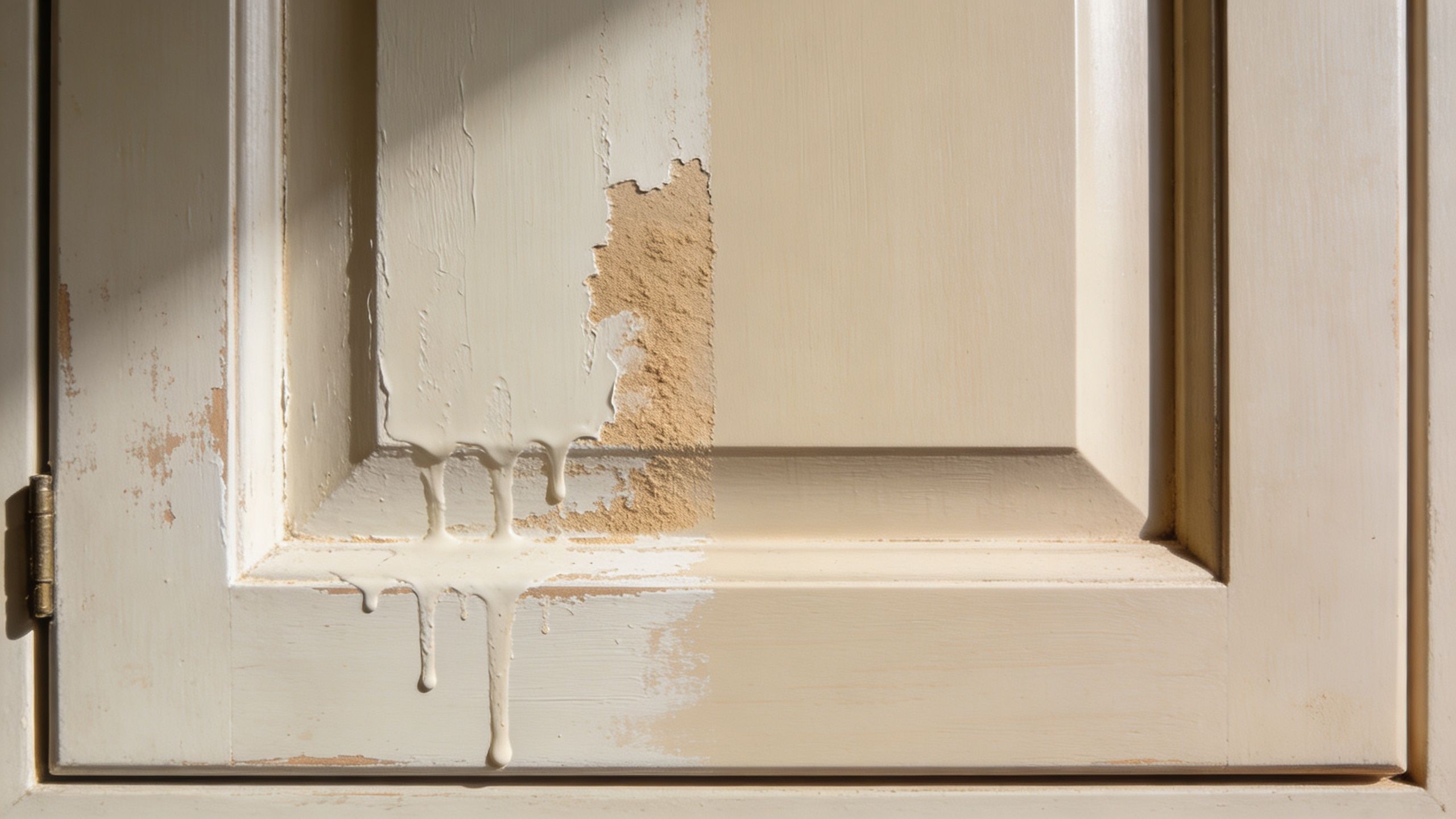
Cabinet refinishing failures usually look like paint problems, but most of them are prep and material-selection problems.
The prep shortcuts that fail first
The most common mistake is treating cabinets like trim. Walls forgive a lot. Cabinets don't. Doors get touched constantly, cleaned often, and exposed to grease, steam, and impact. If the prep isn't disciplined, the finish starts failing where your hand reaches first.
The weak points are predictable:
- Skipping degreasing: Sanding dirty cabinets just grinds contamination into the surface.
- Using the wrong primer: A generic wall primer isn't built for cabinet wear.
- Rushing dry and cure times: A cabinet can feel dry and still be vulnerable.
- Brushing heavy coats: Thick application leads to drips, texture, and soft finishes that don't hold up.
The mixed-material cabinet problem
A lot of 1980s through 2000s kitchens in South Jersey have one hidden issue. The fronts may be wood, but the cabinet sides, exposed panels, or end pieces may be veneer or particleboard-based materials. According to this discussion of painting cabinet sides and mixed materials, up to 50% of kitchens in 1980s-2000s South Jersey homes feature particleboard or veneer sides. Without the right adhesion primers and deglossing techniques, paint can peel and the project can fail.
That's why homeowners get confused. They prepped the doors correctly, but the side panels fail first because they aren't the same material.
The cabinet face may be wood. The exposed side may not be. Treating them as identical is one of the fastest ways to waste a refinishing job.
The practical fix is simple in concept and easy to miss in execution. Identify every substrate before buying products. Wood, veneer, laminate, MDF, and previously coated panels don't all want the same prep path. If the kitchen has mixed materials, the finish plan needs to account for each one.
The DIY Challenge vs The Professional Advantage in South Jersey
DIY cabinet refinishing can work. It's not impossible. But it asks for more patience, more staging space, better dust control, and more product knowledge than most homeowners expect once the doors are stacked in the garage and the kitchen is half-disabled.
When DIY makes sense
DIY makes the most sense when the kitchen is small, the finish goal is modest, and you're comfortable accepting a result that may look improved without looking factory-finished. It also helps if you have time to label every part, store doors safely, and let materials cure fully before reassembly.
If you're repainting a laundry room cabinet run or refreshing cabinets in a lower-stakes space, DIY can be reasonable.
What professionals bring to the job
Professionals earn their advantage in the parts homeowners don't see at first. Surface identification. Product compatibility. Spray control. Grain management. Cure strategy. Protection of surrounding finishes. Reassembly that doesn't nick the new work.
That gap gets wider with newer finishing systems. According to advanced cabinet refinishing technology using UV Lightspeed® instant-curing, professionals now use systems that offer 30% faster turnaround and 50% lower VOC emissions than traditional methods. That matters for homeowners who want durable finishes and greener options aligned with New Jersey's updated standards.
If you're considering whether this is the kind of project to hand off, a look at a dedicated cabinet painting company can help you judge what a more complete process includes.
A kitchen is too visible and too heavily used to be casual about the finish. The right result isn't just prettier. It's more durable, easier to live with, and less likely to need a do-over.
If you're weighing paint and stain cabinets and want guidance customized for your kitchen, The Cabinet Coach helps South Jersey homeowners make the right call before money gets spent in the wrong direction. From finish strategy and material selection to coordinated kitchen updates through a mobile showroom experience, the team brings practical design help directly to homes across Cherry Hill, Camden County, and Burlington County.