

Most homeowners shopping tub-shower combos will end up looking at a 60-inch-long by 30-inch or 32-inch-wide unit, because that's the standard footprint in North American bathrooms and the easiest size to replace without moving plumbing. If you want a little more shoulder room, 60 by 36 inches is the common upgrade, but it only works when the room, framing, and delivery path can handle it.
If you're standing in a South Jersey bathroom right now with a tape measure, that standard probably explains why your current layout feels so locked in. A lot of bathrooms in Cherry Hill, Haddonfield, Collingswood, and nearby towns were built around the same alcove opening, and that affects more than the tub itself. It affects tile cuts, vanity depth, walking space, valve placement, and whether a new unit can even make it around the hallway corner.
The dimensions of a tub shower combo aren't just product specs. They're the limits and opportunities of the whole remodel. Pick the wrong size and you can create a bath that looks good on paper but feels cramped, awkward, or hard to use. Pick the right one and the room works better every day.
Table of Contents
- Decoding Tub Shower Combo Dimensions
- Choosing Your Tub Shower Configuration
- A Practical Guide to Measuring Your Space
- Sample Layouts for Common Bathroom Sizes
- Thinking Beyond the Tub A Coordinated Remodel
- Frequently Asked Questions
Decoding Tub Shower Combo Dimensions
A tub-shower combo has a few numbers on the spec sheet, but four of them drive almost every decision. Read them the way you'd read the footprint of a parked car. Length tells you if it fits the spot. Width tells you how far it sticks out. Depth changes comfort. Skirt height changes how you step in and how the front edge looks against the rest of the room.
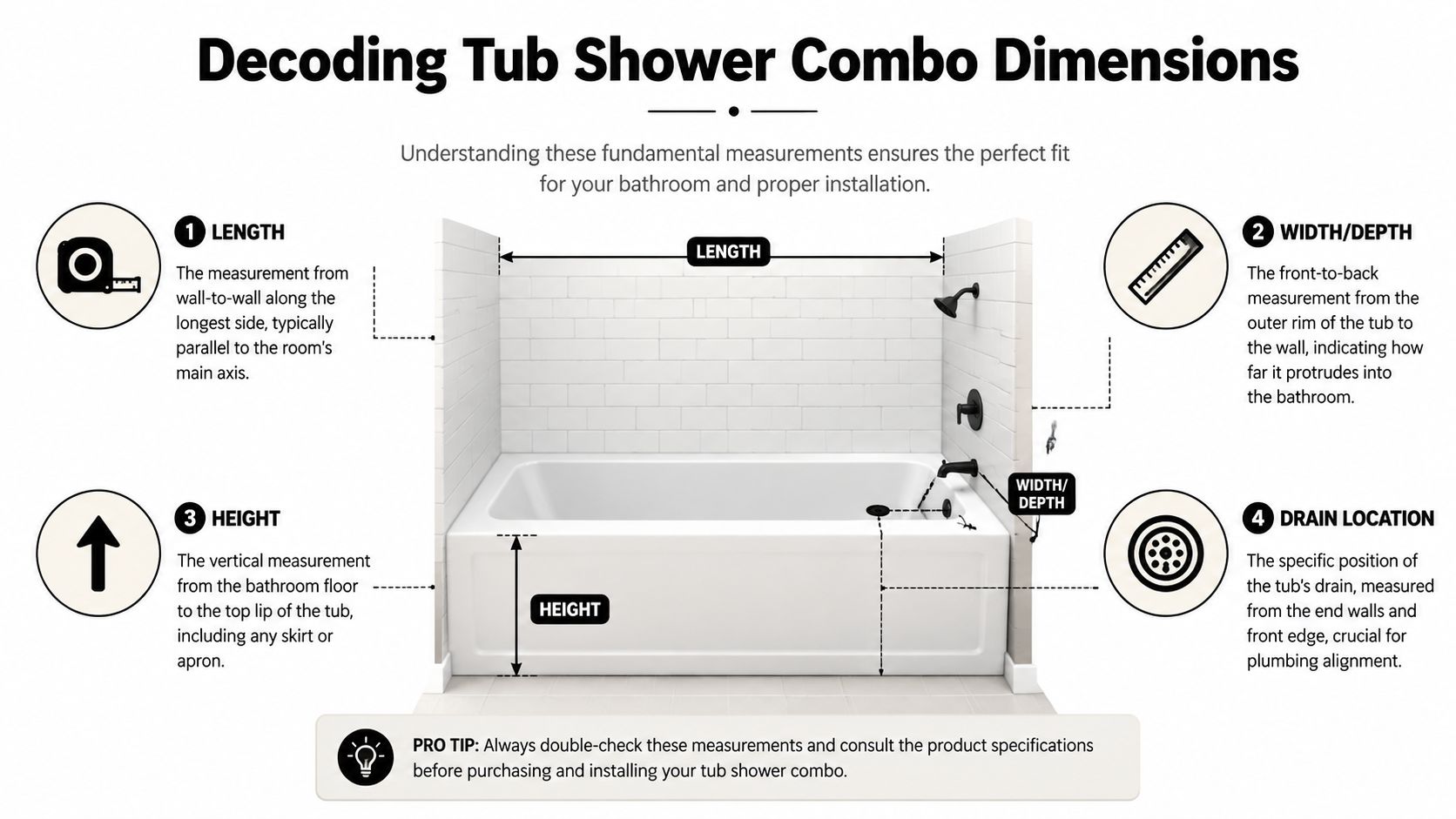
The four measurements that matter
Length is the wall-to-wall measurement along the long side of the tub. In most replacement projects, this is the number that decides whether you're in simple swap territory or major reconstruction territory.
Width is the distance from the back wall to the front apron. This number affects how much floor space remains between the tub and the vanity or toilet.
Soaking depth is different from overall height. It's the useful water-holding depth inside the tub. More depth can feel better for bathing, but a tub that's harder to step into isn't always the right choice for an older homeowner or a family planning to stay in the house long term.
Skirt height is the height of the front apron from the floor to the top lip. It matters for entry, visual balance, and how cleanly the tub meets finished flooring and wall tile.
Practical rule: When you compare two tubs with the same outside dimensions, don't assume they feel the same inside. Interior well shape can change the bathing experience more than the catalog photo suggests.
If you want a good companion reference for enclosure sizing, this breakdown of typical shower stall dimensions helps put tub combo numbers in context.
Why the standard size dominates
The reason you keep seeing the same sizes isn't random. The dominant residential footprint in North America is 60 inches long by 30 to 32 inches wide, and that standard has been in place since the 1960s because it aligns with common framing and plumbing layouts. Industry surveys cited in this tub shower combo sizing guide say 60 to 70% of factory-made tub-shower combos sold fall within those dimensions.
That matters in South Jersey because many existing homes were framed for straightforward replacement, not for experimentation. A standard alcove opening is forgiving when you're replacing like for like. It gets expensive when you try to force a larger unit into a space that was never built for it.
Here's what usually works well:
- Stick with 60-inch length when the existing alcove is already built around that opening.
- Move from 30 to 32 inches wide when you want a modest comfort upgrade without changing the whole room.
- Be cautious with much deeper tubs if the household includes anyone who needs easier entry and exit.
- Check panel height if the home has lower ceilings or older drywall conditions.
The dimensions of a tub shower combo tell you both how the unit installs and how it lives. Homeowners who understand that early tend to avoid the expensive mistakes later.
Choosing Your Tub Shower Configuration
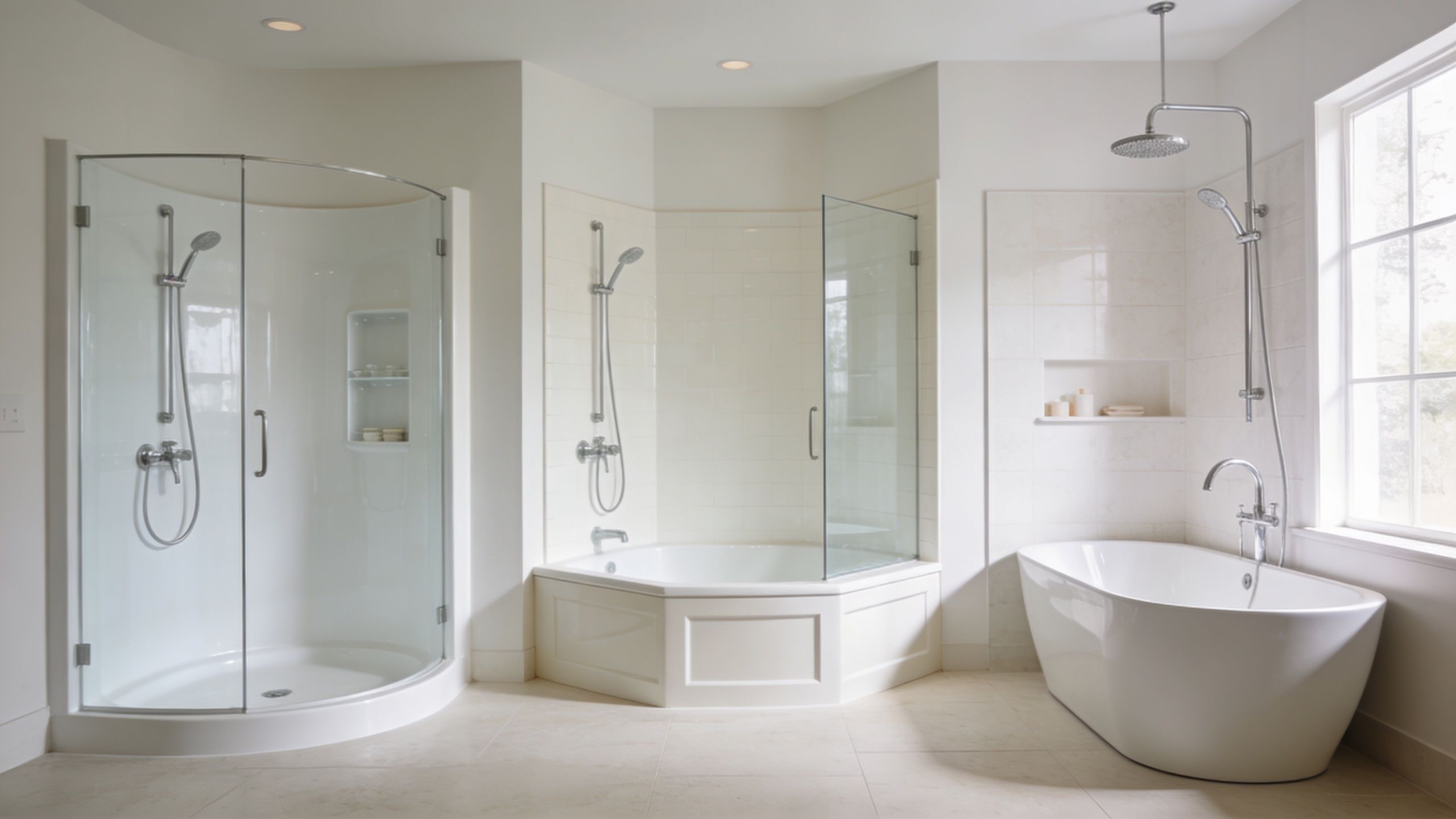
The best configuration depends less on style trends and more on how your bathroom is built and who needs to use it every day. In practice, most South Jersey homeowners choose among three paths: the standard alcove combo, a design-forward freestanding or corner setup, or an accessible unit planned around long-term use.
Alcove combos
This is the default for a reason. The tub sits between three walls, the plumbing stays where the room expects it, and the dimensions are predictable. That predictability is valuable in older homes where walls may not be perfectly plumb and every inch of circulation matters.
A standard alcove combo is usually the right answer when the room already has a tub and the goal is a clean, efficient remodel instead of a complete layout overhaul.
Freestanding and corner options
Freestanding tubs paired with shower hardware can look impressive, but they need enough surrounding space to work visually and practically. In tighter bathrooms, they often create more problems than they solve. You lose wall area for storage, splash control gets harder, and cleaning around the base isn't fun.
Corner tubs can help in some unusual layouts, especially where the room geometry makes a straight alcove awkward. But for a true tub-shower combo, corner solutions are rarely the easiest path in a standard family bath.
Here's a side-by-side view of the common types:
| Configuration Type | Standard Length | Standard Width | Best For |
|---|---|---|---|
| Alcove combo | 60 inches | 30 to 32 inches | Replacement projects, hall baths, family bathrooms |
| Wider alcove combo | 60 inches | 36 inches | Homeowners who want more elbow room without changing length |
| Accessible or walk-in combo | 52 to 72 inches | 30 to 40.5 inches | Aging-in-place planning, mobility concerns, multigenerational homes |
Accessible and walk-in combos
Generic online advice usually falls apart on this topic. In South Jersey, this conversation matters. A verified remodeling source notes that over 25% of residents in Camden and Burlington Counties are aged 55 or older, and it also highlights key walk-in combo dimensions that many guides skip, including seat heights of 15 to 17 inches and low thresholds under 1.5 inches in accessible designs, all of which are important for safety and code-minded planning in New Jersey remodels (walk-in bathtub and combo guide).
That doesn't mean every homeowner needs a walk-in unit right now. It does mean you should decide early whether the remodel is for today's convenience or for the next stage of living in the home.
A beautiful bathroom that becomes difficult to use in a few years isn't really a successful remodel.
If accessibility is part of the conversation, it helps to review real-world ADA shower ideas and planning considerations before fixtures are selected. The tub type, threshold, seat position, and nearby cabinetry all need to work together.
What usually doesn't work is adding accessibility features as an afterthought. That's how you end up with a unit that technically fits the room but doesn't function well once the vanity, door swing, and user movement are considered.
A Practical Guide to Measuring Your Space
Most measuring mistakes happen because homeowners measure what they can see, not what the new unit has to fit. The old tub's outside edge matters less than the opening, the wall condition, and the route from the driveway to the bathroom.
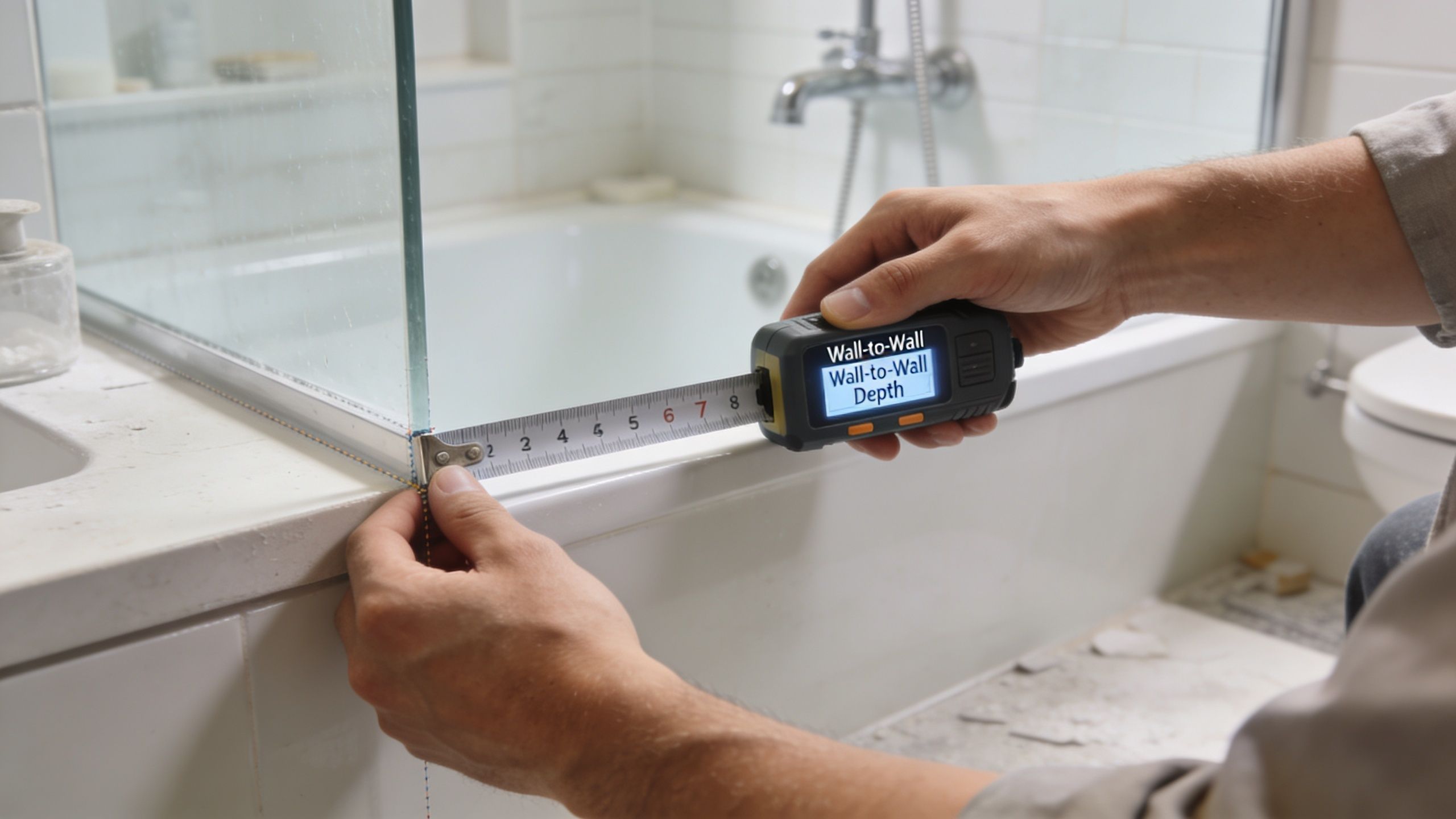
Measure the opening, not just the old tub
Start with the alcove itself. Measure the back wall from side to side at more than one height. Older homes can bow, and a wall that looks straight may not be straight enough for a snug acrylic unit.
Then measure from the finished back wall to the front edge of the space where the tub sits. After that, check the floor for level and the walls for plumb. A slightly twisted room can turn a simple install into a trim-and-filler problem.
Use this order:
- Measure the length of the opening at the front and back.
- Measure the width from the back wall outward.
- Check wall conditions so you know whether a prefab surround will sit cleanly.
- Confirm plumbing side and drain location before you choose a left-hand or right-hand unit.
- Note ceiling height and surround height so the wall system fits the room without awkward cut-downs.
If you're remodeling a compact bath, these small bathroom design ideas for Cherry Hill homes can help you think beyond the tub footprint and into the full room plan.
Don't forget the delivery path
This is the miss that costs money. A one-piece unit can fit the bathroom on paper and still fail before installation starts because it won't make it through the house.
A verified manufacturer reference for a 72 by 36 by 76-inch one-piece tub shower notes a maneuvering requirement of roughly 68 inches maximum door width to get the unit into place. In many mid-century South Jersey homes with standard 30-inch interior doors, that makes delivery and turning a serious constraint, especially in tight hallways (Aquatic 7236ST specifications).
Measure the hall, the stair turn, the bathroom door, and the corner before you fall in love with a one-piece unit.
A quick visual can help you think through the field-measuring process before a contractor visit:
One more practical point. If the home has tight access, a multi-piece unit may be the smarter choice even when a one-piece model looks simpler in the catalog. A cleaner installation plan beats a dramatic demolition surprise every time.
Sample Layouts for Common Bathroom Sizes
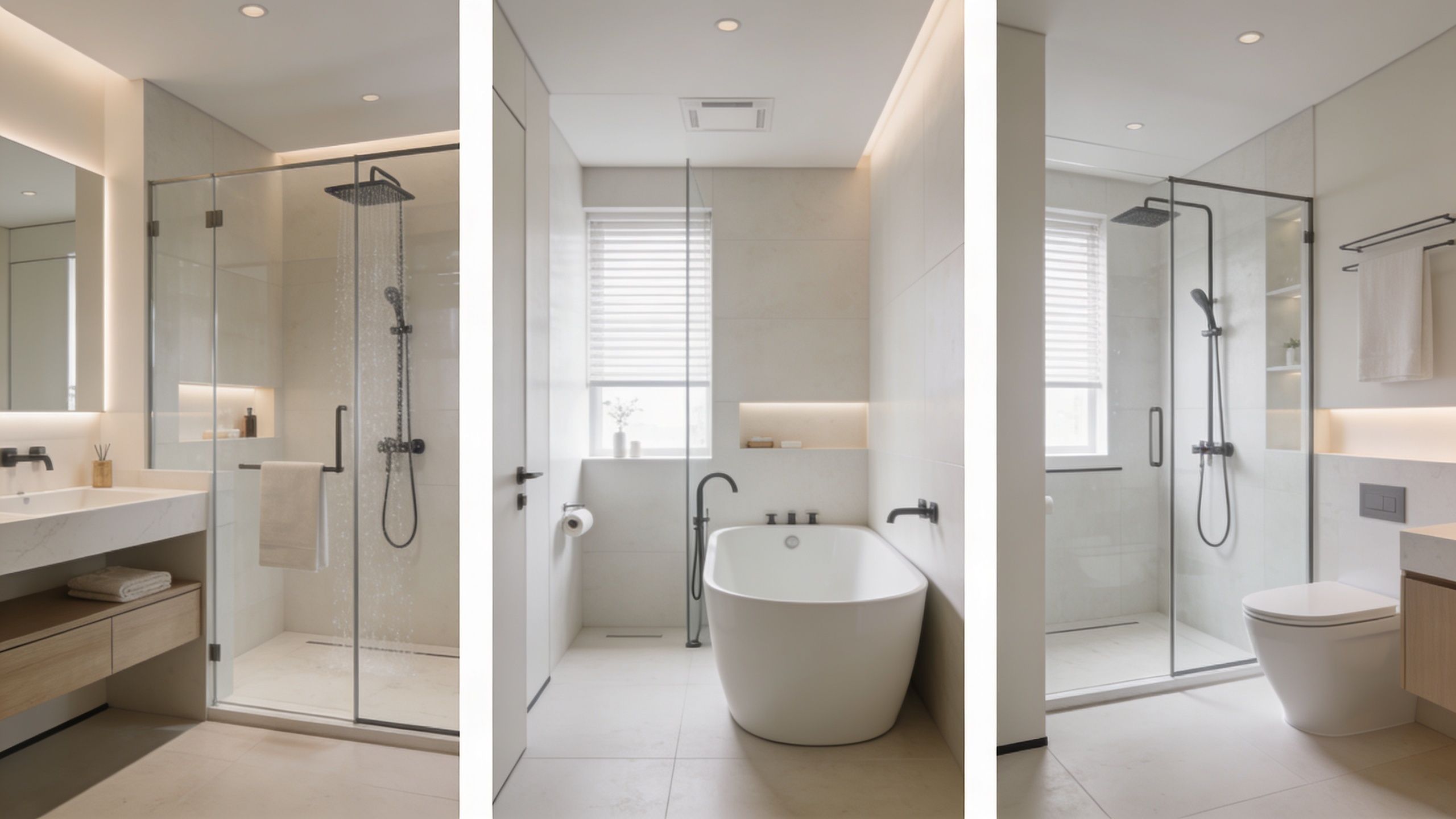
Numbers make more sense when you place them in a real room. South Jersey homes often have a straightforward hall bath or a somewhat larger primary bath, and the tub width you choose changes how the rest of that layout feels.
The classic hall bath
In the familiar hall-bath layout, a 60-inch rough-in usually anchors the room because it matches the framing and keeps plumbing straightforward. When that size is already there, replacing it with another 60-inch unit is usually the cleanest move. A verified sizing guide also notes that moving from a 30-inch width to a 36-inch width can add roughly 2 to 4 inches of interior bathing well space, which improves shoulder room and comfort (tub and shower combo guide).
In practice, that means the narrower combo often works better in a hall bath where every inch in front of the vanity matters. The wider combo feels better during use, but only if it doesn't squeeze the walkway or force a vanity that's too shallow to be useful.
For homeowners comparing layouts from different housing styles, this guide to UK bathroom layouts is useful because it shows how designers solve circulation problems in compact rooms, even when fixture standards differ from what we use here.
A larger primary bath
A larger primary bath gives you more freedom, but not unlimited freedom. A 60 by 36-inch combo can make sense for these spaces. It preserves the standard length while giving the bathing area a less cramped feel.
That wider tub usually works best when paired with a vanity that suits the remaining circulation space. If you're balancing storage against walking room, this reference on double vanity size standards helps frame the trade-off.
A good primary bath layout feels intentional. The tub doesn't crowd the vanity. The vanity doesn't pinch the aisle. The toilet area doesn't feel trapped between larger fixtures.
What usually fails is trying to fit every wishlist item into a room that only has space for some of them. In a hall bath, the standard footprint tends to win. In a primary bath, the wider option often earns its keep if the rest of the room still breathes.
Thinking Beyond the Tub A Coordinated Remodel
A tub-shower combo isn't an isolated purchase. Once you lock in its dimensions, you've set the front edge of the wet area, the line where floor tile transitions, the height relationship against nearby cabinetry, and the amount of free floor left for daily movement.
How tub dimensions affect the rest of the room
Start with the apron. A taller front skirt can look bulky next to a low-profile vanity, especially in a smaller room. A wider tub can also shrink the visible floor area enough that a tile pattern that looked balanced in the showroom starts to feel busy in the actual bathroom.
This matters even more when homeowners want wall-hung pieces or lighter-looking fixtures. If you're considering a floating sink or basin near the tub zone, this guide to reliable fixings for wall-hung basins is helpful because mounting details become more important when the room is visually spare and every alignment line shows.
A coordinated remodel asks better questions than “Will the tub fit?” It asks:
- How does the tub width affect the vanity depth?
- Will the skirt height fight the tile datum line?
- Does the surround height make the room feel shorter?
- Will the cabinetry still feel proportional once the wet wall is finished?
Where remodels usually go wrong
The most common mistake is choosing fixtures one at a time. A homeowner picks a tub for comfort, then a vanity for storage, then a tile for style. Each item is fine alone. Together, they compete.
Good bathroom design comes from relating dimensions, not collecting products.
The smarter approach is to evaluate the tub as the anchor element and let the rest of the room respond to it. That's especially important if resale is part of the plan. This overview of bathroom remodel return on investment is a useful reminder that layout decisions affect value just as much as finishes do.
When a bathroom feels easy to use, the dimensions are doing their job. Users notice that result immediately, even if they never see the spec sheet.
Frequently Asked Questions
A few questions come up in almost every tub-shower planning conversation. The answers are short, but they can save a lot of second-guessing.
Quick Answers to Common Questions
| Question | Answer |
|---|---|
| What is the most common tub-shower combo size? | The most common size is 60 inches long by 30 or 32 inches wide. Slightly wider 60 by 32-inch and 60 by 36-inch combos now make up roughly 30 to 40% of new tub-shower installations in developed markets because homeowners want more elbow room without giving up the standard 60-inch length (market sizing overview). |
| Is a wider tub always better? | Not always. A wider combo can feel better inside, but if it crowds the vanity aisle or creates a tight pass in front of the toilet, the room works worse overall. The right answer depends on the full layout, not just bathing comfort. |
| Should I choose a walk-in or accessible combo now, even if I don't need it yet? | If you expect to stay in the home long term, it's worth discussing early. Threshold height, seat location, and nearby fixture spacing are much easier to plan before materials are ordered than after the room is built. |
One more practical answer that doesn't fit neatly in a table: if you're between sizes, don't choose based on catalog photography. Choose based on your room's actual measurements, the household's mobility needs, and whether the installation path through the home can handle the unit.
If you are planning a bathroom remodel and want help coordinating tub dimensions with cabinetry, tile, countertops, and the specific needs of a South Jersey home, The Cabinet Coach offers a mobile showroom experience that brings design guidance and material selections right to your house. This service makes it easier to make confident decisions before the project reaches the expensive part.