
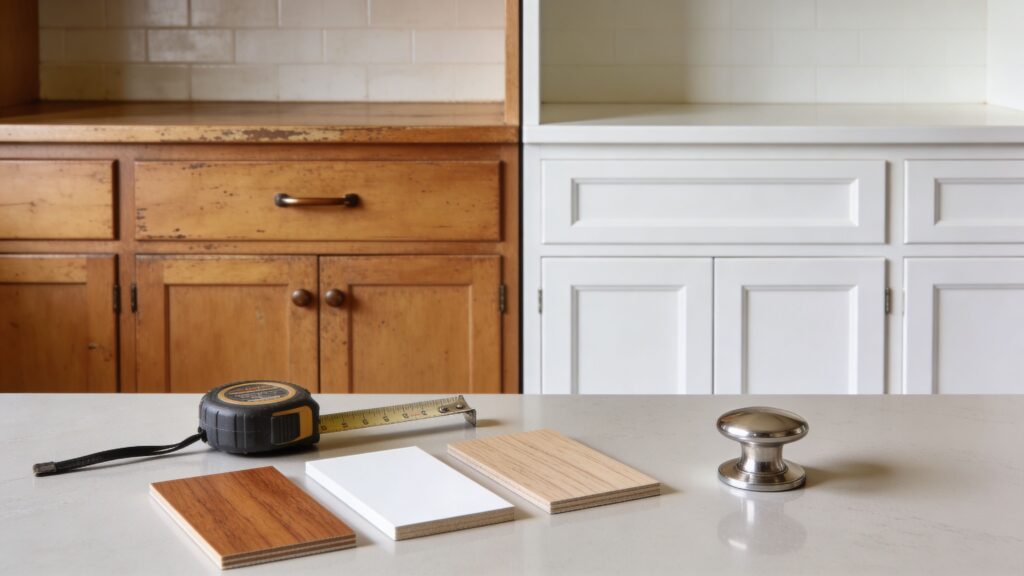
If you're standing in your Cherry Hill kitchen thinking, “The layout still works, but these cabinets make the whole room feel dated,” you're in the same spot as a lot of South Jersey homeowners. The boxes are solid. The doors are tired. And the idea of tearing everything out feels expensive, messy, and bigger than you want this project to be.
That’s where the cost of kitchen cabinets refacing becomes worth understanding. Refacing sits in the middle ground between living with a kitchen you don’t enjoy and committing to a full cabinet replacement. For many homes in Haddonfield, Moorestown, Voorhees, and nearby towns, it’s the option that updates the look without forcing a full demolition.
This guide breaks down what cabinet refacing costs in 2026, what drives the price up or down, and how to think about a quote like a designer instead of guessing like a shopper.
Table of Contents
- Is Cabinet Refacing the Right Choice for Your Kitchen
- Refacing vs Replacement A Cost and Value Comparison
- The Anatomy of Cabinet Refacing Costs
- Key Factors That Influence Your Final Refacing Price
- Cabinet Refacing Cost Examples in South Jersey
- Smart Ways to Manage Your Cabinet Refacing Budget
- How to Get a Reliable Refacing Quote in South Jersey
Is Cabinet Refacing the Right Choice for Your Kitchen
You walk into your kitchen in Cherry Hill every day, and the problem is obvious. The cabinets still open, the drawers still slide, and the layout still works for dinner, homework, and the morning rush. It just looks tired. That is the kind of kitchen where refacing deserves a serious look.
Refacing works best when the cabinet boxes are in good shape and the frustration is mostly visual. The existing structure stays in place. The visible surfaces get updated with new doors, drawer fronts, finished end panels, and hardware that fits the new style. In many South Jersey homes, that is enough to make the whole room feel current again without tearing the kitchen apart.
I see this often in Haddonfield, Moorestown, and older parts of Cherry Hill. The bones are solid. The door style, stain color, and worn fronts are what date the space.
That distinction matters because refacing solves a specific problem. It changes how the kitchen looks. It does not change the footprint, fix failing cabinet boxes, or create a better layout where one never existed. For homeowners sorting out whether they need cosmetic updates or broader changes, these kitchen remodeling tips can help clarify the difference.
When refacing makes sense
Refacing is usually a strong fit when the kitchen already functions well and you want a cleaner, more updated look with less disruption to the house.
Common signs it is the right move:
- Your cabinet boxes are still solid: Doors may be dated, but the cabinet structure is worth keeping.
- Your layout already works: Sink, range, and prep space are where you want them.
- You want a meaningful visual change: New doors, drawer fronts, and hardware can shift the entire feel of the room.
- You want to avoid a full tear-out: That usually means less mess, fewer moving parts, and a tighter project scope.
The Cabinet Coach mobile showroom helps with this decision in a practical way. Instead of guessing under store lighting, homeowners in South Jersey can compare door styles, finishes, and hardware in their own kitchen, against their own floors, paint, and countertops. That usually makes the yes or no decision much clearer.
When it usually does not
Refacing is usually the wrong choice when the cabinets have water damage, the boxes are out of square, shelves are failing, or the layout frustrates you every day.
A simple rule helps here. If you dislike how the kitchen works, refacing will not fix that.
That is especially true in kitchens where storage is poorly planned, appliance clearances are awkward, or traffic flow is a constant problem. In those cases, homeowners are often better served by addressing function first, which is part of why South Jersey homeowners are remodeling kitchens and bathrooms for comfort and function.
The right question is not whether your cabinets can be refaced. The better question is whether refacing solves the actual problem in your kitchen. If the answer is yes, it can be one of the smartest ways to update a South Jersey kitchen without paying for a full replacement project.
Refacing vs Replacement A Cost and Value Comparison
In Cherry Hill, Haddonfield, and Moorestown, this is the kitchen decision I see most often. Homeowners want the room to look new, but they do not want to pay for a full cabinet tear-out if the existing layout already works.
This distinction often serves as the dividing line.
Refacing usually costs less because you keep the cabinet boxes and replace the visible parts: doors, drawer fronts, finished end panels, hardware, and the surface treatment on exposed cabinet frames. Replacement costs more because it starts over with new cabinet boxes and often pulls other work into the job, including removal, disposal, touch-up carpentry, and adjustments to nearby finishes.
The National Association of Realtors notes in its Remodeling Impact Report that cabinet refacing is a lower-cost kitchen upgrade than a full kitchen renovation, while still improving how the space looks and functions for everyday use. That matches what we see in South Jersey consultations. Refacing fits kitchens with a good footprint. Replacement fits kitchens with layout problems, failing boxes, or both.
Cost matters, but scope matters more
The first number on the estimate never tells the whole story.
A replacement project gives you freedom to change the layout, add different storage configurations, and correct long-standing function issues. It also increases labor, project time, and the chance that floors, walls, countertops, or trim need attention once the old cabinets come out.
Refacing keeps the project tighter. For many South Jersey homeowners, that means fewer decisions, less disruption, and a clearer budget from the start.
| Decision point | Refacing | Replacement |
|---|---|---|
| Cabinet boxes | Existing boxes stay in place | Entire cabinet system is removed and replaced |
| Layout | Stays the same | Can be redesigned |
| Visual result | New doors, drawer fronts, finishes, and hardware create a major style update | Entire cabinet system is new |
| Project disruption | Lower in most kitchens | Higher in most kitchens |
| Best fit | Solid cabinet structure, functional layout, dated appearance | Damaged cabinets, poor layout, or full redesign goals |
Where replacement earns the higher price
Replacement makes sense when the cabinets are worn beyond a cosmetic update or the kitchen works poorly every day.
If the boxes have water damage, the shelves are sagging, the cabinet runs are out of square, or you want to move appliances and change the traffic flow, replacement usually gives better long-term value. You are paying more, but you are also fixing structural and functional problems that refacing cannot touch.
Where refacing gives better value
Refacing gives better value when the kitchen already functions well and the cabinets are still structurally sound.
That is a common scenario in South Jersey. A homeowner in Moorestown may have a well-built older kitchen with dated oak doors. A homeowner in Haddonfield may want a cleaner painted look without opening up a larger remodel. In those cases, refacing can free up budget for countertops, tile, lighting, or new organizers inside the existing boxes.
Our mobile showroom helps make that comparison more practical. Instead of choosing from a small sample in a store, homeowners can review door styles, finishes, and hardware in their own kitchen and decide whether a cosmetic transformation is enough or whether the room really calls for new cabinetry. If you are weighing that jump, this South Jersey kitchen cabinet buyer’s guide helps clarify when replacement is worth the added cost.
The right choice depends on what you are trying to fix. If the problem is appearance, refacing is often the better buy. If the problem is structure or layout, replacement usually earns the extra investment.
The Anatomy of Cabinet Refacing Costs
A Cherry Hill homeowner might look at one wall of cabinets and assume refacing is mostly about swapping doors. The estimate is broader than that. In a real South Jersey project, the price usually reflects four cost buckets: doors and drawer fronts, surface materials for exposed cabinet boxes, hardware, and installation labor.
That breakdown matters because two kitchens can have a similar footprint and still price very differently once the door count, exposed end panels, and finish choices are clear. It is one reason our mobile showroom appointments are useful in towns like Haddonfield and Moorestown. We can review samples in the actual kitchen, see what cabinet sides are visible, and sort out what belongs in the quote before anyone guesses at a number.
What you are paying for
A standard refacing proposal usually includes:
- New cabinet doors
- New drawer fronts
- Veneer, laminate, or matching material on visible cabinet box surfaces
- Hinges and pulls, if included in the scope
- Labor for prep, fitting, alignment, and installation
- Trim pieces, filler panels, and finished end panels where needed
Labor is a bigger part of the total than many homeowners expect. Good refacing only looks simple when it is done well. In older South Jersey homes, I often see walls that are slightly out of square, cabinet runs with site-built fillers, and end panels that need extra finish work to make the new fronts look consistent.
If you want a broad consumer-facing comparison point before you request local estimates, this overview of kitchen cabinet refacing costs is a useful secondary reference.
How contractors commonly price refacing
Many refacing companies use linear feet as a starting point for budgeting. HomeAdvisor notes that cabinet refacing often falls in a per-linear-foot range, with material and project complexity driving where a kitchen lands inside that spread, in its cabinet refacing cost guide.
Linear feet measure the length of the cabinet run, not the size of the room.
That distinction matters. A smaller kitchen with cabinets on three walls can cost more to reface than a larger open kitchen with one long run and an island. More doors, more drawer fronts, more visible sides, and more trim detail usually mean more labor and more material.
Here is where linear footage helps and where it falls short:
- Helpful for early budgeting: It gives a quick planning range before every door and panel is counted.
- Less precise for final pricing: It does not fully capture islands, lazy susan corners, appliance panels, glass door upgrades, or decorative end treatments.
- Especially limited in older homes: Custom fillers, uneven soffits, and modified cabinet runs can add work that linear footage alone does not show.
Door construction also affects the final quote. A simple slab door usually installs with less fuss than a more detailed profile, and material choice changes both appearance and durability. If you are comparing painted MDF against wood before settling on a style, this guide on MDF vs wood cabinet doors will help you sort out the trade-offs.
2026 Estimated Cabinet Refacing Costs in South Jersey
The table below gives planning ranges for South Jersey kitchens based on common local project patterns. These are ballpark figures for budgeting, not quote substitutes. In Cherry Hill and Moorestown, projects with more decorative panels or premium finishes often run above the middle of the range. In Haddonfield, older cabinetry details can push labor higher even when the kitchen is not especially large.
| Kitchen Size (Linear Feet) | Laminate/Thermofoil (Budget-Friendly) | Wood Veneer (Mid-Range) | Solid Wood/Premium Finishes (High-End) |
|---|---|---|---|
| Under 10 linear feet | Often starts in the low-thousands for a simple run with few drawers and minimal exposed ends | Usually higher once upgraded door styles and matched finishes are added | Small kitchens can still price high if the finish package and detailing are premium |
| 20 to 30 linear feet | Common range for many standard refacing jobs in South Jersey | Often lands in the middle pricing lane for homeowners who want a warmer, more natural look | Frequently rises fast with furniture-style doors, panels, and upgraded accessories |
| 30 to 70 linear feet | Larger kitchens can still stay controlled if the layout is straightforward | Broad middle-to-upper range depending on door count, island surfaces, and exposed panels | Often the highest tier, especially where custom matching and detailed trim work are involved |
The main budgeting lesson is simple. Cabinet count usually matters more than room size, and the cleanest way to price a refacing job is to look at the kitchen in person, with materials in hand, before the numbers are finalized.
Key Factors That Influence Your Final Refacing Price
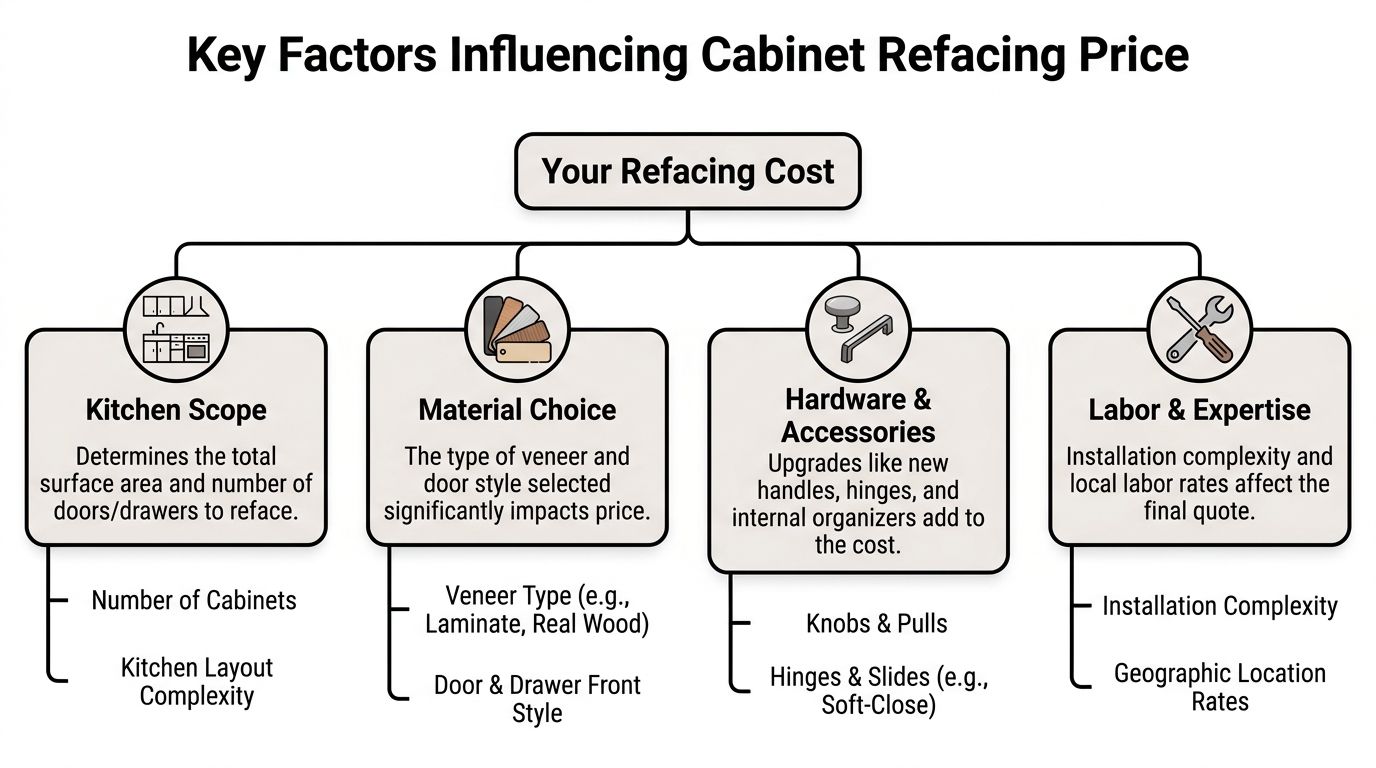
A kitchen in Cherry Hill and a kitchen in Haddonfield can have almost the same footprint and still price very differently to reface. I see that all the time during in-home consultations. The box layout may be similar, but the door count, exposed ends, finish choices, and condition of the existing cabinets can push one project well above the other.
Materials set the budget lane
Material choice is usually the first big pricing decision. Laminate and thermofoil generally keep costs lower than wood veneer or solid wood doors, but lower price does not automatically mean better value. A busy family kitchen in Moorestown may benefit from one finish, while a more design-driven Haddonfield project may justify a different one.
The key question is how the material needs to perform in your house. Durable, easy-clean surfaces often make sense for homeowners who want a fresh look without stretching the budget. Wood-based options usually cost more, but they can deliver a warmer appearance, better edge detail, and a finish that feels more custom.
Material price also includes what has to match. If the kitchen has visible end panels, an island back, or tall pantry sides, those surfaces add square footage and labor fast.
Style decisions change the final number
Door style has a direct effect on price. Flat slab doors are usually more economical than raised-panel or heavily profiled doors because they take less fabrication and tend to install with fewer adjustments. Once you add matching drawer fronts, finished refrigerator panels, crown molding, light rail, or furniture-style toe details, the estimate climbs.
Hardware is another common swing factor. A kitchen with twenty or thirty openings can change price quickly once every pull, hinge, and drawer slide is upgraded. Homeowners comparing finishes and pulls can get useful ideas from these kitchen cabinet hardware trends in South Jersey.
This is one reason our mobile showroom helps. Seeing door samples, finish colors, and hardware together in your own light makes it easier to spot which upgrades improve the kitchen and which ones only add cost.
Labor matters more than most homeowners expect
Refacing looks simple from across the room. Up close, it is precision work.
Cabinet surfaces have to be prepped correctly. Veneer has to bond cleanly. New doors and drawer fronts need even spacing. Trim pieces need to meet properly at corners and exposed ends. If any of that is rushed, the kitchen looks refaced instead of renewed.
Older South Jersey homes add another layer. In Haddonfield and parts of Collingswood, I often see walls that are out of square, floors that have settled a bit, or cabinet runs that were installed years ago with small inconsistencies. Those conditions can usually be handled, but they take more fitting and more time.
The existing cabinet boxes matter too. Solid, well-built boxes are good candidates for refacing. Boxes with water damage, sagging bottoms, failing rails, or poor original construction may need repair before refacing starts, and sometimes replacement makes more sense.
Access, layout, and service details affect the quote
A straightforward L-shaped kitchen is usually easier to price and execute than a kitchen with multiple cabinet heights, a large island, glass-front sections, or several finished sides facing living areas. Every visible surface has to be accounted for.
Service model also affects accuracy. A photo-based rough estimate can only go so far. An in-home visit with actual samples usually produces a tighter number because the measurements, finish selections, and site conditions are being checked at the same time. That is a big reason The Cabinet Coach brings the mobile showroom directly to homes in Cherry Hill, Moorestown, Haddonfield, and nearby towns. Homeowners can compare options on the spot and get pricing tied to their real kitchen, not a generic allowance.
If the goal is to control cost, keep the layout, choose a door style with clean lines, and spend carefully on the details you will touch every day. Soft-close drawers, better hardware, or a more durable finish often give more day-to-day value than loading the project with extra trim.
Cabinet Refacing Cost Examples in South Jersey
A Cherry Hill homeowner calls after hosting Sunday dinner. The kitchen still works, but the oak finish dates the whole room and the cabinet doors have started to show their age. That is usually the point where cost examples help more than broad national averages.
Collingswood condo kitchen
A small galley kitchen in a Collingswood condo often falls near the lower end of the refacing cost range discussed earlier, assuming the cabinet boxes are in good shape and the homeowner keeps the scope basic. A project like that might start around the $1,600 mark for a simple refacing package with new doors, drawer fronts, and updated hardware.
That price can climb if the kitchen has a lot of exposed ends, tricky filler pieces, or cabinet repairs hiding behind the old finish. In compact kitchens, disciplined selections usually keep the project in line. Clean door styles and straightforward finishes do the job well.
Cherry Hill family kitchen
This is the kitchen I see most often around Cherry Hill. The layout works, the storage is adequate, and the owners want the room to look current without tearing everything out.
For a mid-size kitchen, refacing often falls into the middle of the cost spectrum already covered in this article. If the room is close to a standard planning size, our 10×10 kitchen cost guide gives useful context for what a typical kitchen footprint can look like. A Cherry Hill project in that range might include new doors and drawer fronts, matching veneer on the exposed cabinet boxes, fresh hardware, and a finish that better fits the rest of the house.
The final number depends on how far the details go. A painted shaker door with basic pulls prices differently than a woodgrain finish with upgraded accessories and more decorative panels.
Moorestown larger kitchen
A larger Moorestown kitchen usually carries a wider spread. More cabinets means more surfaces to reface, more doors and drawer fronts to build, and more finished ends that need to match.
In higher-end homes, I also see more requests for furniture-style touches, glass sections, islands with visible back panels, and upgraded moldings. Those choices can push the project toward the upper end of the refacing ranges already outlined earlier. The process is still refacing, but the scope is closer to a custom finish package than a basic refresh.
These examples are meant to illustrate how South Jersey kitchens can fall within the ranges already discussed. The only way to price your kitchen accurately is to measure the actual cabinet run, review the box condition, and look at finish samples in the room. That is why The Cabinet Coach brings a mobile showroom to homes in Cherry Hill, Haddonfield, Moorestown, and nearby towns. It gives homeowners a quote based on their kitchen, not a generic allowance.
Smart Ways to Manage Your Cabinet Refacing Budget
A good cabinet project doesn’t come from cutting every corner. It comes from spending in the right places.
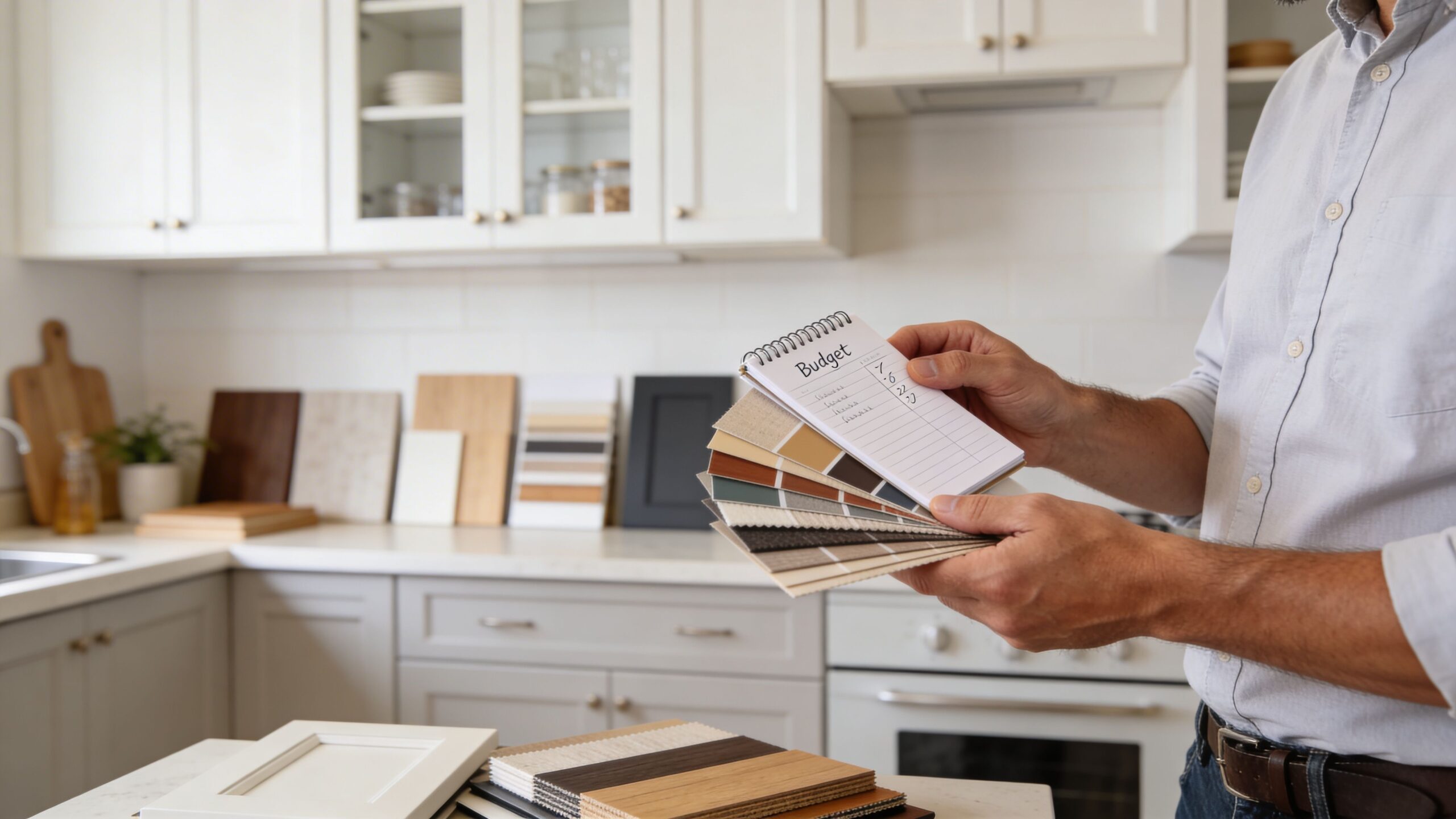
If you want the cost of kitchen cabinets refacing to stay manageable, start by protecting the scope. The fastest way a refacing project gets expensive is when homeowners begin adding unrelated changes that belong in a larger remodel.
A few practical ways to stay in control:
- Keep the existing layout: If the cabinet arrangement already works, don’t create extra expense by chasing changes refacing was never meant to handle.
- Be selective about upgrades: Choose the details you interact with daily. Door style and hardware usually have more visible impact than piling on decorative extras.
- Use material strategy: Thermofoil often lands in a middle zone that balances appearance and budget better than jumping straight to premium wood.
- Invest where hands touch: Hardware, drawer operation, and door alignment affect daily satisfaction more than many homeowners expect.
- Bundle thoughtfully: If you already know countertops or backsplash are next, planning them together can prevent mismatch and rework.
Not every upgrade needs to happen at once. In many kitchens, a disciplined cabinet refacing plan creates the visual reset first, then leaves room for other finish updates later.
A restrained design plan often looks more expensive than a kitchen with too many mixed upgrades.
The smartest budgets usually aren’t the smallest. They’re the clearest.
How to Get a Reliable Refacing Quote in South Jersey
A Cherry Hill homeowner can get two refacing quotes for the same kitchen and see a spread of several thousand dollars. Usually, the difference comes down to how carefully the kitchen was evaluated, what was included, and what was left vague.
A quote you can trust starts with an on-site or video review of the actual cabinets. The estimator should confirm that the cabinet boxes are solid, measure every run accurately, note problem areas like out-of-plumb walls or worn drawer hardware, and document the materials you want. In Haddonfield and Moorestown, that step matters even more because older homes often have quirks that do not show up in a quick price-by-photo estimate.
What to look for in the estimate
A solid quote should clearly identify:
- What is being replaced: Doors, drawer fronts, exposed end panels, veneer, and hardware.
- What is staying: Existing cabinet boxes, interior shelving, and current layout.
- What finish level you selected: Painted wood, stained wood, laminate, or thermofoil.
- What labor is included: Removal, prep, installation, adjustments, and cleanup.
- What site conditions may affect price: Uneven floors, soffits, out-of-square openings, or cabinet repairs.
Good quotes are specific. If the estimate says "reface kitchen cabinets" without listing materials, door style, hardware allowance, or repair work, it leaves too much room for change orders later.
I tell South Jersey homeowners to ask one direct question: what could raise this number after we start? A reputable cabinet company should answer that plainly.
The quoting process should also make material selection easier, not harder. Reviewing small samples under showroom lighting is one thing. Seeing door styles, finishes, hardware, and countertop options in your own kitchen gives you a much better read on color, scale, and fit with the rest of the house.
That is one reason The Cabinet Coach built the process around a complimentary video consultation and a mobile showroom. Instead of sending you back and forth to compare samples, The Cabinet Coach brings cabinet, countertop, hardware, and finish options to homes across Cherry Hill, Haddonfield, Moorestown, and nearby South Jersey towns, so the quote reflects your real kitchen, not a rough allowance.