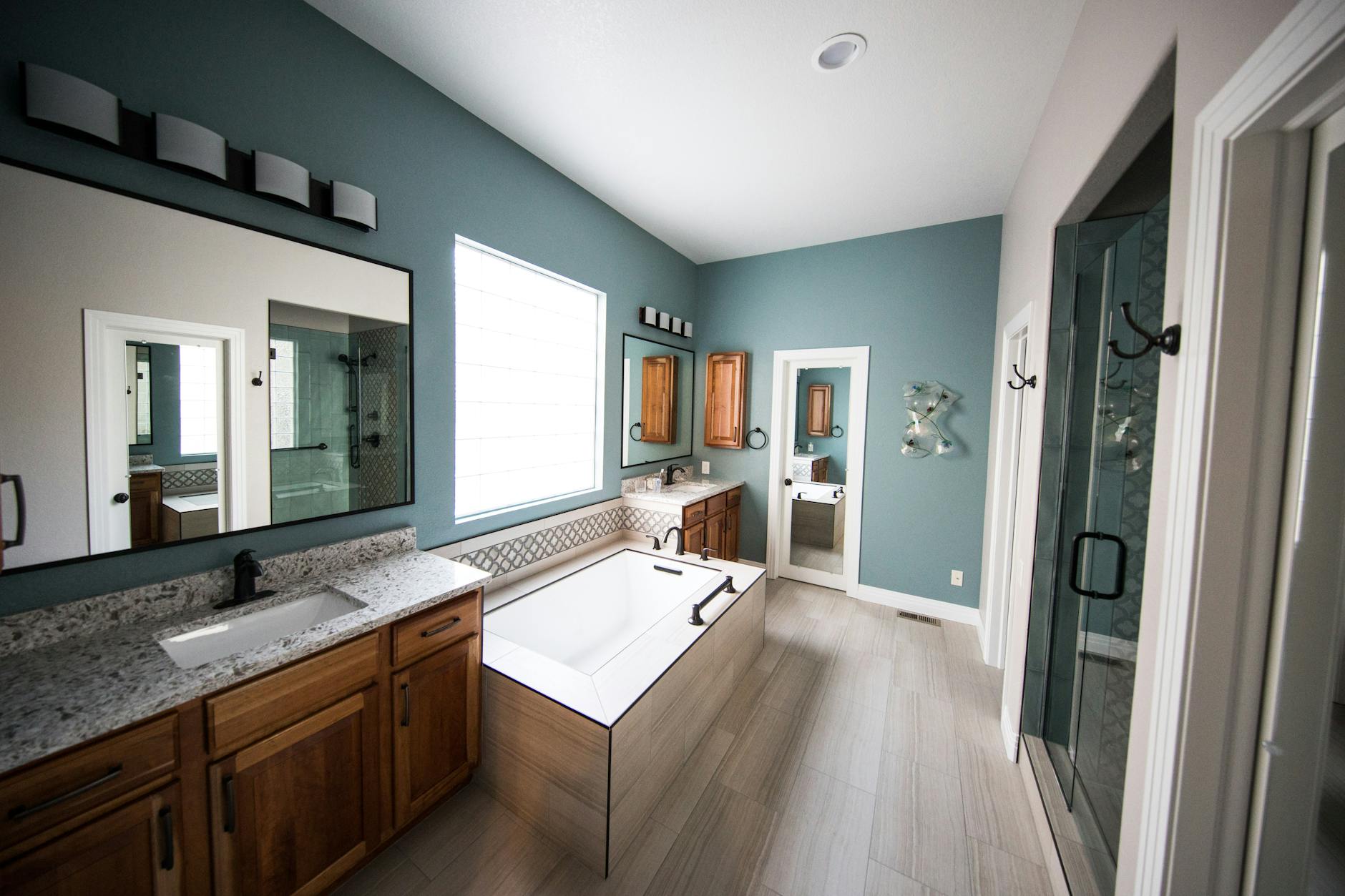

Showroom lights give off a different mix of colors than the lights in your home, changing how cabinet finishes look. During cabinet selection and installation, strong metal-halide or cool fluorescent lighting can hide undertones you need to see. Warm whites can look muddy gray, while rich walnut stains can appear nearly black.
That difference can lead to expensive regrets once the cabinets sit under your household lights. For another part of the installation budget, see our post on cabinet hardware installation cost.
At The Cabinet Coach, we recommend checking finishes in your kitchen instead of making the final choice on a warehouse floor. North-facing daylight, southern sun and warm 2700K bulbs each reveal different parts of a stain or painted finish. Our guide to contemporary cabinets in Woodland, New Jersey covers those cabinet options separately.
What's Inside This Guide
- The Physics Behind Lighting and Surface Pigments
- Metamerism and How Your Room Shifts Paint Undertones
- Viewing Environments Compared: Warehouse Floor, In-Home Samples, and Digital Renders
- Testing Methods for Wood Stains and Factory Finishes
- Matching Lighting Conditions to Specific Cabinet Finishes
- Long-Term Maintenance and Bulb Drift Management
- Straight Answers on Lighting and Cabinet Colors
- Plan Your Cabinet Project Without Costly Color Surprises
The Physics Behind Lighting and Surface Pigments
Light contains different wavelengths, which we see as colors. A cabinet finish absorbs some and reflects others back to your eyes. Showrooms often use cool overhead fixtures to make the floor look bright, but that light can overpower subtle wood tones. Under those commercial bulbs, modern cabinet lines won't look the same as they do in a home.
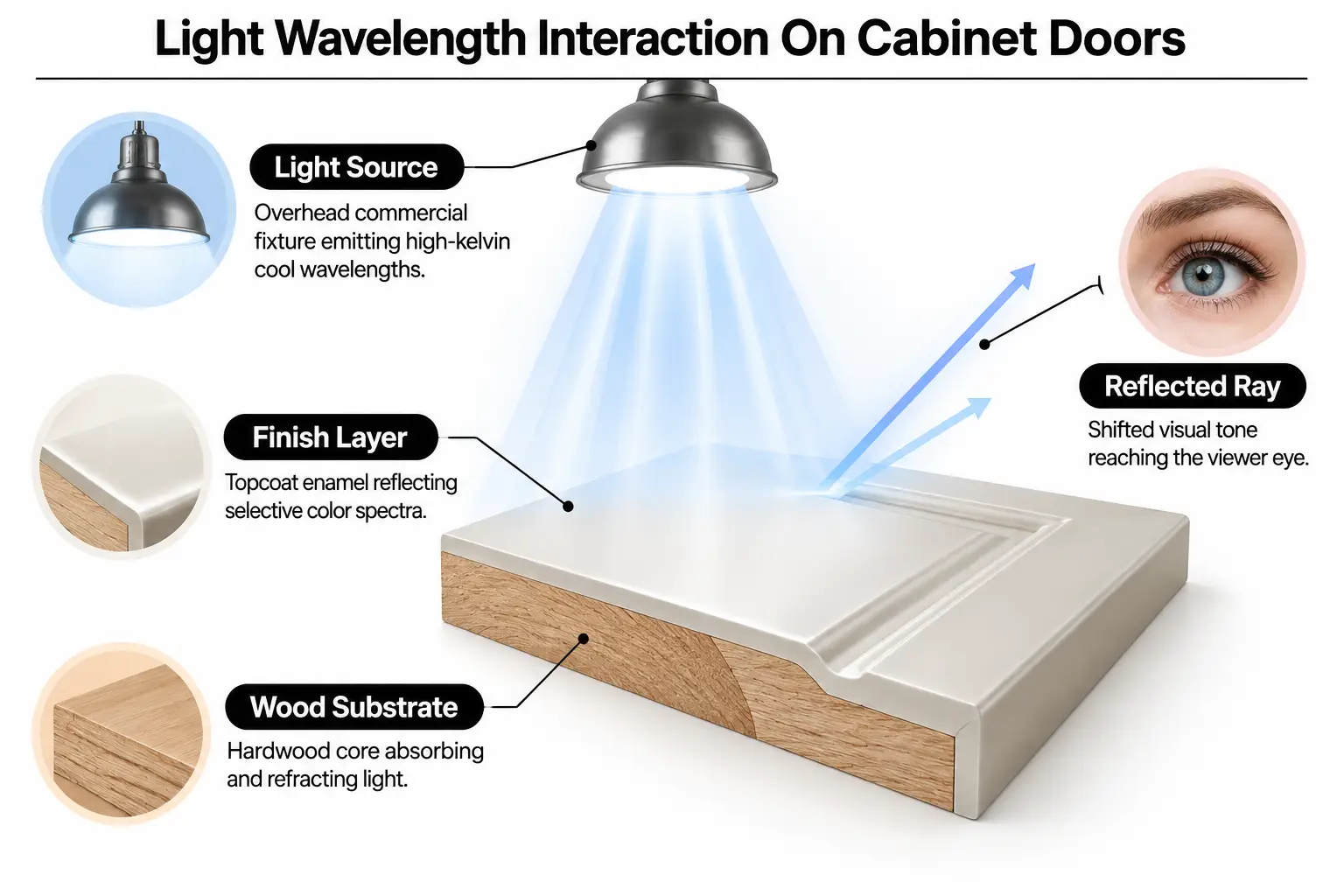
- Correlated Color Temperature: Measured in kelvin, this tells you whether a bulb gives off warm amber light or cool blue light.
- Color Rendering Index: A scale from zero to one hundred that rates how accurately light shows colors against natural daylight, as defined by the U.S. Department of Energy.
- Luminous Flux: The total visible light a fixture gives off. Strong overhead commercial fixtures can wash out fine details in wood grain.
- Substrate Absorption: How the wood beneath a finish takes in light. Porous woods such as oak or maple bend light differently as the overhead angle changes.
Metamerism and How Your Room Shifts Paint Undertones
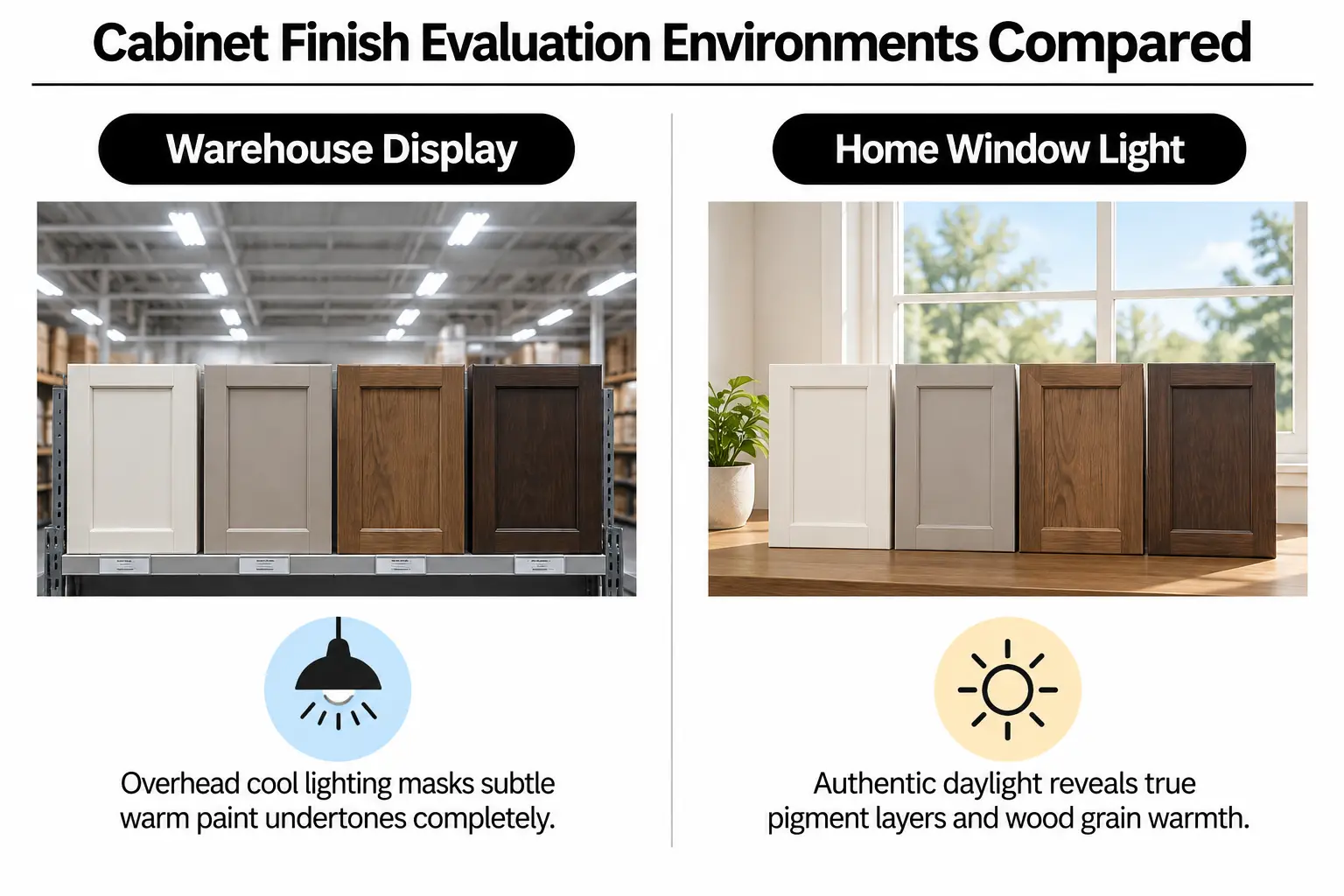
Metamerism describes the color shift that makes a door look crisp white in a warehouse and dingy yellow at home. Different light sources make the same pigments reflect a different mix of colors. Big-box stores often use 4000K to 5000K commercial LEDs. Their blue light hides warm undertones in cream or beige paint.
Video: Forceful Colors to Paint a Kitchen with Light Cabinets (Home Design Advisor)
Back home, standard 2700K soft white bulbs fill the room with more yellow and red light. Those longer wavelengths bring out warm pigments, from peach to yellow, that you couldn't see in the store. Choosing a countertop and cabinet pairing from store impressions alone makes a clash with trim or stone almost certain.
The Window Direction Factor Most Remodelers Overlook
Window exposure changes the color balance every few hours in homes across the United States. North-facing windows bring steady, cool blue daylight that darkens deep stains and draws green out of charcoal paint. South-facing windows bring golden afternoon sun, making clear-coated maple look more amber. Stark white shaker doors can look cream in that same light.
Viewing Environments Compared: Warehouse Floor, In-Home Samples, and Digital Renders
Before choosing cabinets built to last, check the options where you'll use them. Store visits can take hours of driving without showing how a door looks beside your flooring or backsplash. Homeowners often compare the ways to check finishes before choosing our on-site design support.
| Inspection method | Color accuracy | Effort required | Cost tier | Best use |
|---|---|---|---|---|
| Retail warehouse display | Very low | High travel time | $ | Browsing general layout ideas |
| 3D computer rendering | Moderate | Low | $$ | Checking how the layout fits the room |
| Physical door samples at home | High | Low to moderate | $$ | Final checks on stain and paint |
| In-home design studio visit | Maximum | None (doors brought to you) | $$$ | Matching colors and finishes for the full project |
Ordering custom cabinets based on a warehouse display often leads to expensive rework. Our mobile showroom saves those repeat trips across town by bringing real wood doors and modern hardware to your driveway. You get professional advice while judging the finishes under the lights you'll actually live with.
Testing Methods for Wood Stains and Factory Finishes
Paint colors and stain depth deserve a check before you approve a factory order. There are several ways to do that, with trade-offs in how much detail you can see and how long planning takes.
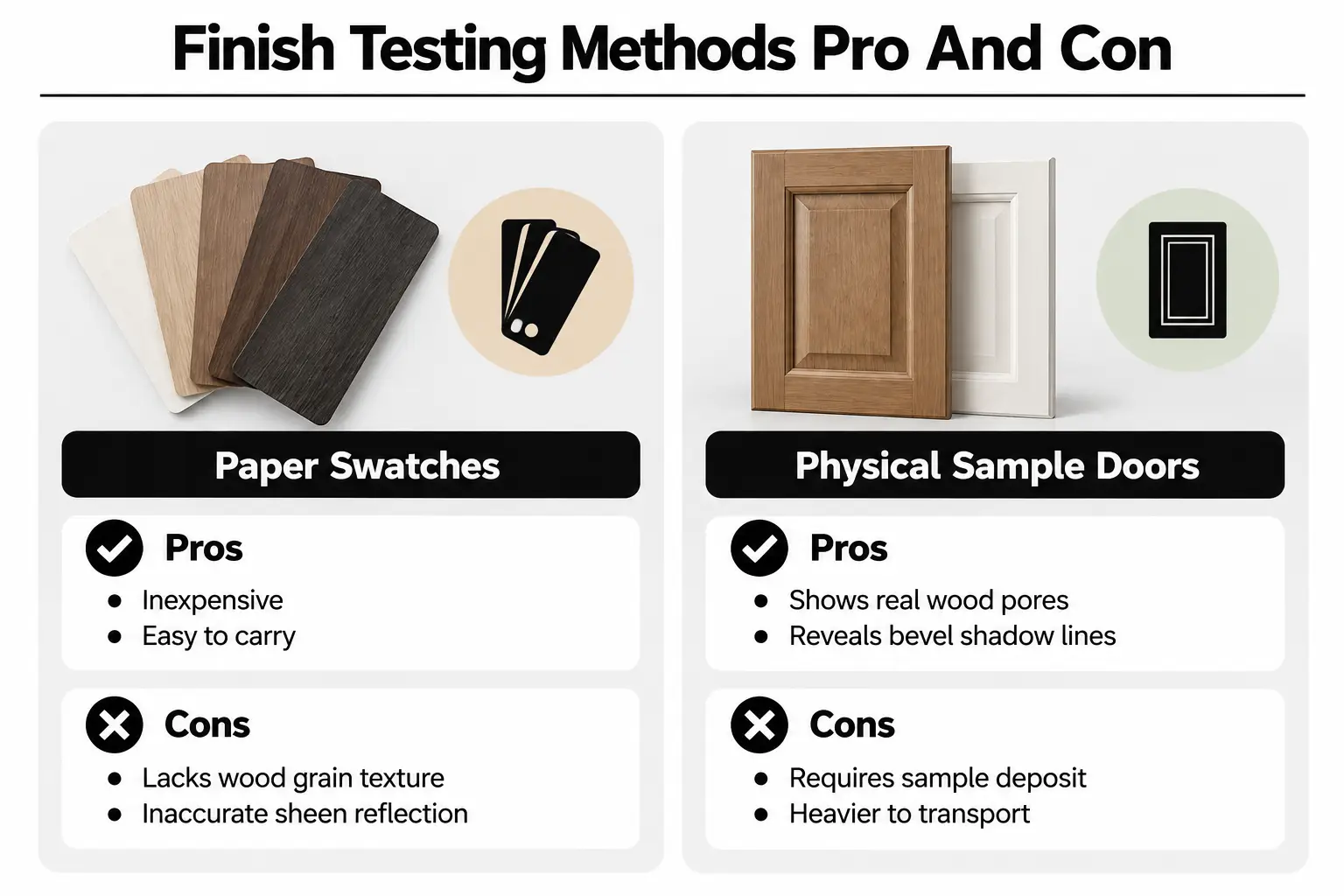
- Small swatch chips: Paper samples cost little and are easy to carry. They can't show how wood grain absorbs stain or how a clear coat reflects light.
- Finished sample doors: A real door shows the exact wood texture and shadows along its beveled edges. Ordering individual samples can add weeks to planning.
- A mobile design service: Full-sized sample doors come to your home, so you can check them in your lighting while the room is measured.
- Peel-and-stick samples: These help you compare wall paint with existing woodwork. They won't tell you how stain will soak into open-grain oak.
Custom modern styles, such as flat-panel cabinetry, reflect light across a flat, upright surface without shadows from a frame. Checking those doors beside the actual hardware finishes helps prevent expensive mistakes during installation.
Matching Lighting Conditions to Specific Cabinet Finishes
Wood species and paint sheen both affect how cabinets respond to room light. Matte factory finishes spread light softly over the surface. Semi-gloss and high-gloss coats create bright reflections that can send ceiling light straight toward your eyes. Match the finish to the room's window direction to keep its appearance predictable.
| Room lighting | Recommended finish | Main color risk | What to do |
|---|---|---|---|
| Little natural light (north-facing) | Warm white or light maple | Shadows make gray paint look muddy | Install 3000K under-cabinet task lighting |
| Strong direct sun (south-facing) | Muted walnut or satin earth tones | Glare washes out wood grain | Choose a low-sheen satin or matte finish |
| Enclosed galley (artificial light only) | Neutral stained oak or shaker white | Bulbs leave a strong yellow or green cast | Use recessed LED downlights with a color rendering index of 90+ |
| Mixed open-concept layout | Two-tone paint and natural wood | Perimeter doors clash with the island stain | Check large sample doors at several wall positions |
Practical check: Hold full-sized sample doors upright in your home at 8:00 AM and 1:00 PM, then under artificial light at 8:00 PM. Don't approve the colors until you've checked all three.
Laundry rooms and other workspaces need the same checks, including those with contemporary utility cabinets. Before ordering, talk with our design team about how daylight will fall across your planned layout.
Long-Term Maintenance and Bulb Drift Management
Even after the cabinets look right on installation day, their appearance can change. Bulbs and cabinet coatings both shift as they age, affecting how well the colors in your room work together.
Scheduled Checks for Color Consistency
- Check bulbs twice a year: After thousands of hours, the drivers that power household LEDs shift their light toward cooler blue or green tones. Replace worn bulbs with the same color temperature to keep painted cabinets looking consistent.
- Review seasonal daylight: Watch how the sun's changing angle between winter and summer affects stained finishes. Pay particular attention to base cabinets along the room's perimeter.
- Watch clear coats for UV changes: Clear lacquer in direct window light gradually grows warmer over five to ten years. Protective window film prevents pale stains from turning amber too soon.
- Clean under-cabinet fixtures: Grease and dust can cut task lights' output by up to twenty percent. That makes cabinets around the counters look darker than the island.
Straight Answers on Lighting and Cabinet Colors
Why does my cabinet paint look green at home when it was gray in the store?
Showroom LEDs lack red wavelengths, hiding green or yellow undertones in gray paint. Home lighting brings those undertones out. Green light reflected from outdoor foliage through your windows can also make the green in the finish stand out.
What bulb color temperature is best for viewing kitchen cabinets?
A 3000K bulb gives the best balance of household warmth and accurate color. It keeps dark stains from looking yellow and painted whites from looking cold or icy blue.
Can high-CRI bulbs fix a cabinet color mistake after installation?
Bulbs with a Color Rendering Index, or CRI, of 90 or higher help show a finish's natural balance of pigments. They can't change the paint itself. Higher-CRI lighting does let you see the chosen finish's colors as accurately as possible.
Why do stained wood cabinets show more color variation than painted ones?
Hardwood grain varies in density, and its pores absorb stain unevenly across the door's upright frame pieces and center panel. Direct overhead lighting makes those differences stand out. It creates highlights and shadows that you don't see with an even coat of paint.
Does under-cabinet lighting change how my base cabinets look?
Yes, task lights cast a pool of light across lower doors while leaving the recessed toe kicks in shadow. Unless their light color matches the ceiling fixtures, upper and lower cabinets will look as though they have different finishes.
Plan Your Cabinet Project Without Costly Color Surprises
With our mobile showroom, we bring real cabinet doors to homes across the United States so you can check colors before ordering. Compare them with your counters and flooring in your own daylight. That saves hours of repeat showroom trips and takes the guesswork out of choosing under warehouse lights.
- Inspect real doors: Hold full-sized wood and painted sample doors against your walls.
- Check hinge specs: Try hardware options on working displays and check the space needed for soft-close hinges.
- Match finishes: Compare door finishes directly with the countertop slabs you've chosen.
- Approve 3D layouts: Check exact room measurements and storage arrangements before delivery.
- Simplify installation: Work with one dedicated team from the first design through the final trim.
Schedule an in-home mobile design consultation to check your cabinet finishes in the room where they'll be installed.