

Your kitchen doesn't have to be falling apart to feel wrong. In a lot of South Jersey homes, the cabinets are solid, the layout still works, and the room just looks tired, dated, and harder to live with than it should. The smartest affordable kitchen remodel ideas keep the structure that still earns its keep, then focus money where your eyes land first, like cabinet faces, counters, lighting, and the fixtures you touch every day.
That approach fits the budget reality too. The 2025 Zonda Cost vs. Value data shows a minor kitchen remodel costs about $28,458 nationally and returns 112.9% at resale, about $32,141 in added value, which is why many homeowners choose targeted upgrades instead of a full gut renovation when they want a cleaner, more marketable kitchen (Zonda Cost vs. Value coverage). In practice, that means cosmetic updates, functional improvements, and selective professional work often beat a costly tear-out that changes the layout just for the sake of change.
If you're in Cherry Hill, Haddonfield, Voorhees, Mount Laurel, Moorestown, or nearby Camden and Burlington County towns, The Cabinet Coach can help you sort through materials, sequence the work, and keep the design coherent with a complimentary video consultation, a mobile showroom visit, preliminary estimates, and coordinated remodeling support. Just keep in mind that any estimate you hear early on is directional until the project is measured and scoped properly.
Table of Contents
- 1. Cabinet Refacing and Refinishing
- 2. Painted Kitchen Cabinets with Updated Hardware
- 3. Laminate and Butcher Block Countertop Options
- 4. Open Shelving and Strategic Cabinet Removal
- 5. High-Impact Backsplash and Tile Updates
- 6. Updated Lighting and Hardware as Statement Elements
- 7. DIY Cabinet Organization and Interior Upgrades
- 8. Strategic Appliance and Fixture Updates
- 8-Point Affordable Kitchen Remodel Comparison
- Turn Your Best Ideas Into a Workable Plan
1. Cabinet Refacing and Refinishing
If your cabinet boxes are sturdy, cabinet work is usually the first place to save real money. Refacing keeps the existing boxes and replaces the doors, drawer fronts, and visible hardware, which delivers a big visual shift without the mess of full replacement. That makes it a strong option for Cherry Hill kitchens where the layout still functions well but the style is stuck in the 1980s or 1990s.

Refinishing goes one step lighter on the budget. If the cabinet doors are solid and the surfaces are worth saving, painting or staining can refresh the room without changing the footprint. I've seen that work especially well in Camden County rental properties, where the goal is to make the kitchen feel cleaner and more current without overbuilding for the property type.
What to check before you spend
Practical rule: if the boxes are swollen, delaminating, or badly misaligned, refacing won't fix the underlying problem.
- Inspect the cabinet boxes carefully. Solid boxes make refacing a smart investment, but weak boxes can turn a budget project into a do-over.
- Match door sizes exactly. Refacing only looks custom when the new fronts fit the existing opening cleanly.
- Upgrade hardware at the same time. New pulls and hinges help the new surfaces read as intentional, not patched together.
- Use a professional for alignment. Poorly hung doors are the fastest way to make a refacing job look cheap.
For homeowners comparing cabinet options, The Cabinet Coach's cabinet refacing guidance is a useful place to start.
2. Painted Kitchen Cabinets with Updated Hardware
Paint is still one of the sharpest tools in the budget remodel kit, but it only works when the prep is done right. A solid wood cabinet can take a dramatic color change, and that's why honey oak kitchens across Camden County often look so much better after a shift to soft white, navy, or even black. Paired with fresh hardware, the whole room reads newer without changing the bones of the kitchen.
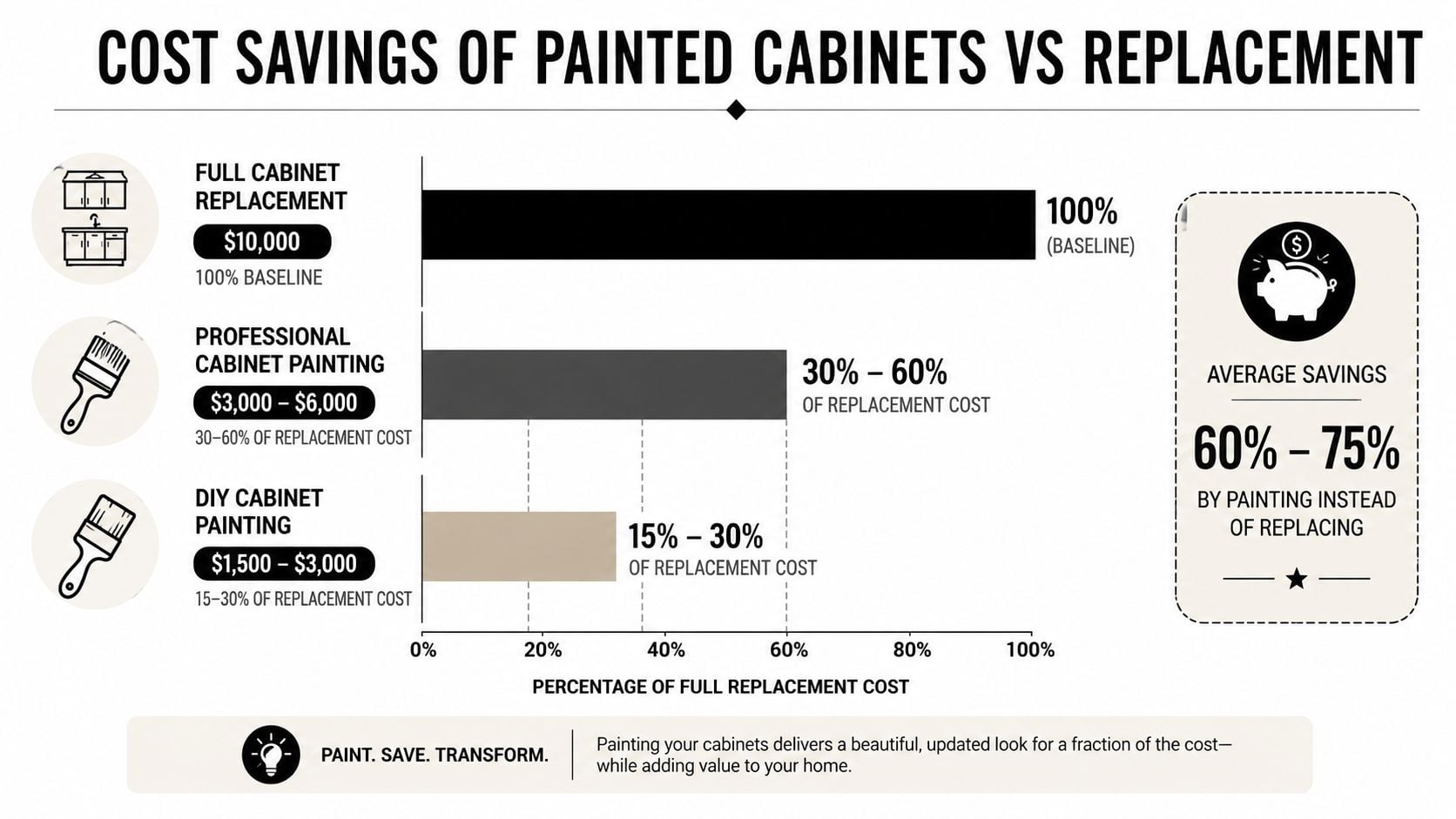
The biggest mistake is treating cabinet paint like wall paint. Kitchen cabinets need serious cleaning, sanding, priming, and curing time, especially if the previous finish is glossy or greasy. In practical terms, this is a task many homeowners can start, but the finish quality often depends on patience, ventilation, and disciplined prep.
How to keep the result durable
- Choose cabinet-grade paint. Products like Benjamin Moore Advance or Sherwin-Williams ProClassic are designed for the wear cabinets take.
- Prep more than you think you need to. Degrease, sand, and prime before the first coat goes on.
- Keep the hardware cohesive. Brushed nickel, matte black, or gold should match the sink faucet and nearby finishes.
- Protect the room. Tape off counters, remove doors, and keep the area ventilated while the coatings cure.
This approach is especially effective in Cherry Hill rental properties and Mount Laurel homes with two-tone schemes, where white uppers and darker lowers can make a standard kitchen feel more custom. For a deeper product and process walkthrough, see The Cabinet Coach's cabinet paint and stain page.
New hardware can change the room faster than a lot of people expect, but only if the cabinet finish underneath looks clean enough to support it.
If you're sourcing pulls on a tighter budget, budget-friendly cabinet pull ideas can help with style direction.
3. Laminate and Butcher Block Countertop Options
Countertops can eat a budget alive, so material choice matters more than almost anywhere else. A lot of South Jersey homeowners start out thinking they need granite or quartz, then realize modern laminate can carry the room visually while leaving room for other upgrades. Butcher block works well too, especially when you want warmth on an island or a focal prep zone.
In Cherry Hill, I've seen laminate collections that mimic marble or slate convincingly enough for homeowners who care more about the overall look than stone authenticity. In Burlington County, a butcher block island paired with laminate perimeter counters can create a layered design without pushing the whole kitchen into premium pricing.
How to make the mix look intentional
- Pick one dominant surface language. If the perimeter is a stone-look laminate, let the island be the warmer accent.
- Choose an edge profile that fits the style. Straight edges feel modern, while bullnose reads softer and more traditional.
- Use butcher block where you'll maintain it. It's a good fit for homeowners willing to oil or seal the surface regularly.
- Account for the full scope. Sink cutouts, backsplashes, and finishing details can change the project cost more than the slab itself.
For many budget-conscious kitchens, the right countertop is the one that lets you upgrade the rest of the room without making the whole project feel stripped down. A good place to review visual options is The Cabinet Coach's laminate countertop guide.
4. Open Shelving and Strategic Cabinet Removal
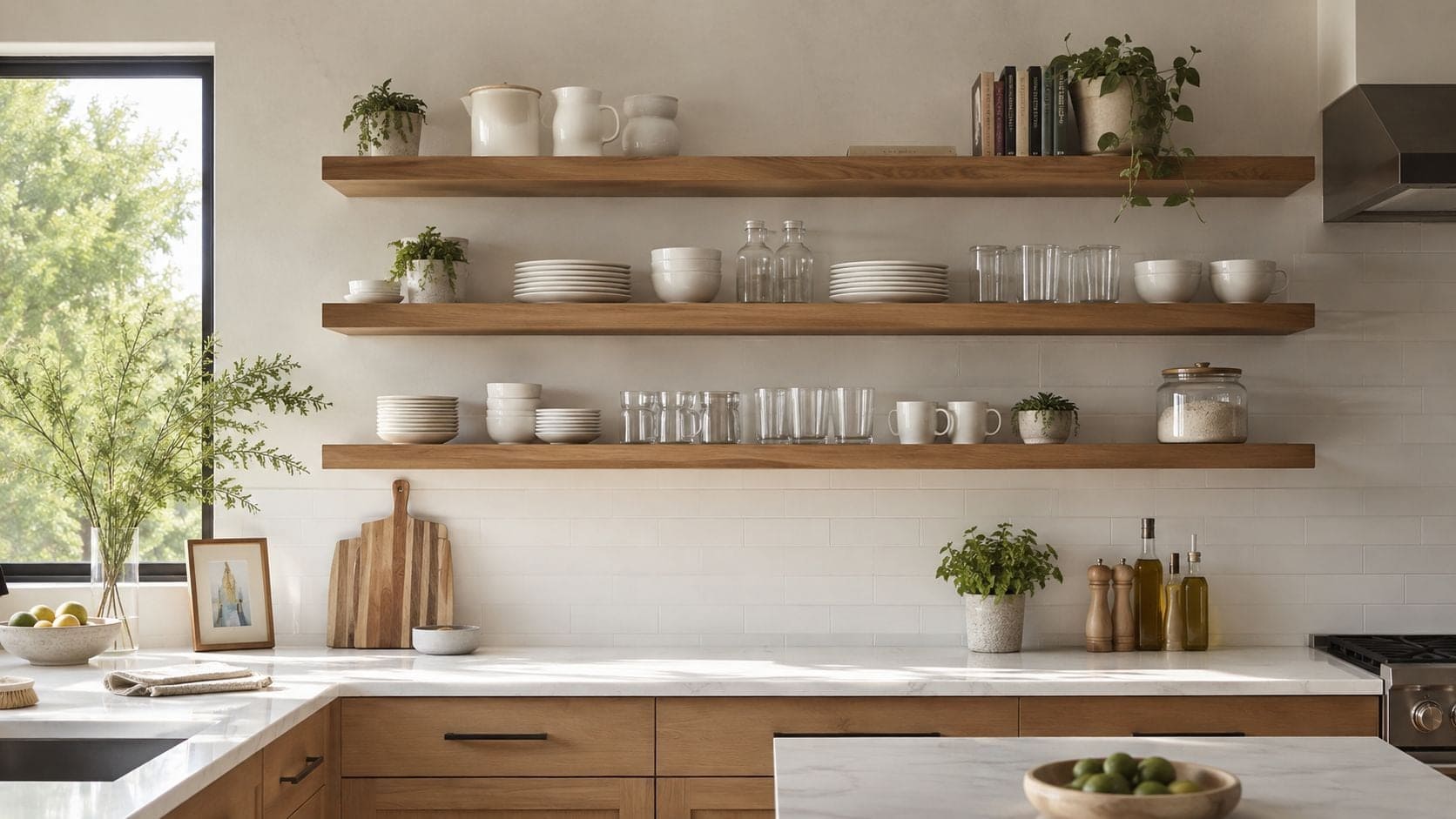
Open shelving works best when it's used as a design move, not a storage crutch. Removing a few upper cabinets can make a small kitchen feel less boxed in, which is useful in older South Jersey homes where the ceiling height and room proportions already work against openness. In Haddonfield and Collingswood, a few shelves over a sink or island can lighten the whole wall.
The mistake is replacing too many cabinets with shelves. Once everything is open, daily clutter becomes part of the decor whether you want it or not. I usually tell homeowners to keep most of the closed storage and use shelves where the visual payoff is highest, not where the family grabs cereal and coffee every morning.
Open shelving should show off the kitchen, not force the kitchen to look like a showroom.
A balanced layout often includes both open and closed storage. That lets you keep the practical stuff behind doors while displaying dishes, glassware, or a few decorative pieces that fit the room's palette. It also helps if the wall behind the shelves gets a fresh paint color or finish, because the background becomes part of the composition.
Where this works best
- Above a sink. A single open run can soften a heavy wall of cabinetry.
- Near a dining connection. Shelves can act like a transition between kitchen and living space.
- On one accent wall only. That keeps the room from feeling stripped down.
- With matching hardware and finishes. The shelves should look like part of the plan, not a leftover cutout.
In Camden County rentals, open shelving can also cut maintenance and make the kitchen feel less dated without forcing a full cabinet replacement. For layout ideas that stay practical, use this as a guide rather than a rule.
5. High-Impact Backsplash and Tile Updates
A backsplash can make a kitchen feel new long before the cabinets or appliances do. White subway tile still works because it's simple, durable, and easy to coordinate with a lot of South Jersey layouts, especially when the counters and cabinets are already doing enough visual work. In Cherry Hill and Voorhees, it's a safe move that still looks current when the grout color and tile placement are handled well.
More decorative tile can be worth it if the rest of the room stays restrained. A herringbone run, a geometric pattern, or a marble-look porcelain tile can become the focal point in a kitchen that otherwise uses economical finishes. The key is not to mix too many competing patterns, because that's how a budget remodel starts to look accidental.
Where the money goes
- Ceramic and porcelain last. They're a better choice than temporary products in kitchens that get heavy use.
- Peel-and-stick is situational. It can make sense in rentals or short-term updates, but it's not the same as a durable tile install.
- Grout color changes the look. Gray grout reads different from bright white, even with the same tile.
- Surface prep matters. A smooth, clean wall gives you a cleaner finish and fewer installation problems.
If you want to see how backsplash choices fit into a broader cabinetry plan, The Cabinet Coach has a useful roundup of kitchen backsplash trends.
For busy kitchens, backsplash selection should be practical first and stylish second. The right tile protects the wall, makes cleanup easier, and gives the room one clear design statement without forcing a total remodel.
6. Updated Lighting and Hardware as Statement Elements
Lighting and hardware are easy to underestimate because they're small, but the room notices them immediately. A new pendant over an island, a cleaner faucet finish, and matching cabinet pulls can make an older kitchen feel like somebody finally finished it. In Mount Laurel and Cherry Hill, that's often the difference between “updated enough” and “why does this still look tired?”
Under-cabinet lighting is especially useful in kitchens that feel dark in the late afternoon or winter months. It also helps the backsplash stand out and makes prep work easier. If you're already repainting cabinets or changing hardware, it's smart to think through lighting at the same time so the finishes don't fight each other.
Keep the finishes coordinated
- Choose one dominant metal. Matte black, brushed nickel, or gold should lead the room.
- Scale pendants to the space. Oversized fixtures crowd small islands, while tiny ones disappear.
- Use warm light for comfort. Cooler light can make a freshly remodeled kitchen feel stark.
- Replace all visible hardware together. Mixing random pulls from different eras usually looks unplanned.
In South Jersey rental properties, standardized matte black hardware often creates a cleaner, more modern look without requiring major construction. In homes with more of a farmhouse or transitional feel, industrial-style pendants or warm metal finishes can tie the room together without looking trendy for the sake of it.
If you only have room for one small upgrade after cabinet work, make it lighting. It affects the finish quality, the mood of the room, and the usability of the kitchen every single day.
7. DIY Cabinet Organization and Interior Upgrades
Some of the best value in a kitchen never shows from the doorway. Pull-out shelves, lazy Susans, drawer dividers, and under-sink organizers can make a kitchen function better without changing a single exterior face. That matters in busy homes where the frustration isn't the cabinet color, it's the wasted space in deep corners and hard-to-reach lower runs.
This is one area where DIY can make sense if you're careful with measurements. Cherry Hill homes with deep base cabinets often benefit from pull-out systems, while Haddonfield kitchens with corner cabinets usually become far easier to use after a lazy Susan or rotating tray goes in. The right organizer turns a “dead” cabinet into useful storage.
Start with the worst cabinets first
Practical rule: fix the cabinets you use every day before you buy organizers for the pretty ones.
- Measure twice. Interior upgrades only work when the hardware matches the cabinet dimensions.
- Choose high-use zones. Utensils, spices, pots, and under-sink storage usually give the fastest payoff.
- Use durable brands. Systems from names like Rev-A-Shelf or Knape & Vogt tend to hold up better than flimsy alternatives.
- Create clear zones. Keep baking, cooking, and cleaning supplies in separate places so the kitchen stays usable.
The Cabinet Coach's deep cabinet organization guide is especially helpful if your current storage feels inefficient rather than under-sized.
These upgrades are also a good fit for homeowners who want to phase a remodel. You can improve function now, then tackle visible finishes later without tearing apart work that still performs well.
8. Strategic Appliance and Fixture Updates
You don't always need a full appliance package to make a kitchen feel current. Sometimes the fastest visual payoff comes from one visible appliance, a new faucet, or a cleaner range hood that becomes the focal point over painted cabinets. In Cherry Hill and Voorhees, that kind of selective update can make an older kitchen feel intentional instead of pieced together.
A faucet swap is one of the most practical moves in the room. A pull-down sprayer, a touchless option, or a cleaner silhouette can improve function and make the sink area look less dated. If the rest of the kitchen is staying put for now, a consistent finish across the faucet, hardware, and light fixtures helps the space feel coordinated.
Where to spend and where to hold back
- Prioritize visible pieces first. Range hoods, faucets, and microwaves affect the overall look more than hidden appliances.
- Match finishes carefully. Stainless should look like stainless, and black should be used with purpose.
- Check dimensions before you buy. A good-looking appliance is useless if it doesn't fit the opening.
- Replace only what needs replacing. A selective approach can keep the project grounded.
For budget-conscious homeowners, this is often the cleanest way to finish a remodel that already includes cabinets, counters, or backsplash work. It's also the most common point where a professional can help prevent costly mismatches in size, finish, or installation planning.
The best appliance and fixture plan is the one that makes the whole kitchen feel finished, not overcrowded with unrelated upgrades.
8-Point Affordable Kitchen Remodel Comparison
| Option | 🔄 Implementation Complexity | ⚡ Resources & Timeline | ⭐ Expected Outcomes | 💡 Ideal Use Cases | 📊 Key Advantages |
|---|---|---|---|---|---|
| Cabinet Refacing and Refinishing | Moderate, replace doors/hardware or refinish surfaces; pro install recommended | ⚡ Moderate cost; 40–50% savings vs replacement; 1–3 weeks | ⭐⭐⭐⭐, dramatic visual update if boxes are sound | Homeowners with structurally good cabinets who want big change fast | Preserves boxes, lower cost than full replace, reduced waste |
| Painted Kitchen Cabinets with Updated Hardware | Low–Moderate, heavy prep and finishing; DIY possible | ⚡ Low cost; DIY $1.5k–3k / Pro $3k–6k; 2–4 weeks | ⭐⭐⭐⭐, high visual impact; may show wear in 5–7 yrs | Solid wood or sound cabinets; rentals; budget remodels | Most budget-friendly, highly customizable, hardware boosts look |
| Laminate and Butcher Block Countertop Options | Low, straightforward install; butcher block needs sealing | ⚡ Low–Moderate cost; Laminate $1.5k–3k / Butcher block $2k–4k; quick install | ⭐⭐⭐, good aesthetics at budget; lower resale uplift than stone | Budget-conscious kitchens, rental units, mixed-material designs | Large cost savings, wide design options, refinishability |
| Open Shelving and Strategic Cabinet Removal | Low, remove selected uppers and add shelves; styling required | ⚡ Low cost; saves ~20–40% on uppers; quick install | ⭐⭐⭐, airy, modern look but reduces enclosed storage | Small kitchens, display-focused homeowners who stay organized | Creates openness, lowers cabinetry cost, easy future changes |
| High-Impact Backsplash and Tile Updates | Low, peel-and-stick DIY to pro grouted tile; simple prep | ⚡ Low cost $300–1,500; 1–2 days pro / weekend DIY | ⭐⭐⭐⭐, outsized visual impact for small investment | Quick aesthetic refreshes, rentals (peel-and-stick) or staged homes | Affordable statement feature, wall protection, many styles |
| Updated Lighting and Hardware as Statement Elements | Low–Moderate, basic installs; electrician for hardwired fixtures | ⚡ Low cost $400–1,500; install in hours–days | ⭐⭐⭐⭐, high perceived value and improved function | Any remodel seeking high ROI and instant style update | High ROI, quick change, enhances functionality and cohesion |
| DIY Cabinet Organization and Interior Upgrades | Low, mostly DIY with basic tools | ⚡ Very low cost $200–800; 1–2 weekends | ⭐⭐⭐, major functional gains; no exterior refresh | Busy households, renters, anyone prioritizing function | Cheapest way to boost usability; flexible and renter-friendly |
| Strategic Appliance and Fixture Updates | Moderate, selective replacements or refinishing; some install skill | ⚡ Moderate cost $1k–3k (selective); timeline varies by item | ⭐⭐⭐⭐, modernizes look and function; energy savings possible | When visible appliances/faucets are focal points or budget limited | Visible impact for targeted spend, improves daily use and efficiency |
Turn Your Best Ideas Into a Workable Plan
The smartest kitchen remodels in South Jersey usually happen in phases. Start with organization and hardware, move to paint or refacing if the cabinet boxes are worth saving, then decide whether countertops, backsplash, lighting, and fixture updates fit the budget and the trade schedule. That sequence keeps the room functional while you improve the parts people see and use every day.
Before you commit, walk through a simple checklist. Confirm the cabinet condition, take exact measurements, gather physical material samples, note any electrical or plumbing changes, and decide whether permits or licensed trade work are needed for your scope. Leave room in the budget for surprises, and write down exactly what's included so the project doesn't drift when the first order or installation date arrives.
Some tasks are very DIY-friendly. Hardware swaps, cabinet organization, and some peel-and-stick applications can be handled by a careful homeowner. Other parts of the project, like cabinet alignment, countertop fabrication, electrical work, plumbing, and full kitchen coordination, are better left to professionals who can keep the finish quality consistent and avoid expensive rework.
That's where a local guide makes a difference. The Cabinet Coach helps South Jersey homeowners compare materials, sequence upgrades, and keep the whole kitchen visually aligned from Cherry Hill to nearby Camden and Burlington County communities. If your kitchen needs a practical refresh, not a risky overhaul, a complimentary video consultation and mobile showroom visit can help you see what fits your home, your timeline, and your budget.
If you're planning a kitchen update in Cherry Hill or nearby South Jersey, The Cabinet Coach can help you match cabinet, countertop, hardware, and tile choices before you spend money in the wrong place. Visit The Cabinet Coach to book a complimentary video consultation and explore a mobile showroom experience that brings practical design guidance right to your home.