

Planning a kitchen remodel in South Jersey usually starts the same way. You've picked cabinets, you've compared countertops, and now the wall between the sink and the uppers suddenly feels like the make-or-break detail. That's where glass tile backsplash ideas earn their keep, because the right tile can brighten a room, sharpen the style, and make the whole kitchen feel finished without overpowering the rest of the design.
At The Cabinet Coach, I see this decision come up in Cherry Hill, Voorhees, and nearby towns all the time. Homeowners want something that looks current in 2026, but they also want a backsplash that won't feel dated before the renovation dust settles. Glass can do both, if it's chosen with the right finish, grout, and installation plan.
Glass backsplashes are still very much part of the market, and the trend has shifted toward textured, frosted, and colored finishes instead of mirror-bright walls. A current design source estimates glass backsplashes at about 18% of new kitchen installations in the U.S., with ceramic tile at 45%, and it notes that textured styles represent 42% of glass backsplash selections, while requests for frosted or textured glass rose 35% versus 2023 (2025 glass backsplash trend report). That matters because it shows glass isn't a novelty choice anymore, it's a real category with staying power.
Table of Contents
- 1. Subway Tile Backsplash
- 2. Mosaic Glass Tile Backsplash
- 3. Beveled Edge Glass Tile Backsplash
- 4. Colored Glass Tile Backsplash
- 6. Frosted or Textured Glass Tile Backsplash
- 6. Frosted or Textured Glass Tile Backsplash
- 7. Mixed Material Backsplash with Glass Tile Components
- 8. Seamless or Grout-Free Glass Tile Backsplash
- 8 Glass Tile Backsplash Styles Compared
- Ready to Design Your Dream Backsplash in South Jersey?
1. Subway Tile Backsplash
A kitchen can look finished on day one and still feel dated quickly if the backsplash pulls too much attention. Glass subway tile avoids that problem when the goal is a clean surface that works with changing cabinet colors, hardware finishes, and countertop choices. I use it often in South Jersey projects because it gives homeowners a polished result without boxing them into one style forever.
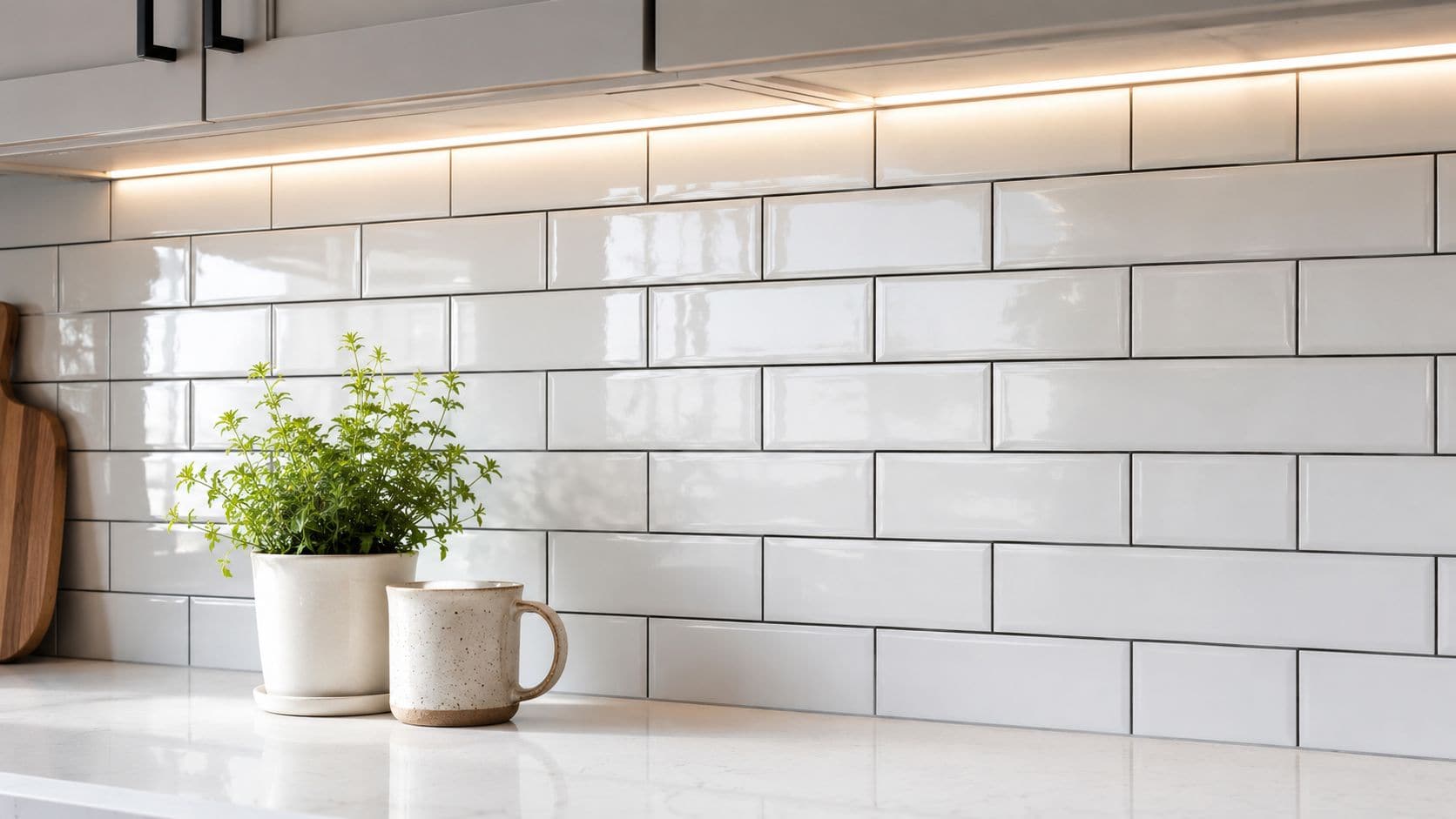
The decision is not whether subway tile works, it is how much contrast you want the backsplash to carry. In a kitchen with busy cabinets or a strong countertop pattern, clear or frosted glass with a grout color that stays in the background keeps the room from feeling crowded. If the cabinets and counters are quiet, a charcoal, navy, or black grout gives the field enough definition to feel deliberate.
Practical rule: grout color changes the mood faster than tile shape.
Layout choices matter too. A vertical install can help a low ceiling feel taller, while larger 6×12-inch tiles reduce the chopped-up look you sometimes get from smaller formats. Near a sink or where kids set down cups and lunch boxes, frosted or textured glass usually holds up better than a high-gloss finish because fingerprints are less obvious.
If you are still sorting out the backsplash before you order material, The Cabinet Coach's tile selection guidance helps you narrow the look before you spend on tile and labor. White cabinets, dark grout, and a simple glass subway pattern can work in a modern farmhouse kitchen, a contemporary space, or a softer traditional layout, but the final choice should always sit comfortably beside the cabinet color, hardware finish, and countertop edge.
2. Mosaic Glass Tile Backsplash
Mosaic glass tile makes sense when the backsplash needs to act like a feature wall instead of background material. Small tiles, especially in herringbone or chevron, bring movement to a kitchen that otherwise leans straightforward. They're especially strong in spaces where the homeowner wants personality without committing to a wild cabinet color or patterned counter.
The key is restraint. Mosaic can look elegant in a curated section behind the range or sink, but a full-room application can start to feel restless if the rest of the kitchen already has a lot going on. In a contemporary kitchen, an iridescent mosaic can catch light beautifully. In a Mediterranean-inspired layout, warm-toned glass adds richness without needing ornate cabinet details.
A few decisions keep mosaic from becoming visually noisy.
- Limit the palette: Two or three colors are usually enough to read as elegant.
- Use the pattern with purpose: Herringbone and chevron create flow, while random mixes can look busy fast.
- Pair with quiet cabinets: Neutral cabinetry lets the tile become the focal point.
- Choose the right grout: Epoxy grout is the smarter pick where stains and moisture are concerns.
- Use it selectively: Accent zones are often more effective than wrapping every wall.
The best mosaic jobs I see in South Jersey usually sit in kitchens that need a little energy, not more competition. White shaker cabinets, brushed brass pulls, and a restrained mosaic field can feel custom without becoming trendy for the sake of it. For homeowners who want design continuity into a bath renovation, the same logic works there too, especially when the cabinetry and hardware are being coordinated across rooms.
If you're unsure whether your layout can support a mosaic, The Cabinet Coach's tile selection guidance helps you narrow the look before you spend on material and labor. That matters because precision is where mosaic either looks polished or looks rushed.
3. Beveled Edge Glass Tile Backsplash
Beveled glass tile has a more refined feel than flat tile because the angled edges catch light and create shadow lines. That small detail makes a big difference in kitchens that need a little more formality. In Cherry Hill and nearby towns, I often recommend it for remodels where the homeowner wants a premium look without going full dramatic.
The finish works best in visible spots, especially behind a sink or range where light hits the wall often. Clear, white, and soft gray are the easiest colors to keep refined. Once you start layering in strong color with a beveled edge, the effect can shift from polished to fussy pretty quickly.
A smart beveled installation also depends on the rest of the kitchen. Premium cabinet hardware, clean line pulls, and a countertop with a calm surface help the tile read as intentional rather than decorative for decoration's sake. Under-cabinet lighting matters too, because the shadow line is what gives the tile its depth.
Use beveled tile where the wall is naturally seen from a distance, not tucked into a shadowed corner.
This style is a strong fit for transitional kitchens, especially when the cabinets have traditional details but the homeowner wants the room to feel more current. It also pairs well with chrome, brushed nickel, or polished nickel hardware because those finishes echo the reflective quality of the glass without competing with it. In high-end remodels, that coordination is what makes the backsplash feel integrated into the whole space.
Beveled tile is one of those choices where the sample matters more than the catalog shot. Under South Jersey kitchen lighting, especially if you've got a mix of daylight and warm LEDs, the edges can either glow or flatten out. I always advise homeowners to view it in the actual room before making the call.
4. Colored Glass Tile Backsplash
Colored glass tile is the right move when the backsplash needs to do more than support the room. It can become the color anchor that ties cabinets, hardware, and countertops together. In contemporary and transitional kitchens, that's often the difference between a room that feels finished and one that just feels assembled.
Emerald, sapphire, and amethyst are the bold options that tend to feel most enduring. Softer blue-gray and sage tones work well when the homeowner wants color but not too much drama. Metallics like copper, gold, and bronze sit in a sweet spot too, because they add richness without leaning too hard into a trend cycle.
The best colored-glass projects are usually built around balance. White, cream, and natural wood cabinets give the tile room to breathe. If the cabinets are already dark or saturated, the tile should usually be quieter, not louder. That's especially true in South Jersey homes where the kitchen connects directly to a breakfast area or family room, and the backsplash can't carry the whole visual load alone.
Design insight: color looks more expensive when it has a neutral partner.
For resale-minded projects, jewel tones usually feel safer than very soft novelty shades. If the goal is a kitchen that still feels tasteful in a few years, deep green or blue has more staying power than a one-off pastel chosen on impulse. Test the tile in your actual lighting, because sunlight, under-cabinet LEDs, and evening overhead light can make the same color read very differently.
Colored glass can also work well in bathrooms when you're matching cabinetry and surfaces across a whole remodel. The Cabinet Coach often helps homeowners think beyond the kitchen alone, especially when the backsplash needs to coordinate with the rest of the home's finishes.
6. Frosted or Textured Glass Tile Backsplash
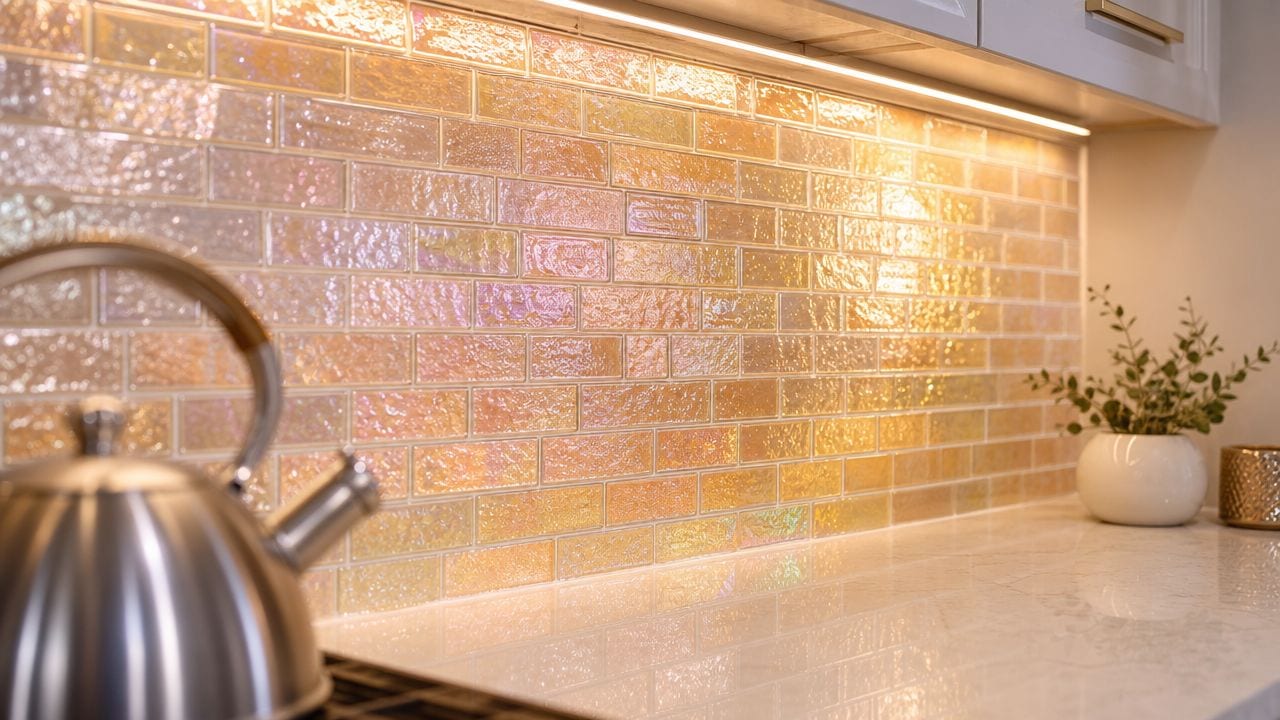
A frosted or textured glass backsplash makes the most sense in a kitchen that gets real use. It cuts glare, hides fingerprints better than polished glass, and still keeps the wall looking clean because the material is nonporous. For South Jersey families who cook often and have a lot of hand traffic around the range and sink, that balance matters.
The current shift toward textured glass fits how homeowners are remodeling. Textured styles now make up a significant share of glass backsplash choices, and interest in frosted finishes has risen as people look for surfaces that are easier to live with day to day. That matches what I see on project sites, where the finish has to work after the install, not just in a showroom.
This is the finish I recommend most often for busy kitchens. It works especially well with under-cabinet lighting because the light spreads across the wall in a softer way instead of bouncing hard off the surface. Pair it with glossy hardware if you want a bit of contrast, or use warm wood cabinets if you want the room to stay calm and grounded. For cabinet and surface pairings, these countertop and cabinet combinations help show which looks feel balanced rather than busy.
A few practical habits help frosted tile perform better.
- Seal grout carefully: textured surfaces need better grout protection.
- Use soft brushes for cleaning: the surface recesses can hold residue if you scrub too aggressively.
- Test in your room lighting: matte finishes can read softer in daylight and flatter at night.
- Plan the cabinet and countertop palette first: frosted glass looks cleaner when the surrounding finishes do not compete for attention.
This finish does not try to be the statement piece, but it still gives the kitchen real presence. In a remodel where the cabinets, hardware, and counters are doing most of the heavy lifting, frosted glass adds texture without adding visual noise.
6. Frosted or Textured Glass Tile Backsplash
Frosted and textured glass are where style and daily use meet best. This finish softens glare, hides fingerprints better than glossy tile, and still gives you the clean, nonporous look people want from glass. For busy South Jersey families, that makes it one of the most practical options on the list.
The current design shift toward textured glass makes sense in real kitchens. A 2025 source says textured styles now represent 42% of glass backsplash selections, and requests for frosted or textured glass rose 35% versus 2023 (2025 glass backsplash trend report). That lines up with what I see on remodel jobs, homeowners are choosing surfaces they can live with, not just admire from across the room.
This is the finish I recommend most often for family kitchens with lots of cooking, splatter, and hand traffic. It also works well with under-cabinet lighting because the light spreads more softly across the wall. Pair it with glossy hardware if you want contrast, or with warm wood cabinets if you want the room to stay calm and grounded.
A few practical habits make frosted tile perform better.
- Seal grout carefully: textured surfaces need better grout protection.
- Use soft brushes for cleaning: the surface recesses can hold residue if you scrub too aggressively.
- Test in your room lighting: matte finishes can look very different in bright daylight versus warm evening light.
- Keep the palette quiet: soft whites, grays, and muted blues age better than trendy bright colors.
For homeowners who want lower maintenance without giving up style, this is often the smartest compromise. It doesn't try to be the showpiece, but it still gives the kitchen real presence.
7. Mixed Material Backsplash with Glass Tile Components
Mixed-material backsplashes work when glass needs a partner. Stone, metal, ceramic, and glass can create a richer wall than glass alone, especially in kitchens where the cabinetry has strong character. Done well, this looks custom. Done poorly, it looks like the installer ran out of a single material halfway through.
The trick is to keep the mix disciplined. Two or three primary materials are enough in most cases, and they should have a clear relationship to the cabinet hardware and countertop finish. If the hardware is brushed brass, repeating that tone in a thin inset or border makes the whole wall feel planned. If the countertop has strong veining, the backsplash should usually calm down and let the stone lead.
This approach is especially useful in higher-end remodels where the homeowner wants more texture than a single tile can provide. Clear glass with marble strips feels refined. Frosted glass with metal accents can read more contemporary. Pairing glass with slate or another natural surface adds depth and a more grounded feel.
Keep one material dominant, otherwise the backsplash starts to compete with the rest of the kitchen.
The best mixed-material jobs are mapped out before anyone orders tile. That's where rendering and finish coordination pay off, because the cut lines, borders, and transitions have to be resolved before install day. I'd also make sure the material sources are consistent, since mixed textures can shift slightly in color under different lighting.
If you're deciding how the backsplash should relate to the rest of the room, The Cabinet Coach's countertop and cabinet combination guidance is useful context. The backsplash should support the composition, not fight it.
8. Seamless or Grout-Free Glass Tile Backsplash
Grout-free glass is the most minimalist option here, and it's also the most unforgiving if the installation isn't done right. The appeal is obvious. You get a clean, almost uninterrupted wall of glass, which is ideal for homeowners who want a sleek finish and less grout maintenance.
This style makes the most sense in kitchens with a strong design plan already in place. The cabinets, countertop, and wall layout need to be settled before tile work begins, because the installation details matter more than they do with standard tile. If the goal is a highly architectural look, the backsplash should feel like part of the built-in shell of the kitchen.
The practical advantage is maintenance. Grout is the weak point in most backsplash systems, since that's where residue and staining collect. Glass itself is impervious, so minimizing grout lines can reduce the cleaning burden, which is one reason this style appeals to busy households and rental properties. The trade-off is that the work has to be handled carefully, because precision is everything here.
This is not the place for shortcuts or guesswork. A clean substrate, careful layout, and the right bonding system matter more than the tile photo ever will. I'd only recommend this route when the homeowner is comfortable with a more premium installation process and the contractor has the experience to execute it cleanly.
For backsplash height planning, especially around windows, outlets, and cabinet terminations, The Cabinet Coach's backsplash height guidance is worth reviewing before the wall goes in. Glass tile backsplashes look best when the proportions are decided upfront, not improvised during installation.
8 Glass Tile Backsplash Styles Compared
| Backsplash Type | 🔄 Implementation Complexity | ⚡ Speed / Efficiency | 💡 Resources & Cost | ⭐ Expected Outcomes / Key Advantages | 📊 Ideal Use Cases |
|---|---|---|---|---|---|
| Subway Tile Backsplash | Low, simple running-bond install for pros | Fast install; easy cleaning but grout needs sealing | $5–$15 / sq ft (material); basic tools, grout & sealer | Timeless, versatile; brightens space; strong resale appeal | Resale-focused kitchens; any cabinet style; low-light kitchens |
| Mosaic Glass Tile Backsplash | Medium–High, pattern work, many grout lines | Moderate, mesh sheets speed install; higher upkeep | $12–$30 / sq ft (material); epoxy grout recommended; skilled labor | High visual interest; customizable focal point; adapts to curves | Accent areas, bathrooms, homeowners wanting statement designs |
| Beveled Edge Glass Tile Backsplash | Medium, precise spacing, edge protection needed | Moderate, less grout to maintain but careful install | $20–$40 / sq ft (material); premium tiles; precision installer | Upscale, dimensional sparkle; perceived luxury; easier grout care | Luxury/transitional kitchens; high-visibility areas (behind sink/stove) |
| Colored Glass Tile Backsplash | Low–Medium, standard install; color coordination critical | Fast install; shows fingerprints more; consider lighting | $8–$25 / sq ft (material); custom colors/metallics possible | Strong color anchor; injects personality; coordinates hardware | Contemporary/transitional kitchens; accent walls; bold design choices |
| Iridescent Glass Tile Backsplash | High, specialized coatings, placement and lighting | Slower install; lighting optimization required for effect | $30–$60+ / sq ft (material); limited availability; pro install | Dynamic, shifting shimmer; premium, attention-grabbing focal point | High-end projects, showrooms, accent areas with controlled light |
| Frosted / Textured Glass Tile Backsplash | Low–Medium, standard install; ensure grout sealing in textures | Efficient daily maintenance; hides fingerprints & spots | $8–$18 / sq ft (material); matte/textured finishes; quality sealer | Soft, sophisticated look; low-maintenance; timeless appeal | Busy family kitchens; professional users wanting practical elegance |
| Mixed Material Backsplash (Glass + Stone/Metal) | Very High, coordinating multiple materials and thicknesses | Slow, complex layout and varied maintenance | $20–$50 / sq ft (material); stone/metal inlays; designer coordination | Custom, layered high-design; warmth + reflectivity; flexible aesthetics | Bespoke designer kitchens; eclectic/transitional styles; luxury renovations |
| Seamless / Grout-Free Glass Tile Backsplash | Very High, precision-edge systems; specialist trade required | Moderate install speed; minimal long-term maintenance | $40–$80 / sq ft installed; specialty tiles, adhesives, edge sealing | Ultra-modern seamless plane; lowest grout maintenance; high-end look | Minimalist luxury kitchens; clients prioritizing low maintenance & modern design |
Ready to Design Your Dream Backsplash in South Jersey?
A great glass tile backsplash does more than fill the wall space between the counter and the cabinets. It sets the tone for the whole kitchen, from the hardware finish to the way light moves across the room in the morning and at night. The right choice can make a modest Cherry Hill kitchen feel brighter, a Voorhees kitchen feel more refined, and a whole South Jersey remodel feel pulled together instead of pieced together.
The biggest mistake homeowners make is choosing tile in isolation. They fall in love with a sample board, then discover the color fights the cabinets, the finish shows every fingerprint, or the grout line overwhelms the room. That's why the smartest projects start with the whole composition, cabinets, countertops, lighting, and backsplash working together from the beginning.
The Cabinet Coach brings that process into your home with a mobile showroom and practical design guidance for how you live. That means curated samples, honest trade-offs, and a plan that fits your style, budget, and timeline without the stress of running from store to store. For South Jersey homeowners who want a kitchen that feels beautiful and built for daily use, that kind of help makes the difference.
If you're ready to compare finishes, see what works with your cabinet color, and make a backsplash decision you won't second-guess, schedule your complimentary consultation with The Cabinet Coach today. Let's design a kitchen that feels right the moment you walk in and still feels right years from now.
A CTA for The Cabinet Coach.