

You’re probably standing in your kitchen right now, looking at cabinets that have done their job for years and wondering how a remodel got so complicated so fast. One minute you’re picking a paint color. The next, you’re comparing plywood boxes, door profiles, finishes, hinge types, county requirements, and lead times.
That’s normal. Cabinets drive the look of the room, the way the kitchen functions, and a big share of what you’ll spend. They also create the most regret when homeowners choose too fast, buy too cheap, or focus only on the door style and ignore the box behind it.
In South Jersey, the decision gets even trickier. Humidity changes how materials behave. Older homes in places like Haddonfield, Collingswood, and Merchantville rarely give you perfectly square walls. Local code and installation conditions can add friction that national cabinet guides never mention. The best cabinets for kitchen remodel projects here aren’t just the prettiest ones. They’re the ones that fit your house, your budget, and the way your family lives.
Table of Contents
- Starting Your Kitchen Remodel with Confidence
- Cabinet Tiers Explained Stock Semi-Custom and Custom
- Materials That Last A South Jersey Durability Guide
- Finding Your Style From Shaker Doors to Modern Finishes
- The True Cost of Cabinets Budget ROI and Long-Term Value
- Aligning Cabinets with Your Remodel Goals
- Simplifying Your Selection in South Jersey
Starting Your Kitchen Remodel with Confidence
A kitchen remodel usually starts with one clear thought: “We can’t keep living with this layout.” Then the cabinet decisions begin, and that’s where many homeowners stall out. They like one door style, another finish, and a third price point, but they’re not sure which combination will hold up.
I see that hesitation most often when the kitchen is still usable, just tired. The doors may be crooked, the drawer boxes may stick, or the finish may be worn around the sink and dishwasher. Nothing looks catastrophic, but everything feels off. That’s often the moment when choosing the best cabinets for kitchen remodel work matters most, because a rushed decision at this stage usually creates years of annoyance.
There’s also a planning gap most homeowners don’t realize they have. They know what they want the room to feel like, but they haven’t yet translated that into cabinet tier, material, construction quality, and layout constraints. That’s why a remodel gets overwhelming.
A better approach is to narrow the decision in this order:
- Start with function: decide how you need the kitchen to work on a normal Tuesday, not just during holidays.
- Then choose durability: match the cabinet box and door material to the conditions in your home.
- Then choose style: pick the look once you know the construction is sound.
- Last, refine the budget: price means more when you’re comparing cabinets built to the same standard.
Good cabinet decisions usually feel boring at first. They become satisfying later, when drawers still glide smoothly and doors still line up after years of use.
If you’re still at the planning stage, a practical next step is reviewing a clear kitchen remodeling roadmap like this guide on how to plan a kitchen remodel. It helps turn a vague wish list into a sequence you can act on.
Cabinet Tiers Explained Stock Semi-Custom and Custom
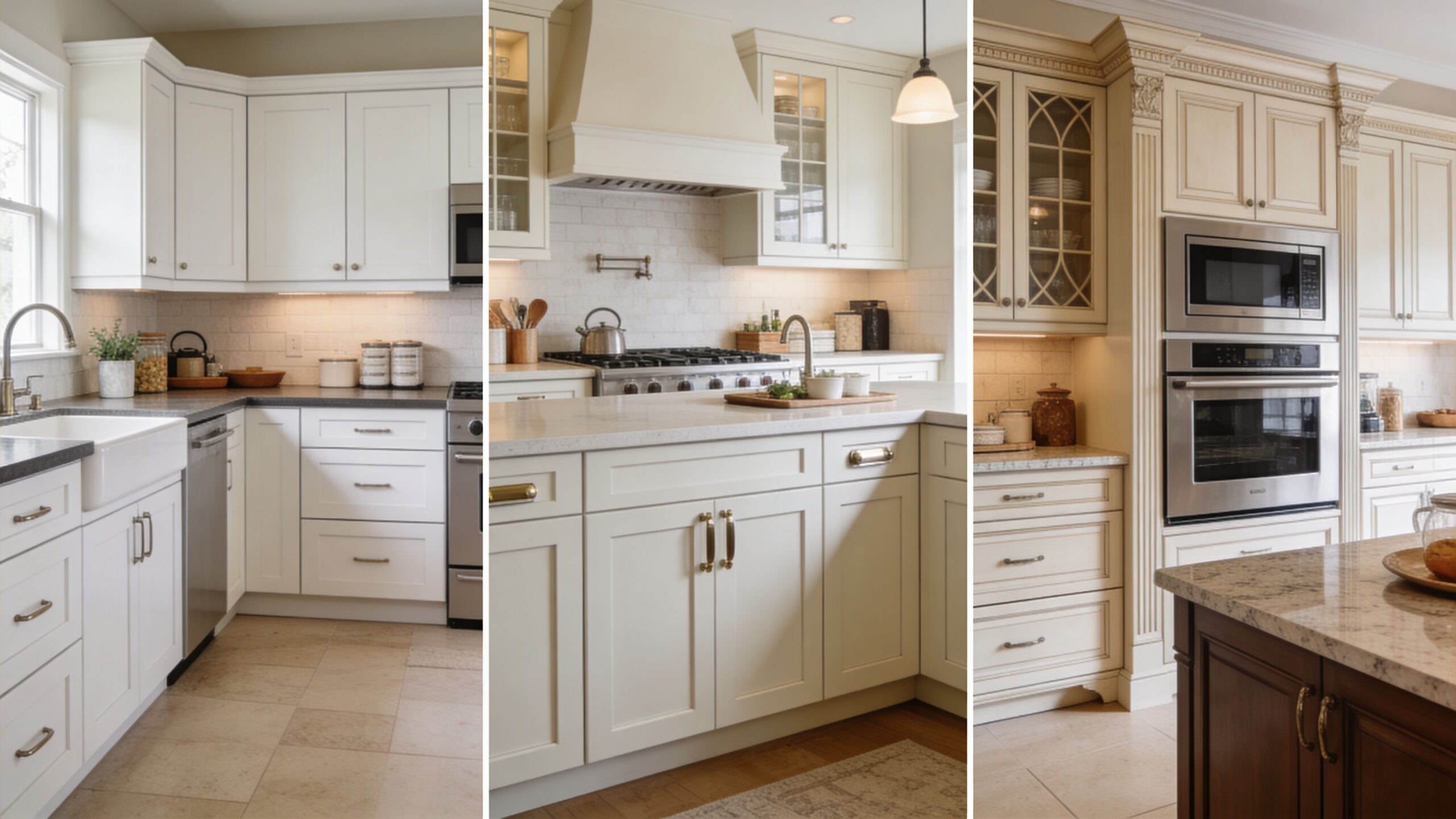
Before comparing brands, finishes, or features, you need to know which cabinet tier you’re shopping in. Most kitchens fall into stock, semi-custom, or custom. Each tier can work. Each also has limits that show up quickly once measurements, fillers, trim details, and appliance fit come into play.
A quick side-by-side comparison
| Cabinet tier | Best fit for | Main advantage | Main drawback | Typical real-world trade-off |
|---|---|---|---|---|
| Stock | Tight budgets, simple layouts, quick replacements | Lower entry cost and faster ordering | Limited sizes, fewer modifications, less flexibility in older homes | Works best when the room is straightforward and you can design around standard sizes |
| Semi-custom | Most remodels | Better balance of size options, finish choices, and design control | Costs more than stock | Usually the sweet spot when you want upgrades without paying for every inch to be built from scratch |
| Custom | Highly specific layouts, luxury projects, difficult spaces | Built to your exact dimensions and design intent | Highest cost, longer process | Best when the room demands precision or the design depends on details stock lines can’t deliver |
How each tier behaves in a real remodel
Stock cabinets are the closest thing to off-the-rack clothing. If the room is square, the appliance plan is simple, and you’re comfortable making the layout fit standard cabinet widths, they can do the job. They’re often a reasonable answer for rentals, light refreshes, or a secondary space.
The problem shows up in older South Jersey homes. If a floor is out of level or a wall runs out by more than expected, stock lines don’t give you much room to recover elegantly. You can end up with larger fillers, awkward reveals, or a design that feels generic because the cabinetry had to adapt to the product instead of the room.
Semi-custom cabinets are where many well-planned remodels land. You still work within a manufacturer’s system, but you gain more flexibility in widths, depths, finish options, moldings, storage accessories, and details that make the kitchen feel intentional instead of pieced together.
That middle tier is often the most practical answer when homeowners want the best cabinets for kitchen remodel value. It gives enough control to solve real design problems without turning every cabinet into a custom fabrication exercise.
To see some of the feature differences in motion, this walkthrough is useful:
Custom cabinets are right when standard options can’t produce the kitchen you need. That may mean a furniture-style island, a precise inset look, unusual ceiling conditions, or a tight historic footprint where every fraction counts. They’re also the right fit when visual details matter enough that substitutions will bother you every day.
Practical rule: If your kitchen is moderately complex, not wildly unusual, and you care about both value and finish quality, start your search in semi-custom. It saves a lot of homeowners from shopping too low or overspending too early.
Materials That Last A South Jersey Durability Guide
South Jersey kitchens don’t live in laboratory conditions. Summer humidity, heavy dishwasher use, steam from cooking, wet traffic at the sink, and seasonal expansion all test cabinet materials in ways showroom lighting never will. That’s why I care more about the cabinet box than the display door.

What holds up and what breaks down
For long-term performance, the safest cabinet box materials are solid wood and furniture-grade plywood. They resist warping and moisture better than lower-end alternatives, and that matters in homes where humidity doesn’t stay perfectly controlled year-round. In humid Camden and Burlington County conditions, particleboard or MDF can warp faster, while solid wood and plywood have been cited as outperforming them by 30% to 50% in longevity according to this regional durability discussion.
That doesn’t mean every use of MDF is automatically wrong. Painted doors sometimes use MDF components because the surface is smooth and stable for paint. But there’s a big difference between using MDF strategically on a door component and building major structural parts of the cabinet from materials that don’t tolerate moisture well.
If a homeowner asks me what usually disappoints first, the answer is rarely the color. It’s swelling at the sink base, soft cabinet bottoms, delaminating edges, and doors that stop sitting right after repeated seasonal changes.
A simple way to think about the main materials:
- Furniture-grade plywood: strong, moisture-resistant, and a reliable choice for cabinet boxes in active kitchens.
- Solid wood: durable and long-lasting, especially when properly finished and maintained.
- MDF: smooth for painted applications, but more vulnerable if moisture gets into exposed or poorly sealed areas.
- Particleboard: budget-friendly, but the least forgiving around humidity, leaks, and repeated wear.
If you’re weighing painted MDF doors against wood components, this breakdown of MDF vs. wood cabinet doors is a helpful place to sort through the trade-offs.
Construction details that matter more than the brochure
Materials matter, but construction tells you whether the cabinet will stay rigid after installation. High-quality cabinets should have full-height solid back panels, not thin backs that rely on added rails or weak fastening points. They should also include full-extension drawer glides and concealed, adjustable hinges so drawers open fully and doors can be fine-tuned over time. Those are key quality markers outlined in this guide to high-quality kitchen cabinet construction.
That same source notes that furniture-grade cabinets typically attract 20% fewer repair or maintenance costs than builder-grade alternatives over their lifespan. That’s not a flashy number, but it reflects what homeowners feel years later when drawers still run cleanly and mounted wall cabinets stay stable.
Here’s what I tell clients to inspect before they fall in love with a finish sample:
| Check this detail | Why it matters |
|---|---|
| Full-height back panel | Gives the cabinet box more rigidity and better support on the wall |
| Full-extension drawer glide | Lets you reach the back of the drawer without digging blindly |
| Adjustable concealed hinge | Makes alignment corrections possible after installation and seasonal movement |
| Moisture-resistant box material | Reduces the risk of swelling near sinks, dishwashers, and exterior walls |
If a cabinet line looks good from ten feet away but cuts corners on the box, the disappointment shows up after move-in, not at ordering.
Finding Your Style From Shaker Doors to Modern Finishes
Style matters. You’ll see these cabinets every morning, and the kitchen has to feel right in your house. But style decisions work best when they’re filtered through daily use. A door profile that looks beautiful online may be annoying to clean, too ornate for the room, or too trend-driven for a long-term remodel.
Door styles that stay relevant
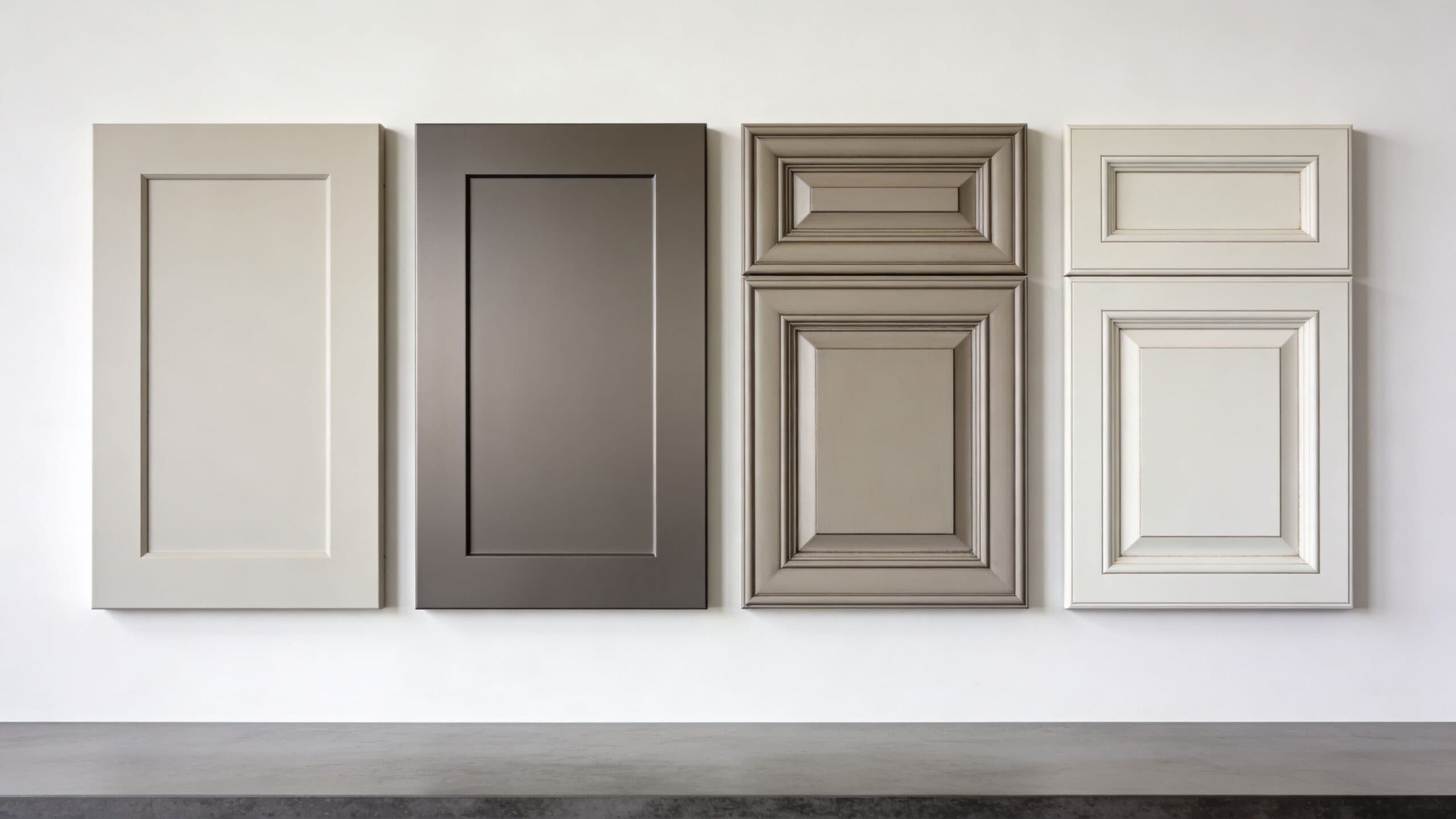
Shaker doors remain the safest recommendation for many kitchens because they sit comfortably between traditional and modern. They’re easy to pair with painted or stained finishes, and they don’t fight with changing wall colors, counters, or lighting. According to the projected 2026 trend data in this kitchen ROI report, Shaker-style doors account for 58% of homeowner selections.
Other common styles can work well too:
- Slab doors suit modern or transitional spaces and are the easiest to wipe down.
- Raised-panel doors bring more depth and formality, but they also collect more dust and grease in the profile.
- Inset doors look refined and architectural, though they require tighter manufacturing and installation precision.
For many South Jersey homes, the strongest style choice is the one that fits both the architecture and the maintenance tolerance of the people using it. A busy household with kids, sports gear, and constant cooking often prefers a simpler profile. A quieter home with a more formal design language may be worth the extra detail.
Finishes that look good and wear well
Painted cabinets create a crisp, current look, especially in whites, soft neutrals, and muted color tones. Stained wood highlights grain and tends to hide small wear patterns differently. Thermofoil can look clean at first, but it’s not my first choice near heat-heavy zones.
Hardware changes the read of the door more than many people expect. A simple Shaker can skew classic, coastal, or contemporary depending on the pull, knob, finish, and placement. If you want a practical primer before choosing knobs and pulls, this guide on how to choose cabinet hardware is worth reviewing.
Color should be tested in the actual room, not chosen under showroom lighting alone. Natural light in Moorestown is different from a shaded kitchen in Haddonfield, and under-cabinet lighting can push the finish warmer or cooler than expected. Before locking anything in, it helps to review some grounded guidance on how to choose kitchen cabinet colors.
The right cabinet style should still feel appropriate when the backsplash changes, the wall paint changes, and trends move on.
The True Cost of Cabinets Budget ROI and Long-Term Value
Cabinet pricing becomes clearer when you stop treating it like a single line item. Cabinets shape labor, countertop layout, appliance fit, storage performance, and resale appeal. The cheapest quote often gets expensive once adjustments, replacements, and compromises pile up.
Why sticker price is the wrong starting point
Cabinets account for nearly 40% of a kitchen remodel budget, so they aren’t a detail purchase. They’re a central financial decision. The same report notes that a typical midrange kitchen refresh costs around $28,000, while a full gut upscale renovation reaches about $164,000. More important, that report cites a 113% national ROI for a minor kitchen refresh versus 36% for upscale major remodels, which is why strategic cabinet choices matter so much in real-world budgeting. The source also notes that a well-constructed cabinet is engineered to last 20+ years, and that semi-custom cabinets often lead in value because they balance affordability with personalization, as outlined qualitatively in this discussion of cabinet costs and refacing options.
Those numbers point to a common mistake. Homeowners often overspend on customization they won’t recoup, or underspend on construction quality they’ll have to live with every day. Neither decision feels good once the kitchen is in use.
A more useful budget question is this: what are you buying per year of performance, convenience, and resale relevance?
Where value usually lands
For most households, value sits in the middle. Not the cheapest stock line with questionable box construction. Not the most elaborate custom package with every decorative option available. The strongest value usually comes from cabinets that are well built, sensibly customized, and chosen to fit the existing room without unnecessary complexity.
Think about value through these filters:
- How long you’ll stay in the home: a short ownership window supports a different cabinet strategy than a forever house.
- How hard the kitchen works: a light-use condo kitchen and a family cooking hub don’t need the same construction standard.
- How specific the room is: older homes often justify better cabinet flexibility because fitting the space cleanly saves trouble later.
- How much correction the installer will need: better cabinetry and better planning reduce ugly filler solutions and field improvisation.
A cabinet quote should answer more than “how much.” It should tell you what material the box is, how the drawers operate, what finish quality you’re getting, what adjustments are available, and whether the line is appropriate for your room. If the proposal skips those points, you’re not comparing cabinets yet. You’re comparing numbers without context.
Aligning Cabinets with Your Remodel Goals
The right cabinet isn’t the same for every homeowner. The best cabinets for kitchen remodel decisions depend on the job the kitchen has to do. I’d rather match cabinets to the goal than argue for one universal answer.
If resale matters most
Choose a semi-custom line with a broadly appealing door style and a practical finish. Keep the look clean, adaptable, and easy for the next buyer to understand. Shaker doors in a neutral painted or natural wood tone usually keep the room current without locking it into a narrow design taste.
Pay close attention to construction. High-quality kitchen cabinets should include full-height solid back panels, full-extension drawer glides, and concealed, adjustable hinges, and furniture-grade cabinets typically see 20% fewer repair or maintenance costs than builder-grade alternatives over time, according to this buyer-focused guide to premium cabinet construction.
If this is your forever kitchen
Prioritize durability and daily ease. That usually means a stronger cabinet box, better drawer hardware, and smart storage choices around prep, cleanup, and small appliances. This is also where layout discipline matters more than decorative upgrades. If traffic flow is wrong, expensive cabinetry won’t save the kitchen.
A quick planning check is the kitchen work triangle guide. It helps homeowners catch a lot of common mistakes before cabinet sizes get finalized.
For this kind of remodel, I also like to think beyond the boxes themselves. Good lighting changes how cabinets perform and how the room feels at night. If you’re building a functional family kitchen, these under cabinet lighting options for your kitchen can help you choose a setup that supports prep work and makes your finish color read correctly.
If you want a polished look without going overboard
Disciplined choices beat flashy ones. Use a cabinet line that gives you enough flexibility to avoid clumsy fillers, but don’t pay for every decorative add-on. Choose one or two details that carry the design. That could be a clean hood surround, a contrasting island, or better hardware.
A few combinations that usually work well:
- For a balanced upgrade: semi-custom cabinetry, plywood box construction, Shaker or simple transitional doors.
- For a formal kitchen: custom or high-feature semi-custom, inset or narrower-frame doors, carefully planned trim.
- For a budget-conscious refresh: straightforward stock or entry semi-custom in a simple profile, with money reserved for installation quality and hardware.
Matching the cabinet to the goal is what prevents overspending. Most regret comes from buying for appearance first and purpose second.
Simplifying Your Selection in South Jersey
South Jersey remodels ask more from cabinets than many national guides admit. Humidity can stress weaker materials. Older houses can punish rigid product lines. Local rules and site conditions can complicate installation, especially when the plan looked fine on paper but not in the actual room.
That’s one reason local guidance matters. South Jersey projects face NJ-specific regulations, including Camden County requirements, and installation costs in places like Cherry Hill can run 15% to 20% higher than national averages, according to this discussion of cabinet brand and regional installation considerations. Those details affect cabinet choice because the wrong line can slow the install, create compliance issues, or force expensive adjustments.
Why in-home decisions work better
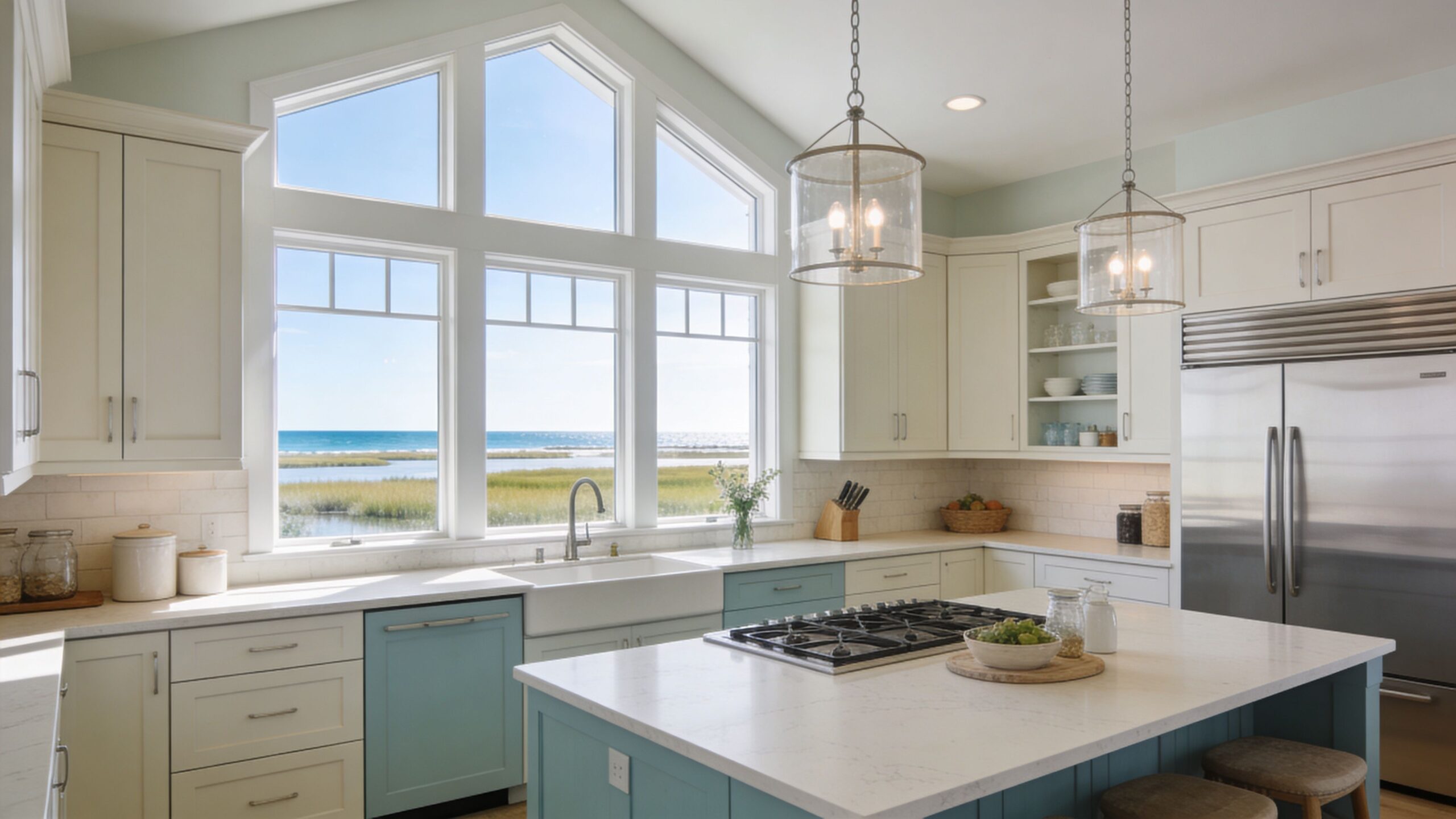
Cabinet decisions improve when samples are seen in the actual kitchen, against the existing floor, with the home’s natural light and wall conditions. That’s especially true when you’re comparing whites, wood stains, paint sheens, or door profiles that can read very differently from one home to another.
An in-home consultation also helps with the practical side of the project:
- Measurements get grounded in reality: not idealized dimensions from an old builder sketch.
- Material choices can match the house: especially in rooms that run humid or have challenging exterior-wall conditions.
- Style decisions get easier: because you can compare cabinet samples with counters, tile, and flooring on site.
- Installation problems show up sooner: before they become change orders.
For homeowners who want a guided process, The Cabinet Coach offers a mobile showroom approach that brings cabinetry, countertop, hardware, and finish selections into the home so decisions can be made against actual site conditions instead of isolated display boards.
The remodel gets easier when you stop asking, “What’s the best cabinet?” and start asking, “What cabinet is right for this kitchen, this house, and this budget?” That’s the question that leads to better results.
If you want help narrowing down the best cabinets for kitchen remodel plans in South Jersey, The Cabinet Coach offers in-home guidance that can help you compare cabinet styles, materials, and layouts in the context of your actual space. It’s a practical way to sort through options before small decisions become expensive ones.